Data Centre Business News and Industry Trends


AVK and Rolls-Royce form new capacity agreement
AVK, a supplier of innovative power solutions for data centres in Europe, and the Rolls-Royce division Power Systems, an expert in power solutions, have announced a new multi-year capacity framework as an addition to their established System Integrator Agreement. The new partnership capacity framework cements a closer collaboration between the two companies, with a focus on increasing industrial capacity for genset orders whilst accelerating joint innovation across the data centre and critical power markets. It comes 12 months after AVK announced a record-breaking year of sales and collaboration between the two companies, with 2024 seeing AVK deliver its 500 mtu generator from Rolls-Royce. The HVO-ready generators were primarily sold into the data centre sector. Under the new Memorandum of Understanding (MoU) agreed between the parties, their relationship moves considerably beyond 2024’s achievements to become a strategically integrated, longer‑term alliance. The new framework formalises a five‑year capacity partnership between Rolls‑Royce Power Solutions and AVK, with Rolls-Royce increasing supply and AVK committing to order volume. A parallel six-year master framework designates AVK as the exclusive System Integrator for mtu generator sets across the UK and Ireland until 2031. The agreement defines commercial terms, pricing, delivery lead times, compliance standards and anti‑bribery obligations, positioning AVK as Rolls‑Royce’s strategic partner for turnkey, mission‑critical energy solutions. As a result, there will be stronger alignment across production planning, product roadmaps and go‑to‑market activity, accelerating innovation and boosting the resilience of supply chains. The new framework with its increased capacity will foster end‑to‑end certainty for customers that specify mtu solutions for decarbonisation and resilience programmes. Finally, the new agreement supports AVK’s ambition to serve the expected surge in data‑centre demand while reinforcing Rolls‑Royce’s commitment to scalable, power platforms. “We are pleased to have signed a Capacity Agreement and extended our System Integrator contract with AVK,” says Vittorio Pierangeli, Senior VP Power Generation at Rolls Royce. This agreement reflects the commitment from both parties to continue our collaboration and support the rapidly growing European Data Centre market. With this in place, we look forward to working closely together in the coming years. “This is an exciting time for our industry, where innovation and collaboration are more important than ever. Technology shifts are accelerating, and the acceptance of alternative fuels is just one example of how the market is evolving. We are investing extensively to introduce our gas product range into this space, complementing our established diesel portfolio. With both diesel and gas solutions, as well as energy storage options, Rolls-Royce is uniquely positioned to meet future demands. Partners such as AVK will also be well placed to capitalise on these opportunities. We look forward to strengthening our partnership as the market continues to develop." Ben Pritchard, CEO of AVK, is delighted with the new framework deal, which he believes is testament to the long‑standing partnership the company has with Rolls-Royce. He comments, “This is not simply about growth. It’s about a much stronger, more enduring collaboration. With Rolls-Royce one of our valued technology partners, we have both achieved impressive growth individually as well as in our work together. Driving growth in innovative solutions on an international scale, our joint projects can be seen succeeding across Europe. We’re excited for this to develop even further.” Ben continues, “Our relationship with Rolls-Royce has evolved in an exciting way and this new multi‑year capacity agreement secures access to equipment across the UK and Europe just as the data centre market is about to boom. The new framework puts us in a position where we have the industrial capacity to deliver technology in line with the growing demands of the market. This makes AVK a pivotal part of the coming energy transition. AVK and Rolls‑Royce are positioned to deliver more than equipment – together we will provide integrated, future‑proofed power solutions that combine industrial scale, sustainability and the delivery certainty required by today’s mission‑critical operators.” For more from AVK, click here.

UK Chancellor urged to use AI for economic growth
UK Chancellor Rachel Reeves has been urged to use the opportunity afforded by AI to ‘Make Britain Great Again’. The news comes as the Government announced that thousands of new AI jobs and billions of pounds of investment will be poured into the next parliament to help stimulate economic growth. New AI Growth Zones Amongst the package of measures proposed for the budget today include a new AI Growth Zone in South Wales, which will create more than 5,000 new jobs for local communities over the next decade, and a further £137 million to support key scientists to drive breakthroughs and develop new drugs, cures, and treatments. Patrick Sullivan, CEO of think tank Parliament Street, argued that with limited options at the budget, only AI can ‘Make Britain Great Again’. He claims, “With limited options due to Labour’s absurd manifesto pledge to rule out income tax rises, the Chancellor is now forced to cobble together a quick fix solution to fill a black hole which is entirely of her own making. "However, the one saving grace is the advent of mass AI adoption, a technology that will bring mass savings at a time when the Government needs it most. “This is Labour’s chance to show that it gets private enterprise and recognises that by supporting tech talent, AI can truly Make Britain Great Again.” Tech expert Graeme Stewart, Head of Public Sector at Check Point Software, says, “The case for investing billions in AI to drive growth and reboot the economy is clear, yet little has been said about the cyber and regulatory risks associated with mass adoption. “Whether it’s attacks on the NHS, nurseries, or local councils, cyber criminals have already proven that nothing in the public sector is off limits. That’s why it’s vital the Chancellor’s AI rollout is backed up with a robust action plan for protecting critical national infrastructure and minimising cyber risk. "We also need to hear more about the Government’s plans to protect the public and private sector from the new wave of AI-enabled cyber-attacks, which require a cohesive national strategy.” Graeme continues, “Mastering AI to drive growth is the right thing to do, but this approach must always go hand-in-hand with the necessary cyber strategy, to ensure the government stays one step ahead of the increasingly lethal cyber threat.” Kenny MacAulay, CEO of Acting Office, a software platform for accounting practices, adds, “With businesses still reeling from the £25 billion National Insurance increase, the Chancellor has a tough task ahead to win the back trust from the private sector. "Proposals for a nationwide AI rollout and investment in infrastructure can help kickstart economic growth, but only alongside a clear action plan to get businesses hiring again. “The industry needs to embrace the opportunities that AI can bring, in terms of centralising technology investment and improving customer service.”

atNorth expands team to meet AI demand
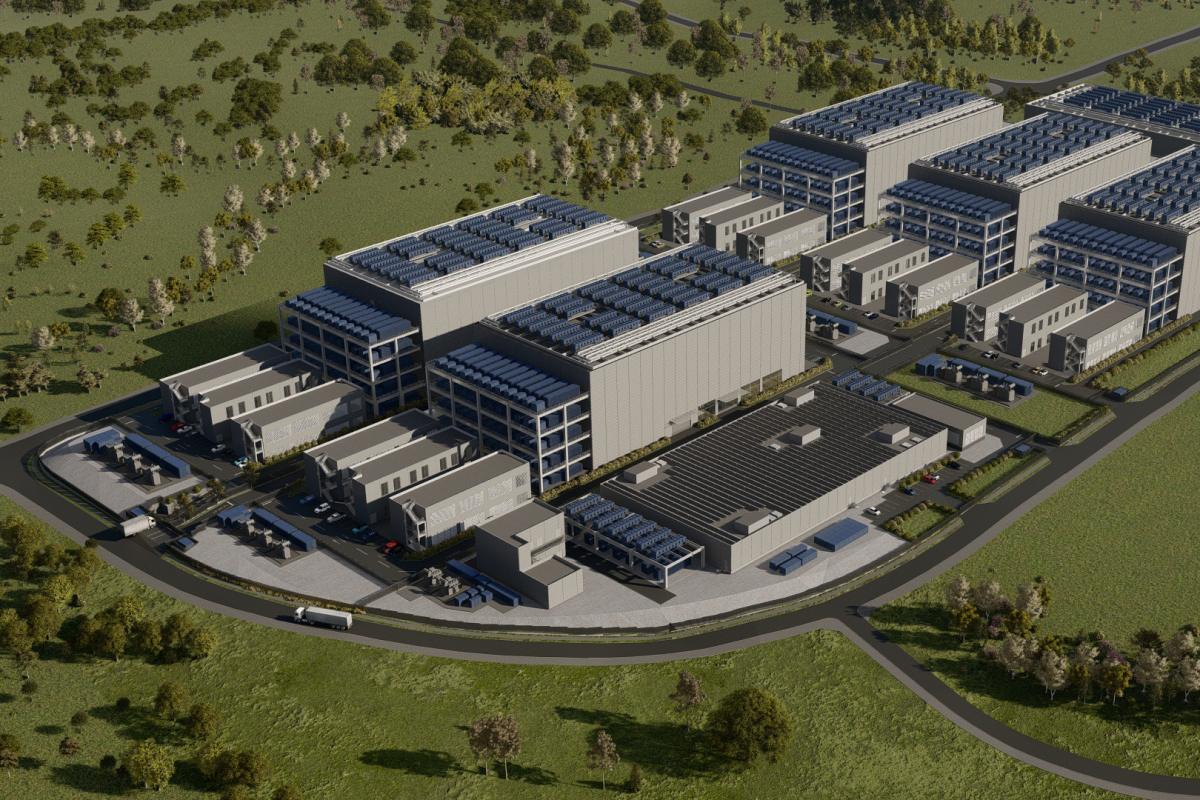
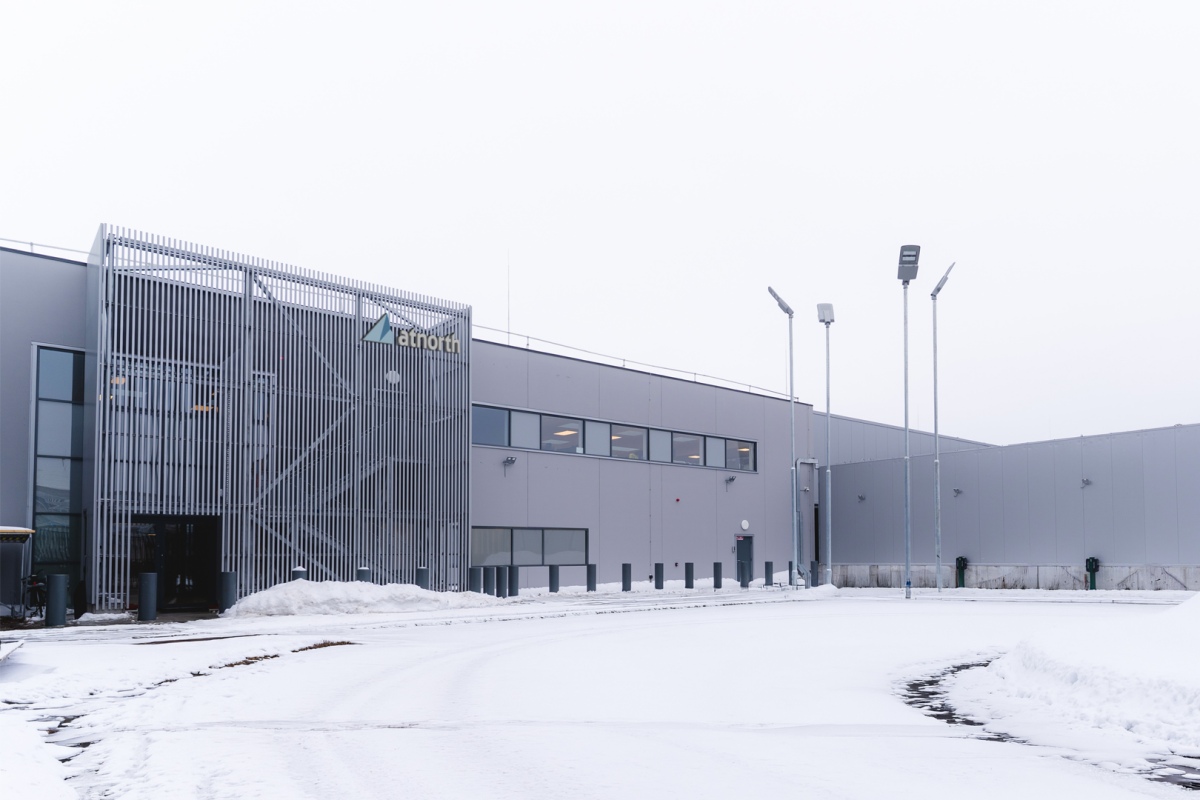
atNorth, an Icelandic operator of sustainable Nordic data centres, has established a new director-level structure within its development organisation, appointing four country leads to support the delivery of new high-density, AI-ready data centres across the Nordics. The roles include one internal promotion and are intended to strengthen operational development as the company expands its regional footprint and continues to grow its portfolio of high-performance facilities, driven by rising demand for AI-focused infrastructure. The new directors will oversee project delivery in Iceland, Finland, Denmark, and Sweden, ensuring consistency across design, construction, and commissioning activities. The appointments Hallgrímur Örn Arngrímsson has been appointed Director of Delivery for Iceland, responsible for end-to-end project execution. He brings more than 15 years of experience in civil engineering and infrastructure, including geotechnical engineering and large-scale civil works. His previous roles include senior positions at Verkís Consulting Engineers and Sweco Norge. Toni Germano becomes Director of Delivery for Finland. With over 25 years of experience in digital transformation and infrastructure strategy, he will manage delivery operations across the country. He previously held leadership roles at Cisco, including serving as CTO for SP EMEAR North. Dave O’Brien has been named Director of Delivery for Denmark. He has more than a decade of experience in data centre construction and engineering, including project management and electrical systems delivery. Before joining atNorth, he worked at Mercury, leading retrofit and new-build projects in Denmark. Daniel Kolm, promoted internally, is the new Director of Delivery for Sweden. He joined atNorth in 2022 and has a background in mechanical engineering and energy systems. His previous experience includes roles at CBRE and DigiPlex, where he led multidisciplinary projects from initial study to commissioning. Strengthening Nordic delivery capabilities Together, the four directors support atNorth’s pan-Nordic delivery model, combining local market knowledge with regional coordination. Their remit spans feasibility assessments, site acquisition, design, deployment, and operational readiness, supporting customers in hyperscale, enterprise, and AI-focused sectors. Anna Kristín Pálsdóttir, Chief Development Officer at atNorth, comments, “We are pleased to welcome such a talented group of development professionals at this crucial time of accelerated growth. “Their combined expertise ensures we are fully equipped to meet the demands of today’s compute-intensive workloads, whilst delivering projects with the speed, scalability, and quality that our customers expect.” For more from atNorth, click here.

UK Government unveils major AI investment package
The UK Government has announced a comprehensive package of AI-focused reforms and investments to accelerate national renewal, boost economic growth, and cement the UK’s position as a global leader in artificial intelligence. The new investment places AI at the centre of the UK’s Modern Industrial Strategy, unlocking billions in private investment and enabling new opportunities for businesses, researchers, and local communities across the country. AI Growth Zones A new AI Growth Zone in South Wales, developed with Vantage Data Centers and Microsoft, will receive £10 billion in private investment and create more than 5,000 jobs over the next decade. Spanning multiple sites along the M4 corridor, including the former Ford Bridgend Engine Plant, the zone will serve as a major hub for AI infrastructure, research, and advanced digital industries. Each AI Growth Zone will benefit from £5 million in government support to help local businesses adopt AI technologies and develop specialised skills in their workforce. Sachin Agrawal, Managing Director for Zoho UK, comments, "The UK’s bold commitment to harnessing artificial intelligence for national renewal is both timely and visionary. This investment represents a crucial step towards ensuring the benefits of AI and data innovation are distributed fairly across the country. "For businesses, the real opportunity lies not only in adopting AI tools, but in developing the skills, governance, and readiness to apply them responsibly at scale. Keeping data privacy at the centre of any AI strategy creates the right foundation to make informed decisions and adopt AI responsibly. "AI literacy and strong data protection standards will be essential to ensure initiatives are credible and built for long‑term impact. Structured implementation, starting with clearly defined pilot programmes underpinned by automation, governance, and security, will help businesses move beyond experimentation and ensure AI drives sustainable competitive advantage. "With the right guidance and accountability in place, AI can support transformative growth across the UK.” To keep UK firms at the front of global AI capability, the Government is launching a new programme to expand free and low-cost compute access. Up to £250 million will be deployed to help British researchers and startups train models and pursue scientific breakthroughs. Alongside this, a new advance market commitment, worth up to £100 million, will allow the Government to act as an early customer for UK AI hardware startups, supporting domestic chip innovation and ensuring British-designed hardware plays a role in future data centre deployments.

InfraPartners, JLL partner to accelerate AI DC delivery
InfraPartners, a designer and builder of prefabricated AI data centres, and JLL, a global commercial real estate and investment management company, have formed a strategic agreement to accelerate the development and operation of AI data centres. The partnership brings together InfraPartners’ prefabricated AI data centre designs and JLL’s capabilities in site selection, project management, construction oversight, financial structuring, and facilities management. The companies state that the combined model is intended to address persistent challenges in data centre development, particularly the period between site identification and operational readiness. As investment in AI infrastructure grows, operators increasingly require deployment models that offer predictable schedules, reduced risk, and scalable designs suitable for GPU-heavy environments. Data centre construction continues to face risks associated with labour shortages, schedule delays, and complex financing. InfraPartners and JLL say they aim to manage these issues jointly by integrating design, prefabrication, delivery, and long-term operations into a single framework. Prefabrication and integrated delivery for AI infrastructure “Our clients are asking for faster, lower-risk routes to delivering AI infrastructure,” says Michalis Grigoratos, CEO at InfraPartners. “Our prefabricated, upgradeable digital infrastructure integrates seamlessly with JLL’s expertise across the full project lifecycle, so, together, we’re focused on providing a superior product that keeps pace with AI infrastructure changes and market growth. "Our globally scalable, repeatable approach includes site selection, prefabrication, and long-term operations, reducing time-to-first-token and maximising performance across the lifecycle.” Matt Landek, JLL Division President, Data Centers and Critical Environments, adds, “AI infrastructure demands a new approach - one that’s as dynamic and high-performing as the workloads it supports. “With InfraPartners, we are delivering a unique blueprint that brings real estate, engineering, and operational precision into a unified model.” Kristen Vosmaer, Managing Director at JLL, oversees global programme management, including JLL White Space and facilities management solutions, and supports delivery of the partnership. He comments, “This is one of the first collaborations to fully integrate data centre design, manufacturing, construction, commissioning, computer deployment, and lifecycle management for institutional-grade real estate delivery, marking a significant shift in shortening the time to monetisation for how mission-critical infrastructure assets are developed and maintained.” The companies plan to offer end-to-end capabilities intended to accelerate the delivery of AI-ready facilities for enterprise, government, and cloud operators. Initial deployment efforts will focus on high-growth AI markets in EMEA and the United States from Q1 2026, with plans to expand into additional regions. For more from InfraPartners, click here.

Vertiv, Caterpillar to expand joint energy offerings for AI DCs
Vertiv, a global provider of critical digital infrastructure, and Caterpillar, a manufacturer of construction equipment, have agreed to collaborate on energy optimisation for AI data centres, combining power generation, distribution, and cooling expertise in a set of integrated reference designs. The aim is to support operators facing rising demand for on-site power and thermal management as AI workloads expand. The undertaking will connect Vertiv’s power distribution and cooling portfolio with Caterpillar’s and Solar Turbines’ experience in power generation and combined cooling, heat, and power (CCHP). The companies intend to offer pre-designed architectures intended to streamline deployment and standardise performance across sites. Integrated approach to power and cooling Caterpillar and Solar Turbines will provide natural gas turbines and reciprocating engines for scalable on-site power and thermal output for CCHP configurations. Vertiv will contribute power and cooling technologies packaged as modular, pre-designed blocks to reduce design time and support consistent deployment across facilities. According to the companies, this approach is intended to shorten deployment time, improve operational efficiency, and offer global lifecycle support through established service networks. Gio Albertazzi, CEO at Vertiv, comments, “This collaboration with Caterpillar and Solar Turbines is a cornerstone of our 'Bring Your Own Power & Cooling' strategy and aligns seamlessly with our grid-to-chip framework by offering resilient, on-site power generation solutions. This is optimal for customers looking to reduce or eliminate grid dependence. “By combining our complementary technologies, portfolios, and expertise, we are enabling coordinated integration. Our pre-engineered, interoperability-tested building blocks let customers execute design, build, and deploy concurrently, with predictable system performance.” Jason Kaiser, Group President of Caterpillar Power & Energy, adds, “As AI-driven workloads continue to accelerate, the demand for robust and scalable power infrastructure and cooling is becoming increasingly critical. Our collaboration with Vertiv will enable us to deliver integrated, on-site energy solutions that lower PUE and meet customers’ evolving needs.” The companies state that the undertaking will support data centre operators facing energy constraints by helping them deploy AI-ready facilities with improved efficiency and more predictable commissioning. A Memorandum of Understanding between Vertiv and Caterpillar establishes the framework for further development of this joint ecosystem. For more from Vertiv, click here.

Carbon3.ai to invest £1bn in UK’s AI infrastructure network
Carbon3.ai, a UK sovereign AI infrastructure company, has announced a £1 billion commitment to develop a nationwide network of data centres that aims to transform legacy industrial and energy infrastructure into secure, fully sustainable, AI-ready hubs. Designed, owned, and operated by Carbon3.ai, the network will seek to deliver high-performance, low-carbon compute capacity to fuel the digital readiness of UK enterprise, research, and public services. All infrastructure and data processing will be located within the UK and fully subject to UK jurisdiction and regulatory oversight. The company has already completed a successful proof of concept and is moving into full-scale rollout with its first 5MW site in the East Midlands, set to open in March 2026, and planning permission submitted for a second facility in Derbyshire. New appointments for further expansion To drive this next phase of growth, Carbon3.ai says it has strengthened its leadership with a team that "brings together deep expertise across government, finance, and national security." Sana Khareghani, former Head of the UK Government Office for Artificial Intelligence, joins as Chief Strategy Officer, leading the company’s strategy on national AI infrastructure and seeking to ensure its network advances the UK’s digital competitiveness and long-term energy transition. Sana is supported by advisors Richard Collier-Keywood, former Vice Chair of PwC’s Global Board, and Sir George Zambellas, former Navy Chief. Sana comments, “If the UK is to lead in AI, we must first secure the foundations that make it possible: compute, power, and data. Carbon3 is building those foundations here at home, transforming legacy energy sites into a sovereign, renewable, AI-ready infrastructure network. "This isn’t a vision on paper, we’re making it happen now on the ground. By putting critical infrastructure back under UK control, we’re creating sustainable capacity and national capability that will power innovation, research, and enterprise for decades to come.” Tom Humphreys, CEO of Carbon3.ai, adds, “The UK’s competitiveness in AI depends on infrastructure that is truly sovereign, sustainable, and resilient. It’s not enough to invest in data centres; we need a national backbone for AI that’s owned, powered, and secured right here at home. "Our goal is to ensure that British enterprise, researchers, and public institutions have access to world-class compute capacity without relying on foreign-controlled infrastructure. "The Government recognises the urgency; that is why they have said we need 6GW of sovereign AI capacity by 2030. Together, we can get there, securing a foundation for innovation, investment, and long-term national advantage.” Carbon3.ai asserts that these developments support the UK Government’s AI and digital infrastructure agenda of strengthening national resilience, creating regional opportunity, and ensuring the benefits of technological progress are rooted in British infrastructure and communities. By converting brownfield and legacy energy sites into renewable-powered compute hubs, the company says it aligns directly with the Government’s priorities for AI growth zones and the designation of data centres as critical national infrastructure.

Signings for European AI DC capacity treble in 2025
Demand for data centre capacity dedicated to artificial intelligence (AI) has surged across Europe this year, as emerging AI infrastructure providers - often referred to as neoclouds - accelerate their expansion efforts amid slowing hyperscaler activity. According to new research from commercial real estate and investment firm CBRE, signings for AI-focused colocation capacity reached 414MW in the first nine months of 2025, up from 133MW compared to the same period in 2024. More than half of this capacity (57%) was signed in the Nordics. The increase reflects a market shift as hyperscaler demand has moderated temporarily and neocloud providers are securing large-scale capacity to meet the growing requirements of AI-driven applications. Neoclouds taking the lead Data centre operators are implementing measures to manage the additional risk associated with leasing to neocloud firms, including higher rental rates to offset build costs and ensure returns on AI-ready facilities. Andrew Jay, Head of Data Centre Solutions, Europe at CBRE, notes, “Neoclouds have expanded their footprint in Europe this year by absorbing vacant space that was originally intended for hyperscalers. "It is a sign that many data centre providers are growing more comfortable with the ambitions of neocloud providers and the covenants that come with it.” Kevin Restivo, Director, European Data Centre Research at CBRE, adds, “Neocloud providers are taking AI-specific capacity at scale in Europe. "We see tremendous growth of this segment especially in the Nordics, where lower-cost renewable power is often available in greater abundance than in many other European markets.” For more from CBRE, click here.

VAST Data, CoreWeave agree $1.17 billion partnership
VAST Data, an AI operating system company, has announced a $1.17 billion (£889.8 million) commercial agreement with CoreWeave, a US provider of GPU-based cloud computing infrastructure for AI workloads, to extend their existing partnership in AI data infrastructure. The deal formalises CoreWeave’s use of the VAST Data Operating System (AI OS) as a key element of its data management platform. Expanding collaboration on large-scale data operations CoreWeave’s infrastructure, which uses the VAST AI OS, is designed to provide rapid access to large datasets and support intensive AI workloads. Its modular architecture allows deployment across multiple data centres, maintaining performance and reliability across distributed environments. As part of the agreement, VAST and CoreWeave will collaborate on new data services intended to improve efficiency in data pipelines and model development. The partnership aims to enhance operational consistency and reduce complexity for enterprise users developing or training AI models at scale. “At VAST, we are building the data foundation for the most ambitious AI initiatives in the world,” claims Renen Hallak, founder and CEO of VAST Data. “Our deep integration with CoreWeave is the result of a long-term commitment to working side by side at both the business and technical level. "By aligning our roadmaps, we are delivering an AI platform that organisations cannot find anywhere else in the market.” “The VAST AI Operating System underpins key aspects of how we design and deliver our AI cloud,” adds Brian Venturo, co-founder and Chief Strategy Officer of CoreWeave. “This partnership enables us to deliver AI infrastructure that is the most performant, scalable, and cost-efficient in the market, while reinforcing the trust and reliability of a data platform that our customers depend on for their most demanding workloads.” Supporting next-generation AI and compute systems Both companies say this agreement reflects their joint focus on developing infrastructure that can manage large-scale data processing and continuous AI training. By integrating VAST’s data management systems with CoreWeave’s GPU-based infrastructure, the partnership aims to support use cases such as real-time inference and industrial-scale model training. For more from VAST Data, click here.

Report: Scotland emerging as key DC growth market
According to new analysis by Lichfields, Scotland’s combination of renewable energy, available land, and skilled talent is creating strong interest among developers assessing new large-scale data centre projects. The study by the UK planning and development consultancy highlights how the UK’s data centre industry currently contributes around £4.7 billion to the economy each year, with forecasts suggesting a further £44 billion could be added by 2035 through construction and operation. Scotland is well placed to capture a significant share of that growth, producing 113% of its electricity consumption from renewables in 2022 and exporting surplus clean power to the grid. Primed for large-scale projects Lichfields’ analysis references a previous site-shortlisting exercise led by Scottish Futures Trust, Crown Estate Scotland, and Scottish Enterprise, which identified a range of potential locations including Aberdeen, Dundee, Fife, and parts of the Highlands, with the right combination of renewable capacity, land availability, and technical expertise. However, most large-scale schemes remain concentrated in southern England, reflecting differences in planning support and grid capacity. Dan Evans, Associate Director at Lichfields, says, “For developers, Scotland offers something few regions or countries can match: abundant low-carbon energy, space for expansion, and a strong engineering base. "The combination of renewable generation, cool climate, and established technical skills creates ideal conditions for sustainable data centre operations. “Across the UK, we’re seeing growing demand from investors and operators looking for sites that balance performance, cost, and environmental responsibility. Scotland’s renewable strength and land availability tick those boxes, but delivery confidence remains key. "Developers need clarity on where projects will be supported and how long approvals will take. A consistent national position, backed by local planning frameworks, would make a real difference in turning interest into investment.” What is needed The analysis points to several practical measures to help maintain momentum, including allocating land for data centre development in new Local Development Plans, using Masterplan Consent Areas to simplify consents for complex or multi-use sites, and encouraging early coordination between planning authorities, developers, and energy providers. It highlights the £3.9 billion regeneration of the former Ravenscraig steelworks in North Lanarkshire as evidence of growing confidence in Scotland’s potential. The project, which includes one of the UK’s largest AI-ready data centres, will support around 2,000 long-term jobs and deliver a £1.2 billion construction boost, contributing an estimated 0.4% to Scotland’s GDP each year once operational. Dan continues, “Scotland has an opportunity to position itself as a genuine alternative to traditional UK data centre clusters. By combining its renewable capacity with a more agile planning approach, it can attract long-term global investment, create skilled employment, and strengthen its reputation for sustainable growth. “Developers are ready to commit where policy, infrastructure, and delivery are properly coordinated. With the right signals from government and local authorities, Scotland could move from potential to performance very quickly.”


Translate »