Data Centre Business News and Industry Trends

Navigating AI’s infrastructure surge
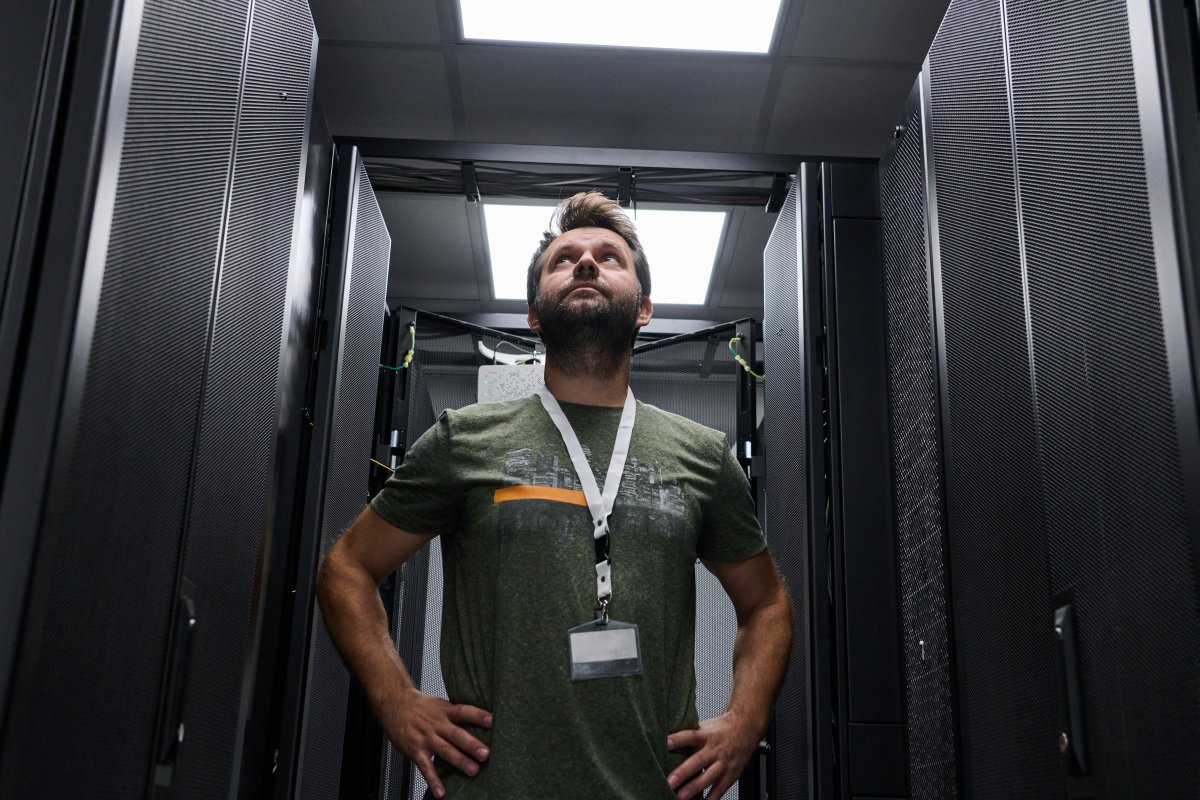
In this exclusive interview, DCNN speaks with Lottie Westerling (pictured above), Head of Product at techoraco, about the structural pressures emerging across digital infrastructure, the industry’s shifting priorities, and the debates set to define the next phase of AI-driven growth: Power, talent, and the road ahead DCNN: AI is accelerating demand for digital infrastructure at an unprecedented rate. From your perspective, is the industry genuinely keeping pace, or are we starting to see structural gaps emerge? Lottie: The pace of growth across digital infrastructure is unlike anything the industry has experienced before. AI has accelerated demand dramatically, and we’re seeing a surge of activity from both established players and new entrants looking to capitalise on the opportunity. However, this rapid expansion is also exposing clear structural gaps - most notably around access to power. The challenge is no longer just about building capacity, but about how quickly that capacity can be energised. From the resurgence of gas and the resulting pressure on turbine supply to increasingly long grid interconnection queues, the strain on energy infrastructure is becoming more visible. In many ways, demand is now outpacing the systems that support it - permitting, power delivery, and supply chains alike. Addressing these constraints will be critical for organisations that want to remain competitive in an AI-driven landscape. DCNN: Events like Datacloud Global Congress Cannes bring together a wide cross-section of the ecosystem. What recurring themes are you hearing most often from industry leaders today? Lottie: Several themes are consistently coming to the fore in conversations with industry leaders. As already mentioned, speed to power remains a dominant concern, but it’s closely followed by a broader shift in how data centres are being designed. As density requirements increase, we’re seeing a growing focus on new architectures, with liquid cooling becoming central to future-ready design strategies. At the same time, financing continues to be a key topic - not due to a lack of capital, but because of questions around risk allocation and the long-term bankability of large-scale projects. Talent continues to dominate as another major area of concern. The rise of AI-driven “gigafactories” is intensifying demand for skilled workers, and the shortage of talent is becoming just as critical as constraints in equipment or infrastructure. Finally, community engagement is rising on the agenda. Public perception and planning friction are increasingly influencing project timelines, making it essential for the industry to communicate its value more clearly and responsibly. DCNN: The industry is often described as highly collaborative, yet also competitive. How important is collaboration in addressing some of the sector’s biggest challenges, such as energy access or skills shortages? Lottie: Collaboration is fundamental to solving the industry’s most pressing challenges. Issues such as energy access extend far beyond the data centre sector; they sit at the intersection of grid planning, regulation, power generation, and infrastructure design. As a result, meaningful progress depends on close coordination between the energy ecosystem and digital infrastructure stakeholders. The same principle applies to talent. Addressing the skills gap will require a collective approach, from developing shared training pathways to increasing visibility into career opportunities across the sector. By working together, the industry can make these pathways more accessible and attractive to a broader, more diverse workforce. DCNN: Talent continues to be a critical issue across digital infrastructure. What changes are needed to attract and retain the next generation of talent into the sector? Lottie: One of the biggest challenges is awareness. The value proposition of a career in digital infrastructure is not always well understood, particularly among younger audiences. There is a clear need to better communicate the scale, impact, and long-term opportunity that the sector offers. This means investing in more structured entry points such as graduate programmes, apprenticeships, and industry-led initiatives that make it easier for people to find and pursue careers in the space. It also involves creating clearer career pathways and showcasing the diversity of roles available, from engineering and operations through to sustainability and innovation. Ultimately, attracting the next generation will depend on making the industry more visible, more accessible, and more aligned with the priorities of emerging talent. DCNN: From the conversations you’re helping to shape across the Global Congress community, are you seeing a shift in priorities? Lottie: There is a growing sense of cautious optimism across the industry. While demand remains strong, there is an increasing focus on ensuring that growth is both resilient and sustainable over the long term. Leaders are placing greater emphasis on the fundamentals: reliability of power supply, sustainability of water usage, and alignment with evolving regulatory frameworks. There is also a stronger focus on future-proofing assets, ensuring that infrastructure built today will remain relevant as technologies continue to evolve. This suggests a shift from purely rapid expansion towards a more balanced approach that prioritises durability, efficiency, and long-term viability. DCNN: Looking ahead, what topics or debates do you think will define the next 12–24 months in the data centre and digital infrastructure space? Lottie: Over the next 12 to 24 months, several key debates are likely to shape the direction of the industry. At the forefront is how to meet the enormous power requirements of AI at scale. This includes discussions around alternative energy pathways, the role of nuclear, and the viability of behind-the-meter solutions. Risk allocation will also be a central issue, particularly in how responsibility is distributed between investors, operators, and tenants in increasingly complex projects. At the same time, more forward-looking topics are beginning to gain traction. The potential for data centres in space, while still nascent, is generating discussion, as is the longer-term impact of quantum computing on infrastructure requirements. Together, these conversations reflect an industry that is not only responding to immediate pressures, but also actively shaping its future trajectory.

IREN acquires Nostrum Group for European AI expansion
IREN, an Australian AI cloud infrastructure provider, has agreed to acquire Spanish data centre developer Nostrum Group as part of its expansion into the European AI infrastructure market. The deal adds around 490MW of secured grid-connected capacity in Spain, alongside an additional development pipeline, strengthening IREN’s AI cloud platform in Europe. Nostrum Group, formerly Ingenostrum, was founded in 2009 and has operated across renewable energy and digital infrastructure development. The company rebranded in 2025 as part of a strategy focused on data centre development, construction, and operations. IREN says Spain offers favourable conditions for large-scale AI data centre development due to renewable energy availability, connectivity, and regulatory support. Acquisition expands AI data centre capabilities The acquisition also brings Nostrum’s local development, engineering, construction, and operations teams into IREN’s business. Daniel Roberts, founder and Co-CEO of IREN, says, “This acquisition establishes a strategic platform in Europe for IREN. Nostrum adds high-quality sites, an experienced local team, and a leading position in an attractive market for AI infrastructure.” Guy Auger, Partner at Andera Partners, adds, “This divestment perfectly illustrates the thesis of Andera Smart Infra 1: supporting entrepreneurs in the acceleration phase of deploying their energy infrastructure assets. “By backing Nostrum Group’s strategic pivot towards renewable-powered data centres, we have helped build a first-tier player in one of Europe’s most dynamic markets.” Gabriel Nebreda, CEO of Nostrum Group, comments, “We are proud to join IREN to accelerate the development of artificial intelligence infrastructure in Europe. “The acquisition of Nostrum Group highlights the enormous potential of Spain as a Southern European digital hub, as well as our team’s ability to lead the emerging market for next-generation digital infrastructure.” Advisers to the transaction included Linklaters and EY for IREN, and BBVA, White & Case, Montero Aramburu and Gómez-Villares Atencia, and Piedmont Advisors for Andera Partners and Nostrum Group. For more from Nostrum Group, click here.

365, Aphorio Carter plan 200MW AI infrastructure expansion
365 Data Centers, a provider of network-centric colocation, network, cloud, and other managed services, has partnered with Aphorio Carter, a Florida-based data centre real estate investment and asset management platform, to develop around 200MW of AI-ready data centre capacity across several US markets. The partnership will focus on identifying, converting, and developing high-density data centre facilities designed to support artificial intelligence and high-performance computing workloads. According to reports, 365 Data Centers is currently evaluating six sites and plans to act as the long-term operator for the facilities. Initial projects are expected to come online within the next nine to 24 months. Letters of intent have been initiated for sites in Aurora and Simpsonville, with further locations under consideration in Trumbull, Louisville, Harrisonburg, and Columbus. The facilities are being designed to support liquid-to-chip cooling infrastructure and cabinet densities ranging from 50kW to more than 200kW. AI workloads driving high-density data centre plans Derek Gillespie, CEO and CRO of 365 Data Centers, comments, “Through this partnership, we’re in an ideal position to create a new class of high-density infrastructure designed specifically for AI-era workloads. "Working with Aphorio Carter will allow us to create new value in existing assets while bringing new capacity online to support today’s demand.” The companies say the partnership combines Aphorio Carter’s real estate and redevelopment experience with 365 Data Centers’ operational capabilities to accelerate deployment timelines and improve infrastructure utilisation. John Regan, President and COO at Aphorio Carter, explains, “We’ve aligned the delivery of utility power with critical infrastructure, allowing us to provide scalable, high-density infrastructure where it’s needed most. "This is a great partnership, where we’ve got the real estate and the ability to supply the data centre infrastructure in line with available utility capacity, while 365 has a highly reliable O&M track record along with a healthy pipeline of customers.” Further information on site developments and timelines is expected as projects progress. For more from 365 Data Centers, click here.

Thailand approves $29bn data centre investment wave
Thailand's Board of Investment (BOI) has approved six major projects worth a combined ฿958 billion ($29 billion; £21 billion), led by a large-scale data infrastructure expansion by TikTok System (Thailand), underscoring the country's growing role as a regional hub for data centres, cloud services, and AI-driven digital infrastructure. The approvals were made at a BOI Board meeting chaired by Ekniti Nitithanprapas, Deputy Prime Minister and Minister of Finance. The Board also approved a second batch of projects under the Thailand FastPass mechanism and discussed with energy agencies steps to strengthen electricity readiness and improve access to clean energy - two increasingly important factors in attracting large-scale digital and high-technology investment. Narit Therdsteerasukdi, Secretary General of the BOI, says the latest approvals reflect growing investor confidence in Thailand at a time when global companies are racing to expand digital infrastructure across Asia. He comments, "Amid continuing global volatility, investment in Thailand's digital and advanced technology sectors continues to grow, reflecting investor confidence in the country's potential as a regional technology hub. "For Thailand to capture this new investment cycle, we must be ready not only with investment incentives, but also with sufficient power, clean-energy options, skilled talent, deeper supply chains, and a reliable facilitation system that allows projects to move quickly from approval to operation." Project details Of the six approved projects, three are in data centre and data hosting services, with a combined investment value of ฿913 billion ($28 billion; £20 billion). The largest project is by TikTok System (Thailand), valued at ฿842 billion ($26 billion; £19 billion). The project will install additional servers and expand data storage and processing infrastructure across Bangkok, Samut Prakan, and Chachoengsao Province, supporting rising demand for digital services and strengthening Thailand's role in regional digital infrastructure. Beyond its core infrastructure investment, TikTok has also committed to developing digital literacy and e-commerce curricula to help create new business opportunities for Thai entrepreneurs and strengthen the country's digital workforce. Another approved project is a ฿46 billion ($1.4 billion; £1 billion) data centre investment by Skyline Data Center and Cloud Services, part of the UAE-based DAMAC Group. Located in Chachoengsao, the project will support an IT load of 200MW. A third data centre project, by Bridge Data Centres IIO (Thailand) from Singapore, was approved with an investment value of ฿24.6 billion ($765 million; £561 million). Located in Chonburi, the project will support an IT load of 134MW. To accelerate project implementation, the BOI Board also selected nine additional projects worth ฿52 billion ($1.6 billion; £1.1 billion) for Thailand FastPass, following the first batch of 16 projects. The latest selection brings the FastPass portfolio to 25 projects. The FastPass mechanism is designed to streamline approval and permitting procedures, speed up coordination among relevant agencies, and help strategic projects begin operations faster. Strengthening grid readiness At the same meeting, the Board outlined steps to strengthen electricity readiness with the Ministry of Energy and the Energy Regulatory Commission, focusing on urgent power supply needs for incoming investment, particularly in the Eastern region. The Board also directed action on accelerating the issuance of Thailand's Power Development Plan (PDP) to support future demand, new energy technologies, and long-term power-system planning. The Board also advanced plans for clean energy mechanisms, including Direct Renewable Power Purchase Agreements (Direct PPA), which would allow private companies to buy and sell renewable electricity directly, with participation criteria and grid-service charges to be announced shortly. In addition, it acknowledged the launch of Utility Green Tariff 2 (UGT2), a source-specific green tariff designed to give companies more options for procuring clean electricity. Narit Therdsteerasukdi explains the combination of large-scale digital investment, power readiness, clean energy access, skilled talent, and faster investment facilitation is central to Thailand's competitiveness in the next phase of global investment. He continues, "Thailand is entering a new investment cycle in which speed, power readiness, clean energy access, and skilled talent will be decisive. "The BOI is working with partner agencies to ensure that major projects can move from approval to operation as quickly as possible, while strengthening the infrastructure, workforce, supply chains, and ecosystem needed for long-term growth in the digital economy."

nLighten appoints new CEO and CFO
European data centre operator nLighten has appointed Dame Dawn Childs as Chief Executive Officer and Matthew Harris as Chief Financial Officer, as demand for edge data centres increases across Europe. Dawn joins from Pure Data Centres Group, where she spent nearly five years, initially as Chief Operating Officer before becoming Chief Executive Officer in May 2023. She will continue as a non-executive director at Pure Data Centres during the transition. Prior to this, she led a multi-billion-pound transformation programme at National Grid, covering gas and electricity transmission. Earlier roles include Group Engineering Director at Merlin Entertainments, Head of Engineering at Gatwick Airport, and 23 years as an Engineering Officer in the Royal Air Force. Matthew brings more than 15 years’ experience across private equity-backed and listed businesses in digital infrastructure, technology, and investment. He joins from Kao Data, where he was a founding board member, investor director, and Chief Financial Officer from 2021. Before that, he was CFO at Goldacre Ventures, where he supported growth and secured more than £250 million in funding for portfolio companies. The appointments come as demand for distributed digital infrastructure grows, driven by artificial intelligence, cloud connectivity, and high-bandwidth applications. nLighten says it is continuing its expansion across European markets, including through acquisitions and investment in infrastructure. Nick Read, Chairman of nLighten, comments, "We are delighted to welcome Dawn and Matthew to nLighten. Dawn’s deep experience leading complex, mission-critical infrastructure businesses makes her exceptionally well suited to guide the company’s continued growth, while Matthew’s strong financial and strategic expertise will be invaluable as we scale the platform. "As AI drives unprecedented demand for digital infrastructure and edge capacity across Europe, nLighten is uniquely positioned to capture this opportunity. "I would also like to thank Harro Beusker for his leadership and the pivotal role he has played in building nLighten into the platform it is today. With such strong foundations in place, we are well positioned to continue delivering sustainable, high-performance data centre solutions for our customers." Expansion plans following rising edge infrastructure demand Dame Dawn Childs says, "I am thrilled to be joining the team at nLighten at such a pivotal time for both the company and the broader digital infrastructure sector. "The opportunity for nLighten to play a meaningful role in supporting Europe’s growing need for digital sovereignty is significant, particularly as demand for secure, high-performance, and sustainable infrastructure continues to accelerate.” Matthew Harris adds, "I am excited to join nLighten as it continues to build momentum across Europe. The company has a clear strategy and strong platform on which to build from. "I look forward to working with the team to support its continued expansion and deliver long-term value for customers and stakeholders." Harro Beusker, who co-founded nLighten in 2021 and has served as CEO since then, will remain on the board as a non-executive director. He will also act as a senior advisor to I Squared Capital. Since launching, nLighten has developed a European platform of 34 data centres across seven countries, with 22MW of capacity, through acquisitions, carve-outs, and brownfield developments. It says its carrier-neutral sites are located in established data centre markets and support deployments closer to end users and latency-sensitive applications. As AI adoption increases and power constraints affect established data centre hubs, organisations are placing greater focus on edge infrastructure to meet performance and capacity requirements. Dawn joined nLighten on 5 May 2026 and will assume the CEO role on 1 June 2026 following a transition period. Matthew will join as CFO on 1 July 2026. For more from nLighten, click here.

Castleforge, Galaxy to expand £500m Redhill campus
Real estate investor Castleforge and Galaxy Data Centers, a data centre operator and advisory firm, have secured planning consent to expand their Redhill data centre campus, situated near London, with a new 15MW facility set to be developed. Approved by Reigate & Banstead Borough Council, the project will add four data halls as part of a two-storey building on the existing site at Foxboro Business Park. The expansion forms part of a wider programme that could see total investment in the campus reach around £500 million. The Redhill site, located on a 3.1-hectare industrial estate, will also include an office building and is designed to support future growth in digital infrastructure capacity across the London market. The project follows a previous investment of more than £100 million in the campus in 2024, with a further £200 million expected as part of the next phase. A focus on low-carbon data centre development The new facility is designed to achieve a BREEAM ‘Very Good’ rating and will incorporate low- and zero-carbon technologies. Waste heat generated by the data centre will be reused on site, with infrastructure in place to enable future export to a nearby residential heat network. The expansion reflects continued demand for data centre capacity in and around London, driven by AI, cloud computing, and hybrid workloads. Limited power availability and planning constraints have made existing sites increasingly important for new development. Mike Adcock, Head of Investments at Castleforge, says, "Securing planning consent for our new development at Redhill is a major milestone in our plans to deliver high-quality, sustainable digital infrastructure to one of the world's most important data centre markets." Paul Leong, Chief Financial Officer and Partner at Galaxy Data Centers, adds, "This planning consent is a pivotal step in realising the long-term vision we set out when we acquired [the Redhill site] alongside Castleforge." The Redhill campus currently spans 11,800m² across three buildings and serves customers including enterprises in financial services and AI. The site benefits from access to renewable energy, low-latency connectivity to hubs such as Slough and London Docklands, and available space for further expansion. Construction timelines have not yet been confirmed, with further development milestones expected to be announced.

National Data Centre Day launches #BackToSchool campaign
National Data Centre Day (NDCD), an awareness initiative founded to recognise the critical role data centres play in powering the UK’s digital economy and AI ambitions, has officially launched its 2026 theme: #BackToSchool, placing a renewed focus on inspiring the next generation of digital talent to step into the industry. Established to help change the public perception of the data centre and digital infrastructure industries, National Data Centre Day continues its mission to champion the vital role of technology in everyday life. This initiative represents an opportunity for the industry to take measurable action to address three of the key challenges it faces: the skills shortage, education, and understanding. This year’s campaign is shifting the industry’s focus towards education and long-term engagement from an early stage. By engaging students at both primary and secondary school phases, NDCD hopes to inspire future talent to learn more about data centres and the infrastructure behind it. The campaign calls on data centre operators, developers, and technology providers across the UK to take an active role in engaging with schools and local communities, and calls on public and private sector educators to make data centres part of the curriculum. https://www.youtube.com/watch?v=sN8ZzA0h5hAIdeas inspired by the campaign's promotional video (above) could include encouraging data centre operators to host student tours at their facilities and delivering educational sessions, providing critical insight into the infrastructure that powers the digital world. By encouraging data centre companies to provide hands-on learning opportunities, the initiative's promoters believe the industry can offer a new and more informed understanding of the sector and engage students at earlier stages of their education. The awareness day and campaign is supported by a growing coalition of industry organisations, including AVK, AtlasEdge, CUDO Compute, EfficiencyIT, Kao Data, and Schneider Electric, all of whom are committed to playing an active role in shaping the future workforce. Rory Flashman-Wells, co-founder of National Data Centre Day and Managing Director at Spa Communications, says, “This year’s National Data Centre Day is about turning talk into action. “The ‘Back to School’ campaign takes the conversation back to where education and understanding about technology takes place: the classroom. "By starting education at an earlier stage, we have an important opportunity to change the narrative of how data centres are understood and help a new generation recognise the technology that powers data in their lives.” Comments from campaign supporters Giuseppe Caltabiano, VP of Marketing at AVK, notes, “National Data Centre Day isn’t just about industry recognition; it’s about responsibility. On 12 September, we recommit to giving back by helping young people understand the vital role data centres play in everyday life, supporting education in classrooms and at home and showcasing how our industry is powering tomorrow's data.” Duncan White, Senior Director of Communications & Marketing at AtlasEdge, adds, “Data centres are the digital engine rooms of the UK’s future and, at AtlasEdge, we’re proud to be part of this critical community. “National Data Centre Day is a brilliant opportunity not only to celebrate the people behind this progress, but to inspire the next generation, shining a light on the infrastructure and innovation shaping Britain’s digital ambitions.” Lizzy McDowell, Director of Marketing at Kao Data, comments, “National Data Centre Day is a vital reminder of the crucial role data centres play in supporting the UK’s digital economy. “Through initiatives like Critical Careers, the Kao Academy, and NDCD, we’re committed to inspiring more young people and diverse talent to explore opportunities in the sector, ensuring the next generation can help shape the UK’s digital future.” Khristina Atwal, Strategic Communications Manager, Secure Power Europe at Schneider Electric, concludes, “From powering AI to supporting healthcare, data centres are the backbone of our digital world. "At Schneider Electric, we’re proud to support this campaign, celebrating the people driving innovation while helping to inspire and educate and build a more sustainable, connected future together.” The promoters of National Data Centre Day 2026 say it represents a key opportunity for the industry to take measurable action to engage and highlight the importance data centres have in powering everything from communication and streaming to AI and cloud computing. To learn more about this year’s theme and the awareness day itself, click here to visit the National Data Centre Day website. For more on National Data Centre Day, click here.

Australia data centre forecast report launched
Data Centres Australia, an Australian industry body representing data centre developers, operators, and the broader digital infrastructure ecosystem, and DC Byte, a London-based market intelligence firm, have formed a partnership to provide independent market insight and forecasting for the country’s data centre sector. As part of the collaboration, the organisations have published the first Australian Data Centre Forecast Report, offering analysis of current capacity and future development trends. The report estimates that Australia’s operational data centre capacity currently stands at 1.5GW and could reach 3.2GW by 2030. The initiative aims to support policymakers, utilities, and industry stakeholders with more accurate data, as demand for digital infrastructure continues to grow across the Asia Pacific region. The partnership combines Data Centres Australia’s industry network with DC Byte’s global market intelligence, with a focus on improving understanding of development pipelines and long-term capacity planning. Addressing forecasting challenges in Australia The report highlights the challenges of tracking data centre growth, particularly in relation to early-stage developments that do not always progress to completion. This can lead to overstated projections and so-called ‘phantom demand’ within the market. By providing forward-looking forecasts based on industry data and development trends, the partners say they aim to support more informed decision-making across the sector. Data Centres Australia will use DC Byte’s analysis to inform engagement with members and policymakers, while DC Byte will provide briefings and insight sessions as part of the agreement. Belinda Dennett, Chief Executive Officer at Data Centres Australia, comments, "Australia has a significant opportunity to position [itself] as a global hub for AI infrastructure investment and sustainable data centre development." James Murphy, Managing Director APAC at DC Byte, adds, "As data centres become more important to Australia’s digital future, having clear visibility into the market matters." The partnership is intended to support collaboration between industry, government, and investors, while providing broader international context for Australia’s digital infrastructure development.

1547's Orangeburg data centre reaches full occupancy
Harrison Street Asset Management and fifteenfortyseven Critical Systems Realty (1547), a developer and operator of interconnected data centres and carrier hotels across North America, have completed the latest expansion phase of their Orangeburg data centre in New York, with the facility now fully leased and operating at near-full utilisation. The colocation site, located around 18 miles (28.9 kilometres) north of Manhattan, provides capacity for tenants requiring proximity to New York City and access to established connectivity routes. Originally supporting 3.7 MW of IT load when acquired in 2021, the joint venture has since added approximately 14 MW of capacity while increasing density across the existing 232,000ft² (21,553m²) facility. A further 12MW utility feed is currently under development, with additional long-term expansion plans in place. The site has outline approval for a new 230,000ft² (21,367m²) building, supported by a planned 60MW on-site substation. Expansion driven by connectivity demand The Greater New York data centre market remains one of the largest in the US, supported by multiple terrestrial fibre routes and subsea cable landings along Long Island and New Jersey, enabling international connectivity, particularly with Europe. The Orangeburg facility now supports around 18 MW of IT load and has reached near-full utilisation following recent leasing activity. Demand is primarily driven by financial services organisations, including banks, trading platforms, and hedge funds, which require low-latency connectivity to Manhattan. Michael Hochanadel, Head of Digital Assets at Harrison Street Asset Management, comments, "The Orangeburg data centre exemplifies our approach to digital infrastructure investing, pairing strategic locations with disciplined demand-driven expansion." J Todd Raymond, Chief Executive Officer and Managing Director of 1547, adds, "From day one, our focus has been on delivering capacity in direct response to customer demand while maintaining the performance and reliability our clients depend on." Since 2018, Harrison Street Asset Management’s digital investment platform has committed more than $6.5 billion (£4.8 billion) to data centre and connectivity infrastructure, including powered shells, carrier hotels, colocation facilities, and dark fibre networks. For more from 1547, click here.

€50bn Croatia AI data centre investment announced
Pantheon Atlas, a transatlantic-led investment group, has announced plans to develop a hyperscale AI data centre and innovation campus in Topusko, Croatia, with total investment expected to exceed €50 billion (£43 billion). This is reportedly the largest investment of its kind in Croatian history and among the largest private US investments in Europe. The project, known as Pantheon AI, is intended to address growing demand for AI-driven data centre capacity across Europe, where availability of power, land, and construction resources remains constrained. The development is being delivered by a transatlantic investment group combining US capital with local expertise in Croatia, including regulatory and grid access experience. The announcement was made at the Three Seas Initiative Summit in Dubrovnik. Pantheon AI is designed to meet NVIDIA’s gigawatt-scale AI factory standards and is expected to offer high levels of availability, exceeding Tier IV benchmarks. Jako Andabak, Founding Partner at Pantheon AI, comments, "Pantheon AI is a signal to the world that Croatia is open for the highest-caliber investment. "This project is the culmination of years of work to bring world-class digital infrastructure to Croatia." Addressing European data centre capacity Across Europe, established data centre markets are operating with limited vacancy, while grid connection delays continue to affect new developments. Demand in Central and Eastern Europe is expected to increase significantly by 2035, particularly as AI workloads expand and regulatory requirements encourage data to be stored within EU borders. Ryan Rich, Managing Partner at Pantheon AI, explains, "We have assembled a transatlantic partnership to solve one of the most pressing challenges in global digital infrastructure: enabling hyperscale operators to meet AI-driven demand at scale." The project is expected to support up to 5.2 GW of renewable energy integration into Croatia’s grid. It will include an on-site solar installation and battery storage, alongside multiple fibre connections across European network corridors. Joshua Volz, Special Envoy for Global Energy Integration at the US Department of Energy, says, "Critical infrastructure of this scale, built by the private sector responding to real market demand, is exactly how US interests and European security advance together." Construction of the campus is scheduled to begin in early 2027, with operations expected to start in the first quarter of 2029. The initial phase represents a €12 billion (£10 billion) investment, with additional funding anticipated as tenants deploy infrastructure. The campus will have a planned capacity of 1GW, including 800MW of usable IT load, and will span approximately 310 acres (1.2 km²), with expansion potential. The development is expected to create around 1,500 permanent roles, alongside 3,000 jobs during construction.


Translate »