Data Centre Business News and Industry Trends

Opna named World Economic Forum 'Technology Pioneer'
London-based Opna has been named a 2026 Technology Pioneer by the World Economic Forum (WEF), joining the organisation's annual list of 100 companies recognised for developing technologies with the potential to influence industries and markets. The company, which focuses on the procurement and financing of critical power equipment, will participate in the Technology Pioneers programme, with the first meeting of the 2026 cohort scheduled to take place in China later this month. Opna works with data centre operators, renewable energy developers, and industrial organisations across Europe, helping them source and finance equipment including transformers, switchgear, high-voltage cables, and generators. According to the company, its platform combines equipment verification, supplier matching, and financing through a single data platform designed to improve visibility of manufacturing capacity and procurement options. Focus on power equipment supply chains The announcement coincides with the publication of a new industry blueprint from Opna founder and CEO Shilpika Gautam, which examines challenges affecting the supply of critical power infrastructure across Europe. The report argues that growing demand from sectors including data centres, renewable energy, and grid infrastructure is placing increasing pressure on power equipment supply chains. Opna identifies four key challenges affecting project delivery: differences between manufacturing and project timelines, payment structures that require significant upfront deposits, mismatches between available manufacturing capacity and changing demand patterns, and repeated verification processes for equipment suppliers. The company argues that improved coordination between manufacturers, developers, financiers, and infrastructure operators could help address these issues. Shilpika says, “More factories are coming, and that is a good thing, but they will not start delivering in time to close the power equipment supply squeeze that everyone from data centres to renewable developers and critical facilities [...] are facing. “We face a very real and worsening risk of funded projects stalling, clean energy generation not making it onto the grid, and the window to ramp off fossil fuels, electrify our economies, and create growth, resilience, and security across Europe narrowing. “I see a clear solution: we need a coordination layer for the industry, not just new physical supply - a foundational backbone that holds verification, matching, and financing on the same data, built with the visibility, financing depth, and platform capability that can turn this industry into a healthy market.” The blueprint includes commentary from a number of energy and infrastructure specialists, including representatives from Ember, Ørsted, Power System Partners, and other organisations involved in energy systems and grid infrastructure. Growing demand for grid infrastructure Opna says increasing demand for electricity infrastructure is being driven by data centre growth, electrification projects, renewable energy deployment, and wider grid modernisation efforts. The company cites long lead times for high-voltage power equipment and increasing pressure on manufacturing capacity as key challenges facing developers and infrastructure operators. According to Opna, its platform is designed to help organisations access qualified suppliers, secure manufacturing capacity, and align financing arrangements with project delivery schedules. The company says regulatory developments in the UK, EU (including Ireland), and the United States are placing greater emphasis on demonstrating access to equipment supply as part of infrastructure development and grid connection processes.

Datum supports Manchester STEM code club
UK data centre provider Datum Datacentres has partnered with a STEM code club in Wythenshawe, Manchester, donating eight iPad Air tablets to support technology education for local children. Based in the IT suite at Forum Library, the club helps children aged nine to 12 develop computer science and digital skills through a range of coding activities and projects. The programme introduces participants to programming concepts and wider STEM subjects, while also exploring areas such as artificial intelligence and machine learning. Sessions are designed to accommodate different learning styles, with both drop-in activities and longer-term projects available. Datum says the initiative forms part of its ongoing commitment to supporting the communities surrounding its data centre campuses. The company operates facilities in Farnborough and Manchester, including the MCR1 and MCR2 data centres located in Wythenshawe itself. Investment in future technology skills According to Datum, supporting grassroots technology education can help encourage future participation in the region's growing technology sector. The donated devices will be used to support coding activities and improve access to digital learning resources for young attendees. Code club tutor Liam Cookson comments, "We’re pleased to have the support of an important local player in the tech industry." Kerry Quinn, Manager of People & Office Operations at Datum Datacentres, adds, "We value our role within the local community in Wythenshawe and are pleased to be supporting such a worthwhile project. "Technical digital skills are becoming increasingly important, so it’s excellent to see that a cohort of potential new talent is being shaped so young." Datum says the partnership reflects its wider focus on creating educational opportunities and supporting local initiatives in the communities where it operates. For more from Datum Datacentres, click here.

Experts urge sustainable requirements for new developments
Industry experts are calling on the UK Government to introduce stronger sustainability requirements for new data centre developments, following reports that the sector's future energy demand could exceed previous forecasts. The comments follow a report by The Times suggesting that growing demand from data centres could significantly increase national electricity consumption, driven in part by the rapid expansion of AI infrastructure. Concerns have also been raised over proposals for some large-scale developments to build dedicated gas-fired power generation to overcome grid capacity constraints. David Woon, Head of Net Zero Engineering and Operations at Ennovus Solutions, says, “The figures for the expected energy demand of data centres are staggering, but immediately pivoting to new gas power stations is incredibly disappointing. "The space and resources required to build a new gas power plant could almost certainly be used instead for significant renewable generation development - ideally utilising wind turbines to better match the consistent, 24/7 energy demand of these facilities. “While on-site renewables may not provide 100% of the baseline power required by these data centres, a forward-thinking country aiming for energy independence and climate mitigation should jump at the chance to integrate green generation directly into planning permissions. "We already mandate solar panels on new-build homes; why are we not implementing similar, strict sustainable development mandates for industrial-scale data centres? “Furthermore, as the Government considers mandating grid ‘flexibility’ from operators, we must look beyond standard battery technologies like lithium-ion. Long-standing, energy-hungry data centres need a technology that matches their requirements, like Vanadium Flow batteries. They are suited to large energy demand projects, provide up to double the lifespan of lithium-ion, experience no degradation, and avoid environmentally hazardous, scarce materials like cobalt and lithium. "If battery storage is on the table to support the National Grid, it is nonsensical not to bring on-site renewable generation into the exact same conversation.” Grid constraints remain a major challenge Lee Ackerman, Utilities General Manager at Connectus Utilities, adds that while infrastructure upgrades are possible, they are likely to require significant investment and lengthy delivery timescales. He says, “The reality is that, while resolving these infrastructure bottlenecks is physically possible, it carries massive cost and time implications. "The National Energy System Operator (NESO) and Ofgem have transitioned the grid from a ‘first come, first served’ model to a ‘first ready and needed, first connected’ approach. "While major structural upgrades, new on-shore power lines, and smart grid sensors are scheduled for rollout between 2026 and 2028, there is an immense amount of work to do before we see true grid relief by 2030. “Every utility connection faces identical hurdles: cable lengths, land access, and complex legal processes. It’s not just an electricity problem either; data centres require major water capacity for cooling. “Developers could and should be targeting the Environmental Discounts offered in Water Charging Statements, aiming for Tier 2 or Tier 3 water neutrality incentives through advanced rainwater harvesting and greywater recycling. "Some might argue that technology will naturally become more efficient over time, but history shows that as components shrink, developers simply pack more technology into the same footprint. The energy demand isn’t going to drop on its own; we must build [in] sustainability from day one.” The comments highlight growing debate around how future AI and data centre infrastructure should be powered, with industry figures calling for greater emphasis on renewable energy generation, long-duration energy storage, water efficiency, and sustainable design principles during the planning process.

AMD commits £2bn to UK AI infrastructure
AMD, an American multinational semiconductor company, has announced plans to invest up to £2 billion in the UK over the next five years to support computing infrastructure, AI research, and technology development. The investment, announced during London Tech Week, includes collaborations with government, academia, and industry aimed at expanding access to high-performance computing (HPC) resources and supporting the UK's AI ambitions. AMD says the initiative aligns with the Government's AI Opportunities Action Plan and AI Hardware Strategy, which seek to strengthen the country's AI infrastructure, skills base, and adoption of AI technologies. Lisa Su, Chair and CEO of AMD, explains, "The United Kingdom has the talent, research excellence, and ambition to help lead the next era of AI. "AMD is proud to deepen our commitment to the UK and work with partners across government, academia, and industry to expand access to the compute infrastructure needed to advance sovereign AI, accelerate discovery, and drive long-term economic growth." The announcement was welcomed by government ministers, who highlighted the potential impact on AI research, skills development, and economic growth. Rachel Reeves, Chancellor of the Exchequer, says, "This investment is a major vote of confidence in Britain’s place as a global AI superpower. We’ve got the talent, the world-class universities, and the ambition to lead, and partnerships like this help turn that potential into real progress. "It will drive more cutting-edge research here in the UK, open up opportunities for people to build the skills they need for the jobs of the future, and speed up breakthroughs that can improve people’s lives and grow our economy." New partnerships to support AI research As part of the investment programme, AMD has announced a collaboration with Imperial College London focused on computational science and research areas that require large-scale computing resources, including healthcare and climate modelling. The organisations also plan to explore ways to optimise AI models, scientific workflows, and data-intensive applications using AMD hardware and its ROCm software platform. AMD is also working with Oriole Networks as part of the UK Advanced Research and Invention Agency's (ARIA) Scaling Inference Lab initiative. The project will combine Oriole's photonic networking technology with AMD GPUs and processors to investigate new approaches for scaling AI inference workloads while improving performance and energy efficiency. According to AMD, the initiative could contribute to the development of what is expected to be the world's first large-scale AI system built on a pure photonic network. Expanding UK AI supercomputing capacity AMD and Dell Technologies are also supporting the University of Cambridge's growing AI infrastructure programme, including the Zenith AI supercomputer and the Sunrise fusion AI system being developed with the UK Atomic Energy Authority (UKAEA). Zenith is funded by the Department for Science, Innovation and Technology and UK Research and Innovation, while Sunrise is funded by the Department for Energy Security and Net Zero and will support fusion energy research. The systems will be used across a range of 'AI-for-science' applications, including healthcare research, climate modelling, materials science, engineering simulation, fusion research, and AI model development. Liz Kendall, Technology Secretary, says, "This investment reflects the strength of Britain’s talent, research, and ambition in AI, but also the infrastructure we are putting in place to match it. "With world-class chip designers, leading universities, and partners such as AMD choosing to invest here, we are building the compute capability needed to power innovation, drive growth, create jobs, and ensure the most advanced AI technologies are developed in the UK." AMD says it will continue working with partners across government, academia, and industry to expand computing capacity and support future scientific and technological research in the UK. For more from AMD, click here.

Nebius selects Kao Data for UK AI deployment
Dutch AI cloud company Nebius has signed a 10-year agreement with Kao Data, a data centre developer and operator, to deploy 22MW of AI infrastructure at the company's data centre campus in Harlow, Essex. The deployment will support AI cloud services in the UK and forms part of Nebius's wider expansion plans, including a recently announced £1.7 billion investment in UK AI infrastructure. Nebius will host its AI cloud platform and Nebius Token Factory inference service at Kao Data's Harlow campus, which has been designed to support AI and high-performance computing (HPC) workloads. According to the companies, the agreement will provide additional computing capacity for organisations across the UK's research, academic, and enterprise sectors, while supporting the Government's AI Opportunities Action Plan. Spencer Lamb, CEO of Kao Data, says, "Today marks a significant milestone in the evolution of the Kao Data portfolio and a landmark moment in the UK’s AI ambitions. "Nebius is an impressive global AI cloud operator, and we are delighted to welcome such a significant deployment into our Harlow data centre campus. "This partnership proves that despite challenging macroeconomic circumstances, demand for industrial-scale, UK-based, cutting-edge AI remains high, with Kao Data the perfect platform for the latest AI workloads." Expansion of UK AI computing capacity Nebius provides cloud infrastructure designed for AI model training, deployment, and inference. Part of the new capacity at Harlow will support Nebius Token Factory, the company's inference platform for deploying and managing open AI models at scale. Andrey Korolenko, Chief Product and Infrastructure Officer at Nebius, comments, "We’re pleased to be continuing our expansion in the UK with Kao Data. "The UK is a major destination for AI and is becoming an important part of Nebius’s global footprint. By bringing dedicated capacity to support inference workloads, we can enable UK AI builders and enterprises to achieve their AI goals." Kao Data says the Harlow campus is powered by renewable energy and supported by HVO-powered backup generators. Its KLON-03 facility also incorporates direct-to-chip liquid cooling technology designed to support high-density AI infrastructure while reducing water consumption. The company states that the site already hosts a large concentration of AI, academic research, and life sciences computing workloads. It adds that the Nebius deployment is expected to further strengthen Harlow's position as a centre for AI infrastructure in the UK, as demand for GPU-accelerated computing continues to grow. Kao Data is also reportedly progressing planned facilities in Park Royal, West London, and Greater Manchester. For more from Kao Data, click here.

atNorth expands to Norway with new 'mega site'
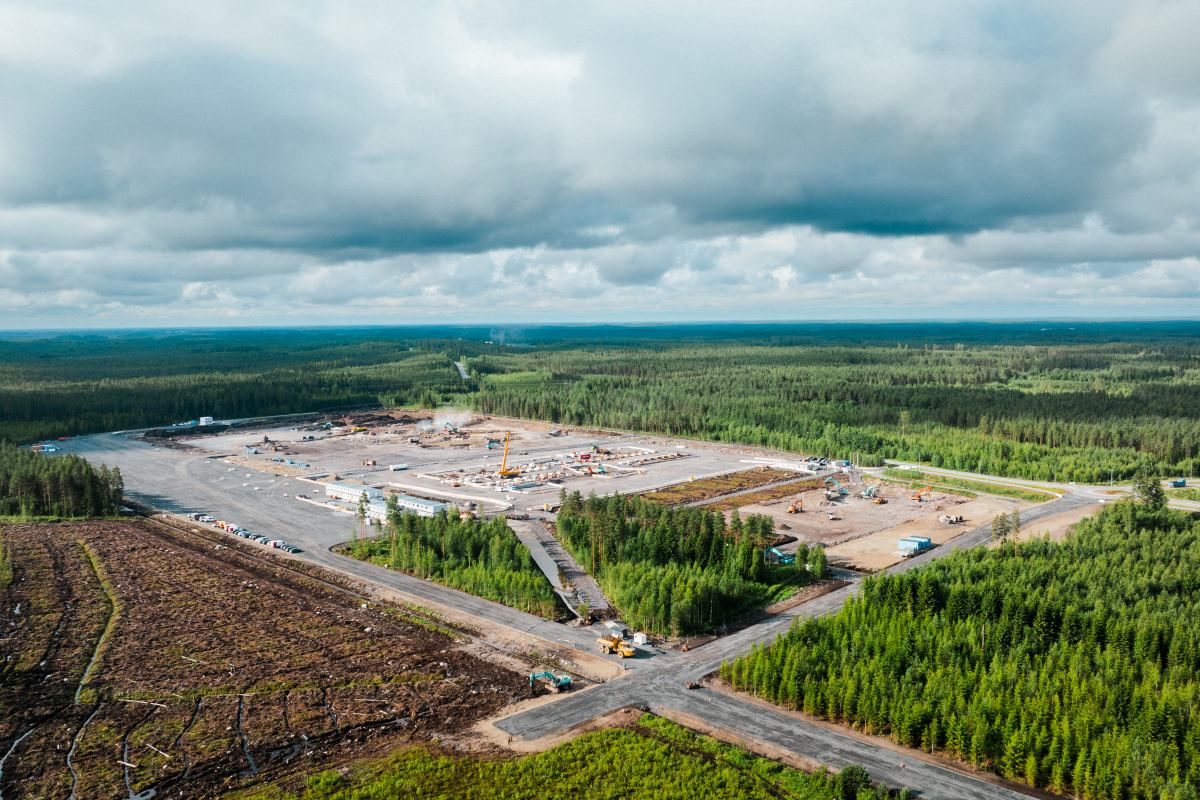
atNorth, a Nordic high-density data centre provider, has announced its expansion into Norway through the acquisition of land for a new data centre campus in Haugaland. The site will become home to NOR01, a planned data centre designed to support high-density computing workloads and hyperscale deployments. The development marks atNorth's first presence in Norway and extends the company's footprint across all Nordic countries. Located within Haugaland Business Park, the 36-hectare site is expected to deliver 120MW during its initial phases, with capacity ultimately increasing to 350MW. Power availability is projected for 2028 and will be supported by two new substations: one will be developed by Norway's transmission system operator, Statnett, and the second by regional grid provider Fagne. According to atNorth, the company is also exploring opportunities to reuse excess heat generated by the facility in partnership with organisations based within the business park. Eyjólfur Magnús Kristinsson, CEO of atNorth, says, "Expanding to Norway has been a long-term strategic priority for us, and we’re proud to officially mark our presence across all the Nordic countries with the announcement of NOR01. "Haugaland Business Park is a strong industrial region that offers the ideal combination of renewable energy, excellent connectivity, and a naturally cool climate, making it a highly attractive location for future-focused, AI workloads. "We look forward to collaborating with the local community to deliver world-class digital infrastructure in a responsible way." Haugaland selected for power and connectivity Norway has become an increasingly popular location for large-scale data centre developments due to its renewable energy resources, stable operating environment, and connectivity to European markets. The country's climate also supports more efficient cooling strategies, reducing reliance on mechanical cooling systems. Monika Lindanger, Mayor of Tysvær Municipality, suggests, "This project will not only bring in new investment and innovation to the region, but will also support our local community through training and employment opportunities, our economy via sustainable industry development, and our circular economy with beneficial heat reuse partnerships. "We’re proud to be part of this next chapter in the Nordic data centre evolution." The announcement follows atNorth's plans for a new large-scale data centre campus in Sollefteå, Sweden, as well as recent expansions at facilities in Iceland and developments in Sweden and Finland. For more from atNorth, click here.

Bergen Engines signs 750MW data centre deal
Bergen Engines, a Norwegian manufacturer of medium-speed gas and dual-fuel engines, has signed an agreement with Crusoe to provide up to 750MW of power generation capacity for AI data centre developments in the United States. The agreement comprises a 438MW contract and a further 310MW letter of intent, supporting Crusoe's expanding portfolio of AI infrastructure projects. Crusoe develops large-scale AI data centre campuses using a combination of grid power, natural gas generation, renewable energy, and battery storage. The company deploys both grid-connected and behind-the-meter power infrastructure to support the high energy demands of AI workloads. John Adams, Senior Vice President of Power at Crusoe, says, "The pace of AI infrastructure development demands builders who treat power as a first-class AI infrastructure layer. "Bergen’s gensets give us the reliable baseload power we need to energise large-scale campuses, deployable on our timeline. We’re building AI factories at record speed, and this agreement helps us maintain that pace." Under the initial contract, Bergen Engines will supply 27 gas-powered generating sets rated at 12.5MWe and 20 units rated at 5MWe. Additional units are included within the letter of intent, with deliveries planned across multiple US locations through 2027. On-site generation supports growing AI power demand The generators are intended to provide continuous baseload power for AI data centres operating around the clock. The systems will incorporate alternators from Marelli Motori and dynamic power stabilisation technology from Piller Power Systems. According to the companies, the technology is designed to manage rapid fluctuations in electricity demand associated with computing-intensive workloads. Dean Richards, CEO of Piller Power Systems, says, "AI workloads have a distinct power profile that demands purpose-built generation and stabilisation technology. "SHIELD-X is designed to manage those dynamics, protecting the generation assets and maintaining stable plant operation while ensuring consistent power quality for the data centre." As AI infrastructure capacity expands, developers are increasingly turning to on-site and behind-the-meter power generation where grid connections are unavailable or unable to support required capacity within project timescales. Theo Lorentzos, Vice President of Sales for Bergen Engines Americas, notes, "The pace of AI infrastructure development is unlike anything the power generation industry has seen before. "In this market, access to power determines how fast you can scale. Crusoe’s model is built around speed and stable power, and our solution is designed to deliver both." The agreement forms part of a wider trend towards dedicated power infrastructure for AI data centres, enabling developers to accelerate deployments while reducing reliance on traditional utility connection timelines. For more from Bergen Engines, click here.

Kao Data appoints new CEO
Kao Data, a data centre developer and operator, has appointed Spencer Lamb as Chief Executive Officer as the company continues expanding its AI-focused data centre platform across the UK. Spencer Lamb, who joined Kao Data in January 2020, previously served as Managing Director and Chief Commercial Officer. He will now oversee day-to-day operations and growth strategy alongside founder and Executive Chairman David Bloom. According to the company, Spencer will focus on the development of Kao Data’s AI-ready data centre capacity and support the continued growth of its UK facilities. David Bloom will remain Executive Chairman, concentrating on long-term strategy, financing, partnerships, and engagement with government around AI infrastructure and energy development. During his time at Kao Data, Spencer has led the company’s commercial strategy and supported the expansion of its portfolio across Harlow, Slough, Northolt, Park Royal, Greater Manchester, and additional sites under development. The company says he has also played a key role in developing the Harlow campus as a location for high-performance computing, AI workloads, scientific research, and life sciences computing. A leadership change to support AI infrastructure growth Kao Data says the leadership structure is intended to support the company’s next phase of growth as demand for AI and high-density computing infrastructure increases. Spencer comments, “I have loved my time at Kao Data, and I am excited to step up and lead the company as its CEO. “I am looking forward to ensuring Kao Data continues to play a strong and defining role in the UK’s AI infrastructure story, and that we keep delivering for our customers, our people, and the communities we operate in.” David Bloom, Executive Chairman at Kao Data, adds, “Spencer’s appointment formalises what has been an increasingly natural evolution in how we lead this business. “As CEO, Spencer will drive Kao Data’s operations and day-to-day growth strategy, while I remain directly focused on the strategic priorities that will shape our next chapter: major financing, capital partnerships, M&A, and our ongoing engagement with government on the UK’s AI infrastructure agenda.” Spencer Lamb’s appointment as Chief Executive Officer is effective immediately. For more from Kao Data, click here.

Pure DC secures $2.7bn AI data centre funding
Pure Data Centres Group (Pure DC), a designer, developer, and operator of hyperscale data centres, has secured $2.7 billion (£2 billion) in financing to support the expansion of its AI and hyperscale data centre infrastructure across Europe and the Middle East. The financing package includes a $2.15 billion (£1.5 billion) facility secured against the company’s campuses in Dublin and Amsterdam, alongside an increase in its corporate financing facility to $550 million (£408 million). The expanded financing structure includes support from financial institutions including SMBC, ABN AMRO, and Allianz Global Investors. According to Pure DC, the $2.15 billion (£1.5 billion) facility was syndicated within three months and will support continued development at its Dublin and Amsterdam sites. Construction is currently underway at the Amsterdam campus, which is fully leased. The company notes its Dublin campus recently became Europe’s first carbon net zero data centre microgrid. Located in the Ballycoolin area, the campus is designed to provide up to 150MW of IT capacity, with 54MW currently permitted. Expansion plans across FLAP-D and the Middle East Pure DC says the increase in its corporate financing facility will support investment in new FLAP-D sites and AI-focused data centre campuses across the region. The company states that the funding structure is intended to provide greater flexibility when securing sites and progressing future developments. The business is also targeting further expansion in the Middle East, which it identifies as a growth market for AI and hyperscale infrastructure over the coming decade. Gary Wojtaszek, Executive Chairman and interim CEO of Pure DC, comments, “Pure DC is rapidly positioning itself at the centre of Europe and the Middle East’s AI transformation, leveraging one of the region’s fastest-growing FLAP-D hyperscale platforms to deliver the next generation of AI inferencing infrastructure. “The support we’re seeing from leading global financial institutions reflects that. This funding demonstrates strong market confidence in Pure’s leadership team and strategy.” Mike Schwartz, Chief Financial Officer at Pure DC, adds, “Over the past 12 months, we have materially strengthened and diversified our financing platform, bringing in high-quality institutional partners and increasing available capital. “The successful syndication of the $2.15 billion facility and the expansion of our corporate facility demonstrate both the depth of market demand and the confidence lenders have in our assets, structure, and strategy. “Importantly, the combination of asset-level and corporate-level financing gives us the flexibility to accelerate investment across the business and act decisively as new opportunities arise.” For more from Pure DC, click here.

Bergen secures 500+ MW of orders from Liberty Energy
Bergen Engines, a Norwegian manufacturer of medium-speed gas and dual-fuel engines, has secured an order from Liberty Energy for more than 500MW of onsite power generation capacity to support AI data centre developments in the United States. The projects will use gas-powered generation systems capable of operating both independently from the grid and in parallel with utility infrastructure, supporting high-density AI computing environments. The developments are being delivered through Liberty Energy’s Liberty Power Innovations division, which focuses on distributed power infrastructure for AI-era data centres. Under the agreement, Bergen Engines will supply 45 gas generator sets, each rated at 11.2MWe, providing a combined installed capacity exceeding 500MW. The infrastructure combines Bergen Engines’ medium-speed engines with alternators from Marelli Motori and SHIELDX dynamic power stabilisation technology from Piller Power Systems. Power stability for AI workloads According to the companies, the SHIELDX platform is designed to manage rapid fluctuations in AI-related power demand by stabilising short-duration load variations. The flywheel-based system is intended to help maintain stable power delivery while reducing the need for oversized generation infrastructure. Ron Gusek, CEO of Liberty Energy, says, “AI data centres are fundamentally changing how power infrastructure can be designed and deployed, and this initial order with Bergen Engines reflects a shared commitment to providing reliable, high-efficiency power solutions to support critical data centre infrastructure growth. “Collaborating with Bergen Engines strengthens our power platform, serving as an important component of our broader integrated solution that includes LPI’s Forte modular power generation architecture and Tempo power quality system. "Together, we will be able to deliver essential power generation infrastructure to support the demanding requirements of next-generation computing.” Theo Lorentzos, Vice President Sales Americas at Bergen Engines, adds, “These environments require robust baseload generation and the ability to respond to rapid and significant load fluctuations. "By working in partnership with Liberty and integrating SHIELDX, we are delivering a solution that combines proven generation performance with the flexibility required for AI-driven demand profiles.” Dean Richards, CEO of Piller Power Systems, comments, “SHIELDX protects the generation assets from highly dynamic, sub-second load behaviour, enabling stable plant operation under extreme load fluctuations. This ensures optimal engine performance while delivering consistent, high-quality power to the data centre.” Deliveries for the projects are scheduled to begin during the second half of 2027.


Translate »