Sustainable Infrastructure: Building Resilient, Low-Carbon Projects
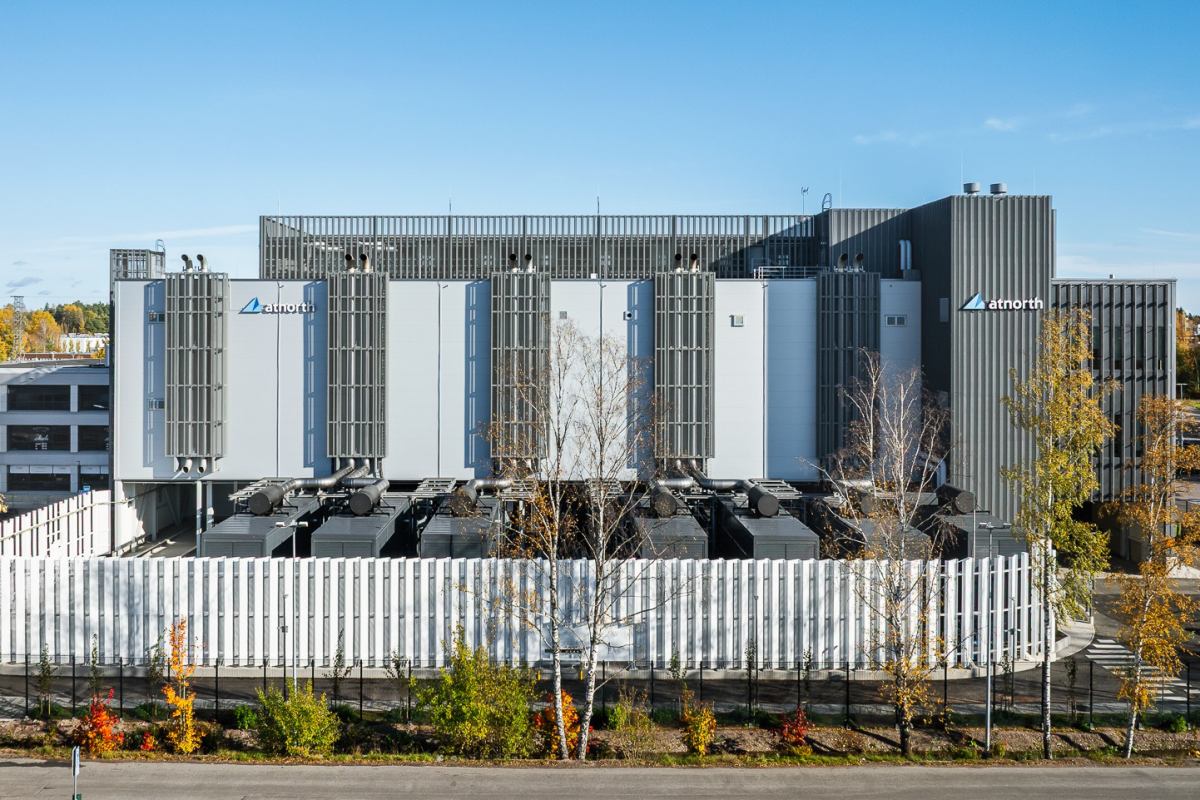

atNorth's ICE03 wins award for environmental design
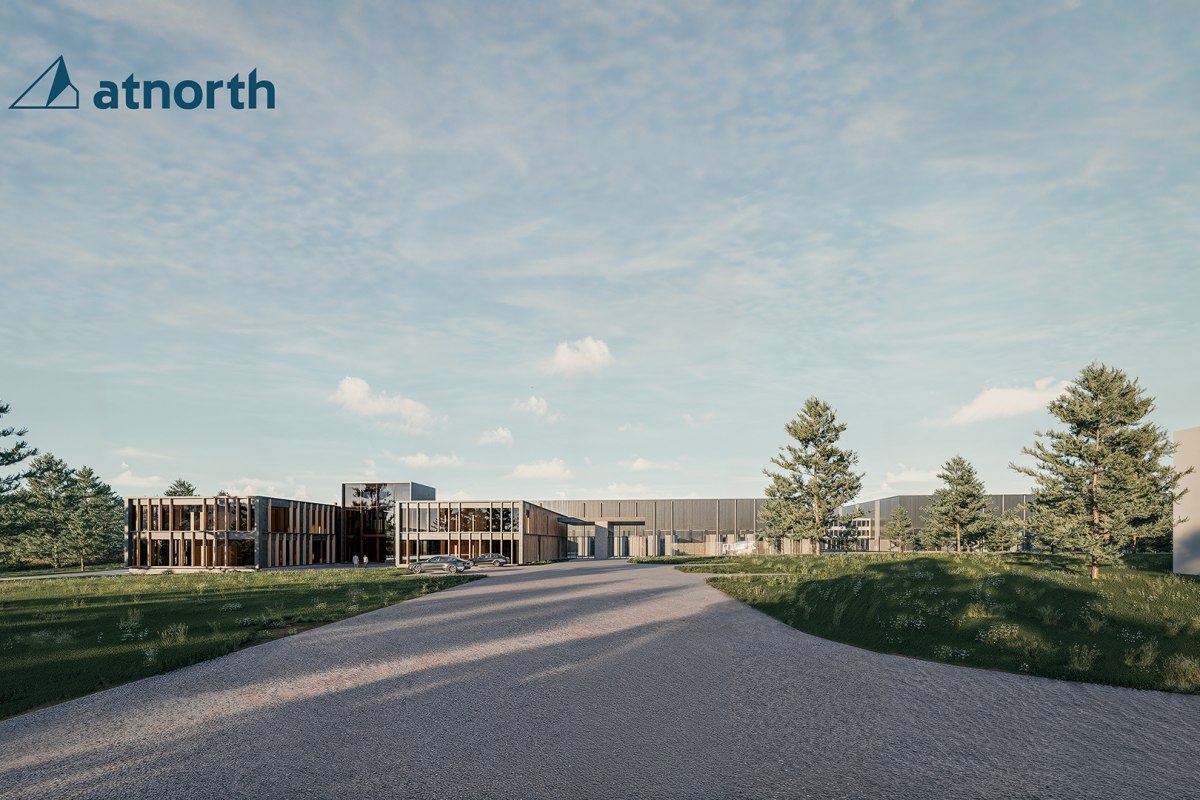
atNorth, an Icelandic operator of sustainable Nordic data centres, has received the Environmental Impact Award at the Data Center Dynamics Awards for its expansion of the ICE03 data centre in Akureyri, Iceland. The category recognises projects that demonstrate clear reductions in the environmental impact of data centre operations. The expansion was noted for its design approach, which combines environmental considerations with social and economic benefits. ICE03 operates in a naturally cool climate and uses renewable energy to support direct liquid cooling. The site was constructed with sustainable materials, including Glulam and Icelandic rockwool, and was planned with regard for the surrounding landscape. Heat-reuse partnership and local benefits atNorth says all its new sites are built to accommodate heat reuse equipment. For ICE03, the company partnered with the local municipality to distribute waste heat to community projects, including a greenhouse where school children learn about ecological cultivation and sustainable food production. The initiative reduces the data centre’s carbon footprint, supports locally grown produce, and contributes to a regional circular economy. ICE03 operates with a PUE below 1.2, compared with a global average of 1.56. During the first phase of ICE03’s development, more than 90% of the workforce was recruited locally, and the company says it intends to continue hiring within the area as far as possible. atNorth also states it supports educational and community initiatives through volunteer activity and financial contributions. Examples include donating mechatronics equipment to the Vocational College of Akureyri and supporting local sports, events, and search and rescue services. The ICE03 site has also enabled a new point of presence (PoP) in the region, established by telecommunications company Farice. The PoP provides direct routing to mainland Europe via submarine cables, improving network resilience for northern Iceland. Ásthildur Sturludóttir, the Mayor of Akureyri, estimates that atNorth’s total investment in the town will reach around €109 million (£95.7 million), with long-term investment expected to rise to approximately €200 million (£175.6 million). This, combined with the wider economic and social contribution of the site, is positioned as a model for future data centre development. Eyjólfur Magnús Kristinsson, CEO of atNorth, comments, “We are delighted that our ICE03 data centre has been recognised for its positive impact on its local environment. "There is a critical need for a transformation in the approach to digital infrastructure development to ensure the scalability and longevity of the industry. Data centre operators must take a holistic approach to become long-term, valued partners of thriving communities.” For more from atNorth, click here.

atNorth's DEN01 to supply district heating in Copenhagen
atNorth, an Icelandic operator of sustainable Nordic data centres, has agreed a partnership with Vestforbrænding, Denmark’s largest waste-to-energy company, to supply excess heat from its forthcoming DEN01 data centre campus into the district heating network serving Greater Copenhagen. DEN01, a 22.5MW site in Ballerup, is scheduled to open in early 2026. Through the collaboration, warm water generated as a by-product of direct liquid cooling will be transferred into Vestforbrænding’s network from 2028. The recovered heat is expected to support the heating of more than 8,000 homes, reducing energy consumption for local central heating and lowering emissions for both organisations. Denmark has pursued decarbonisation for several years and has set a national target to become net zero by 2045, with a 110% emissions reduction target by 2050. Coal is being phased out of the district heating sector, and heat-reuse projects form part of the country’s circular economy strategy. atNorth highlights that the initiative aligns with its wider approach to sustainable construction, energy efficiency, and community-focused development. Vestforbrænding is expanding its network as part of its 2030 District Heating Plan, replacing oil and gas boilers across thousands of households and integrating new heat sources such as surplus heat from data centres. Heat-reuse initiatives across the Nordics Steen Neuchs Vedel, CEO of Vestforbrænding, says, “For many years, we have talked about surplus heat from data centres being part of the future. Now, the future is here. “With today’s contract signing, we are showing the way forward for how surplus heat from data centres can reach people’s homes. There has also been talk about sector coupling in the district heating sector: today, we demonstrate how this can happen in practice, to the benefit of consumers.” Eyjólfur Magnús Kristinsson, CEO at atNorth, adds, “As the demand for AI-ready digital infrastructure continues to increase, it is imperative that data centre companies scale in a responsible way. “By actively seeking heat-reuse partnerships for our data centres, we can mitigate our environmental impact, benefit the communities in which we operate, and help clients decarbonise their IT workloads.” The announcement follows atNorth’s partnership with Wa3rm, which plans to use waste heat from the company’s DEN02 site to support local vegetable production. atNorth has also agreed a heat-reuse initiative with Kesko Corporation to supply recovered heat from its FIN02 site to a neighbouring store. For more from atNorth, click here.

Verne, Nscale planning 15MW AI deployment in the Nordics
Verne, a provider of low-carbon high-performance data centres across the Nordics, has agreed a 15MW AI infrastructure deployment with hyperscaler Nscale, expanding high-density, renewable-powered computing capacity across its Icelandic campus. The project centres on liquid-cooled GPU infrastructure and is set to run throughout 2026. The installation will comprise around 4,600 NVIDIA Blackwell Ultra GPUs, with an 85% liquid-cooled and 15% air-cooled configuration designed to maximise efficiency within Verne’s existing facilities. It is one of the region’s largest liquid-cooled GPU projects and is expected to support lower energy use and reduced environmental impact. Iceland’s renewable electricity and natural free-cooling conditions position it as a suitable location for high-density AI workloads. Nscale selected Verne based on its experience in renewable-powered data centres and its ability to support large-scale training and inference environments. Large-scale renewable AI capacity across the region “The pace of change in AI infrastructure is extraordinary," notes Dominic Ward, CEO of Verne. "As the demand for GPU capacity accelerates, availability of clean, renewable power has become as important as raw performance. "Partnering with Nscale, whose expertise is redefining how AI infrastructure is delivered responsibly at scale, demonstrates how the Nordics are fast becoming a strategic hub for sustainable AI growth.” Philippe Sachs, Chief Business Officer and President of EMEA at Nscale, adds, “As compute demand grows, we’ve worked with partners throughout the world and the Nordic region to deliver sustainable solutions to meet that demand. "The Nordics offer a uniquely sustainable foundation: abundant renewable energy and natural cooling. With our existing operations in Norway, we’ve seen first-hand how the region powers low-carbon, sovereign-grade AI infrastructure." David Hogan, Vice President Enterprise at NVIDIA, comments, “The collaboration between Verne and Nscale showcases how NVIDIA technology can enable high-performance AI factories with a focus on energy efficiency and sustainability. "Deployments like this reflect how organisations are scaling the next generation of AI workloads responsibly, using innovative cooling and renewable-powered data centres.” The agreement aligns with Verne’s wider European expansion, which includes new campuses planned in Finland and early-stage development activity in France. The companies state that these projects contribute to the Nordics’ growing role as a centre for renewable-powered AI infrastructure. For more from Verne, click here.

Sabey achieves 25% carbon emissions cut
Sabey Data Centers, a data centre developer, owner, and operator, has announced a 25.2% reduction in Scope 1 and Scope 2 carbon emissions from a 2018 baseline, even as electrical load under management has continued growth in the same interval. The company’s 2024 Sustainability Report details progress in environmental performance, technology innovation, and clean energy partnerships intended to rival the global data centre sector. 2024 report highlights The 2024 report shares data on Sabey’s emissions reductions, energy efficiency improvements, and external partnerships. The company says it continues to align its emissions reductions with its science-based targets and is working to achieve net-zero carbon emissions across Scope 1 and Scope 2 by 2029. Key developments from the report include: · Carbon emissions slashed 25.2% from 2018 baseline· Pioneering MOU with TerraPower to explore integrating next-generation nuclear energy· Nine buildings earn ENERGY STAR certification with scores over 90; five receive a score of 99/100 Clear path to net zero The report outlines the steps Sabey is taking to meet its net-zero goal. These include continued investment in carbon-free energy, improving building operations to reduce energy use, reducing emissions from HVAC and fuel sources, and helping customers better understand their own energy footprints. Casey Mason, Senior Energy & Sustainability Manager, says, “Data centres are the backbone of the digital economy and [the] AI revolution, but must become stewards of global decarbonisation. “We are not just on track for net zero by 2029; we're reimagining how critical digital infrastructure can be both scalable and sustainable for the world’s fastest-growing industries. "Our work with TerraPower, local utilities, and SBTi showcases the kind of bold collaboration needed for a climate-secure future.” In alignment with the Greenhouse Gas Protocol, Sabey reports on emissions and sustainability efforts annually, engaging with external organisations in the process, including CDP, GRESB, EcoVadis, Atrius, and data centre tenants. The company’s emissions reporting includes both location-based and market-based accounting methods. For more from Sabey, click here.

nLighten reports first ICFEn scores for UK, Germany, Spain
nLighten, a European data centre operator, has announced the first Integrated Carbon-Free Energy (ICFEn) scores for its data centres in the United Kingdom, Germany, and Spain, something the company considers a significant step in how environmental performance is measured within the sector. Developed in collaboration with the Fondazione Eni Enrico Mattei (FEEM), nLighten says the ICFEn framework introduces a more comprehensive approach to sustainability reporting by assessing hourly carbon-free energy matching, heat recovery, and contributions to grid stability. Unlike traditional metrics that rely on annual averages or focus solely on energy consumption, the company notes that ICFEn provides real-time insights into how facilities contribute to decarbonisation through energy reuse and system integration. A new framework for transparent environmental reporting The ICFEn model builds upon the 24/7 Carbon-Free Energy concept by including three key elements: hourly renewable electricity matching, heat recovery, and grid stabilisation. This combined methodology aligns with the EU Energy Efficiency Directive, as well as sustainability standards such as the Greenhouse Gas (GHG) Protocol and the Science Based Targets initiative. Chad McCarthy, Chief Technology Officer at nLighten, comments, “Traditional sustainability metrics have focused on the data centre’s electrical energy profile, but ICFEn integrates the data centre into a community energy system, accounting for both consumption and contribution. "By including heat recovery and real-time renewable energy matching, we’re offering customers and stakeholders unprecedented transparency about our environmental impact, hour by hour, not just as year-end averages.” nLighten’s facilities in the UK, Germany, and Spain achieved good ICFEn scores through renewable power purchase agreements and heat recovery initiatives. Its UK data centres recorded an ICFEn score of 94.61%, higher than the regional carbon-free energy grid average of 56.47%. The company achieves hourly renewable energy matching by integrating renewable assets into its portfolio and aligning their production with operational demand in real time. This aims to ensure that data centres are powered by clean energy when it is actively being consumed. Francesco Marasco, Vice President of Energy Operations and Sustainability at nLighten, adds, “We’re not just measuring renewable energy consumption, but quantifying environmental improvement through sustainable projects, for which we share the calculation method transparently. "The ICFEn methodology allows us to demonstrate measurable, system-wide benefits that lower community emissions. We encourage other operators to adopt this framework, as raising awareness of data centres’ environmental contributions benefits the wider sector.” Encouraging wider adoption nLighten has made the ICFEn methodology publicly available under a Creative Commons licence to encourage industry-wide adoption. The framework’s release coincides with updates to the GHG Protocol, which are expected to introduce hourly-based renewable energy reporting requirements. The company plans to extend ICFEn reporting to all European sites and introduce third-party verification of hourly energy and heat recovery data as part of its next phase of implementation. For more from nLighten, click here.

A-Gas completes large-scale DC refrigerant recovery project
A-Gas, a company specialising in Lifecycle Refrigerant Management (LRM), has completed a major refrigerant recovery project for a global technology provider, marking a significant environmental milestone for the data centre sector. More than 73,000 lbs (33,000 kg) of R410A were safely recovered across five buildings containing 222 cooling units scheduled for decommissioning. The work, carried out under challenging summer conditions, prevented the release of greenhouse gases equivalent to 70,226 tonnes of carbon dioxide (CO₂e). The project was managed by A-Gas Rapid Recovery, the company’s on-site refrigerant recovery division, which specialises in high-speed, compliant recovery operations for commercial and industrial facilities. Environmental and operational impact A-Gas said the recovery operation demonstrated its commitment to safe and environmentally responsible refrigerant lifecycle management. The project not only reduced environmental impact, but also delivered financial benefits to the client through the A-Gas buyback programme. Rapid Recovery’s process is designed to complete complex projects quickly, with recovery speeds up to 10 times faster than conventional methods, helping reduce downtime during critical infrastructure transitions. The operation included full Environmental Protection Agency (EPA) documentation, refrigerant analysis, and regulatory compliance checks throughout. A-Gas said its approach combines global expertise with safety-first practices to help technology and data centre clients meet both operational and sustainability goals. For more from A-Gas, click here.

R&M awarded EcoVadis gold medal for sustainability
R&M, a globally active Swiss developer and provider of infrastructure for data and communications networks, has again been awarded a gold medal for sustainability by EcoVadis. The recognition places the company in the top 4% of all firms assessed globally, and in the top 3% of manufacturers in the “cables and network technologies” sector. EcoVadis evaluates companies on environmental, social, and ethical performance. According to R&M, its strongest improvements in the past year were in environmental measures, particularly in the tracking of carbon emissions and waste management. Integrating sustainability across operations R&M has said it is embedding sustainability across its business areas through its 'Connecting the Planet' programme, which covers environment, people, ethics, and circular economy. The company has introduced more detailed measurement of CO₂ emissions, as well as policies to support compliance and integrity in business practices. The EcoVadis framework assesses organisations against a set of international sustainability standards, including climate protection, labour rights, procurement, business ethics, and transparent reporting of progress. R&M CEO Dr Roger Baumann says, “EcoVadis confirms that we were able to improve slightly overall and significantly in the environmental area compared to the previous year. "The entire R&M team is proud that we were once again able to achieve gold status. The award underscores the credibility and effectiveness of our ‘Connecting the Planet’ sustainability programme.” Jonas Güresir, COO and Sustainability Officer at R&M, adds, “The renewed award is the result of exceptional teamwork. "We want to continuously develop in all facets of sustainability and contribute to the achievement of the UN Sustainable Development Goals within the scope of our capabilities as a medium-sized, family-owned company.” For more from R&M, click here.

Ramboll report outlines roadmap to sustainable data centres
A new report published by Ramboll, an architecture, engineering, and consultancy company, at Climate Week NYC sets out a strategic framework for reducing the environmental impact of data centres and achieving net zero carbon. The report, Developing sustainable data centres: A strategic roadmap to achieve net zero carbon and reduce environmental impact, provides guidance across the full value chain, with recommendations for owners, developers, operators, and consultants. It addresses key sustainability challenges including embodied and operational carbon, biodiversity, circularity, energy, and water use. Tackling operational and embodied carbon Data centres accounted for around 1.5% of global electricity consumption last year, a figure projected by the International Energy Agency (IEA) to double by 2030. Given this demand, operational carbon is the largest component of emissions. The report states that net zero operational carbon is achievable through measures such as optimised energy efficiency, renewable energy procurement, energy reuse and export, and demand response. Embodied carbon, associated with construction materials, can be reduced by using low-carbon steel and concrete, sourcing locally, and reusing materials from decommissioned buildings. Ed Ansett, Ramboll’s Global Director of Technology and Innovation, says, “The construction of data centres powered by the rise of artificial intelligence is booming across the globe, driving unprecedented demand for electricity and significantly contributing to global greenhouse gas emissions, increased water consumption, waste production, habitat destruction, and resource depletion. "These challenges can be managed and mitigated if data centres are built with climate, biodiversity, and circularity impacts in mind from the very start.” Biodiversity, circularity, and water use The report highlights the importance of integrating biodiversity into site planning, recommending ecological surveys to identify protected species and habitats at an early stage. It also calls for the involvement of landscape architects to help reduce ecological impacts. For circularity, Ramboll proposes a benchmark of 100% reuse, reusability, or recyclability of materials, with no output to landfill or incineration. Water consumption, a major concern in regions with limited supply, can be reduced by achieving water neutrality. Strategies include avoiding water-based cooling, maximising cycles of concentration, and making use of alternative sources such as rainwater. Ed continues, “There are economic benefits for data centre owners if they focus on circular practices. For instance, the sole physical byproduct of data centre energy consumption is heat, which has historically been unused and released to atmosphere. Data centres are in an excellent position to export what would otherwise be wasted energy.” For more from Ramboll, click here.

Why data centres should care about atmospheric chemistry
Data centres are multiplying to satisfy the world’s appetite for computational power, driven by AI and other emerging technologies. The outcome has been an unprecedented surge in energy demand and greenhouse gas (GHG) emissions. Here, Alexander Krajete, CEO at emissions treatment specialist Krajete, explains why data centres must look beyond their direct carbon footprint and adopt a holistic approach to multi-emission capture and valorisation: What's changed? Data centres once had a modest footprint, accounting for under 1% of global GHG emissions, according to the International Energy Agency. But rising demand from AI, streaming, and blockchain is set to more than double their energy use from 415 TWh in 2024 to 945 TWh by 2030. Some tech giants share these predictions. Google stated in its 2024 Environmental Report that “in spite of the progress we're making, we face significant challenges that we’re actively working through. In 2023, our total GHG emissions increased 13% year-over-year, primarily driven by increased data centre energy consumption and supply chain emissions.” A holistic approach to data centre sustainability Some leading tech companies claim to have purchased or generated enough renewable electricity to match 100% of their operational energy consumption. As the IEA notes, buying renewable energy or certificates doesn’t guarantee a data centre runs on clean power 24/7 due to the intermittency of renewables and potential mismatches in location or grid. A more accurate, holistic calculation also includes indirect emissions throughout the supply chain — the so-called scope three emissions. These include mining raw materials like copper, silicon, and lithium - used in a data centre’s server racks - or the production of building materials like aluminium, steel, and concrete. Complying with new sustainability regulations Although not specifically aimed at data centres, the EU’s Corporate Sustainability Reporting Directive (CSRD) requires organisations, including tech companies, to report on their sustainability performance, including scope one, two, and three emissions. In addition, in 2024, the European Commission adopted legislation specifically aimed at “establishing an EU-wide scheme to rate the sustainability of EU data centres.” To comply with these new legal obligations, data centre operators must examine their environmental footprint holistically. Why atmospheric chemistry matters to data centres Although reducing the amount of CO2 in the atmosphere remains vital, we must also address other gases that can harm our ecosystems and climate. These chemicals include nitrogen oxides (NOX), carbon monoxide (CO), hydrogen sulphide (H2S), sulphur oxides (SOX), hydrocarbons, and various metals. Once released, these gases can react with one another, leading to secondary pollutants. The consequences of these are yet to be fully understood. They originate from combustion-heavy sectors like mining, cement, and energy, all contributors to scope two and three emissions. Traditionally, there have been two ways of capturing atmospheric pollutants. Take CO2 as an example. The sacrificial method uses limestone to remove CO2 and other gases, creating non-reusable carbonates. The regenerative amine-based method produces reusable amine carbamates but emits harmful, amine-based degradation products. Advanced adsorption is a low-energy, low-emission regenerative process that captures and valorises emissions at temperatures below 100°C, far lower than the 150–200°C required for amine-based methods. Pollutant gases weakly bind to a complex inorganic filter, allowing for easy separation. It can be applied at the exhaust point of any combustion process, such as cement factory chimneys or stationary diesel engines. By supporting the adoption of advanced adsorption technology throughout their supply chains, data centres can address their scope two and three emissions more effectively and meet their sustainability goals. Multi-emission capture is the key to sustainable data centres Thanks to innovative technologies like advanced adsorption, we can go beyond capturing and neutralising pollutants like nitrogen oxides. We can also transform these emissions into valuable by-products like fertilisers, supporting a circular economy. As the world’s insatiable demand for data grows, data centres must adopt holistic sustainability strategies that withstand the test of time. Multi-emission capture must be part of the solution, enabling data centres to balance the growing need for powerful AI with the needs of our planet.

Siemens earns Platinum in EcoVadis Sustainability Rating
German multinational technology company Siemens has been awarded the Platinum medal in the 2025 EcoVadis Sustainability Rating. This achievement places Siemens among the top 1% of around 130,000 companies assessed worldwide by EcoVadis, a provider of business sustainability ratings. The Platinum medal, according to the company, "underscores Siemens' commitment to sustainability and reflects achievements across all of EcoVadis’ assessment areas: Environment, Ethics, Labour & Human Rights, and Sustainable Procurement." EcoVadis assessed Siemens with a score of 85 points. In addition, Siemens Mobility was assessed separately, achieving a score of 84 points. More than 90% of Siemens’ business enables customers to achieve a positive sustainability impact across three key areas: decarbonisation and energy efficiency, resource efficiency and circularity, and people centricity & society. “Achieving the highest-ever score and being among the top 1% of all rated companies reinforces our position as a sustainability leader and recognises the dedication of our people,” claims Eva Riesenhuber, Global Head of Sustainability at Siemens. “Sustainability is at the core of our business, and we are continuing to scale our impact in the areas of industry, infrastructure, and mobility, while empowering our customers to become more competitive, more resilient, and more sustainable.” Andreas Mehlhorn, Head of Sustainability at Siemens Mobility, adds, “Being awarded the EcoVadis Platinum medal once again is a strong testament to our leading position in the rail industry. "It reflects our commitment to integrating sustainable solutions for our customers by maintaining rigorous sustainability standards across our operations and supply chain.” The EcoVadis business sustainability rating is based on international sustainability standards, including the Ten Principles of the UN Global Compact, the International Labour Organization (ILO) conventions, the Global Reporting Initiative (GRI) standards, and ISO 26000. For more from Siemens, click here.


Translate »