Data Centre Projects: Infrastructure Builds, Innovations & Updates


JSM constructing power infrastructure for Maincubes Berlin DC
JSM Group, a provider of integrated utility infrastructure solutions, has commenced construction of the high-voltage substation and cable route for Maincubes’ new data centre campus in Nauen, Germany. The start of the works follows the granting of a building permit for the energy infrastructure and represents a major milestone in the delivery of the main Hub Berlin campus. JSM is responsible for the delivery of the companioned 110kV cable route and substation - critical components that will underpin the campus’s long-term energy security and scalability. The approximately six kilometre cable route will transport electricity from renewable energy sources via the modern E.DIS distribution network to the site’s 110kV substation. Enabling high-performance infrastructure for cloud and AI The new campus has been designed with a grid connection capacity of 200 megawatts - with further expansion options available - to support high-performance computing environments, including advanced AI workloads and complex data analytics. Maincubes selected Nauen as the site for its new campus due to the Berlin-Brandenburg region’s stable energy supply, strong renewable generation from wind and photovoltaics, and favourable conditions for sustainable growth. Oliver Menzel, CEO of Maincubes, comments, “The start of construction of the substation is the next visible step on our journey towards Hub Berlin. "In Nauen, a state-of-the-art data centre location is being created: regionally rooted and internationally connected. In doing so, we are consistently continuing the success story of Maincubes and reinforcing our commitment to sustainable, energy efficient, and resilient digital infrastructure.” JSM leadership perspective Michael Booth, CEO of JSM Group, says, “This project highlights JSM Group’s capability to deliver complex, high-voltage energy infrastructure for mission critical environments. "Data centres of this scale demand absolute reliability, technical excellence, and close collaboration with our partners. We are proud to be playing a central role in enabling Maincubes’ expansion in the Berlin region and supporting the delivery of sustainable, high-performance digital infrastructure.” Michael Wiebersinsky, Mayor of the City of Nauen, adds, “With the new data centre campus, our region is developing into a highly modern location where future innovations can emerge. From a sustainability perspective, it gives me confidence that Nauen will be a reliable partner for the operating company, Maincubes.” Hanjo During, Managing Director of E.DIS Netz, notes, “With the campus currently under development, we will connect a particularly high-performance data centre to our regional electricity distribution network. With the campus planned here in Nauen, the connected capacity will increase significantly in the future.” Through the Nauen development, Maincubes says it continues to expand its presence in the capital region, building on the "successful operation of its first Berlin data centre, BER01."

atNorth data centre heat reuse powers Finnish store
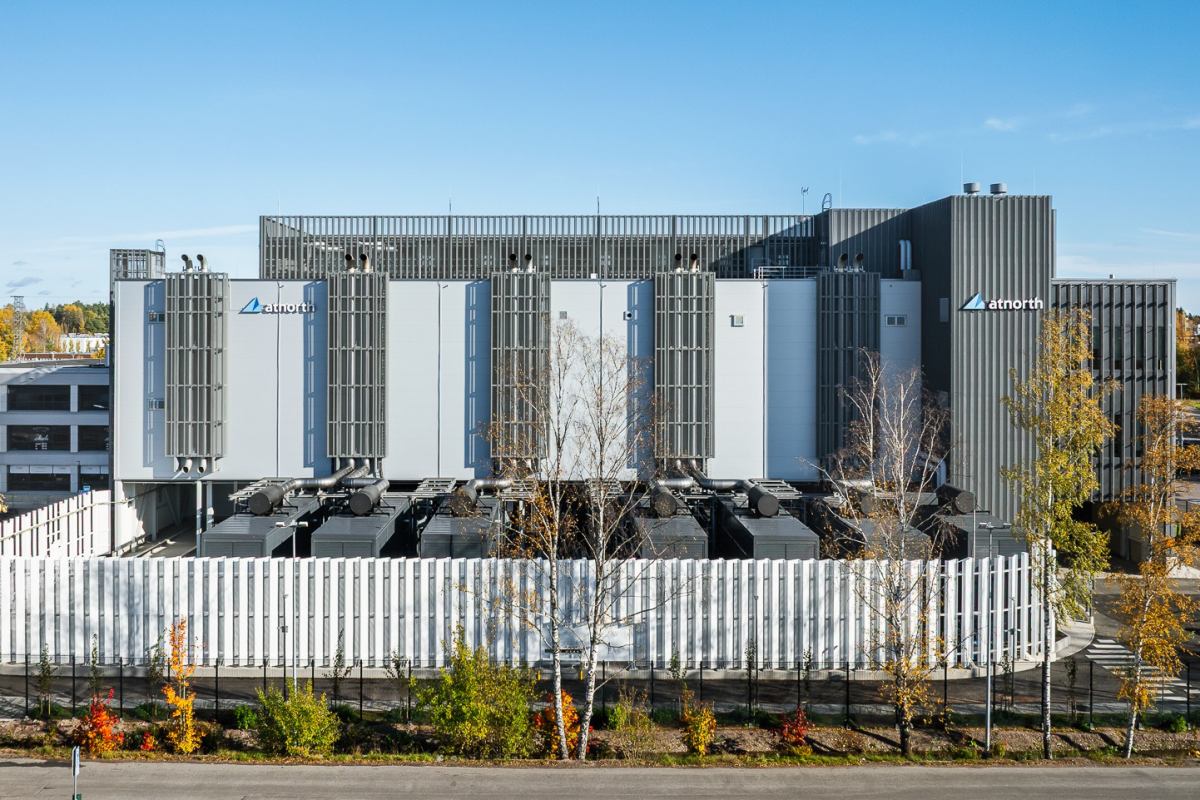
atNorth, a Nordic high-density data centre provider, has begun supplying recycled heat from its FIN02 data centre in Espoo, Finland, to a nearby retail store operated by Kesko Corporation. The heat reuse system became operational in November 2025 and captures surplus heat generated by the data centre, using it to provide most of the heating required by the adjacent store. The approach reduces reliance on district heating and lowers emissions for both organisations. For Kesko, the initiative supports its target to reduce Scope 1 and Scope 2 emissions by 58.8%. The recovered heat is expected to cut emissions linked to district heating by around 200 tonnes of CO₂ equivalent per year, representing approximately 0.9% of its district heating emissions. Antti Kokkonen, Director of Energy at Kesko, comments, “Reducing emissions from the heating of our properties is a key priority within our sustainability strategy. “Through this collaboration with atNorth, we are able to significantly cut emissions at one of our stores while demonstrating how innovative partnerships can accelerate the transition to lower-carbon operations.” Supporting local energy systems through heat reuse The project reflects a wider trend of integrating data centres into local energy systems by repurposing excess heat. By capturing waste heat, the FIN02 facility improves overall energy efficiency while contributing to Finland’s circular economy objectives. Erling Gudmundsson, COO of atNorth, notes, “As demand for AI-ready digital infrastructure continues to grow, it is essential that data centres scale responsibly. “This project demonstrates how data centres can become active contributors to local energy systems. By recycling excess heat, we can reduce our client’s environmental footprint while supporting our partners’ sustainability goals and delivering tangible benefits to the surrounding community.” The FIN02 site forms part of atNorth’s wider Nordic expansion strategy. The company is also involved in similar heat reuse projects, including a greenhouse development in Iceland and partnerships with Vestforbrænding in Denmark and Stockholm Exergi in Sweden to supply district heating networks. For more from atNorth, click here.

Echelon launches Ireland’s first Green Energy Park
Echelon Data Centres, a developer and operator of large-scale data centre infrastructure, has announced that its DUB20 campus in Arklow, Co Wicklow, will become Ireland’s first Green Energy Park, aligned with the Irish Government’s Large Energy Users Action Plan (LEAP). Green Energy Parks are defined by the Department of Enterprise Trade and Employment as developments that co-locate energy-intensive facilities, such as data centres, with renewable energy generation. They are designed to operate primarily on renewable power, supported by energy storage or backup generation, while reducing reliance on the national grid. Darragh O'Brien, Minister for Climate, Energy, and the Environment, comments, “The Large Energy Users Action Plan sets out a clear pathway for how energy-intensive industries can develop in a way that strengthens Ireland’s grid, accelerates renewable deployment, and supports our climate ambitions. “The Green Energy Park being developed at DUB20 is an important example of that model in action: co-locating data infrastructure with offshore wind, onsite solar, battery storage, and grid-supporting capacity. This is exactly the kind of forward-planned, sustainable development we want to see delivered under LEAP.” Integrating renewables with data centre infrastructure The DUB20 campus is being developed in line with the LEAP framework and will integrate several energy systems. Plans include a 220kV substation developed with SSE Renewables, enabling access to offshore wind energy from the Arklow Bank Wind Park Phase 2 project. Onsite solar PV is also planned, with expected generation exceeding 6,000MWh per year. The site will incorporate battery energy storage systems (BESS) and energy centres, including infrastructure capable of exporting power back to the grid during periods of low renewable output. Hydrotreated vegetable oil will be used to reduce emissions from onsite generation. The DUB20 campus forms part of Echelon’s wider investment in data centre developments in Wicklow and is located on a former industrial site at the Avoca River Business Park. Construction is underway, with completion expected by 2028. An economic impact assessment by KPMG indicates that the DUB20 and DUB30 developments could generate up to €7.5 billion (£6.4 billion) in economic output during construction, and €801 million (£693 million) annually once operational. Graeme McWilliams, Co-Founder of Echelon Data Centres, says, “The establishment of Ireland’s first Green Energy Park at DUB20 demonstrates how large-scale digital infrastructure can be developed responsibly and in lockstep with national climate and energy policy. “By co-locating data centre capacity with offshore wind, onsite solar, and grid-supporting infrastructure, we are delivering the exact model envisioned under the Government’s LEAP framework - cutting emissions, reinforcing energy security, and supporting regional economic growth.” For more from Echelon, click here.

CyrusOne breaks ground on first data centre in Italy
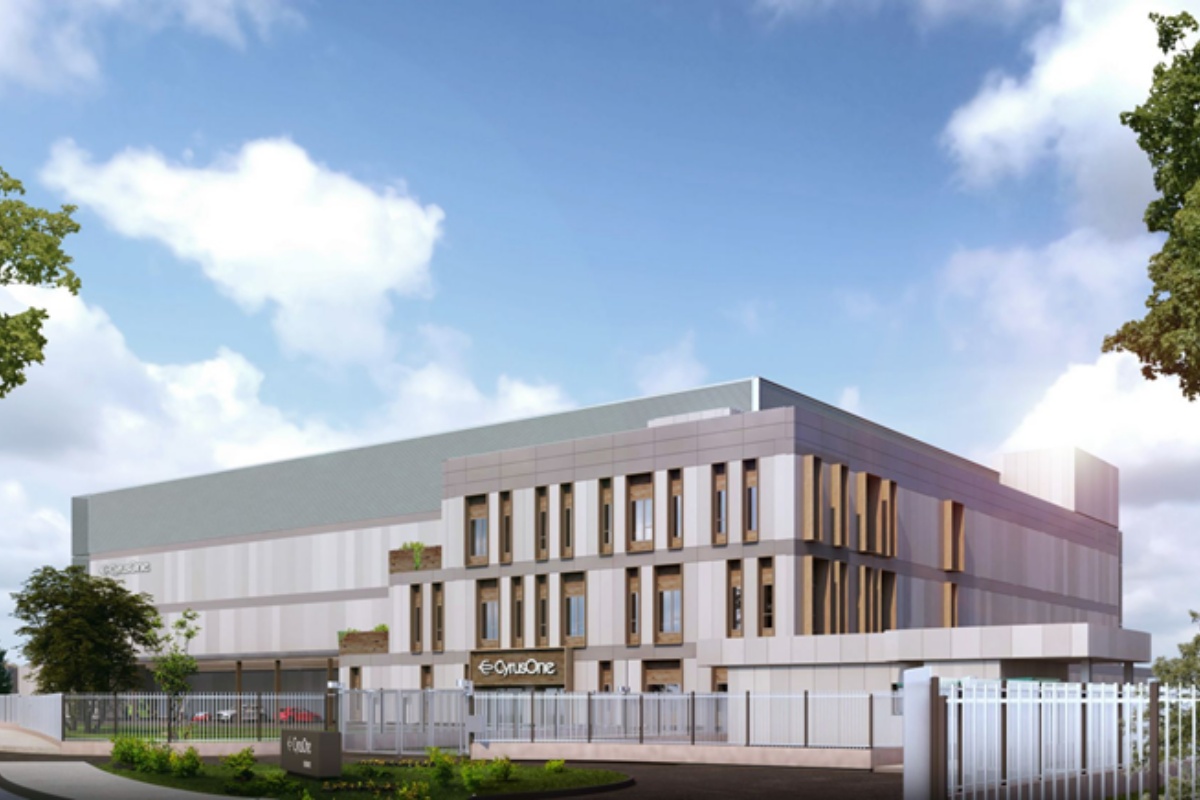
CyrusOne, a global data centre developer and operator, has broken ground on its first data centre in Italy, marking its entry into the Milan market. The facility, known as MIL1, is the first of two planned developments in the area. It will provide 27MW of IT capacity across 7,000m² of technical space within a three-storey building that includes three data halls. Andreas Paduch, Managing Director, Europe at CyrusOne, says, “Milan is an increasingly important digital infrastructure market for Southern Europe, and this development marks a key milestone in our European growth strategy. “With MIL1, we are establishing a strong platform in Milan to support our customers’ long-term capacity and connectivity needs.” Community investment and site regeneration The development is being delivered in collaboration with the Municipality of Segrate, with more than €6 million (£5.19 million) allocated to local infrastructure improvements. Plans include the redevelopment of Via delle Regioni into an urban boulevard, with improved connections to nearby schools, a library, and other public buildings. Additional work will include a new east–west road, cycle routes, and pedestrian pathways aimed at improving access and safety. CyrusOne has also transferred ownership of the Golfo Agricolo parkland to the local authority for community use, alongside landscaping works around the site. In addition, construction is expected to create up to 300 on-site roles at peak, with around 25 permanent positions once the facility becomes operational. Paolo Micheli, Mayor of Segrate, comments, “The start of construction on the CyrusOne data centre marks a significant step in the development of Segrate and strengthens our city's role as a leading hub for innovation and digital infrastructure. “An investment of this magnitude enhances the area, as it finally allows for the regeneration of a vast, problematic industrial area that has been abandoned for decades.” Focus on sustainability The facility is designed to operate using 100% renewable energy and is targeting a BREEAM ‘Very Good’ rating. It will also include systems to recover and reuse waste heat, initially within the site but with the potential to support a district heating network in future. Additionally, more than 15,000 plants and 170 trees are being planned as part of the development to support biodiversity. As the project involves the regeneration of a former industrial site, demolition materials will be reused or recycled to reduce waste, with around 60% of materials being reused on site and most excavated soil also retained for construction purposes. For more from CyrusOne, click here.

STULZ, Merford conduct unique acoustic test for data centres
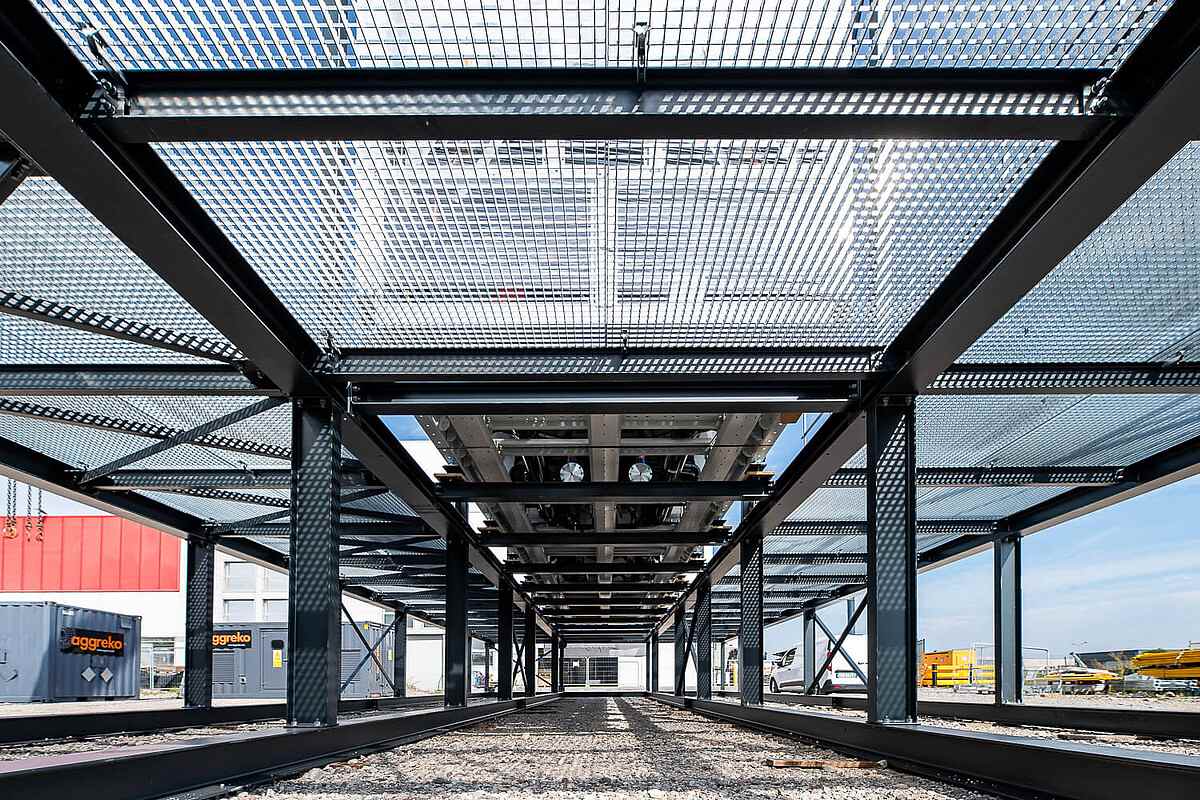
STULZ, a manufacturer of mission-critical air conditioning technology, and Merford, a Dutch specialist in noise control systems and acoustic doors, have completed an acoustic test confirming that a newly developed chiller system can meet strict data centre noise regulations under operational conditions. The test was carried out on a chiller for a project in Valeggio sul Mincio, Italy. It used a validated measurement methodology designed to reflect real-world performance, as operators increasingly consider noise alongside cooling capacity and energy efficiency. As data centre power densities increase, larger cooling systems can create greater environmental impact, particularly in urban locations. The project required compliance with a maximum night-time noise level of 80.2dB(A), prompting acoustic considerations to be integrated early in the design process. Davide Mazzi, Head of the Application Team at STULZ, explains, “The challenge was not only to guarantee efficient cooling, but to comply with extremely strict noise limits. “The installation is located on a rooftop in a densely built urban environment. Our task was to deliver the required performance without disturbing the surroundings and without compromising the operational reliability of the data centre.” Acoustic testing under real operating conditions The companies developed a noise attenuation system tailored to the chiller configuration. Acoustic measurements were conducted in line with EN ISO 9614-2:1997, which determines sound power levels using sound intensity measurements. Before testing, the team carried out an environmental analysis using SoundPLAN software to model sound propagation. The test setup ensured that background noise levels were at least 10dB below the chiller’s output, with surrounding equipment positioned to avoid interference. Two attenuation configurations were assessed: Both used steel frame structures with integrated acoustic components to reduce airborne and structure-borne noise, while the second configuration also included additional optimisation measures, resulting in greater overall noise reduction (although it increased system weight and complexity). Engineers measured sound power levels with and without the attenuation system to quantify performance and confirm compliance with the required limits. Davide continues, “We were delighted to find that the chiller equipped with the developed attenuation system successfully met the stringent noise requirements. “This project demonstrates that data centre cooling and acoustic compliance can be achieved simultaneously when engineering, acoustic design, and validation are approached as an integrated process. "As data centres continue to expand into urban environments, such integrated approaches are likely to become essential for balancing performance, sustainability, and community impact.” For more from STULZ, click here.

Industry recognises International Data Centre Day
In celebration of International Data Centre Day (25 March), DCNN has brought together a series of expert perspectives from across the industry to reflect on the opportunities and challenges facing data centre infrastructure today. From soaring energy demands driven by AI workloads to the shifting geography of deployment and the importance of community stewardship, these industry figures offer a broad view of the forces reshaping the sector and what must be done to meet them responsibly: The future of deployment Ivo Ivanov, CEO of internet exchange operator DE-CIX, comments, "The AI boom used to be about building bigger, better data centres. That works for model training, where raw compute power is prioritised over connectivity and latency, but it doesn't work for inference, which is where the real value of AI is realised at edge deployments. "AI inference demands near real-time responsiveness and, as such, it can't tolerate the latency associated with long round-trip delays to remote data centre hubs. From driverless vehicles to real-time fraud detection, the deployment of AI in edge locations demands a far more distributed infrastructure environment than what we're currently used to. "AI depends on data moving constantly between locations, and if that movement slows down, performance drops off quickly, no matter how much compute you add into the equation. It's no longer about building bigger or better data centres, but about where they're deployed and how they're connected. In other words, geography is becoming just as important as power and compute. "In the coming years, that's going to stretch the definition of data centres: from hyperconnected edge deployments and emerging AI-focused data centre hubs to more experimental concepts that sit above the clouds in the Earth's orbit. The data centre map is being redrawn in real time." Sustainability continuing as a vital factor Professor Aoife Foley, IEEE Senior Member and Chair in Net Zero Infrastructure at the University of Manchester, notes, "The International Energy Agency expects data centre electricity demand to more than double by 2030, reaching around 945 terawatt-hours, slightly above Japan's annual use. This not only indicates a greater demand for energy, but also highlights the importance of balancing digital growth with sustainable energy practices. "Infrastructure and operations leaders have a responsibility here and need to consider the unnecessary waste associated with data storage and commit to generating power from more renewable sources. By eliminating unstructured data and improving operational efficiency, organisations can actually lower their maintenance costs and improve regulatory compliance. "AI workloads consume significantly more energy than traditional cloud computing tasks, and although hyperscale operators are investing in renewable energy to soften the impact, this alone is not enough. Cooling innovations such as liquid immersion and direct-to-chip systems add further efficiencies, yet they still address symptoms rather than the deeper inefficiencies in model design and compute intensity. These impacts can be reduced through smarter model optimisation and a closer alignment between data centre strategy and regional renewable generation." Infrastructure integrated into communities Dave Philp, Chief Value Officer at infrastructure engineering software and digital twin platform provider Bentley Systems, concludes, "International Data Centre Day is a moment to recognise the often-unseen critical infrastructure that underpins modern life. Like healthcare, transport, and energy systems, data centres have become essential civic infrastructure in an increasingly connected world. "Today, data centres are no longer isolated technical buildings; they are part of the fabric of local communities. Being a 'good neighbour' is no longer optional; it is fundamental to earning trust, securing consent, and operating sustainably over the long term. That requires a clear understanding of how data centres interact with local water resources, energy networks, transport infrastructure, and surrounding land use. "We need to put digital modelling, analysis, and visualisation at the heart of how we plan, design, deliver, and operate these facilities. This enables better decisions, earlier engagement, and more resilient outcomes, anticipating construction challenges, responding to environmental constraints, and embedding operational resilience from day one. "As global demand for digital services continues to accelerate, the challenge is not simply to build more data centres, but to build them better. Thoughtful design, digital insight, and a commitment to community and environmental stewardship are what turn a data centre from a functional box into a trusted, long‑term asset that genuinely serves society."

Ramon.Space, Foxconn to deliver space DC infrastructure
Ramon.Space, a developer of computing systems for satellites and space missions, has expanded its partnership with cloud infrastructure provider Ingrasys, a subsidiary of Foxconn Technology Group, to develop data centre infrastructure for use in orbit. The collaboration focuses on scaling computing platforms designed for space, which comes as demand reportedly grows for processing data generated by satellites. Traditional Earth-based infrastructure, the companies state, faces constraints including latency, bandwidth, and power availability, particularly when handling large volumes of space-generated data. Space-based data centres, they say, aim to address these challenges by enabling processing and storage directly in orbit, reducing reliance on data transmission back to Earth and supporting real-time applications. Ramon.Space develops computing, storage, and communications systems designed to operate in space environments. These systems are engineered to manage challenges such as radiation exposure, power efficiency, thermal conditions, and autonomous operation. Ingrasys has previously supported the manufacturing of Ramon.Space’s computing platforms. Under the expanded agreement, the companies will work towards a production-ready product line, using Ingrasys’ manufacturing capabilities to support scale and consistency. Scaling infrastructure for space-based data Avi Shabtai, CEO of Ramon.Space, comments, “Expanding our work with Ingrasys to build data centre capabilities in space marks a major milestone in turning space computing from innovation into infrastructure. “We are laying the foundation for in-orbit data centers that enable real-time processing, reduce reliance on downlink, and support the next generation of software-defined satellites and distributed systems.” Benjamin Ting, CEO of Ingrasys, adds, “Ingrasys is proud to extend our collaboration with Ramon.Space into the in-orbit data centre domain. “By combining world-class manufacturing with Ramon.Space’s innovative computing platform, we are helping unlock a new era of space infrastructure.” The initiative is intended to complement terrestrial data centres and cloud infrastructure, while supporting applications where processing in orbit is more efficient. These include Earth observation, communications, and government-led space programmes. The programme will begin with prototype development and testing, with plans to expand towards operational deployments as space-based data infrastructure develops.

Duos Edge AI expands Amarillo data centre footprint
Duos Technologies Group, through its subsidiary, Duos Edge AI, a provider of edge data centre (EDC) systems, has deployed a second EDC in the Amarillo, Texas market. The carrier-neutral facility is located on land in Potter County, adjacent to a major colocation site in the Texas Panhandle. It is designed to support regional demand for low-latency computing, including AI applications, enterprise workloads, and public sector services. The deployment builds on the company’s initial Amarillo site and forms part of a wider expansion across Texas, with additional locations in Lubbock, Waco, Victoria, Abilene, and Corpus Christi. The facility is designed to provide local processing capacity, reducing reliance on data centres in larger metropolitan areas and supporting improved network performance. Regional expansion and edge infrastructure strategy Duos Edge AI says the site will deliver high-density computing, increased bandwidth availability, and secure data processing capabilities for organisations operating in the region. The expansion reflects a broader strategy to develop edge infrastructure in underserved and high-growth markets. Dave Irek, Chief Operations Officer at Duos Edge AI, says, “This expansion enhances capacity and capability in the region. We are creating a robust, carrier-neutral ecosystem designed to support innovation, attract investment, and drive long-term economic growth.” Potter County Judge Nancy Tanner adds, “This collaboration with Duos Edge AI represents a significant investment in our community's future. [It] will attract new businesses, improve connectivity for our residents and schools, and position Potter County as a leader in digital infrastructure.” The new facility is expected to become operational in the coming months. For more from Duos Edge AI, click here.

Nscale, Microsoft partner on large-scale campus in West Virginia
Nscale, a UK developer of AI data centres and cloud infrastructure, has signed a letter of intent with Microsoft to deliver 1.35GW of AI compute capacity at the Monarch AI campus in West Virginia, in collaboration with NVIDIA and Caterpillar. The development will deploy NVIDIA’s next-generation Vera Rubin NVL72 GPU systems, based on the NVIDIA DSX AI Factory reference design, with the undertaking expected to begin in phases from late 2027. In addition to this news, Nscale has also announced the acquisition of American Intelligence & Power Corporation (AIPCorp), which includes the Monarch Compute Campus in Mason County. The site spans up to 2,250 acres (9.1 km²) and is designed as a state-certified AI microgrid, with the potential to scale beyond 8GW of power capacity. Hyperscale AI infrastructure and power integration Under the agreement, Nscale will construct and operate the data centre infrastructure, with Microsoft supporting long-term compute services and lease arrangements. The campus is intended to support large-scale AI training and inference workloads, with high-speed connectivity to major US data centre hubs, including Ashburn and Chicago. As part of the project, Caterpillar will supply G3500 series natural gas generator sets, with plans to deliver up to 2GW of on-site power generation by the first half of 2028. The microgrid design enables the facility to operate independently of the local grid, while also allowing for potential future grid integration. The development reflects increasing demand for AI-driven data centre capacity, with industry forecasts indicating significant growth in global power requirements over the coming years. The Monarch campus is expected to build on Nscale’s existing capacity and support expansion of large-scale AI infrastructure in the US. For more from Nscale, click here.

Pure DC, AVK deploy 'Europe’s first' data centre microgrid
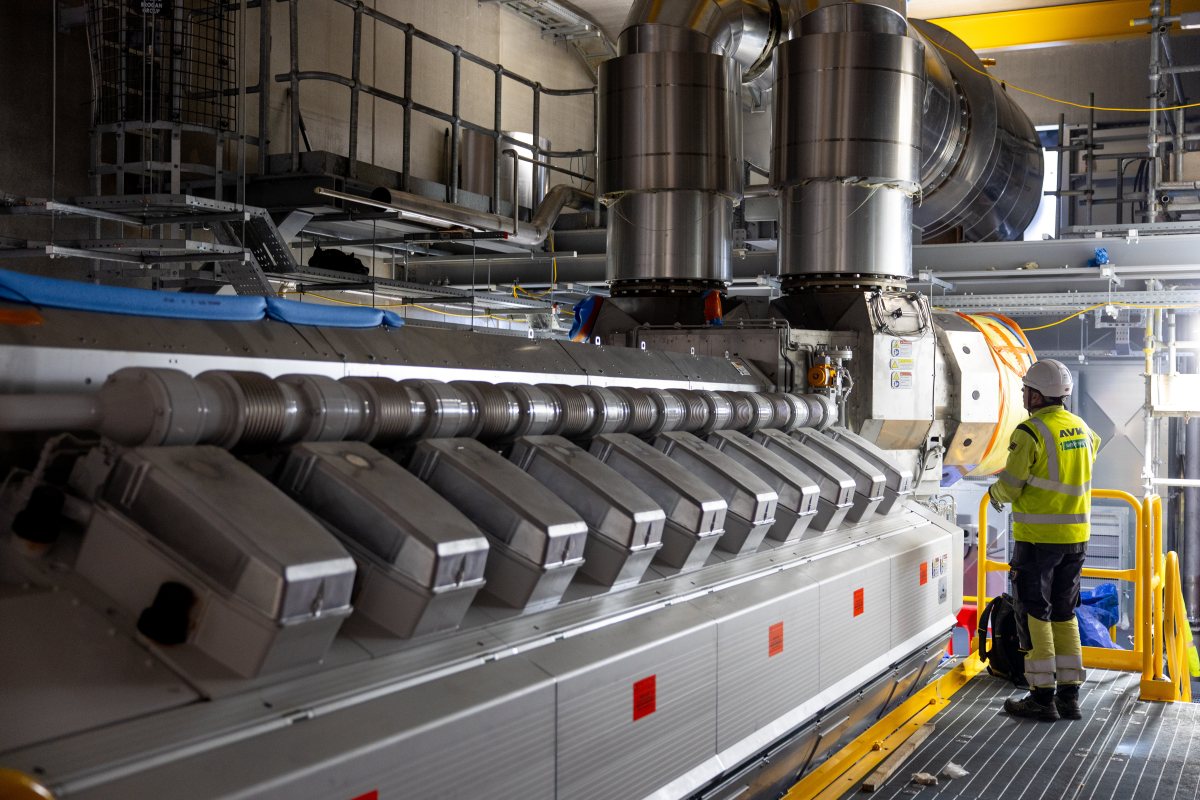
Pure Data Centres Group (Pure DC), a designer, developer, and operator of hyperscale data centres, together with AVK, a provider of power systems and electrical infrastructure for data centres, have announced the launch of what they describe as Europe’s first, large-scale, 110MW on-site microgrid, developed to support early‑phase site operational resilience. Located within Pure DC’s Dublin campus, the on‑site energy system provides the opportunity for dispatchable capacity to support data centre operations during initial development phases, prior to full integration with the national electricity system as grid connection capacity becomes available. Over time, the campus is intended to operate as part of a hybrid energy configuration, combining grid‑supplied electricity with on‑site infrastructure designed to enhance flexibility, resilience, and system stability. What AVK describes as a "first-of-its-kind deployment in Europe" showcases the ability to use its microgrid technology for on-site power generation, and the transitional and complementary role it can play in supporting the delivery of strategically important digital infrastructure. This is particularly relevant for regions where grid reinforcement and renewable generation are being delivered on a phased basis under national planning frameworks. A replicable model The microgrid also represents a blueprint for energy generation and showcases how large-scale microgrids can be replicated across Europe - with Germany, the Netherlands, and the UK having been identified as key target markets for the technology. The Mayor of Fingal County Council, Councillor Tom O'Leary, comments, “Fingal wants to remain a champion for breakthrough technologies, but we also understand that progress must be delivered in a way that is climate friendly, resilient, and aligned with Ireland’s energy transition. That’s why this project is so important. "A microgrid that can generate and manage its own power supports future integration into the national grid, integrates renewable energy, enables storage, and trials new low‑carbon fuels like biomethane. This is innovation with purpose.” Gary Wojtaszek, Pure DC’s Executive Chairman and interim CEO, notes, “The biggest barrier to deploying AI infrastructure in Europe today isn’t technology; it’s power. This microgrid proves that even the most constrained markets can unlock new digital capacity, giving Ireland the opportunity to lead Europe’s next chapter of AI infrastructure. "The future of AI infrastructure will be built where energy and compute come together, and that’s exactly what we’re building at Pure.” Speaking about the project, Ben Pritchard, CEO of AVK-SEG, adds, “We are delighted to have worked with Pure DC to deliver this groundbreaking project. While several microgrids are already in operation in the US, until today there were none of these deployments in Europe. This project demonstrates how carefully designed onsite energy infrastructure can complement national energy planning frameworks. “This recognises that power is now the new differentiator for data centres, and that energy has shifted from being a utility to a strategic asset - shaping the location, design, economics, and competitiveness for operators. "The first of many in Europe, this microgrid has the capability to revolutionise the data centre power race as we know it, providing a complementary solution that will ease gridlock and pave the way for greater take-up of AI and cloud.” Powering the digital economy Pure DC’s microgrid is comprised of three, interconnected energy centres, with each building generating up to 30 MW of power. Energy Centre 1 (EC1) and EC2 will be fully operational by the end of 2026 and will be followed by EC3 at a later stage. The design includes combined heat and power (CHP) capability, with infrastructure in place to enable heat recovery and potential future connection to district heating networks, subject to third‑party demand and regulatory approvals. Waste heat recovery systems are also used to improve operational efficiency within the energy centres. Future water management measures include rainwater harvesting and on‑site treatment, reducing reliance on mains water for engine‑related processes. The system is engineered to accommodate incremental changes in fuel composition - including hydrogen blending - supporting future decarbonisation of the gas network in line with national policy developments. Pure DC’s battery energy storage system (BESS) is integrated to manage load fluctuations and enhance operational efficiency, improving response times and enabling more optimal engine operation. The BESS is designed to support future renewable energy integration as part of a broader transition pathway. For more from Pure DC, click here, and for more from AVK, click here.


Translate »