Data Centre Projects: Infrastructure Builds, Innovations & Updates

Eastern Light expands Nordic fibre capacity
Eastern Light, a Stockholm-based independent operator building and owning long-haul dark fibre submarine cable routes, has started construction of the Nordic Corridor, a new subsea fibre cable system connecting Sweden and Finland. The project includes the SF-II subsea connection and represents an investment of approximately €30 million (£26 million). Combined with the company’s existing SF-I cable system, the Nordic Corridor is intended to increase digital communications capacity between the two countries. Eastern Light currently operates the SF-I subsea cable between Sweden and Finland, which contains 144 fibres. The new SF-II system will add a further 288 fibres through a combination of terrestrial and subsea infrastructure. According to the company, the expanded system is designed to meet increasing demand for digital capacity across the Nordic and Baltic regions, particularly as data centre development accelerates. Mikael Vesterlund, COO of Eastern Light, says, “We are seeing rapidly growing demand for digital capacity in the Baltic Sea region, driven primarily by investments in data centres across the Nordics. "Several of the existing cable systems are old and are beginning to reach full utilisation. That is why we need to expand digital capacity between the countries. The Nordic Corridor is an important step in meeting this development.” New cable route designed around resilience Eastern Light says the SF-II deployment will take place in several phases. The first stage, extending to Finnish territorial waters near the Åland archipelago, was completed in May. The company states that the cable route has been designed to remain within national waters, reducing risks associated with international routes and simplifying future repair work if required. Eastern Light also says the Nordic Corridor is owned and financed by Nordic stakeholders. Mikael continues, “The Nordic Corridor is a project of critical importance to society. In the event of security incidents, data must be able to take alternative routes. "That is why we are now strengthening the robustness of the system by building a new fibre connection between Sweden and Finland. More cables are needed.” The SF-II project will span approximately 480km and has an estimated operational lifespan of around 50 years. The subsea cable itself will weigh approximately 566 metric tonnes.

Techno Digital commissions Mumbai edge data centre
Indian data centre developer Techno Digital has announced the completion of its Mumbai Edge Data Center (EDC) in Mahalakshmi, South Mumbai, India. Developed in partnership with RailTel Corporation of India, the facility is built to Rated-3 infrastructure standards and is now fully operational. The site has been designed to support enterprise workloads through a smaller infrastructure footprint focused on low latency and connectivity. The Mumbai EDC is positioned to support businesses operating in Mumbai’s financial districts, providing a reported latency of less than 150 microseconds from the Bombay Stock Exchange in Nariman Point and less than 250 microseconds from the National Stock Exchange of India in Bandra Kurla Complex (BKC). The facility is located near business districts including BKC, Nariman Point, Worli, Lower Parel, Mahalakshmi, and Fort, allowing organisations to deploy infrastructure closer to operational sites. A focus on low-latency connectivity Key features of the facility include: • Low-latency connectivity across Mumbai business districts• Access to RailTel’s nationwide fibre network, spanning more than 63,000km• Infrastructure designed to support sovereign and compliance-focused workloads Its proximity to Mumbai’s cable landing stations is also intended to support international connectivity while maintaining low-latency domestic performance. The Mumbai facility forms part of Techno Digital’s wider edge data centre expansion strategy in partnership with RailTel. The company plans to launch five additional edge locations, with a longer-term target of expanding to 102 sites across India over the next three to four years. Ankit Saraiya, Director & CEO of Techno Digital, comments, “As India’s digital economy scales, infrastructure requirements are evolving beyond capacity to include proximity and performance. "The Mumbai EDC is designed to align infrastructure with demand centres, particularly in high-performance environments such as financial services and real-time platforms. "At Techno Digital, our mission is to build a leading distributed network of interconnected edge infrastructure that matches the concentration of economic and digital activity. The Mumbai facility represents a key milestone in that journey.” Amit Agrawal, President of Techno Digital, adds, “In a city like Mumbai, where milliseconds can impact outcomes, infrastructure placement becomes critical. "This facility combines low-latency architecture, strong connectivity, and sovereign infrastructure to support performance-critical workloads ranging from trading and fintech platforms to real-time AI inferencing and enterprise applications. "It is designed to deliver the reliability and responsiveness required in latency-sensitive environments.” For more from Techno Digital, click here.

'DC construction enters a new era of delivery pressure'
In this exclusive article for DCNN, Dave Wagner, VP of Product Marketing at Newforma, examines how AI-driven demand, compressed timelines, and constantly evolving designs are forcing construction teams to rethink how data centre projects are coordinated and delivered: Why construction teams are rewriting the playbook The data centre boom has pushed construction into unfamiliar territory. Demand keeps climbing, driven by cloud computing, AI workloads, and real-time digital services. Analysts expect the global data centre market to pass $500 billion (£369 billion) within the decade. That growth sounds like opportunity; on the ground, it feels like pressure. Project teams face a new reality: Designs shift mid-build, stakeholders span continents, precision requirements leave no room for error, timelines shrink, and the old workflows do not hold up under these conditions. The solution isn’t just to work harder; it’s to work differently. The golden thread is under strain The “golden thread” promises a clear, traceable record of decisions from design through to delivery. In data centre projects, that thread gets pulled in every direction. Designs evolve while construction is already underway and a change in server density drives new cooling requirements. That then triggers updates across mechanical and electrical systems, while documentation must reflect those changes in real time or the thread breaks. Carl Veillette, Chief Product Officer at Newforma, sees this first hand, stating, “On data centre projects, the golden thread is not a static record; it is a live system. If it falls out of sync with reality, the risk compounds fast.” When information lags, teams build off outdated assumptions. That leads to rework, delays, and finger-pointing. Maintaining continuity of information is no longer a compliance exercise, but a delivery requirement. Design does not sit still Traditional construction relies on a stable design phase. Data centres ignore that sequence as technology advances too quickly. A facility planned around one generation of hardware often needs to support the next before completion. GPU-heavy AI workloads increase power density while liquid cooling replaces air in certain zones and redundancy strategies evolve. Each shift forces coordination across disciplines:• Electrical systems must handle higher loads.• Cooling infrastructure must adapt to new methods.• Structural layouts must support revised equipment footprints. These are not minor tweaks; they affect core systems. Carl puts it plainly, “You are designing for a future state that keeps changing. The teams that succeed are the ones that accept that volatility and build processes around it.” That means parallel workflows. Design, coordination, and construction happen at the same time, whilst decisions move faster, often with incomplete data. Teams need immediate visibility into the latest information to stay aligned. Precision, security, and uptime raise the stakes Data centres operate under strict conditions. Downtime is not tolerated and systems must perform on day one. This drives extreme precision: • Redundant power systems must function without failure.• Cooling must maintain exact environmental conditions.• Security measures must meet strict standards.• System integration must be flawless. At the same time, security concerns limit information access. Teams must share data widely enough to stay aligned while also restricting sensitive details. The margin for error disappears. According to Uptime Institute, over 60% of data centre outages cost more than $100,000 (£74,000), with a growing share exceeding $1 million (£739,000). That risk shapes every decision. Teams cannot afford mistakes caused by poor coordination or outdated information. Speed to market is the new benchmark The race to bring capacity online has compressed schedules across the industry. Hyperscale operators push for faster delivery to meet demand, and delays translate into lost revenue and competitive disadvantage. This pressure reshapes project timelines: • Design cycles shorten.• Construction phases overlap.• Procurement accelerates.• Commissioning windows tighten. There is no buffer for inefficiency. Rework becomes expensive and miscommunication becomes costly. Carl highlights the impact, noting, “Speed to market is not a goal anymore; it is the baseline. The only way to hit it is to remove friction from how teams share and act on information.” A shift towards structured collaboration The common thread across these challenges is information flow. Projects succeed when the right data reaches the right people at the right time. That requires a shift in how teams manage project information: • Centralised access to current documents and models• Clear tracking of RFIs, submittals, and decisions• Real-time updates across all stakeholders• A complete audit trail for accountability and risk management This is where platforms like Newforma play a role. They support the golden thread by keeping project information connected, traceable, and accessible. The impact shows up in reduced risk and faster delivery. Teams spend less time searching for information and more time acting on it. Coordination improves and errors drop, whilst projects move forward with fewer disruptions. The new standard Data centre construction has set a new standard for the industry. It demands speed without sacrificing precision. It requires flexibility without losing control. It depends on collaboration at a scale most projects never reach. These conditions will not ease, as demand will keep rising and technology will keep evolving. The teams that adapt their workflows to this reality will keep pace. Those that do not will fall behind. The playbook has already changed. The only question is who is still using the old one.

Andalusia greenlights €1.26bn campus at Málaga TechPark
The Andalusian regional government in southern Spain has formally declared a major new data centre development a "project of strategic interest", clearing the path for a €1.257 billion (£1 billion) facility to be built within the expansion zone of Málaga TechPark. The announcement was made on Tuesday, 12 May 2026, following a meeting of the Consejo de Gobierno, the regional cabinet of the Junta de Andalucía. The project is being promoted by Saltburn Holding, a company linked to brothers Rafael and José Benjumea Benjumea - grandsons of the founder of the Abengoa industrial group - and headquartered in Madrid. The Benjumea brothers have also been active in other digital infrastructure ventures, including Aquilon Project Iberia and CSM Holding, positioning them as increasingly significant players in Spain's fast-growing data centre sector. Facility specifications The proposed campus will occupy a 71,415m² plot within the SUS CA-23 sector of Málaga TechPark's expansion area, in the Campanillas district on the city's western fringe. The facility is designed to meet Tier III / Tier III+ reliability standards and will deliver an IT power capacity of 100 MW, with a total electrical draw of 150 MW, placing it firmly in the hyperscale-adjacent category. Intended workloads span data storage and processing, artificial intelligence inference and training, cloud services, and digital connectivity infrastructure. Construction is scheduled to commence in 2027, with the strategic interest declaration valid through to 31 December 2031, providing a regulatory framework to cover the full development and early operational phases. The development is projected to create 710 direct jobs during the construction phase, with a further 254 permanent positions once the facility enters operation. Given typical multiplier effects for large-scale infrastructure projects, the indirect employment and supply-chain impact on the wider Málaga economy is expected to be substantially higher. The declaration of strategic interest falls under Decreto-ley 4/2019, Andalusia's framework for administrative simplification and the promotion of strategic economic initiatives. It activates the regional government's Unidad Aceleradora de Proyectos (UAP - Project Acceleration Unit), designed to streamline permitting and reduce the bureaucratic timeline for large-scale investments. The project file has received favourable assessments from the departments responsible for industry, territorial planning, environmental sustainability, agriculture, culture, and public health, alongside a technical endorsement from the UAP itself. Málaga as a digital hub in southern Europe The Málaga TechPark - also known as the Parque Tecnológico de Andalucía (PTA) - has been the anchor of the city's technology economy since opening in 1992. Today, it hosts more than 650 companies across ICT, cybersecurity, fintech, and research and development, employing over 20,000 people and contributing around €4.8 billion (£4.1 billion) to Andalusia's GDP. International tenants include Google, Agilent Technologies, and TDK, among others. The Saltburn Holding campus would be the second major data centre to be announced in Andalusia in quick succession. Construction is already under way on Sierra DC's macrocentre in Escúzar, Granada - a project backed by Swedish capital with an investment approaching €1 billion (£865 million) - signalling that the region is beginning to attract the kind of hyperscale-scale commitments that have so far concentrated in Madrid, Barcelona, and the Iberian Atlantic coast. However, despite the scale of investor interest, electrical grid constraints remain a structural challenge for Andalusia's data centre ambitions. Regional President Juanma Moreno has publicly acknowledged delays to at least one technology project in Málaga due to grid connection difficulties and insufficient power supply. Industry analysts note that the region's grid infrastructure has been deprioritised in negotiations between the Junta and the central government over Spain's new energy planning framework, with data centres placed at the bottom of the list of infrastructure requests. For the Saltburn Holding project, a planned electrical consumption of 150 MW makes grid access a critical dependency. How quickly those connections can be secured will likely determine whether the 2027 construction start holds.

BCS Consultancy expands into Southern Europe
BCS Consultancy, a global data centre consultancy, has expanded its presence in Southern Europe through two senior appointments and a new data centre project in Barcelona. As part of this move, the company has appointed Alberto Modrego Eisman and Rhoana Zanotelli as Senior Consultants to support growth across the Iberian market. According to BCS, the appointments strengthen its ability to support clients across the data centre development lifecycle in Spain and wider Southern Europe. Alberto Modrego Eisman joins the company with experience in cost management and large-scale developments across Spain and the EMEA region, including previous roles at JLL. Rhoana Zanotelli previously held senior infrastructure and development roles at Goodman, where she worked on data centre projects across Europe. The Iberian market and a Barcelona data centre project BCS has also secured a data centre development project in Barcelona as part of a wider urban digital infrastructure scheme in the region. The company says it will support the project through key delivery phases as demand for data centre capacity continues to increase across Southern Europe. According to BCS Consultancy’s Q1 Data Centre Commercial Report, the Spanish market has recently moved to a competitive grid access framework using capacity auctions across constrained power nodes in locations including Madrid, Aragón, and Andalusia. The report states that the model prioritises operational readiness and accelerated delivery times for new infrastructure developments. BCS says the Iberian Peninsula continues to attract data centre investment due to lower land costs, renewable energy availability, and the ability to support large-scale AI and GPU-focused facilities. Chris Coward, COO at BCS Consultancy, comments, “Iberia is rapidly becoming one of the most important growth markets for data centre development in Europe. As constraints intensify in traditional hubs, our clients are looking to new regions to scale. "Expanding our presence in Southern Europe allows us to combine local expertise with our pan-European delivery capability, giving clients the clarity and confidence they need to execute complex projects in these emerging markets.” For more from BCS Consultancy, click here.

Kao Data acquires site in Park Royal, West London
Kao Data, a data centre developer and operator, has acquired a 4.7-acre (19,020m²) industrial site in Park Royal, West London, for the development of a new data centre facility. The site, formerly part of the Frogmore Industrial Estate, was acquired from Reassure Limited, part of Legal & General, in March 2026. It is located within the Park Royal area of West London, one of the UK’s largest data centre and cloud computing markets. According to Kao Data, the planned facility will be designed to support AI and advanced computing workloads while targeting high environmental and energy efficiency standards. Plans for the development are currently being prepared in consultation with the Old Oak and Park Royal Development Corporation (OPDC), local authorities, and community stakeholders. Data centre planned for 2029 Kao Data says the new facility is expected to support computing infrastructure used across sectors including life sciences, healthcare research, artificial intelligence, and financial services. David Bloom, founder and Executive Chair of Kao Data, comments, “Today’s data centres are the engine rooms of the digital age, but it’s vital that new developments work hand in hand with local stakeholders and are developed responsibly, with the community front of mind. “Our acquisition of this former industrial site in Park Royal demonstrates our longstanding commitments to sustainable redevelopment, and we’re excited to work closely with the OPDC to continue our expansion in West London.” The company also states that community engagement activities linked to the development will include education and local support initiatives, building on programmes already established at its Harlow, Slough, and Stockport sites. Detailed proposals for the Park Royal development are expected to be submitted during the coming months as part of the formal planning process. Kao Data says the facility is expected to be operational in 2029. For more from Kao Data, click here.

365, Aphorio Carter plan 200MW AI infrastructure expansion
365 Data Centers, a provider of network-centric colocation, network, cloud, and other managed services, has partnered with Aphorio Carter, a Florida-based data centre real estate investment and asset management platform, to develop around 200MW of AI-ready data centre capacity across several US markets. The partnership will focus on identifying, converting, and developing high-density data centre facilities designed to support artificial intelligence and high-performance computing workloads. According to reports, 365 Data Centers is currently evaluating six sites and plans to act as the long-term operator for the facilities. Initial projects are expected to come online within the next nine to 24 months. Letters of intent have been initiated for sites in Aurora and Simpsonville, with further locations under consideration in Trumbull, Louisville, Harrisonburg, and Columbus. The facilities are being designed to support liquid-to-chip cooling infrastructure and cabinet densities ranging from 50kW to more than 200kW. AI workloads driving high-density data centre plans Derek Gillespie, CEO and CRO of 365 Data Centers, comments, “Through this partnership, we’re in an ideal position to create a new class of high-density infrastructure designed specifically for AI-era workloads. "Working with Aphorio Carter will allow us to create new value in existing assets while bringing new capacity online to support today’s demand.” The companies say the partnership combines Aphorio Carter’s real estate and redevelopment experience with 365 Data Centers’ operational capabilities to accelerate deployment timelines and improve infrastructure utilisation. John Regan, President and COO at Aphorio Carter, explains, “We’ve aligned the delivery of utility power with critical infrastructure, allowing us to provide scalable, high-density infrastructure where it’s needed most. "This is a great partnership, where we’ve got the real estate and the ability to supply the data centre infrastructure in line with available utility capacity, while 365 has a highly reliable O&M track record along with a healthy pipeline of customers.” Further information on site developments and timelines is expected as projects progress. For more from 365 Data Centers, click here.

Thailand approves $29bn data centre investment wave
Thailand's Board of Investment (BOI) has approved six major projects worth a combined ฿958 billion ($29 billion; £21 billion), led by a large-scale data infrastructure expansion by TikTok System (Thailand), underscoring the country's growing role as a regional hub for data centres, cloud services, and AI-driven digital infrastructure. The approvals were made at a BOI Board meeting chaired by Ekniti Nitithanprapas, Deputy Prime Minister and Minister of Finance. The Board also approved a second batch of projects under the Thailand FastPass mechanism and discussed with energy agencies steps to strengthen electricity readiness and improve access to clean energy - two increasingly important factors in attracting large-scale digital and high-technology investment. Narit Therdsteerasukdi, Secretary General of the BOI, says the latest approvals reflect growing investor confidence in Thailand at a time when global companies are racing to expand digital infrastructure across Asia. He comments, "Amid continuing global volatility, investment in Thailand's digital and advanced technology sectors continues to grow, reflecting investor confidence in the country's potential as a regional technology hub. "For Thailand to capture this new investment cycle, we must be ready not only with investment incentives, but also with sufficient power, clean-energy options, skilled talent, deeper supply chains, and a reliable facilitation system that allows projects to move quickly from approval to operation." Project details Of the six approved projects, three are in data centre and data hosting services, with a combined investment value of ฿913 billion ($28 billion; £20 billion). The largest project is by TikTok System (Thailand), valued at ฿842 billion ($26 billion; £19 billion). The project will install additional servers and expand data storage and processing infrastructure across Bangkok, Samut Prakan, and Chachoengsao Province, supporting rising demand for digital services and strengthening Thailand's role in regional digital infrastructure. Beyond its core infrastructure investment, TikTok has also committed to developing digital literacy and e-commerce curricula to help create new business opportunities for Thai entrepreneurs and strengthen the country's digital workforce. Another approved project is a ฿46 billion ($1.4 billion; £1 billion) data centre investment by Skyline Data Center and Cloud Services, part of the UAE-based DAMAC Group. Located in Chachoengsao, the project will support an IT load of 200MW. A third data centre project, by Bridge Data Centres IIO (Thailand) from Singapore, was approved with an investment value of ฿24.6 billion ($765 million; £561 million). Located in Chonburi, the project will support an IT load of 134MW. To accelerate project implementation, the BOI Board also selected nine additional projects worth ฿52 billion ($1.6 billion; £1.1 billion) for Thailand FastPass, following the first batch of 16 projects. The latest selection brings the FastPass portfolio to 25 projects. The FastPass mechanism is designed to streamline approval and permitting procedures, speed up coordination among relevant agencies, and help strategic projects begin operations faster. Strengthening grid readiness At the same meeting, the Board outlined steps to strengthen electricity readiness with the Ministry of Energy and the Energy Regulatory Commission, focusing on urgent power supply needs for incoming investment, particularly in the Eastern region. The Board also directed action on accelerating the issuance of Thailand's Power Development Plan (PDP) to support future demand, new energy technologies, and long-term power-system planning. The Board also advanced plans for clean energy mechanisms, including Direct Renewable Power Purchase Agreements (Direct PPA), which would allow private companies to buy and sell renewable electricity directly, with participation criteria and grid-service charges to be announced shortly. In addition, it acknowledged the launch of Utility Green Tariff 2 (UGT2), a source-specific green tariff designed to give companies more options for procuring clean electricity. Narit Therdsteerasukdi explains the combination of large-scale digital investment, power readiness, clean energy access, skilled talent, and faster investment facilitation is central to Thailand's competitiveness in the next phase of global investment. He continues, "Thailand is entering a new investment cycle in which speed, power readiness, clean energy access, and skilled talent will be decisive. "The BOI is working with partner agencies to ensure that major projects can move from approval to operation as quickly as possible, while strengthening the infrastructure, workforce, supply chains, and ecosystem needed for long-term growth in the digital economy."

Castleforge, Galaxy to expand £500m Redhill campus
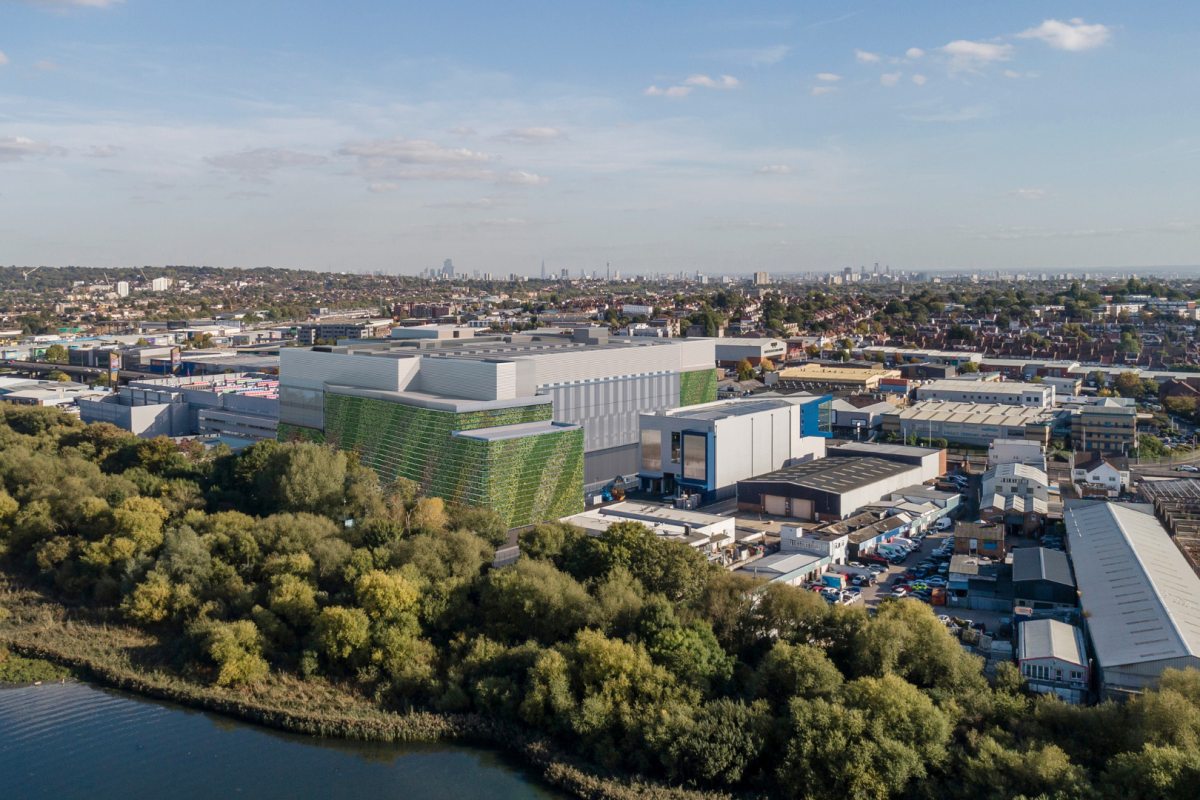
Real estate investor Castleforge and Galaxy Data Centers, a data centre operator and advisory firm, have secured planning consent to expand their Redhill data centre campus, situated near London, with a new 15MW facility set to be developed. Approved by Reigate & Banstead Borough Council, the project will add four data halls as part of a two-storey building on the existing site at Foxboro Business Park. The expansion forms part of a wider programme that could see total investment in the campus reach around £500 million. The Redhill site, located on a 3.1-hectare industrial estate, will also include an office building and is designed to support future growth in digital infrastructure capacity across the London market. The project follows a previous investment of more than £100 million in the campus in 2024, with a further £200 million expected as part of the next phase. A focus on low-carbon data centre development The new facility is designed to achieve a BREEAM ‘Very Good’ rating and will incorporate low- and zero-carbon technologies. Waste heat generated by the data centre will be reused on site, with infrastructure in place to enable future export to a nearby residential heat network. The expansion reflects continued demand for data centre capacity in and around London, driven by AI, cloud computing, and hybrid workloads. Limited power availability and planning constraints have made existing sites increasingly important for new development. Mike Adcock, Head of Investments at Castleforge, says, "Securing planning consent for our new development at Redhill is a major milestone in our plans to deliver high-quality, sustainable digital infrastructure to one of the world's most important data centre markets." Paul Leong, Chief Financial Officer and Partner at Galaxy Data Centers, adds, "This planning consent is a pivotal step in realising the long-term vision we set out when we acquired [the Redhill site] alongside Castleforge." The Redhill campus currently spans 11,800m² across three buildings and serves customers including enterprises in financial services and AI. The site benefits from access to renewable energy, low-latency connectivity to hubs such as Slough and London Docklands, and available space for further expansion. Construction timelines have not yet been confirmed, with further development milestones expected to be announced.

Legrand cooling selected for 'Europe’s largest AI campus'
Legrand, a French multinational infrastructure products manufacturer, has been selected by Start Campus, a designer, builder, and operator of sustainable data centres, to supply cooling technology for a large-scale data centre development in Sines, Portugal. The project forms part of a planned 1.2GW campus designed to support AI, cloud computing, and high-performance workloads. Legrand will deploy its rear-door heat exchanger technology, developed by its USystems brand, to provide rack-level cooling across the site. The Sines campus is powered by renewable energy and is targeting a power usage effectiveness (PUE) of 1.1 and a water usage effectiveness (WUE) of 0, using seawater cooling to support high-density environments. Robert Dunn, CEO of Start Campus, says, "These are very technically challenging projects, so we need to work with the best in the business to meet those complex challenges." Cooling technology for high-density workloads The cooling system operates at rack level, removing heat directly at source by cooling exhaust air before it enters the wider data hall. This approach reduces reliance on traditional air-cooling methods and supports higher rack densities. Legrand states that the system can reduce cooling-related power consumption compared with conventional approaches, whilst also maintaining stable thermal conditions. The technology additionally adjusts cooling capacity in real time to match operational requirements, supporting efficiency and performance across the facility. Rita Lourenço, Key Account Manager - Critical Power at Legrand, notes, "The full lifecycle partnership [...] includes knowledge sharing, maintenance support, proactive problem detection, and long-term collaboration beyond commissioning." The two companies state their partnership includes ongoing support and maintenance, alongside the initial deployment of the cooling systems. For more from Legrand, click here.


Translate »