Data Centre Build News & Insights


AIP partners with Caterpillar for 2GW AI power
Developer of integrated AI power and compute infrastructure platforms American Intelligence & Power Corporation (AIP), construction equipment manufacturer Caterpillar, and equipment deliverer Boyd CAT have formed a strategic partnership to support the development of AIP’s Monarch Compute Campus in West Virginia, USA. The agreement includes a purchase arrangement for dedicated onsite power infrastructure, intended to support hyperscale and enterprise data centre requirements. The initial phase will provide up to 2GW of generation capacity, with power delivery beginning in 2026 and full capacity online during 2027. Under the agreement, AIP has ordered 2GW of fast-response natural gas generator sets to support the first phase of Monarch. Deliveries are scheduled between September 2026 and August 2027. The generation systems will be supported by battery energy storage systems (BESS), intended to manage rapid load changes associated with AI workloads. The equipment is expected to be commissioned within months of delivery, supporting phased deployment at the site. Further expansion is planned in later phases. Power platform for AI data centre workloads The Monarch site is designed as a behind-the-meter power platform, with onsite generation intended to operate independently of incremental utility transmission or distribution infrastructure. According to the companies, the platform is intended to support rapid load variability, high availability, and predictable long-term operation for AI-driven data centre environments. Daniel J Shapiro, CEO of AIP, comments, “This strategic alliance reflects a shared commitment to delivering reliable, scalable, and capital-efficient power solutions on an accelerated timeline. "Our design is purpose-built for AI data centre operations, combining fast-response natural gas generation with battery energy storage to manage rapid load variability and deliver consistent power quality at scale. "By leveraging our existing microgrid designation from the State of West Virginia, we can bring new capacity online quickly while supporting long-term grid reliability and resilience, without increasing rates or adding costs for existing utility customers.” Melissa Busen, Senior Vice President of Electric Power at Caterpillar, adds, “This collaboration reflects Caterpillar and our dealers’ continued focus on supporting customers that require primary, continuous-duty power at scale through our broad energy portfolio. "Projects like Monarch demonstrate how Caterpillar’s natural gas generation platforms are being deployed as core infrastructure for data centres and other power intensive applications where reliability, speed of deployment, and lifecycle performance are critical.” Generator details The project will use Caterpillar G3516 fast-response natural gas generator sets, selected for behind-the-meter data centre applications. The generators are designed to support rapid start, load-following operation, and continuous-duty performance. According to the companies, the systems can ramp from zero to full load in approximately seven seconds, supporting workloads with rapid load fluctuations. The generators will operate on natural gas and incorporate emissions controls, including selective catalytic reduction, to support compliance with relevant air permitting requirements. The Monarch platform has a stated long-term target of up to 8GW of planned generation capacity. With an existing West Virginia microgrid designation, the site is intended to operate without increasing rates or adding costs for existing utility customers. In parallel, AIP and Caterpillar have also entered into a strategic alliance framework covering phased expansion planning, operations and maintenance strategy, lifecycle performance, and service and parts support. The agreement also includes vendor equipment financing through Caterpillar Financial, subject to standard terms and conditions and aligned with delivery phasing. For more from Caterpillar, click here.

GCRE extends Energy and Data Centre Partner opportunity
The Global Centre of Rail Excellence (GCRE) has extended its competition to secure an Energy and Data Centre Partner (EDCP) for its 700-hectare site. GCRE is a new, purpose-built facility being developed in South West Wales for international rail research, testing, and net zero technology development. The GCRE site has the potential to become Europe’s leading cluster for rail innovation. In September last year, the company began its search for a partner to develop Renewable Energy Sources (RES) and a data centre (DC) on the site, a former open cast mine equivalent to the size of Gatwick Airport. The plan is for the partner to develop the assets alongside the rail project. Chief Executive Simon Jones notes that ‘significant’ interest had been expressed in the site from developers in the energy and data centre sectors, but confirmed that bidders had requested more time to develop comprehensive proposals for the site. GCRE has therefore decided to extend its search for a partner into 2026, with a revised EDCP Invitation to Tender (ITT) available on the Sell to Wales platform. Potential bidders can register their interest in the opportunity, by completing a ‘Conditions of Participation’ document, which runs from now until 12 noon on 10th March 2026. Opportunities in an emerging data centre region The site is only 30km from Bridgend and 50km from Cardiff, where data centre clusters are already forming. GCRE Chief Executive Simon Jones explains, “The last few weeks have been very encouraging as we have seen the significant interest there is from the commercial market in the GCRE site as a location for high-quality renewable energy and data centre infrastructure. “What’s clear, however, is that more time is needed for bidders to develop their proposals. It has meant that we have taken the decision as a company to extend our partner search and give everyone in the market more time to put forward proposals. “That is why we have issued a new ITT with an extended timeline to allow that interest to crystalise into firm proposals. We had originally hoped to appoint a partner by the end of the current Senedd term, but that has not been possible and so we have extended the time available into 2026. “The opportunity for a long-term partnership with GCRE is a unique one. The GCRE site’s size, power grid, and telecoms connectivity make it very appealing for the development of renewable energy assets and data centre infrastructure. 132kV and 400kV power lines cross over the GCRE site, with high-quality fibre connectivity being progressed for the area. “It’s right that we take time to find the correct partner. Energy and data centre infrastructure at GCRE will help raise the economic profile of the site, something that is very important as we continue our search for private investment for the rail project.” The EDCP competition is being developed in parallel with GCRE’s separate search for private investment for the railway. Simon continues, “We have seen in recent months the important ways in which the energy and AI policy landscape is developing fast. The UK is seeking to harness the opportunities of net zero transition and AI by developing the infrastructure needed to support it. "This region is at the forefront of that change. Just recently, South Wales was designated as a new AI Growth Zone by the UK Government. “GCRE and the modern energy and data infrastructure we can build on the site is one of those opportunities and it’s something we believe we can use as a platform for new green jobs around an international rail cluster.”

Thorn, Zumtobel to exhibit at Data Centre World
Thorn and Zumtobel, both lighting brands of the Zumtobel Group, are to present a "unified approach" to data centre lighting at Data Centre World 2026. The companies say the focus will be on three operational priorities for data centre operators and delivery teams: reduced energy consumption, reliable operation, and consistent control across white space, plant, circulation, and perimeter areas. The stand will outline how a coordinated lighting and controls strategy can support specification, installation, and ongoing operation across different data centre environments. The Zumtobel Group says its approach is intended to support consistency across projects, while also simplifying long-term maintenance and operational management. Lighting controls for data centres A central element of the stand will be the use of the LITECOM control platform, which is presented as a way to connect a defined portfolio of luminaires across different zones of a data centre. The companies say this is intended to support scheduling, presence detection, daylight strategies, scene setting, and portfolio standardisation. The stand will also feature TECTON II, shown as part of a continuous-row lighting infrastructure approach, which is designed to support rapid, tool-free assembly and future adaptation. Lighting applications on show will cover white space, technical areas, offices, and exterior zones. Products listed for demonstration include: • Thorn: Aquaforce Pro, ForceLED, Piazza, Omega Pro 2, IQ Beam • Zumtobel: IZURA, TECTON II, MELLOW LIGHT, AMPHIBIA, LANOS All are shown as being controlled via LITECOM. The stand design itself will be intended to reflect Zumtobel Group's stated sustainability principles, using reused and modular components from previous events, with minimal new-build elements. In addition, graphics have been consolidated to reduce printing and waste. Neil Raithatha, Head of Marketing, Thorn and Zumtobel Lighting UK & Ireland, notes, “Data centre customers need lighting that is consistent, efficient, and straightforward to manage. “Our presentation this year brings together proven luminaires with a control platform that helps project teams deliver quickly and run reliably, from the white space to the perimeter.” Thorn and Zumtobel will be exhibiting at Stand F140 at Excel London on 4–5 March 2026. For more from Thorn and Zumtobel, click here.

DataVita's North Lanarkshire site named AI Growth Zone
Data centre and cloud services provider DataVita's North Lanarkshire site has been named a UK AI Growth Zone, unlocking £8.2 billion of private investment for the region - one of the largest technology commitments in Scottish history. The project brings together three integrated components: 500MW of AI-ready data centre capacity, over 1GW of private wire renewable energy infrastructure, and 'innovation parks' designed to attract next-generation industries. Over 3,400 jobs will reportedly be created in the coming years, from immediate construction roles through to permanent positions in data centre operations, renewable energy, and AI-related fields. Site details DataVita is building 500MW of hyperscale data centre capacity optimised for AI workloads. The facilities use closed-loop cooling systems with near-zero water consumption and will operate at a power usage effectiveness (PUE) of 1.15. Over 1GW of renewable energy - wind, solar, and battery storage - will be developed on private wire connections directly to the data centres. The system will be grid positive, exporting surplus clean energy to the national grid. Power costs will be sub-10p per kWh, with carbon intensity under 5 gCO₂e/kWh - 97% lower than the London grid average. Purpose-built 'innovation parks' will provide the physical infrastructure for next-generation industries. The development includes laboratory space, robotics research facilities, and advanced manufacturing units, aiming to attract companies and researchers who need proximity to AI compute at scale. The goal is to create a thriving ecosystem where the anchor investment draws new businesses and hundreds of additional jobs to the region. A community fund will also deliver over £543 million to North Lanarkshire over the next 15 years, supporting skills and training programmes, local charities, and community initiatives. The fund will be governed by an independent board with local representation, ensuring the community decides how the money is spent. Additional commitments include 50 apprenticeships and an AI Venture Fund backing Scottish startups. Eco-conscious development DataVita claims the AI Growth Zone will be one of the most sustainable AI infrastructure developments in the world. The system is grid positive, with renewable sources to generate more energy than the data centres consume. Carbon intensity will be 97% lower than other major UK data centre hubs and with almost zero water waste. Technology Secretary Liz Kendall comments, "Today’s announcement is about creating good jobs, backing innovation, and making sure the benefits AI will bring can be felt across the community. “From thousands of new jobs and billions in investment through to support for local people and their families, AI Growth Zones are bringing generation-defining opportunity to all corners of the country.” Danny Quinn, Managing Director of DataVita, adds, "Scotland has everything AI needs: the talent, the green energy, and now the infrastructure. But this goes beyond the physical build. "We're creating innovation parks, new energy infrastructure, and attracting inward investment from some of the world's leading technology companies. This is a real opportunity for North Lanarkshire, and we want to make sure local people share in it. "The £543 million community fund means the benefits stay here: good jobs, new skills, and investment that actually reaches the people who live and work in this area." For more from DataVita, click here.

XYZ Reality appoints new COO and CFO
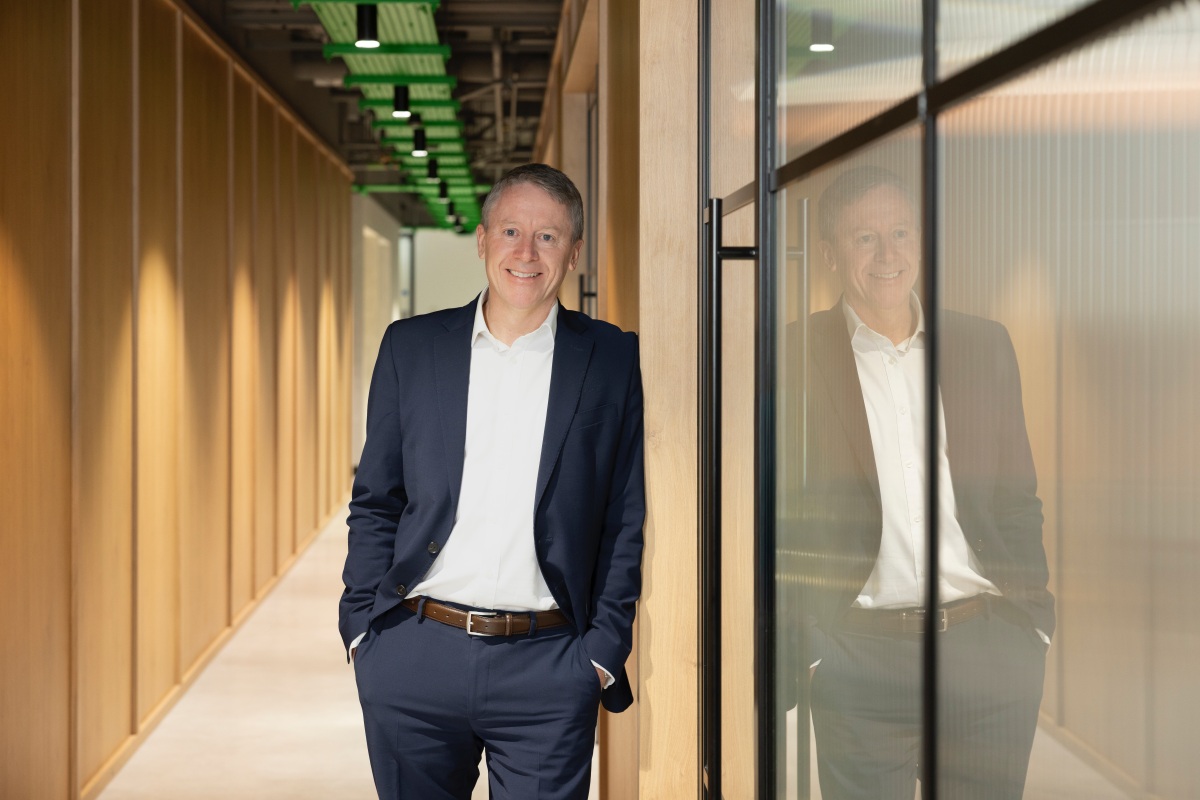
XYZ Reality, a provider of augmented reality (AR) and real-time project controls, has appointed Bruno P.S. Rocha as Chief Operating Officer (COO) and Soroosh Keshtgar (pictured above) as Chief Financial Officer (CFO) at a time when demand is increasing across data centre construction projects. The company says adoption of its construction delivery platform is rising across hyperscale data centre and mission-critical environments, with projects increasing in scale and complexity. The appointments are intended to support operational growth and long-term expansion. As COO, Bruno will be responsible for operational execution, aligning teams, and strengthening consistency across delivery as the company expands across markets and customers. His remit also includes shaping the operating model and supporting planned fundraising activity. He has previously held senior roles at Palantir and Gecko Robotics, with experience in engineering-led and robotics organisations. He joins XYZ Reality with a background focused on applying technology to physical-world operations. Soroosh joins as CFO as the company scales into larger projects and prepares for further international growth. His role will focus on strengthening financial systems, processes, and governance to support decision-making and future investment. He began his career in aerospace engineering before qualifying as a chartered accountant at PwC. He has since held senior finance roles in high-growth organisations, with experience in scaling finance functions during periods of rapid expansion and organisational change. Leadership to support mission-critical growth David Mitchell, founder and CEO of XYZ Reality, says, “As we scale the business, it’s critical that we strengthen our leadership team alongside the customer base and technology. "Bruno and Soroosh bring the experience, perspective, and operational discipline we need to support increasingly complex projects and build a resilient company for long-term growth.” Bruno Rocha, COO at XYZ Reality, comments, “XYZ Reality is at a real inflection point. The technology is proven and the momentum is clear; now it’s about building a company that can scale well beyond a single product or market. "This is about solving real problems in construction. With the right people and ambition, there’s a genuine opportunity to rethink how construction is delivered end to end.” Soroosh Keshtgar, CFO at XYZ Reality, adds, “As XYZ Reality scales into larger, more complex projects, financial clarity becomes critical. "My focus is on building the systems, transparency, and insight that allow the business to make confident, data-informed decisions, supporting customers, investors, and the wider team as we grow.” For more from XYZ Reality, click here.

Data centre waste heat could warm millions of UK homes
New analysis from EnergiRaven, a UK provider of energy management software, and Viegand Maagøe, a Danish sustainability and ESG consultancy, suggests that waste heat from the next generation of UK data centres could be used to heat more than 3.5 million homes by 2035, provided the necessary heat network infrastructure is developed. The research estimates that projected growth in data centres could generate enough recoverable heat to supply between 3.5 million and 6.3 million homes, depending on data centre design efficiency and other technical factors. The report argues that without investment in large-scale heat network infrastructure, much of this heat will be lost. The study highlights a risk that the UK will expand data centre and AI infrastructure without making use of the waste heat produced, missing an opportunity to reduce household energy costs and improve energy resilience. “Our national grid will be powering these data centres - it’s madness to invest in the additional power these facilities will need and waste so much of it as unused heat, driving up costs for taxpayers and bill payers,” argues Simon Kerr, Head of Heat Networks at EnergiRaven. “Microsoft has said it wants its data centres to be ‘good neighbours’ - giving heat back to their communities should be an obvious first step.” Regional opportunities and proximity to housing The research points to examples where data centres are located close to both new housing developments and areas affected by fuel poverty. Around Greater Manchester, for example, 15,000 homes are planned in the Victoria North development, with a further 14,000 to 20,000 planned in Adlington. The area also includes more than a dozen existing data centres, with additional facilities planned. According to the analysis, these sites could potentially supply heat to nearby new housing, reducing the need for individual gas boilers and supporting lower-carbon heating. Moreover, the study maps how similar patterns could be replicated across the UK, linking waste heat sources with residential demand through heat networks. Using waste heat for space heating is common in parts of northern Europe, particularly in Nordic countries. There, waste heat from sources such as data centres, power plants, incinerators, and sewage treatment facilities is often connected to district heat networks, supplying homes via heat interface units instead of individual boilers. In the UK, a number of cities have been designated as Heat Network Zones, where heat networks have been identified as a lower-cost, low-carbon heating option. From 2026, Ofgem will take over regulation of heat networks and new technical standards will be introduced through the Heat Network Technical Assurance Scheme, aimed at improving consumer and investor confidence. Heat networks, regulation, and policy context The Warm Homes Plan includes a target to double the proportion of heat demand met by heat networks in England to 7% by 2035, with longer-term ambitions for heat networks to supply around 20% of heat by 2050. The plan also includes funding support for heat network development. However, Simon argues that current policy does not fully reflect the scale of opportunity from large waste heat sources, continuing, “Current policy in the UK is nudging us towards a patchwork of small networks that might connect heat from a single source to a single housing development. If we continue down this road, we will end up with cherry-picking and small, private monopolies, rather than national infrastructure that can take advantage of the full scale of waste heat sources around the country. “We know that investment in heat networks and thermal infrastructure consistently drives bills down over time and delivers reliable carbon savings, but these projects require long-term finance. "Government-backed low-interest loans, pension fund investment, and institutions such as GB Energy all have a role to play in bridging this gap, as does proactivity from local governments, who can take vital first steps by joining forces to map out potential networks and start laying the groundwork with feasibility studies.” Peter Maagøe Petersen, Director and Partner at Viegand Maagøe, adds, “We should see waste heat as a national opportunity. In addition to heating homes, heat highways can also reduce strain on the electricity grid and act as a large thermal battery, allowing renewables to keep operating even when usage is low and reducing reliance on imported fossil fuels. "As this data shows, the UK has all the pieces it needs to start taking advantage of waste heat - it just needs to join them together. With denser cities than its Nordic neighbours and a wealth of waste heat on the horizon, the UK is a fantastic place for heat networks. It needs to start focusing on heat as much as it does electricity - not just for lower bills, but for future jobs and energy security.”

RWE sustainably powers Global Switch’s London DC
RWE, a German renewable energy company, has signed an eight-year power purchase agreement (PPA) with Global Switch, an owner, operator, and developer of data centres in Europe and Asia-Pacific. Under the terms of the agreement, Global Switch will source electricity produced from RWE’s Brechfa Forest West onshore wind farm to power its data centre in the heart of London’s Docklands. From January 2026 until 2033, RWE will supply a total of 70 gigawatt hours of clean electricity per year. The Brechfa Forest West onshore wind farm is located in southwest Wales and was commissioned in 2018. It comprises 28 turbines and has a generation capacity of 57.4 megawatts. Ulf Kerstin, Chief Commercial Officer at RWE Supply & Trading, notes, “In view of the ongoing digitalisation and the increasing use of artificial intelligence in almost all areas of life, the number of data centres and their energy requirements are growing. "Some data centre operators are already relying on the use of low-carbon electricity from RWE, and we are delighted to have gained Global Switch as another partner.” Peter Domeney, COO at Global Switch, comments, “Our agreement with RWE is a critical next step on our journey to purchasing 100% renewable energy by 2030 and to the setting of new standards for what a sustainable, environmentally-conscious data centre can look like. "It’s an agreement that brings together the forests of Wales and the most powerful, most advanced AI and high-performance compute deployments in the world.” Wind power from Wales to London Global Switch’s London data centre, set to benefit from this agreement, is located in the heart of the city’s business district, with access to 224 Mega Volt Ampere (MVA) - or approximately 224 MW - of secured power and currently undergoing a programme of densification and expansion. Last year, it was selected by CoreWeave to host one of Europe’s largest deployments of NVIDIA H100 and H200 GPUs, as well as being the site of the company’s liquid cooling showcase - a presentation of the latest liquid cooling technologies, some of which had never before been deployed in Europe. Global Switch is targeting 100% renewable energy by 2030, and annualised power usage efficiency (PUE) of 1.2 across its European sites. In 2025, its emissions reduction targets were approved by the Science Based Targets initiative and its sites were inducted into the voluntary European Code of Conduct for Energy Efficiency in Data Centres initiative. RWE says it is investing billions of euros in expanding its generation portfolio, particularly in offshore and onshore wind, solar energy, and battery storage. This is complemented by its global energy trading business. The company says that, thanks to its "integrated portfolio of renewables, battery storage, and flexible generation, [it] is well positioned to meet the growing global demand for electricity," which is being driven by the increasing use of artificial intelligence and further electrification.

McCarthy tops out NV12 project at Vantage’s campus
General contractor McCarthy Building Companies recently completed the topping out milestone for hyperscale data centre provider Vantage Data Centers’ second of four planned data centres on its NV1 Campus, located outside of Reno in Storey County, Nevada, USA. With representatives from Storey County and Vantage leadership in attendance, the project marked major progress on the NV12 facility, the second 64-megawatt (MW) data centre on the campus. Phase I of the campus provides hyperscalers and large cloud providers with 128 MW of combined critical IT capacity across its NV11 and NV12 facilities. The campus has reportedly created more than 1,200 local construction jobs and generated local economic impact. McCarthy notes that, just recently, the campus reached more than 1.1 million labour hours on site since breaking ground in May 2024, with zero lost-time incidents through what it describes as a "campus-wide commitment to safe construction practices and innovative methods." Austin Osborne, Storey County Manager, explains, “Vantage Data Centers, our developer partners; McCarthy Building Companies, the general contractor on site; and the Storey County team - from Community Development and Planning to Business Development and the Fire Protection District - have worked closely to move this project forward. "It’s a strong example of effective collaboration, and we’re grateful for the long-term opportunities this project will continue to bring to our community.” The 260,000ft² (24,155m²), two-storey NV12 facility utilises liquid-to-liquid cooling, similar to NV11, that operates on a closed loop chilled water system to properly cool the systems while requiring only an initial fill. This more sustainable design is common across Vantage’s data centres, with the company noting it represents its "commitment to sustainable operations and long-term reliability." Continued construction during ongoing operation Jared Carlson, Senior Vice President at McCarthy Building Companies, comments, “This project has demonstrated an incredible commitment to sustainability, safe construction, and operations, and has created a strong sense of community within Storey County. "Vantage and our design-build partners have been instrumental in creating a campus that will provide significant economic impact to the region and will continue to sustain technological growth in the years to come.” Following turnover of NV11, NV12 will begin to turn over phased portions of the facility beginning in December 2027, allowing customers to begin operations prior to final completion in early 2029. As construction progress continues, McCarthy will be piloting the use of an HP Robot to map out the layout of NV12’s walls, blockouts, and backing. Following the robot’s success on some of McCarthy's healthcare projects, the team will use the robot to layout all elements on the concrete slab, based on the existing Building Information Model (BIM) layout. This method allows for greater efficiency and precision as the facility’s core components have already been digitally modelled to the site’s conditions.Both NV11 and NV12 are being constructed by McCarthy in a design-build effort with Corgan, serving as the campus architect. Key design-build trade partners include: Amfabsteel, Chavez-Grieves, Rosendin Electric, Apollo Mechanical Contractors, Salas O’Brien, Integrated Fire and Security Solutions, Cosco Fire Protection, and Wood Rogers. For more from Vantage, click here.

Datacloud Middle East comes to Dubai
Taking place in Dubai, UAE on 10–12 February 2026, Datacloud Middle East will highlight the region’s rapid emergence as a global data centre hub, driven by hyperscaler investment, sovereign AI strategies, and large-scale digital transformation. Over three days, the event will examine how the Middle East will build future-ready infrastructure to support AI at scale while advancing sustainability and innovation. More than 50 industry experts will share insights on preparing for AI-driven workloads, with focused discussions on energy strategy, high-density design, and major developments such as Stargate UAE. Driving data centre acceleration in the Middle East The agenda will also address financing and delivery challenges, including capital deployment, modular construction, and international expansion. Sessions will explore operational excellence and sustainability, showcasing advanced cooling technologies, sovereign AI initiatives, and interconnection strategies that will enable resilient, high-performance connectivity across the region. With over 500 attendees, Datacloud Middle East will offer a comprehensive view of how gigawatt-scale campuses, cutting-edge cooling, and strategic partnerships will shape the Middle East’s AI infrastructure leadership. Click here to secure your place now.

Huber+Suhner expands sustainable packaging drive
Huber+Suhner, a Swiss fibre optic cable manufacturer, has broadened the use of recycled and recyclable packaging across its fibre optic portfolio as part of its ongoing sustainability programme. The company has removed more than 743,000 single-use plastic bags, substituted approximately 1.5 million cable ties, and replaced 35,500 blister packages with recycled polyethylene terephthalate. 11 product families are now covered by the initiative. Lana Ollier, Head of Global Sustainability at Huber+Suhner, says, “Removing single-use plastic items and moving more product families to recyclable and sustainable materials show what’s possible when sustainability is designed in, not added on.” Less waste and lower packaging emissions The measures include FSC-certified, recyclable paper packaging for connector and cable assemblies, and recycled PET for fibre modules including LISA, SYLFA HD, and IANOS. Huber+Suhner reports improvements in handling, dust protection, and transport weight. Verified lifecycle assessments indicate that blister packaging emissions have been reduced by around 50% for selected modules when compared with traditional plastics. The changes are intended to cut on-site material waste and ease installation through simplified paper formats and stackable blister trays. Following positive feedback, the company says its sustainable packaging approach will extend to 17 fibre optic product families during 2026. For more from Huber+Suhner, click here.


Translate »