Data Centre Build News & Insights


BCS Consultancy expands into Southern Europe
BCS Consultancy, a global data centre consultancy, has expanded its presence in Southern Europe through two senior appointments and a new data centre project in Barcelona. As part of this move, the company has appointed Alberto Modrego Eisman and Rhoana Zanotelli as Senior Consultants to support growth across the Iberian market. According to BCS, the appointments strengthen its ability to support clients across the data centre development lifecycle in Spain and wider Southern Europe. Alberto Modrego Eisman joins the company with experience in cost management and large-scale developments across Spain and the EMEA region, including previous roles at JLL. Rhoana Zanotelli previously held senior infrastructure and development roles at Goodman, where she worked on data centre projects across Europe. The Iberian market and a Barcelona data centre project BCS has also secured a data centre development project in Barcelona as part of a wider urban digital infrastructure scheme in the region. The company says it will support the project through key delivery phases as demand for data centre capacity continues to increase across Southern Europe. According to BCS Consultancy’s Q1 Data Centre Commercial Report, the Spanish market has recently moved to a competitive grid access framework using capacity auctions across constrained power nodes in locations including Madrid, Aragón, and Andalusia. The report states that the model prioritises operational readiness and accelerated delivery times for new infrastructure developments. BCS says the Iberian Peninsula continues to attract data centre investment due to lower land costs, renewable energy availability, and the ability to support large-scale AI and GPU-focused facilities. Chris Coward, COO at BCS Consultancy, comments, “Iberia is rapidly becoming one of the most important growth markets for data centre development in Europe. As constraints intensify in traditional hubs, our clients are looking to new regions to scale. "Expanding our presence in Southern Europe allows us to combine local expertise with our pan-European delivery capability, giving clients the clarity and confidence they need to execute complex projects in these emerging markets.” For more from BCS Consultancy, click here.

Kao Data acquires site in Park Royal, West London
Kao Data, a data centre developer and operator, has acquired a 4.7-acre (19,020m²) industrial site in Park Royal, West London, for the development of a new data centre facility. The site, formerly part of the Frogmore Industrial Estate, was acquired from Reassure Limited, part of Legal & General, in March 2026. It is located within the Park Royal area of West London, one of the UK’s largest data centre and cloud computing markets. According to Kao Data, the planned facility will be designed to support AI and advanced computing workloads while targeting high environmental and energy efficiency standards. Plans for the development are currently being prepared in consultation with the Old Oak and Park Royal Development Corporation (OPDC), local authorities, and community stakeholders. Data centre planned for 2029 Kao Data says the new facility is expected to support computing infrastructure used across sectors including life sciences, healthcare research, artificial intelligence, and financial services. David Bloom, founder and Executive Chair of Kao Data, comments, “Today’s data centres are the engine rooms of the digital age, but it’s vital that new developments work hand in hand with local stakeholders and are developed responsibly, with the community front of mind. “Our acquisition of this former industrial site in Park Royal demonstrates our longstanding commitments to sustainable redevelopment, and we’re excited to work closely with the OPDC to continue our expansion in West London.” The company also states that community engagement activities linked to the development will include education and local support initiatives, building on programmes already established at its Harlow, Slough, and Stockport sites. Detailed proposals for the Park Royal development are expected to be submitted during the coming months as part of the formal planning process. Kao Data says the facility is expected to be operational in 2029. For more from Kao Data, click here.

Deep Green partners with Zendo on renewable data centres
British digital infrastructure company Deep Green has partnered with Zendo Energy, a London-based startup building an AI-powered energy management platform, to support a "new generation" of AI-ready data centres powered by renewable energy and energy management technology. The partnership begins at Deep Green’s 400kW site in Urmston, Greater Manchester, where Zendo has secured a renewable energy supply contract for the facility. Designed for high-performance computing and AI workloads, the Urmston site supports rack densities of up to 150kW. Waste heat generated by the servers is captured and reused to heat the swimming pool at Trafford Leisure Centre. According to Deep Green, the heat reuse system is expected to save the leisure centre around £80,000 annually while reducing carbon emissions. The company’s approach centres on deploying modular data centres close to facilities that can use recovered heat, including swimming pools, district heating networks, and public buildings. Renewable energy aiding modular data centre expansion Deep Green says demand for AI infrastructure continues to increase, while grid limitations and planning delays remain challenges for UK data centre developments. The company says its modular deployment model allows new capacity to be brought online more quickly than traditional developments. Through the partnership, Zendo will provide energy monitoring, forecasting, and capacity optimisation using its Energy OS platform. Renewable power for the Urmston facility, in particular, will be supplied by ENGIE. Hazel Lim, Chief Financial Officer at Deep Green, says, “Zendo has been a strong partner in shaping our power procurement strategy for our data centres. "We are excited to draw on their expertise to develop a highly efficient, cost-effective approach that maximises value for our colocation clients by fully capturing the advantages of heat reuse.” Drew Barrett, COO and co-founder of Zendo Energy, adds, “Deep Green has an ambitious vision to accelerate data centre deployments at pace, and we're proud to be the energy technology partner making sure energy is never the bottleneck. “The flexibility we've built into this contract is designed to grow alongside their trajectory, and we see this as a blueprint for what the next generation of data centres should look like: flexible, sustainable, and built for scale.” For more from Deep Green, click here.

365, Aphorio Carter plan 200MW AI infrastructure expansion
365 Data Centers, a provider of network-centric colocation, network, cloud, and other managed services, has partnered with Aphorio Carter, a Florida-based data centre real estate investment and asset management platform, to develop around 200MW of AI-ready data centre capacity across several US markets. The partnership will focus on identifying, converting, and developing high-density data centre facilities designed to support artificial intelligence and high-performance computing workloads. According to reports, 365 Data Centers is currently evaluating six sites and plans to act as the long-term operator for the facilities. Initial projects are expected to come online within the next nine to 24 months. Letters of intent have been initiated for sites in Aurora and Simpsonville, with further locations under consideration in Trumbull, Louisville, Harrisonburg, and Columbus. The facilities are being designed to support liquid-to-chip cooling infrastructure and cabinet densities ranging from 50kW to more than 200kW. AI workloads driving high-density data centre plans Derek Gillespie, CEO and CRO of 365 Data Centers, comments, “Through this partnership, we’re in an ideal position to create a new class of high-density infrastructure designed specifically for AI-era workloads. "Working with Aphorio Carter will allow us to create new value in existing assets while bringing new capacity online to support today’s demand.” The companies say the partnership combines Aphorio Carter’s real estate and redevelopment experience with 365 Data Centers’ operational capabilities to accelerate deployment timelines and improve infrastructure utilisation. John Regan, President and COO at Aphorio Carter, explains, “We’ve aligned the delivery of utility power with critical infrastructure, allowing us to provide scalable, high-density infrastructure where it’s needed most. "This is a great partnership, where we’ve got the real estate and the ability to supply the data centre infrastructure in line with available utility capacity, while 365 has a highly reliable O&M track record along with a healthy pipeline of customers.” Further information on site developments and timelines is expected as projects progress. For more from 365 Data Centers, click here.

Thailand approves $29bn data centre investment wave
Thailand's Board of Investment (BOI) has approved six major projects worth a combined ฿958 billion ($29 billion; £21 billion), led by a large-scale data infrastructure expansion by TikTok System (Thailand), underscoring the country's growing role as a regional hub for data centres, cloud services, and AI-driven digital infrastructure. The approvals were made at a BOI Board meeting chaired by Ekniti Nitithanprapas, Deputy Prime Minister and Minister of Finance. The Board also approved a second batch of projects under the Thailand FastPass mechanism and discussed with energy agencies steps to strengthen electricity readiness and improve access to clean energy - two increasingly important factors in attracting large-scale digital and high-technology investment. Narit Therdsteerasukdi, Secretary General of the BOI, says the latest approvals reflect growing investor confidence in Thailand at a time when global companies are racing to expand digital infrastructure across Asia. He comments, "Amid continuing global volatility, investment in Thailand's digital and advanced technology sectors continues to grow, reflecting investor confidence in the country's potential as a regional technology hub. "For Thailand to capture this new investment cycle, we must be ready not only with investment incentives, but also with sufficient power, clean-energy options, skilled talent, deeper supply chains, and a reliable facilitation system that allows projects to move quickly from approval to operation." Project details Of the six approved projects, three are in data centre and data hosting services, with a combined investment value of ฿913 billion ($28 billion; £20 billion). The largest project is by TikTok System (Thailand), valued at ฿842 billion ($26 billion; £19 billion). The project will install additional servers and expand data storage and processing infrastructure across Bangkok, Samut Prakan, and Chachoengsao Province, supporting rising demand for digital services and strengthening Thailand's role in regional digital infrastructure. Beyond its core infrastructure investment, TikTok has also committed to developing digital literacy and e-commerce curricula to help create new business opportunities for Thai entrepreneurs and strengthen the country's digital workforce. Another approved project is a ฿46 billion ($1.4 billion; £1 billion) data centre investment by Skyline Data Center and Cloud Services, part of the UAE-based DAMAC Group. Located in Chachoengsao, the project will support an IT load of 200MW. A third data centre project, by Bridge Data Centres IIO (Thailand) from Singapore, was approved with an investment value of ฿24.6 billion ($765 million; £561 million). Located in Chonburi, the project will support an IT load of 134MW. To accelerate project implementation, the BOI Board also selected nine additional projects worth ฿52 billion ($1.6 billion; £1.1 billion) for Thailand FastPass, following the first batch of 16 projects. The latest selection brings the FastPass portfolio to 25 projects. The FastPass mechanism is designed to streamline approval and permitting procedures, speed up coordination among relevant agencies, and help strategic projects begin operations faster. Strengthening grid readiness At the same meeting, the Board outlined steps to strengthen electricity readiness with the Ministry of Energy and the Energy Regulatory Commission, focusing on urgent power supply needs for incoming investment, particularly in the Eastern region. The Board also directed action on accelerating the issuance of Thailand's Power Development Plan (PDP) to support future demand, new energy technologies, and long-term power-system planning. The Board also advanced plans for clean energy mechanisms, including Direct Renewable Power Purchase Agreements (Direct PPA), which would allow private companies to buy and sell renewable electricity directly, with participation criteria and grid-service charges to be announced shortly. In addition, it acknowledged the launch of Utility Green Tariff 2 (UGT2), a source-specific green tariff designed to give companies more options for procuring clean electricity. Narit Therdsteerasukdi explains the combination of large-scale digital investment, power readiness, clean energy access, skilled talent, and faster investment facilitation is central to Thailand's competitiveness in the next phase of global investment. He continues, "Thailand is entering a new investment cycle in which speed, power readiness, clean energy access, and skilled talent will be decisive. "The BOI is working with partner agencies to ensure that major projects can move from approval to operation as quickly as possible, while strengthening the infrastructure, workforce, supply chains, and ecosystem needed for long-term growth in the digital economy."

Castleforge, Galaxy to expand £500m Redhill campus
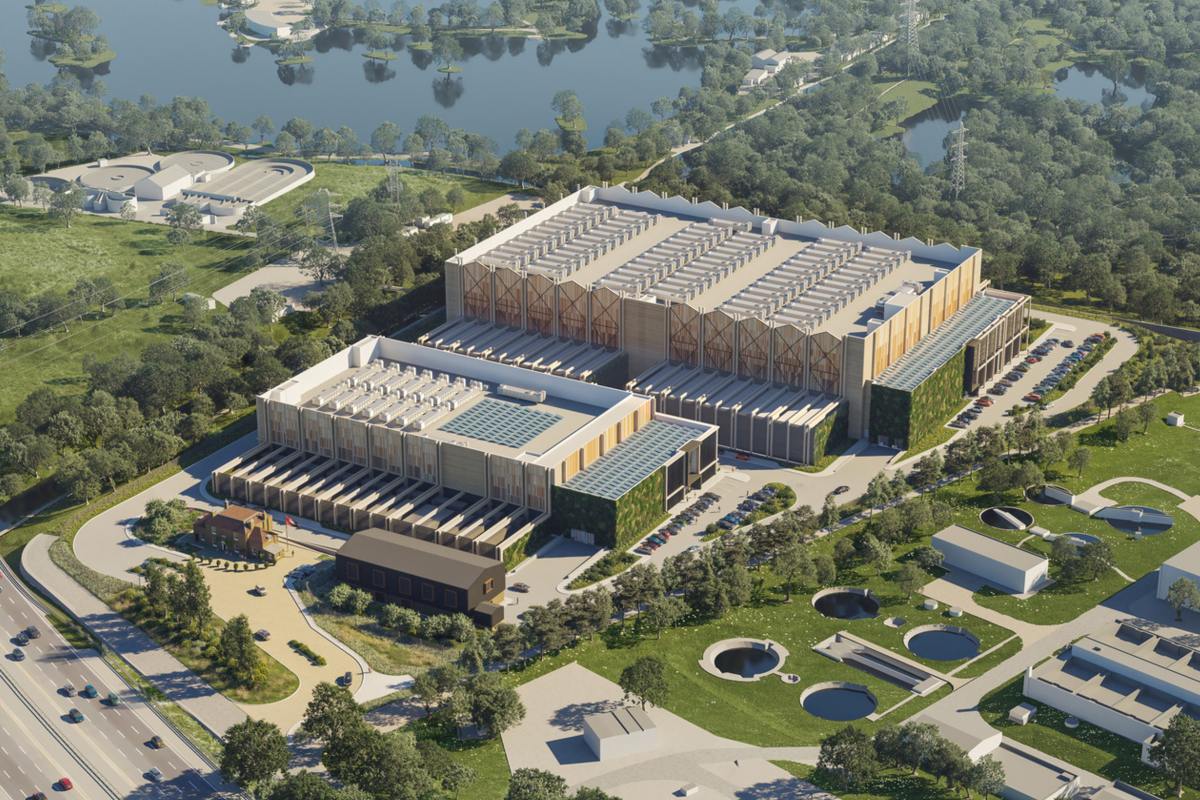
Real estate investor Castleforge and Galaxy Data Centers, a data centre operator and advisory firm, have secured planning consent to expand their Redhill data centre campus, situated near London, with a new 15MW facility set to be developed. Approved by Reigate & Banstead Borough Council, the project will add four data halls as part of a two-storey building on the existing site at Foxboro Business Park. The expansion forms part of a wider programme that could see total investment in the campus reach around £500 million. The Redhill site, located on a 3.1-hectare industrial estate, will also include an office building and is designed to support future growth in digital infrastructure capacity across the London market. The project follows a previous investment of more than £100 million in the campus in 2024, with a further £200 million expected as part of the next phase. A focus on low-carbon data centre development The new facility is designed to achieve a BREEAM ‘Very Good’ rating and will incorporate low- and zero-carbon technologies. Waste heat generated by the data centre will be reused on site, with infrastructure in place to enable future export to a nearby residential heat network. The expansion reflects continued demand for data centre capacity in and around London, driven by AI, cloud computing, and hybrid workloads. Limited power availability and planning constraints have made existing sites increasingly important for new development. Mike Adcock, Head of Investments at Castleforge, says, "Securing planning consent for our new development at Redhill is a major milestone in our plans to deliver high-quality, sustainable digital infrastructure to one of the world's most important data centre markets." Paul Leong, Chief Financial Officer and Partner at Galaxy Data Centers, adds, "This planning consent is a pivotal step in realising the long-term vision we set out when we acquired [the Redhill site] alongside Castleforge." The Redhill campus currently spans 11,800m² across three buildings and serves customers including enterprises in financial services and AI. The site benefits from access to renewable energy, low-latency connectivity to hubs such as Slough and London Docklands, and available space for further expansion. Construction timelines have not yet been confirmed, with further development milestones expected to be announced.

Schneider, GreenScale partner on new operational architectures
Global energy technology company Schneider Electric has partnered with GreenScale, a developer of hyperscale data centre campuses, to support the development of data centre sites across Europe, focusing on AI-ready infrastructure and operational design. Under the agreement, Schneider Electric’s Secure Power and Services divisions will provide engineering and design consultancy, contributing to the development of new operational architectures for data centres. The collaboration combines Schneider Electric’s infrastructure expertise with GreenScale’s experience in data centre operations, software, and digital twin technology. The aim is to improve deployment timelines, operational predictability, and maintenance processes through the use of automation and data-driven tools. With application in mind, GreenScale is developing data centres in regions with available power and renewable energy potential, with projects intended to support long-term regional investment and infrastructure growth. A focus on automation and operational efficiency The partnership includes the use of predictive analytics, condition-based maintenance, and digital twin integration to support performance and reliability across sites. These approaches are intended to reduce operational risk, improve maintenance planning, and support consistent performance, particularly in remote or emerging locations. The companies are also working on reference architectures designed to incorporate automation and monitoring from the outset, enabling improved visibility and control across infrastructure systems. Dan Thomas, CEO at GreenScale, says, "As demand for AI, Cloud and HPC accelerates in Europe, data centre operators must rethink how facilities are designed and managed." Thierry Chamayou, Vice President, Cloud and Service Providers, Europe at Schneider Electric, adds, "By combining expertise from our Secure Power and Services divisions, we are helping to create a resilient, AI-ready infrastructure platform." The collaboration also includes the integration of monitoring and control systems that connect physical infrastructure with digital platforms, supporting high-density AI and cloud workloads. For more from Schneider Electric, click here.

Legrand cooling selected for 'Europe’s largest AI campus'
Legrand, a French multinational infrastructure products manufacturer, has been selected by Start Campus, a designer, builder, and operator of sustainable data centres, to supply cooling technology for a large-scale data centre development in Sines, Portugal. The project forms part of a planned 1.2GW campus designed to support AI, cloud computing, and high-performance workloads. Legrand will deploy its rear-door heat exchanger technology, developed by its USystems brand, to provide rack-level cooling across the site. The Sines campus is powered by renewable energy and is targeting a power usage effectiveness (PUE) of 1.1 and a water usage effectiveness (WUE) of 0, using seawater cooling to support high-density environments. Robert Dunn, CEO of Start Campus, says, "These are very technically challenging projects, so we need to work with the best in the business to meet those complex challenges." Cooling technology for high-density workloads The cooling system operates at rack level, removing heat directly at source by cooling exhaust air before it enters the wider data hall. This approach reduces reliance on traditional air-cooling methods and supports higher rack densities. Legrand states that the system can reduce cooling-related power consumption compared with conventional approaches, whilst also maintaining stable thermal conditions. The technology additionally adjusts cooling capacity in real time to match operational requirements, supporting efficiency and performance across the facility. Rita Lourenço, Key Account Manager - Critical Power at Legrand, notes, "The full lifecycle partnership [...] includes knowledge sharing, maintenance support, proactive problem detection, and long-term collaboration beyond commissioning." The two companies state their partnership includes ongoing support and maintenance, alongside the initial deployment of the cooling systems. For more from Legrand, click here.

Hudson IX expands 60 Hudson Street capacity
Hudson InterXchange (Hudson IX), a New York-based carrier-neutral colocation and interconnection data centre provider, has added a new 1MW data hall at 60 Hudson Street in New York, USA, increasing available capacity at one of the city’s most connected carrier hotels. The facility is now operational and available for high-density colocation deployments. A second 1MW data hall is scheduled to come online in the second quarter of 2026, with longer-term plans to expand total capacity at the site beyond 10MW. The expansion comes as data centre space and power availability remain limited across the New York City market, particularly in locations with established network connectivity. 60 Hudson Street continues to act as a key interconnection hub, hosting more than 300 carriers and service providers. The latest development introduces additional capacity within this environment, enabling organisations to deploy infrastructure close to network providers and end users. Additional capacity in a constrained market Hudson IX is among a small number of operators currently adding new capacity within the building, supported by available power for future deployments. The new data hall is designed to support a range of requirements, including network providers, content delivery networks, cloud platforms, enterprises, and financial services organisations. The company notes it can accommodate both standard and high-density installations, including workloads linked to AI and other compute-intensive applications. Atul Roy of Hudson InterXchange says, "This expansion is the result of our remarkable team and its commitment to delivering a large, world-class, high-performance data centre platform with scalable solutions ranging from single cabinets to bespoke cages." Further expansion is planned as part of a wider roadmap to increase total capacity at the site beyond 10MW, supporting continued demand for colocation and interconnection in the New York metro area. For more from Hudson IX, click here.

Design strategies for efficient, high-performance data centres
The rapid expansion of artificial intelligence workloads is placing unprecedented demands on data centre infrastructure. As computer densities increase and operational expectations tighten, the need to balance performance with energy efficiency and carbon reduction has become more urgent. This shift is driving a re-evaluation of how data centres are designed, particularly in relation to cooling strategies and overall resource use. Data centres are now a critical component of global infrastructure, supporting cloud services, digital platforms, and AI applications. With increasing digitalisation, energy consumption associated with these facilities continues to rise. In the UK and globally, regulatory and market pressures are also evolving, with greater emphasis on energy performance, carbon reporting, and long-term sustainability targets. Within this context, various industry reports are suggesting that: • Data centres are estimated to account for approximately 1–1.5% of global electricity consumption• High-density AI workloads can exceed 30–80 kW per rack, significantly increasing cooling demand• Leading facilities are targeting power usage effectiveness (PUE) values of 1.2 or lower Efficient cooling system strategies As computational loads increase, cooling systems are under growing pressure to maintain stable operating conditions without excessive energy use. Traditional approaches that rely heavily on mechanical cooling are becoming less viable due to their high energy intensity. This challenge affects operators, developers, and designers, particularly as expectations around efficiency and environmental performance continue to rise. BSE|3D, a UK building services engineering and consultancy practice, says it works with organisations navigating these challenges by applying a performance-led design approach from the earliest project stages. The company notes that it has observed that early integration of simulation tools allows for more effective alignment between building form, system design, and operational performance. Solutions that focus on reducing cooling demand at source while optimising system efficiency can significantly improve outcomes. This includes evaluating environmental conditions, refining building parameters, and developing strategies that prioritise low-energy operation. A key approach involves enabling a cooling profile where approximately 70% of annual demand can be met through low-energy systems such as economisation and adiabatic processes, with mechanical systems supporting peak conditions and operational resilience. This reduces reliance on continuous compressor use and supports improved overall performance. Kriti Gupta, Sustainability Consultant at BSE|3D, explains, “As data centre loads continue to increase, the industry needs to move beyond conventional cooling approaches. By prioritising low-energy strategies and validating them through simulation, it is possible to reduce energy demand while maintaining performance and resilience. Early-stage design decisions play a critical role in achieving this balance.” Data centres are expected to play an increasingly significant role in supporting digital infrastructure. As their impact grows, so too does the importance of designing them in a way that responds to both operational requirements and environmental considerations.


Translate »