Data Centre Build News & Insights


atNorth expands to Norway with new 'mega site'
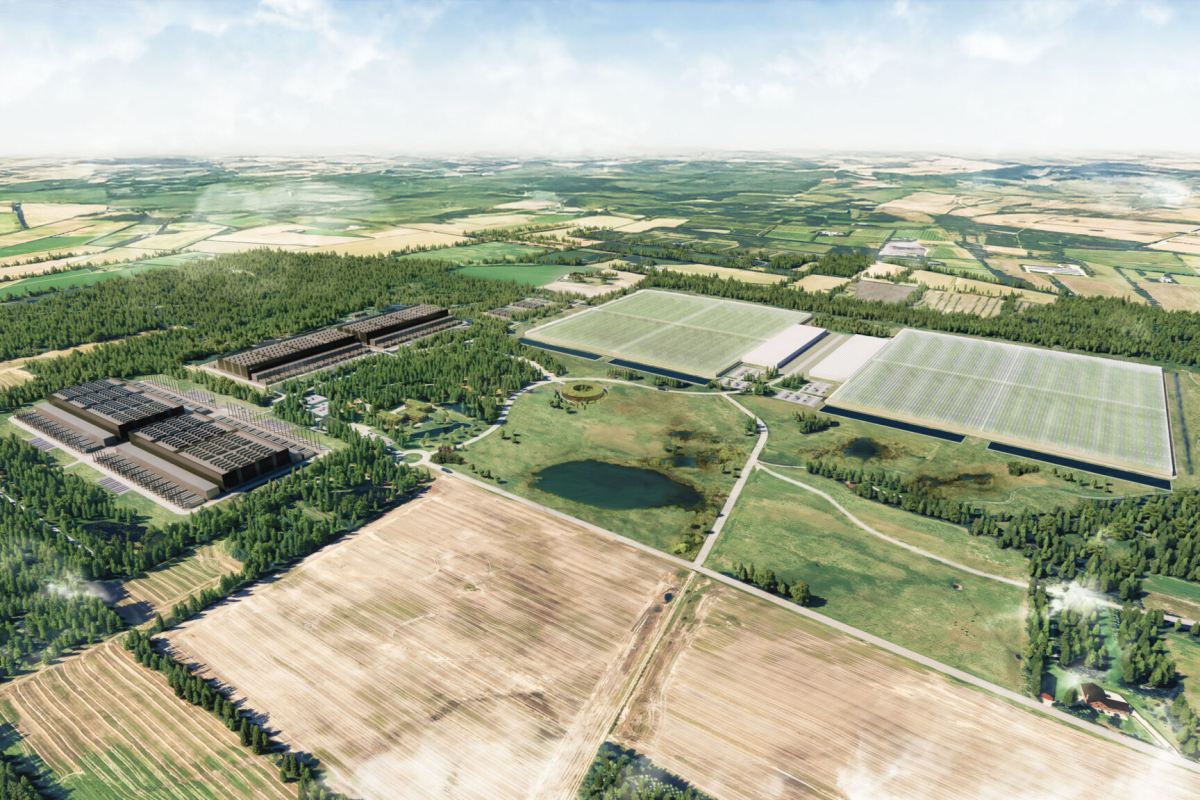
atNorth, a Nordic high-density data centre provider, has announced its expansion into Norway through the acquisition of land for a new data centre campus in Haugaland. The site will become home to NOR01, a planned data centre designed to support high-density computing workloads and hyperscale deployments. The development marks atNorth's first presence in Norway and extends the company's footprint across all Nordic countries. Located within Haugaland Business Park, the 36-hectare site is expected to deliver 120MW during its initial phases, with capacity ultimately increasing to 350MW. Power availability is projected for 2028 and will be supported by two new substations: one will be developed by Norway's transmission system operator, Statnett, and the second by regional grid provider Fagne. According to atNorth, the company is also exploring opportunities to reuse excess heat generated by the facility in partnership with organisations based within the business park. Eyjólfur Magnús Kristinsson, CEO of atNorth, says, "Expanding to Norway has been a long-term strategic priority for us, and we’re proud to officially mark our presence across all the Nordic countries with the announcement of NOR01. "Haugaland Business Park is a strong industrial region that offers the ideal combination of renewable energy, excellent connectivity, and a naturally cool climate, making it a highly attractive location for future-focused, AI workloads. "We look forward to collaborating with the local community to deliver world-class digital infrastructure in a responsible way." Haugaland selected for power and connectivity Norway has become an increasingly popular location for large-scale data centre developments due to its renewable energy resources, stable operating environment, and connectivity to European markets. The country's climate also supports more efficient cooling strategies, reducing reliance on mechanical cooling systems. Monika Lindanger, Mayor of Tysvær Municipality, suggests, "This project will not only bring in new investment and innovation to the region, but will also support our local community through training and employment opportunities, our economy via sustainable industry development, and our circular economy with beneficial heat reuse partnerships. "We’re proud to be part of this next chapter in the Nordic data centre evolution." The announcement follows atNorth's plans for a new large-scale data centre campus in Sollefteå, Sweden, as well as recent expansions at facilities in Iceland and developments in Sweden and Finland. For more from atNorth, click here.

Corscale begins work on 140MW Iver data centre
Hyperscale data centre developer Corscale has appointed UK contractors McLaren Construction and Phoenix ME under a pre-construction services agreement to begin predevelopment works for a 140MW data centre campus in Iver, Buckinghamshire, UK. Located on a 14-acre (4,047m²) site at Court Lane near the M25, the development forms part of the West London data centre market and represents a significant addition to UK digital infrastructure capacity. The project will comprise two data centre buildings and a dedicated 140MVA substation. Designed by Gensler, the scheme includes architectural features intended to complement a nearby Grade II listed farmhouse, alongside measures aimed at supporting biodiversity. McLaren Construction will serve as main contractor, while Phoenix ME will act as MEP delivery partner. Gensler is supported by Cundall on MEP design and L&P Group on engineering services. Julian Michalski, Head of Development for Corscale Europe, says, "This is, by design, an exceptional collaboration of a tier-one team. "It brings a combination of expertise and experience - each with a strong track record in complex, mission-critical environments - to deliver superior quality, programme certainty, and technical assurance at every stage, ensuring we meet programme deadlines and our practical completion date in late 2029." Site clearance and remediation works begin in July Predevelopment activities are scheduled to begin on 1 July 2026 and will include site clearance, enabling works, utility diversions, and environmental remediation. The site is currently occupied by a mix of industrial uses, including vehicle storage, waste transfer operations, recycling facilities, concrete and aggregate storage, and tyre distribution businesses. Among the first phases of work will be the relocation of two 36in (91cm) water mains by Affinity Water and the implementation of a site-wide remediation strategy. David McDonnell, Managing Director for Data Centres at McLaren Construction, notes, "As data centres become larger, more powerful, and more complex, we become all the more reliant on the latest construction technology to achieve the project management and precision that this design requires. "We are proud to be partnering with Corscale and this outstanding project team on what promises to be a landmark scheme, and we look forward to progressing works on site." The project is targeting practical completion during the fourth quarter of 2029. For more from Corscale, click here.

Siemens develops AI data centre reference architecture
German multinational technology company Siemens has worked with NVIDIA and Fluence to develop a reference architecture aligned with NVIDIA DSX Vera Rubin, providing an electrical, power, and controls framework for hyperscalers, colocation providers, and cloud infrastructure operators deploying AI data centres. As AI workloads continue to drive demand for larger-scale infrastructure, platforms such as NVIDIA Vera Rubin NVL72 are increasing requirements for power and cooling. Data centre operators must also address challenges including site selection, grid connectivity, capital expenditure, and deployment times while integrating emerging technologies. The reference design, as a response to this, is based on a 136MW facility with a 100MW IT load. It covers the electrical infrastructure from the utility connection at 34.5kV through medium-voltage distribution, modular low-voltage power blocks, and rack-level interfaces. The architecture is designed to meet Tier III concurrent maintainability requirements, allowing individual components to be taken out of service without affecting IT operations. The modular design also allows capacity to be added in phases, supporting deployments ranging from 10s of megawatts to 100s of megawatts without requiring a complete redesign. The reference architecture incorporates electrical design parameters aligned with nVent and NVIDIA requirements, and a future update is expected to add advanced thermal management guidance. Sara Zawoyski, President of nVent Systems Protection, says, "nVent has deployed more than two gigawatts of liquid cooling capacity globally. That operational experience is what allows us to help partners like Siemens translate reference architectures into deployable thermal solutions that perform reliably from day one at this scale. "Platforms like NVIDIA Vera Rubin NVL72 are pushing rack densities well beyond what traditional air-cooled infrastructure can support." Supporting large-scale AI infrastructure According to Siemens, the architecture is designed to support high-density AI deployments while maintaining compatibility with future IT platforms and changing energy requirements. It also supports NVIDIA DSX MaxLPS and is intended to help operators maximise computing output within fixed power limits. Ruth Gratzke, President of Siemens Smart Infrastructure USA, states, "Siemens’ deep expertise in power systems and controls engineering, modular infrastructure, protection, and industrialised delivery is really evident in this latest joint reference architecture design. "Our pre-engineered, prefabricated, and factory-tested medium- and low-voltage skids help minimise on-site construction complexity, shorten commissioning cycles, and improve quality, safety, and repeatability across deployments. "Further, our automation and digital twin strategies deployed in this reference help ensure that facilities are brought online faster and with greater potential to produce tokens at scale." The design also incorporates battery energy storage technology from Fluence to provide additional operational flexibility and resilience. Jeff Monday, Chief Growth Officer at Fluence, suggests, "Our Smartstack platform is central to this new architecture, transforming the grid into an accelerator for compute. "By providing essential capabilities like voltage and frequency ride through, black start, grid demand response, and AI load smoothing, we are enabling our customers to build the AI factories of the future faster and more reliably." The architecture also includes integration with a centralised data centre management platform, providing visibility across power, cooling, and compute infrastructure through a single management interface. For more from Siemens, click here.

Pure DC launches carbon removal platform
A Healthier Earth (AHE), the climate technology research and development subsidiary of Pure Data Centres Group (Pure DC), has launched a carbon removal platform designed to increase the availability of biochar-based carbon removal credits for hyperscale operators, enterprises, and institutional buyers. According to AHE, the platform combines carbon removal project development, financing, governance, and verification within a single framework. The company says the initiative is intended to address challenges associated with the fragmented nature of the current carbon removal market. The launch comes as demand for carbon removal projects increases alongside broader corporate decarbonisation targets and continued investment in AI infrastructure. Gary Wojtaszek, Executive Chairman and interim CEO of Pure DC, comments, “What we’re doing at Pure DC is the first of its kind anywhere in the world. "In Dublin, we’ve demonstrated that net zero carbon, self-powered data centres are deliverable. Now, with our Biochar Integrated Carbon Removal from AHE, we’re making them scalable. “This isn’t incremental improvement; it’s a complete reset of how this sector will be built going forwards.” AHE says it is expanding its commercial, scientific, and operational capabilities to support the development of the platform as it moves from individual projects towards a longer-term operating model. Platform combines carbon removal projects and verification According to AHE, the platform combines company-owned production facilities with partner-developed projects, operating under a common governance structure and technical standards. All carbon removal credits generated through the platform will be certified under the Isometric Standard and supported by digital monitoring, reporting, and verification technology from Mangrove Systems. The company says this approach is intended to provide buyers with greater consistency, transparency, and traceability across carbon removal projects. Lukas May, Chief Commercial Officer at Isometric, states, “The data centre sector needs scalable, high-quality carbon removal and the confidence that every credit represents genuine climate impact. We’re looking forward to working with A Healthier Earth to deliver on that mission.” Brandon Vlaar, CEO of Mangrove Systems, adds, “We’re proud to be chosen as AHE’s digital data infrastructure partner, combining automation and AI-enabled tools to ensure every tonne of carbon removed through the platform is measured, accurate, and verified.” Carbon removal linked to data centre decarbonisation plans Pure DC says the platform forms part of its wider decarbonisation strategy and will support discussions with hyperscale customers and other organisations seeking to address residual emissions alongside energy efficiency measures. According to the company, the platform is designed to complement carbon reduction initiatives across its data centre campuses while providing customers with access to independently verified carbon removal projects. AHE says the framework has been developed to provide long-term access to carbon removal credits while maintaining oversight through centralised governance, verification processes, and project monitoring. For more from Pure DC, click here.

VIRTUS installs super-grid transformers at Berlin campus
VIRTUS Data Centres, a UK data centre owner-operator and part of ST Telemedia Global Data Centres (STT GDC), has completed the installation of two 185MVA super-grid transformers at its Wustermark campus in Berlin/Brandenburg, Germany. According to the company, the transformers are among the largest deployed at a European data centre and represent a key milestone in the development of the site. The Wustermark campus is expected to become the first data centre campus in the Berlin/Brandenburg region to connect directly to a 380kV transmission network. VIRTUS says this will give customers the option of operating without diesel generators while maintaining access to conventional backup generation where required. The transformers form part of the campus's initial 300MW capacity, with power supplied through a dedicated 500MW substation and dual direct connections to the 50Hertz 380kV network. VIRTUS says the integration with the 50Hertz Wustermark substation and the high-voltage transmission connections are designed to provide a resilient and stable power architecture for large-scale data centre operations. High-voltage design targets efficiency and resilience The company says the site has been designed to support both traditional generator-backed operations and a generator-free operating model. As with other VIRTUS facilities, the campus will operate using 100% certified renewable electricity. The site is also located close to regional renewable energy resources, including onshore wind generation. According to VIRTUS, the higher-voltage transformer design provides several operational benefits, including improved electrical efficiency, reduced transmission losses, increased system stability, and enhanced resilience for high-density computing environments. The company adds that the approach may also help reduce system usage charges and long-term energy costs. Mike Golding, SVP of Construction at VIRTUS Data Centres, says, “Delivering the Wustermark Campus has been one of the most ambitious engineering programmes VIRTUS has undertaken to date. “From the 380kV connections to the deployment of these super-grid transformers, every element has been designed to deliver levels of resilience and scalability that have not previously been available in this region. “This campus represents a new generation of infrastructure - one that supports AI-scale growth, reduces reliance on generators, and aligns with the future of renewable energy.” For more from VIRTUS, click here.

euNetworks launches quantum-safe connectivity service
euNetworks, a European bandwidth infrastructure company, has launched a new quantum-safe private connectivity service developed in collaboration with Adtran, a US manufacturer of networking and communications equipment. Called Quantum Shield, the service is designed to provide encrypted data centre connectivity for organisations with high security and compliance requirements across Europe. According to euNetworks, the platform combines dedicated optical infrastructure, real-time fibre monitoring, and quantum-resistant encryption technologies to protect sensitive data in transit. The company says the launch comes as businesses prepare for evolving cybersecurity regulations and post-quantum security requirements, including the EU’s post-quantum cryptography roadmap, DORA, and NIS2. Quantum Shield will be offered as an additional security layer for euNetworks’ Private Connect MOFN service, which provides managed private network infrastructure for enterprise customers. The new platform uses FSP 3000 technology from Adtran, alongside post-quantum cryptography aligned with standards from NIST. According to the companies, all traffic is encrypted automatically at Layer 1 across dedicated fibre infrastructure. Optical monitoring and encryption combined for data protection The deployment also incorporates Adtran’s ALM fibre monitoring technology, which is designed to detect and locate fibre-tapping events in real time. euNetworks says the combined system is intended to provide low-latency, high-throughput connectivity while giving customers greater visibility into how data is secured across the optical layer. Marisa Trisolino, CEO of euNetworks, says, “We’re committed to providing customers with connectivity that meets increasingly stringent security requirements and chose to partner with Adtran because they bring deep expertise in optical networking and a practical understanding of how private infrastructure is built and operated at scale.” Christoph Glingener, CTO of Adtran, adds, “By combining quantum-resilient encryption with real-time fibre monitoring, we’re helping euNetworks safeguard critical traffic without compromising performance or scalability.” The companies say the deployment reflects increasing demand for secure optical networking infrastructure as enterprises prepare for future cybersecurity challenges linked to quantum computing. For more from euNetworks, click here.

GreenScale study examines data centre energy use
GreenScale, a developer of hyperscale data centre campuses, has published analysis examining how a proposed data centre development in Derry/Londonderry could support renewable energy use and reduce electricity system costs in Northern Ireland. The whitepaper analyses grid constraints, renewable energy curtailment, electricity demand, and infrastructure capacity across the region. According to the report, locating data centre infrastructure closer to renewable energy generation in Northern Ireland’s North West could improve grid utilisation and reduce renewable energy wastage. Northern Ireland is targeting 80% renewable electricity consumption by 2030, with the transition projected to deliver annual consumer savings of approximately £110 million. Brian Doherty, Managing Director of GreenScale Ireland, says, “This whitepaper highlights a growing mismatch between where renewable energy is generated and where demand is located. "Northern Ireland has made strong progress in expanding wind capacity, but transmission and system constraints mean a significant proportion of that clean energy is curtailed, which means it is effectively switched off, often during periods of high generation. "This increases system costs and reduces the value of existing infrastructure. A strategically located data centre campus in the North West could help absorb surplus power, reduce curtailment, and support lower overall electricity system costs.” Wind curtailment remains a major challenge The report states that 29.6% of wind generation in Northern Ireland was curtailed during 2024 because of transmission constraints and electricity system balancing requirements. According to the analysis, the strongest wind generation resources are concentrated in the North West, while the largest areas of electricity demand are located elsewhere. The report argues that this imbalance limits the effective use of renewable generation during periods of high wind output. GreenScale says flexible electricity demand from data centres could help absorb excess renewable generation that would otherwise be curtailed. The company also states that facilities capable of adjusting parts of their power demand in response to grid conditions could improve overall electricity system efficiency. Pressure grows on established data centre markets The whitepaper also highlights wider growth in global data centre electricity demand, which is projected to reach 945TWh by 2030. The report notes that established European data centre markets including Frankfurt, London, Amsterdam, Paris, and Dublin (FLAP-D) are facing increasing grid constraints and longer connection timelines, leading operators to consider alternative regions with greater power availability. GreenScale identifies Northern Ireland’s North West as a suitable location for future data centre infrastructure because of its wind generation resources, available land, and proximity to renewable energy supply. The report concludes that improving alignment between renewable generation and electricity demand could reduce energy wastage, improve grid efficiency, and support Northern Ireland’s clean energy targets. For more from GreenScale, click here.

Case study: Reducing emissions through refrigerant recovery
Through this case study, A‑Gas, a company specialising in lifecycle refrigerant management (LRM), demonstrates how its Rapid Recovery service enabled the safe, fast recovery and AHRI‑700 reclamation of 1,745 kg of R134a during a London data centre chiller retrofit, preventing 2,495 tonnes CO₂e, maintaining continuous operations, and enabling a successful transition to lower‑GWP cooling. The background The customer is a leading technology solutions and services provider in Europe, headquartered in the United Kingdom. It offers a broad portfolio of products and services, including data centre hosting, enterprise infrastructure, and cloud infrastructure, among others. The company, A‑Gas, is building a sustainable future through the supply of lower global warming refrigerants combined with responsible lifecycle management of refrigerant gases. Through its first-class recovery, reclamation, and repurposing processes, it captures refrigerants and fire protection gases for future re-use or safe destruction, preventing harmful release into the atmosphere. The offering, Rapid Recovery, is A-Gas’s premier refrigerant recovery service. Across the globe, it provides a safe and fast onsite solution, which includes what the company calls industry-leading F-Gas documentation. The challenge A-Gas was engaged by a digital infrastructure provider operating an edge data centre in London to support the recovery of refrigerant and assist in the transition to a lower GWP solution. The A-Gas Rapid Recovery team was contracted to recover a significant volume of R134a from four chillers scheduled for decommissioning. These units were being replaced as part of a retrofit project involving the installation of new cooling equipment with a substantially lower GWP. The solution A-Gas Rapid Recovery, an onsite refrigerant recovery service that operates up to 10 times faster than traditional methods, was appointed to assist with recovering the high GWP gas used at the data centre. The Rapid Recovery equipment is fully independent of external services (such as power), is portable, and is capable of reaching units across distances exceeding 300 feet (91 metres) through flexible hoses, making it ideal for challenging locations. This innovative solution proved perfect for the complex retrofit project, where efficiency was paramount. A-Gas’s team of certified F-Gas engineers managed the full recovery process, enabling contractors to focus on other critical aspects of the retrofit, ensuring streamlined and timely project completion. The results Over a four-day period, the A-Gas Rapid Recovery team successfully recovered 1,745 kg of R134a refrigerant, preventing the equivalent of 2,495 tonnes of CO₂e emissions. In addition, new chillers with a lower GWP were installed, significantly reducing the Total Equivalent Warming Impact (TEWI) of the cooling systems. A-Gas’s quick and efficient refrigerant recovery process ensured the project was executed without disruption to data centre operations, maintaining continuous service to customers and uninterrupted data security. The conclusion The recovered refrigerant was reclaimed to AHRI 700 standards, ready for safe reuse in the market. By ensuring full recovery and reclamation, A-Gas mitigated emissions from both leaks and the production of new refrigerants, supporting the principles of the circular economy, combining environmental protection with operational continuity. For more from A-Gas, click here.

Huawei launches AI data centre infrastructure platform
Chinese multinational technology company Huawei has introduced a new full-stack data infrastructure platform designed for AI data centres and large-scale enterprise AI deployments. The announcement was made during the Huawei Innovative Data Infrastructure (IDI) Forum 2026 on 21 May in Paris, France, where Yuan Yuan, Vice President of Huawei and President of the company’s Data Storage Product Line, outlined the growing role of AI infrastructure in enterprise operations. According to Huawei, increasing adoption of AI agents and AI applications is driving significant growth in enterprise data processing and token consumption, requiring organisations to redesign traditional IT infrastructure around AI workloads. With this in mind, the company says its platform has been developed to support AI data lakes, inference systems, model deployment, agent frameworks, and data resilience. Platform targets large-scale AI workloads Huawei says the infrastructure platform combines storage, data management, model deployment, and AI orchestration technologies intended for enterprise and hyperscale AI environments. The company introduced updates across several areas of its AI infrastructure portfolio, including: • OceanStor Pacific Scale-Out Storage for high-density data storage• DME Omni-Dataverse unified data management platform• Context Memory Storage for AI inference environments• ModelEngine deployment and resource scheduling platform• Nexent AI agent framework• AI-focused data resilience and protection technologies Firstly, Huawei says its OceanStor Pacific storage platform can deliver 11PB of capacity within a 2U chassis, enabling massive data storage at "optimal total cost of ownership" (TCO), while DME Omni-Dataverse is designed to support multimodal and cross-site data management. The company also introduced its Context Memory Storage system, which it says is designed for large-scale inference clusters and can reportedly reduce time to first token by 90%. AI infrastructure evolves beyond compute alone Huawei states that AI infrastructure planning increasingly requires integration between storage, compute, models, and data management systems, rather than focusing solely on GPU capacity. The company says its ModelEngine platform supports model deployment and compute resource scheduling, including partitioning resources across multiple workloads. Huawei also introduced the Nexent agent platform, which is designed to allow AI agents to be generated through natural language interactions. “AI is unlocking new opportunities for the IT industry," says Yuan. "The next chapter of AI is data. "Committed to technological innovation in data storage, Huawei will accumulate the experience of industrial AI adoption and work closely with the entire industry to help customers accelerate their journey into the intelligent era." The company says the platform also includes technologies designed to address AI-related security risks including ransomware, data tampering, and data poisoning attacks. For more from Huawei, click here.

HSCALE expands Milan hyperscale data centre plans
HSCALE, a London-based pan-European hyperscale data centre developer, has completed the acquisition of a second hyperscale data centre campus in northwest Milan, Italy, bringing its total planned power capacity in the region to 250MW. The company, which is backed by Bain Capital, says the combined investment across both Milan campuses will exceed €2 billion (£1.7 billion), with facilities expected to be ready for service in 2028. Both campuses are located in Settimo, northwest Milan, an area the company describes as one of the region’s most established hyperscale infrastructure locations. HSCALE says the sites are fully owned, with power capacity secured and pre-construction work already underway. According to the company, the projects are intended to support growing demand for hyperscale cloud and AI infrastructure across Southern Europe. Oliver Schiebel, CEO of HSCALE, explains, “We designed HSCALE's Milan campuses around a simple principle: the building should never be the bottleneck. "Our base design is liquid-cooled first, built for the most demanding hyperscale and AI workloads, and can pivot to air-cooled traditional deployments in the same physical structure. No redesign, no additional capex. "We design and build like this because we understand the long-term commitments our customers must make.” Flexible cooling designs target AI workloads HSCALE says the campuses have been designed to support multiple cooling approaches, including air cooling, direct liquid cooling, and hybrid configurations. The company states that this flexibility is intended to support both traditional cloud infrastructure and higher-density AI workloads without requiring major facility redesigns. Paul Berry-Selwood, CCO at HSCALE, says, “Milan is one of the strongest hyperscale markets in Europe and we are committing around €2 billion to this region because we understand what the market needs and are serious about its growth potential. "Our team closed the second site, secured the power, and is already progressing through pre-construction, ensuring we deliver real capacity as fast as possible.” The announcement also highlights Milan’s growing role as a connectivity hub, supported by the Milan Internet Exchange and increasing hyperscale investment outside traditional FLAP-D markets. Renewable energy and regional investment plans HSCALE says its Milan energy strategy currently targets an electricity mix with approximately 50% renewable generation, including solar, wind, and hydroelectric sources. The company also states that it is working with Aquila Clean Energy as part of a wider clean energy partnership. In addition to infrastructure investment, HSCALE says the developments are expected to create jobs across construction, engineering, IT, and data centre operations within the Milan region. The company is also supporting local initiatives including the Festival di Villa Arconati cultural event.


Translate »