Huber+Suhner expands Microsoft Azure fibre collaboration
Author: Joe Peck
Huber+Suhner, a Swiss fibre optic cable manufacturer, has strengthened its collaboration with Microsoft Azure to support the wider deployment of hollow core fibre (HCF) connectivity across the Azure network.
The company plans further investment in production capabilities to increase manufacturing volumes as Microsoft expands the use of HCF across additional Azure regions. The collaboration is focused on supporting cloud and AI infrastructure requirements.
Huber+Suhner has worked with Microsoft’s Azure fibre team in Romsey, UK, since 2017, following the acquisition of Lumenisity, a University of Southampton spin-out.
Together, the organisations have developed HCF cable and connector technologies which are already deployed within the Azure network. Higher-capacity variants are also in development to support future infrastructure growth.
The two companies have jointly developed and qualified a range of outside plant (OSP) and inside plant (ISP) cable designs for field deployment. Work is also ongoing to develop higher-density HCF cable designs for future network requirements.
At Huber+Suhner’s manufacturing facility in Herisau, Switzerland, dedicated processes have been introduced to integrate HCF into multi-fibre loose-tube cables, with scope to increase capacity as demand grows.
Connector development supporting HCF deployment
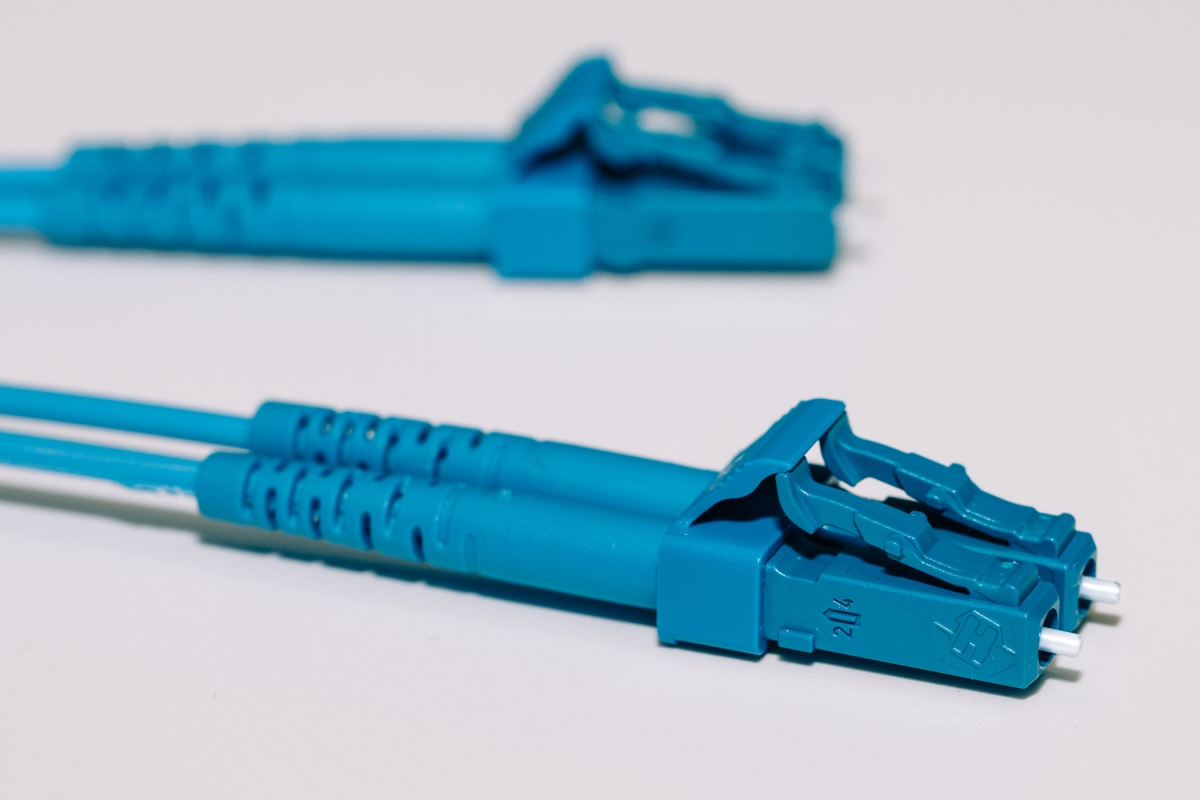
Alongside cable development, Huber+Suhner has developed a mode-converting HCF connector designed for hyperscale and metro optical environments. These connectors are manufactured at the company’s Cube Optics facility in Mainz, Germany, with further investment planned to expand production capacity.
With both HCF cable and connector designs qualified, Huber+Suhner says it is extending its portfolio to support end-to-end fibre connectivity across cloud infrastructure.
Jürgen Walter, COO Communication Segment at Huber+Suhner, comments, “Huber+Suhner is proud to support Microsoft as HCF connectivity solutions move to deployment at scale.
“Building on our foundations of innovation and quality, we can expect further advances in our HCF connectivity portfolio as the pace of adoption accelerates. Together, we look forward to shaping the future of cloud connectivity and unlocking the full potential of HCF.”
Colin Wallace, GM Cloud Network Engineering at Microsoft Azure, adds, “We value our long-standing collaboration with Huber+Suhner, which has helped us transition HCF technology from advanced research into operational deployment in the Microsoft Azure network.
“These HCF cable and connector technologies are already deployed and carrying live traffic over Azure HCF links today, and this integrated capability will help us rapidly co-design and scale connectivity solutions for the future of cloud and AI network infrastructure.”
The relevance of HCF
HCF technology enables data to be transmitted through air rather than glass, allowing for significantly lower latency in optical networks.
Microsoft’s Double-Nested Anti-Resonant Nodeless Fibre design also supports lower signal loss and higher launch powers compared to standard single-mode fibre, reducing the need for optical amplification in some metro networks.
The use of HCF in data centre environments is expected to support greater flexibility in site location, as well as improved efficiency in distributed AI workloads by reducing latency between compute clusters.
However, wider deployment presents technical challenges, including the need for robust cable designs and compatible termination methods.
Huber+Suhner says its HCF connectors are designed to interface with standard single-mode fibre systems while protecting the hollow core structure and maintaining performance in operational environments.
For more from Huber+Suhner, click here.