2 March 2026
Kioxia hosts tour of flash memory plant
 
2 March 2026
Nokia, Telefónica to expand edge networking in Spain
 
27 February 2026
Data Centre World 2026 has almost arrived
 
27 February 2026
Nostrum Group appoints new board member
 
27 February 2026
CPP Investments, Equinix to acquire atNorth
 

Latest News


Schneider to demonstrate power and cooling at DCW 2026
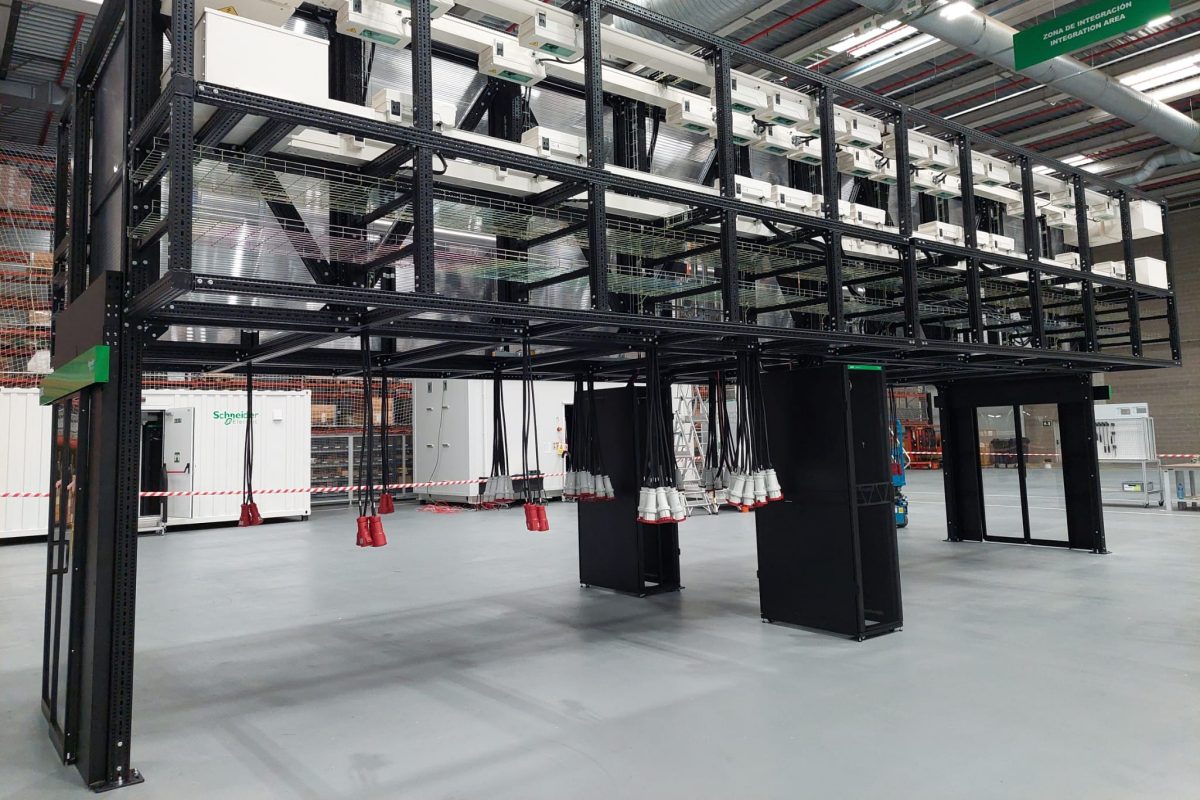
In this article for DCNN, Matthew Baynes, Vice President, Secure Power & Data Centres, UK & Ireland at Schneider Electric, details how the company will demonstrate its integrated power, cooling, and digital capabilities at Data Centre World 2026: Building for AI at scale – are you ready? As the global competition for AI leadership intensifies, the UK is stepping up in its mission to become an ‘AI Maker’. As demand increases, so too does the need for the secure, scalable, and sustainable infrastructure to accommodate it. The UK ranks among the world’s top three data centre markets, and the industry sits at the core of the country’s AI ambitions, with the Government’s AI Opportunities Action Plan now designating data centres as critical national infrastructure (CNI). Data Centre World in London is the industry’s largest gathering of professionals and end-users. During the event, as the UK’s energy technology provider, Schneider Electric will explore how we can scale AI infrastructure. The impact of investment and AI Growth Zones As previously mentioned, with the Government’s AI Opportunities Action Plan being backed by investment from big tech, data centres are now considered as critical national infrastructure. This has opened the gates for large-scale innovation, investment, and opportunities. From Stargate UK to Google’s £5 billion commitment to AI infrastructure, announcements by major global technology companies have all strengthened the UK’s leadership position. Exploring the UK’s position in the data centre market, on 4 March at 11:05am, I will discuss the importance of scaling AI responsibly in the UK, prioritising energy efficiency and innovation in data centres. Liquid cooling: Meeting the challenge of density As rack densities soar to support AI workloads, the challenge is no longer whether to adopt liquid cooling, but how to deploy if effectively at scale. On 4 March, 12:05–13:15pm, Andrew Whitmore, Vice President of Sales at Motivair by Schneider Electric, will chair a panel discussion on tackling liquid cooling challenges in data centres, and will unpack the innovations, risks, and realities behind the technology. During the session, Andrew will be joined by Karl Harvard, Chief Commercial Officer at Nscale; Ian Francis, Global Design and Engineering SME at Digital Realty; and Petrina Steele, Business Development Senior Director at Equinix. How agentic AI transforms data centre services While AI is driving demand for data centre capacity, it is also transforming how these facilities are operated and maintained. On 5 March, 11:15–11:45am, Natasha Nelson, Chief Technology Officer at Schneider Electric’s Services business, will deliver a keynote exploring how agentic AI can transform data centre services at scale. During the session, Natasha will explore the transformative role of agentic AI and Augmented Operations in delivering highly skilled technical services – both remotely and on site – for electro-sensitive environments such as large-scale data centres. She will unpack how AI-powered decision-making and human expertise can create a new era of service excellence, where every intervention is smarter, faster, and more sustainable. Building resilient, end-to-end, AI-ready data centres At Stand D140, Schneider Electric will showcase its complete, end-to-end, AI-ready data centre portfolio, enabling scalable, resilient, and sustainable AI infrastructure. Our solutions cover: • Integrated power train — including Ringmaster AirSeT switchgear, Galaxy UPS, iLine busbar, and 800VDC sidecar • Hybrid cooling solutions — including Motivair by Schneider Electric’s liquid cooling and coolant distribution units (CDUs) • All-in-one modular infrastructure — AI POD (EcoStruxure Pod Data Centres) and Modular Data Centres • Lifecycle Services — to support compliant and optimised operations Our integrated power chain begins with the Ringmaster AirSet compact switchgear, directing high-voltage power and preventing overloads. The Galaxy UPS systems provide resilient backup, keeping AI servers running continuously. Inside facilities, the iLine busbar replaces cable complexity with overhead power bars, while the 800VDC sidecar delivers direct current to racks, avoiding conversion losses. Lifecycle services orchestrate this seamless system – from the Galaxy UPS enabling rapid repair to essential cabling controlling power safely. This de-risks expansion, ensures UK regulatory compliance, and delivers efficient, long-term AI infrastructure. Together, these solutions demonstrate a fully integrated, AI-ready architecture, showcased digitally and in physical format at the stand. Experts from Secure Power, Digital Energy, and Power Products divisions will also be present to explore how these technologies enable UK organisations to lead the AI race. Software and digital services Our DCIM software solutions and services safeguard AI operations through monitoring, optimisation, and digital modelling. These include: • EcoStruxure Data Centre Expert• AVEVA and ETAP Digital Twins• EcoStruxure Building Operation• Power Monitoring Expert The software pods demonstrate comprehensive digital solutions for monitoring, controlling, and optimising infrastructure. EcoStruxure Data Centre Expert provides real-time power and cooling visibility, while Aveva and ETAP Digital Twins enable simulation, design, and automation of critical systems. EcoStruxure Building Operation facilitates secure data exchange from third-party energy, HVAC, fire safety, and security systems. Power Monitoring Expert (PME) delivers electrical system insights for improved performance and sustainability, connecting smart devices across electrical systems and integrating with process controls for real-time monitoring. Join us at Stand D140 during Data Centre World in London to be part of the conversation on scaling sustainable, efficient, and resilient data centres together. For more from Schneider Electric, click here.

STL, Mynet deliver fibre in mountainous Italy
STL, an optical and digital systems company, has worked with Mynet to deliver optical fibre infrastructure for the Intacture data centre in Trentino, Italy, located in a mountainous area described as the ‘heart of the mountain’. The project was led by the University of Trento as implementing body and scientific lead. It involves total funding of €50.2 million (£43.7 million), including €18.4 million (£16 million) from Italy’s National Recovery and Resilience Plan (PNRR). Mynet, a telecommunications company focused on fibre optic networks across Northern Italy, is the first provider to activate fibre connectivity at the facility. The deployment required high-capacity fibre to be installed within a tight timeframe and in a geographically complex environment. https://www.youtube.com/watch?v=9KpsqOIWu2E Fibre deployment completed within two months STL supplied high fibre-count cable with a compact diameter, designed for installation in 10/12mm duct systems. The cable is engineered to support long-distance blowing, faster end preparation, and simplified on-site handling, while meeting performance, durability, and scalability requirements. The connectivity infrastructure assigned to Mynet was completed in under two months. According to the companies, this resulted in around a 50% reduction in deployment time, an expected network lifetime of more than 15 years, and improved stability during peak load. Giovanni Zorzoni, General Manager of Mynet, says, “We accepted a challenge to bring high-performance connectivity to this extraordinary infrastructure in less than sixty days. "With STL’s advanced optical fibre solutions, we were able to focus on the design and execution without compromising on reliability or performance. The quality, robustness, and ease of deployment of STL’s optical fibre solutions enabled us to complete the project at record speed, even in a uniquely demanding environment.” Rahul Puri, CEO, ONB, STL, adds, “This collaboration underscores STL's expertise in delivering mission-critical digital infrastructure for data centres. "By providing scalable, future-ready solutions like multi-core and low-latency fibre, we are helping our customers build resilient networks structurally prepared for an AI-driven future.” For more from STL, click here.

McLaren appointed for 70MW London data centre phase
UK construction firm McLaren Construction has been appointed to deliver the shell and core of the first 70MW building at global data centre developer and operator Ada Infrastructure’s Docklands campus in London. The project marks Ada Infrastructure’s first European development and forms part of a planned 210MW campus in the Royal Docks. McLaren’s contract also covers enabling infrastructure for the wider site and provision for a future district heating network. The development will comprise three 70MW data centre buildings, alongside a community facility and public realm improvements, including upgraded pedestrian and cycle routes along the River Thames and works to the river wall, including a new flood defence barrier. The buildings will incorporate air and liquid cooling systems designed to operate without water evaporation, as well as low-carbon construction materials and connection points for district heating. The campus is targeting a BREEAM Excellent rating and is designed to support AI and high density workloads. A 210MW campus in London's Royal Docks James Moloney, Head of Ada Infrastructure EMEA, says, “The appointment of McLaren Construction is an important step in bringing this vision to life. "[Its] experience delivering complex data centre and infrastructure projects will be instrumental as we transform this long-vacant site into a sustainable, future-focused campus that also enhances public spaces and contributes to the wider regeneration of the Royal Docks.” McLaren’s supply chain partners include Keltbray for CFA piling, Menard for BMC piling, Gallagher for groundworks and civils, and William Hare for the steel frame. The shell and core contract is scheduled for completion in mid-2028, with the first building expected to be ready for occupation by the end of 2028.

Mayflex to highlight Elevate at Data Centre World 2026
Mayflex, a UK-based distributor of converged IP infrastructure, networking, and electronic security products, will present updates to its Elevate infrastructure portfolio at Data Centre World London 2026, taking place on 4–5 March at ExCeL London. The company will exhibit on Stand B180. Launched at the 2025 event, Elevate brings together fibre connectivity, racks, aisle containment, power distribution, and rack-level security within a single infrastructure platform. Mayflex says the portfolio has evolved over the past 12 months in response to increasing density and performance requirements in data centre environments. Andrew Percival, Managing Director at Mayflex, says, “From concept, our ambition with Elevate was to continually move the offer forwards. "We aim to build an integrated set of solutions that responds to the real pressures facing data centre operators: densification, thermal performance, deployment speed, and operational clarity. The progress made over the last 12 months reflects that focus.” New high-density additions At the exhibition, Mayflex will introduce new very small form factor (VSFF) pre-connectorised fibre systems supporting up to 3,456 fibres in 1U, alongside high-density optical distribution frames with pre-connectorised trays and cables. Additional launches include high-density power distribution strips and intelligent rack locking systems. Updates to the DCR Rack Series and cold aisle containment systems will also be demonstrated. Visitors to Stand B180 can view the portfolio and speak with the team during the event. For more from Mayflex, click here.

Norton advises on €210m data centre financing for Berlin
Global law firm Norton Rose Fulbright has advised British multinational bank Standard Chartered and French international banking group Crédit Agricole on a €210 million (£183 million) development facility for Virtus Data Centres, a UK data centre owner-operator providing colocation services across the region. The facility will finance the development of a 19,000m² data centre campus in Marienpark, Berlin. Once fully operational, the campus will deliver 57.6MW of IT capacity to meet the needs of hyperscale, government, and enterprise customers. Investment in Germany's infrastructure market The multi-disciplinary Norton Rose Fulbright team was led by London-based partners Jennie Dorsaint and Jonathan Crookes, and included partners Veit Sahlfeld (Hamburg), Holger Wolf (Frankfurt), Simon Weppner (Düsseldorf), Head of Real Estate Finance EMEA Sarah Cullen (London), counsels Michael-Alexander Volks (Hamburg) and Tobias Block (Hamburg), Senior Associate Anne-Sophie Wilhelmy (Frankfurt), and associates Symone Malcolm (London) and Jakob Kramer (Hamburg). Jonathan Crookes comments, “This financing is a landmark transaction, representing a significant investment in Germany’s rapidly growing digital infrastructure market. The deal showcases not only the breadth of our cross-border network but also the depth of our capability in the sector.”

Echelon secures €1.7bn loan financing for European expansion
Echelon Data Centres, an Irish-headquartered developer and operator of large-scale data centre infrastructure, has announced the successful closing of an initial €1.7 billion (£1.4 billion) in loan financing provided by investment bank and financial services company Morgan Stanley. The data centre operator says the financing "further strengthens [its] capital base to continue its planned expansion across Europe." Echelon now has eight campuses across Europe, totalling 1.2 GW of capacity, of which 400MW is operational or under development. The company notes that this "new multi-billion-euro financing facility enhances [its] ability to scale [its] development pipeline, invest in enabling power infrastructure, and grow [its] campus portfolio across Ireland, the UK, Spain, and Italy." David Smith, Deputy CEO of Echelon Data Centres, comments, “Ireland is one of Europe’s most important and supply-constrained data centre markets, and we have established the leading position in the Irish market through the delivery of large-scale campus developments supported by innovative power solutions developed in partnership with customers, regulators, and grid stakeholders. “Over the past 15 months, we have expanded into Spain - in joint venture with Europe’s largest utility, Iberdrola - and into Italy, extending our development model into new strategic markets. “We are incredibly proud of the growth Echelon has achieved over the past several years and [we are] excited for the opportunity ahead. "Demand for digital infrastructure across Europe is substantial and long term, and our ambition is to continue expanding our platform to support the growth of our customers in key strategic markets.” Continuing growth Charlie Etheridge, Head of Investments at Echelon Data Centres, adds, “This €1.7 billion financing strengthens our capital position and provides the flexibility to execute on our pipeline at scale and at pace. “It reflects the quality of our platform and the strong institutional support behind our strategy. We are pleased to continue our valued partnership with Morgan Stanley as we advance the next phase of our European expansion.” Echelon was advised by A&O Shearman and Arthur Cox. For more from Echelon, click here.

AECOM calls for sovereign UK data centre framework
AECOM, a US multinational infrastructure consulting firm, is advocating for the establishment of a sovereign data centre framework to protect critical digital infrastructure and ensure the UK benefits from the rapid growth of AI. As AI becomes embedded across public services and regulated sectors, questions of where sensitive data is hosted and who controls the infrastructure that underpins it are becoming more critical. In a new report, Data centres, energy and regional growth: a road map to success, AECOM cautions that while global investment in data centres is accelerating, the UK risks losing strategic control and economic value unless growth is guided by clearer national priorities, coordinated planning, and stronger alignment between energy, infrastructure, and regional development. The report makes the case that delivering secure, UK-based infrastructure for sensitive AI and public-sector workloads will require clearer long-term signals and greater coordination between government and industry, alongside continued private investment. “Data centres are now critical national infrastructure in every meaningful sense”, says Mary-Ann Clarke, UK and Europe Data Centre Lead at AECOM. “A clear sovereign framework would give developers and investors greater certainty, strengthen resilience, and help ensure the UK retains control over a critical layer of its digital economy.” The report’s key recommendations include: • Establishing a sovereign data centre infrastructure framework for sensitive public-sector and regulated workloads, supported by clear demand signals and long-term contracting models • Actively steering where digital demand is located, directing high-intensity computing towards locations that support the energy system, unlock powered land, and enable regional growth • Incentivising system-positive data centres that strengthen the energy system through flexible demand, waste heat reuse, and on-site generation • Positioning data centres as anchors for regional growth, aligning major developments with skills, energy, and regeneration strategies “The UK has made important progress in recognising the strategic role of data centres and AI-enabled infrastructure, particularly through recent planning and energy reforms,” notes Adrian Del Maestro, Vice President, Global Energy Advisory at AECOM. “The next step is to build on that momentum by providing clearer long-term signals on where critical digital infrastructure should be located, how it is powered, and how sensitive workloads are secured.” For more from AECOM, click here.

atNorth confirms 'mega' 300MW data centre in Sweden
atNorth, a Nordic high-density data centre provider, has confirmed plans to develop a 300MW data centre in Sollefteå Municipality, Sweden. Located at Hamre Industrial Park in Långsele, the new site will be developed on a 50-hectare (202km²) plot (Hamre 1) and is expected to be operational in the first half of 2028. The industrial park is fully zoned for development, which the company says supports a shorter construction timeline as demand grows for AI and high-performance computing infrastructure. Renewable energy and heat reuse The site was selected for its grid capacity and access to renewable energy. The campus will follow atNorth’s modular design approach and is intended to support both colocation and built-to-suit deployments. The company states it will pursue heat reuse partnerships so that excess heat from the facility can be redirected for local use. Eyjólfur Magnús Kristinsson, CEO at atNorth, says, “We face a critical point in time right now, where we must balance unprecedented growth in high-density workloads with an increasingly urgent need for sustainable, scalable digital infrastructure. "Our Sollefteå campus represents a significant milestone for the company and demonstrates our commitment to building data centre ecosystems that deliver both technical excellence and long-term value for local communities.” The announcement follows recent expansion projects in Iceland and Stockholm. For more from atNorth, click here.

RETN launches Tallinn–Cēsis backbone route
RETN, an independent global network services provider, has launched a new backbone route between Tallinn and Cēsis, designed to strengthen connectivity between Northern and Central Europe. The route was tested shortly before entering service when a fibre break affected the primary backbone path in late 2025. During pre-service testing, engineers redirected live traffic onto the new Tallinn–Cēsis link. More than 40 DWDM (Dense Wavelength Division Multiplexing) backbone channels across multiple European segments were rerouted within 60 minutes. According to the company, latency and jitter remained within normal operating parameters during the transfer. Additional capacity and route diversity The new line forms part of RETN’s wider network expansion strategy, aimed at increasing route and supplier diversity. It provides an additional terrestrial path between Finland, the Nordics, and Central Europe. The deployment includes a new core point of presence at Greenergy Data Centre in Tallinn and adds capacity of up to 40Tbps, with additional DWDM spectrum available for future services and traffic resilience. Tony O’Sullivan, CEO of RETN, says, “Modern backbone networks have to be engineered on the assumption that outages are inevitable. Therefore, the network design should be resilient from the start. "The Tallinn–Cēsis route was built as part of a deliberate resilience strategy, adding diversity at both the route and supplier level so that when a failure occurs, traffic can be shifted quickly without compromising performance.” For more from RETN, click here.

Data Centre Alliance, Clear Decisions launch Regulatory Radar
The Data Centre Alliance (DCA), a UK trade association for the data centre sector, and Clear Decisions, a regulatory compliance and sustainability reporting platform for data centre operators, have launched Regulatory Radar, a regulatory intelligence platform developed specifically for the data centre sector. The platform is designed to provide structured, real-time updates on policy and regulatory developments across the UK and EU, including energy reform, planning policy, sustainability regulation, and AI infrastructure strategy. Regulatory Radar combines AI-based analysis with expert review. The organisations state this approach is intended to ensure updates are interpreted in context and linked to potential operational and commercial impact. Tracking policy change across UK and EU The platform includes forward-looking analysis of planning, energy, and sustainability reform, alongside monitoring of digital and AI policy developments. It also identifies emerging compliance and reporting requirements. According to the DCA and Clear Decisions, the aim is to consolidate regulatory developments into a single source and provide greater visibility of potential risks and strategic considerations for data centre operators and investors. Steve Hone, Chief Executive of the Data Centre Alliance, says, “The regulatory landscape for digital infrastructure is evolving faster than ever. Our sector cannot afford to operate on partial information or delayed insight. "Regulatory Radar combines AI-driven intelligence with expert oversight to give operators and investors the foresight required to anticipate change, shape engagement, and protect long-term value. This collaboration sets a new benchmark for industry intelligence.” Regulatory Radar is available to DCA corporate members and Clear Decisions subscribers. For more from the DCA, click here.


Translate »