20 March 2026
Huawei Cloud: The first choice of multicloud provider for LATAM
 
20 March 2026
Duos Edge AI expands Amarillo data centre footprint
 
20 March 2026
Corning expands AI data centre connectivity
 
19 March 2026
Antin acquires NorthC
 
19 March 2026
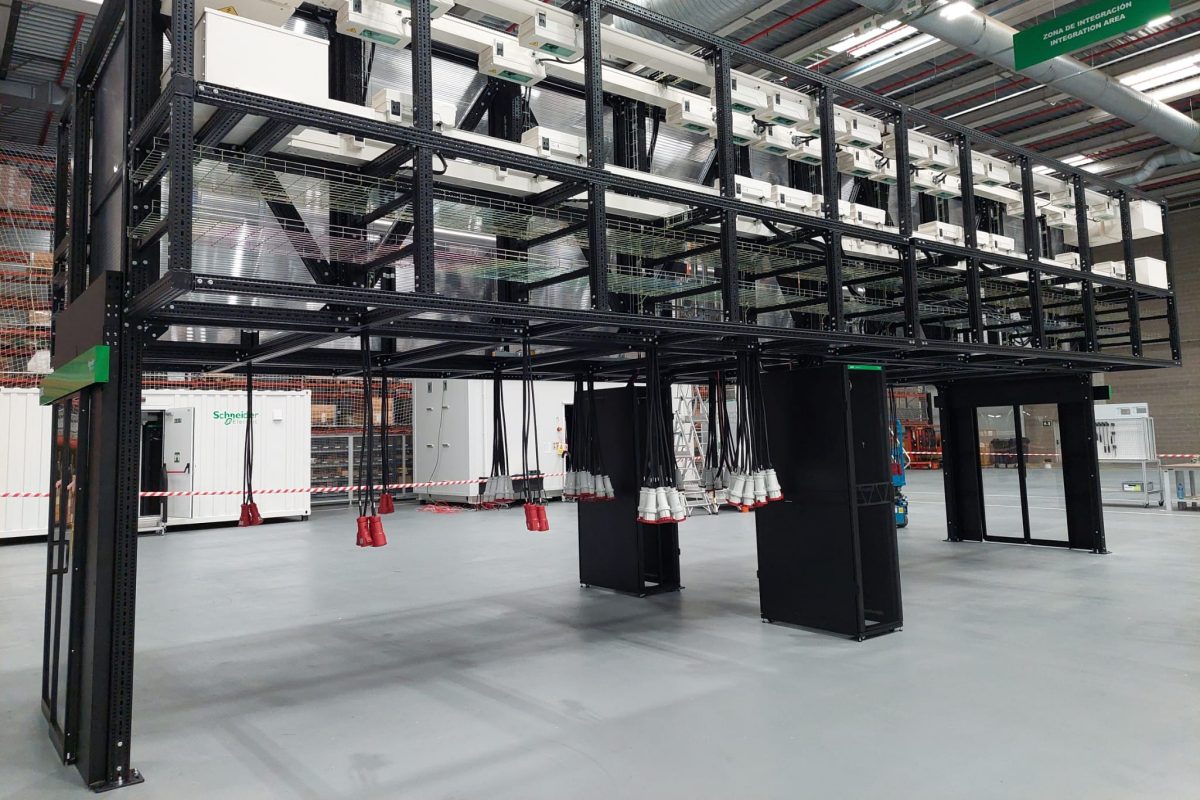
Siemens, Rittal partner on data centre power
 

Latest News


Report: AI boom driving US data centres off grid
The rapid expansion of off-grid data centres across the US is emerging as a possible answer to the power constraints reshaping the AI-driven digital economy, according to a new report from law firm Troutman Pepper Locke. As artificial intelligence accelerates demand for compute capacity, the firm's report - Off-Grid Data Centers: A Potential Power Solution for AI - finds that developers, hyperscalers, and energy companies are increasingly turning to behind-the-meter and ‘island-moded’ generation to secure reliable, scalable electricity while avoiding grid congestion and regulatory delays. According to projections cited in the analysis, global data centre investment could reach $6.7 trillion (£5 trillion) by 2030, with approximately $2.7 trillion (£2 trillion) of that invested in the US market. Nowhere is the transformation more visible than in Texas, where the Electric Reliability Council of Texas (ERCOT) forecasts that data centre electricity demand could rise by 22 GW between 2025 and 2031, reaching 78 GW (or roughly 36% of total statewide demand). At the same time, AI-specialised server racks now require 50–100 kW each, up from 5–10 kW in traditional configurations just a few years ago. As microchips become more powerful and energy intensive, the report concludes that power - not silicon - has become the primary constraint on AI expansion. Natural gas as the bridge to scale One of the report's central findings is the decisive shift towards natural gas as the preferred near-term solution for off-grid facilities. Developers are prioritising dispatchable generation that can deliver the "five nines" reliability (99.999% uptime) demanded by hyperscale AI operations. While renewables remain a central part of long-term decarbonisation strategies, the analysis suggests that wind and solar alone cannot yet provide consistent, 24/7 baseload power at the scale AI requires without substantial overbuild and storage. Battery capacity, though advancing, "remains limited" in duration for utility-scale deployments. Small modular nuclear reactors reportedly hold promise but are not yet commercially deployable at scale. Natural gas generation, by contrast, can be deployed relatively quickly and offers dependable output, which the report argues makes it the dominant choice for early off-grid adopters, particularly in Texas, where fuel supply and land availability align. However, the report also cautions that turbine supply chains are tightening, and competition for equipment, skilled labour, and transmission infrastructure is intensifying as AI-driven projects accelerate nationwide. Interconnection bottlenecks fuel off-grid momentum Grid interconnection queues are increasingly congested, delaying projects in key markets. Developers are therefore reportedly pursuing behind-the-meter solutions as a bridge to eventual grid connection - or, in some cases, as a long-term strategy to maintain operational autonomy. Texas's deregulated electricity market and advanced behind-the-meter framework make it a focal point for this shift. Yet, regulatory oversight is also evolving. Senate Bill 6, passed with bipartisan support in 2025, introduced new obligations for large-load users, including requirements tied to backup generation and infrastructure cost allocation. At the federal level, policymakers are responding to the AI "gold rush" with measures designed both to accelerate data centre permitting and protect grid reliability. Proposed initiatives such as the Decentralised Access to Technology Alternatives (DATA) Act and large-load interconnection reforms could further clarify the treatment of private off-grid facilities and reduce compliance burdens. The report suggests that regulatory clarity - rather than deregulation alone - will be essential to sustaining investment momentum while safeguarding broader system stability. Community scrutiny and the $64 billion delay factor Beyond infrastructure, the report highlights mounting community resistance. Research referenced in the analysis indicates that as of early 2025, approximately $64 billion (£48.2 billion) in US data centre developments had faced delays due to bipartisan local opposition, often centred on energy costs, water use, and property impacts. Off-grid systems can mitigate some of these concerns by reducing strain on public grids and shielding residential ratepayers from infrastructure cost allocation. Nevertheless, proactive community engagement and transparent economic value propositions remain critical. The report also explores alternative models, including modular data centres colocated with renewable assets to absorb curtailed power, demonstrating that innovation in design and siting can complement traditional off-grid approaches. The partner imperative With gigawatt-scale campuses carrying price tags exceeding $1 billion (£753 million) per facility, counterparty strength and supply chain resilience are paramount, according to the report. Developers and energy providers "must conduct rigorous due diligence" on turbine manufacturers, engineering teams, landholders, and off-takers. In an off-grid environment, there is no utility fallback. Creditworthiness, long-term commitment, and technical capability become central risk determinants. The report underscores that competition is fierce and that some early entrants may struggle to scale without robust financial backing. Reliability first and always Ultimately, the report concludes that reliability eclipses all other considerations. Hyperscalers racing to lead the AI market prioritise guaranteed uptime over short-term cost arbitrage or energy trading opportunities. The business case for AI infrastructure depends on uninterrupted power, and developers are reshaping generation strategies accordingly. Brandon Lobb, Partner in Troutman Pepper Locke’s Energy Transactional Practice Group, says, "AI has shifted the centre of gravity in the energy market. Power availability - not just price - is now the defining variable in digital infrastructure strategy. "Off-grid solutions are emerging as a pragmatic response to interconnection delays, reliability demands, and community pressures. Companies that align regulatory strategy, supply chain discipline, and creditworthy partnerships will be best positioned to lead in this next phase of AI growth." As federal and state frameworks continue to evolve, off-grid data centres appear set to become a structural feature of the US energy and technology landscape, rather than a temporary workaround.

Schneider, NVIDIA to advance AI data centre design
Global energy technology company Schneider Electric has expanded its collaboration with NVIDIA to develop validated designs and digital tools for large-scale AI data centres. Working alongside AVEVA, the companies outlined new developments in designing, simulating, building, and operating AI infrastructure during NVIDIA GTC in San Jose, USA. These include a reference design for NVIDIA’s latest rack-scale systems, integration of digital twin capabilities, and testing of AI-driven tools for managing data centre alarms. The announcements focus on supporting large-scale AI deployments, sometimes referred to as “AI factories”, with an emphasis on power, cooling, and operational efficiency. Reference design and digital twin integration A new reference design has been developed for NVIDIA’s Vera Rubin NVL72 rack architecture, covering power distribution and cooling requirements. The design supports higher supply voltage, improved thermal efficiency, and clustered rack configurations for AI workloads. It has been validated using electrical system and airflow modelling tools to assess performance before deployment. In parallel, AVEVA has introduced a lifecycle digital twin architecture integrated within the NVIDIA Omniverse environment. This enables simulation of power, cooling, and operational conditions, allowing operators to test and refine designs prior to construction. According to the companies, this approach is intended to reduce design cycles, improve accuracy, and support more efficient deployment of AI infrastructure. Manish Kumar, Executive Vice President, Secure Power & Data Centers at Schneider Electric, comments, “As AI workloads scale in both size and complexity, the margin for error in data centre design becomes incredibly small. “Delivering AI at scale requires tightly integrated electrical, cooling, and digital architectures that can support both unprecedented performance demands while maintaining peak energy efficiency. "By combining advanced software, digital twins, and validated reference designs, operators can simulate and optimise infrastructure before a single rack is deployed. This approach reduces risk, accelerates deployment, and ensures the efficiency and resilience needed to power the next generation of AI factories.” Vladimir Troy, Vice President of AI Infrastructure at NVIDIA, adds, “Gigawatt-scale AI factories demand a fundamentally new class of energy-efficient and highly predictable infrastructure. “Together, NVIDIA and Schneider Electric are providing the power, cooling, and digital twin architectures needed to accelerate time-to-token for our customers worldwide.” AI-based alarm management testing Schneider Electric also confirmed testing of an AI-based alarm management capability using NVIDIA Nemotron models. The system analyses real-time data from multiple sources to identify root causes of issues and recommend corrective actions. The aim is to support data centre operators in resolving incidents more quickly and consistently, while reducing unnecessary maintenance activity. The latest developments build on ongoing collaboration between the companies, including work on digital twin environments, power system modelling, and support for higher-voltage data centre architectures. For more from Schneider Electric, click here.

SUBCO expands Australia network route diversity
SUBCO, an Australian developer of undersea fibre optic cable networks, has expanded its Australian network with additional route diversity between Sydney and Melbourne, alongside new data centre access points across major cities. The company says its Sydney–Melbourne connection now operates across two geographically independent paths, combining subsea and terrestrial infrastructure to improve resilience on one of the country’s busiest corridors. On the Sydney–Perth route, the Indigo Central and SMAP systems provide two separate cable paths with distinct geographic routes. Both systems operate independently, with separate landing stations, submarine line terminal equipment, and data centre connections to reduce the risk of disruption from a single incident. Bevan Slattery, founder and Co-CEO of SUBCO, explains, “Diversity has traditionally been something customers needed to engineer themselves, engaging multiple providers and hoping the underlying paths were physically separate. SUBCO’s strategy has been to own and operate diverse assets and deliver them as a single, fully integrated offering.” Expanded data centre connectivity SUBCO has also introduced new access points across Sydney, Melbourne, Adelaide, and Perth, extending connectivity to its domestic and international cable network. New connection locations include facilities operated by NextDC, Equinix, AirTrunk, and CDC Data Centres. The update forms part of a wider infrastructure expansion programme, which also includes the APX East subsea cable project. This planned system is expected to connect Australia directly with the mainland United States, with service targeted for late 2028. According to SUBCO, APX East will provide a direct subsea route without intermediate landing points, and will land north of Sydney’s existing cable protection zone to increase geographic separation.

NetApp launches new EF-Series storage systems
NetApp, a US provider of data storage and cloud infrastructure management, has announced new additions to its EF-Series storage portfolio, designed for high-performance workloads across AI, high-performance computing (HPC), and transactional databases. The latest models, EF50 and EF80, are intended to support increasing data demands in enterprise environments, including emerging applications such as sovereign AI clouds and AI-driven manufacturing. The systems are designed to work with parallel file systems such as Lustre and BeeGFS, supporting HPC simulations and GPU-intensive workloads through high-performance scratch storage. Performance and efficiency improvements According to NetApp, the new systems deliver over 110GBps of read throughput and 55GBps of write throughput, representing a 250% increase compared to previous generations. The systems also offer a power efficiency of 63.7GBps per kW, alongside storage density of up to 1.5PB within a 2U form factor. This is intended to support high-performance requirements while maintaining efficient rack usage. The EF-Series is positioned to support a range of use cases, including AI development, media production workflows, and large-scale data processing, with built-in data protection features. Clayton Vipond, Senior Solution Architect at CDW, says, “As we navigate the AI era, many enterprises are finding that they need to maximise their raw performance to extract the most value from their data. “The refreshed NetApp EF-Series deliver the throughput and capacity businesses need to scale high-powered workloads that transform data into insights and outcomes.” Simon Robinson, Principal Analyst at Omdia, adds, “By delivering a high-performance storage system that supports parallel file systems like Lustre and BeeGFS, NetApp is making its mark as emerging industries - such as neocloud - emerge to support the AI-Era.” NetApp states that the EF-Series platform builds on its existing installed base, with more than one million deployments globally. For more from NetApp, click here.

Panduit expands fibre portfolio with fusion splice connectors
Panduit, a manufacturer of electrical and network infrastructure solutions, has introduced OmniSplice, a new range of fusion-spliced fibre optic connectors designed for data centres, edge environments, and enterprise networks. The addition expands the company’s fibre optic portfolio with connectors aimed at supporting high-performance connectivity and faster installation in modern network infrastructure. OmniSplice connectors are designed for use with standard fusion splicing equipment, allowing integration into existing installation and maintenance workflows without requiring additional tools or modifications. Panduit says the connectors are intended to support consistent performance while reducing installation time. Integrated design for simplified deployment A key feature of the OmniSplice range is the integration of the splice point within the connector housing. This removes the need for additional components such as pigtails, helping to reduce space requirements and simplify installation. The connectors include pre-assembled fibre stubs and a holder design intended to support the fusion splicing process, aiming to improve consistency and reduce the likelihood of installation errors. According to Panduit, the design is suited to environments where rapid deployment or maintenance is required, including moves, adds, and changes, as well as repair work under time constraints. The launch reflects continued growth in fibre optic infrastructure across data centres, enterprise LANs, and edge applications, where there is increasing demand for solutions that can be integrated efficiently into existing systems. For more from Panduit, click here.

Nscale, Microsoft partner on large-scale campus in West Virginia
Nscale, a UK developer of AI data centres and cloud infrastructure, has signed a letter of intent with Microsoft to deliver 1.35GW of AI compute capacity at the Monarch AI campus in West Virginia, in collaboration with NVIDIA and Caterpillar. The development will deploy NVIDIA’s next-generation Vera Rubin NVL72 GPU systems, based on the NVIDIA DSX AI Factory reference design, with the undertaking expected to begin in phases from late 2027. In addition to this news, Nscale has also announced the acquisition of American Intelligence & Power Corporation (AIPCorp), which includes the Monarch Compute Campus in Mason County. The site spans up to 2,250 acres (9.1 km²) and is designed as a state-certified AI microgrid, with the potential to scale beyond 8GW of power capacity. Hyperscale AI infrastructure and power integration Under the agreement, Nscale will construct and operate the data centre infrastructure, with Microsoft supporting long-term compute services and lease arrangements. The campus is intended to support large-scale AI training and inference workloads, with high-speed connectivity to major US data centre hubs, including Ashburn and Chicago. As part of the project, Caterpillar will supply G3500 series natural gas generator sets, with plans to deliver up to 2GW of on-site power generation by the first half of 2028. The microgrid design enables the facility to operate independently of the local grid, while also allowing for potential future grid integration. The development reflects increasing demand for AI-driven data centre capacity, with industry forecasts indicating significant growth in global power requirements over the coming years. The Monarch campus is expected to build on Nscale’s existing capacity and support expansion of large-scale AI infrastructure in the US. For more from Nscale, click here.

Siemens expands data centre ecosystem for AI infrastructure
German multinational technology company Siemens has expanded its data centre partner ecosystem to support the growth of next-generation artificial intelligence infrastructure, focusing on the integration of compute, power, and operational systems. The expansion includes a strategic investment in Emerald AI, a collaboration with PhysicsX, and the integration of energy storage technologies from Fluence. As AI adoption accelerates, data centre operators are facing increasing constraints around power availability and grid connection timelines. Siemens says the expanded ecosystem is intended to improve flexibility across infrastructure, helping operators scale capacity while maintaining reliability in power-constrained environments. Coordinating compute and energy systems Emerald AI’s technology enables AI workloads to shift in time and location to align with grid conditions, allowing data centre demand to respond dynamically to available power. This approach is designed to reduce peak demand pressures and support faster grid connections. Fluence’s battery energy storage systems (BESS) are intended to help operators manage large-scale AI workloads by shaping energy demand and supporting more predictable load profiles. The systems can also provide on-site power during grid constraints or outages, supporting operational continuity. In addition, Siemens is working with PhysicsX to apply physics-based AI modelling to data centre power distribution systems. Using simulation data, the approach enables engineers to model thermal behaviour in real time, reducing design times and supporting optimisation for dynamic AI workloads. Siemens said the combined ecosystem brings together workload orchestration, energy infrastructure, and AI-driven modelling to address the growing complexity of data centre design and operation as AI demand increases. For more from Siemens, click here.

Barriers to colocation could hold back DC market
Speaking from the Space Comm Expo Europe event in London, Strategies in Satellite Ground Segment (SSGS), the organiser of the world’s only conference dedicated exclusively to the satellite ground segment, has warned that the global success of data centres is at risk if barriers to their colocation with satellite ground stations are not removed. SSGS argues that the advantages to placing a satellite ground station next to a data centre are already clear. It suggests that, for example, keeping the antenna systems physically close to compute and storage functions eliminates long terrestrial backhaul links and helps to reduce latency. Both the data centre and ground station can benefit from cost-savings and can become scalable digital hubs as capacity can be quickly added to meet increased demand. However, securing the necessary planning permissions, obtaining sufficient levels of funding, obtaining the necessary spectrum licenses in already crowded frequency bands, and event issues relating to data sovereignty can all hold up the process of colocation. Colocating data centres with satellite ground systems Kevin French, Director of the SSGS conference and exhibition, says, “Satellite ground systems are increasingly being colocated with data centres, and it’s not a coincidence; it’s a structural shift. "As demand for high-capacity, low-latency services accelerate, bringing ground infrastructure closer to compute isn’t just efficient; it’s transformative. “Colocation enables virtualised architectures, cloud native workflows, and far more resilient end-to-end operations. It ensures that satellite data isn’t just collected, but processed, stored, and delivered with the speed and reliability that modern networks now require.” While there are successful colocation projects in operation - such as the recent approval given to Amazon's Project Kuiper to operate a satellite earth station gateway at the National Space Centre (NSC) in Cork, Ireland - there are fears that the speed of approvals in some jurisdictions could lag behind demand and create a two-tier system. The issue of colocation, data centres, cloud, and edge computing is set to be a major topic of discussion at the SSGS conference being held at the Park Plaza Hotel in London on 30 September 2026. Registration is now open. Find out more by clicking here.

'One in four DC operators fails to track energy usage'
A late‑2025 451 Research study, commissioned by Janitza, a German manufacturer of energy measurement and power quality monitoring equipment, reveals that nearly one in four data centre operators does not monitor the power consumption of their primary sites, even as AI workloads drive unprecedented pressure on electrical and cooling infrastructure. Without precise, real‑time energy data, Janitza argues, operators cannot safely scale AI‑ready capacity or protect their investments. Energy consumption without control 451 Research, the technology market intelligence unit of S&P Global, surveyed 208 data centre professionals to assess how efficiently business‑critical facilities operate today, using power usage effectiveness (PUE) as a key metric. Just over half of respondents reported a PUE between 1.5 and 2.0, while 23% admitted they are not tracking this fundamental performance indicator at all. The study highlights a structural business risk: power has become the limiting factor in building, scaling, and monetising AI‑capable infrastructure. Highly dynamic AI workloads drive power fluctuations of up to 40–70% within milliseconds, creating new challenges for power quality and increasing the risk of outages and equipment damage. The report notes, “In an environment where milliseconds matter, flexibility and data expertise are the critical differentiators.” The findings suggest that reliable, high‑resolution energy data now underpins predictive maintenance, capacity planning, and revenue optimisation in modern data centres. Janitza says operators who capture and analyse detailed power and power‑quality data can detect emerging faults earlier, extend the lifetime of critical components, and avoid unplanned downtime. As rack power densities rise towards 40–120 kW and AI models continue to grow, the study finds that comprehensive monitoring across the entire power chain, from grid connection to individual racks, is becoming a decisive competitive factor. For more from Janitza, cick here.

Why DC-powered lighting matters for modern data centres
In this exclusive article for DCNN, Ton van de Wiel, Global Segment Manager, Intelligent Buildings at Signify, outlines why DC-powered LED lighting is emerging as a key consideration in making data centre infrastructure more efficient and resilient: Building resilience from the ground up The digital services that underpin modern economies – from media streaming to cloud computing – depend on a rapidly expanding global network of data centres. These facilities are not only critical to digital connectivity; they represent significant sources of employment, infrastructure investment, and tax revenue through construction and long-term operation. Today, data centre operators face a convergence of challenges. Capacity requirements are accelerating due to AI-driven workloads, energy prices are rising, and expectations around sustainability and carbon reduction are becoming more stringent. In response, the industry is re-examining its electrical infrastructure. Direct current (DC) power architectures, once limited to niche applications, are gaining traction as a foundation for higher efficiency and greater operational resilience. Within this shift, lighting – often treated as a peripheral system – can play a strategic role. DC-powered LED lighting combines high energy efficiency with relatively low implementation risk, making it an effective starting point for broader DC adoption. Beyond energy savings, lighting can also function as an intelligent layer within next-generation data centre infrastructure. How power architectures are changing Operating a data centre requires tight coordination between IT equipment, networking, cooling, security, and electrical distribution. Historically, alternating current (AC) has been the default for power distribution. However, as facilities' scale and power densities increase, electrical efficiency has become a primary design concern. Early facilities relied on 48V DC for backup systems – safe but capacity-constrained. This gave way to 230/277V AC distribution, followed by 380V DC for internal systems. Today, the extreme power demands of AI servers are driving another transition towards 650V DC and even 800V DC architectures. According to the Open Direct Current Alliance (ODCA), 650V DC represents the optimal level for building-wide distribution, balancing efficiency with safety, while organisations such as NVIDIA and the Open Compute Project are investigating 800V DC. Despite promising high-power IT loads, these higher voltages do not yet deliver the same system-wide efficiency benefits as a facility-level 650V DC approach. Outside the data centre sector, industrial sites are already deploying 650V DC systems to improve energy efficiency and resilience. One key advantage is the ability to capture regenerative energy from motor drives and robotics – energy that would otherwise be dissipated as heat. Because lighting is a continuous base load, it can readily absorb this recovered energy, reducing grid dependency and operating costs. Integrating lighting, motors, renewables, and storage on a shared DC grid reduces conversion losses, cuts copper usage through fewer conductors, and lowers transmission losses compared with 400V AC systems. When paired with solar PV and batteries, DC grids also improve self-consumption, backup capability, and flexible energy management. What’s driving the move? The momentum behind DC power in data centres is rooted in both engineering logic and economics: • Lower conversion losses — Conventional AC systems require multiple conversion steps, resulting in energy losses of up to 18%. • Alignment with IT equipment — Servers and GPUs operate natively on DC power. • Simpler renewable integration — Solar panels and battery systems produce DC, enabling more efficient connections. • Reduced system complexity — Fewer transformers and rectifiers mean simpler installation and improved reliability. • Preparedness for AI growth — Rising AI workloads are accelerating the shift towards DC-based power systems. DC power is therefore not just an alternative distribution method, but a pathway to smarter, more resilient infrastructure. Lighting as the first step Among all building systems, lighting is often the most practical candidate for early DC adoption. Connected LED lighting allows operators to pilot DC distribution with limited risk before extending it to mission-critical IT loads. The benefits are tangible: • Capital expenditure savings — DC lighting cables reduce copper use by 40%. Three-conductor DC cables (L+, L-, PE) can transmit the same power as five-conductor 400V three-phase AC cables. • Operational cost reductions — With only two current-carrying conductors, DC lighting avoids approximately 33% of cable losses compared with three-phase AC at the same current. • Improved resilience — DC lighting can operate directly from on-site solar generation or battery storage, strengthening microgrid performance during outages. DC-compatible luminaires and components are already commercially available. For example, Signify offers a 100W Xitanium LED driver designed for 620–750V DC operation, integrated into the Pacific LED Gen5 and Maxos Fusion luminaire families. These solutions achieve up to 165lm/W efficacy and can be paired with systems such as Signify Interact and Philips Dynalite. Driver-level efficiency can exceed 95%, with future potential to reach 200lm/W through ultra-high-efficiency LED modules. Sustainability and ESG outcomes DC-powered lighting supports measurable sustainability objectives: • Lower carbon emissions through reduced conversion losses and material usage • Support for certifications such as LEED Zero and BREEAM • Energy optimisation with connected lighting systems, cutting lighting energy use by up to 75% For hyperscalers like Amazon Web Services and Microsoft Azure, as well as colocation providers, these outcomes translate directly into stronger ESG reporting and progress towards carbon neutrality. DC lighting can also be implemented incrementally. Some facilities deploy rack-level DC lighting while retaining an AC backbone. Others adopt facility-wide DC grids that integrate lighting, renewables, storage, and IT infrastructure. In larger deployments, centralised emergency lighting connected to the DC backbone ensures continuous illumination during outages, reinforcing safety in mission-critical spaces. A strategic role for lighting As operators prepare for the next phase of digital expansion, DC-powered lighting offers a practical, high-impact entry point into efficient, renewable-ready DC infrastructure. Modern connected lighting systems extend far beyond illumination. With embedded sensors measuring occupancy, daylight, temperature, humidity, and air quality, luminaires form a dense, facility-wide sensing network without the need for additional hardware. Using open protocols such as DALI, BACnet, and MQTT, DC lighting networks integrate with building management systems and DCIM platforms, enabling predictive maintenance, enhanced operational intelligence, and optimised cooling and space utilisation. By simplifying cabling, reducing losses, and enabling intelligent energy management, DC lighting transforms illumination from a passive load into an active contributor to resilient, sustainable data centre operations.


Translate »