30 January 2026
Expert cleaning for critical environments
 
30 January 2026
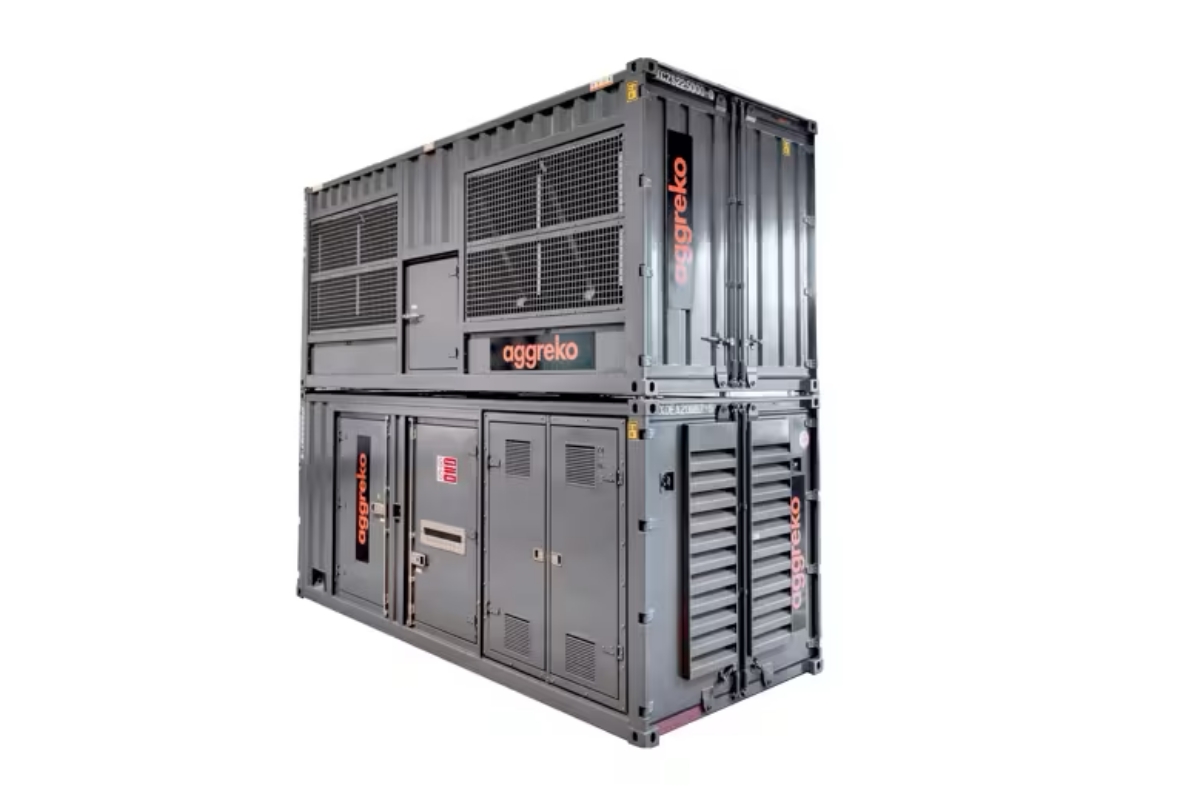
AIP partners with Caterpillar for 2GW AI power
 
30 January 2026
GCRE extends Energy and Data Centre Partner opportunity
 
29 January 2026
Thorn, Zumtobel to exhibit at Data Centre World
 
29 January 2026
Case study: The data centre's shield against errors
 

Latest News


DataVita's North Lanarkshire site named AI Growth Zone
Data centre and cloud services provider DataVita's North Lanarkshire site has been named a UK AI Growth Zone, unlocking £8.2 billion of private investment for the region - one of the largest technology commitments in Scottish history. The project brings together three integrated components: 500MW of AI-ready data centre capacity, over 1GW of private wire renewable energy infrastructure, and 'innovation parks' designed to attract next-generation industries. Over 3,400 jobs will reportedly be created in the coming years, from immediate construction roles through to permanent positions in data centre operations, renewable energy, and AI-related fields. Site details DataVita is building 500MW of hyperscale data centre capacity optimised for AI workloads. The facilities use closed-loop cooling systems with near-zero water consumption and will operate at a power usage effectiveness (PUE) of 1.15. Over 1GW of renewable energy - wind, solar, and battery storage - will be developed on private wire connections directly to the data centres. The system will be grid positive, exporting surplus clean energy to the national grid. Power costs will be sub-10p per kWh, with carbon intensity under 5 gCO₂e/kWh - 97% lower than the London grid average. Purpose-built 'innovation parks' will provide the physical infrastructure for next-generation industries. The development includes laboratory space, robotics research facilities, and advanced manufacturing units, aiming to attract companies and researchers who need proximity to AI compute at scale. The goal is to create a thriving ecosystem where the anchor investment draws new businesses and hundreds of additional jobs to the region. A community fund will also deliver over £543 million to North Lanarkshire over the next 15 years, supporting skills and training programmes, local charities, and community initiatives. The fund will be governed by an independent board with local representation, ensuring the community decides how the money is spent. Additional commitments include 50 apprenticeships and an AI Venture Fund backing Scottish startups. Eco-conscious development DataVita claims the AI Growth Zone will be one of the most sustainable AI infrastructure developments in the world. The system is grid positive, with renewable sources to generate more energy than the data centres consume. Carbon intensity will be 97% lower than other major UK data centre hubs and with almost zero water waste. Technology Secretary Liz Kendall comments, "Today’s announcement is about creating good jobs, backing innovation, and making sure the benefits AI will bring can be felt across the community. “From thousands of new jobs and billions in investment through to support for local people and their families, AI Growth Zones are bringing generation-defining opportunity to all corners of the country.” Danny Quinn, Managing Director of DataVita, adds, "Scotland has everything AI needs: the talent, the green energy, and now the infrastructure. But this goes beyond the physical build. "We're creating innovation parks, new energy infrastructure, and attracting inward investment from some of the world's leading technology companies. This is a real opportunity for North Lanarkshire, and we want to make sure local people share in it. "The £543 million community fund means the benefits stay here: good jobs, new skills, and investment that actually reaches the people who live and work in this area." For more from DataVita, click here.

Corning, Meta agree $6bn data centre supply deal
Corning, a US manufacturer of optical fibre for telecommunications and data centres, and US technology company Meta Platforms have today announced a multi-year agreement of up to $6 billion (£4.3 billion) to support the build-out of advanced data centres in the United States. Under the agreement, Corning will supply Meta with optical fibre, cable, and connectivity products to support its data centre and AI infrastructure. As part of the arrangement, Corning will expand manufacturing capacity across its operations in North Carolina, including a major expansion at its optical cable manufacturing facility in Hickory, where Meta will act as an anchor customer. Corning says the agreement will support increased domestic production of optical connectivity technology used in large-scale data centre deployments. Manufacturing expansion and employment impact Wendell P. Weeks, Chairman and Chief Executive Officer of Corning, comments, “This long-term partnership with Meta reflects Corning’s commitment to develop, innovate, and manufacture the critical technologies that power next-generation data centres here in the US. “The investment will expand our manufacturing footprint in North Carolina, support an increase in Corning’s employment levels in the state of 15–20%, and help sustain a highly skilled workforce of more than 5,000 people - including the scientists, engineers, and production teams at two of the world’s largest optical fibre and cable manufacturing facilities. "Together with Meta, we are strengthening domestic supply chains and helping to ensure that advanced data centres are built using US innovation and advanced manufacturing.” Meta says it is continuing to expand its data centre footprint in the US and increase the use of domestically manufactured technology to support its infrastructure requirements. Joel Kaplan, Chief Global Affairs Officer at Meta, notes, “Building the most advanced data centres in the US requires world-class partners and American manufacturing. "We are proud to partner with Corning - a company with deep expertise in optical connectivity and a strong commitment to domestic manufacturing - to supply the high-performance fibre optic cables our AI infrastructure requires. "This collaboration will help create well-paid, skilled jobs in the US, strengthen local economies, and help secure the US lead in the global AI race.” The agreement covers the supply of latest-generation optical fibre, cable, and connectivity products designed to meet the density and scale requirements of large AI-focused data centres.

GridAI names new CEO
GridAI Technologies, a US provider of AI-driven software platforms for managing utility load and distributed energy resources, has appointed Marshall Chapin as CEO of its AI and energy infrastructure subsidiary, GridAI, following its acquisition of the company. GridAI Technologies says the appointment is intended to support its expansion at the intersection of artificial intelligence and energy infrastructure, as demand increases from hyperscale AI data centre developments. GridAI is developing grid and power-management software for large-scale AI data centre campuses. The platform is designed to coordinate distributed energy resources and manage power across multiple scales, with the aim of supporting more efficient and reliable operation as energy demand from AI workloads grows. The company says its software supports functions such as market-based dispatch, peak-load reduction, and dynamic pricing in utility and commercial environments. It also monitors real-time inputs, including energy prices and weather, to support operational decision-making. Platform focus and leadership background New hyperscale campuses can consume hundreds of megawatts of power, requiring advanced systems to manage and optimise energy resources. GridAI says that its platform incorporates forecasting, bidding, and dynamic load-balancing to support reliability and efficiency across large installations. The company also says the platform can be used in residential and small business environments to manage behind-the-meter assets such as HVAC systems, appliances, and batteries. Chapin brings experience across grid optimisation, energy transition, and distributed energy. Since March 2025, he has served as interim CEO of Amp X, an AI-driven grid-edge platform that is also a GridAI subsidiary. Jason Sawyer, CEO of GridAI Technologies, comments, “Marshall’s proven ability to commercialise complex energy-software platforms and scale global go-to-market operations makes him the ideal leader for GridAI at this pivotal moment. "With hyperscale AI campuses emerging as the defining infrastructure challenge of this decade, our power orchestration capabilities will be critical in helping hyperscalers deploy energy assets rapidly, profitably, and with enhanced reliability and resilience.” Marshall says, “GridAI is uniquely positioned to help hyperscalers, utilities, and energy-asset owners orchestrate the massive amount of flexible power required for this transformation. I’m excited to build on this vision and lead GridAI through this extraordinary phase of growth.”

XYZ Reality appoints new COO and CFO
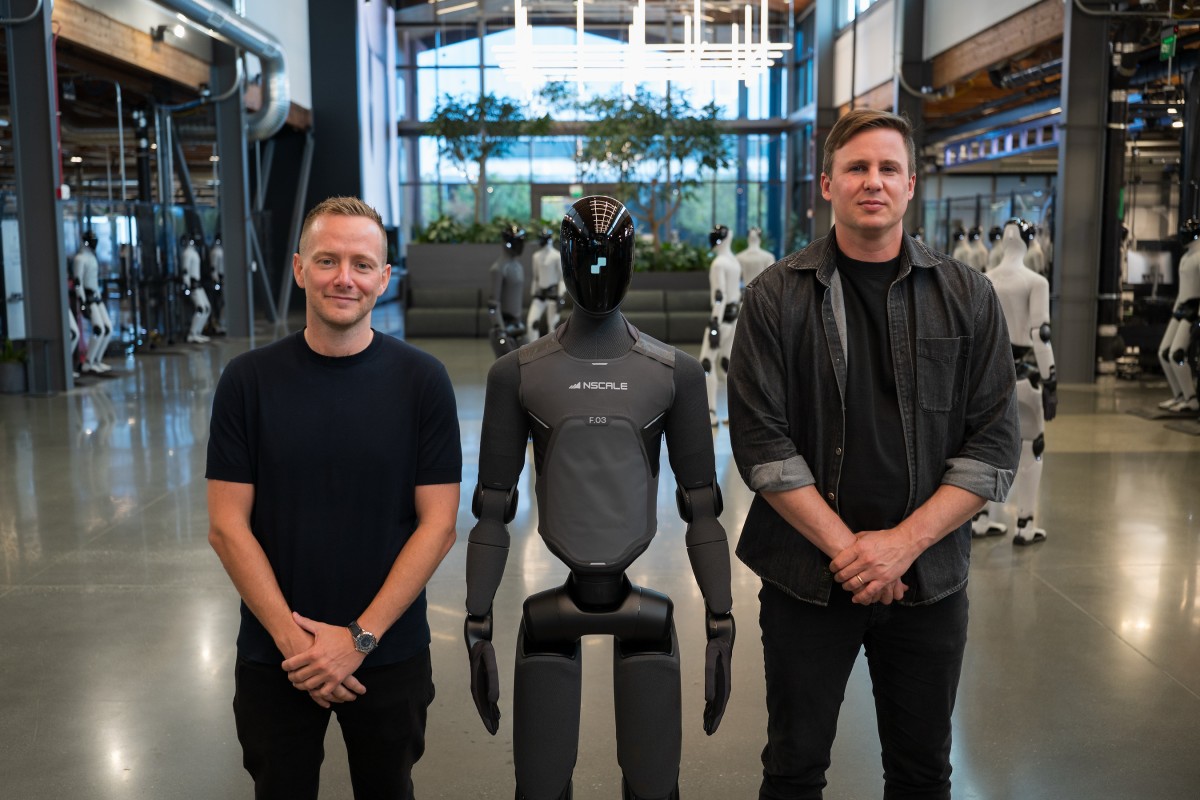
XYZ Reality, a provider of augmented reality (AR) and real-time project controls, has appointed Bruno P.S. Rocha as Chief Operating Officer (COO) and Soroosh Keshtgar (pictured above) as Chief Financial Officer (CFO) at a time when demand is increasing across data centre construction projects. The company says adoption of its construction delivery platform is rising across hyperscale data centre and mission-critical environments, with projects increasing in scale and complexity. The appointments are intended to support operational growth and long-term expansion. As COO, Bruno will be responsible for operational execution, aligning teams, and strengthening consistency across delivery as the company expands across markets and customers. His remit also includes shaping the operating model and supporting planned fundraising activity. He has previously held senior roles at Palantir and Gecko Robotics, with experience in engineering-led and robotics organisations. He joins XYZ Reality with a background focused on applying technology to physical-world operations. Soroosh joins as CFO as the company scales into larger projects and prepares for further international growth. His role will focus on strengthening financial systems, processes, and governance to support decision-making and future investment. He began his career in aerospace engineering before qualifying as a chartered accountant at PwC. He has since held senior finance roles in high-growth organisations, with experience in scaling finance functions during periods of rapid expansion and organisational change. Leadership to support mission-critical growth David Mitchell, founder and CEO of XYZ Reality, says, “As we scale the business, it’s critical that we strengthen our leadership team alongside the customer base and technology. "Bruno and Soroosh bring the experience, perspective, and operational discipline we need to support increasingly complex projects and build a resilient company for long-term growth.” Bruno Rocha, COO at XYZ Reality, comments, “XYZ Reality is at a real inflection point. The technology is proven and the momentum is clear; now it’s about building a company that can scale well beyond a single product or market. "This is about solving real problems in construction. With the right people and ambition, there’s a genuine opportunity to rethink how construction is delivered end to end.” Soroosh Keshtgar, CFO at XYZ Reality, adds, “As XYZ Reality scales into larger, more complex projects, financial clarity becomes critical. "My focus is on building the systems, transparency, and insight that allow the business to make confident, data-informed decisions, supporting customers, investors, and the wider team as we grow.” For more from XYZ Reality, click here.

ISE 2026 launches inaugural CyberSecurity Summit
Integrated Systems Europe (ISE), a Barcelona-based annual trade show for audiovisual (AV) and systems integration professionals, has announced the launch of the CyberSecurity Summit, a major new addition to its 2026 content programme. Scheduled for Thursday, 5 February 2026, the Summit will tackle the escalating cybersecurity challenges confronting the professional AV and systems integration industries as digital threats increasingly impact critical infrastructure, smart buildings, venues, and public services. The announcement comes during European Cybersecurity Awareness Month, a continent-wide initiative coordinated by ENISA and the European Commission to promote safer digital practices across businesses, institutions, and individuals. With cybercrime surging across Europe and globally, the timing of ISE’s new Summit couldn’t be more relevant. Cybersecurity: A business-critical priority for AV As AV systems become increasingly networked and embedded in enterprise, public sector, and venue environments, they are directly exposed to the same vulnerabilities as traditional IT infrastructure. From control rooms and conferencing platforms to digital signage, smart buildings, and event venues, AV solutions are now high-value targets for ransomware, data breaches, social engineering, and denial-of-service attacks. At ISE’s CyberSecurity Summit, AV professionals will learn about safeguarding critical systems, navigate evolving regulations like NIS2 and ISO 27001, and transform cybersecurity from a vulnerability into a strategic advantage, before it’s too late “Cybersecurity is no longer a technical afterthought; it’s a business-critical factor,” says Mike Blackman, Managing Director of Integrated Systems Events. “For AV manufacturers, integrators, and technology users, it’s essential for accessing public tenders, ensuring regulatory compliance, and building long-term trust with clients.” Pere Ferrer i Sastre, Summit Chair and former Director General of the Catalan Police (Mossos d’Esquadra), with extensive experience in public security, digital transformation, regulatory frameworks, and critical infrastructure management, will facilitate discussions addressing emerging digital threats to the AV and systems integration sectors. He explains, “Cybersecurity is no longer optional; it lies at the heart of every AV innovation. ISE’s CyberSecurity Summit brings together the brightest minds in our industry to confront today’s digital threats head-on and turn them into strategic advantages. "By sharing actionable insights, proven strategies, and real-world experience, we will empower AV professionals to protect critical systems, lead with confidence, and build a safer, smarter future for the entire industry.” The CyberSecurity Summit at ISE 2026 will unite AV and cybersecurity leaders to tackle the most pressing challenges facing connected AV systems in critical infrastructure, smart buildings, and corporate environments. Opening with Pere Ferrer, the Summit features keynotes from Shaun Reardon (DNV Cyber) on building cyber resilience, Timo Kosig and Andrew Dowsett (Barco Control Rooms) on secure operations, and Pedro Pablo Pérez (TRC) on protecting corporate communications. Roundtables with Laura Caballero (Cybersecurity Agency of Catalonia), Folly Farrel (TÜV SÜD), and Sergi Carmona (Veolia España) will explore compliance, governance, and best practices for securing critical AV environments. Cybersecurity: A strategic imperative for AV The Summit is part of ISE 2026’s overarching theme, "Push Beyond", which challenges the global AV and systems integration community to redefine what’s possible. By introducing the CyberSecurity Summit, ISE is pushing beyond traditional boundaries to address one of the most urgent and complex issues facing the industry today. Don’t miss your chance to be part of what’s next Registration for ISE 2026 is now open, so take your place among the visionaries, trailblazers, and creative minds from every corner of the globe. Whether you're an AV integrator, manufacturer, IT manager, or facilities director, the CyberSecurity Summit offers essential knowledge and networking opportunities to help you navigate the evolving threat landscape. It’s a chance to learn from leading voices in cybersecurity and discover how to protect your business, your clients, and your reputation. Reserve your spot at the event where tomorrow’s innovations are unveiled, and let’s Push Beyond what’s possible, together: Click here to register for free using the code ‘dcnnews’ to Push Beyond.

Vertiv launches AI predictive maintenance service
Vertiv, a global provider of critical digital infrastructure, has launched a new AI-powered predictive maintenance service, Vertiv Next Predict, aimed at modern data centres and facilities supporting AI workloads, including AI factories. The managed service is designed to move maintenance away from time-based and reactive models, using data analysis to identify potential issues before they affect operations. Vertiv says the service supports power, cooling, and IT systems with the aim of improving visibility and supporting more consistent infrastructure performance. The company notes that, as AI workloads increase compute intensity, data centre operators are under pressure to maintain uptime and performance across increasingly complex environments. In this respect, predictive maintenance and advanced analytics are positioned as a way to support more informed operational decisions. Ryan Jarvis, Vice President of the Global Services Business Unit at Vertiv, says, “Data centre operators need innovative technologies to stay ahead of potential risks as compute intensity rises and infrastructures evolve. “Vertiv Next Predict helps data centres unlock uptime, shifting maintenance from traditional calendar-based routines to a proactive, data-driven strategy. We move from assumptions to informed decisions by continuously monitoring equipment condition and enabling risk mitigation before potential impacts to operations.” AI-based monitoring and anomaly detection Vertiv Next Predict uses AI-based anomaly detection to analyse operating conditions and identify deviations from expected behaviour at an early stage. A predictive algorithm then assesses potential operational impact to determine risk and prioritise responses. The service also includes root cause analysis to help isolate contributing factors, supporting more targeted resolution. Based on system data and site context, prescriptive actions are defined and carried through to execution, with corrective measures carried out by Vertiv Services personnel. According to Vertiv, this approach is intended to support earlier intervention and reduce the likelihood of unplanned outages by addressing issues before they escalate. The service currently supports a range of Vertiv power and cooling platforms, including battery energy storage systems (BESS) and liquid cooling components. Vertiv says the platform is designed to expand over time to support additional technologies as data centre infrastructure evolves. Vertiv Next Predict is intended to integrate as part of a broader grid-to-chip service architecture, with the aim of supporting long-term scalability and alignment with future data centre technologies. For more from Vertiv, click here.

Data centre waste heat could warm millions of UK homes
New analysis from EnergiRaven, a UK provider of energy management software, and Viegand Maagøe, a Danish sustainability and ESG consultancy, suggests that waste heat from the next generation of UK data centres could be used to heat more than 3.5 million homes by 2035, provided the necessary heat network infrastructure is developed. The research estimates that projected growth in data centres could generate enough recoverable heat to supply between 3.5 million and 6.3 million homes, depending on data centre design efficiency and other technical factors. The report argues that without investment in large-scale heat network infrastructure, much of this heat will be lost. The study highlights a risk that the UK will expand data centre and AI infrastructure without making use of the waste heat produced, missing an opportunity to reduce household energy costs and improve energy resilience. “Our national grid will be powering these data centres - it’s madness to invest in the additional power these facilities will need and waste so much of it as unused heat, driving up costs for taxpayers and bill payers,” argues Simon Kerr, Head of Heat Networks at EnergiRaven. “Microsoft has said it wants its data centres to be ‘good neighbours’ - giving heat back to their communities should be an obvious first step.” Regional opportunities and proximity to housing The research points to examples where data centres are located close to both new housing developments and areas affected by fuel poverty. Around Greater Manchester, for example, 15,000 homes are planned in the Victoria North development, with a further 14,000 to 20,000 planned in Adlington. The area also includes more than a dozen existing data centres, with additional facilities planned. According to the analysis, these sites could potentially supply heat to nearby new housing, reducing the need for individual gas boilers and supporting lower-carbon heating. Moreover, the study maps how similar patterns could be replicated across the UK, linking waste heat sources with residential demand through heat networks. Using waste heat for space heating is common in parts of northern Europe, particularly in Nordic countries. There, waste heat from sources such as data centres, power plants, incinerators, and sewage treatment facilities is often connected to district heat networks, supplying homes via heat interface units instead of individual boilers. In the UK, a number of cities have been designated as Heat Network Zones, where heat networks have been identified as a lower-cost, low-carbon heating option. From 2026, Ofgem will take over regulation of heat networks and new technical standards will be introduced through the Heat Network Technical Assurance Scheme, aimed at improving consumer and investor confidence. Heat networks, regulation, and policy context The Warm Homes Plan includes a target to double the proportion of heat demand met by heat networks in England to 7% by 2035, with longer-term ambitions for heat networks to supply around 20% of heat by 2050. The plan also includes funding support for heat network development. However, Simon argues that current policy does not fully reflect the scale of opportunity from large waste heat sources, continuing, “Current policy in the UK is nudging us towards a patchwork of small networks that might connect heat from a single source to a single housing development. If we continue down this road, we will end up with cherry-picking and small, private monopolies, rather than national infrastructure that can take advantage of the full scale of waste heat sources around the country. “We know that investment in heat networks and thermal infrastructure consistently drives bills down over time and delivers reliable carbon savings, but these projects require long-term finance. "Government-backed low-interest loans, pension fund investment, and institutions such as GB Energy all have a role to play in bridging this gap, as does proactivity from local governments, who can take vital first steps by joining forces to map out potential networks and start laying the groundwork with feasibility studies.” Peter Maagøe Petersen, Director and Partner at Viegand Maagøe, adds, “We should see waste heat as a national opportunity. In addition to heating homes, heat highways can also reduce strain on the electricity grid and act as a large thermal battery, allowing renewables to keep operating even when usage is low and reducing reliance on imported fossil fuels. "As this data shows, the UK has all the pieces it needs to start taking advantage of waste heat - it just needs to join them together. With denser cities than its Nordic neighbours and a wealth of waste heat on the horizon, the UK is a fantastic place for heat networks. It needs to start focusing on heat as much as it does electricity - not just for lower bills, but for future jobs and energy security.”

Carrier launches CDU with 2°C ATD
Carrier, a manufacturer of HVAC, refrigeration, and fire and security equipment, has introduced a new coolant distribution unit (CDU), designed to support the growing use of liquid cooling in UK data centres while improving energy performance, resilience, and space utilisation. The Carrier CDU is intended to help operators manage higher rack densities and increasing cooling demands. It is designed to support liquid-cooled IT environments and provide greater control over energy use and system uptime. As liquid cooling becomes more widely adopted to meet efficiency targets, the CDU enables deployment at scale through management of secondary coolant loops. Carrier says this can help reduce pumping energy and optimise heat removal across varying load conditions. Thermal performance and system efficiency The CDU uses modular heat exchangers that can deliver approach temperatures as low as 2°C, compared with more typical 4°C systems. According to Carrier, this can enable up to 15% chiller energy savings, allowing more electrical capacity to be allocated to IT loads rather than cooling. Oliver Sanders, Data Centre Commercial Director UK&I, Carrier HVAC, notes, “Data centre leaders across the UK are focused on increasing capacity without increasing risk. “This new Carrier CDU supports that goal by giving operators greater thermal stability, more flexibility in system design, and better visibility of cooling performance. The result is improved energy efficiency and smoother scalability as liquid cooling demand grows.” The CDU is designed for use in mission-critical environments and includes redundant pumps and power supplies to support continued operation during maintenance or unexpected events. Intelligent controls manage fluid temperatures and flow rates in real time, with the aim of maintaining stable conditions for high-density servers while reducing energy consumption. Integration, scalability, and monitoring Carrier states that the CDU is designed for simplified integration into existing facilities, allowing liquid cooling to be introduced with minimal disruption. The product range includes multiple unit sizes from 1.3 to 5 MW, enabling operators to align cooling capacity with current and future high-density requirements. The system is intended to support direct-to-chip cooling as well as mixed cooling environments. Carrier says it is designed to maintain stable performance under fluctuating workloads and higher ambient temperatures. “Liquid cooling adoption is accelerating, and operators want systems that deliver both efficiency and certainty,” Oliver continues. “With this Carrier CDU, customers can integrate high-density workloads confidently, knowing their cooling system is designed to maximise uptime, efficiency, and long-term value.” The CDU integrates with Carrier’s control platforms to support centralised monitoring, performance optimisation, and energy management. This is intended to help data centre teams track cooling trends, respond to load changes, and plan capacity more effectively. The Carrier CDU forms part of Carrier’s QuantumLeap portfolio of data centre technologies. For more from Carrier, click here.

FTTH Council Europe welcomes the DNA
The FTTH Council Europe, a European industry association promoting fibre-optic broadband deployment across Europe, has said it welcomes the Digital Networks Act, as put forward by the European Commission. The mission of the FTTH Council Europe is to see the widespread availability and use of FTTH (Fibre to the Home) in Europe as quickly as possible. It therefore maintains that it is important to ensure that the regulatory framework incentivises investment and fosters effective competition, adding that that these two objectives must remain at the core of any access policy. The FTTH Council Europe positively welcomes the proposal for the switch-off of copper networks. The process, it claims, strikes the right balance between the need to incentivise the take-up of future-proof networks, the necessity to consider national specificities, and avoiding unintended consequences for consumers. The association says it is convinced that copper switch-off is an important driver for investments and that it will positively contribute to the competitiveness of the EU, supporting the digital transition and the enhancement of the Single Market. Therefore, it invites the co-legislators to support the European Commission approach on this topic. The FTTH Council Europe further considers that the current regulatory framework has delivered positive outcomes. It believes maintaining the SMP process in the proposed DNA is central to preserving competition and demonstrates the Commission’s commitment to a stable and predictable regulatory environment, something critical to supporting investors and enabling the continued development of sustainable competition. The Council also notes the proposed harmonised access products but believes that any remedies should start by being tailored to the specific realities of national and market contexts, which can vary significantly between countries and market segments. National Regulatory Authorities (NRAs), it propounds, are best positioned to define, where necessary, appropriate SMP obligations that reflect the unique characteristics of their markets. The FTTH Council Europe also acknowledges the provisions on security and resilience in the DNA that recognise the critical importance of communications infrastructure. However, the body invites the co-legislators to make clear that any obligation that may arise should be adequately supported by national and European resources in the next MFF and not create excessive burdens for a sector that is investing heavily in the achievement of the Digital Decade targets. There are other aspects that need refinement, according to the FTTH Council Europe, and there are certain issues where it believes a different approach should be taken, not least regarding the availability of licence-free spectrum for RLAN. The FTTH Council Europe says it looks forward to working constructively with co-legislators to share its insights and experience in refining this proposal.

STULZ updates CyberRack Active Rear Door cooling
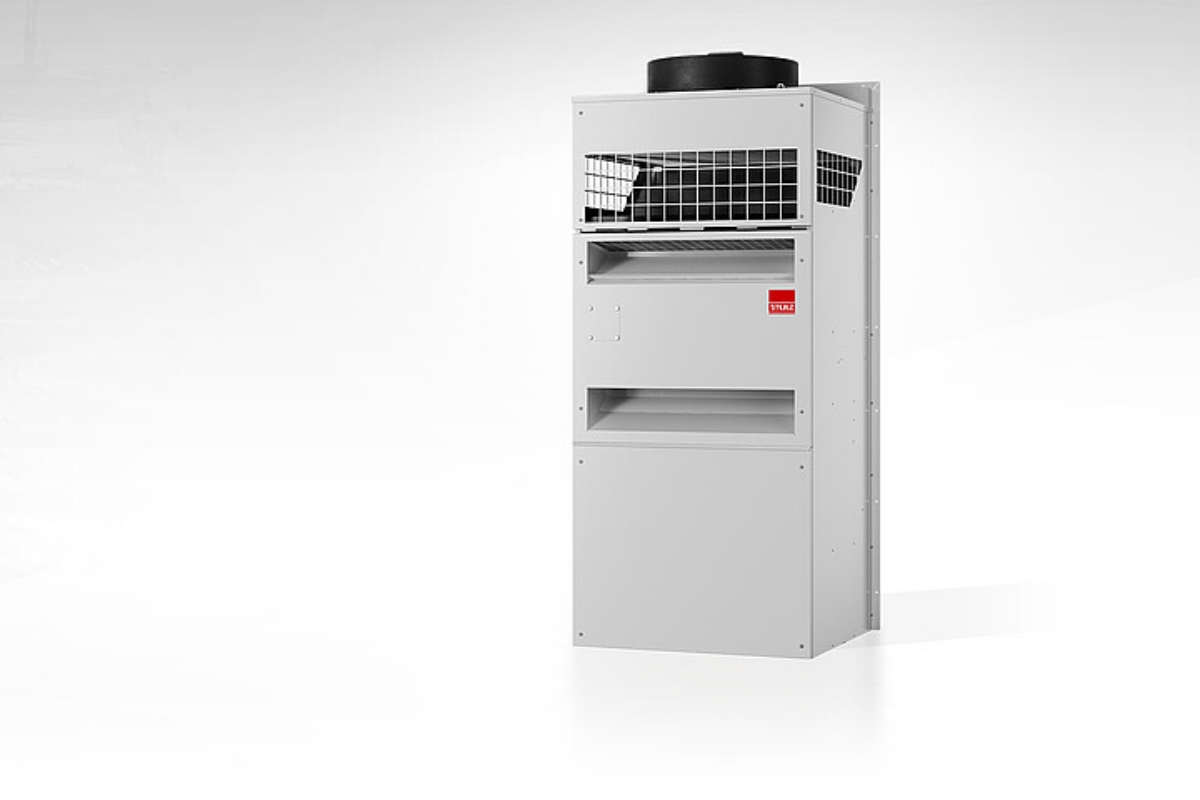
STULZ, a manufacturer of mission-critical air conditioning technology, has launched an updated version of its CyberRack Active Rear Door, aimed at high-density data centre cooling applications where space is limited and heat loads are increasing. The rear-mounted heat exchanger is designed to capture heat directly at rack level, using electronically commutated fans to remove heat at the point of generation. The updated unit is intended for use in both air-cooled and liquid-cooled data centre environments. Integrated sensors monitor return and supply air temperatures within the rack. Cooling output is then adjusted automatically in line with server heat load, aiming to maintain consistent thermal performance as workloads fluctuate. Designed for high-density and retrofit environments Valeria Mercante, Product Manager at STULZ, explains, “The tremendous growth of high-performance computing and artificial intelligence has driven server power densities higher than ever, creating significant heat challenges. “With data centre space often at a premium, the CyberRack Active Rear Door is precision engineered to deliver maximum cooling capacity in a footprint depth of just 274mm. "Delivering up to 49kW chilled water cooling with large heat exchanger surfaces and EC fans, it also supports higher water temperatures and can extend free cooling hours. This helps reduce overall energy consumption and operating costs.” The compact footprint means the unit can be installed without rack repositioning, making it suitable for retrofit projects and sites with limited floorspace. Custom adaptor frames are available to support a range of rack sizes and deployment models, including standalone use, supplemental precision air conditioning, and hybrid configurations alongside direct-to-chip liquid cooling. For maintenance, the system includes a two-step door opening of more than 90°, providing access to fans and coils. Hot-swappable axial fans with plug connectors are also designed to simplify servicing and reduce downtime. Differential pressure control adjusts fan speed in line with server airflow requirements, while low noise operation is also specified. The CyberRack Active Rear Door includes the STULZ E² intelligent control system, featuring a 4.3-inch touchscreen interface. The controller supports functions such as redundancy management, cross-unit parallel operation, standby mode with emergency operation, and integration with building management systems. Valeria continues, “The updated CyberRack Active Rear Door embodies our commitment to providing air conditioning solutions that combine cutting edge technology with intelligent design, user friendliness, energy efficiency, flexibility, and reliability. “In environments where space is tight, heat loads are high, or there’s no raised floor, these advanced units can deliver highly efficient cooling, regardless of the server load.” For more from STULZ, click here.


Translate »