27 March 2026
ING, UniCredit finance Retelit data centres
 
27 March 2026
SATLINE completes Tier III infrastructure modernisation
 
27 March 2026
ABB extends VoltaGrid data centre power deal
 
26 March 2026
atNorth data centre heat reuse powers Finnish store
 
26 March 2026
Echelon launches Ireland’s first Green Energy Park
 

Latest News


CyrusOne breaks ground on first data centre in Italy
CyrusOne, a global data centre developer and operator, has broken ground on its first data centre in Italy, marking its entry into the Milan market. The facility, known as MIL1, is the first of two planned developments in the area. It will provide 27MW of IT capacity across 7,000m² of technical space within a three-storey building that includes three data halls. Andreas Paduch, Managing Director, Europe at CyrusOne, says, “Milan is an increasingly important digital infrastructure market for Southern Europe, and this development marks a key milestone in our European growth strategy. “With MIL1, we are establishing a strong platform in Milan to support our customers’ long-term capacity and connectivity needs.” Community investment and site regeneration The development is being delivered in collaboration with the Municipality of Segrate, with more than €6 million (£5.19 million) allocated to local infrastructure improvements. Plans include the redevelopment of Via delle Regioni into an urban boulevard, with improved connections to nearby schools, a library, and other public buildings. Additional work will include a new east–west road, cycle routes, and pedestrian pathways aimed at improving access and safety. CyrusOne has also transferred ownership of the Golfo Agricolo parkland to the local authority for community use, alongside landscaping works around the site. In addition, construction is expected to create up to 300 on-site roles at peak, with around 25 permanent positions once the facility becomes operational. Paolo Micheli, Mayor of Segrate, comments, “The start of construction on the CyrusOne data centre marks a significant step in the development of Segrate and strengthens our city's role as a leading hub for innovation and digital infrastructure. “An investment of this magnitude enhances the area, as it finally allows for the regeneration of a vast, problematic industrial area that has been abandoned for decades.” Focus on sustainability The facility is designed to operate using 100% renewable energy and is targeting a BREEAM ‘Very Good’ rating. It will also include systems to recover and reuse waste heat, initially within the site but with the potential to support a district heating network in future. Additionally, more than 15,000 plants and 170 trees are being planned as part of the development to support biodiversity. As the project involves the regeneration of a former industrial site, demolition materials will be reused or recycled to reduce waste, with around 60% of materials being reused on site and most excavated soil also retained for construction purposes. For more from CyrusOne, click here.

STULZ, Merford conduct unique acoustic test for data centres
STULZ, a manufacturer of mission-critical air conditioning technology, and Merford, a Dutch specialist in noise control systems and acoustic doors, have completed an acoustic test confirming that a newly developed chiller system can meet strict data centre noise regulations under operational conditions. The test was carried out on a chiller for a project in Valeggio sul Mincio, Italy. It used a validated measurement methodology designed to reflect real-world performance, as operators increasingly consider noise alongside cooling capacity and energy efficiency. As data centre power densities increase, larger cooling systems can create greater environmental impact, particularly in urban locations. The project required compliance with a maximum night-time noise level of 80.2dB(A), prompting acoustic considerations to be integrated early in the design process. Davide Mazzi, Head of the Application Team at STULZ, explains, “The challenge was not only to guarantee efficient cooling, but to comply with extremely strict noise limits. “The installation is located on a rooftop in a densely built urban environment. Our task was to deliver the required performance without disturbing the surroundings and without compromising the operational reliability of the data centre.” Acoustic testing under real operating conditions The companies developed a noise attenuation system tailored to the chiller configuration. Acoustic measurements were conducted in line with EN ISO 9614-2:1997, which determines sound power levels using sound intensity measurements. Before testing, the team carried out an environmental analysis using SoundPLAN software to model sound propagation. The test setup ensured that background noise levels were at least 10dB below the chiller’s output, with surrounding equipment positioned to avoid interference. Two attenuation configurations were assessed: Both used steel frame structures with integrated acoustic components to reduce airborne and structure-borne noise, while the second configuration also included additional optimisation measures, resulting in greater overall noise reduction (although it increased system weight and complexity). Engineers measured sound power levels with and without the attenuation system to quantify performance and confirm compliance with the required limits. Davide continues, “We were delighted to find that the chiller equipped with the developed attenuation system successfully met the stringent noise requirements. “This project demonstrates that data centre cooling and acoustic compliance can be achieved simultaneously when engineering, acoustic design, and validation are approached as an integrated process. "As data centres continue to expand into urban environments, such integrated approaches are likely to become essential for balancing performance, sustainability, and community impact.” For more from STULZ, click here.

Industry recognises International Data Centre Day
In celebration of International Data Centre Day (25 March), DCNN has brought together a series of expert perspectives from across the industry to reflect on the opportunities and challenges facing data centre infrastructure today. From soaring energy demands driven by AI workloads to the shifting geography of deployment and the importance of community stewardship, these industry figures offer a broad view of the forces reshaping the sector and what must be done to meet them responsibly: The future of deployment Ivo Ivanov, CEO of internet exchange operator DE-CIX, comments, "The AI boom used to be about building bigger, better data centres. That works for model training, where raw compute power is prioritised over connectivity and latency, but it doesn't work for inference, which is where the real value of AI is realised at edge deployments. "AI inference demands near real-time responsiveness and, as such, it can't tolerate the latency associated with long round-trip delays to remote data centre hubs. From driverless vehicles to real-time fraud detection, the deployment of AI in edge locations demands a far more distributed infrastructure environment than what we're currently used to. "AI depends on data moving constantly between locations, and if that movement slows down, performance drops off quickly, no matter how much compute you add into the equation. It's no longer about building bigger or better data centres, but about where they're deployed and how they're connected. In other words, geography is becoming just as important as power and compute. "In the coming years, that's going to stretch the definition of data centres: from hyperconnected edge deployments and emerging AI-focused data centre hubs to more experimental concepts that sit above the clouds in the Earth's orbit. The data centre map is being redrawn in real time." Sustainability continuing as a vital factor Professor Aoife Foley, IEEE Senior Member and Chair in Net Zero Infrastructure at the University of Manchester, notes, "The International Energy Agency expects data centre electricity demand to more than double by 2030, reaching around 945 terawatt-hours, slightly above Japan's annual use. This not only indicates a greater demand for energy, but also highlights the importance of balancing digital growth with sustainable energy practices. "Infrastructure and operations leaders have a responsibility here and need to consider the unnecessary waste associated with data storage and commit to generating power from more renewable sources. By eliminating unstructured data and improving operational efficiency, organisations can actually lower their maintenance costs and improve regulatory compliance. "AI workloads consume significantly more energy than traditional cloud computing tasks, and although hyperscale operators are investing in renewable energy to soften the impact, this alone is not enough. Cooling innovations such as liquid immersion and direct-to-chip systems add further efficiencies, yet they still address symptoms rather than the deeper inefficiencies in model design and compute intensity. These impacts can be reduced through smarter model optimisation and a closer alignment between data centre strategy and regional renewable generation." Infrastructure integrated into communities Dave Philp, Chief Value Officer at infrastructure engineering software and digital twin platform provider Bentley Systems, concludes, "International Data Centre Day is a moment to recognise the often-unseen critical infrastructure that underpins modern life. Like healthcare, transport, and energy systems, data centres have become essential civic infrastructure in an increasingly connected world. "Today, data centres are no longer isolated technical buildings; they are part of the fabric of local communities. Being a 'good neighbour' is no longer optional; it is fundamental to earning trust, securing consent, and operating sustainably over the long term. That requires a clear understanding of how data centres interact with local water resources, energy networks, transport infrastructure, and surrounding land use. "We need to put digital modelling, analysis, and visualisation at the heart of how we plan, design, deliver, and operate these facilities. This enables better decisions, earlier engagement, and more resilient outcomes, anticipating construction challenges, responding to environmental constraints, and embedding operational resilience from day one. "As global demand for digital services continues to accelerate, the challenge is not simply to build more data centres, but to build them better. Thoughtful design, digital insight, and a commitment to community and environmental stewardship are what turn a data centre from a functional box into a trusted, long‑term asset that genuinely serves society."

Ramon.Space, Foxconn to deliver space DC infrastructure
Ramon.Space, a developer of computing systems for satellites and space missions, has expanded its partnership with cloud infrastructure provider Ingrasys, a subsidiary of Foxconn Technology Group, to develop data centre infrastructure for use in orbit. The collaboration focuses on scaling computing platforms designed for space, which comes as demand reportedly grows for processing data generated by satellites. Traditional Earth-based infrastructure, the companies state, faces constraints including latency, bandwidth, and power availability, particularly when handling large volumes of space-generated data. Space-based data centres, they say, aim to address these challenges by enabling processing and storage directly in orbit, reducing reliance on data transmission back to Earth and supporting real-time applications. Ramon.Space develops computing, storage, and communications systems designed to operate in space environments. These systems are engineered to manage challenges such as radiation exposure, power efficiency, thermal conditions, and autonomous operation. Ingrasys has previously supported the manufacturing of Ramon.Space’s computing platforms. Under the expanded agreement, the companies will work towards a production-ready product line, using Ingrasys’ manufacturing capabilities to support scale and consistency. Scaling infrastructure for space-based data Avi Shabtai, CEO of Ramon.Space, comments, “Expanding our work with Ingrasys to build data centre capabilities in space marks a major milestone in turning space computing from innovation into infrastructure. “We are laying the foundation for in-orbit data centers that enable real-time processing, reduce reliance on downlink, and support the next generation of software-defined satellites and distributed systems.” Benjamin Ting, CEO of Ingrasys, adds, “Ingrasys is proud to extend our collaboration with Ramon.Space into the in-orbit data centre domain. “By combining world-class manufacturing with Ramon.Space’s innovative computing platform, we are helping unlock a new era of space infrastructure.” The initiative is intended to complement terrestrial data centres and cloud infrastructure, while supporting applications where processing in orbit is more efficient. These include Earth observation, communications, and government-led space programmes. The programme will begin with prototype development and testing, with plans to expand towards operational deployments as space-based data infrastructure develops.

Vertiv to acquire ThermoKey
Vertiv, a global provider of critical digital infrastructure, has announced an agreement to acquire ThermoKey, as part of its ongoing focus on data centre cooling technologies. The acquisition is expected to expand Vertiv’s thermal management portfolio and manufacturing capabilities, particularly across EMEA. It also aims to strengthen the company’s ability to support high-density data centres and AI workloads, where cooling performance and efficiency are increasingly important. ThermoKey develops heat rejection and heat exchange technologies, with established relationships across original equipment manufacturers and system integrators. Its range includes dry coolers and microchannel-based systems designed for data centre and industrial applications. Giordano Albertazzi, CEO at Vertiv, notes, “Heat rejection is becoming increasingly critical for data centres and AI factories as the industry seeks new ways to unlock capacity, improve energy efficiency, and scale with confidence. “Through our work with ThermoKey, we have come to value its differentiated heat-exchange technologies, engineering depth, and relationships across OEMs and system integrators. "This acquisition is expected to expand the options available to our customers as they adopt more efficient cooling strategies and build infrastructure designed to stay ahead of rapidly evolving compute demands.” Founded in 1991 and based in Italy, ThermoKey has more than three decades of experience in designing and manufacturing heat exchangers for data centre cooling and other applications. Expanding thermal capabilities for AI data centres The company’s portfolio includes heat exchangers, dry coolers, air cooled condensers, and liquid cooling systems. Its technologies are compatible with low global warming potential (GWP) and natural refrigerants, aligning with wider industry efforts to improve efficiency and reduce environmental impact. ThermoKey’s engineering and production capabilities are expected to complement Vertiv’s existing thermal portfolio, while also increasing manufacturing flexibility and available capacity. This is intended to help meet rising demand for cooling infrastructure in high-density computing environments. For data centre operators, the acquisition is expected to support more integrated thermal system design, allowing coordination between liquid cooling, air cooling, and heat rejection technologies. This approach can help optimise performance based on site conditions, efficiency targets, and future expansion requirements. The transaction remains subject to regulatory approvals and other customary conditions, with completion anticipated in the second quarter of 2026. For more from Vertiv, click here.

RETN now live at Manchester's Lunar 1 data centre
RETN, an independent global network service provider, has launched a new point of presence (PoP) in Manchester, UK. As the city’s interconnection ecosystem continues to grow, RETN says it is enabling secure, reliable, and future-ready connectivity, powering both local and global digital ambitions. Christopher Elliott, UK Commercial Director at RETN, comments, “This new PoP strengthens our presence in the North, delivering greater route diversity and resilience for businesses, ISPs, and enterprises across the region. "It’s another step in our commitment to the Northern Powerhouse, supporting Manchester’s role as one of the UK’s leading connectivity hubs. Lunar’s commitment to operational excellence and customer‑focused service makes them an ideal partner as we continue to expand our network footprint.” Darren Elliston, Director of Customer Success at Lunar Digital, adds, “RETN’s decision to build a PoP inside our facility is a strong endorsement of the quality, resilience, and strategic importance of Lunar’s data centres. "This partnership gives our customers even more choice and flexibility in how they build and scale their infrastructure. It also reinforces Manchester’s position as one of the UK’s most important digital hubs, supporting the region’s continued growth and innovation.” For more from RETN, click here.

ZutaCore brings two-phase cooling to PCIe GPUs
ZutaCore, a developer of liquid cooling technology, has announced that its OmniTherm cold plate now enables waterless, two-phase cooling for manufacturers building servers with the NVIDIA RTX PRO 6000 Blackwell Server Edition GPUs in a single-slot PCIe form factor, supporting full-power operation in standard enterprise and AI cloud server environments. As AI inference expands across enterprise and cloud environments, PCIe GPU servers have become a common platform due to their relative ease of deployment, scalability, and compatibility with existing infrastructure. However, as GPU power consumption rises, air cooling can become a limiting factor, restricting density, driving up fan power, and increasing the risk of thermal throttling during sustained workloads. The company says OmniTherm addresses this by enabling a transition to two-phase liquid cooling without introducing water inside the server. The single-slot design allows operators to increase accelerator density in standard server architectures while capturing heat into a liquid loop, reducing reliance on high fan speeds that can create excessive noise, waste power, and cause difficult operating conditions in the data centre. "Enterprise and cloud operators want the flexibility of PCIe GPUs, but they also need density and sustained performance as power levels rise," comments My D. Truong, CTO of ZutaCore. "OmniTherm delivers waterless, two-phase cooling in a single-slot form factor, helping data centres increase accelerator density while maintaining stable thermals for 24/7 AI workloads." Two-phase cooling for dynamic AI workloads Production AI workloads - particularly inference - are rarely steady, fluctuating constantly and creating thermal swings that can affect performance and reliability. ZutaCore says its two-phase approach is designed to respond to changing workloads, helping data centres maintain predictable performance under dynamic utilisation. As racks move into higher power levels, the operational cost of air cooling also rises, with increased fan energy consumption and growing acoustic and facility pressures. OmniTherm uses a sealed, non-conductive dielectric fluid system that captures heat without requiring facility water in the server, reducing cooling overhead and providing a path to scaling PCIe-based AI deployments. Alongside this announcement, ZutaCore has also introduced HyperCool Cloud, a cloud-native operations platform designed to help data centres manage liquid cooling infrastructure. The platform, the company says, provides "near-real-time" CDU telemetry, fleet-level monitoring, and alarm-to-resolution workflows, helping operators manage service response and uptime as deployments scale across sites and fleets. For more from ZutaCore, click here.

Pure DC appoints new CCO and CFO
Pure Data Centres Group (Pure DC), a designer, developer, and operator of hyperscale data centres, has appointed Jeff Harrison as Chief Commercial Officer and Michael Schwartz as Chief Financial Officer, expanding its leadership team to support reported growth across Europe and the Middle East. The appointments follow the recent hiring of Gary Wojtaszek as Executive Chairman and Interim CEO. All three previously worked at CyrusOne, where they were involved in the company’s shift towards hyperscale cloud infrastructure. Pure DC is targeting increased demand for AI infrastructure, with plans to expand capacity in established European markets and develop larger-scale sites to support high-density compute. Expansion plans across Europe and Middle East markets Jeff Harrison joins from Stack Infrastructure, where he led North American sales, while Michael Schwartz previously held a finance leadership role at CyrusOne, overseeing planning and capital management during a period of expansion. Both executives are expected to relocate to London in spring 2026. Gary Wojtaszek says, “Jeff and Mike are joining an experienced leadership team with a strong track record in delivering infrastructure for hyperscale customers. Jeff played a key role in developing hyperscale sales at CyrusOne. Mike brings financial discipline to support platform growth.” Jeff Harrison comments, “Europe is expected to see increased demand linked to AI infrastructure. Pure DC has the leadership and development capability to expand across both urban cloud markets and larger-scale campuses.” Michael Schwartz adds, “The opportunity to scale a hyperscale platform across Europe and the Middle East while maintaining financial discipline is a key focus.” Pure DC currently has more than 1 GW of capacity live or under development and is evaluating additional large-scale campus opportunities across Europe. For more from Pure DC, click here.

ZIEHL-ABEGG updates ZAplus fan design
ZIEHL-ABEGG, a German ventilation manufacturer, has introduced the ZAplus Next Generation axial fan, aimed at improving airflow, efficiency, and acoustic performance in data centres and other cooling applications. The updated design builds on the existing ZAplus platform, incorporating a slimmer housing and revised aerodynamic components to increase air output and pressure within the same footprint. The company says this allows larger fan sizes to be deployed in existing spaces, supporting upgrades without requiring significant changes to system layouts. The housing, available in sizes from 450 mm to 1,000 mm, has been developed using computational fluid dynamics to optimise airflow. It is manufactured using plastic injection moulding to reduce weight and improve corrosion resistance. Design changes focus on airflow and efficiency The system includes FE2owlet and FE3owlet blade designs, alongside guide vanes and a compact diffuser to stabilise airflow and improve pressure performance. Additional nozzles are used to help smooth airflow and reduce turbulence. The company notes that these elements are designed to support efficient operation while maintaining a consistent footprint. The fan also enables variable speed control, allowing airflow to be adjusted to demand, which can help reduce energy use over time. The ZAplus Next Generation is available with both AC and ECblue motor options, providing flexibility for both retrofit and new-build data centre environments. ZIEHL-ABEGG says its composite construction is intended to support durability and reduce maintenance requirements in long-term operation.

Huawei Cloud: The first choice of multicloud provider for LATAM
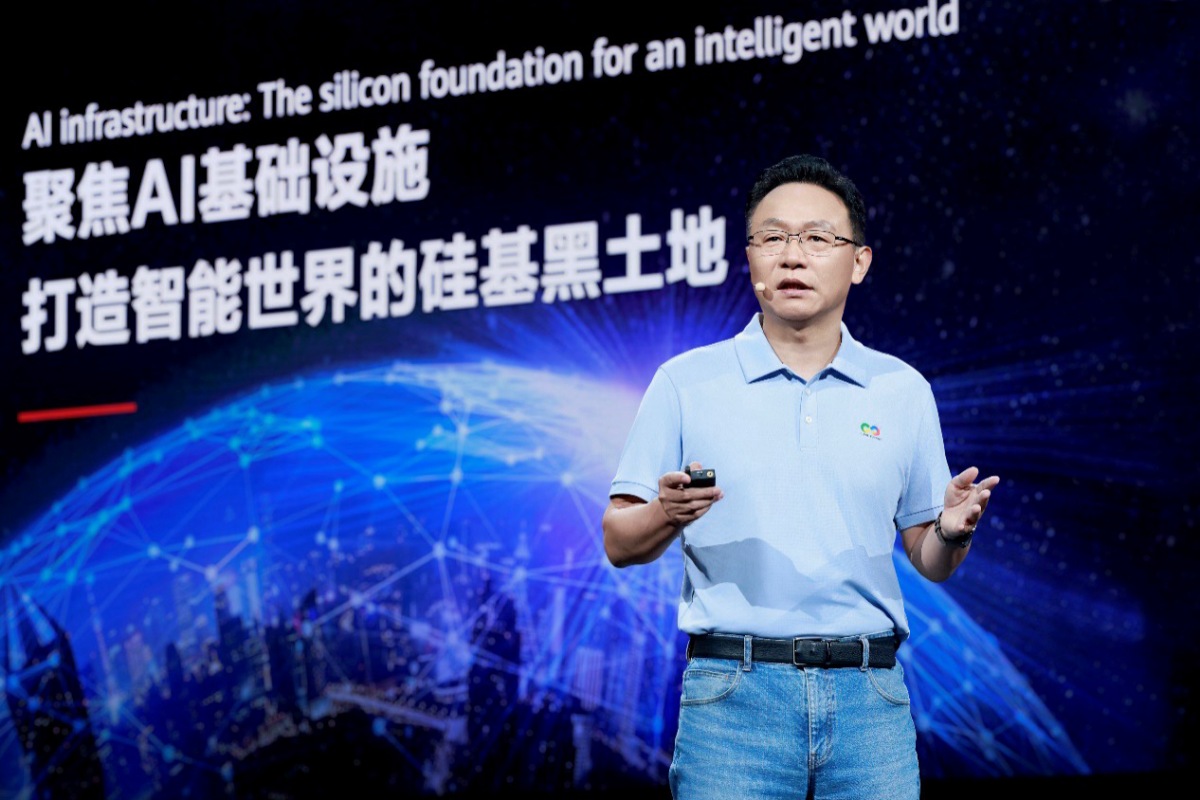
On 17 March 2026, Huawei Cloud hosted COMPASS, its annual flagship event for Latin America in Shenzhen and Dongguan, China. The event convened more than 150 attendees including public sector decision-makers, business leaders, tech partners, and industry experts from Latin America. They explored cutting-edge Chinese technologies, witnessed AI's power in daily life, and discussed how cloud technologies can enable a better future. Named "COMPASS" to represent exploration and guidance, the summit brought together Huawei Cloud and its Latin American customers and partners to advance digital and intelligent transformation efforts. Latin America: A vital pillar of Huawei Cloud's global strategy Peter Zhou, CEO of Huawei Cloud, highlighted Latin America as a vital pillar of Huawei Cloud's global strategy during his keynote speech. He stated that Huawei Cloud leads the region with the most extensive cloud regions, broadest coverage, and fastest growth. Huawei Cloud has become the go-to provider for businesses adopting hybrid and multi-cloud solutions while supporting governments and organisations in major industries in their shift toward intelligent operations. In 2026, Huawei Cloud aims to drive customer transformation in Latin America by focusing on three strategic areas: 1. Continuous innovation: In line with the deeper AI adoption into production systems, Huawei Cloud plans to expand its AI compute service in Brazil and Mexico while ramping up investments in a full-stack solution that involves cloud computing, diverse AI models, and application platforms, combining public cloud flexibility and hybrid cloud security to meet a wider range of customer needs. 2. Deepened industry focus: Huawei Cloud will integrate AI best practices from both China and globally with regional insights in Latin America to assist customers in solving real-world business challenges. 3. A robust cloud foundation: Security and stability are the lifeline of Huawei Cloud. Huawei Cloud boasts 955 days of secure, uninterrupted operation. Moving forward, Huawei Cloud will converge its cloud foundation and data security centres into end-to-end security solutions, which ensure sound and efficient cloud migration. Strong local presence: The trusted partner for LATAM Daniel Zhou, President of Huawei Latin America, emphasised the company's strong, long-term dedication to the region during his keynote speech. By 2025, Huawei has had over 20 offices and employed more than 4,400 people across Latin America, with over 70% local hires. The company indirectly creates over 100,000 jobs and ranks as a top employer in several countries. Through its carrier business, Huawei reaches more than half of Latin America's population. It collaborates with thousands of partners and customers in areas like enterprise solutions, digital power, and consumer products. As a leading provider of digital infrastructure and smart devices, Huawei is a dedicated, trusted partner in driving Latin America's digital innovation and sustainable growth. Huawei Cloud has become the go-to cloud for Latin American businesses by focusing on five key strengths, as highlighted by Daniel Zhou: • Systemic AI capabilities: Huawei Cloud provides advanced AI infrastructure, a Model as a Service (MaaS) platform, and an agent platform to help industries across Latin America solve their unique challenges with AI. • State-of-the-art hybrid cloud: As the sole provider supporting complete AI deployment - from infrastructure to model services - on local data centres, Huawei Cloud ensures local access to powerful AI tools while keeping critical data secure within customer premises. • Trust by industry leaders: With deep expertise in Latin America and a strong grasp of industry needs, Huawei Cloud is the go-to multi-cloud solution provider for major players in government, finance, carrier, and retail sectors. • Reliable and compliant: Keeping a track record of zero major incidents for more than 900 days, Huawei Cloud fully complies with Latin America's security, privacy, and financial regulations. • Always-on support: 24/7 Spanish and Portuguese support with the fastest response times in the industry guarantees uninterrupted service for local customers. Enhanced performance, increased trust, and "1+3" solution Mark Chen, President of Huawei Cloud Latin America, shared key updates on the company's growth and plans: Huawei Cloud leads in public cloud revenue growth in Latin America, outpacing competitors and solidifying its position as the third-largest player in the IaaS market. Partner revenues grew over 50%. Major customers like SMU (Chilean retail leader), Claro (leading telecom provider), and Dataprev (Brazilian public sector IT company) trust Huawei Cloud for digital transformation in finance, retail, carrier, and government sectors. In addition, customer satisfaction rises to a new height: 92 points according to a third-party survey, with 83.4% of users recommending Huawei Cloud, reflecting the success of the company's customer-centric approach. Such achievements are backed by stronger localised service teams. Huawei Cloud has improved its team structure, increasing local hires by 10% and boosting bilingual Chinese staff proficient in Spanish and Portuguese by 15%. On behalf of Huawei Cloud Latin America, Mark Chen expressed the company's gratitude to customers for their ongoing support, emphasising collaboration with the saying: "Alone we go fast, together we go far." Over the past year, many new partners have contributed to this shared path towards sustainability and success. Huawei Cloud's "1+3" solution - featuring one cloud foundation and three key capabilities (AI, application modernisation, and big data) - empowers industry leaders in Latin America to achieve significant breakthroughs. Embracing AI transformation: Empowering quick actions on the right track Tim Tao (pictured above), President of Huawei Cloud Solution Sales, highlighted that AI now impacts nearly 90% of enterprise daily operations, evolving from a tool to a productivity partner. He stressed that enterprise intelligence must focus on core business requirements and deploying AI in high-value areas first. Huawei Cloud has helped customers in more than 500 scenarios across more than 30 industries achieve intelligent upgrades. With innovative products, technologies, and global experience, Huawei Cloud is poised to pave the way for enterprises towards greater business success. Tim showcased major use cases and proven practices across government, finance, and retail sectors. Governments focus on digitising services, enhancing information systems, and enabling smart governance. Financial institutions adopt distributed cores, data-driven operations, and intelligent innovations. Retailers leverage cloud to streamline promotions, omnichannel operations, and AI-powered customer service. Tim also presented innovative offerings - Huawei Cloud Foundation (HCF), AI DataLake, TaurusDB, ModelArts, AgentArts, and CodeArts - spanning cloud infrastructure, data, AI, and application enablement. Additionally, Huawei Cloud shared its success in supporting global customers, including those in Latin America, by building a reliable and secure cloud foundation, multimodal AI data platform, and one-stop AI development platform. These efforts empower businesses to thrive in the AI era. Success stories with Huawei Cloud from top customers • Latin America's top bank created an automated cloud foundation with Huawei Cloud and smoothly migrated 100% of its systems to the cloud, especially its core transaction system. • Dataprev, Brazil's premier public sector IT company, developed a national cloud platform using Huawei Cloud. The hybrid cloud architecture meets data sovereignty requirements, supports cross-cloud disaster recovery, and enables centralised O&M. By leveraging state-of-the-art AI technologies, Dataprev enables administrative organisations to deliver better public services to Brazilian citizens. • iFLYTEK, a top Chinese intelligent voice and AI company, collaborates with Huawei Cloud to combine its AI expertise with Huawei's compute resources. Together, they create industry-specific AI models and expand their global reach. • Stefanini, a leading technology consulting firm in Brazil, represents Huawei Cloud as a trusted advisor and solution provider. Via its extensive delivery network, Stefanini facilitates businesses across Latin America to adopt Huawei Cloud to accelerate digital transformation. COMPASS is not only an annual event of Huawei Cloud, but also a key indicator of Latin America's digital progress. Ready to shape a collaborative future, Huawei Cloud invites customers and partners to join forces today. For more from Huawei, click here.



Translate »