Sponsored

Data Centre Infrastructure News & Trends
Enclosures, Cabinets & Racks for Data Centre Efficiency
Sponsored
Treat your rack like prime real estate
Data centre racks are often specified on dimensions, load ratings, and cost alone. However, as power densities, cooling requirements, and cable volumes continue to increase, the rack has become a critical infrastructure platform that directly influences performance, operability, and long-term resilience.
A rack may have available U space and still be effectively 'full' if airflow is compromised, access becomes restricted, or cable and power management become difficult to maintain. Modern data centre environments demand a broader view of rack performance - one that considers serviceability, cooling, power distribution, security, and future growth alongside physical capacity.
Elevate's latest whitepaper, Treat Your Rack Like Prime Real Estate, explores why racks should be treated as infrastructure rather than furniture, providing practical guidance for consultants, specifiers, and operators.
Covering topics including usable capacity, access capacity, airflow management, and lifecycle planning, the whitepaper offers a framework for designing rack environments that remain effective throughout their operational life.
Download the whitepaper and discover what your rack really enables.
For more from Elevate, click here.

Joe Peck - 16 July 2026

Data Centre Infrastructure News & Trends
Enterprise Network Infrastructure: Design, Performance & Security
Sponsored
Kickstarting the next decade of mobile growth
The Mobile Broadband Forum (MBBF) Top Talk Summit recently took place in Shanghai, held in tandem with MWC Shanghai 2026. The event gathered 150 industry experts, including mobile telecom operators, movers and shakers in the AI ecosystem, industry organisation leaders, and renowned academics to discuss the next 10 years of mobile development, as well as the key paths to get there. The discussion largely focused on how the industry can make the most of intelligent connectivity and pave the way for new growth.
"The mobile communications industry is entering the age of intelligence," said David Wang, Huawei's Deputy Chairman of the Board and Rotating Chairman, in his opening keynote. "Intelligent devices and agentic services are developing fast, opening the doors to incredible new growth opportunities - but also some key challenges.
"As we chart the way forward, we need to drive the advancement of mobile communications in three key areas: industry, technology, and business."
From an industry perspective, he explained that coordinating efforts to connect people, things, and agents with a single network is key to meeting a growing range of disparate application requirements. He called for the development of integrated satellite-ground networks to push out the boundaries of connectivity, as well as the allocation of ultra-large, contiguous spectrum blocks that can truly support a generational leap in mobile communications.
As for the technology itself, Wang said, "We can use AI to upgrade networks across the board. And with AI-native architecture for next-generation core networks, we can more effectively support agentic services."
When it comes to the business side, Wang encouraged carriers to actively explore new business models and scenarios, focusing on sustainable growth opportunities that intelligent mobile networks and services will unlock.
"We look forward to working closely with industry partners as we explore the boundless horizons ahead," he concluded. "The paths forward are clear. And with practical action, we can build a solid future for mobile communications."
Symbiosis with AI: Industry synergy breaks new boundaries
As the mobile AI era accelerates, AI services are transforming into the engine of industry intelligence. These services expand rapidly from consumer-facing applications to deep vertical integration. AI applications are driving ecosystem convergence through the harmonious coordination of people, things, and agents.
In the consumer field, user interaction modes are undergoing a paradigm shift, from touch-based graphical user interfaces (GUI) to zero UI with multimodal user assistance. A prime example is Celia, whose three billion daily activations are powered by proactive user-intent recognition and autonomous agent services, driving a 4.5-fold increase in agent distribution.
In firefighting and emergency response, embodied AI robots equipped with 5G-Advanced (5G-A) modules have become indispensable frontline assistants. Using China Mobile's high-bandwidth, ultra-low-latency 5G-A network, these robots seamlessly backhaul real-time videos and thermal imagery to cloud-based AI brains. In complex fire scenarios, they provide precise data-driven support for rescue operations, with fire source localisation, real-time reporting, remote piloting, and autonomous execution.
In logistics, AI has evolved from a mere assistive tool into a driver of productivity capable of autonomous decision making and execution. During weather-induced road closures, smart logistics networks harness specialised AI agents to synthesise real-time traffic, weather, and order workflows. Within seconds, these systems can plot hundreds of alternative routes and sync them with drivers, slashing shipment delays by 15%.
Advancing with AI: Technological innovation unlocks new capabilities
As connectivity extends beyond humans and things to encompass intelligence, it creates new requirements for mobile network capabilities.
In terms of breadth, networks need to extend beyond terrestrial boundaries into fully integrated space-air-ground systems, redefining the limits of intelligent connectivity.
In terms of density, with massive robots operating concurrently, agent density in hotspot zones is projected to exceed 10 million per square kilometre, vastly exceeding human density.
In terms of quality, future traffic models will undergo a fundamental shift from a downlink-heavy model to a highly symmetric uplink-downlink model optimised for intelligent collaboration. Multimodal real-time perception, context synchronisation, and collaborative training and inference will drive explosive uplink growth. This will create stringent requirements on network latency as well as uplink and downlink speeds.
Network transformation requires technological innovations. Operators must tap into new bands like U6GHz to build wide pipes that offer ultra-high capacity as well as stable low latency. In addition, multi-band coordination (high, mid, and low bands) and device-cloud-service synergy must be utilised to satisfy the multifaceted connectivity demands of people, things, and agents.
To this end, China Telecom and China Unicom are using their co-constructed and shared footprint of over one million 5G base stations to form a premium network, featuring multi-band coordination and multi-dimensional coverage. They are also pioneering innovations like GigaUplink technologies for greater network speed and stability. This will power seamless collaboration between people, things, vehicles, and agents.
Succeeding with AI: The intelligent economy unleashes new value in connectivity
Currently, industrial digital and intelligent transformation is gaining significant momentum. While consolidating their existing traffic and user experience monetisation, operators are actively pioneering network service upgrades across diverse scenarios.
For Singtel, its deployment of agentic AI enabled its AI assistant to handle more than 70,000 customer interactions within just six weeks, with more than 70% of routine requests being resolved independently, freeing employees to focus on higher-value and more complex customer needs. This combination of AI-driven automation and human expertise is helping operators improve service quality, accelerate response times, and unlock new productivity gains across the organisation.
With the dawn of the Agentverse, tokens are emerging as a critical new factor of production, placing higher demands on SLA differentiation. From differentiated, intelligent service packages for consumers to tailored network assurance solutions for industries, operators are well positioned to diversify their portfolios of smart service products.
Consequently, the value monetisation blueprint for operators will extend from a single traffic pipe to the entire lifecycle of token generation, transmission, and application, achieving collaborative innovation and shared prosperity with industry partners.
Li Peng, Huawei's Director of the Board, President of ICT Sales & Service, and President of the China Region, delivered the closing remarks at the event. Li said, "By 2035, we'll have co-created an Agentverse defined by carbon-silicon symbiosis, virtual-real integration, and agent collaboration. Intelligent connectivity can break new boundaries, technological innovation can open the door to new network capabilities, and the intelligent economy can unlock new value in connectivity. Together, we can achieve symbiosis with AI, advance with AI, and succeed with AI."
Li concluded his speech by inviting global carriers and industry partners to collaborate with Huawei in building a Mobile AI City and shaping the next decade of mobile communications.
For more from Huawei, click here.
Joe Peck - 14 July 2026

Features
News in Cloud Computing & Data Storage
Sponsored
Addressing enterprise storage's biggest challenges
In this article for DCNN, Eric Herzog, CMO at Infinidat, explores how enterprise storage platforms can help organisations strengthen cyber resilience, support AI adoption, simplify operations, and manage growing data volumes more efficiently:
IDC's research highlights how enterprises can tackle five key challenges
The most successful organisations aren't the ones that avoid challenges; they're the ones that directly confront them. Whether it's improving cyber resilience, managing data growth, reducing operational complexity, or navigating the demands of AI investment, enterprise leaders that ignore challenges won’t see them disappear. Instead, they need to identify a technology partner capable of tackling them together.
The IDC Business Value Snapshot, ‘The Business Value of Infinidat InfiniBox Solutions’, provides a very useful lens through which to examine how Infinidat supports enterprises to realise their business goals. In part, this is achieved through overcoming the five major challenges facing IT and enterprise storage teams, as this article highlights.
IDC's research, based on interviews with Infinidat Global Fortune 500 and very large enterprise customers, describes how Infinidat provides a blueprint for doing exactly this, with significant improvements quantified across operational efficiency, complexity, integration, cyber resilience, downtime, and operating costs. Importantly, the study highlights the value of a storage platform that goes beyond storing data to one that’s designed to help enterprises navigate the realities of modern IT.
Supporting AI initiatives without increasing infrastructure overheads
AI has exploded in use and many research papers highlight how widely adopted it is. A 2025 study by Deloitte found that 85% of organisations increased their AI investment in the previous 12 months, and 91% plan to increase levels of investment again. McKinsey's State of AI in 2025 report corroborates this, finding that 88% of organisations are using AI tools in at least one business function. All these projects come with significantly increased demands on storage and data teams, which also needs to be financed, unless appropriate technology is in place.
Data-intensive AI and analytics applications are forcing IT departments to reconsider legacy architectures to ensure their storage infrastructure can meet rapidly evolving requirements for high performance, availability, scalability, and data accessibility. IDC’s study found that Infinidat significantly reduced storage expenses via its high-density architecture and efficient data reduction, whilst delivering powerful, real-world application performance. This means IT teams are freed up to focus on AI projects rather than infrastructure management.
Strengthening cyber resilience and reducing downtime
Cyberattacks are now so prevalent that enterprises must realise the question is not if your enterprise will suffer a cyberattack, but when and how often. The latest data suggests an average enterprise is suffering over 2,000 cyberattacks per week, which is an incredible number. Cybersecurity has become such a hyper-critical issue that it’s a top concern across the whole of the C-Suite - and it’s not going away. In fact, the inevitability of cyberattacks means enterprises are now being judged on speed of recovery and post-service availability.
This means having ultra-reliable storage that underpins enterprise cyber resilience and business continuity objectives is essential. IDC’s study reported that users of InfiniBox and InfiniBox SSA benefit from this, with the backing of InfiniSafe cyber storage which provides guarantees for data recovery and restoration within a minute in the event of a cyberattack, regardless of dataset size. Infinidat's capabilities include ransomware detection, immutable snapshots, logical air-gapping, and automated cyber protection mechanisms as standard.
Reducing operational complexity
Too many enterprises are managing fragmented, multi-platform environments which result in significant administration and management inefficiencies. In fact, storage simplification is a key driver of value. The IDC report found that organisations using InfiniBox were achieving this, with enterprises reporting less staff time for storage management activities and over 50% greater storage administration team efficiency, highlighting the clear business value of simplifying storage operations and reducing management complexity.
Managing data growth within budget constraints
As stored data volumes continue to grow, enterprises face increasing pressure to expand storage capacity without matching increases in budget. IDC found that enterprises using InfiniBox were able to achieve this goal, with an average of 51% annual cost reduction and 58% lower operational costs. These improvements were driven by Infinidat’s high-density architecture, advanced data reduction technologies, and lower infrastructure overheads. The result is a storage platform that helps enterprises absorb their data growth more efficiently while controlling operational and capital expenditure.
Delivering more against resource and skills constraints
This final challenge is far from new, but it remains one of the defining characteristics of today’s IT department. At a time when enterprise technology spending overall continues to rise exponentially, CIOs and IT leaders face increasing pressure to deliver greater business value without corresponding increases in departmental resources or headcount.
IDC's report highlights that Infinidat helps enterprises achieve this balance through a combination of simplified management, reduced operational overhead, and improved infrastructure efficiency. The IDC study highlights productivity improvements, lower management effort, and the ability for smaller teams to manage larger environments effectively. This enables IT departments to maintain high service levels while focusing their resources on strategic initiatives like AI innovation rather than routine administration. In short, Infinidat’s easier-to-manage ‘set it and forget it’ infrastructure helps them to do more with the resources they already have.
Overall, IDC's research shows us that the greatest value enterprises derive from their enterprise storage is not based solely on performance metrics, capacity figures, or technical specifications. These are still important, of course, but the greatest benefits reported by InfiniBox users were strategic outcomes that directly impact business performance. IT professionals must contend with constantly growing data volumes, tougher cyber resilience requirements, expensive AI initiatives, and ongoing general pressure on resources. The question is no longer simply whether the storage solution can perform well, but how well it can help the business operate more effectively.
For more from Infinidat, click here.
Joe Peck - 7 July 2026

News in Cloud Computing & Data Storage
Products
Sponsored
Kaytus launches all-QLC flash storage solution
Kaytus, a manufacturer of servers, storage systems, and data centre infrastructure hardware, has unveiled its All-QLC Flash Storage Solution at AI EXPO KOREA 2026, a platform engineered for ultra-large-scale AI training across clusters of 10,000-plus GPUs.
As model sizes and agentic-AI workloads surge, Kaytus argues that the real bottleneck in modern AI infrastructure is no longer raw compute, but the storage layer feeding data to accelerators fast enough to keep them fully utilised.
Built on an all-QLC flash architecture, the solution is designed to deliver the sustained throughput and high-density capacity that hyperscale AI clusters demand - reducing GPU idle time and improving overall training efficiency.
Purpose-built for over 10,000 GPU clusters, the new architecture targets storage - not compute - as the decisive constraint on AI scale.
The launch signals a broader shift in AI-era infrastructure priorities, placing high-performance storage at the centre of the conversation around scaling AI.
Joe Peck - 6 July 2026

Data Centre Infrastructure News & Trends
Enterprise Network Infrastructure: Design, Performance & Security
Products
Sponsored
Fourth generation of the R&Mfreenet system released
Reichle & De-Massari (R&M), a Swiss manufacturer of cabling and connectivity infrastructure for data centres and networks, is introducing the fourth generation of its standard cabling system, R&Mfreenet.
"With R&Mfreenet 4.0, we are beginning a new chapter in network technology," says Matthias Gerber, R&M Market Manager LAN Cabling. "R&Mfreenet 4.0 is more than a portfolio for structured cabling with connectivity, cables, distributors, and outlets; it sets new standards because it considerably simplifies and perfects the planning, installation, and operation of data networks."
With the cabling system, R&M is offering a comprehensive modular system for the physical level of local data networks (LAN). The focus is on the renewed and harmonised range of RJ45 connection modules, and R&M is reducing the number of variants of the EL4.0 module generation to two per category.
Small parts such as adaptors are no longer required or are now integrated into the module - such as tension relief, colour code, and protective flap. The self-explanatory "Easy Lock" assembly process has also been compressed into a single work step.
The R&Mfreenet 4.0 system includes installation and patch cords that "meet the highest-quality requirements". R&M also says it is the only manufacturer to connect the copper wires of the patch cords with corrosion-resistant, strain- and vibration-proofed IDC technology.
The plug contacts are coated with a layer of gold (of a specified thickness) "to ensure loss-free signal transmission under all conditions". The installation cables must pass the R&M endurance test before they are approved for use. R&M maintains its own supply chain and ensures that the installation cables are available worldwide at all times.
R&M also offers the modular rack family, Freenet, as housing for distributors and equipment. Customers can freely configure the Freenet racks to suit their project.
Infrastructure solutions for every commercial use
With R&Mfreenet 4.0, customers can set up structured cabling as well as a complete passive infrastructure for modern ethernet/IP networks.
The cabling system is suitable for a variety of commercial applications and environments. These include IT, offices and data centres, trade and industry, and WiFi and IP-aided building automation.
With the Cat. 8.1 ISO products, networks can be installed that enable high-speed data traffic of up to 40 Gigabit/s. R&Mfreenet 4.0 contains fibre optic solutions for backbones, digital ceilings, Fibre to the Office, and extended and hybrid networks.
The cabling system supports Power over Ethernet (PoE) "up to the highest performance level" for the remote power supply of terminal devices and equipment. R&M uses the PowerSafe seal to label specifically tested PoE-stable products.
Customers receive lifetime application warranties on R&Mfreenet 4.0 installations. To this end, the network must be installed and tested by qualified specialists in accordance with R&M specifications.
Matthias sums it up, stating, "We are proud to be introducing the fourth-generation R&Mfreenet system, which is equipped to meet the challenges of the digital era.
"This strategic renewal reduces complexity and the risk of errors. R&Mfreenet 4.0 incorporates continuous innovation and in-depth knowledge of technologies, markets, and customer requirements.
"Improved interaction of the components simplifies planning, ordering, storage, work preparation, and installation. We are making design, functions, installation, security, and logistics more user-friendly, coherent, and sustainable, without compromising on quality, technology, and cost-effectiveness."
For more from R&M, click here.
Joe Peck - 30 June 2026

Data Centre Infrastructure News & Trends
Enterprise Network Infrastructure: Design, Performance & Security
Sponsored
Huawei announces Wi-Fi 7 patent licensing rates
Chinese multinational technology company Huawei has announced that its patent licensing royalty rate for WiFi 7 technologies would be set at $0.5 (£0.38) per unit for Wi Fi 7 compliant devices.
This announcement, Huawei says, underscores its dedication to fostering a healthy innovation ecosystem through fair, transparent, and predictable licensing practices.
As the latest generation of Wi-Fi technologies, Wi-Fi 7 delivers dramatically higher throughput, lower latency, and greater reliability. Serving as much more than just a connectivity upgrade, it lays the groundwork for the next wave of digital transformation and opens up new possibilities for interactions between people and intelligent systems.
As a leading contributor to the IEEE 802.11 standards family, Huawei has played a pivotal role in shaping WiFi 7 (802.11be) technologies and holds one of the largest portfolios of declared essential patents for WiFi 7.
The company has invested a decade of research and substantial resources into developing the core technologies that make Wi-Fi 7 truly next generation.
Huawei has thus emerged as a leader in the global Wi-Fi licensing landscape, and its patent license agreements had covered over 1.2 billion consumer electronic devices worldwide by the end of 2024.
With today's announcement, Huawei provides clear advance notice of its Wi‑Fi 7 royalty rate, which is $0.5 (£0.38) per unit for consumer‑grade Wi‑Fi 7 devices. Implementers may obtain licenses either through bilateral agreements or via patent pools, on FRAND (Fair, Reasonable, and Non-Discriminatory) terms.
Support for both Wi-Fi 6 and 7
In July 2022, Huawei joined the Sisvel WiFi 6 patent pool as a founding member, concurrently becoming both a licensor and a licensee of the pool. The patent pool is a valuable option for the industry which in large provides a "one-stop" licensing solution under a transparent and fair framework with lower transactions costs.
Huawei also maintains a strong and proven Wi-Fi 6 patent portfolio, which has been widely recognised and licensed across the industry. This legacy of innovation across successive generations further demonstrates Huawei's long-term commitment to advancing wireless connectivity.
Building on this success, Huawei has extended its participation to the Sisvel WiFi Multimode pool as a founding member, offering licensees a single, streamlined platform for accessing essential patents across both WiFi 6 and WiFi 7 generations.
Alan Fan, Huawei's Chief Intellectual Property Officer, comments, "Through these initiatives, Huawei continues to facilitate collaborative licensing models that balance the interests of innovators and implementers, further reinforcing its leadership in shaping a transparent and efficient global Wi-Fi licensing environment."
For more information on Huawei's WiFi 7 licensing program, click here to visit the webpage.
For more from Huawei, click here.
Joe Peck - 23 June 2026

Data Centre Architecture Insights & Best Practices
Data Centre Build News & Insights
Data Centre Infrastructure News & Trends
Enterprise Network Infrastructure: Design, Performance & Security
Sponsored
AFL: Why AI infrastructure planning is changing
In recent years, AI infrastructure discussions centred predominantly on training clusters. Industry attention focused on larger models, sizeable GPU estates, dense scale-out fabrics, and the synchronisation demands created by collective communication across thousands of accelerators. In 2026, however, deployment patterns point to inference as the dominant operational AI workload.
This transition introduces infrastructure behaviours that extend beyond the assumptions of traditional training environments. While much of the industry conversation still focuses on accelerators and compute scale, less attention is given to the implications for network architecture, optical connectivity, and physical infrastructure design.
In response, AFL, a manufacturer of fibre optic cables and connectivity equipment, has developed a whitepaper series to help address that gap.
The first paper, Architecting AI at Scale: From Training Clusters to Inference-Driven Infrastructure, introduces six workload categories representing the evolving AI deployment landscape. These include synchronous training fabrics, throughput inference systems, disaggregated reasoning architectures, heterogeneous decode environments, context-centric infrastructure, and workflow orchestration platforms.
The paper provides practical insight into evolving network behaviours, optical requirements, and multi-domain infrastructure planning.
Future instalments will examine the engineering implications in greater depth. Click here to register to receive email notifications as soon as each paper in the series becomes available.
For more from AFL, click here.
Joe Peck - 12 June 2026
Data Centre Infrastructure News & Trends
Enterprise Network Infrastructure: Design, Performance & Security
Sponsored
Digital infrastructure boosts rural development in Guizhou
The province of Guizhou has reached the top ranks in base station numbers and 5G coverage in China. Digital infrastructure like base stations forms a strong economic foundation and stimulates rural development. Under the guidance of national strategies like Digital China and Broadband China, Guizhou continues to enhance communications network construction.
Robust 4G, 5G, and 5G-A networks have enabled mountainous villages and ancient towns in Guizhou to overcome geographical and communications barriers. These upgrades have made life more convenient for local residents, stimulated rural economic growth, and enabled local intangible cultural heritage to reach a wider audience, ensuring shared benefits from digitalisation for all.
Guizhou is one of China's first national big data pilot regions. To date, China Mobile has built nearly 200,000 base stations in the province, including more than 70,000 5G base stations. Now all of Guizhou's administrative villages and high-speed rail lines are covered by 5G. Special coverage assurance is provided for key urban and rural areas, with gigabit broadband available in all townships.
Connecting canyons with 5G-A to stimulate growth
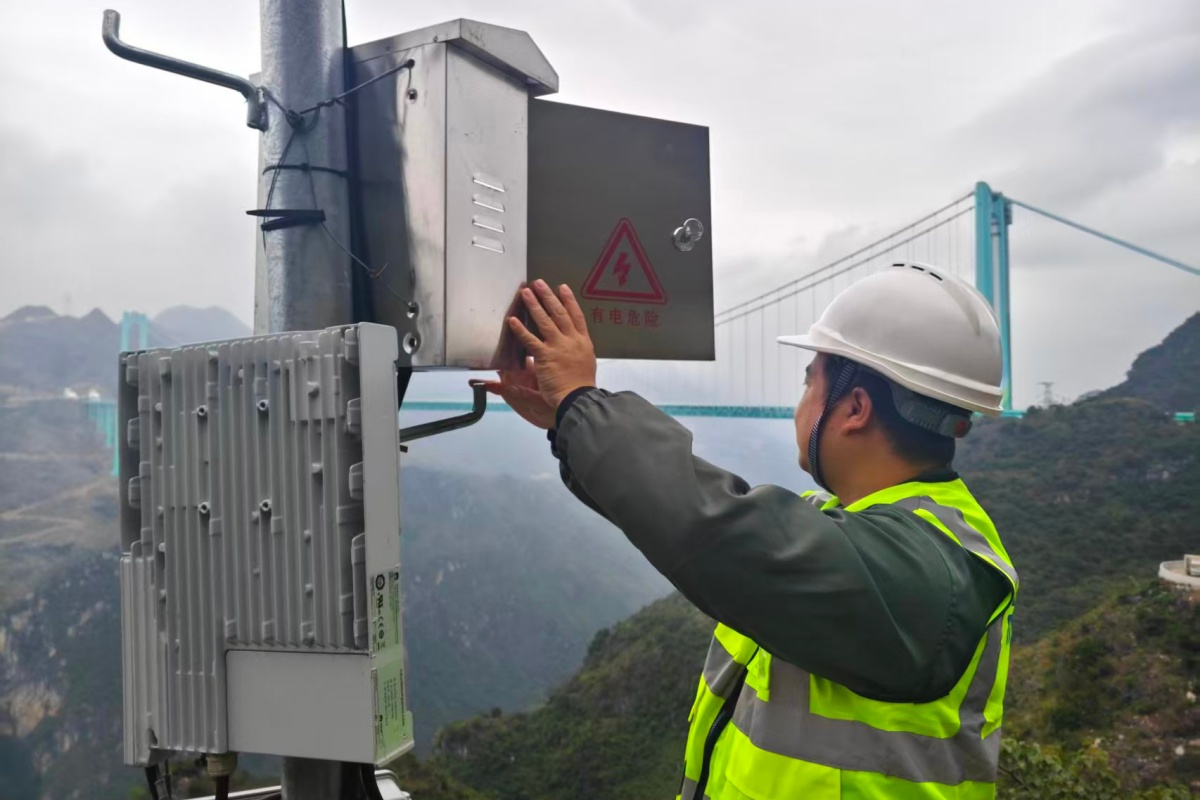
Economic and telecom development along the Huajiang Grand Canyon, which looks like a crack in the Earth, have long been constrained by the region's mountainous terrain. Now, the Huajiang Grand Canyon Bridge has eliminated physical barriers, and the integrated communications networks built by Chinese multinational technology company Huawei and China Mobile provide a digital bridge for these villages.
Working in the steep cliffs of the Huajiang Grand Canyon, Huawei and China Mobile innovatively used drones to deploy four 4G sites, four 5G sites, and 39 cells on the bridge and in its surrounding areas to provide 4G, 5G, and 5G–A connectivity for around 11,000 users. Field tests in hotspot areas like the Yundu Service Area have shown average 5G-A download speeds of up to 1500Mbps.
Pan Cong, Network Engineer at China Mobile Guizhou, explains, "For Guizhou's complex mountainous terrain, we used drone-assisted lifting and installation to solve the challenge of building networks over cliffs and canyons where traditional construction methods cannot be applied."
Improved transport and network infrastructure is stimulating and transforming the development of villages in the region. Residents of Xiaohuajiang Village now use high-speed networks for e-commerce and homestay businesses. In April 2026, the village had a total of 19 homestays, and its homestay revenue and tourist numbers increased three to fourfold year-on-year.
Homestay owner Lin Guoquan says, "Now, more tourists can find out about our village through short videos and livestreaming. And many young people who used to work in other places have returned home to seek careers in the village."
Digital technology helps conserve and promote the cultural heritage of ancient towns
Digital enablement is happening in Guizhou's ancient towns as well. In Tianlong Tunpu Ancient Town, which has a history of more than 600 years, network construction was very difficult in the past due to the town's narrow streets and densely-packed stone buildings. Today, Huawei and China Mobile have used innovative solutions to build nine 4G base stations, eight 5G base stations, and one 5G-A base station to provide seamless network coverage in the town's core areas.
With improved connectivity, residents in the town have started selling local products like chili peppers and batik items through livestreaming. This has resulted in a 15% increase in agricultural product sales and a 9% increase in resident income. Dixi Opera, a form of intangible cultural heritage, can now reach a wider audience through livestreaming. Relevant livestreams have already garnered more than 100,000 views. These developments have boosted local cultural tourism. From January to April 2026, the number of visitors to Tianlong Tunpu Ancient Town increased by two to three times year-on-year.
Dixi Opera performer Zheng Ruhong comments, "Now, many people across the country know about Dixi Opera from livestreaming. Many young people who used to work in other places have returned home to learn this art. This ensures that this intangible cultural heritage can be preserved and passed down."
Working together to promote digital inclusion and bridge the development divide
On 29 May, China Mobile and Huawei jointly hosted the TECH Cares Digital and Intelligent Guizhou Roundtable Forum, which brought together representatives from carriers, enterprises, and international organisations. The attendees discussed how digital infrastructure enables rural development, intangible cultural heritage preservation, and sustainable development in the region, and explored new paths for inclusive digital development.
Yang Mengmeng from China Mobile Guizhou stated that China Mobile Guizhou set up special teams to overcome the challenges of building networks in mountainous areas to serve local residents in Guizhou. The company has led the construction of a 'gigabit Guizhou', providing 5G coverage to all administrative villages and dual gigabit connections to all townships.
Aleksei Savrasov from the United Nations Industrial Development Organization (UNIDO) says, "For a remote enterprise, a signal bar is the difference between a local stall and a global market. Where the signal reaches, the economy follows."
Huawei's Zhou Jianguo adds, "While physical bridges shorten distances, digital connections bridge digital gaps. Huawei will continue advancing technological innovation and open collaboration to provide remote areas with equal access to the digital world, so that they can share in the dividends of the digital era."
By 2025, Huawei had worked with partners to provide digital connectivity for 170 million people in rural and remote areas in more than 80 countries and regions. Moving forwards, Huawei and China Mobile say they will continue to innovate in rural network technologies and provide digital skills training to help more regions bridge geographical and digital divides. This will allow more people to benefit from the digital and intelligent world.
For more from Huawei, click here.
Joe Peck - 29 May 2026

Data Centre Infrastructure News & Trends
Enterprise Network Infrastructure: Design, Performance & Security
Sponsored
Via Licensing Alliance expands Voice Codec programme
US-based patent licensing platform Via Licensing Alliance has announced continued momentum for its Voice Codec patent pool, including the addition of a new unnamed licensee and new licensors, NovaVoice Limited and Cordial IP, further growing the programme’s patent stack and market penetration from its initial five, large global licensors.
The addition of the new licensee, unnamed at this time, reflects growing industry adoption of the collaborative licensing pathway Via’s Voice Codec programme creates for accessing IP rights to critical voice technologies. It also reflects a growing market uptake of advanced voice technologies, including EVS and IVAS, driven by rising demand as 5G and 5G-Advanced technologies are adopted worldwide.
Additionally, Via says it continues to prioritise transparency and has published its full rate structure for the Voice Codec pool, providing further clarity and predictability for implementers and to the broader market.
For implementers, the full rate structure allows for complete visibility as they consider the appropriate royalty structure to choose from to meet their product level costs, evaluate future growth paths for their product lines, or plan their geographical expansion plan needs.
This level of disclosure not only reduces uncertainty in licensing decisions but also enables more consistent benchmarking, reinforcing confidence in fair, market-aligned SEP licensing practices. The programme’s royalty rates are listed on Via’s website.
Anticipating future growth
The addition of the new licensors indicates increased interest from patent holders in licensing their voice technology SEPs through highly efficient, aggregated licensing vehicles such as patent pools.
Future growth in both the licensor list and the number of patents consolidated through the pool licence will continue to enhance the value of the Voice Codec licence for implementers. Via’s Voice Codec programme licensors are listed on the website.
Via’s Voice Codec pool covers Enhanced Voice Services (EVS), which supports voice communications across more than one billion (and growing) active devices globally, as well as Immersive Voice and Audio Services (IVAS), which will play a central role in next-generation voice and spatial audio applications.
Kevin Mack, President of Via Licensing Alliance, says, “We are pleased to welcome these new entrants to our pool, which signals continued growth and momentum our Voice Codec programme.
"This pool licence offers strong value relative to other market options and represents the only collaborative licensing solution for EVS and IVAS technologies, making it a smart and efficient pathway for companies seeking to licence critical voice capabilities."
EVS remains a foundational technology for high-quality voice communications in 5G and 5G-Advanced networks, with adoption continuing to expand as 5G, 5G-Advanced, and future network iterations reach global scale.
As spatial audio and advanced voice technologies expand into 6G and a broader range of non-cellular devices, the importance of IVAS technologies is expected to increase, with Via’s pool offering an early and effective licensing pathway.
For more information about the Voice Codec patent pool, including information for prospective licensees, you can click here to visit the website.
Joe Peck - 26 May 2026
Data Centre Build News & Insights
Sponsored
Sustainable Infrastructure: Building Resilient, Low-Carbon Projects
Case study: Reducing emissions through refrigerant recovery
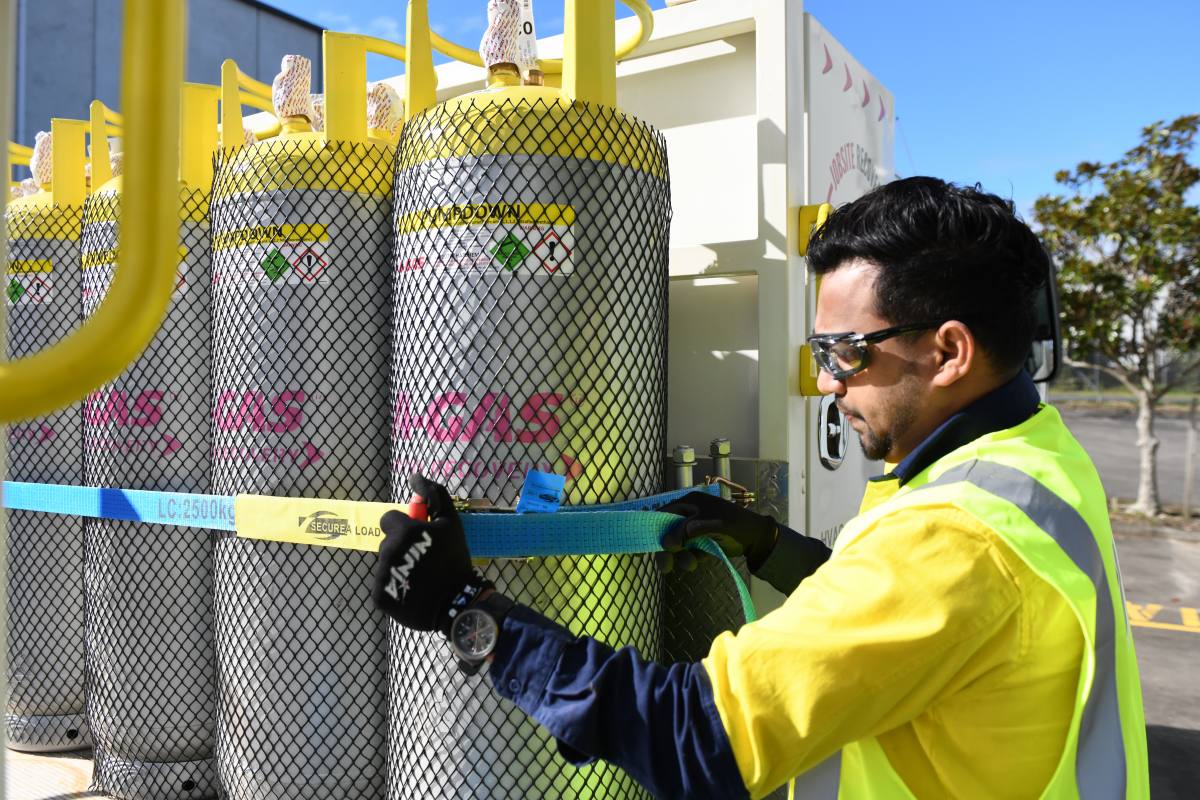
Through this case study, A‑Gas, a company specialising in lifecycle refrigerant management (LRM), demonstrates how its Rapid Recovery service enabled the safe, fast recovery and AHRI‑700 reclamation of 1,745 kg of R134a during a London data centre chiller retrofit, preventing 2,495 tonnes CO₂e, maintaining continuous operations, and enabling a successful transition to lower‑GWP cooling.
The background
The customer is a leading technology solutions and services provider in Europe, headquartered in the United Kingdom. It offers a broad portfolio of products and services, including data centre hosting, enterprise infrastructure, and cloud infrastructure, among others.
The company, A‑Gas, is building a sustainable future through the supply of lower global warming refrigerants combined with responsible lifecycle management of refrigerant gases. Through its first-class recovery, reclamation, and repurposing processes, it captures refrigerants and fire protection gases for future re-use or safe destruction, preventing harmful release into the atmosphere.
The offering, Rapid Recovery, is A-Gas’s premier refrigerant recovery service. Across the globe, it provides a safe and fast onsite solution, which includes what the company calls industry-leading F-Gas documentation.
The challenge
A-Gas was engaged by a digital infrastructure provider operating an edge data centre in London to support the recovery of refrigerant and assist in the transition to a lower GWP solution.
The A-Gas Rapid Recovery team was contracted to recover a significant volume of R134a from four chillers scheduled for decommissioning. These units were being replaced as part of a retrofit project involving the installation of new cooling equipment with a substantially lower GWP.
The solution
A-Gas Rapid Recovery, an onsite refrigerant recovery service that operates up to 10 times faster than traditional methods, was appointed to assist with recovering the high GWP gas used at the data centre.
The Rapid Recovery equipment is fully independent of external services (such as power), is portable, and is capable of reaching units across distances exceeding 300 feet (91 metres) through flexible hoses, making it ideal for challenging locations.
This innovative solution proved perfect for the complex retrofit project, where efficiency was paramount. A-Gas’s team of certified F-Gas engineers managed the full recovery process, enabling contractors to focus on other critical aspects of the retrofit, ensuring streamlined and timely project completion.
The results
Over a four-day period, the A-Gas Rapid Recovery team successfully recovered 1,745 kg of R134a refrigerant, preventing the equivalent of 2,495 tonnes of CO₂e emissions.
In addition, new chillers with a lower GWP were installed, significantly reducing the Total Equivalent Warming Impact (TEWI) of the cooling systems.
A-Gas’s quick and efficient refrigerant recovery process ensured the project was executed without disruption to data centre operations, maintaining continuous service to customers and uninterrupted data security.
The conclusion
The recovered refrigerant was reclaimed to AHRI 700 standards, ready for safe reuse in the market.
By ensuring full recovery and reclamation, A-Gas mitigated emissions from both leaks and the production of new refrigerants, supporting the principles of the circular economy, combining environmental protection with operational continuity.
For more from A-Gas, click here.
Joe Peck - 26 May 2026

Head office & Accounts:
Suite 14, 6-8 Revenge Road, Lordswood
Kent ME5 8UD
T: +44 (0)1634 673163
F: +44 (0)1634 673173