Hyperscale Data Centres: Scale, Speed & Strategy


atNorth announces heat reuse enabled mega site in Kouvola
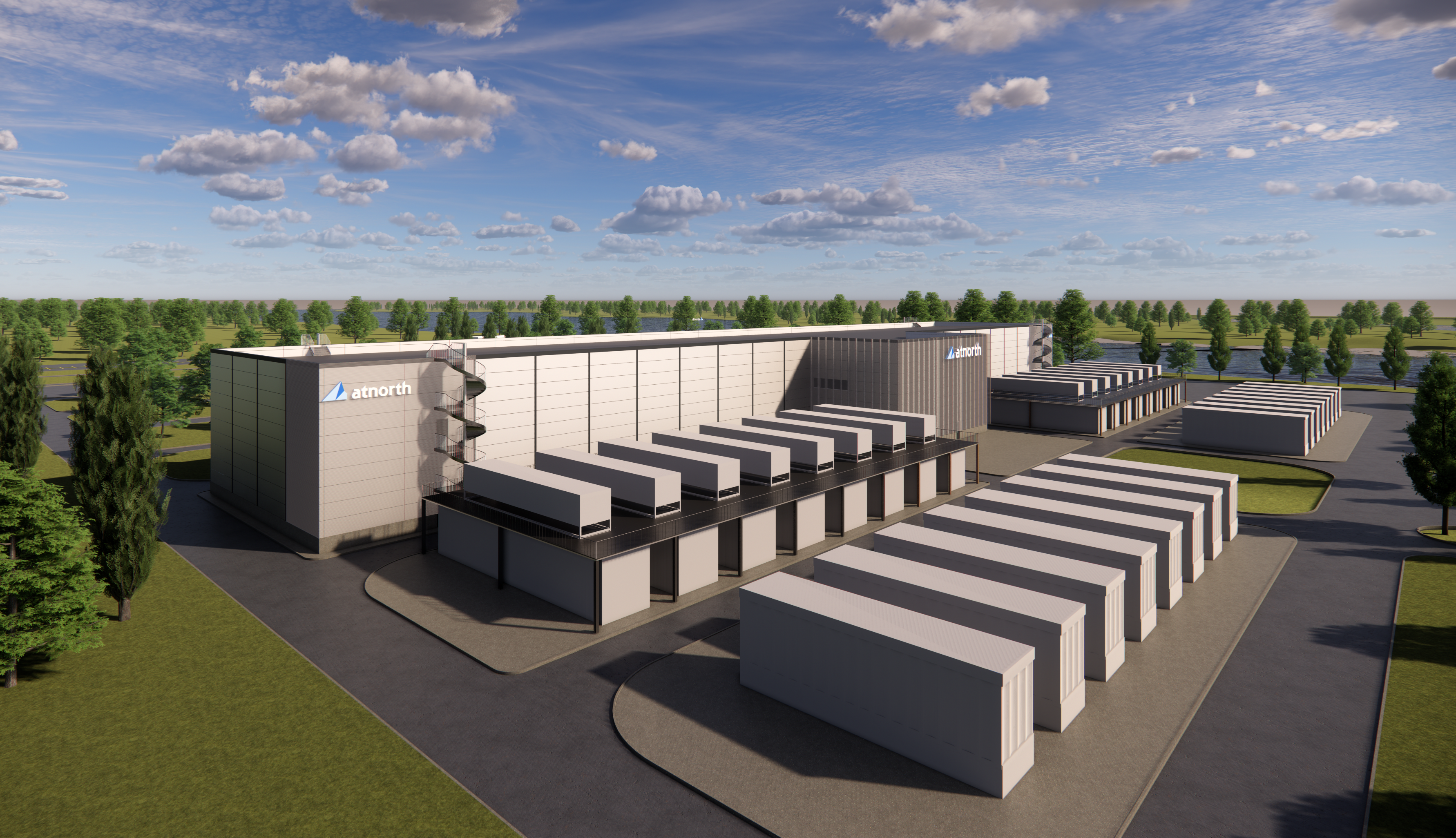
atNorth has announced further expansion into Finland with a new mega site planned on a 21Ha plot, in Kouvola, 139km north east of Helsinki and 52km from the city of Hamina. The site, called FIN04, aligns to atNorth’s growth strategy and will be its 10th data centre in the Nordics and its fourth campus in Finland.FIN04 will have an immediate power supply of 60MW with the first phase, ready for operation in the second half of 2025 and a path to power to several hundred megawatts when fully built. The site will cater for both colocation customers and build-to-suit projects.“This agreement is yet another hallmark moment for atNorth. Kouvola is a critical location for our next site, as we continue to expand and meet the growing demand for high performance services,” comments Eyjolfur Magnus Kristinsson, CEO, atNorth. “We are in ongoing discussions with several AI companies, hyperscalers as well as international organisations requiring high performance computing, who see the clear benefit of moving to the Nordics to decarbonise their IT workloads. True to our vision, we are leading the way in future-proofed data centre infrastructure across the Nordics.”The Kouvola region is known for its sustainability practices. The city promotes a circular economy throughout its infrastructure design and architecture, in line with the needs of local communities, businesses, and residents.“Kouvola is a sought-after, sustainable destination. We welcome business investment from responsible companies like atNorth, who see the benefit in helping to advance digitalisation in an environmentally responsible way,” states Marita Toikka, Mayor of Kouvola. “We are excited to collaborate with atNorth to bring innovation, digital competitiveness and sustainability to the forefront.” Working closely with the city of Kouvola and energy partner, KSS Energia, the new FIN04 site will be enabled with heat reuse capabilities, which will enable the recovery of excess heat from the data centre to be recycled for possible reuse within the local community.“We are excited to work with atNorth to implement a heat reuse practice that can serve as an inspiration for other businesses striving to meet sustainability targets and contribute to a better world,” states Marko Riipinen, CEO, KSS Energia.

Reliable, experience-first, multivendor: Data centre solutions for the channel
Dale Smith, Channel Director, EMEA and LATAM at Juniper Networks In the current data centre landscape, businesses grapple with many challenges in their day-to-day operations. The scarcity of qualified professionals makes it difficult for organisations to effectively manage data centres, while complex, often standalone tools and technologies can lead to inefficiencies and errors. Additionally, staying updated with emerging trends and selecting the right solutions adds another layer of complexity. These challenges can be overwhelming for data centre operators to manage alongside their day-to-day jobs. Many companies have found the task so daunting that they have shifted IT workloads from their on-premises data centres to public clouds, only to realise they greatly underestimated the costs of public cloud. Partners should be the first port of call when organisations look for a data centre solution. They can offer a helping hand to customers navigating these challenges by recommending the most appropriate technologies and the right tools based on specific requirements. With the right technologies on offer, partners can help customers transform their data centre operations and alleviate some of the pressures they currently face. Getting solutions offerings right There are numerous data centre networking solutions available on the market, so it can be challenging for partners to know which will be the best investment to ultimately meet customer needs. In reality, most solutions can be complex to learn, implement and operate for IT teams. This complexity arises from a variety of factors such as multi-layered architectures, diverse technologies and protocols, customisation needs, scale and complexity of network infrastructure, interoperability limitations and skill requirements. Integrating and configuring these solutions across different layers and components can be a huge challenge. To combat this, the key is to opt for a solution that abstracts the complexity in such a way that simplifies the networking experience through user-friendly interfaces and reliable and consistent operations, while offering multivendor support to ensure the best flexibility and ease-of-use. For vendors, the goal is to assist customers in setting up a seamless private data centre operation that they can manage effortlessly and with the same simplicity it takes to run public cloud-based infrastructure. Here are three steps for partners to consider when choosing solutions offerings for customers: Reliable data centre operations If the cloud hyperscalers have taught us anything, it is that reliability, consistency and repeatability are the foundations for speed. Solutions based on repeatable templates are a great way for partners to ensure reliability at pace for customers. By following predictable and repeatable data centre fabric designs based on industry best practices and common use cases, organisations can efficiently implement configurations with speed and reliability. Validated designs offer guardrails for customers and lead to increased productivity, reduced downtime and optimised operational performance. Organisations can design their data centre with a simple blueprint. No need to mess around with esoteric vendor syntax in a command-line interface (CLI). Once the blueprint is complete, customers can duplicate the same design every time they need to expand their data centre network, ensuring quick, reliable and easy expansion for enterprises who may need to rollout new infrastructure in minimal time with minimal downtime. Partners should consider investing in solutions with augmented automation capabilities and intuitive design, as operators can easily navigate and configure their data centre, reducing complexities and saving time. Experience-first ensures smooth operation The most innovative data centre solutions prioritise user experience and enable the user to easily implement their intent. These solutions should then take care of the "how” by the device configurations and service assurance. These continuously validate the infrastructure in operation versus the intended blueprint design that is stored in a single-source-of-truth graph database as the foundation. This means customers are no longer tied to the CLI and vendor certifications. It is also important for partners to offer data centre solutions that can integrate with other applications to offer a seamless user experience. Integration with a range of popular services and solutions enable customers to create a cohesive ecosystem across hybrid cloud environments and disparate IT infrastructure. A seamless experience means that organisations can connect their data centre infrastructure with various services, such as cloud platforms, security solutions and management tools to have full visibility. A growing number of businesses, especially those using DevOps and site reliability engineering (SRE) approaches, want more programmatic or structured ways to use data centre fabric management tools. They would like to fold their data centre automation into the same Infrastructure-as-Code (IaC) framework used for the rest of the cloud environment. These integrations enhance interoperability, improve workflow efficiency and unlock additional capabilities and features. Multivendor solutions allow flexibility Multivendor solutions allow a customer to design their data centre first and then pick the underlying fabric, offering strategic flexibility and ensuring a tailored infrastructure which meets the exact needs of the customer. Hardware selection should be one of the final steps in data centre design, not the first. Multivendor automation also expands hiring flexibility and increases efficiency. With a multivendor solution, customers are no longer constrained to find and train experts in a specific vendor’s portfolio and operating system (OS). By providing an abstraction layer, this ensures consistent operations regardless of vendor and turns each person on the team into an expert. The best protection against supply chain disruptions — or getting locked into one vendor’s pricing and product roadmap — is the ability to quickly change vendors. Multivendor solutions offer this protection. Some customers even use these solutions for what they call 'lead time arbitrage', pivoting away from an incumbent that needed many months to fill an order and swapping to a vendor who could deliver much sooner. With multivendor flow data, digital businesses gain significant advantages, including enhanced end-customer experiences, improved operational efficiency, data-driven decision-making and cost optimisation. Flow data through these systems enables complete network visibility across vendors for in-depth analysis of traffic patterns, performance optimisation, security enhancement, regulatory compliance, capacity planning and cost control. Perhaps most importantly, flow data allows operators to understand how network issues impact specific applications. Data centres exist for the applications running in them, not the underlying network. Partners can benefit greatly from offering the latest data centre technologies and having deep knowledge of how these cutting-edge solutions can enhance data centre operations for organisations. This ensures continued growth of trusted relationships with customers and increased growth for the partner’s business. As organisations grapple with their data centre operations, partners should be ready to support them on their journey to deliver the best user experience.

Colt DCS expands with third Frankfurt hyperscale data centre
Colt Data Centre Services (DCS) has commenced the construction of its third state-of-the-art data centre in Frankfurt, Germany. Recognising Germany's pivotal role as a digital business hub with essential infrastructure for seamless internet traffic across Europe and beyond, it has strategically chosen to continue to invest in the Frankfurt market in order meet customer demand.  The latest Frankfurt hyperscale data centre project is strategically situated in close proximity to Colt DCS's existing Frankfurt data centre, offering seamless connectivity to the Rhine-Main region and convenient access to Frankfurt's major financial district. Designed for a leading cloud service provider, this facility will provide 32.4MW of IT power capacity, ensuring exceptional data storage capabilities and scalability for the tenant's IT infrastructure. The facility boasts direct access to DE-CIX, one of the world's largest internet exchange points, as well as multiple dark fibre providers. Additionally, the Frankfurt data centre will maintain its status as a cloud, carrier, and IX neutral, with multiple points of entry and alternative carrier routing to ensure zero service disruptions.  At the heart of Colt DCS's commitment is sustainable scalability, evident across its 16 state-of-the-art data centre developments, with the company procuring 100% renewable energy across its entire European estate, providing robust and environmentally friendly power to the new hyperscale Tier-3 data centre. Furthermore, the facility will offer round-the-clock local language customer support and is set to achieve ISO 27001 certification post-phase delivery. Richard Wellbrock, Vice President of Real Estate at Colt DCS, says, "We understand the imperative to provide digital businesses in Germany with the data storage and scalability they need to serve their customers optimally. Our proven track record and extensive experience in constructing and operating data centres in Frankfurt has allowed us to optimise efficiency, reliability, and data security for our partners and customers. Germany's robust digital infrastructure, supported by a dependable power grid and sophisticated telecommunications network, reinforces our commitment to delivering unparalleled services in the market. Colt DCS remains steadfast in its mission to develop strategically located data centre sites that cater to our customers' needs, establishing us as the industry's most trusted and customer-centric data centre operator." Colt DCS’ design of all newly built data centre is future-proofed to accommodate liquid cooling and high-density racks layouts, with flexibility to deliver hybrid solutions (air and/or liquid cooling) depending on the customer's use case.

PowerHouse announces a strategic development site
PowerHouse Data Centers (PowerHouse) has recently begun demolition on a 43 acre plot with a significant history in the digital space. The site will soon become home to its new hyperscale-sized powered shell campus. When complete, the new campus, known as PowerHouse Pacific, will include three high performance buildings totalling approximately 1.2 million square feet and a new power substation. A subsidiary of American Real Estate Partners (AREP), PowerHouse offers turnkey site selection, powered shell, and build-to-suit data centre solutions for hyperscalers, data centre operators, and multinational companies. PowerHouse Pacific's demolition process finishes in early 2024, enabling the construction of a new power substation through summer 2024 in partnership with Dominion Energy. Construction of the first of three new buildings begins in the fall of 2024 and delivers in mid-2026. The demolition of the existing structures on the site includes two multi-story parking structures, three office buildings, one mail hub, and a long-defunct pedestrian bridge stretching across Pacific Boulevard. PowerHouse Pacific's general contractor, E.E. Reed Construction, mobilised early last month, and demolition started with the parking structures. In preparation for the demolition, the team pulled literally tons of materials from each building. This meant all ceilings, floors, and walls were stripped for any wires, pipe, and other elements that could be recycled. All recyclable building materials and metal were sent for processing, and the concrete will be processed for reuse onsite, reducing the amount of waste sent to landfills and the impact of trucking this material off-site. Usable furniture and office components were donated, as was the case with the property's kitchen equipment, which PowerHouse donated to the Dulles South Soup Kitchen in Loudoun County. Each building's final preparation step is the removal of any non-load-bearing walls and flooring.

Rise of AI to drive growth for Nordic data centre market
The data centre market in the Nordics is primed for exponential growth as a result of the acceleration of AI, according to CBRE. AI and machine learning (ML) technologies have experienced unprecedented adoption levels in 2023 and these wide-scale, digital business transformations are fuelling demand for data centre infrastructure as a result. New research from CBRE suggests that much of this demand can be satisfied in the Nordics, primarily due to the low-cost power availability and leading sustainability credentials in the region. There is an abundance of low-cost hydropower available and with the inherently cold climate, there is minimal need to use additional power to cool equipment. CBRE predicts that the Nordics will account for 8% of all colocation data centre supply in Europe by the end of 2023, a sharp year-on-year increase from 5% in 2022, with many locations in the region set to benefit from increased hyperscaler demand. According to the research, Norway’s data centre capacity is expected to more than double by the end of 2026 to 500MW, compared to the projected 210MW at the end of 2023. Furthermore, CBRE predicts that Stockholm’s data centre capacity will almost double by the end of 2026 to 136MW. Stockholm, alongside Oslo and Copenhagen, already forms part of Europe’s 20 largest data centre markets, with further growth expected as customers with large scale requirements look to the Nordics to fulfil demand. Much of the new capacity will be absorbed by the hyperscale operators, but significant opportunities exist for colocation vendors to develop new purpose-build facilities, according to the research.

Start Campus drives momentum in Portugal
Start Campus has announced that it has welcomed its first hyperscaler clients for the initial setup phase at its NEST building, the company’s first phase data hall. Highlights of this event were showcased during a visit from Portuguese Minister of Infrastructure, João Galamba, who toured the 100% sustainable campus powered by 24x7 renewable energy on September 29, 2023. In advance of the upcoming operational launch of its data centre, the onboarding process for the new hyperscalers is underway, including access to unique and diverse global network connectivity solutions. The NEST is scheduled to be fully operational by March 2024 and will deliver an initial 15MW of power, setting the stage for a capacity of 495MW across six buildings. "This moment represents a very important milestone for Start Campus and the SINES Project,” says Afonso Salema, CEO of Start Campus. “We are developing a dynamic sustainability driven ecosystem that will place Portugal at the centre of the rapidly growing international data market. We’re challenging what’s deemed possible in our industry, so we are particularly pleased with the entry of the first clients who resonate with our values, decisively reducing the carbon footprint of this industry.”

Juniper Networks announces enhanced data centre capabilities
Juniper Networks has announced new Juniper Apstra capabilities that enhance operator experiences to facilitate the deployment and operations of private data centre infrastructures. With the introduction of new experience-first data centre features, including simplified data collection and visualisation via graph databases, tighter flow data integration from multivendor switches and automated provisioning via Terraform, Juniper's customers can continue to leverage Apstra as the premier solution for intent-based networking and automated data centre assurance with even more management capabilities, that make private data centres as flexible and agile to operate as cloud-based infrastructures. Budget constraints, skills shortages and increasing complexity continue to drive the need for automated data centre operations. As the pioneer of intent-based networking, Juniper Apstra provides exceptional value by automating and validating the design, deployment and operation of multivendor data centre networks. In addition, it provides a single source of truth for predicting, analysing and troubleshooting ongoing operations. With the latest release of Apstra software, customers and partners get even more value, which includes: Simple data collection and visualisation: Building on Apstra’s powerful, unique graph database, users can now easily customise intent-based analytics probes for telemetry and visibility into network operations, then easily explore and visualise the data using the new database query interface included in Apstra 4.2.0. The easy-to-use, no-code user interface enables new users to easily query and explore the database while allowing experienced users to write customised graph queries. Complete network visibility with integrated flow data: Multivendor flow data through Apstra provides granular visibility for in-depth analysis and insights into the application traffic flows traversing the network without the complexity and cost of a separate monitoring system. When paired with Apstra’s telemetry and analytics features, these capabilities simplify and speed troubleshooting, enable better performance management, capacity planning and cost control, and improve security and compliance - regardless of vendor. Automated and streamlined network provisioning with Terraform: Companies currently using the Terraform Infrastructure-as-Code (IaC) platform to automate their public cloud deployments can now use the Terraform provider for Apstra to automatically push configurations to the data centre through Apstra without any API programming. By simplifying network operations, Terraform and Apstra accelerate the delivery of new services, giving organisations a data centre solution modelled after the simplicity and agility of the cloud. When these features are coupled with Apstra’s existing intent-based networking capabilities and Juniper validated designs, organisations can simplify and standardise data centre architectures to achieve hyperscaler-like efficiencies.

Zayo launches new Bordeaux route expansion
Zayo Group Holdings has announced the launch of a new Bordeaux wavelength route connecting Paris and Marseille. The Bordeaux route leverages its extensive fibre-optic network in France and affirms its commitment to delivering infrastructure solutions to customers across Europe and around the world. Bordeaux is a strategic connection for Zayo’s global network due to its central location in the Southwest region of France, thriving technology industry and proximity to cable landing station locations. This provides the opportunities to tap into this growing market and provide critical connectivity infrastructure to support the region's digital economy. The company also provides these regions with access to Europe, the Middle East, and North America. This ensures maximum uptime and minimal disruption to customers' operations, while also providing greater network flexibility and resiliency. As part of the route expansion, it selected Equinix’s first International business exchange data centre in Bordeaux, BX1, as one of its major hubs on the new route. This will act as the connectivity hub for the new Amitié subsea cable, delivered this summer by a consortium of hyperscalers made up of Microsoft and Meta, Orange, Vodafone and Aquacomms. It will play a key role in responding to rapidly increasing bandwidth demand in the region. 

GLP announces new data centre campus in Tokyo
GLP has announced that it has broken ground on Tokyo West 1 (TKW1), its first three-building data centre campus totalling 31MW IT load in West Tokyo, Japan. Building one represents the first phase of the three-building campus and is expected to be ready for service by February 2025. It is designed to meet both hyperscale and enterprise customer requirements for physical and cyber security, safety, reliability, and sustainability. Buildings two and three representing 10MW and 11MW IT load respectively, will be developed in sequence in the vicinity of the same site. Located in an area with low natural disaster risk to promote stable business continuity, the campus is situated within a network-rich environment and is in proximity to some of the largest enterprise, IT and telecommunications and hyperscale companies. The new facility will also feature amenities including private meeting rooms, offices and common rest areas such as a lounge to provide customers with an optimal working environment. Leveraging its existing real estate portfolio and core capabilities of acquiring land for development, GLP has assembled a dedicated global team of trusted data centre industry veterans. Combined with experienced local professionals, the team is well-equipped to provide full-scale data centre technical expertise in design, delivery, and operations. TKW1 will be constructed to LEED Gold certification standards and will benefit from GLP’s renewable energy business, offering clean sources of energy to advance the sustainability objectives of its future enterprise and hyperscale customers. “This ground-breaking marks our first data centre facility in this region and represents a significant milestone as we further establish our digital infrastructure business to be a leading provider in Japan. As a rising data centre hub in Asia, Tokyo is a prime location for our entry into the market and we look forward to serving hyperscale and enterprise customers’ data capacity needs in this region,” says Yoshiyuki Chosa, President and CEO of GLP Japan. “We will leverage our expertise, scale and synergies with our renewable energy business to provide customers with sustainable digital infrastructure to power the future.” Click here for latest data centre news.

Pulsant delivers cost savings for LinkPool crypto ecosystem
LinkPool has reduced memory, CPU and disk costs by 85%, while delivering higher network performance, following its move to platformEDGE, which is Pulsant’s multiregional UK edge infrastructure. Having previously operated on hyperscale cloud infrastructure, the combination of cost inflation and performance limitations led LinkPool to seek a solution that offered lower latency and expense without sacrificing scalability. platformEDGE was chosen to compose the infrastructure it needs to support its business-critical global workload. In moving to a regional data centre network offering edge colocation, hyperscale cloud access, and distributed compute – all available in a high-performance package – LinkPool has been able to make huge cost savings while improving performance. It has done so in an infrastructure capable of scaling to match the company’s success and growth over time. Pulsant's regional network also meant that Sheffield's data centre was ideally placed to personally oversee the build, onboarding its infrastructure in a matter of days rather than weeks. Continued investment has also seen a recent upgrade to 380kW from 176kW processing power (+114%), ensuring all businesses in the region can benefit scalable, high-performance, low latency edge application delivery. As part of the edge platform, Pulsant's Milton Keynes data centre delivers resiliency via dedicated links over its high-performance, secure, national network. “As the first third-party team creating products and services specifically for the Chainlink network, we’re in a unique position to further its use cases and adoption, and Pulsant is enabling us to do that at scale,” says Jonathan Huxtable, Founder, LinkPool. “LinkPool is committed to lowering the barrier of entry to meaningfully contribute to the Chainlink Network. Pulsant is doing the same for edge computing, making sure regional businesses like us can drastically reduce costs and improve performance,” Jonathan adds. Click here for latest data centre news.


Translate »