Enterprise Network Infrastructure: Design, Performance & Security


STL launches 'India's first' hollow core fibre cable
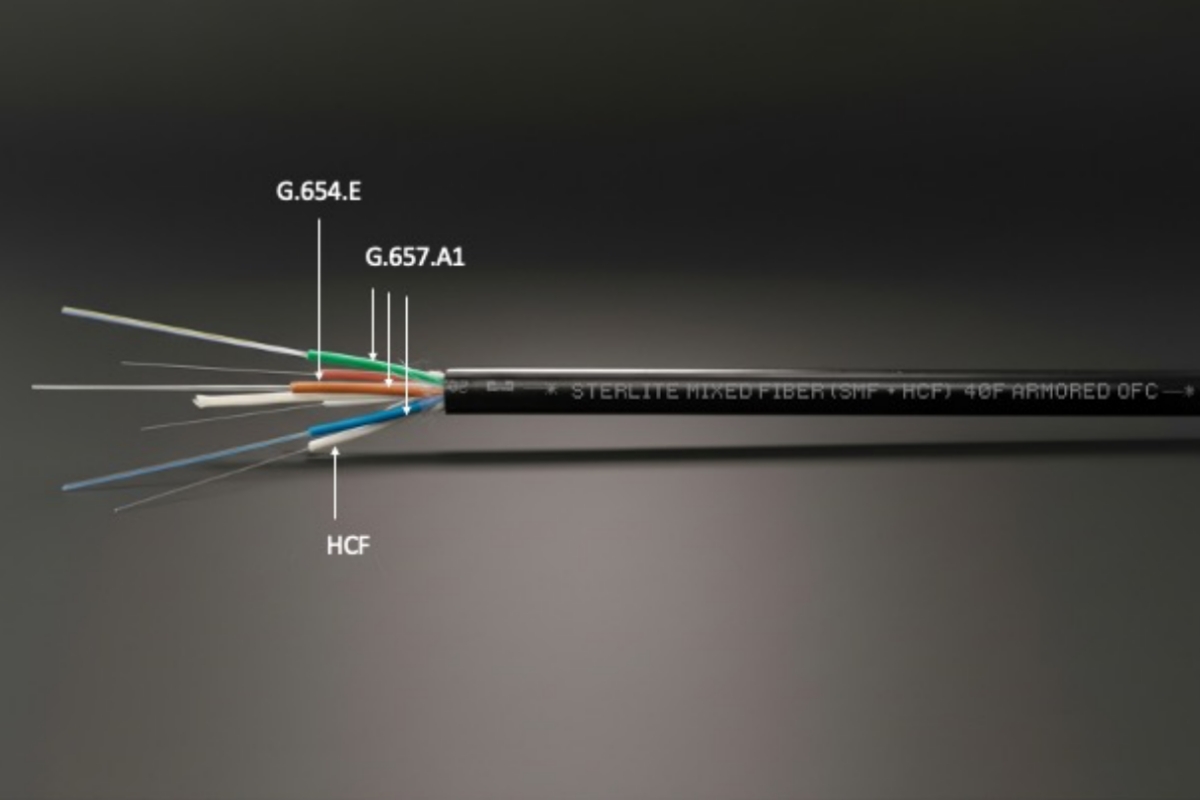
STL, an optical and digital systems company, has introduced a hollow core fibre (HCF) cable in India, designed for data centre networks and high-frequency transmission environments. The development focuses on reducing latency and supporting higher bandwidth demands in modern data centres, hyperscale facilities, and network infrastructure. Unlike conventional optical fibre, which transmits light through a solid glass core, hollow core fibre uses an air-filled core. This allows signals to travel at higher speeds, with STL stating performance improvements of around 46%, alongside reduced latency and signal loss. Noting that it is the first company to develop and manufacture this type of cable in India, STL says it is expanding its optical connectivity portfolio in response to increasing demand from AI-driven and high-performance computing environments. The cable also incorporates a hybrid design intended to support a range of network requirements. This includes hollow core fibre for low-latency transmission, G.654.E fibre for long-distance, low-loss performance, and G.657.A1 fibre to support flexible deployment across different network types. Hybrid design supports varied network needs The hybrid architecture reflects the growing complexity of data centre and telecoms infrastructure, where operators require a mix of performance characteristics within a single cable system. STL reports that the design supports both high-speed data transmission and broader network coverage, particularly in large-scale or distributed environments. The company also states that it holds more than 780 patents and continues to focus on optical technologies aimed at increasing network capacity and efficiency. Badri Gomatam, CTO at STL, says, "Our R&D focus has always been on solving the most complex challenges of the future. With the launch of [this] Hollow Core Fibre cable, we are providing the 'speed-of-light' infrastructure required for the AI revolution. "This is a defining moment that demonstrates our capability to innovate and empower hyperscalers and data centres on a global scale.” For more from STL, click here.

SATLINE completes Tier III infrastructure modernisation
SATLINE, a Lithuanian provider of virtual satellite-to-IP streaming services and colocation for satellite communications, has upgraded its core infrastructure to align with Tier III standards under the Uptime Institute Tier Classification System, strengthening resilience across its power and cooling environments. The upgrade introduces full redundancy across critical systems, enabling concurrent maintainability and removing single points of failure, all without interrupting live operations. The project included a comprehensive overhaul of SATLINE’s infrastructure, namely: • Power redundancy — upgraded from a single generator to two fully redundant generators• Expanded UPS capacity — systems doubled to improve runtime and load handling• Modernised cooling — HVAC systems redesigned for full redundancy and improved efficiency• Tier III-aligned architecture — enabling maintenance without service disruption All improvements were reportedly completed with no customer-impacting downtime. Improved resilience and operational continuity The transition from Tier II to a Tier III-aligned design delivers a fully resilient environment. This allows any component within the infrastructure to be serviced without affecting operations, while also improving fault tolerance and scalability. For customers, the upgrade should provide greater continuity, even during maintenance or future system expansions. Simas Mockevicius, Senior Network Engineer at SATLINE, comments, “Our Tier III–aligned upgrade has already delivered measurable gains in operational resilience. “Building on a 10-year track record of 100% uptime across both network and power, we have further strengthened our infrastructure through fully redundant power generation, increased UPS capacity, and modernised cooling. "The result is a system that not only sustains uninterrupted service, but is engineered to exceed the reliability benchmarks our customers depend on.” The upgrade, according to the SATLINE, forms part of its broader strategy to support the uptime demands of satellite communications and critical connectivity services. The company has also outlined plans to expand into Asia, targeting regions with growing demand for satellite connectivity.

RETN now live at Manchester's Lunar 1 data centre
RETN, an independent global network service provider, has launched a new point of presence (PoP) in Manchester, UK. As the city’s interconnection ecosystem continues to grow, RETN says it is enabling secure, reliable, and future-ready connectivity, powering both local and global digital ambitions. Christopher Elliott, UK Commercial Director at RETN, comments, “This new PoP strengthens our presence in the North, delivering greater route diversity and resilience for businesses, ISPs, and enterprises across the region. "It’s another step in our commitment to the Northern Powerhouse, supporting Manchester’s role as one of the UK’s leading connectivity hubs. Lunar’s commitment to operational excellence and customer‑focused service makes them an ideal partner as we continue to expand our network footprint.” Darren Elliston, Director of Customer Success at Lunar Digital, adds, “RETN’s decision to build a PoP inside our facility is a strong endorsement of the quality, resilience, and strategic importance of Lunar’s data centres. "This partnership gives our customers even more choice and flexibility in how they build and scale their infrastructure. It also reinforces Manchester’s position as one of the UK’s most important digital hubs, supporting the region’s continued growth and innovation.” For more from RETN, click here.

Corning expands AI data centre connectivity
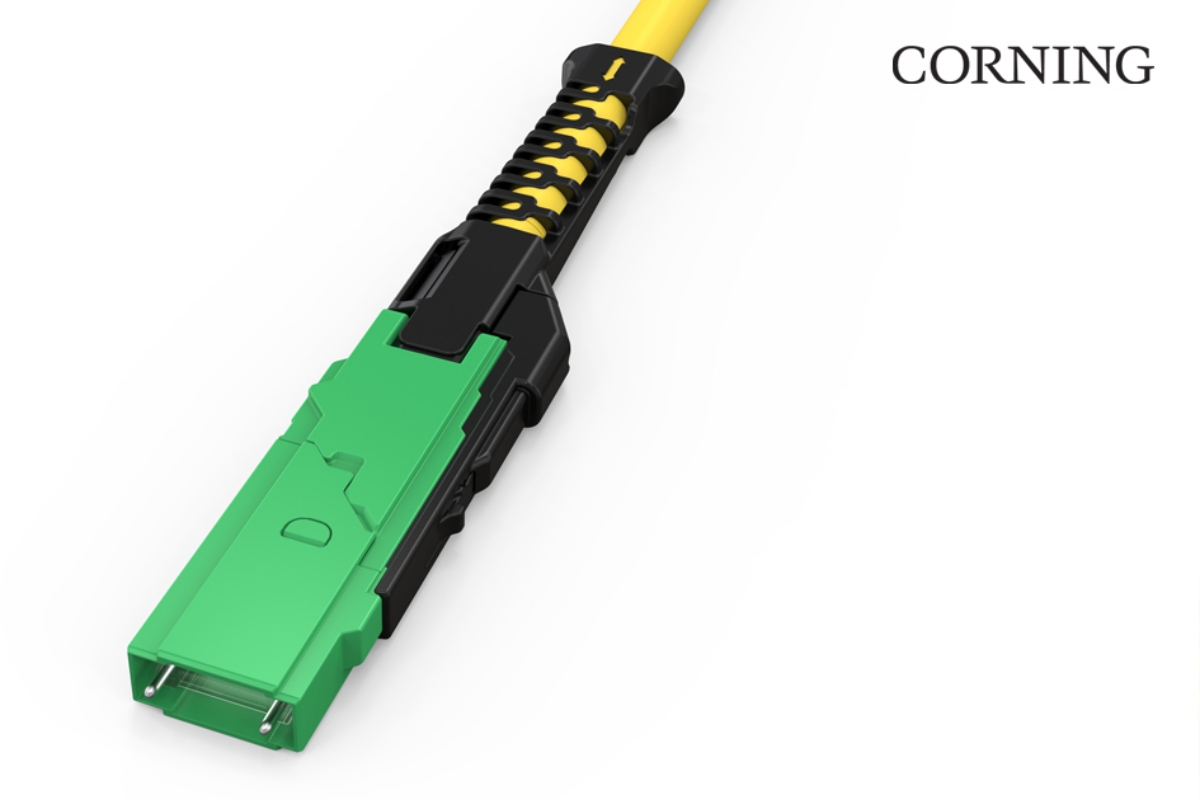
Corning, a US manufacturer of optical fibre for telecommunications and data centres, has expanded its data centre connectivity portfolio through a licensing agreement with US Conec. The agreement enables Corning to use PRIZM TMT optical ferrule technology, designed to increase fibre density within data centre environments, particularly for AI infrastructure. The technology supports higher fibre counts in limited space, addressing growing demand for connectivity as AI workloads scale and data centre architectures evolve. Mike O’Day, Senior Vice President and General Manager of Corning Optical Communications, comments, “AI infrastructure is pushing optical connectivity into new and more demanding environments. “By licensing PRIZM TMT, Corning is strengthening its ability to deliver scalable, fibre-rich solutions that help customers build larger, faster, and more efficient AI clusters, while aligning closely with the broader industry ecosystem.” Supporting higher-density AI infrastructure As AI deployments expand, data centres are increasing the number of connected accelerators and shifting towards optical connections in place of traditional copper links. This change is driving higher fibre density within server and switch racks, increasing the need for compact, high-performance connectors. The PRIZM TMT ferrule uses expanded beam technology with precision-aligned microlenses, rather than direct fibre contact. This approach is intended to improve installation reliability, reduce sensitivity to contamination, and support faster deployment. According to the companies, these characteristics are suited to large-scale AI environments, where high connection density and consistent performance are required. For more from Corning, click here.

SUBCO expands Australia network route diversity
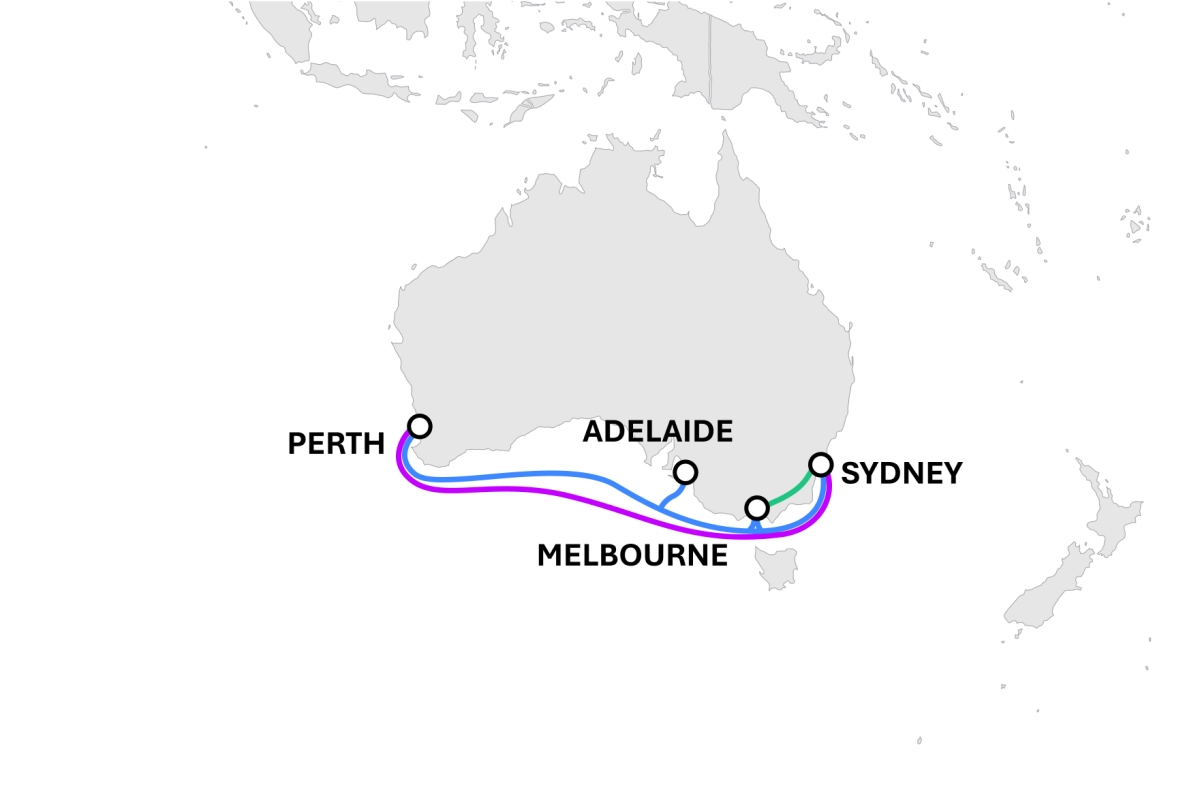
SUBCO, an Australian developer of undersea fibre optic cable networks, has expanded its Australian network with additional route diversity between Sydney and Melbourne, alongside new data centre access points across major cities. The company says its Sydney–Melbourne connection now operates across two geographically independent paths, combining subsea and terrestrial infrastructure to improve resilience on one of the country’s busiest corridors. On the Sydney–Perth route, the Indigo Central and SMAP systems provide two separate cable paths with distinct geographic routes. Both systems operate independently, with separate landing stations, submarine line terminal equipment, and data centre connections to reduce the risk of disruption from a single incident. Bevan Slattery, founder and Co-CEO of SUBCO, explains, “Diversity has traditionally been something customers needed to engineer themselves, engaging multiple providers and hoping the underlying paths were physically separate. SUBCO’s strategy has been to own and operate diverse assets and deliver them as a single, fully integrated offering.” Expanded data centre connectivity SUBCO has also introduced new access points across Sydney, Melbourne, Adelaide, and Perth, extending connectivity to its domestic and international cable network. New connection locations include facilities operated by NextDC, Equinix, AirTrunk, and CDC Data Centres. The update forms part of a wider infrastructure expansion programme, which also includes the APX East subsea cable project. This planned system is expected to connect Australia directly with the mainland United States, with service targeted for late 2028. According to SUBCO, APX East will provide a direct subsea route without intermediate landing points, and will land north of Sydney’s existing cable protection zone to increase geographic separation.

Panduit expands fibre portfolio with fusion splice connectors
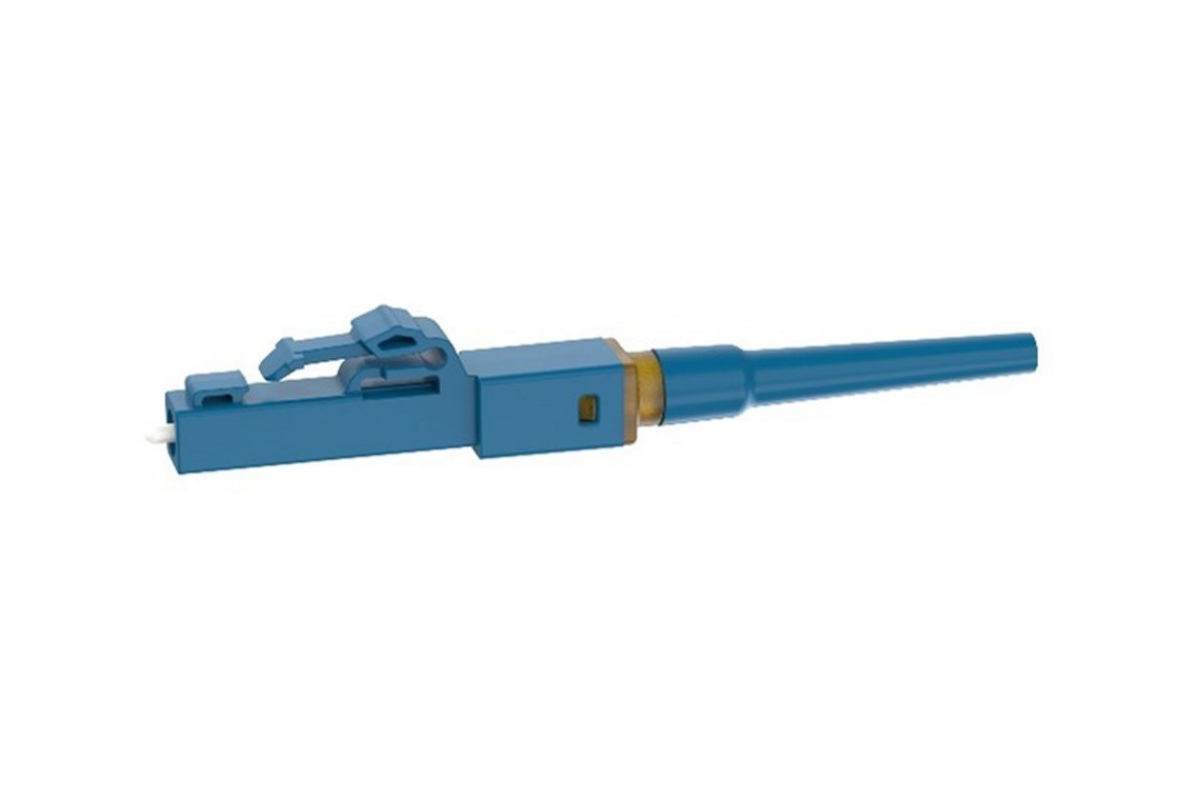
Panduit, a manufacturer of electrical and network infrastructure solutions, has introduced OmniSplice, a new range of fusion-spliced fibre optic connectors designed for data centres, edge environments, and enterprise networks. The addition expands the company’s fibre optic portfolio with connectors aimed at supporting high-performance connectivity and faster installation in modern network infrastructure. OmniSplice connectors are designed for use with standard fusion splicing equipment, allowing integration into existing installation and maintenance workflows without requiring additional tools or modifications. Panduit says the connectors are intended to support consistent performance while reducing installation time. Integrated design for simplified deployment A key feature of the OmniSplice range is the integration of the splice point within the connector housing. This removes the need for additional components such as pigtails, helping to reduce space requirements and simplify installation. The connectors include pre-assembled fibre stubs and a holder design intended to support the fusion splicing process, aiming to improve consistency and reduce the likelihood of installation errors. According to Panduit, the design is suited to environments where rapid deployment or maintenance is required, including moves, adds, and changes, as well as repair work under time constraints. The launch reflects continued growth in fibre optic infrastructure across data centres, enterprise LANs, and edge applications, where there is increasing demand for solutions that can be integrated efficiently into existing systems. For more from Panduit, click here.

Barriers to colocation could hold back DC market
Speaking from the Space Comm Expo Europe event in London, Strategies in Satellite Ground Segment (SSGS), the organiser of the world’s only conference dedicated exclusively to the satellite ground segment, has warned that the global success of data centres is at risk if barriers to their colocation with satellite ground stations are not removed. SSGS argues that the advantages to placing a satellite ground station next to a data centre are already clear. It suggests that, for example, keeping the antenna systems physically close to compute and storage functions eliminates long terrestrial backhaul links and helps to reduce latency. Both the data centre and ground station can benefit from cost-savings and can become scalable digital hubs as capacity can be quickly added to meet increased demand. However, securing the necessary planning permissions, obtaining sufficient levels of funding, obtaining the necessary spectrum licenses in already crowded frequency bands, and event issues relating to data sovereignty can all hold up the process of colocation. Colocating data centres with satellite ground systems Kevin French, Director of the SSGS conference and exhibition, says, “Satellite ground systems are increasingly being colocated with data centres, and it’s not a coincidence; it’s a structural shift. "As demand for high-capacity, low-latency services accelerate, bringing ground infrastructure closer to compute isn’t just efficient; it’s transformative. “Colocation enables virtualised architectures, cloud native workflows, and far more resilient end-to-end operations. It ensures that satellite data isn’t just collected, but processed, stored, and delivered with the speed and reliability that modern networks now require.” While there are successful colocation projects in operation - such as the recent approval given to Amazon's Project Kuiper to operate a satellite earth station gateway at the National Space Centre (NSC) in Cork, Ireland - there are fears that the speed of approvals in some jurisdictions could lag behind demand and create a two-tier system. The issue of colocation, data centres, cloud, and edge computing is set to be a major topic of discussion at the SSGS conference being held at the Park Plaza Hotel in London on 30 September 2026. Registration is now open. Find out more by clicking here.

Keysight expands validation for 1.6T AI DC interconnects
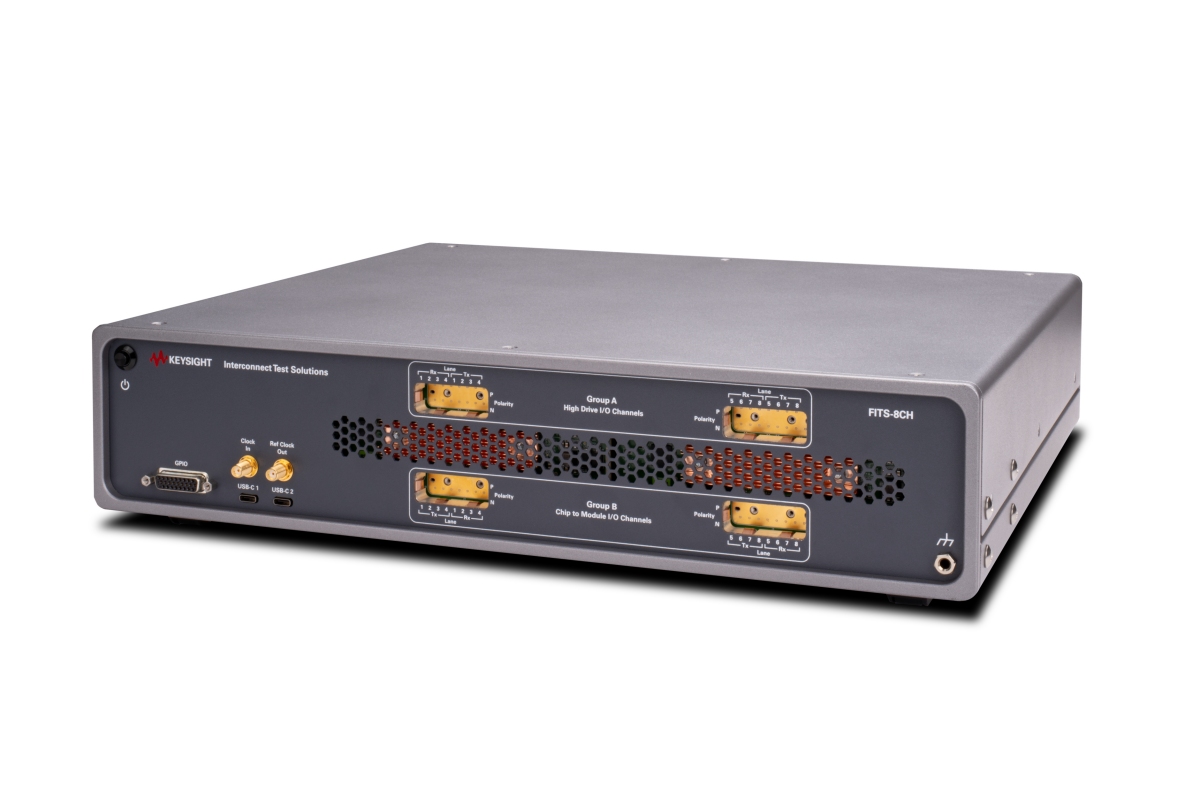
Keysight Technologies, a manufacturer of electronic test and measurement equipment and software, has introduced the Functional Interconnect Test Solutions (FITS) portfolio, alongside the first product in the range, FITS-8CH, designed to validate digital-layer error performance for high-speed optical and copper interconnects used in network infrastructure. The platform provides bit error ratio (BER) and forward error correction (FEC) validation for interconnect technologies supporting modern ethernet architectures, including 400GE, 800GE, and emerging 1.6T deployments. As interconnect speeds increase and designs become more complex, manufacturers of chips, interconnects, and networking equipment face greater pressure to ensure reliability before mass production and during manufacturing. While traditional physical-layer test tools validate electrical lanes against industry specifications, system-level testing provides additional insight into how fully integrated interconnect assemblies perform under operational conditions. Digital-layer testing for high-speed interconnects The FITS-8CH platform provides multi-lane error performance validation at the digital layer, supporting PAM4 signalling speeds from 53Gb/s to 212.5Gb/s. The system enables simultaneous bi-directional testing across eight transmit and eight receive channels, allowing complete optical or copper interconnect assemblies to be validated during development, manufacturing, and system-level qualification. The platform also integrates with Keysight’s physical-layer testing systems, enabling validation across a broader range of network configurations and topologies. According to the company, the platform includes automated lane-by-lane tuning to optimise PAM4 signal output and improve measurement consistency. This capability can help identify potential manufacturing or configuration issues earlier in the process, including mechanical misalignment, thermal failures, or incorrect digital signal processor settings. Keysight says the FITS portfolio is intended to support testing requirements across the full product lifecycle, from research and development through to production and deployment in large-scale network environments. For more from Keysight, click here.

STMicroelectronics begins silicon photonics production for AI
STMicroelectronics (ST), a Swiss-Italian semiconductor manufacturer, has begun high-volume production of its silicon photonics platform designed for optical interconnects in data centres and artificial intelligence infrastructure. The company’s PIC100 platform is used in optical transceivers deployed by hyperscale operators to support high-speed connectivity within data centres and AI clusters. The 800G and 1.6T transceivers are intended to support increasing bandwidth requirements while reducing latency and energy consumption. Production is being carried out on 300mm semiconductor manufacturing lines, which the company says allow the platform to be produced at scale as demand for AI infrastructure grows. Fabio Gualandris, President of Quality, Manufacturing and Technology at STMicroelectronics, says, “Following the announcement of its new silicon photonics technology in February 2025, ST is now entering high-volume production for leading hyperscalers. "The combination of our technology platform and the superior scale of our 300mm manufacturing lines gives us a unique competitive advantage to support the AI infrastructure super-cycle. “Looking ahead, we are planning and executing on capacity expansions to enable more than quadrupling of production by 2027. This fast expansion is fully underpinned by customers’ long-term capacity reservation commitments.” Silicon photonics technology for optical interconnects Silicon photonics technology combines optical and electronic components to enable high-speed data transmission between servers, switches, and other computing infrastructure. According to market research firm LightCounting, the data centre pluggable optics market reached $15.5 billion (£11.5 billion) in 2025 and is expected to grow at a compound annual growth rate of 17% between 2025 and 2030. Vladimir Kozlov, CEO and Chief Analyst at LightCounting, says, “The data centre pluggable optics market continues to expand strongly, reaching $15.5 billion (£11.5 billion) in 2025. We expect the market to grow at a compound annual growth rate (CAGR) of 17% from 2025 through 2030, surpassing $34 billion (£25.3 billion) by the end of the forecast period. In addition, co-packaged optics (CPO) will emerge as a rapidly growing segment, contributing more than $9 billion (£6.7 billion) in revenue by 2030. Over the same period, the share of transceivers incorporating silicon photonics modulators is projected to increase from 43% in 2025 to 76% by 2030. “ST’s leading silicon photonics platform coupled with its aggressive capacity expansion plan illustrates its capabilities to provide hyperscalers with secure, long-term supply, predictable quality, and manufacturing resilience.” STMicroelectronics is also developing the next stage of its silicon photonics roadmap with the PIC100 TSV platform. This technology will integrate through-silicon via connections to increase optical connectivity density, improve module integration, and support system-level thermal efficiency. The platform is designed to support emerging architectures such as near packaged optics and co-packaged optics, which aim to bring optical connectivity closer to processing hardware within large-scale computing systems. The company will present further updates on its silicon photonics technology at the Optical Fiber Communication Conference in Los Angeles, USA, between 15 and 19 March 2026.

Huawei launches enhanced AI-centric network solutions
Chinese multinational technology company Huawei released a series of all-scenario U6 GHz products at MWC Barcelona 2026 to help carriers unlock the full potential of 5G-A and set the stage for a seamless transition to 6G. The company also launched enhanced AI-centric network solutions that will help carriers prepare for the agentic era by enabling intelligent services, networks, and network elements (NEs). In addition, Huawei is showcasing its SuperPoD cluster for the first time outside China, which they have created to offer "a new option for the intelligent world". The theme of Huawei's booth for this year's conference is "Advancing All Intelligence", reflecting the company's plans to build more AI-centric networks and computing backbones that will help carriers and industry customers seize opportunities from the AI era. U6 GHz: Unlocking 5G-A potential for a smooth transition to 6G According to Huawei, the next five years will provide a window of opportunity to unleash the full potential of 5G-A. They plan to work with global carriers on the large-scale 5G-A deployment, use high uplink to address surging consumer and industry demand for mobile AI applications, and use the U6 GHz band to unlock the full value of spectrum and pave the way for smooth evolution to 6G. There are already 70 million 5G-A users globally and 5G-A is increasingly being adopted by carriers at scale. In China, Huawei has helped carriers deliver contiguous 5G-A coverage across 270 cities and launch 5G-A packages that monetise experience in over 30 provinces. The all-scenario U6 GHz products and solutions Huawei have released use innovative technologies to create a high-capacity, low-latency, optimal-experience backbone designed for mobile AI applications. Three-layer intelligence with AI-centric network: Seizing opportunities in the agentic era Following the trend to integrate AI directly into networks, Huawei is using AI to create AI-centric network solutions that will act as target networks for the agentic era. These solutions embed intelligence across three layers: • At the service layer — Huawei is helping carriers build multi-agent collaboration platforms, with specialised agents for calling, experience monetisation, and home broadband. These platforms will enable AI-driven transformation of carriers' core services like voice, internet access, and home broadband. • At the network layer — Phase one of Huawei's L4 Autonomous Driving Network (AND L4) solution primarily focuses on single-scenario automation, helping carriers drastically improve O&M efficiency, network quality, and monetisation capabilities. By the end of 2025, the company's single-scenario ADN solutions have been commercially deployed on more than 130 telecom networks worldwide. Moving forward, Huawei will continue to help carriers reshape operations with AI, going beyond single-scenario automation to support end-to-end single-domain network autonomy. • At the NE layer — Huawei works with carriers to accelerate innovation in areas like algorithm optimisation for RANs, intelligent and accurate service identification for WANs, and unified service intent for core networks that helps integrate B2C and B2H services. Innovations in these domains are already driving marked improvements in network energy and spectral efficiency, intelligent service awareness, and network resilience assurance. Computing backbone with SuperPoDs and clusters: A new option for the intelligent world In the computing space, Huawei is showcasing its computing cluster and SuperPoD products featuring new innovations in system-level architecture, including its UnifiedBus technology for SuperPoD interconnect, for the first time outside China. Key products on display will include the Atlas 950 SuperPoD for AI computing, the TaiShan 950 SuperPoD for general-purpose computing, the Atlas 850E SuperPoD, and the TaiShan 500 and TaiShan 200 servers. These offerings are Huawei's answer to demand for stronger compute and lower latency – two elements that are especially critical as trillion-parameter AI models become more commonplace and agentic AI is introduced into core production systems. These offerings also reflect Huawei's ongoing commitment to going fully open source and open access. The company is actively working with partners to build an open computing ecosystem and provide the world with another option for solid computing power. In the enterprise space, Huawei's focus at MWC is on helping different industries accelerate their intelligent transformation. Together with customers, partners, and representatives from different industries, Huawei will unveil a series of innovative practices that are helping different industries go intelligent on all fronts. The company will also share its new offerings in digital and intelligent infrastructure, and give updates on its latest efforts in partner ecosystem development. In total, Huawei will feature 115 industrial intelligence showcases for enterprise customers in different domains, its SHAPE 2.0 Partner Framework, and 22 new industrial intelligence solutions jointly developed with partners. In the consumer space, Huawei's theme for this year's MWC is "Now is Yours". The company is working to deliver an unparalleled intelligent experience for consumers in all scenarios and will showcase a range of new smartphones, wearables, tablets, PCs, and earphones that feature its latest breakthroughs in areas like foldable screens, health and fitness, mobile photography, productivity, and creativity. In 2026, Huawei will keep innovating to deliver competitive products with a superior experience, giving consumers greater freedom to discover and create in their own unique way. Huawei also announced that it had successfully surpassed the commitment it had made to help drive digital inclusion and combat the rapidly widening digital divide. By the end of 2025, Huawei had worked with customers to provide connectivity to 170 million people in remote areas across more than 80 countries, giving more people access to inclusive digital services. MWC Barcelona 2026 is being held from 2 March to 5 March in Barcelona, Spain. During the event, Huawei is showcasing its latest products and solutions at Stand 1H50 in Fira Gran Via Hall 1. The era of agentic networks is now approaching fast and the commercial adoption of 5G-A at scale is gaining speed. Huawei is actively working with carriers and partners around the world to unleash the full potential of 5G-A and pave the way for the evolution to 6G. It is also creating AI-centric network solutions to enable intelligent services, networks, and network elements (NEs), speeding up the large-scale deployment of level-4 autonomous networks (AN L4) and using AI to upgrade its core business. Together with other industry players, it says it will create leading value-driven networks and AI computing backbones for a fully intelligent future. For more information, click here to visit Huawei's website. For more from Huawei, click here.


Translate »