Infrastructure Management for Modern Data Centres

ePLDT announces plans for its 12th data centre
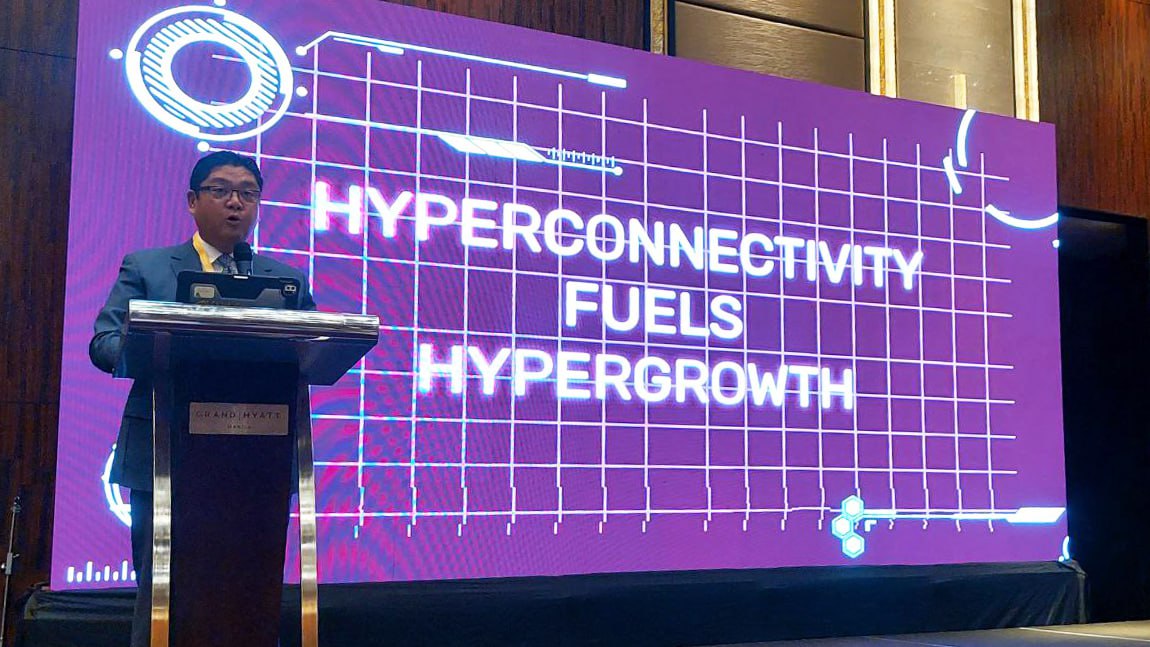
The PLDT Group, through its ICT subsidiary, ePLDT, has announced new plans to further boost its 65% data centre market capacity share by building its 12th data centre facility. This development was officially announced by ePLDT President and CEO, Victor S. Genuino, during his keynote presentation at the W. Media Philippines Cloud and Datacenter Convention 2023. He shared that the decision to build this data centre is anchored on customers’ needs and its aspirations of delivering digital innovation that will increase business value and result in inclusive economic growth. The move is also part of its vision to boost the country’s regional competitiveness and bring much needed investments. “We want to be able to help the Philippines be the next hyperscaler hub of Asia while continuing to support the digital transformation journey of different sectors locally. That’s why we’ve been investing heavily in our ecosystem to ensure that our data centres will be a crucial enabler of the country’s digital economy,” adds Victor. The 12th data centre will have a power capacity of no less than 100MW. It will leverage on the infrastructure investment of the country’s telecommunication group. “Historically, data centres have played a silent yet fundamental role in the digital agenda, most especially in the Philippines. But things are changing now. Governments and enterprises are now seeing the integral role that this industry takes on to secure our digital future,” says Victor. He also shared developments in ePLDT’s 11th and biggest data centre, VITRO Sta. Rosa, stating that it is already receiving several colocation requests from a diverse range of industry leaders. Once completed in early 2024, VITRO Sta. Rosa will be an advanced data centre with a total power capacity of 50MW. With VITRO Sta. Rosa on the rise and a 12th data centre facility underway, the company’s power capacity will increase to around 200MW once both sites are activated.

LCL Data Centers to use biofuel for standby power
Caterpillar has announced that LCL Data Centers has commissioned a new 13.5MVA standby power solution at its Brussels-West data centre in Aalst that operates exclusively on 100% hydrotreated vegetable oil (HVO) fuel. It is the first data centre in the nation to use biofuels for standby power operation. Facility planners for the company leveraged the expertise of engineering experts from Eneria to design, install, test and commission the solution, which consists of six Cat 3516B diesel generator sets. “With our deep roots in Belgium, we are committed to supporting environmentally responsible initiatives that create a better world,” says Laurens van Reijen, Managing Director, LCL. “Our collaboration with Eneria and Caterpillar has demonstrated the viability of HVO100 in our standby power systems. We’re strongly committed to becoming carbon neutral by the end of this decade, and we’ve launched numerous initiatives across our operations to help us achieve this goal.” Eneria will also provide ongoing maintenance and service under a Cat Customer Value Agreement (CVA). Through fully customisable CVAs, Cat dealers assume responsibility for the onsite maintenance and service of power solutions, enabling customers to focus on running their enterprises. “We were delighted to receive the request from the data centre specialist, LCL to ensure its emergency power generators operate on HVO100, a renewable diesel fuel. We tested the operation of Cat generator sets with traditional diesel, HVO100, and a blend of these fuels. We concluded that the power and reactivity performance of the generators remained the same regardless of the fuel used,” says Tim Bisson, Director of Eneria Belux. Propelled by the success of the project in Aalst, LCL plans to convert the standby power solutions at all its data centres to operate on HVO over the next two years. The standby system was installed as part of a €15.5m expansion that tripled its footprint in Aalst while achieving the Uptime Institute’s Tier III certifications for design and construction.

AirTrunk announces new data centre in Hong Kong
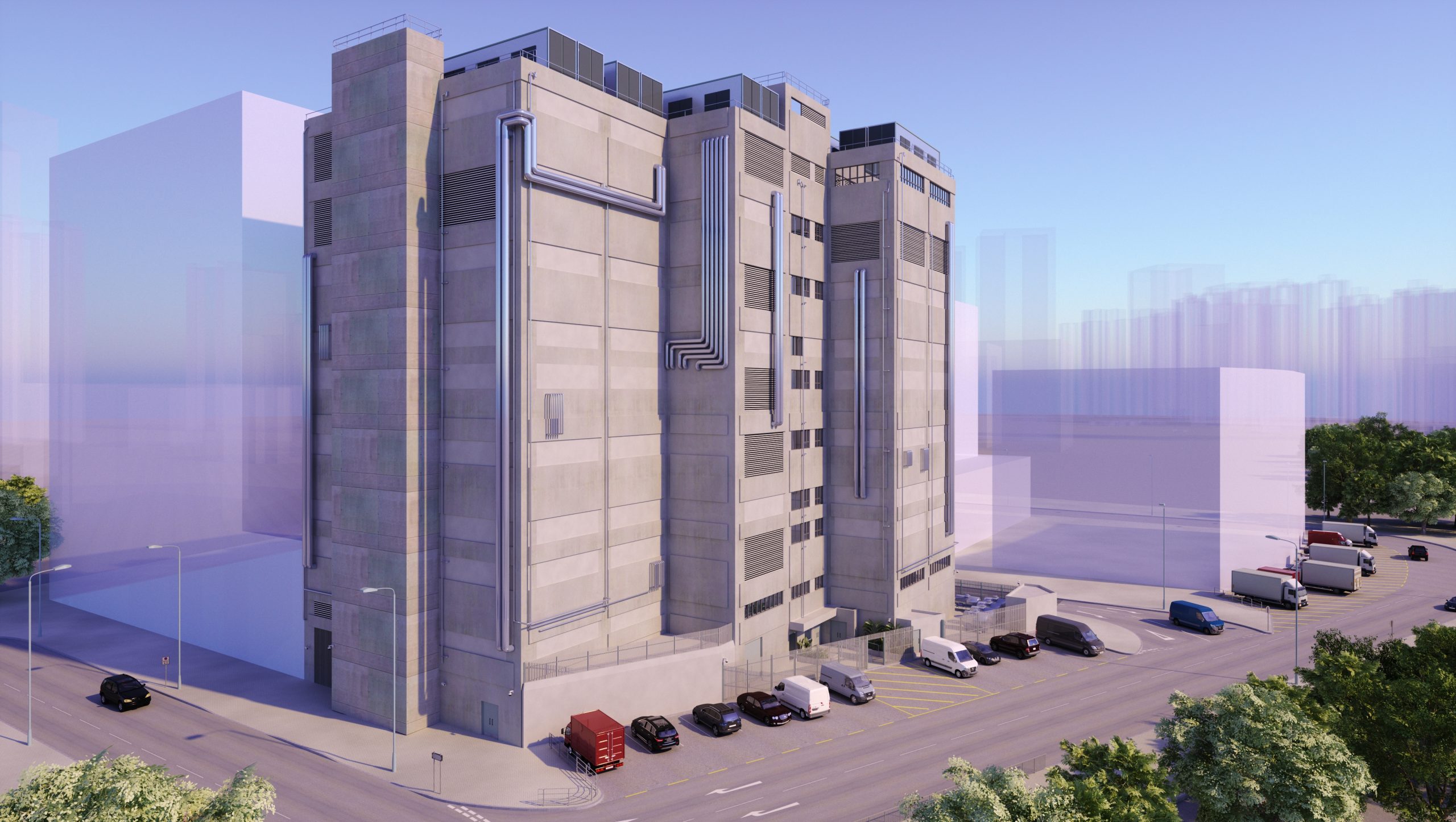
AirTrunk has announced plans to develop its second data centre in Hong Kong, supporting the demand for critical digital infrastructure in the region. The company's HKG2 data centre will be scalable to over 15MW and strategically located in a new, major cloud availability zone in East New Territories. Initial capacity is expected to be delivered to the anchor tenant in mid-2024. HKG2 complements HKG1, which opened in late 2020 in the West New Territories and provides location diversity for the company’s large technology customers. The addition takes its capacity to more than 35MW in Hong Kong. The facility will become the 10th data centre in its APJ platform that also includes data centres in Australia, Japan, Singapore and Malaysia. Collectively, the platform will offer almost 1.38GW across the region. AirTrunk's Deputy CEO, Michael Juniper, says, “As a key international business hub, Hong Kong has ambitions to accelerate the development of a digital economy. Combined with the rapid rise of artificial intelligence (AI), there is a huge demand for cloud services and the supporting critical digital infrastructure. HKG2 will play an important role in responding to this demand.” The data centre will be a retrofit of an existing building and designed to meet the stringent security requirements of global technology customers such as PCI DSS, ISO27001, SOC2 Type 2. Close to key data centres, it will enable international connectivity with direct and low latency access to Greater China and neighbouring North East Asian countries. AirTrunk's Head of Hong Kong, KC Li, says, “The development of HKG2 will bring significant benefits to the Hong Kong economy, including the creation of new jobs, enablement of public cloud, sustainable innovation, as well as community contributions.” HKG2 will be designed to an industry low power usage effectiveness of 1.25 and as part of the company’s broader emissions commitment, deliver net zero emissions by 2030, as well as renewable sourcing options.

Vertiv announces the opening of head office in South Africa
Vertiv has announced the official opening of its African head office and a customer experience centre, based in Johannesburg, South Africa.  According to Wojtek Piorko, Managing Director, Vertiv Africa, the formal opening of the South African premises forms an important part of the company’s ‘Africa for Africa’ initiative, and underscores the organisation’s investment in the region. “Vertiv is placing a strong business focus on Africa, as well as expanding our local network of authorised partners and service providers. Our ‘Africa for Africa’ project also emphasises the importance of meeting our local clients’ needs, of which the opening of the African head office and local customer experience centre play a key role,” explains Wojtek. The Johannesburg Customer Experience Centre provides customers with the opportunity to engage with Vertiv’s diverse range of critical infrastructure solutions for applications from the edge of the network to the cloud. These include: Vertiv SmartCabinet: a complete cabinet solution for a multitude of environments, providing intelligent and integrated infrastructure for any type of IT. Vertiv Liebert EXS: compact and flexible three-phase uninterruptible power supply (UPS) with high-efficiency operation. Vertiv Liebert EXM2: highly reliable monolithic UPS designed to provide industry-leading performance and efficiency up to 98.8%, for mid-size critical applications. In addition to the products displayed at the centre, it offers the experience of its large-scale modular data centres, power and thermal management solutions through virtual reality (VR) to customers. Wojtek clarifies, “Using our VR offering, the Vertiv Virtual Showroom, clients can embark on a unique virtual trip to experience Vertiv's capabilities, giving both novices and seasoned experts of Vertiv products a way to fully understand the entire layout of the critical digital infrastructure.”  Users wear a headset and use hand controllers to navigate the VR environment, interact with equipment, and watch animations that demonstrate a product’s value and key features. They can observe the spatial placement of its rack and row solutions, as though they were actually on site. They are also able to customise a Vertiv VR rack by placing servers, power, thermal, and storage devices into the unit.  “This experience gives decision-makers a deeper understanding of the entire infrastructure at work,” Wojtek adds. “In addition, our new centre will provide presales, sales, and product training, as well as full service certification courses for Vertiv’s authorised service partner network.” 

HPE announces extension of HPE GreenLake private cloud portfolio
Hewlett Packard Enterprise has announced partnership with Equinix to extend the HPE GreenLake private cloud portfolio at Equinix International Business Exchange (IBX) data centres. It will pre-provision HPE GreenLake for Private Cloud Enterprise and Private Cloud Business Edition at Equinix data centres around the world, giving customers access to a range of private cloud offerings, for greater speed, agility, flexibility, and choice in their hybrid cloud strategy. HPE GreenLake for Private Cloud Enterprise is API-enabled and is an automated, flexible, scalable, and enterprise-grade private cloud with a simple modern experience. It has been designed with modular infrastructure and software, and supports the deployment of bare metal, virtual machines, and container workloads in a self-service mode. With simple rate-card pricing that delivers a pay-as-you-go consumption model, it offers six workload-optimised instances for general purpose, compute, memory and storage.HPE also expanded its private cloud portfolio with the addition of Private Cloud Business Edition. It allows customers to spin up virtual machines (VMs) across hybrid clouds on demand and self-manage their private cloud from VMs to infrastructure with AIOps-driven simplicity. With an intuitive cloud operational experience for management and seamless integration for data protection, customers can store, manage and protect data across on-premises, edge and public cloud while providing data availability and efficiency. It provides flexibility with self-service agility, as well as the option to pay up-front or pay-as-you-go.  Both editions will be pre-provisioned and available on a rolling basis at Equinix IBX data centres in metro areas such as Frankfurt, London, Silicon Valley, Singapore, Sydney, Toronto, and Washington DC. It aims to provide customers with a wide range of workload management and payment options to cover a broad spectrum of their private cloud needs. “Increasingly, global organisations are turning to digital infrastructure providers to help transform IT investments by distributing private cloud infrastructure at the edge, close to clouds, users, and applications, to enhance enterprise network capabilities that can enable rapid scaling and security, minimise latency and ensure availability of applications,” says David Tapper, Program Vice President at IDC. “By deepening their partnership, HPE and Equinix can assist customers in their hybrid cloud strategy by providing managed cloud services that provision standardised private clouds and simplify integration with public cloud providers, add capacity on an as-needed basis, and enable shorter time commitments. Together, this should help organisations achieve critical objectives such as improved productivity, lower costs and enhanced ROI.”

DF&I announces DataBank as its new industry partner
Dark Fiber and Infrastructure, LLC (DF&I) has announced that DataBank has brought its Ashburn campus on-net to its Express Connect dark fibre network. The infrastructure provides dedicated access to and between major data centres, and peering points in and around the Northern Virginia and Maryland marketplaces on the region’s dark fibre and conduit system. The DF&I Express Connect network offers the greatest physical route diversity from Northern Virginia to Baltimore, and the most conduit capacity in the region. Over 40,000 fibre strands are available between Maryland and Virginia on its infrastructure, and more than 70,000 fibre strands are available within Virginia, all 100% underground. With its most recent route completed early last year, the network boasts plenty of advantages. “We are pleased to have DataBank on board with DF&I’s Express Connect network,” says John Schmitt, DF&I’s Founder and Chief Revenue Officer. “We take pride in offering a high capacity, low latency network in one of the most critically important data corridors in the world, and now it can benefit even more businesses thanks to our new partner, DataBank. It’s always a great day when we can expand the network to accommodate even more interconnection in such a vital communication hub like Ashburn.” The system now connects the campus, which consists of two facilities with a combined 300,00ft² of raised floor space and 50MW of critical IT load across 13ac. Its location in the heart of the Data Centre Alley makes it ideal for enterprise, web-scale SaaS, or hyperscale cloud workloads looking for interconnection and expansion. “Through DF&I’s vital network infrastructure, we’re now able to give our clients even more reason to deploy here,” says Thomas Cannady, Vice President, DataBank. "We’re excited to join the Express Connect network to strengthen everyone’s access to such powerful dark fibre pathways in the region.”

Delta delivers Xubus Node as solution for data centre deployment
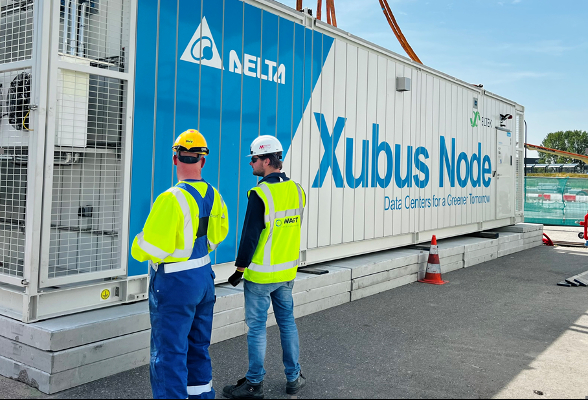
For many data centre managers, maintaining storage capacity for data is a continuously moving target. A fine line exists between investment in additional capacity, and leveraging and upgrading existing installations. Data centres can cost anything from tens of millions of dollars upwards, with some of the industry’s behemoths reportedly having spent over a billion dollars on such infrastructure. And readiness to invest doesn’t turn into capacity quickly. Factoring in construction, electrical and plumbing work, plus installation of the hardware and commissioning, it can be anywhere between 15 and 30 months before a data centre is operable. Many choose to outsource their data operations to a market that is projected to see good annual growth over the remainder of this decade. But colocation data centres, despite their efficiency through shared resources, aren’t for everyone, especially for those handling sensitive data. Another challenge is the growing demand in the Internet of Things (IoT) and industry 4.0 markets for providing sub-millisecond latency support at the edge, along with 5G, big data, and artificial intelligence applications. Going modular with data centres Tackling these issues head-on are modular data centres (MDC). Customisable in size and capacity, they can provide a stopgap solution on-site as a new data centre is being built or can operate as a permanent solution in locations where setting up long-term infrastructure is restricted. Installation on-site enables the MDC to be connected securely to the existing IT system while leveraging existing physical security. The Delta Xubus Node is fully designed and optimised, deliverable in five standard solutions from 18-90kW IT load with optional auxiliary systems. The system is built into a customised container module (5635 – 13380 × 3300 × 3200mm) that is designed to be transported, installed, and operated on a client’s site. IT load per rack ranges from 6kW-8.18kW and comes with a battery backup time of five minutes. Depending on the topology, the UPS is implemented using Delta’s DPH Series in an N+1 or 2N approach. Each rack is fitted with a metered power distribution unit (rPDU) or two for a Tier 3 implementation. At Tier 3, the MDC can be serviced anytime without shutting down any system components. In addition, an integrated automatic transfer switch allows a simple installation and use of external diesel generators. In-row cooling is implemented with N+1 redundancy and the Tier 3 topology uses cooling units with Automatic Transfer Switching (ATS). This allows operation of the MDC over the -15°C to +48°C range. The cooling units have an internal monitoring system, which continuously control both temperature and humidity. It detects various types of critical events, for example, congested filters, and triggers an alarm if the parameters reach critical values. A selection of optional components is also available to increase safety, security, and reliability. An access control system and CCTV ensure only authorised staff can access the data centre, while the situation inside the unit is always visible. Aspirating smoke detectors and fibre cable trays are further options, as well as additional hardware configuration. The Data Centre Infrasuite Manager (DCIM) software can be used to monitor the MDC, providing an overview of environmental parameters, the access system, power, and status of the fire suppression equipment. Thanks to its robust steel construction and mineral wool panels, coupled with a refractory cable entry, fire resistance of 60min (EI) in both directions is achieved. Transportation, installation and support with Zwart Delta has successfully deployed the Xubus Node MDC with the support from partner, Zwart Techniek. It supports the transportation, installation, commissioning, and service of Europe’s first Xubus Node, which is also the first containerised data centre built and sold in Europe. Meeting the customer’s financial requirements with a new leasing model, this 70kVA model was delivered to a client based in the Netherlands. Selected to provide data centre support while a permanent data centre is under-construction, the unit was configured and installed in less than nine months, and will provide at least 24 months of service.

STT GDC and Firmus to build sustainable AI factories
ST Telemedia Global Data Centres (STT GDC) has announced a significant investment into a global venture with Firmus Technologies. The venture is to be based in Singapore and will see the launch of a GPU-centric Infrastructure as a Service (IaaS) offering focused on deep learning AI and visual computing workloads, to be known as Sustainable Metal Cloud (SMC). SMC will deliver bare-metal-service access to high-performance AI clusters, which include some of the world’s most advanced workload accelerators including GPUs and high-speed networking from NVIDIA for energy-efficient computing. It will leverage Firmus’ proprietary, scaled, immersion-cooled platform, the HyperCube, to deliver sustainable AI factories that are all at once sustainable, scalable, high-performance and cost-effective. Within the HyperCube, Firmus will operate a fleet of high-performance servers provided by OEM partners including Supermicro. It unlocks access to world-class AI tools and hardware in a highly available way. The SMC is being launched in Singapore, India and Australia in 2023, with the Singapore AZ (SIN01) expected to be live in H2 2023. The combination of Firmus’ platform, paired with STT GDC’s highly efficient data centre infrastructure, will result in AI workloads running with a lower PUE, lower CO2 emissions and higher petaflops per watt. “The compound growth in forecasted energy consumption is an existential threat to the data centre sector. Data centre operators and their customers must be prepared to embrace and support new cooling solutions and expand the services they offer beyond traditional air-cooled colocation if they are to host AI GPU platforms in a sustainable manner. The evolution of the data centre into AI factories of the future will fundamentally change the way that all infrastructure operators are thinking about the design and operation of their facilities. STT GDC’s foresight and long-term vision made them the ideal global partner for Firmus’ highly developed solution,” says Ted. “The future of data centres will rely on the ability to provide both exceptional performance and highly sustainable services at scale. From our beginnings in Singapore almost 10 years ago, we now have scaled the business to cover 10 geographies. We are immensely pleased to enhance our core co-location offering to include the latest GPU-based bare-metal services, empowering our customers with access to the next generation of high-performance computing which will be so critical in the AI revolution. These high-performance services are a key component of the critical infrastructure needed to support the plethora of AI use cases that will be critical to business, governments and society in years to come,” says Bruno Lopez, President and Group Chief Executive, ST Telemedia Global Data Centres.

Schneider Electric delivers data centre project for Loughborough University
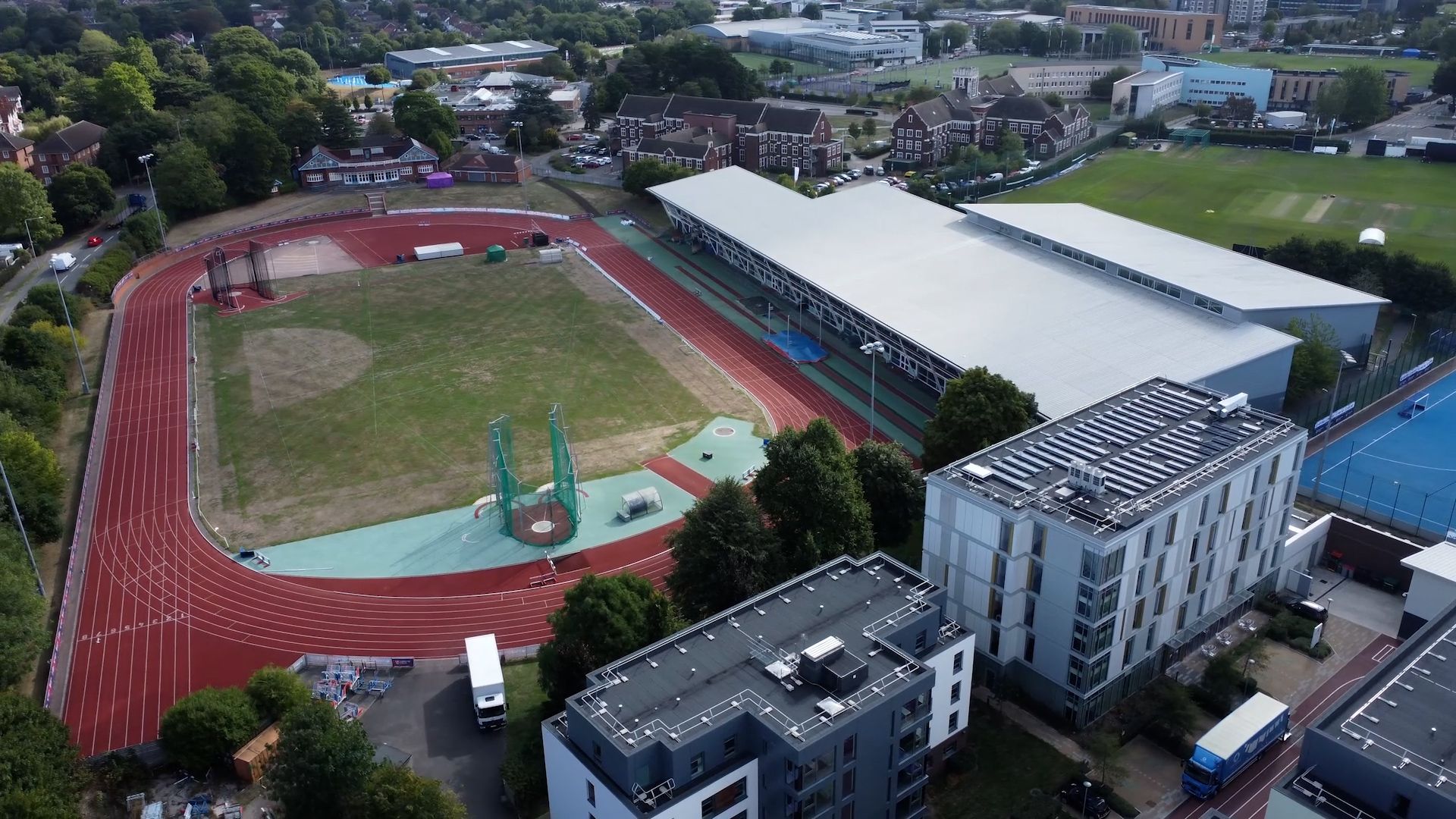
Schneider Electric has delivered a new data centre modernisation project for Loughborough University, in collaboration with its elite partner, on365. The project saw Schneider Electric and on365 modernise the university’s IT infrastructure with new energy efficient technologies, including an EcoStruxure Row Data Center, InRow Cooling solution, Galaxy VS UPS and EcoStruxure IT software, enabling the university to harness the power of resilient IT infrastructure, data analytics and digital services to support new breakthroughs in sporting research. As Loughborough University is known for its sports-related subjects and is home to world-class sporting facilities, IT is fundamental to its operations, from its high-performance computing (HPC) servers which support analytical research projects, to a highly virtualised data centre environment that provides critical applications including finance, administration and security. To overcome a series of data centre challenges, including requirements for a complete redesign, modernisation of legacy cooling systems, improved cooling efficiencies, and greater visibility of its distributed IT assets, the university undertook the project at its Haslegrave and Holywell Park data centres. Delivered in two phases, the project firstly saw on365 modernise the Haslegrave facility by replacing an outdated raised floor and deploying an EcoStruxure Row Data Center solution. The deployment of this significantly improved the overall structure, enabling an efficient data centre design. During the upgrade, it also brought other parts of the infrastructure under the IT department’s control, using new InRow DX units to deliver improved cooling reliability, and provide it with greater ability to cope with unplanned weather such as heat waves, which had adversely affected its IT and cooling operations in the past. Use of this solution also created a new space for future IT expansions and extended a ‘no single points of failure’ design throughout the facility. This made the environment more suitable for a new generation of compact and powerful servers, and the solution was replicated at Holywell Park thereafter. Further improvements in resilience and efficiency were also achieved by Schneider Electric’s Galaxy VS UPS with lithium-ion batteries. “At the foundational level of everything which is data-driven at the university, the Haslegrave and Holywell data centres are the power behind a host of advancements in sports science, and our transition towards a more sustainable operation,” says Mark Newall, IT Specialist at the University of Loughborough. “Working with Schneider Electric and on365 has enabled our data centre to become more efficient, effective and resilient.” The university has also upgraded the software used to manage and control its infrastructure. It has deployed the company’s EcoStruxure IT platform, providing it with enhanced visibility and data-driven insights that help identify and mitigate potential faults before they become critical. This, in conjunction with a new three-year Schneider Electric services agreement delivered via on365, has given the university 24x7 access to maintenance support. The university also utilises a large distributed edge network environment, which has in excess of 60 APC Smart-UPS protecting it. As part of its services agreement, all critical power systems are monitored and maintained via EcoStruxure IT, providing real-time visibility and helping IT personnel to manage the campus’ network more efficiently.

Lunar Digital signs lease of a new site at Manchester Technopark
Lunar Digital has signed a 15-year lease on the Capitaland Ascendas REIT, Reynolds House in Manchester, adding 23,000 sq. ft. of data centre space to its portfolio, making it the North West’s largest independent data centre operator.  The new site comprises two data centres, offering tier two and three colocation options, through more than 20 carriers including their own Lunar Connect low latency high capacity network. In the coming years Lunar Digital will invest a seven-figure sum in the modernisation of the site, substantially increasing its performance and energy efficiency. Its acquisition and development of the site’s two data centres, now named Lunar 1 and Lunar 2, represents great investment in the modernisation of Manchester’s colocation network, including the installation of their new cloud platform at the facility. ‘Lunar Cloud’ is a highly scalable, multi-tenanted cloud solution incorporating the flexibility and pay-as-you-go features of a public cloud with security to provide a safe, simple cloud solution for companies across Manchester.  This addition to their Manchester portfolio solidifies its position as one of the key data centre players in the city and has increased their capacity to over 35,000 sq. ft. of powered space, providing essential colocation services to the region’s businesses. Lunar Digital's CEO, Rob Garbutt, comments, “We are delighted to have this opportunity to invest in the region we call home. Modernising the data centres in Manchester, and installing Lunar Cloud, will help local businesses run more smoothly and efficiently, and promote growth in the North West.”


Translate »