Enclosures, Cabinets & Racks for Data Centre Efficiency


Vultr scales AI infrastructure with new AMD GPUs
Vultr, a privately held cloud infrastructure company, has announced plans to offer the AMD Instinct MI455X GPU, alongside support for the AMD Helios rack-scale architecture, with pre-orders now open ahead of availability in Q4. The cloud infrastructure provider says the platform is designed for AI training, inference, fine tuning, agentic AI, and high-performance computing (HPC). According to the company, the infrastructure is intended to support organisations moving AI workloads from development into production, particularly those requiring high-memory, rack-scale computing. J.J. Kardwell, CEO of Vultr, comments, "Customers are rapidly moving from AI experimentation into production and, increasingly, that means agentic and inference-heavy workloads that require infrastructure built for scale. "The AMD Instinct MI455X and Helios rack-scale architectures give our customers the flexibility, control, and price-to-performance they need to scale their AI initiatives. Making this architecture available across Vultr's global infrastructure enables teams to build and deploy without constraints." AI infrastructure targets large-scale workloads The AMD Instinct MI455X GPU is based on AMD's CDNA architecture and features HBM4 memory, increased memory bandwidth, and support for low-precision AI data types. The Helios rack-scale architecture supports up to 72 GPUs in a single deployment. Vultr says the platform will also support direct liquid cooling to improve thermal management and energy efficiency in higher-density deployments. The infrastructure is complemented by AMD's ROCm software platform and Pensando networking technology, which are designed to improve AI training, inference performance, and scalability. IDC forecasts a tenfold increase in the number and complexity of enterprise AI agents over the next five years, increasing demand for computing infrastructure capable of supporting repeated inference workloads. Dave McCarthy, Group Vice President, Cloud and Datacenter Infrastructure at IDC, notes, "As enterprises transition into the agentic era, the massive influx of complex, data-intensive workflows requires a fundamental shift in infrastructure design. "Vultr's deployment of the AMD Instinct MI455X GPU provides the massive memory capacity and rack-scale efficiency necessary to support the continuous inference loops that define next-generation AI workloads." Vultr says reserved capacity for deployments based on the AMD Instinct MI455X GPU and AMD Helios architectures is now available for pre-order, with deployments planned from 2027 through to 2028. For more from Vultr, click here.

Treat your rack like prime real estate
Data centre racks are often specified on dimensions, load ratings, and cost alone. However, as power densities, cooling requirements, and cable volumes continue to increase, the rack has become a critical infrastructure platform that directly influences performance, operability, and long-term resilience. A rack may have available U space and still be effectively 'full' if airflow is compromised, access becomes restricted, or cable and power management become difficult to maintain. Modern data centre environments demand a broader view of rack performance - one that considers serviceability, cooling, power distribution, security, and future growth alongside physical capacity. Elevate's latest whitepaper, Treat Your Rack Like Prime Real Estate, explores why racks should be treated as infrastructure rather than furniture, providing practical guidance for consultants, specifiers, and operators. Covering topics including usable capacity, access capacity, airflow management, and lifecycle planning, the whitepaper offers a framework for designing rack environments that remain effective throughout their operational life. Download the whitepaper and discover what your rack really enables. For more from Elevate, click here.

Lenovo to supply HPC for research at Southampton Uni
Lenovo, a Chinese multinational technology company making servers and AI infrastructure systems, has signed a four-year agreement with the University of Southampton in the UK to supply high-performance computing (HPC) infrastructure, supporting the university's research programmes. Through and in addition to this, the company says it also plans to return to the 'Top500' ranking of the world's most powerful supercomputers. Under the agreement, Lenovo will become the university's preferred supplier of HPC infrastructure following a competitive tender process. The partnership builds on a relationship between the two organisations spanning more than a decade. The first order, valued at approximately £7 million, is scheduled for delivery during summer 2026. New systems to support AI and scientific research The initial deployment will include Lenovo ThinkSystem SR675 V3 servers equipped with NVIDIA H200 GPUs and NVLink technology, designed for artificial intelligence, simulation, and other compute-intensive workloads. A second phase is expected to introduce a cluster based on NVIDIA Grace Blackwell architecture using Lenovo ThinkSystem SC777 V4 Neptune servers, further increasing the university's computing capacity. According to Lenovo, the systems will support research across a range of scientific disciplines and help expand the university's computational capabilities. Andy Rhodes, Managing Director of Lenovo UK & Ireland, says, "As research demands continue to grow in scale and complexity, access to powerful, scalable computing is critical. "Lenovo's latest HPC solutions, including next-generation GPU-accelerated systems, will enable the University of Southampton to tackle data-intensive workloads and accelerate breakthrough research. We are proud to support their ambition to further elevate their global research standing." Partnership extends beyond infrastructure Alongside the deployment of HPC systems, the agreement includes opportunities for collaboration on end-user computing, researcher engagement, and the adoption of new technologies across the university. Professor Mark Spearing, Vice President Research and Enterprise at the University of Southampton, comments, "This partnership represents a major step forward in strengthening our research infrastructure. "These new HPC capabilities will play a vital role in enabling cutting-edge research and innovation, helping to raise the global profile of Southampton's research community and compete at the highest international level." The organisations also expect to work together on activities linked to the British Science Festival, which will be hosted by the University of Southampton in September 2026. For more from Lenovo, click here.

Vertiv unveils high-capacity rack platform
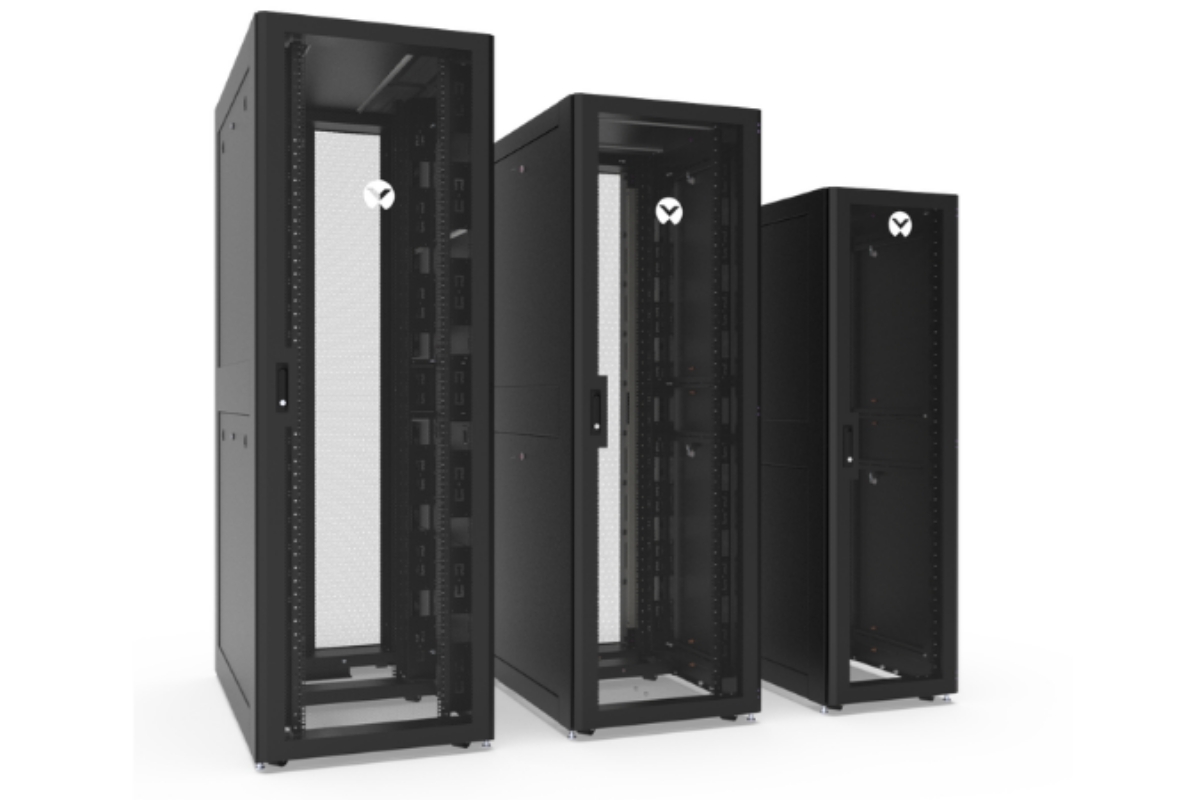
Vertiv, a global provider of critical digital infrastructure, has introduced the Rack Extreme, a rack platform designed to support high-density computing, AI workloads, and next-generation IT deployments. The new rack has been developed to accommodate increasingly large and heavy computing equipment while supporting airflow management, cable organisation, and deployment flexibility within data centre environments. According to Vertiv, the platform is intended to address growing infrastructure requirements driven by higher compute densities and the adoption of AI applications. Giuseppe Leto, Senior Director, IT Systems at Vertiv, says, "The Vertiv Rack Extreme reflects our expanded capabilities in rack and enclosure designs for high-density and AI-driven deployments. "The platform also draws on Vertiv’s long-standing rack engineering expertise, including solutions historically developed under the Knürr brand, to support scalable next-generation IT infrastructure." The Rack Extreme is available in multiple sizes and configurations, allowing operators to tailor deployments to specific application requirements. The units are shipped fully assembled and are designed to integrate with a range of compatible cable management and airflow optimisation accessories. Designed for high-density deployments Vertiv says the Rack Extreme offers both static and dynamic load ratings of up to 2,045kg, enabling it to support high-density equipment installations while maintaining the same load capacity when being moved or when stationary. The company states that this provides greater flexibility during deployment and infrastructure changes, particularly in environments where heavy equipment must be repositioned after installation. The rack features a welded frame construction, integrated cable management options, high open-area mesh doors, flexible mounting rails, vertical cable bars, and corner mounting bars for rack power distribution units. Vertiv has also incorporated shipping features designed to simplify installation, including shock-absorbing pallets and reusable ramps intended to reduce the risk of equipment damage during transportation and deployment. The Rack Extreme has been designed to integrate with Vertiv's wider portfolio of data centre infrastructure products, including uninterruptible power supplies (UPS), rack PDUs, rear-door heat exchanger systems, coolant distribution units, and KVM management platforms. For more from Vertiv, click here.

nLighten launches rapid colocation deployment service
European data centre operator nLighten has launched ReadyCabinet, a standardised colocation offering designed to reduce deployment times for organisations requiring edge infrastructure across Europe. The service provides customers with a pre-built, fixed-price colocation cabinet and is designed to enable deployments within three working days of an order being placed. According to nLighten, ReadyCabinet is intended to simplify the process of procuring colocation capacity by replacing bespoke design and engineering processes with a standardised offering. Customers can choose a full or partial cabinet configuration, including up to 5kW of power and access to nConnect, the company's connectivity platform. Joachim van Collenburg, Vice President of Enabling Services at nLighten, says, "We are moving colocation away from bespoke engineering and turning it into a scalable product. "ReadyCabinet reflects that reality. It's a deliberately simple product, built to be the entry point to a much longer journey with our customers." The deployment process consists of a quotation with real-time availability, a service order agreement, and cabinet handover within three working days. Standardised approach targets edge infrastructure growth nLighten says the service has been developed in response to increasing demand for rapid, repeatable infrastructure deployments across multiple locations. The company cites the growth of AI inference, low-latency applications, and edge computing as drivers behind the need for faster provisioning and more standardised colocation services. ReadyCabinet forms part of nLighten's wider colocation platform, which allows customers to expand from a single cabinet deployment to higher-density and liquid-cooled environments across its European data centre portfolio. All ReadyCabinet deployments operate across nLighten's European edge platform and include metered power billing. The service is currently available at selected nLighten facilities, with further expansion planned throughout 2026. For more from nLighten, click here.

Supermicro launches liquid-cooled NVIDIA HGX B300 systems
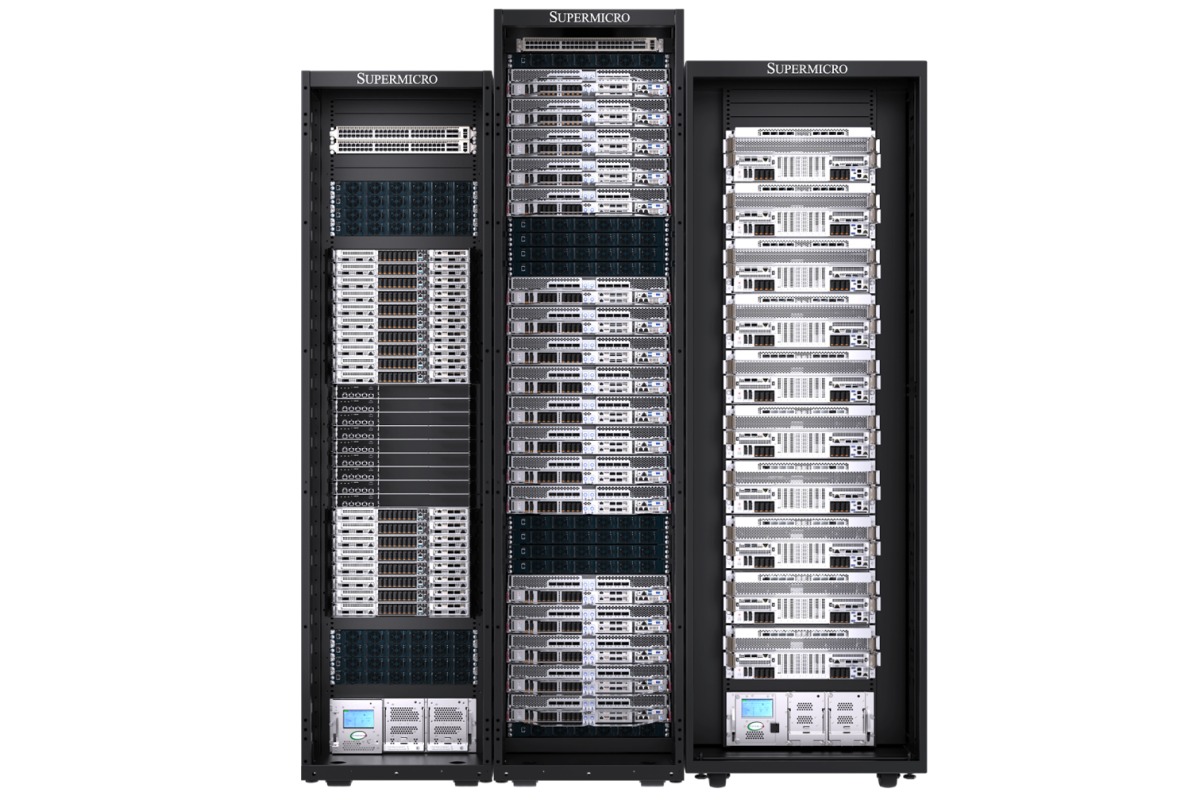
Supermicro, a provider of application-optimised IT systems, has announced the expansion of its NVIDIA Blackwell architecture portfolio with new 4U and 2-OU liquid-cooled NVIDIA HGX B300 systems, now available for high-volume shipment. The systems form part of Supermicro's Data Centre Building Block approach, delivering GPU density and power efficiency for hyperscale data centres and AI factory deployments. Charles Liang, President and CEO of Supermicro, says, "With AI infrastructure demand accelerating globally, our new liquid-cooled NVIDIA HGX B300 systems deliver the performance density and energy efficiency that hyperscalers and AI factories need today. "We're now offering the industry's most compact NVIDIA HGX B300 options - achieving up to 144 GPUs in a single rack - whilst reducing power consumption and cooling costs through our proven direct liquid-cooling technology." System specifications and architecture The 2-OU liquid-cooled NVIDIA HGX B300 system, built to the 21-inch OCP Open Rack V3 specification, enables up to 144 GPUs per rack. The rack-scale design features blind-mate manifold connections, modular GPU and CPU tray architecture, and component liquid cooling. The system supports eight NVIDIA Blackwell Ultra GPUs at up to 1,100 watts thermal design power each. A single ORV3 rack supports up to 18 nodes with 144 GPUs total, scaling with NVIDIA Quantum-X800 InfiniBand switches and Supermicro's 1.8-megawatt in-row coolant distribution units. The 4U Front I/O HGX B300 Liquid-Cooled System offers the same compute performance in a traditional 19-inch EIA rack form factor for large-scale AI factory deployments. The 4U system uses Supermicro's DLC-2 technology to capture up to 98% of heat generated by the system through liquid cooling. Supermicro NVIDIA HGX B300 systems feature 2.1 terabytes of HBM3e GPU memory per system. Both the 2-OU and 4U platforms deliver performance gains at cluster level by doubling compute fabric network throughput up to 800 gigabits per second via integrated NVIDIA ConnectX-8 SuperNICs when used with NVIDIA Quantum-X800 InfiniBand or NVIDIA Spectrum-4 Ethernet. With the DLC-2 technology stack, data centres can reportedly achieve up to 40% power savings, reduce water consumption through 45°C warm water operation, and eliminate chilled water and compressors. Supermicro says it delivers the new systems as fully validated, tested racks before shipment. The systems expand Supermicro's portfolio of NVIDIA Blackwell platforms, including the NVIDIA GB300 NVL72, NVIDIA HGX B200, and NVIDIA RTX PRO 6000 Blackwell Server Edition. Each system is also NVIDIA-certified. For more from Supermicro, click here.

R&M introduces radio-based access control for racks
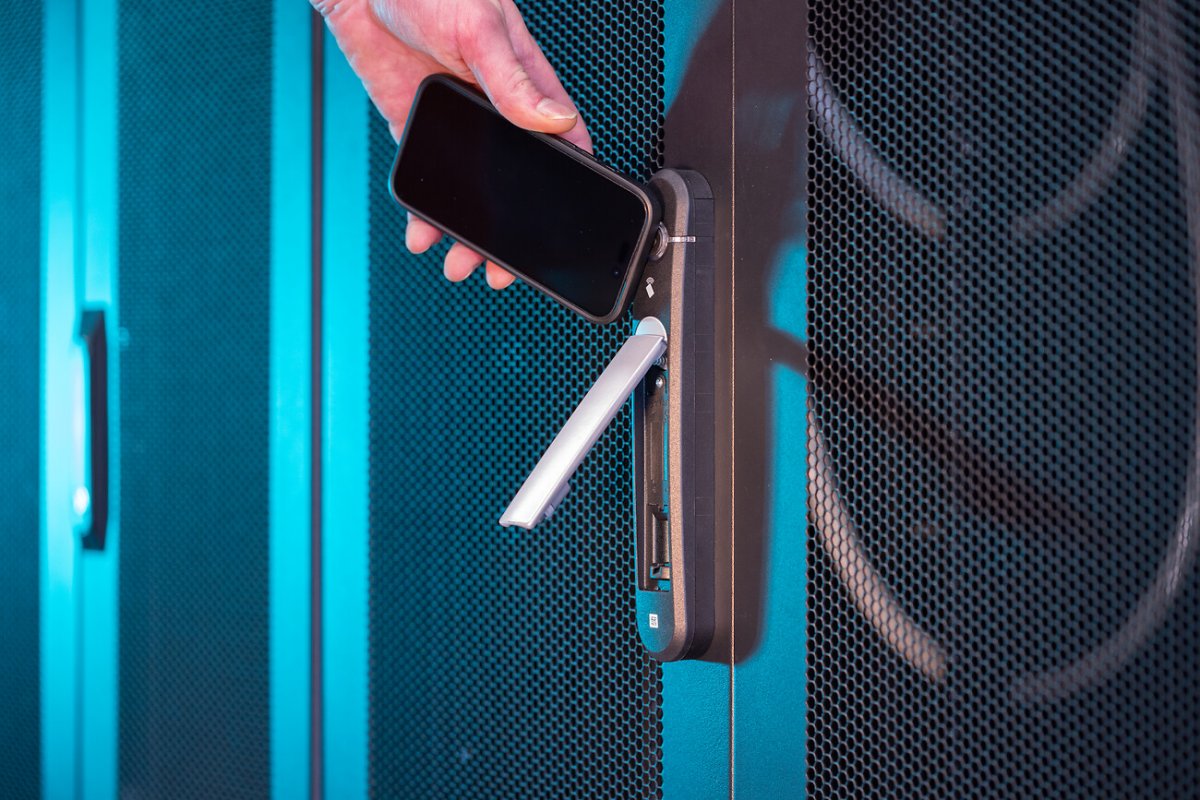
R&M, a Swiss developer and provider of infrastructure for data and communications networks, is introducing radio-based access control for data centres. The core product is an electromechanical door handle for the racks of the BladeShelter and Freenet families from R&M. Technicians can only open the door handles with authorised transponder cards, while administrators can control them remotely via encrypted radio connections and data networks. R&M says it is thus integrating high-security digital protection into its "holistic infrastructure solutions" for data centres. Package details One installation comprises up to 1,200 door handles for server and network racks, as well as radio and control modules for computer rooms. The door handles do not require any wiring in the racks. Their electronics are powered by batteries whose power is sufficient for three years of operation or 30,000 locking cycles. The personalised transponder cards communicate with the door handles via RFID antennas. In addition, there is software to manage users, access rights, the transponder cards, and racks. The software creates protocols, visualises alarm states, and supports other functions. It can be operated remotely and integrated into superordinate systems such as data centre infrastructure management (DCIM). The new offer is the result of the collaboration with German manufacturer EMKA, being based on the company's 'Agent E', an intelligent locking system. The R&M offering aims to integrate complementary systems from selected manufacturers into infrastructure for data centres. In Europe, R&M notes it is already working with several independent partner companies that pursue comparable medium-sized business models and sustainability goals. For more from R&M, click here.

Fused connectors increase system availability for data centres
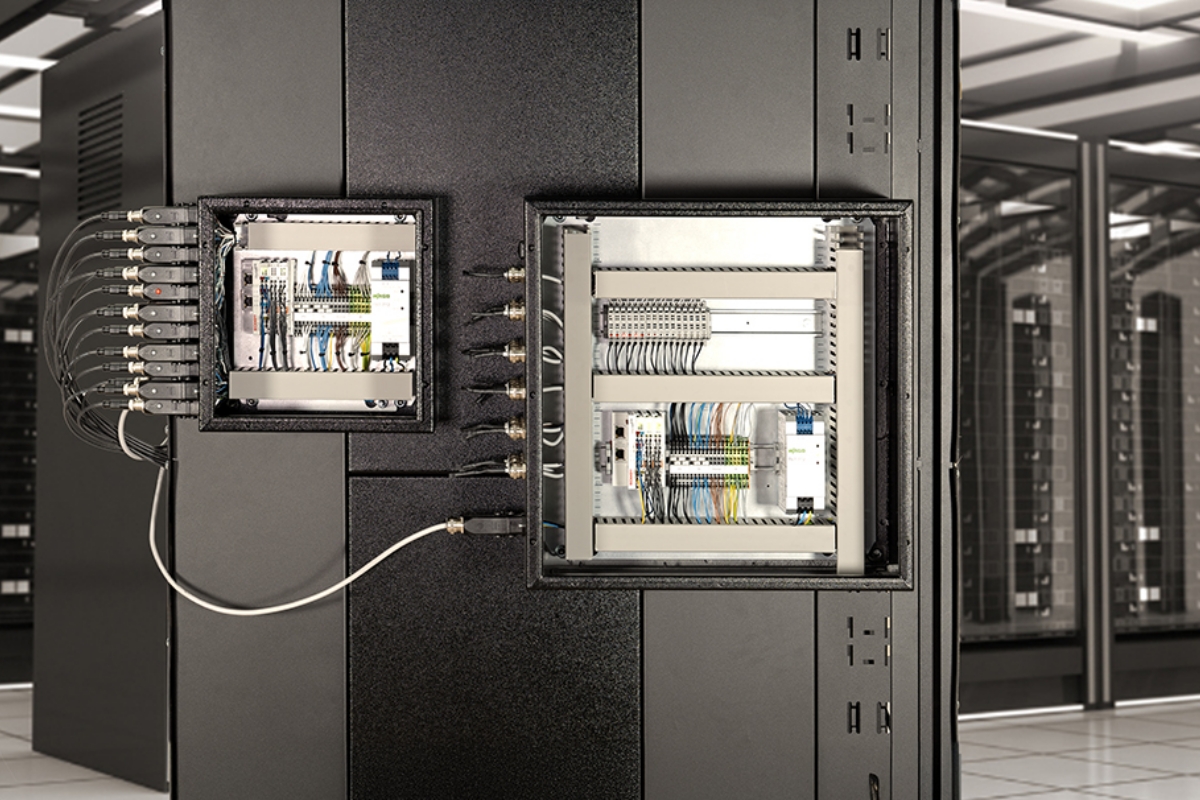
IT systems are only ever noticed when they fail. The new Han Protect connector solution from HARTING, a German manufacturer of electrical and electronic connectors, cable assemblies, and industrial networking equipment, aims to help simplify troubleshooting in the event of failures. Large buildings like data centres require a Building Automation System (BAS) to control Heating, Ventilation and Air Conditioning (HVAC), lighting, power supply, core IT, and security systems. The control cabinets for those subsystems are built with fused terminal blocks or circuit breakers to protect the automation devices against short-circuits or overcurrent. In the event of a short circuit, fixing the fault and finding the broken fuse is a time-consuming task that must be performed by expensive skilled workers. The fault may not even be in the switch cabinet, it could also be in the device itself. Both possibilities must therefore be checked and sometimes several control cabinets need to be examined before the fault can be isolated. With Han Protect, HARTING have developed a new connector that seeks to simultaneously simplify protection and reduce installation space in the control cabinet. Inside the connector (designed in the Han 3A format), there is an insulation body that adapts an M12A-coded five-pole connector and integrates a 5x20 mm miniature fuse. In the event of a short circuit, the fuse ensures that the supply to the connected units is quickly interrupted. A red LED on the Han Protect clearly identifies the blown fuse and should enable quick, simple, and tool-less replacement without opening the cabinet. Due to the external mounting of the housings, up to 30% of installation space for connectors can be saved inside the cabinet. The main advantage of Han Protect is that extensive fuse terminal blocks are no longer required. The control units remain protected while the connected systems can be started up again quickly. Some benefits include:• Increased system availability due to reduced Mean Time To Repair (MTTR).• Increased efficiency in maintenance due to visual identification of blown fuses outside of the control cabinets.• Space savings of up to 30% for control cabinets by eliminating extensive fuse terminal blocks inside of the control cabinet. For more from HARTING, click here.

nVent rear door coolers offer solution for high-density racks
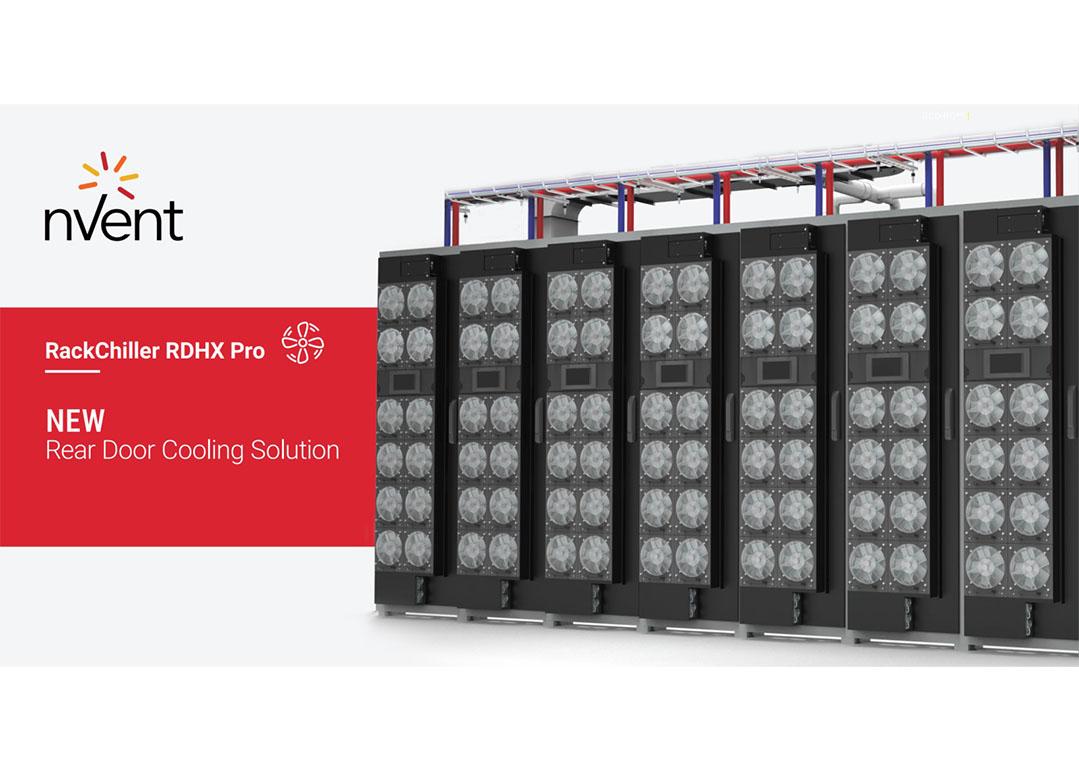
nVent has announced the launch of its RDHX PRO rear door cooling unit, a new high-performance solution offering the capability to upgrade data centres with up to 83kW high-density racks, meeting the requirements for the growing use of AI-enhanced applications, demands for higher energy efficiency and sustainability, and the need for greater data centre space utilisation. Rear door cooling solutions are increasingly popular as a pay-as-you-go method for retrofitting increased data centre cooling performance, in many cases without the need for additional re-engineering of the existing facility mechanical design. When installed as a primary method of heat removal, rear door coolers eliminate much of the need for mechanical equipment including fans, blowers and CRAHs, to provide a more optimised cooling solution aligned with the exact requirements for individual racks, at the same time reducing noise and energy waste. Bringing flexibility to rack cooling One of the features of RDHX PRO RDC is the ability to operate comfortably with 57°F (14°C) warm water cooling, making it environmentally friendly. By utilising free cooling, the device significantly reduces the amount of energy required to cool the data centre, not only reducing overall data centre power consumption but also the carbon footprint of operations. The future-proofed solution can also be combined with direct-to-chip (D-2-C) liquid cooling deployments, for customers who are moving towards a hybrid approach to cooling, and especially those looking to maximise heat reuse opportunities, combined with NVent’s liquid cooling CDU 800. Maximum compatibility and availability The new rear door cooling units from nVent are offered in a range of standard sizes for use with 42U, 47U, 48U and 52U data centre racks, in both 600mm and 800mm widths. The coolers themselves are 250mm deep, one of the features of rear door coolers is that they are compact and do not require any additional floor space or ceiling headroom, it can free up white space compared to other competitor RDCs and cooling devices CRAH and CRAC units may be eliminated from the data centre. Each unit has a maximum power draw of 1800W and features 12x axial brushless DC fans – more than any competitive unit. However, the large number of fans mean they individually do less work than a smaller number of large fans, reducing stress on the electromechanical devices and increasing their lifecycle. In the event failures do occur, nVent has developed an innovative, tool-less and hot-swappable method for fan replacement as well as other critical components such as PSUs. This feature allows uptime to be maximised at the same time as reducing service callouts and associated costs. For ease of integration with data centre management applications as well as BMS software, the new rear door cooling units also feature a newly designed controller which is compatible with most popular network and control protocols including Web Interface, Ethernet, SNMP, Modbus TCP, RTU, and Redfish. The new RDHX PRO RDC is available from September and will be on demonstration at DCW Paris and SuperComputing in Denver, Colorado, US.

Inspur Information and JD Cloud launch liquid-cooled server
Inspur Information and JD Cloud have announced they have jointly launched the liquid-cooled rack server ORS3000S. The server utilises cold-plate liquid cooling to reduce data centre power consumption by 45% compared to traditional air-cooled rack servers, making it a green solution that dramatically reduces total cost of ownership (TCO). Cold-plate liquid cooling technology allows ORS3000S to improve heat dissipation efficiency by 40%. It adopts a centralised power supply design with N+N redundancy that is capable of meeting the demands of whole rack power supply, and can function at the highest efficiency throughout operation due to power balance optimisation. This results in an overall efficiency increase of 10% when compared to a distributed power supply. Pre-installation at the factory, plus efficient operations and maintenance (O&M) allow for 5-10x faster delivery and deployment. The ORS3000S has been widely deployed in JD Cloud data centres, providing computing power support for JD during major shopping events. It brings a performance increase of 34–56% while minimising power usage effectiveness (PUE), carbon emissions and energy consumption. Inspur Information has been a pioneer in direct and indirect cooling. With new heat conduction technologies such as phase-change temperature uniformity, micro-channel cooling and immersion cooling, Inspur achieves a 30–50% optimisation in the comprehensive energy efficiency of the cooling system. This is achieved via cooling improvements throughout the server design, including a micro/nano-cavity, phase-change, and uniform temperature design for high-power components such as the CPU and GPU. This improves heat dissipation performance by 150% compared to traditional air cooling technologies. Experienced in the industrial application of liquid cooling, Inspur has built one of the world’s largest liquid-cooled data centre production facilities with an annual manufacturing capacity of 100,000 servers. This includes a full-chain liquid-cooling smart manufacturing solution covering R&D, testing, and delivery for the mass production of cold-plate liquid-cooled rack servers. As a result, the PUE for data centres is less than 1.1, and the entire delivery cycle takes five to seven days. Inspur Information’s cold-plate, heat-pipe, and immersion liquid-cooled products have been deployed at a large scale. In addition, Inspur offers complete solutions for liquid-cooled data centres, including primary and secondary liquid cooling circulation and the coolant distribution unit (CDU). This total solution enables a full-path liquid cooling circulation for data centres with the overall PUE reaching the design limit of less than 1.1. Inspur holds more than 100 core patents in the liquid cooling, and has participated in the formulation of technical standards and test specifications for cold-plate and immersion liquid-cooled products in data centres. The company is committed to and will continue to lead the rapid development of the liquid cooling industry and the large-scale application of innovative liquid cooling technology.


Translate »