News in Cloud Computing & Data Storage


Epsilon, Megaport expand North American network reach
Epsilon Telecommunications, a global connectivity provider offering network, cloud, and colocation services, and Network-as-a-Service (NaaS) provider Megaport have partnered to expand Epsilon’s network footprint in North America. The partnership allows customers to access Megaport’s compute, network, and storage infrastructure across the USA and Canada through Epsilon, with software-defined connectivity to data centre, cloud, and internet exchange hubs across the region. North America is expected to account for 43% of a global addressable IT market worth more than $6 trillion (£4.5 trillion) in 2026, according to Omdia. The companies say their partnership provides on-demand connectivity across their software-defined networks, in response to demand for connectivity between key markets in the USA and Canada. Customers can access additional destinations through a single connectivity service, whether expanding within North America or entering the region from international markets. Warren Aw, Chief Commercial Officer at Epsilon, comments, “North America is a key market for our customers, with growing demand for high-performance access to cloud, data centres, and digital infrastructure across the region. “By partnering with Megaport, we’re simplifying how our customers can connect and accelerate their growth in the United States and Canada. Together, we’re hugely expanding the opportunities available to our customers and making global connectivity more seamless than ever.” Connectivity across North America The partnership enables cloud access across North America, bringing applications closer to customers and their users, whilst allowing cloud regions to be connected on demand. It also supports content delivery across markets and business continuity through geographically redundant backup environments. Misha Cetrone, Executive VP, NAM & Global Alliances at Megaport, says, “Our collaboration with Epsilon brings together two complementary platforms to give customers more choice in how and where they connect. “We’re combining our strengths for unparalleled global connectivity, while creating new compute, network, and storage possibilities for businesses around the world. We’re excited to help more customers connect and grow across North America with our automated, globally connected infrastructure platform.” Epsilon and Megaport say organisations in Europe, Asia Pacific, and other international markets can also use the connectivity service to expand into North America and scale workloads across hybrid and multi-cloud environments. For more from Epsilon, click here.

Huawei Cloud rolls out enterprise AI products
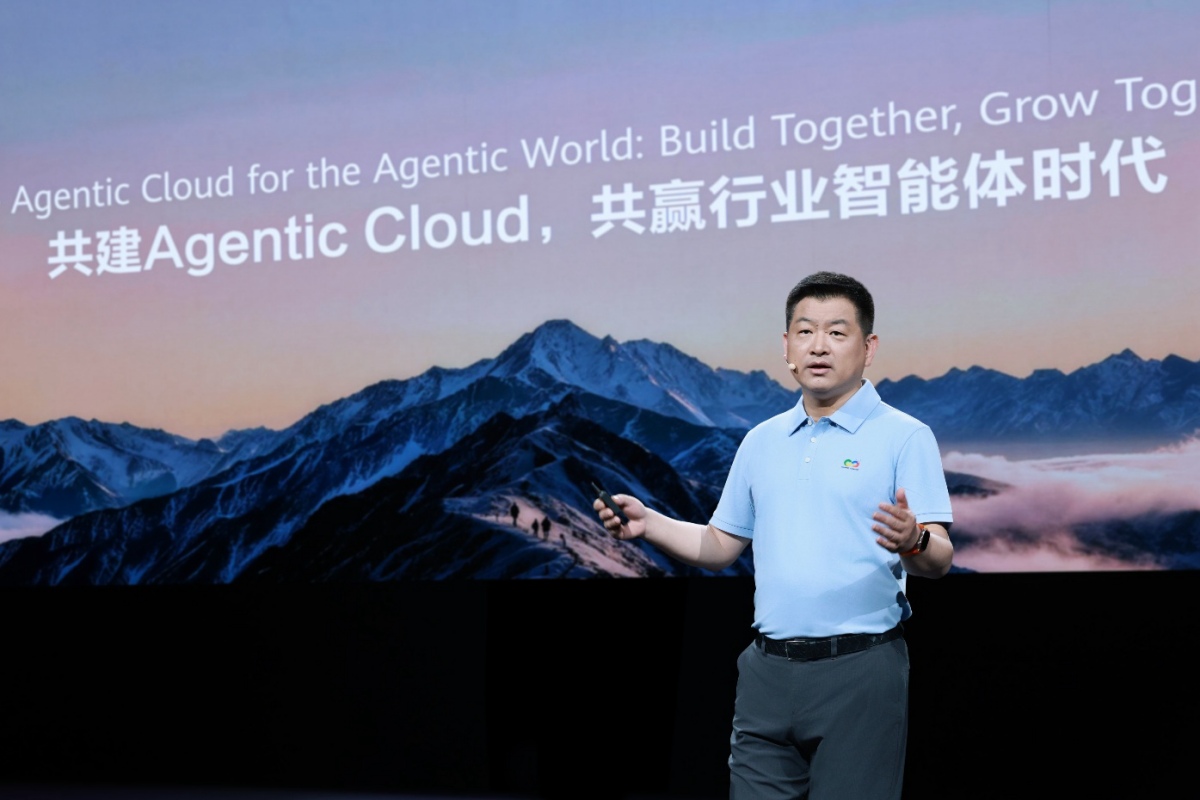
On 18 September, Peter Zhou, Director of the Board at Huawei and CEO of Huawei Cloud, delivered a keynote titled The Agentic Cloud for the Agentic World: Build Together, Grow Together at Huawei Connect 2026. He shared Huawei Cloud's latest progress. He announced the global launch of the latest AI Cluster Service (AICS), a key step in Huawei Cloud's strategy to strengthen the silicon bedrock on the cloud and reinforce the foundation for agentic AI. The keynote also highlighted the Agentic Model as a Service (MaaS) platform, which brings together diverse models to accelerate model capabilities as services at scale. The AgentArts enterprise-grade agent platform already serves over 100 enterprises. The Industry AI Foundry has accumulated more than 1,000 industry assets, with over 1,000 projects deployed. The Industry AI Foundry now includes two new zones, Smart Government Zone and AI Hardware Zone, to drive agents toward large-scale adoption. These efforts, taken together, are building a thriving AI ecosystem on the cloud. Building Agentic Infra for agents Peter also highlighted that, in the agentic era, infrastructure no longer simply exists to provide compute. Instead, its purpose has expanded to making every token more efficient, coordinating general and AI compute, enabling models to keep learning, and, more importantly, running agents securely and reliably within real production environments. Huawei Cloud has defined Agentic Infra, a new paradigm around efficient tokens, enhanced memory, unified general & AI scheduling, and secure autonomy. To date, Agentic Infra has served over 3,500 customers. • The latest AICS is built on a five-level fast recovery mechanism with full-chain observability. It supports over 40 days of stable training on cloud and is capable of fault recovery within 10 minutes. Furthermore, supported by coordinated optimisation across scheduling, cache, and algorithms, it delivers 20% higher token throughput than the previous generation of compute service. The latest AICS will be commercially available in China on 30 September and in markets outside China on 30 November. • The Context Memory Storage (CMS) solution addresses the needs of long-horizon agent tasks for memory capacity and access efficiency. It provides a petabyte-scale memory space, twice the storage capacity of comparable industry products, and supports high-speed terabyte-scale memory reads with 50% higher performance than industry peers. • Agentic MaaS brings together diverse models, enabling developers to invoke state-of-the-art (SOTA) models from leading providers with just one click and no deployment required. At the event, MiniMax demonstrated its advanced multimodal model, which, combined with Huawei Cloud, delivers open, cutting-edge multimodal capabilities. Building an enterprise-grade agent platform to help enterprises develop and use agents effectively Huawei Cloud is advancing its enterprise-grade agent platform through a dual approach: commercial and open source. Built on AgentArts and its open-source edition, openJiuwen, the platform opens up more than 5,000 general Model Context Protocol (MCP) assets and over 1,000 industry-specific MCP assets, making it easier for enterprises to develop, use, and manage agents. To date, the platform has served more than 100 customers, including the Shenzhen Longgang District Government, China Southern Power Grid, Guangzhou Laboratory, the University of Science and Technology of China, Kingsoft Office, Sichuan Yingu Carbon Sink Renewable Resources Co., Ltd., Changsha Thunder Cloud Network Technology Co., Ltd., and KingMed Diagnostics. At the event, Kingsoft Office shared its implementation practices based on Huawei Cloud's agent platform. By deeply integrating the agent platform with the WPS 365 Document Center and WPS Comate, Kingsoft Office has built vertical office agents that are now deployed across multiple industries, including finance and government. Huawei Cloud has announced that AgentArts will be commercially available in markets outside China on 30 December. To date, the openJiuwen open-source community has surpassed 50,000 stars and 3.29 million downloads. Together with Chinasoft International, iSoftStone Group, and Beiming Software, Huawei Cloud has launched partner commercial editions and shared a broad market space, helping partners thrive on Huawei Cloud's silicon bedrock. Advancing the Industry AI Foundry to accelerate AI adoption at scale across industries Through the Industry AI Foundry, Huawei Cloud brings together assets such as industry scenarios, models, data, knowledge, and agents, turning industry know-how from isolated project experience into reusable industry capabilities. It has built five industry-specific zones — Smart Healthcare Zone, Embodied AI Zone, AI for Science (AI4S) Zone, Smart Manufacturing Zone, and Smart Finance Zone — with over 1,000 industry-specific assets and more than 1,000 deployed projects. Two new zones have been launched within the Industry AI Foundry: Smart Government Zone and AI Hardware Zone. The Smart Government Zone has already brought together 24 founding partners, covering a range of scenarios such as government office operations, public services, urban governance, and industry development. The AI Hardware Zone has onboarded 15 core partners, covering more than 20 device types, including AI glasses, AI toys, and AI recording cards, along with over 10 scenario templates and more than 110 scenario skills. From infrastructure and enterprise-grade agent platforms to industry ecosystems, Huawei Cloud is committed to building an open agentic cloud, with open infrastructure to power AI, an open platform to support enterprises in effectively developing and using agents, and an open industry ecosystem to accelerate AI adoption at scale. Ultimately, Huawei Cloud looks to move forward with customers and partners to build and grow together in the agentic era. Themed Advancing the Agentic World, Huawei Connect 2026 delved into AI across three dimensions: strategy, technology, and ecosystems. You can catch up on in-depth looks at Huawei's latest strategic initiatives, and how the company also unveiled its all-new digital and intelligent infrastructure products, scenario-specific solutions for industries, and development tools. The event ran from 17 to 19 September at the Shanghai World Expo Exhibition & Convention Center and Shanghai Expo Center. For more information, please visit Huawei Connect 2026 online by clicking here. For more from Huawei, click here.

Nscale, Figure partner to power physical AI
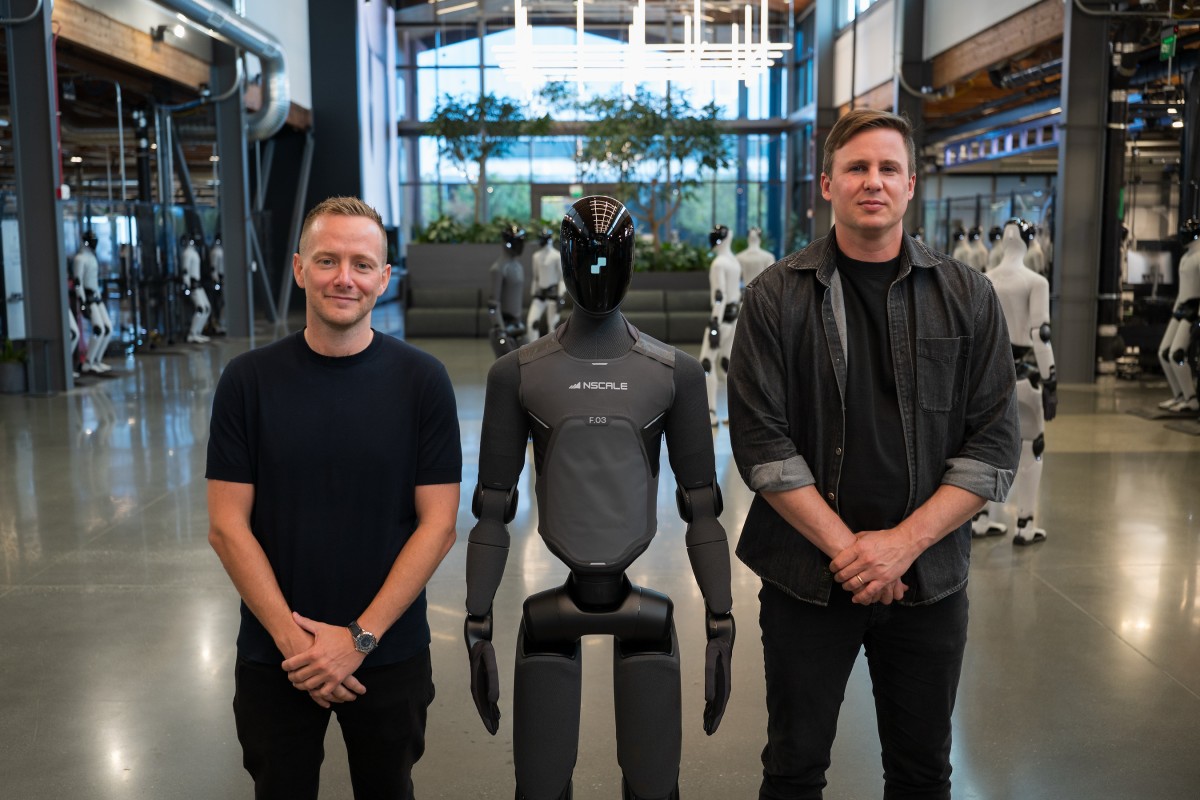
Nscale, a UK developer of AI data centres and cloud infrastructure, has signed a multi-year strategic partnership with humanoid robotics company Figure, including plans to deploy up to 100,000 NVIDIA GPUs to support the development of physical AI. The initial GPUs are targeted for deployment from the second half of 2027 at Nscale’s site in Barstow, Texas, USA. The agreement includes an initial commitment of $3.5 billion (£2.5 billion) in compute, with an intention to scale the partnership beyond $6 billion (£4.4 billion). Nscale will also become a Figure shareholder and its preferred compute provider, supporting the training and deployment of Figure’s Helix AI models for humanoid robotics. Compute supports humanoid robotics The partnership will use NVIDIA’s Vera Rubin platform and Nscale’s AI cloud infrastructure to provide compute for Figure’s models. The companies will also explore scaling Nscale’s supply chain using humanoid robots. Jensen Huang, founder and CEO of NVIDIA, has stated that the partnership will connect model training, simulation, and deployment in Figure’s robots. He comments, “Humanoid robots extend physical AI into the world designed for people, opening a major new industry. Nscale and Figure have activated the robotics flywheel: training Figure's models on NVIDIA Vera Rubin through Nscale's AI cloud, validating them in NVIDIA Isaac Sim, and deploying them on NVIDIA GPUs in Figure's robots.” Brett Adcock, founder and CEO of Figure, adds, “To bring humanoid robots to every home in the world, we are largely constrained by data and compute. Our AI model, Helix, becomes more capable the same way every learned system does: with more data and compute. "Today, we're excited to partner with Nscale to bring the compute required to make this vision a reality.” For more from Nscale, click here.

CBRE: AI demand drives record Europe data centre signings
Demand for AI-ready data centre capacity is increasing across Europe, with emerging AI infrastructure providers, often referred to as neoclouds, securing record levels of capacity. According to research from global commercial real estate services and investment firm CBRE, signings for AI-focused colocation capacity reached 420MW in the first half of 2026, compared with 89MW during the same period in 2025. Two thirds (66%) of the contracted capacity is expected to be delivered by data centre operators to neoclouds in the Nordic region, where lower-cost renewable power is more readily available. The increase in AI-related capacity signings indicates growing confidence amongst data centre operators and investors in the neocloud sector. CBRE says operators are finding ways to meet funding requirements when contracting with neoclouds, representing a shift from the more cautious investment environment seen two years ago. Operators have also adopted measures such as rental deposits and letters of credit on some transactions to reduce financial risk. Neoclouds secure capacity for AI workloads Andrew Jay, Head of Data Centre Solutions, Europe at CBRE, explains, “Neoclouds have emerged as viable occupiers who are taking capacity at scale in markets typically where lower-cost power is the norm. "It is a sign that many data centre providers are increasingly comfortable with the ambitions of neocloud providers and the financial structures that can be used to satisfy the funders.” Kevin Restivo, Director, European Data Centre Research at CBRE, adds, “The underlying demand for compute is immense. Several neocloud companies have emerged with investment-grade customers, enabling them to secure capacity and support the growing requirements of AI workloads. “As a result, we are seeing unprecedented growth in this segment with deployments in areas in parts of Europe where data centre development isn’t the norm.” For more from CBRE, click here.

Macquarie, Microsoft sign A$278m data centre deal
Macquarie Cloud Services, an Australian cloud services provider for business and government, part of Macquarie Technology Group, has signed a Microsoft Datacentre Optimisation (DCO) agreement covering Azure consumption over the next three years. The agreement is the third DCO agreement signed by Macquarie and builds on its work with Microsoft supporting Australian organisations with cloud migration and infrastructure modernisation. Under the agreement, Microsoft forecasts that Macquarie's Azure consumption spend could reach up to A$278 million (£145 million) over three years, based on its roadmap and performance to date. Microsoft DCO is an initiative intended to support partners in expanding their Azure practices and helping customers with hybrid cloud transformation. Macquarie Cloud Services is a Microsoft cloud service provider (CSP) in Australia and has used the DCO programme to support customer workload migration. Azure demand grows in Australia The agreement comes as Australia's public cloud market is forecast to reach around A$220 billion (£114 billion) by 2034, according to Macquarie. The company attributes the expected growth to AI, cyber security, systems modernisation, and regulatory requirements affecting major industries, which include APRA's CPS 230 and CPS 234 standards, the Security of Critical Infrastructure (SOCI) Act, and Essential Eight (E8) maturity requirements. Vincent Texcier, Global DCO Centre of Excellence at Microsoft, comments, “Macquarie Cloud Services continues to demonstrate strong leadership in helping Australian organisations modernise with Microsoft Azure. “Through this agreement, Macquarie Cloud Services can continue helping customers migrate and modernise infrastructure, strengthen their cloud foundations, and prepare for future data and AI opportunities.” Macquarie has held Microsoft's Expert MSP status for six years. The company says it has delivered average cloud cost savings of 26% and reduced operational risk for thousands of Australian organisations. Naran McClung (pictured above), Executive Head of Azure at Macquarie Cloud Services, notes, “By combining our capabilities with the DCO framework, we are enabling customers to move to Azure at scale, while building a foundation for data, AI, and next-generation applications that will ultimately drive the Australian economy. “Increasingly, our growth is being driven by customers expanding into new workloads and more sophisticated capabilities as their cloud maturity develops, as well as organisations moving to Azure for the first time. "This agreement reflects continued confidence in our Azure capability, experience, and customer outcomes. We look forward to continuing to work closely with Microsoft as it continues its own significant investment into Australia.” For more from Macquarie, click here.

Vultr scales AI infrastructure with new AMD GPUs
Vultr, a privately held cloud infrastructure company, has announced plans to offer the AMD Instinct MI455X GPU, alongside support for the AMD Helios rack-scale architecture, with pre-orders now open ahead of availability in Q4. The cloud infrastructure provider says the platform is designed for AI training, inference, fine tuning, agentic AI, and high-performance computing (HPC). According to the company, the infrastructure is intended to support organisations moving AI workloads from development into production, particularly those requiring high-memory, rack-scale computing. J.J. Kardwell, CEO of Vultr, comments, "Customers are rapidly moving from AI experimentation into production and, increasingly, that means agentic and inference-heavy workloads that require infrastructure built for scale. "The AMD Instinct MI455X and Helios rack-scale architectures give our customers the flexibility, control, and price-to-performance they need to scale their AI initiatives. Making this architecture available across Vultr's global infrastructure enables teams to build and deploy without constraints." AI infrastructure targets large-scale workloads The AMD Instinct MI455X GPU is based on AMD's CDNA architecture and features HBM4 memory, increased memory bandwidth, and support for low-precision AI data types. The Helios rack-scale architecture supports up to 72 GPUs in a single deployment. Vultr says the platform will also support direct liquid cooling to improve thermal management and energy efficiency in higher-density deployments. The infrastructure is complemented by AMD's ROCm software platform and Pensando networking technology, which are designed to improve AI training, inference performance, and scalability. IDC forecasts a tenfold increase in the number and complexity of enterprise AI agents over the next five years, increasing demand for computing infrastructure capable of supporting repeated inference workloads. Dave McCarthy, Group Vice President, Cloud and Datacenter Infrastructure at IDC, notes, "As enterprises transition into the agentic era, the massive influx of complex, data-intensive workflows requires a fundamental shift in infrastructure design. "Vultr's deployment of the AMD Instinct MI455X GPU provides the massive memory capacity and rack-scale efficiency necessary to support the continuous inference loops that define next-generation AI workloads." Vultr says reserved capacity for deployments based on the AMD Instinct MI455X GPU and AMD Helios architectures is now available for pre-order, with deployments planned from 2027 through to 2028. For more from Vultr, click here.

Sharon AI signs $373m cloud agreement
Sharon AI, an Australian neocloud provider, has signed a five-year cloud computing agreement with a global artificial intelligence platform worth $373 million (£277 million). Under the agreement, Sharon AI expects to deploy cloud computing infrastructure across its AI facilities in Australia, with revenue expected to begin in the first quarter of 2027. The company says its total AI factory capacity remains at 132MW, with 120MW now contracted to end customers. It also plans to increase the number of NVIDIA GPUs across its AI factory platform from 62,000 to 64,000 by mid-2027. The initial deployment under the agreement is expected to use 2,048 NVIDIA Blackwell Ultra B300 GPUs. Further deployments may take place during the five-year agreement, subject to customer requirements and the contract terms. An expansion of Australian AI infrastructure capacity Sharon AI says the agreement will contribute to the expansion of AI compute capacity in Australia and support the development of domestic AI infrastructure. James Manning, co-founder and Chief Executive Officer of Sharon AI, comments, "This agreement represents an important milestone in the continued expansion of Sharon AI's customer base and contracted AI infrastructure capacity. "As organisations increasingly seek access to sovereign, high-performance AI compute, we remain focused on delivering scalable infrastructure that supports the evolving needs of AI platforms, enterprises, and governments. "We continue to see strong demand for AI infrastructure in Australia and across the Asia-Pacific region, and this agreement reflects our strategy of securing long-term customer commitments as we expand our AI factory platform." The company has said the agreement is also expected to support investment in Australian digital infrastructure and provide additional opportunities for businesses, researchers, and government organisations to access AI compute capacity domestically.

Airbus selects Scaleway for sovereign cloud
European multinational aerospace company Airbus has selected French cloud computing provider Scaleway as a sovereign cloud provider to support parts of its cloud infrastructure, adding European-based cloud services to its existing multi-cloud strategy. Under the agreement, Scaleway will provide cloud infrastructure for selected enterprise applications operating in environments requiring high levels of governance, resilience, and legal protection. The platform is also intended to support AI-enabled workloads. Airbus says the appointment follows a competitive tender process that assessed cloud providers on technical capabilities, operational resilience, and legal and governance safeguards, including European jurisdiction and data protection. The sovereign cloud platform will be built on European infrastructure and integrated with Airbus's existing technology environment. According to the companies, it is designed to support business-critical applications across aircraft design, engineering, manufacturing, and enterprise operations. The agreement forms part of Airbus's wider digital sovereignty strategy, allowing different workloads to be hosted in environments that best meet their technical, operational, and regulatory requirements. Supporting critical applications with European cloud infrastructure Scaleway says the platform will provide interoperability with Airbus's existing cloud estate whilst enabling the company to retain operational control over sensitive applications and industrial data. Damien Lucas, Chief Executive Officer of Scaleway, comments, "Artificial intelligence is redefining how the world's most advanced industries design, manufacture, and operate. Unlocking its full potential requires digital infrastructure that combines world-class performance with trust, openness, and long-term control. "We're proud that Airbus has selected Scaleway to help build this next chapter of its cloud strategy and to demonstrate that Europe can deliver sovereign cloud capabilities at the highest international standards." Catherine Jestin, Executive Vice President Digital at Airbus, adds, "This collaboration marks a significant milestone in our broader commitment to European digital sovereignty. "By integrating a trusted, high-performance cloud environment that keeps our critical data assets shielded from foreign extraterritorial laws, we are ensuring that our digital infrastructure keeps pace with our aerospace innovation while maintaining control and resilience of our industrial operations." For more from Scaleway, click here.

GigaCloud, Cubbit partner on sovereign cloud storage
GigaCloud, a Ukrainian cloud services provider, and Cubbit, an Italian provider of geo-distributed cloud storage infrastructure, have formed a partnership to provide sovereign, geo-distributed cloud storage services for organisations in Ukraine and Poland. Organisations in the two countries currently face an increasingly demanding risk landscape, where ransomware and cyberattacks remain a persistent threat. Armed conflicts make data centre facilities extremely susceptible to physical disruptions. Throughout recent years, missile strikes and attacks on critical infrastructure have demonstrated that no single site can be considered safe. If a facility goes offline, organisations lose access to critical systems and productivity halts. At the same time, companies must comply with an ever-stricter legislative framework - from GDPR to regional laws - whilst keeping sensitive and strategic data under their direct control, operated within defined geographic boundaries. For enterprises, government institutions, and critical infrastructure operators, storage that is resilient, sovereign, and distributed across multiple trusted cross-country sites has become a requirement. As such, the agreement will see GigaCloud deploy Cubbit's software-defined object storage platform, DS3 Composer, across five data centres in Kyiv, Lviv, and Warsaw. The companies say the platform is intended to improve resilience whilst helping organisations meet data sovereignty and regulatory requirements. The storage platform encrypts, fragments, and distributes data across multiple locations, allowing organisations to define where their data is stored, including within Ukraine, within Poland, or across both countries. The service also provides S3-compatible object storage for applications including backup, disaster recovery, long-term archiving, and management of unstructured data. Supporting data resilience across multiple locations Stefano Onofri, co-CEO and co-founder of Cubbit, says, "We are proud to bring our technology to Ukraine and support the country at a moment when the resilience of digital infrastructure has never mattered more. "GigaCloud is firmly rooted in the local market - trusted by government institutions and critical infrastructure operators - and brings deep technical expertise. "Together, we are giving Ukrainian and Polish organisations something new to these regions: a geo-distributed storage infrastructure that keeps strategic data protected and always available, distributed across multiple trusted countries by design, so that even in the most demanding conditions, data remains online and in the hands of those who own it." The service will target mid-sized and enterprise organisations, including government, defence, financial services, media, retail, and IT sectors, where resilient data storage and rapid recovery are operational priorities. Nazariy Kurochko (pictured above), CEO of GigaCloud, explains, "Cloud infrastructure in our region can’t be built around assumptions borrowed from calmer markets. Our businesses have learned to think differently: to plan for uncertainty, to value control, and to choose architectures that remain dependable when circumstances change. "This partnership with Cubbit helps us turn that experience into a practical storage model for organisations that need not just capacity, but confidence. For us, it is also a step towards strengthening a European cloud ecosystem where resilience, sovereignty, and a technology-agnostic approach are built into the foundation." For more from Cubbit, click here.

DeepInfra opens its first international AI data centre
DeepInfra, a US cloud platform providing inference infrastructure for AI, has opened a new data centre in Toronto, Canada, marking the company's first facility outside the US as it expands its AI inference infrastructure. The 1.7MW site is DeepInfra's ninth data centre and will host more than 1,000 NVIDIA Blackwell GPUs. The company says the expansion increases its AI inference capacity whilst supporting lower-latency services for customers across North America and other international markets. Supporting growing AI inference demand According to research from McKinsey & Company, AI inference is expected to account for more than 40% of total data centre demand by 2030. The growth is being driven by organisations moving AI models into production, increasing demand for GPU infrastructure capable of supporting real-time applications, AI agents, and high-volume API traffic. DeepInfra says the Toronto deployment forms part of its wider infrastructure strategy as demand for AI inference continues to grow. Nikola Borisov, CEO and co-founder of DeepInfra, notes, "Enterprises are moving from experimentation to production at unprecedented speed, and that shift demands infrastructure that is both scalable and globally distributed. "This Toronto cluster is a foundational step in expanding our capacity beyond the US and ensuring customers can run AI workloads closer to where their users and data reside." The Toronto facility follows DeepInfra's 'Series B' funding round and forms part of the company's plans to increase AI inference capacity in strategically selected regions. Additional international deployments are also being evaluated as demand for GPU-intensive AI workloads continues to increase.


Translate »