Features

Data Centre Operations: Optimising Infrastructure for Performance and Reliability
News
News in Cloud Computing & Data Storage
Google Cloud appoints new regional Vice President
Google Cloud has announced the appointment of Maureen Costello as Vice President, United Kingdom and Ireland (UKI) and Sub-Saharan Africa. In this role, Maureen will oversee the company's sales strategy and operations across both regions.
Maureen brings nearly three decades of industry experience to Google Cloud, having previously served as Corporate Vice President for Industry Solutions Delivery at Microsoft. Prior to her role at Microsoft, she held several leadership positions during her 25-year tenure at Accenture, including Senior Managing Director and Resources Lead for UKI.
"It’s an honour to join Google Cloud at such a pivotal time in its journey," Maureen comments. "We have a tremendous opportunity to help businesses across the UKI and Sub-Saharan Africa harness the full potential of the cloud, from AI and data analytics to cyber security and sustainability. I am eager to build on the strong foundation already in place."
Maureen joins Google Cloud at a key stage in its growth trajectory. The company has recently announced major relationships in the UK with organisations including BT, John Lewis & Partners, Vodafone, and WPP. In Africa, Google Cloud opened its first region in Johannesburg, South Africa, in January 2024, and has committed $1 billion to support digital transformation initiatives across the continent.
"Maureen is a proven leader with an exceptional track record of driving growth and building high-performing teams," notes Tara Brady, President, EMEA, Google Cloud. "Her deep industry expertise and understanding of the unique needs of customers will be invaluable as we continue to expand Google Cloud's presence in these key markets. We are thrilled to welcome her to the Google Cloud EMEA leadership team."
Google Cloud is a new way to the cloud, providing AI, infrastructure, developer, data, security, and collaboration tools built for today and tomorrow. It offers a powerful, fully integrated and optimised AI stack with its own planet-scale infrastructure, custom-built chips, generative AI models and development platform, as well as AI-powered applications, to help organisations transform. Customers in more than 200 countries and territories use Google Cloud as their trusted technology partner.
For more from Google Cloud, click here.

Simon Rowley - 10 January 2025

Data Centre Operations: Optimising Infrastructure for Performance and Reliability
Data Centres
News
News in Cloud Computing & Data Storage
AWS Direct Connect Location available at Telehouse Osaka
KDDI Corporation, parent company to Telehouse, has announced today the availability of an Amazon Web Services (AWS) Direct Connect Location at its Telehouse Osaka data centre in Japan.
Telehouse Osaka customers can now directly access over 240 AWS cloud services, including AWS's generative AI via AWS Direct Connect, a cloud service that links customer networks directly to AWS Regions (data centres) through a dedicated network from Telehouse Osaka. This enables low-latency and secure connections to their own cloud environments.
Telehouse Osaka will reportedly be the first data centre in Japan operated by a Japanese telecommunications company to provide a dedicated connection point to AWS Direct Connect. Globally, this will be the third AWS Direct Connect site to implement the service, following Telehouse PARIS Voltaire and Telehouse London Docklands.
Takeyuki Yanagisawa, General Manager, Connectivity DC Planning Department at KDDI, comments, “The AWS Direct Connect Location at Telehouse Osaka allows for the creation of a secure and private link between AWS cloud services and our customers’ IT systems within the data centre. This setup significantly enhances throughput and ensures stability of our customers’ networks.”
“Additionally, by using the fibre core-based data centre interconnection service in the Osaka Business Park, customers can also access their IT infrastructure from other data centres.”
For more from KDDI, click here.
Simon Rowley - 9 January 2025

Data Centre Operations: Optimising Infrastructure for Performance and Reliability
News
News in Cloud Computing & Data Storage
Alibaba named 'leader' in Public Cloud Platforms report
Alibaba Cloud, the digital technology and intelligence backbone of Alibaba Group, has been named a 'Leader' in The Forrester Wave: Public Cloud Platforms Q4 2024 report.
Alibaba Cloud believes this designation recognises its depth of its cloud and AI offerings and strategy, its significant global presence, as well as the ability to provide its global customers with a wide range of products and services. This is the first time Alibaba Cloud has been recognised as a Leader among other significant public cloud platform providers in this report.
Alibaba Cloud is named one of four leaders among nine global vendors evaluated in Forrester’s report, with the second highest scores in the current offering and strategy categories. The report states that Alibaba Cloud showed its capacity for AI innovation with homegrown AI models, breadth of foundation model choices and model-as-a-service (MaaS) innovation. The report also states that the core infrastructure and model-as-a-service capabilities enable Alibaba Cloud to provide a major model repository for AI across China.
“Alibaba has upped the ante on serverless beyond AI, packaging its powerful cloud-native infrastructure into more accessible offerings for both developers and operators, with data and analytics as a stand out,” Forrester notes in the report. “Alibaba is a good fit for Chinese-based enterprises or international corporations requiring cloud scale across APAC and parts of Africa, Europe, and Latin America.”
The Forrester report is a 30-criterion evaluation of the nine most significant public cloud platform providers. Each provider is evaluated on the strengths of their current offerings, strategy and market presence. Alibaba Cloud has achieved the highest possible assessment score (5.0 out of 5.0) in 17 criteria, including database, data integration and governance services, container and Kubernetes services, serverless/FaaS services, compute, IoT, storage services, as well as AI development services.
Jingren Zhou, Chief Technology Officer of Alibaba Cloud Intelligence, comments, “Expanding our cloud-native infrastructure and AI capabilities in the public cloud space to better support our clients is a top priority. We are honoured to be recognised by Forrester for our efforts in this critical area. To address the increasing demands of AI, we are dedicated to continuously enhancing our ability to provide accessible, scalable, and reliable cloud products and AI applications to our customers.”
At Apsara Conference 2024, Alibaba Cloud’s annual flagship event hosted in September, Alibaba Cloud unveiled a revamped full-stack infrastructure designed to meet the growing demands for robust AI computing. It also released over 100 of its newly-launched large language models, Qwen 2.5, to the global open-source community. Qwen, Alibaba Cloud’s proprietary large language model, has seen significant adoption since its introduction in April 2023. The Qwen models have been downloaded over 40 million times on open-source platforms such as Hugging Face and ModelScope, and have inspired the creation of more than 78,000 derivative models.
As a creator of the MaaS concept and an advocate of open source, Alibaba Cloud also built ModelScope, China’s biggest AI model community. It hosts over 10,000 models and serves more than 8 million developers.
Alibaba Cloud continues to expand its global reach, currently operating 85 data centres in 28 regions globally. In May 2024, Alibaba Cloud announced plans to launch its first cloud region in Mexico, and to establish additional data centres in its key markets including Malaysia, the Philippines, Thailand, and South Korea in the next three years.
For more from Alibaba Cloud, click here.
Simon Rowley - 3 January 2025

Data Centre Security: Protecting Infrastructure from Physical and Cyber Threats
Features
News
Infinidat's 2024 year in review
By Eric Herzog, Chief Marketing Officer of Infinidat, reflects back on 2024 - a year of awards, cyber storage innovation, and the next-generation InfiniBox family.
2024 will be remembered as the year that Infinidat took enterprise storage to the next level with the launch of the InfiniBox G4 family of next-generation storage solutions for all-flash and hybrid configurations. Not only has the new enterprise storage solution raised the bar for the performance of a high-end storage array, but it also delivers ground-breaking cyber storage resilience capabilities that are game-changing, coupled with the practicality of hybrid multi-cloud support.
In 2024, Infinidat also revolutionised enterprise cyber storage protection to reduce ransomware and malware threat windows. Infinidat’s InfiniSafe Automated Cyber Protection (ACP) was introduced as a first-of-its-kind cyber security integration solution, enabling enterprises to seamlessly integrate with their Security Operations Centers (SOC), Security Information and Event Management (SIEM), Security Orchestration, Automation, and Response (SOAR) cyber security software applications, and simple syslog functions for less complex environments.
With InfiniSafe ACP, a security-related incident or event triggers immediate automated immutable snapshots of data, providing the ability to protect InfiniBox and InfiniBox SSA block-based volumes and/or file systems and ensure near instantaneous cyber recovery, while reducing the threat window. It’s an innovative solution that clearly differentiates Infinidat in the storage space and emphasises the importance of incorporating cyber storage resilience into an overall cyber security strategy. This is just one example of the innovation that Infinidat delivers – and we’ve been getting noticed on multiple fronts.
Equipped with an extremely strong value proposition for large enterprises, Infinidat keeps on winning. We have garnered a slew of awards in 2024. The past year has been a time when Infinidat won major industry recognition to set us apart from the competition in the storage industry. Indeed, we are on track to surpass a record number of awards in a 12-month period by the end of 2024.
Some of the 35 awards to date include: 2024 Gartner Peer Insights Customers’ Choice in the Gartner Peer Insights “Voice of the Customer” ─ Gartner; the xixth time that Infinidat has been identified as a Gartner Peer Insights Customers’ Choice; the “Best of Show Award” at 2024 FMS ─ InfiniBox G4 family ─ FMS: The Future of Memory and Storage trade show; and “Best Enterprise Storage Array of the Year” (Gold Medal winner) ─ InfiniBox SSA – TechTarget.
What all these accolades and recognitions have done is give Infinidat substantial momentum heading into 2025. As a company, we are well-positioned to enable our enterprise customers and cloud provider/managed service customers to reap the superior benefits of the next generation InfiniBox G4 in the new year.
Many enterprises are up for a refresh of their enterprise storage – and the InfiniBox G4 has become the new obvious choice in the enterprise market. The combination of the business value and technical value of the G4 is unparalleled.
The year of GenAI
2024 is also the year that Infinidat ventured into generative AI (GenAI), making a move to unlock the business value of GenAI applications. We unveiled our Retrieval-Augmented Generation (RAG) workflow deployment architecture to enable enterprises to fully leverage GenAI. This dramatically improves the accuracy and relevancy of AI models.
With Infinidat’s RAG architecture, enterprises utilise Infinidat’s existing InfiniBox and InfiniBox SSA enterprise storage systems as the basis to optimise the output of AI models, without the need to purchase any specialised equipment. Infinidat also provides the flexibility of using RAG in a hybrid multi-cloud environment, with InfuzeOS Cloud Edition, making the storage infrastructure a strategic asset for hereby unlocking the business value of GenAI applications for enterprises.
Infinidat will play a critical role in RAG deployments in 2025 and beyond, leveraging data on InfiniBox enterprise storage solutions, which are perfectly suited for retrieval-based AI workloads. Vector databases that are central to obtaining the information to increase the accuracy of GenAI models run extremely well in Infinidat’s storage environment.
Our customers can deploy RAG on their existing storage infrastructure, taking advantage of the InfiniBox system’s high performance, industry-leading low latency, and unique Neural Cache technology, enabling delivery of rapid and highly accurate responses for GenAI workloads.
Three keys to success across the board for Infinidat
To harness this success in 2024 and then drive success in 2025, we will continue to do three key things:
• Be unwaveringly customer-centric, delivering the best white glove-quality customer experience in the industry• Work hand-in-hand with the channel, empowering partners to increase their business• Excel to spread the word about Infinidat through teamwork, unleashing the power of Infinidat employees to achieve new milestones that propel our company forward.
The customers
We love it when our customers provide feedback that collectively catapults Infinidat forward to acclaim. We’re so proud that Infinidat was named a 2024 Gartner Peer Insights Customers’ Choice in the Gartner Peer Insights “Voice of the Customer”. This special recognition is indeed the sixth time that Infinidat has been identified as a Gartner Peer Insights Customers’ Choice in either a regional segment or overall distinction for enterprise storage.
In 2024, CIO Review named Ryan Walker, CIO of Net3 (an Infinidat customer), one of the Top 10 CIOs of the Year. Walker was honoured for his forward-thinking use of the industry’s most advanced storage technology to transform the data infrastructure of Net3, a leading cloud service provider (CSP) in the US. Net3 has become a prime example of how to run a cloud services business efficiently and economically.
The channel
CRN named Infinidat as one of 2024's 50 Coolest Software-Defined Storage Vendors. Infinidat was also named as a CRN Storage Vendor 100 for the fifth consecutive year. Plus, CRN awarded us with a 5-Star Rating for the Infinidat Channel Partner Program for the third consecutive year. Approximately 90% of Infinidat’s business comes through the channel.
Steve Sullivan, Chief Revenue Officer at Infinidat, was named a 2024 Channel Chief by CRN. James “JT” Lewis was named a 2024 Regional Channel Chief for EMEA and APAC by CRN. In addition, CRN named Lynsy Marshall, Senior Field & Channel Marketing Manager at Infinidat, as a finalist in the “Rising Star of the Year – Vendor/Distributor” category of the 2024 CRN Women of the Year Awards.
The team
In Q4, Infinidat’s global marketing team was awarded a 2024 OnCon Icon Award, being recognised as one of the Top 50 Marketing Teams in the world. Infinidat’s marketing team has been instrumental in catapulting awareness of the company as an innovator, articulating the business value of Infinidat’s broad portfolio of enterprise storage solutions, educating enterprises about how to secure storage infrastructure against cyber attacks, and how to leverage their storage solutions for AI applications and workloads.
As an industry, we have evolved to value inclusive leadership, and it’s worth the effort, spurring a diverse set of news ideas and thought-provoking perspectives. For transparent, inclusive leadership that cultivates a culture of belonging within our organisation and with our channel partners, CRN named me as a 2024 Inclusive Channel Leader.
As a byproduct of our accomplishments as a team, I was recently given two prestigious awards for excellence in marketing. I was awarded a 2024 Top 10 Marketer / CMO Award from OnCon Icon as one of the top marketers in the world. I have also been named to HotTopics’ 2024 Global B2B CMO 100 list as one of the most innovative and effective CMOs in the technology sector.
Looking ahead to 2025
All things considered, we are poised to enable enterprises to accomplish their goals in 2025, including:
• Make AI more accurate with a RAG workflow deployment architecture• Recover nearly instantaneously from ransomware and malware attacks• Sustain 100% availability of the storage infrastructure• Simplify hybrid multi-cloud configurations• Lower total cost of ownership for enterprise storage through storage array consolidation and flexible consumption models• Deliver the most comprehensive enterprise cyber storage solution in the market• Our Infinidat solutions are backed by our SLA-driven, enterprise-proven guarantees: performance, 100% availability, cyber storage resilience, and enhanced data services.
Infinidat has shaken up the status quo of the storage industry with the innovation we have brought to market in 2024. This is how we roll. Because of it, I predict that the new year will be the year of mass adoption of the InfiniBox G4. There is a sense of urgency in the channel, and those partners who are proactive will score big. The hard work we did in this past year to launch all the new innovations and ground-breaking capabilities and prepare channel partners will pay off over the next 12 months.
Leveraging our momentum, I look forward to Infinidat continuing as, to borrow CRN’s term, one of the 'coolest' software-defined storage vendors in the industry. Infinidat is so cool, it’s 'hot, hot, hot'.
For more from Infinidat, click here.
Simon Rowley - 18 December 2024
Data Centre Build News & Insights
Data Centre Operations: Optimising Infrastructure for Performance and Reliability
Data Centre Projects: Infrastructure Builds, Innovations & Updates
News
News in Cloud Computing & Data Storage
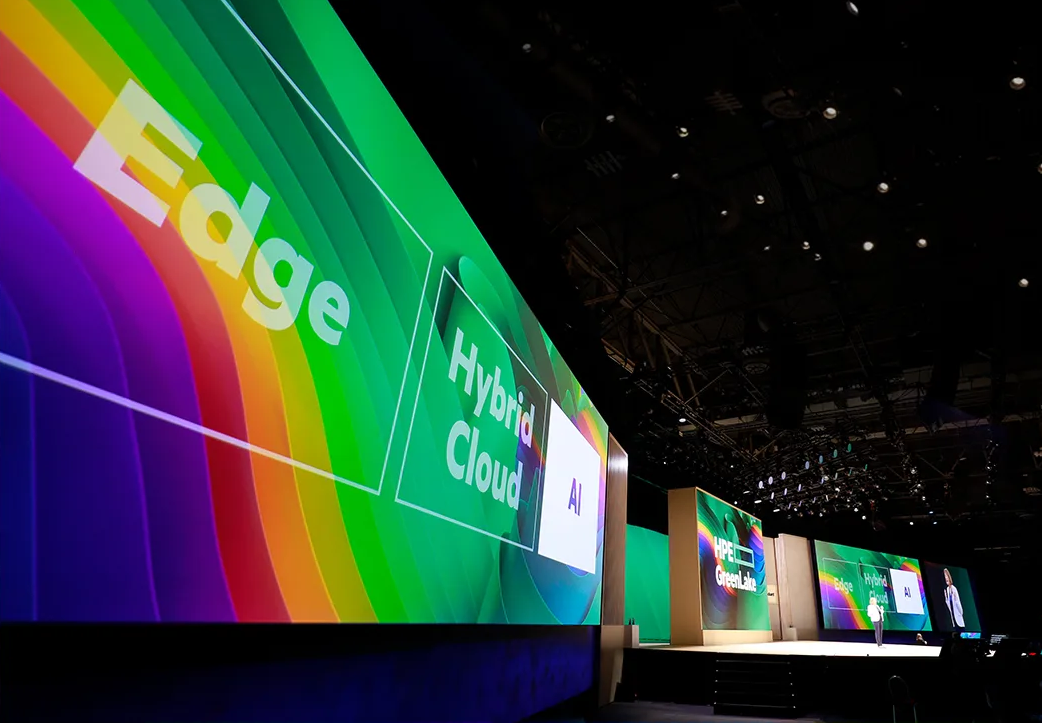
Nationwide migrates IT estate to HPE GreenLake cloud
Hewlett Packard Enterprise today announced that Nationwide Building Society has selected HPE GreenLake cloud for its private cloud deployment, enabling it to accelerate its hybrid cloud journey. With the addition of HPE GreenLake Management Services as a strategic cloud services provider, Nationwide is now using the power of cloud technology to support the evolving needs of its customers.
In 2018, Nationwide kick-started an ambitious journey to ensure it was primed for the next generation of digital innovation, with its hybrid cloud strategy being driven by the need for different cloud environments for various types of data and workloads. Leveraging the comprehensive capabilities of HPE GreenLake, Nationwide is creating an agile, scalable, secure, resilient, and efficient technology platform.
“In today’s world our customers expect us to deliver an always-on service whilst providing new, innovative features that help them better manage their finances,” says Paul Walsh, Director of Infrastructure & Service Delivery, at Nationwide Building Society. “Nationwide’s hybrid cloud strategy is vital to our ability to compete and means we can continue to meet the needs and expectations of our customers. HPE GreenLake cloud is a core component of our hybrid cloud strategy. With them we’re building a cloud platform that will further improve our resilience and agility, enabling us to provide even better levels of service and deliver new capabilities to our developers faster than ever before.”
With HPE GreenLake Management Services, Nationwide’s IT team will automate and orchestrate infrastructure management and deliver infrastructure as code. This enables them to focus on innovation, value-add activities and gain better control over application builds and security. Faster release cycles will accelerate the time to market, providing consistent customer experiences across all digital platforms. At the same time, Nationwide can ensure that sufficient controls are in place to manage risk, protect their customers and meet the demands of regulators, while unlocking the value of cloud technology.
Nationwide’s hybrid cloud strategy fully embraces cloud economics, enabling efficient monitoring and management of consumption. HPE GreenLake's consumption-based model prevents overprovisioning and allows Nationwide to only pay for capacity that it is using. This is expected to support Nationwide in reducing its IT cost base by at least 30%.
Furthermore, a dedicated service within HPE GreenLake cloud gives the building society a clear overview of their energy consumption and emissions, enabling Nationwide to manage its infrastructure more efficiently and reduce the environmental impact. The impact will be further reduced by upcycling and recycling of decommissioned assets, such as the end-of-use compute and storage infrastructure that GreenLake has replaced.
“We are proud to support Nationwide with their cloud vision, providing them with enhanced control and security and the reliability and flexibility for growth,” says Matt Harris, Senior Vice President and Managing Director, UK, Ireland, Middle East and Africa at HPE. “Nationwide’s modernisation journey showcases the effectiveness of HPE GreenLake cloud, with the storied institution transitioning from complex, legacy technology to a modern, future-proofed hybrid cloud operating model, where a one-size-fits all public cloud could never be the only answer."
For more from HPE, click here.
Simon Rowley - 19 November 2024

Data Centre Operations: Optimising Infrastructure for Performance and Reliability
Enterprise Network Infrastructure: Design, Performance & Security
News
News in Cloud Computing & Data Storage
CtrlS Datacenters announces direct access to Oracle Cloud
CtrlS Datacenters, Asia’s largest Rated-4 data centre operator and a member of Oracle PartnerNetwork (OPN), today announced it will offer its customers direct high-speed connectivity to Oracle’s cloud and AI services through Oracle Cloud Infrastructure (OCI) FastConnect.
Organisations can harness the power of AI and a full suite of over 150 cloud services, including Oracle Autonomous Database, using the Oracle Cloud Mumbai Region and the Oracle Cloud Hyderabad Region to unlock innovation and drive business growth.
Through dedicated 2x100G Partner ports, CtrlS Datacenters offers customers both shared and dedicated access to OCI FastConnect. This enables organisations to:
• Reduce latency and improve performance: experience faster data transfer, minimising lags and disruptions for optimal application performance• Enhance security: dedicated network paths and robust encryption help ensure secure migration and management of workloads in OCI• Increase agility and scalability: scale cloud resources to support evolving business needs, fostering greater flexibility and adaptability
This collaboration with Oracle is designed to empower organisations in key markets, such as Hyderabad and Mumbai, to access OCI services with enhanced speed, security, and reliability. Customers across all CtrlS data centres will be able to get the OCI FastConnect nodes in Hyderabad and Mumbai.
With OCI, customers can benefit from best-in-class security, consistent high-performance, simple and predictable pricing, and the tools and expertise needed to bring enterprise workloads to cloud quickly and efficiently.
Beyond Mumbai and Hyderabad, enterprise customers of CtrlS Datacenters across all markets (Bangalore, Noida, Lucknow, and Patna) can benefit from OCI FastConnect through their Cloud Connect portfolio. Chennai and Kolkata will follow soon. This solution leverages diverse connectivity options to deliver secure and reliable access to OCI, regardless of physical location.
Sridhar Pinnapureddy, Founder & Chairman, CtrlS Datacenters & Cloud4C, comments, "Our unwavering commitment lies in being a market leader, not just in Rated-4 data centres, but also in building a comprehensive interconnection ecosystem that empowers businesses across India. Partnering with Oracle to provide direct access connectivity options to OCI marks a significant step towards this vision.
“It's not just about offering services; it's about equipping organisations with the agility and security they need to thrive in the cloud-driven era. This expansion reinforces our dedication to bridging the gap between ambition and achievement, propelling organisations toward a brighter future."
OCI’s extensive network of more than 100 FastConnect global and regional partners offers customers dedicated connectivity to Oracle Cloud regions, providing customers with optimal cloud deployment options anywhere in the world.
For more from CtrlS Datacenters, click here.
Simon Rowley - 12 November 2024

Data Centre Operations: Optimising Infrastructure for Performance and Reliability
News
News in Cloud Computing & Data Storage
Tata unveils AI infrastructure with NVIDIA accelerated computing
Tata Communications today announced a transformative upgrade to its AI cloud infrastructure in India, powered by NVIDIA Hopper GPUs.
The company says that the strategic collaboration marks a significant milestone in the country’s AI journey, and that it positions Tata Communications as a key player in enabling AI applications across a wide spectrum of industries - including manufacturing, healthcare, retail, and banking and financial services - and equipping them with the computing power needed to handle complex AI workloads.
As part of the initiative, Tata Communications will integrate cutting-edge NVIDIA software solutions such as NVIDIA NIM microservices, and the NVIDIA Omniverse and NVIDIA Isaac platforms, into its AI Cloud offerings. These technologies will provide businesses with an extensive suite of tools and services designed for AI-driven simulation, automation and more.
At the end of this year, Tata Communications will begin the first phase of its large-scale deployment of Hopper GPUs, establishing itself as one of the largest NVIDIA Hopper GPU cloud-based supercomputers in India. The second phase, planned for 2025, will further expand the infrastructure with Blackwell GPUs.
Tata Communications is poised to disrupt the AI landscape with an AI studio, a ground-breaking, all-in-one platform designed to transform how businesses use AI, by offering tools like AI Workbench, Model Garden, Responsible AI and serverless functions.
Furthermore, its advanced tools will simplify distributed data management, allowing businesses to efficiently collect and curate data across various enterprise systems and move it to the AI Cloud using Tata Communications' IZO Multi Cloud Connect platform. This approach will ensure cost-effectiveness and scalability for enterprises, while maintaining their existing data structures.
Complementing this is Tata Communications' CloudLyte Edge Computing platform, which enables low-latency inferencing, allowing businesses to deploy models at the edge for real-time responses. Together, these innovations empower enterprises to fully harness the power of AI.
“AI is expanding the boundaries of innovation and revolutionising business in ways we could never have imagined,” says AS Lakshminarayanan, MD & CEO, Tata Communications. “Therefore, every entity must prioritise AI integration to stay competitive. We are delighted to partner with NVIDIA to build a unique and transformative Cloud Fabric that will empower a generation of Indian innovators and entrepreneurs, fostering a vibrant AI ecosystem and propelling the nation towards a future fuelled by AI.”
Providing enterprises with a powerful infrastructure capable of handling complex AI workloads will help drive AI adoption across India. Combining NVIDIA’s AI platform with TATA Communications’ global network, will create a national supercomputing framework, driving innovation and helping elevate India’s role in the global AI player ranks.
“Tata Communications’ AI cloud infrastructure, integrating NVIDIA accelerated computing, will support businesses of all sizes - from AI startups to large enterprises - helping drive AI transformation across various sectors of the Indian economy and creating a powerful ecosystem for AI innovation,” adds Jay Puri, Executive Vice President of Worldwide Field Operations at NVIDIA.
Tata Communications customers will also gain access to the NVIDIA AI Enterprise software platform on its accelerated infrastructure, which is designed to let users build, customise and run generative and agentic AI applications in production. This includes NVIDIA NIM Agent Blueprints, which provide customisable reference architectures for use cases like digital human technologies or AI virtual assistants for customer service, multimodal PDF extraction workflows for enterprise data retrieval and container security workflows for cyber security.
Enterprises can also create their own AI models using the NVIDIA NeMo end-to-end platform for developing custom generative AI, and run efficient AI inference through NVIDIA’s NIM microservices - both part of the NVIDIA AI Enterprise - offering unparalleled flexibility and performance for AI workloads.
By integrating NVIDIA technologies, Tata Communications will continue to demonstrate its commitment to building next-generation AI infrastructure and services, positioning the company to lead India’s AI transformation and make AI more accessible across industries.
For more from Tata Communications, click here.
Simon Rowley - 24 October 2024

Data Centre Operations: Optimising Infrastructure for Performance and Reliability
Enterprise Network Infrastructure: Design, Performance & Security
News
News in Cloud Computing & Data Storage
CMC Networks rolls out platform in Africa and Middle East
CMC Networks, a global Tier 1 service provider, has rolled out its CMC Fusion networking platform across 51 African and 11 Middle Eastern countries. It will enable carriers, service providers and enterprises to provision and manage network services across these regions from anywhere in the world, simplifying business growth across dynamic markets.
CMC Fusion is a cloud-based platform that consolidates multiple network services and analytics into a single portal and marketplace, including MPLS, Carrier Ethernet, Dedicated Internet Access (DIA), multi-cloud connect, software-defined wide-area networking (SD-WAN), service monitoring, assurance, security, management, and more. The easy-to-use portal is built on the largest application-aware, AI-enabled and software-defined network (SDN) in Africa. It is aligned with global industry standards to ensure interoperability and provide support with regulatory compliance.
“CMC Fusion is transforming what was once a complex, costly and fragmented market into one unified networking ecosystem,” says Marisa Trisolino, CEO at CMC Networks. “The company is developing a platform that is making it easier than ever to do business across Africa and the Middle East.”
CMC Fusion enables seamless, consistent performance and application experience for customers connecting across multiple countries and clouds in Africa and the Middle East. It provides a consolidated view of all information and analytics, making it easy for customers to track their orders, tickets, and services. Round-the-clock network monitoring enables fast identification and troubleshooting of any potential problems. Carriers, service providers and enterprises can move with greater agility to connect and capture new growth opportunities across multiple markets.
Geoff Dornan, CTO at CMC Networks, adds, “In an increasingly cloud-centric world, CMC Networks is removing the borders and barriers to growth in Africa and the Middle East and innovating to directly address on-the-ground challenges where the company operates. CMC Networks is looking forward to making it even easier for its customers to grow their businesses across these regions.”
CMC Cloud is one of the many solutions available through CMC Fusion, delivering high-performance edge computing across Africa. The Infrastructure as a Service (IaaS) solution is designed to bring workloads closer to the end user and improve the performance of applications and services, without the need to invest in physical hardware. CMC Networks has the largest pan-African network servicing 51 out of 54 countries in Africa and 11 countries in the Middle East, plus regional hubs in key interconnect locations across Europe, the Americas and Asia Pacific.
For more from CMC Networks, click here.
Simon Rowley - 9 October 2024

Data Centres
Features
News
Feature - Overcoming the DCI deluge
Tim Doiron, VP Solution Marketing, Infinera, looks at the ways of overcoming the DCI deluge in the era of artificial intelligence and machine learning.
In the Merriam-Webster dictionary, deluge is defined as “an overwhelming amount.” In recent discussions with communication service providers and internet content providers (ICPs), data centre interconnect (DCI) traffic growth is running hot at 50% or more per annum. Any traffic that doubles in less than two years surely qualifies as a deluge, so yes, DCI traffic is a deluge.
But is DCI’s accelerated growth driven by artificial intelligence (AI) and machine learning (ML)? The short answer is yes, some of it is – but we are still in the early days of AI/ML, and in particular, generative AI. AI/ML’s contribution to DCI traffic will increase with time. With more applications, more people taking advantage of AI/ML capabilities (think about medical imaging analysis for disease detection), and generative AI creating new images and videos (consider collaboration with artists or marketing/branding), the north-south traffic to/from data centres will continue to grow.
And we know that data centres don’t exist in a vacuum. They need connectivity with other data centres – data centres that are increasingly modular and distributed to reduce their impact on local real estate and power grids and to be closer to end users for latency-sensitive applications. One estimate from several years ago holds that 9% of all data centre traffic is east-west – meaning DCI or connectivity to other data centres. Even if this percentage is high for today’s data centres, with more data centres coming online and more AI/ML traffic to/from data centres, Al/ML will help DCI sustain its hot growth rate for years to come.
So, how do we address increasing data centre modularity and distribution while also supporting the DCI deluge that is already here and will be sustained in part by accelerating AI/ML utilisation? The answer is threefold: speed up, spread out, and stack it.
Speed up with terabit waves
Today’s 800G embedded optical engines are moving into the terabit era with the development of 1.2+ Tb/s engines that can transmit 1.2 Tb/s wavelengths hundreds of kilometres and 800G waves up to 3,000 kilometres. Data centre operators that lease fibre can utilise embedded optical engines with high spectral efficiency to maximise data transmission over a single fibre pair and thus avoid the incremental costs associated with leasing incremental fibres.
While 400G ZR coherent pluggables are increasingly common in metro DCI applications, 800G coherent pluggables are under development for delivery in early 2025. This latest generation of coherent pluggables based upon 3-nm digital signal processor technology expands capacity-reach significantly with the ability to deliver 800G wavelengths up to 2,000 kilometres. With such capabilities in small QSFP-DD or OSFP packages, IP over DWDM (IPoDWDM) will continue to be realised in some DCI applications, with pluggables deployed directly into routers and switches.
Spread out with Super C
With advancements in optical line system components like amplifiers and wavelength-selective switches, we can now cost-effectively increase the optical fibre transmission spectrum from 4.8 THz to 6.1 THz to create Super C transmission. With Super C we can realise 27% incremental spectrum enabling up to 50 Tb/s transmission capacity per band. A similar approach can be applied to creating a Super L transmission band. Super C and Super L transmission are cost-effective ways to squeeze more out of existing fibre and to keep up with DCI capacity demands.
Spread out with Super C-band spectrum evolution
Super C expansion also benefits coherent pluggables in DCI deployments by reclaiming any reduction in total fibre capacity due to the lower spectral efficiency of pluggables. Combining coherent pluggables with Super C enables network operators to leverage the smaller space and power utilisation benefits of pluggables without sacrificing total fibre transmission capacity.
Stack it with compact modularity
Today’s next-generation compact modular optical platforms support mix-and-match optical line system functionality and embedded and pluggable optical engines. Network operators can start with a single 1RU, 2RU, or 3RU chassis and stack them as needed, matching cost to capacity while minimising complexity. By supporting both line system and optical engine functionality in a common platform, network operators can cost-effectively support small, medium, and large DCI capacity requirements while minimising the amount of equipment required versus dedicated per-function alternatives. As capacity demand grows, additional pluggables, sleds, and chassis can be easily added – all managed as a single network entity for operational simplicity.
Stack it with a compact modular platform
Bringing it all together
While modest today, AI/ML-related DCI traffic will continue to grow – and help buoy an already hot DCI market. To accommodate the rapid connectivity growth between data centres, we will need to continue to innovate with pluggable and embedded optical engines that deliver more capacity with less power and a smaller footprint; with more transmission spectrum on the fibre; and with modular, stackable optical platforms. Commercially available generative AI applications like ChatGPT launched less than two years ago. We are literally just getting started. Hold on tight and grab an optical transmission partner that’s laser focused on what’s next.
For more from Infinera, click here.
Simon Rowley - 4 October 2024

Data Centre Operations: Optimising Infrastructure for Performance and Reliability
Enterprise Network Infrastructure: Design, Performance & Security
News in Cloud Computing & Data Storage
Nasuni integrates Microsoft 365 Copilot
Nasuni, an enterprise data platform for hybrid cloud environments, has announced its latest advancement in data intelligence by further integrating with Microsoft 365 Copilot. Through the Microsoft Graph Connector, Nasuni managed data is now fully accessible and operational with Microsoft Search and Microsoft 365 Copilot, significantly expanding data access for Microsoft's AI services.
AI requires AI-ready infrastructure, and today's legacy data storage infrastructure creates a challenge for forward-thinking enterprises. Legacy hardware-based storage generates silos of data, making it impossible to run AI and analytics against. Organisations, which can have billions of files and petabytes of data, need to break down these silos and consolidate their data into the cloud. The power to unlock this data is incredible, which is why the Nasuni File Data Platform enables this through data consolidation, protection and accessibility for anyone and anything (including AI).
The Graph Connector enables organisations to leverage Nasuni’s managed data repositories to harness the full potential of Microsoft 365 Copilot, aligning AI-powered experiences with specific business needs and workflows. Organisations can use the Graph Connector to leverage Nasuni data with Microsoft 365 semantic index to unlock AI-powered search, enhanced compliance, and advanced analytics through a unified interface.
Key benefits of this integration include:
· Unlocking greater value from data: Customers can now maximise the value of their Nasuni-managed data by making it accessible for personalised experiences via Microsoft 365 Copilot and Microsoft Search, enriching user interactions with relevant content.
· AI-powered search and insights: The Graph Connector enables Nasuni-managed files to be indexed into Microsoft's semantic index, which forms a key part of the Microsoft 365 AI infrastructure. This semantic index is utilised by Microsoft 365 Copilot and Microsoft Search to provide contextually relevant answers and insights across Microsoft 365 applications.
· A unified data interface: Customers benefit from single-pane-of-glass access to their Microsoft 365 data (including SharePoint and OneDrive) and Nasuni. This unified view allows for efficient searching and interaction with documents across the entire unstructured file stack, inclusive of Nasuni-managed data.
"By enabling Microsoft 365 Copilot through the use of the Microsoft Graph Connector, we're empowering our customers to get even more value out of their Nasuni-managed data," says Jim Liddle, Chief Innovation Officer of Data Intelligence and AI at Nasuni. "This solution integration will make it frictionless to use Microsoft 365 Copilot with Nasuni data in context with Microsoft 365 stored data sets, allowing for more informed decision-making and improved efficiency in our customers' day-to-day operations."
For more from Nasuni, click here.

Carly Weller - 25 September 2024

Head office & Accounts:
Suite 14, 6-8 Revenge Road, Lordswood
Kent ME5 8UD
T: +44 (0)1634 673163
F: +44 (0)1634 673173