Data Centre Compliance: Standards, Risk & Governance


DataVita invites Greens, APRS to Chapelhall data centre
DataVita, a UK data centre and cloud services provider, has published open letters inviting Ross Greer MSP, Co-leader of the Scottish Greens, and Kat Jones, Director of Action to Protect Rural Scotland (APRS), to visit its data centre campus at Chapelhall in North Lanarkshire, Scotland. The invitation to Ross also extends to his co-leader, Gillian Mackay MSP, with both letters welcoming colleagues, including planning and technical advisers. DataVita says visits can take place at a time convenient to the recipients. The Scottish Greens are expected to use an opposition debate on data centres to renew calls for a moratorium on large-scale data centre applications across Scotland. The proposed visits would provide an opportunity to see DataVita's existing operations, discuss construction under way at Chapelhall, and ask questions about its published proposals for a fourth data centre, DV4. DataVita, which is headquartered in Lanarkshire, has operated data centres in Scotland for more than 10 years. It built, owns, and operates its DV1 facility in Chapelhall, is constructing DV3 alongside it, and operates a second facility in Glasgow. The company says its facilities use renewable energy and closed-loop cooling, with plans for new facilities to contribute to Scotland's electricity grid. DataVita recently secured around £300 million in funding from a syndicate of lenders, including the UK Government's National Wealth Fund, to expand DV1 and build DV3. The company says this will support the development of Scotland's first AI data centres within a designated AI Growth Zone. UK Government figures estimate that, if fully adopted, AI could be worth up to £47 billion a year to the UK economy over the next decade. DataVita says the wider data centre campus could also support more than 3,400 new jobs and more than £8 billion in private investment in North Lanarkshire. More immediately, the expansion of DV1 and development of DV3 are expected to create around 600 construction jobs, as well as around 100 permanent high-skilled roles once completed. Data centre plans and public discussion The Lanarkshire AI Growth Zone features a Community Investment Fund that will provide up to £543 million in direct funding to North Lanarkshire over 15 years. This includes skills and training programmes in AI, coding, and other areas of technology for local people, alongside support for local food banks and charities, delivered in partnership with the community. Danny Quinn, Managing Director of DataVita, comments, “Nearly all of us use data centres every single day whether we realise it or not - from being able to use online banking and working from home, to scientists delivering groundbreaking medical research. They are the critical infrastructure that makes many of the things we do in modern life possible, and that is only going to accelerate as technology becomes even more entwined with daily life. “For more than a decade, we’ve been supporting Scotland’s public services, businesses, and even households to take advantage of the many benefits from online services. And, although AI is very much a hot topic at the moment, there is no doubt it is here to stay, and the question for Scotland is how can we best use it to support jobs, skills, the public services we all rely on, and the way we live more generally. “DataVita fully supports an open, public debate about the right kind of controls to have in place for AI and, where necessary, government action to protect our economy, society, and environment. But, the importance of the decisions we make about AI for Scotland's future economy cannot be overstated. We need to move beyond a debate in which one side has to be entirely right and the other entirely wrong. “Where opinions differ, open and honest dialogue is the best way forward. A visit gives us the opportunity to show how our facilities operate and have a detailed conversation about our plans. We can explain the choices behind their design, hear the questions people have, and discuss them directly. “Data centres differ in what they do and how they are designed and operated. We would welcome the chance to explain how those differences apply to our facilities and proposals, and we are making these invitations public because the developments are of public interest. “People should be able to see that we are willing to explain our work, listen to different views, and have a constructive discussion. We hope the invitations will be accepted.” The letters are published in full on the DataVita website. For more from DataVita, click here.

techUK calls for 10-year digital infrastructure strategy
Trade association techUK has called on the UK Government to publish a 10-year 'Digital Infrastructure Strategy' by 2027, warning that economic growth, productivity, and national resilience depend on stronger digital infrastructure. The organisation’s latest report argues that connectivity, compute, and data infrastructure are now as fundamental to the economy as transport, energy, and housing. It says the UK’s digital technologies already contribute an estimated £286 billion in annual Gross Value Added (GVA), equivalent to around 13% of national output. The UK is home to Europe’s largest data centre market, alongside research capabilities in quantum, photonic, and neuromorphic computing, whilst full-fibre broadband and 5G Standalone deployment continue to expand. However, techUK warns that high industrial electricity prices, lengthy grid connection times, planning constraints, and comparatively weak network performance are limiting investment and threatening the UK’s competitive position. Five objectives for 2035 The report sets out five objectives for 2035: universal full-fibre and 5G Standalone coverage, with commercial 6G deployment underway; a globally competitive position in next-generation compute; electricity prices below the IEA median; governance and planning frameworks that can keep pace with technological change; and widespread digital adoption across the UK. To support these objectives, techUK recommends a coordinated programme of government and industry action. This includes establishing a cross-government digital infrastructure strategy, appointing a Minister of State with responsibility for its delivery, and creating a dedicated digital infrastructure unit within the Regulatory Innovation Office. The organisation also calls for an interim update to the UK Compute Roadmap by 2027, covering neuromorphic, photonic, and quantum computing, alongside measures to develop commercial supply chains. On energy, techUK recommends a roadmap to bring non-domestic electricity prices below the IEA median by 2035. Its proposals include moving electricity levies to general taxation by 2029 and accelerating grid connection reforms. Sophie Greaves, Associate Director for Digital Infrastructure at techUK, argues that the UK needs to treat digital infrastructure as a national economic priority. She says, “Digital infrastructure is no longer simply an enabler of economic activity; it is the foundation on which future economic growth, innovation, and national resilience will be built. The countries that invest now in connectivity, compute, and data infrastructure will be best placed to capture the economic opportunities of the next decade. “By following the roadmap we have set out for a resilient digital infrastructure by 2035, the UK can secure its position as a leader in compute, bringing significant benefits to the economy.” techUK warns that failing to address these infrastructure challenges could result in slower growth, weaker productivity, reduced investment, and greater dependence on infrastructure and technologies developed elsewhere. For more from techUK, click here.

ABB launches grid compliance solution for Irish data centres
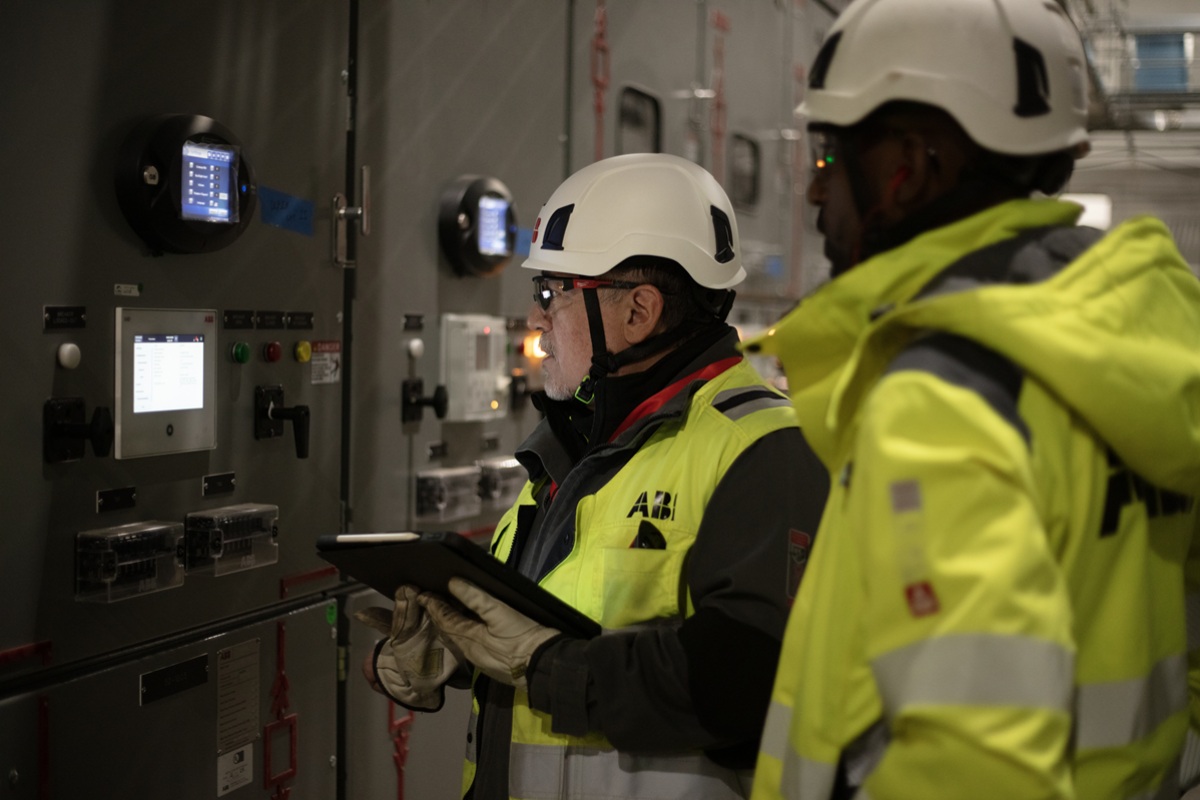
ABB, a multinational corporation specialising in industrial automation and electrification products, has introduced a new energy storage and power management system designed to help data centres comply with emerging grid stability requirements in Ireland. The system combines ultracapacitor energy storage with real-time power orchestration to enable large energy users to respond to grid disturbances within milliseconds, without requiring major changes to existing electrical infrastructure. The announcement comes as Ireland prepares to introduce new grid requirements under EirGrid's proposed MPID345 grid code modification, which will require large-demand facilities, including data centres, to remain connected during grid faults and rapidly restore power demand following network disturbances. ABB has also published a whitepaper, Ireland's Data Centers - Moving from Passive Consumption to Active Participation in Grid Stabilization, outlining how the technology could support compliance with the new regulations. Addressing new grid stability requirements According to ABB, the solution integrates ultrafast energy storage, grid-forming power conversion, and digital control systems to help support grid frequency and voltage stability whilst also maintaining data centre operations. The company says the approach differs from conventional backup systems, which are primarily designed to isolate facilities from grid events rather than actively supporting the electricity network. Ireland's data centres currently account for around 24% of the country's electricity consumption, with that figure expected to increase to 30% by 2032. Under Ireland's Large Energy-User Action Plan (LEAP), new large-scale facilities are expected to provide on-site or nearby generation and/or energy storage, participate in electricity markets, and source at least 80% of their annual energy from new renewable energy projects. Lee Todd, Vice President, Energy & Carbon Services, Electrification Service at ABB, explains, "This is a radical change in what the national grid demands of Ireland’s data centre operators. "When large loads shed simultaneously during a disturbance, the resulting power imbalance can drive frequency excursions that cascade across the entire grid. That is why the country’s data centre operators will be required to provide grid support. And while Ireland is leading the way, other countries such as Spain and US State of Texas are set to follow. "The path forward is not more backup capacity, but precise, coordinated control of power delivered at the exact moment it is needed. We are using ultracapacitors as a unique innovative solution that replaces the need to use the larger alternative technologies of synchronous condensers, e-statcoms, or a combination of different technologies. "The primary purpose of the solution is to provide not only grid inertia and grid voltage control that can be controlled on demand, but [to] support all the available services that energy storage can provide, lowering CapEx investment and OpEx." ABB says a representative 50MW data centre deployment would use five modular 8.4MVA power blocks, providing around 42MVA of dynamic grid support capability. For more from ABB, click here.

Black & White Engineering expands into Spain
Data centre design consultancy Black & White Engineering has expanded its European operations with the opening of a new office in Madrid, strengthening its presence in Spain's growing data centre market. The new office will support increasing demand from data centre clients across Europe, providing civil, structural, MEP, and design management expertise from a local base. The Madrid operation will be led by Hector Hernandez (pictured above), Area Director, Spain, while Marcos Uttley has been appointed Regional Director, Europe, with responsibility for supporting the consultancy's growth across southern Europe. Marcos says, "Spain is an important market for data centre investment and gives us a strong base from which to support clients locally and across wider Europe. The Madrid office reflects our continued focus on building depth in key markets while drawing on the technical experience of our global team." Strengthening support for Europe's data centre market Hector Hernandez brings more than 20 years' experience in data centre and critical infrastructure engineering, having worked on projects across Europe, the Middle East, Australia, and the Americas. His experience spans hyperscale and colocation facilities, including advisory, design, construction, commissioning, and operational delivery. He comments, "The opportunity to build Black & White Engineering's presence in Spain from the ground up was a major draw. The market here is developing quickly and clients need advisors who understand both the technical demands of these projects and the local delivery environment." An Accredited Tier Designer by the Uptime Institute, Hector will work with the company's wider European leadership team as it continues to expand its operations in Spain. For more from Black & White Engineering, click here.

How to ensure your infrastructure complies with DORA
In this exclusive article for DCNN, Chris Noon, Director of Solution Engineering, International at Alkira, outlines how financial institutions must embed security, resilience, and transparency into their network infrastructure to meet the demands of DORA: Rethinking network infrastructure The Digital Operational Resilience Act (DORA) marks a major change in how the European financial sector manages technology risk. Instead of focusing only on solvency, DORA emphasises keeping digital services running smoothly. For enterprise organisations, this means every part of the technology stack, especially the network infrastructure connecting cloud environments and data centres, must be reviewed with operational resilience and security in mind. With this new framework, financial institutions are ultimately responsible for their digital resilience, even as they rely more on a complex network of ICT third-party service providers. To manage this, IT and compliance teams need to shift from reactive security to building systems where resilience is built in from the start. The core pillars of DORA compliance DORA requires financial organisations to have a complete strategy for managing ICT risks. This strategy should address five main areas: ICT risk management, incident reporting, operational resilience testing, third-party risk management, and information sharing. From an infrastructure point of view, the regulation says organisations must treat their network and cloud providers as essential parts of service delivery. IT teams should make sure providers go beyond just offering a service-level agreement and also give clear information about how their systems are built, managed, and secured. Security by design in network infrastructure To build security by design, start by choosing infrastructure platforms that follow well-known industry standards. When reviewing a network provider, IT teams should look for signs of a "born-in-the-cloud" or "security-first" approach. This shows the platform was built to work in high-risk, tightly regulated settings. Key indicators of a security-by-design approach include: • Identity and access governance — Providers should have strong identity and access management (IAM) features, such as multi-factor authentication (MFA); detailed, role-based access control (RBAC); and Policy Based Access Control (PBAC). This helps make sure only authorised people can change important network settings. • Encrypted connectivity — Security by design means data must be protected both while moving and when stored. Network providers should make it easy to use encryption across multi-cloud and hybrid setups without making operations more complicated. • Independent validation — Security claims need to be supported by third-party audits. Certifications like SOC 2 Type II, which cover security, availability, and confidentiality, are important standards. These reports give the proof needed for the due diligence required by DORA. Building for operational resilience Operational resilience means a company can handle, respond to, and recover from technology problems. For DORA, this means the network should not have a single point of failure. A resilient setup is usually spread out so if one part fails, traffic is rerouted to keep services running. IT teams should choose providers that focus on high availability as a key part of their services. This means having constant monitoring and alerts to catch problems early. The provider should also have a clear and tested incident response plan. DORA requires financial institutions to report major ICT incidents to regulators quickly, so the network provider must be able to supply the needed data and logs for fast investigation and reporting. Managing third-party risk and oversight A major challenge with DORA is the extra oversight of third-party providers. Financial organisations now have to include clear contract terms about oversight and audit rights. This need for transparency can be hard for some traditional technology providers to handle. When choosing an infrastructure partner, organisations should pick providers with clear processes for handling compliance questions. This means they can share security policies, operational procedures, and proof of regular penetration testing under non-disclosure agreements. The provider should act as a partner, helping the customer meet regulatory requirements, not just supplying a technical service. The role of Infrastructure-as-a-Service (IaaS) As financial institutions update their networks, many are choosing Infrastructure-as-a-Service (IaaS) models to handle the complexity of multi-cloud environments. These platforms connect on-premises data centres with different cloud service providers, acting as the system’s central hub. To meet DORA requirements, an IaaS platform must show it does not create new risks. It should be built on a well-known cloud infrastructure that already meets strong security standards. Using a resilient IaaS model helps IT teams see their whole network clearly, making risk management and compliance easier. Practical steps for IT teams To get ready for DORA, IT and risk management teams should take these practical steps with their network providers: 1. Conduct comprehensive due diligence — Check current and potential providers to make sure they meet DORA’s rules for security controls, incident response, and resilience testing. 2. Audit contractual arrangements — Make sure contracts clearly state audit rights, service levels, and the provider’s duty to help during a regulatory inquiry. 3. Evaluate multi-cloud strategy — Check if your current network setup allows you to quickly move workloads between cloud providers if one goes down. 4. Establish clear reporting lines — Decide how the network provider will communicate during an incident and what information they will give to support your reporting needs. Looking forward DORA is an ongoing operational process, not a one-off project. As regulations change, the need for operational resilience will only grow. Financial institutions that focus on security by design and pick infrastructure partners who value transparency and reliability will be better prepared for these changes. In the end, resilience is something everyone shares. The financial organisation is still responsible to the regulator, but its compliance success depends on its technology providers. By choosing providers who see compliance as a key part of their design, organisations can build a digital foundation that meets DORA and supports the future of digital finance.

AECOM calls for sovereign UK data centre framework
AECOM, a US multinational infrastructure consulting firm, is advocating for the establishment of a sovereign data centre framework to protect critical digital infrastructure and ensure the UK benefits from the rapid growth of AI. As AI becomes embedded across public services and regulated sectors, questions of where sensitive data is hosted and who controls the infrastructure that underpins it are becoming more critical. In a new report, Data centres, energy and regional growth: a road map to success, AECOM cautions that while global investment in data centres is accelerating, the UK risks losing strategic control and economic value unless growth is guided by clearer national priorities, coordinated planning, and stronger alignment between energy, infrastructure, and regional development. The report makes the case that delivering secure, UK-based infrastructure for sensitive AI and public-sector workloads will require clearer long-term signals and greater coordination between government and industry, alongside continued private investment. “Data centres are now critical national infrastructure in every meaningful sense”, says Mary-Ann Clarke, UK and Europe Data Centre Lead at AECOM. “A clear sovereign framework would give developers and investors greater certainty, strengthen resilience, and help ensure the UK retains control over a critical layer of its digital economy.” The report’s key recommendations include: • Establishing a sovereign data centre infrastructure framework for sensitive public-sector and regulated workloads, supported by clear demand signals and long-term contracting models • Actively steering where digital demand is located, directing high-intensity computing towards locations that support the energy system, unlock powered land, and enable regional growth • Incentivising system-positive data centres that strengthen the energy system through flexible demand, waste heat reuse, and on-site generation • Positioning data centres as anchors for regional growth, aligning major developments with skills, energy, and regeneration strategies “The UK has made important progress in recognising the strategic role of data centres and AI-enabled infrastructure, particularly through recent planning and energy reforms,” notes Adrian Del Maestro, Vice President, Global Energy Advisory at AECOM. “The next step is to build on that momentum by providing clearer long-term signals on where critical digital infrastructure should be located, how it is powered, and how sensitive workloads are secured.” For more from AECOM, click here.

Data Centre Alliance, Clear Decisions launch Regulatory Radar
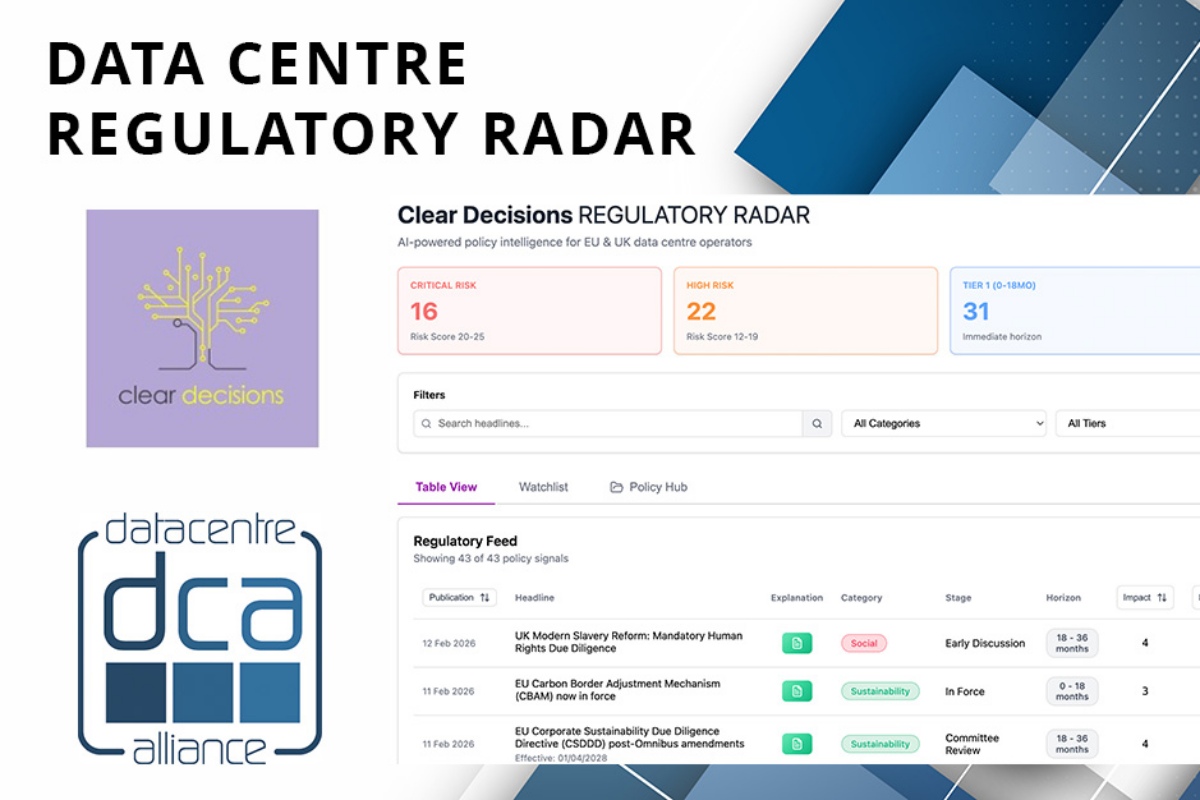
The Data Centre Alliance (DCA), a UK trade association for the data centre sector, and Clear Decisions, a regulatory compliance and sustainability reporting platform for data centre operators, have launched Regulatory Radar, a regulatory intelligence platform developed specifically for the data centre sector. The platform is designed to provide structured, real-time updates on policy and regulatory developments across the UK and EU, including energy reform, planning policy, sustainability regulation, and AI infrastructure strategy. Regulatory Radar combines AI-based analysis with expert review. The organisations state this approach is intended to ensure updates are interpreted in context and linked to potential operational and commercial impact. Tracking policy change across UK and EU The platform includes forward-looking analysis of planning, energy, and sustainability reform, alongside monitoring of digital and AI policy developments. It also identifies emerging compliance and reporting requirements. According to the DCA and Clear Decisions, the aim is to consolidate regulatory developments into a single source and provide greater visibility of potential risks and strategic considerations for data centre operators and investors. Steve Hone, Chief Executive of the Data Centre Alliance, says, “The regulatory landscape for digital infrastructure is evolving faster than ever. Our sector cannot afford to operate on partial information or delayed insight. "Regulatory Radar combines AI-driven intelligence with expert oversight to give operators and investors the foresight required to anticipate change, shape engagement, and protect long-term value. This collaboration sets a new benchmark for industry intelligence.” Regulatory Radar is available to DCA corporate members and Clear Decisions subscribers. For more from the DCA, click here.

Data Centre Alliance appoints new advisory board
The Data Centre Alliance (DCA), the UK trade association for the data centre sector, has appointed a new Advisory Board to lead its expanded Advisory Council. Liam Round has been named Chair, alongside board members Jonathon Freegard, Scott Cunningham, Astrid Wynne, Phil Beale, and John Booth. The appointments reflect experience across different areas of the data centre industry. The board will oversee the Advisory Council’s work in identifying key industry priorities and developing initiatives aimed at informing end users, policymakers, media, and the wider public. Focus on policy, energy, and standards Previous DCA initiatives include: • The DCA UK Data Centre Legislation Horizon Scan report• The Drowning in Data report on data centre water usage• The Data Centre Anti Contamination, Filtration, and Cleaning guide• The Data Centre Planning Policy, Sustainability, and Resilience Initiative guide• EU Code of Conduct for data centres energy efficiency updates• DCA data centre standards whitepapers Liam Round, Managing Director of Teksan UK and now Chair of the Advisory Council at the DCA, comments, “It is an honour to take on the role of Chair of the Advisory Board and Council at The Data Centre Alliance at such an important time for our sector. "Digital infrastructure underpins economic growth, national resilience, and AI development. I look forward to working with the DCA’s leadership and Partners to provide clear guidance, strong governance, and strategic focus as the industry navigates rapid change.” Over the next year, the Advisory Board and Council says it will focus on planning reform, energy market integration, grid access, sustainability, water resilience, AI infrastructure readiness, and industry standards development.

FTTH Council Europe welcomes the DNA
The FTTH Council Europe, a European industry association promoting fibre-optic broadband deployment across Europe, has said it welcomes the Digital Networks Act, as put forward by the European Commission. The mission of the FTTH Council Europe is to see the widespread availability and use of FTTH (Fibre to the Home) in Europe as quickly as possible. It therefore maintains that it is important to ensure that the regulatory framework incentivises investment and fosters effective competition, adding that that these two objectives must remain at the core of any access policy. The FTTH Council Europe positively welcomes the proposal for the switch-off of copper networks. The process, it claims, strikes the right balance between the need to incentivise the take-up of future-proof networks, the necessity to consider national specificities, and avoiding unintended consequences for consumers. The association says it is convinced that copper switch-off is an important driver for investments and that it will positively contribute to the competitiveness of the EU, supporting the digital transition and the enhancement of the Single Market. Therefore, it invites the co-legislators to support the European Commission approach on this topic. The FTTH Council Europe further considers that the current regulatory framework has delivered positive outcomes. It believes maintaining the SMP process in the proposed DNA is central to preserving competition and demonstrates the Commission’s commitment to a stable and predictable regulatory environment, something critical to supporting investors and enabling the continued development of sustainable competition. The Council also notes the proposed harmonised access products but believes that any remedies should start by being tailored to the specific realities of national and market contexts, which can vary significantly between countries and market segments. National Regulatory Authorities (NRAs), it propounds, are best positioned to define, where necessary, appropriate SMP obligations that reflect the unique characteristics of their markets. The FTTH Council Europe also acknowledges the provisions on security and resilience in the DNA that recognise the critical importance of communications infrastructure. However, the body invites the co-legislators to make clear that any obligation that may arise should be adequately supported by national and European resources in the next MFF and not create excessive burdens for a sector that is investing heavily in the achievement of the Digital Decade targets. There are other aspects that need refinement, according to the FTTH Council Europe, and there are certain issues where it believes a different approach should be taken, not least regarding the availability of licence-free spectrum for RLAN. The FTTH Council Europe says it looks forward to working constructively with co-legislators to share its insights and experience in refining this proposal.

BCS Consultancy appoints new COO
BCS Consultancy, a global data centre consultancy, has appointed Chris Coward as its new Chief Operating Officer following the departure of co-founder Scott Shearer after ten years with the business. Chris steps into the role as BCS says it continues to grow internationally and expand its work with customers across the data centre lifecycle. Chris joined BCS in 2017 as one of its earliest employees. Over the past eight years he has worked with founders James Hart and Scott Shearer as the company expanded from a small UK-based consultancy to a global business with more than 165 specialists across five international offices. During that period, BCS has supported more than 300 projects, advised on over £20 billion of investment, and generated annual revenue in excess of £22 million. Chris has led the development of the company’s project management capability and helped build its talent pipeline, including launching an apprenticeship programme designed to address skills shortages within the data centre sector. BCS says Chris will help guide the company through its current phase of overseas expansion, focusing on strengthening internal operations, supporting digital adoption, and maintaining a customer-first culture. New leadership during a global growth phase Commenting on his appointment, Chris says, “I’ve had the privilege of working closely with James and Scott for much of my career, and want to thank them both for their leadership and trust, which have shaped both my journey and the culture of BCS. "As BCS becomes an increasingly global business, my primary focus is to ensure we have the right operational structure, technology, and support in place to deliver consistently for our clients while staying true to the ethos that makes BCS different.” BCS reports that demand for data centre expertise remains strong. According to the company's Q4 Data Centre Commercial Report, 92% of surveyed professionals expect continued sector growth through 2026. However, the report also highlights challenges such as increased AI-driven workloads, skills shortages, power and supply chain constraints, and the need for more resilient infrastructure. BCS states that Chris’s appointment reflects its commitment to supporting customers entering the AI era and strengthening operational capability as the company continues to expand internationally.


Translate »