Data Centre Build News & Insights


GreenScale study examines data centre energy use
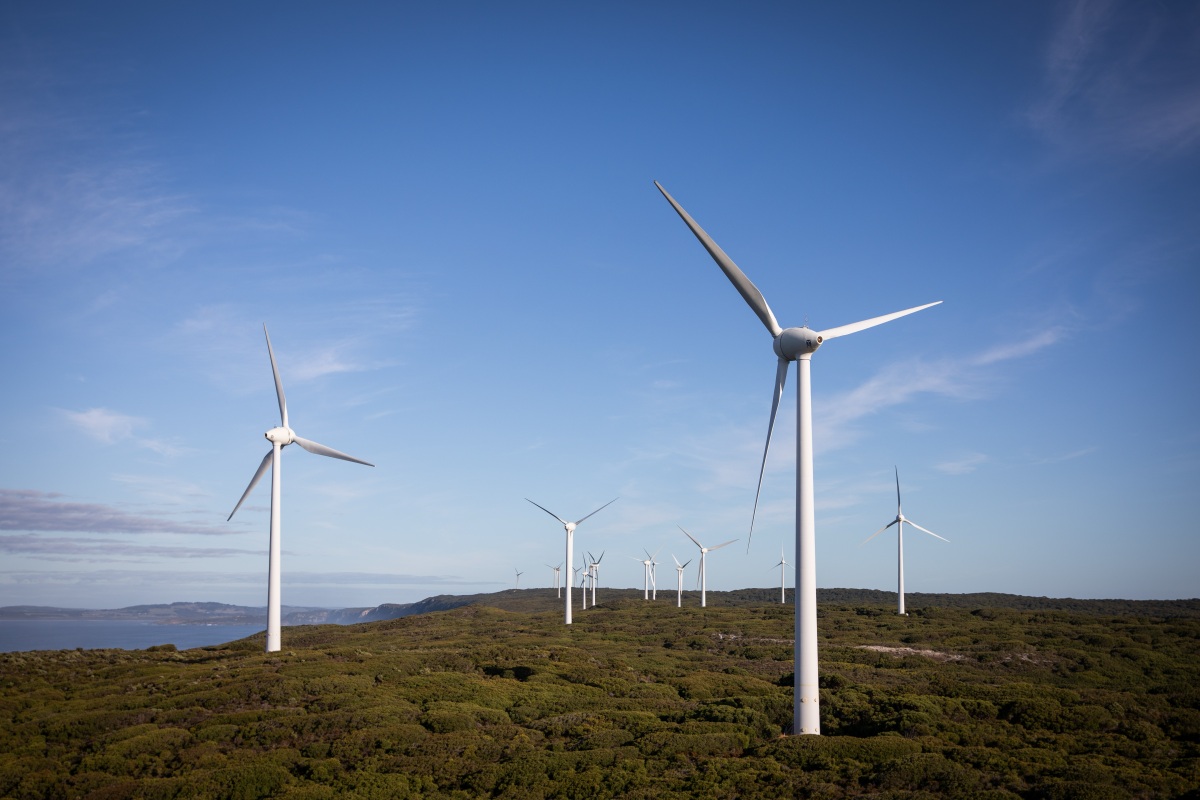
GreenScale, a developer of hyperscale data centre campuses, has published analysis examining how a proposed data centre development in Derry/Londonderry could support renewable energy use and reduce electricity system costs in Northern Ireland. The whitepaper analyses grid constraints, renewable energy curtailment, electricity demand, and infrastructure capacity across the region. According to the report, locating data centre infrastructure closer to renewable energy generation in Northern Ireland’s North West could improve grid utilisation and reduce renewable energy wastage. Northern Ireland is targeting 80% renewable electricity consumption by 2030, with the transition projected to deliver annual consumer savings of approximately £110 million. Brian Doherty, Managing Director of GreenScale Ireland, says, “This whitepaper highlights a growing mismatch between where renewable energy is generated and where demand is located. "Northern Ireland has made strong progress in expanding wind capacity, but transmission and system constraints mean a significant proportion of that clean energy is curtailed, which means it is effectively switched off, often during periods of high generation. "This increases system costs and reduces the value of existing infrastructure. A strategically located data centre campus in the North West could help absorb surplus power, reduce curtailment, and support lower overall electricity system costs.” Wind curtailment remains a major challenge The report states that 29.6% of wind generation in Northern Ireland was curtailed during 2024 because of transmission constraints and electricity system balancing requirements. According to the analysis, the strongest wind generation resources are concentrated in the North West, while the largest areas of electricity demand are located elsewhere. The report argues that this imbalance limits the effective use of renewable generation during periods of high wind output. GreenScale says flexible electricity demand from data centres could help absorb excess renewable generation that would otherwise be curtailed. The company also states that facilities capable of adjusting parts of their power demand in response to grid conditions could improve overall electricity system efficiency. Pressure grows on established data centre markets The whitepaper also highlights wider growth in global data centre electricity demand, which is projected to reach 945TWh by 2030. The report notes that established European data centre markets including Frankfurt, London, Amsterdam, Paris, and Dublin (FLAP-D) are facing increasing grid constraints and longer connection timelines, leading operators to consider alternative regions with greater power availability. GreenScale identifies Northern Ireland’s North West as a suitable location for future data centre infrastructure because of its wind generation resources, available land, and proximity to renewable energy supply. The report concludes that improving alignment between renewable generation and electricity demand could reduce energy wastage, improve grid efficiency, and support Northern Ireland’s clean energy targets. For more from GreenScale, click here.

Case study: Reducing emissions through refrigerant recovery
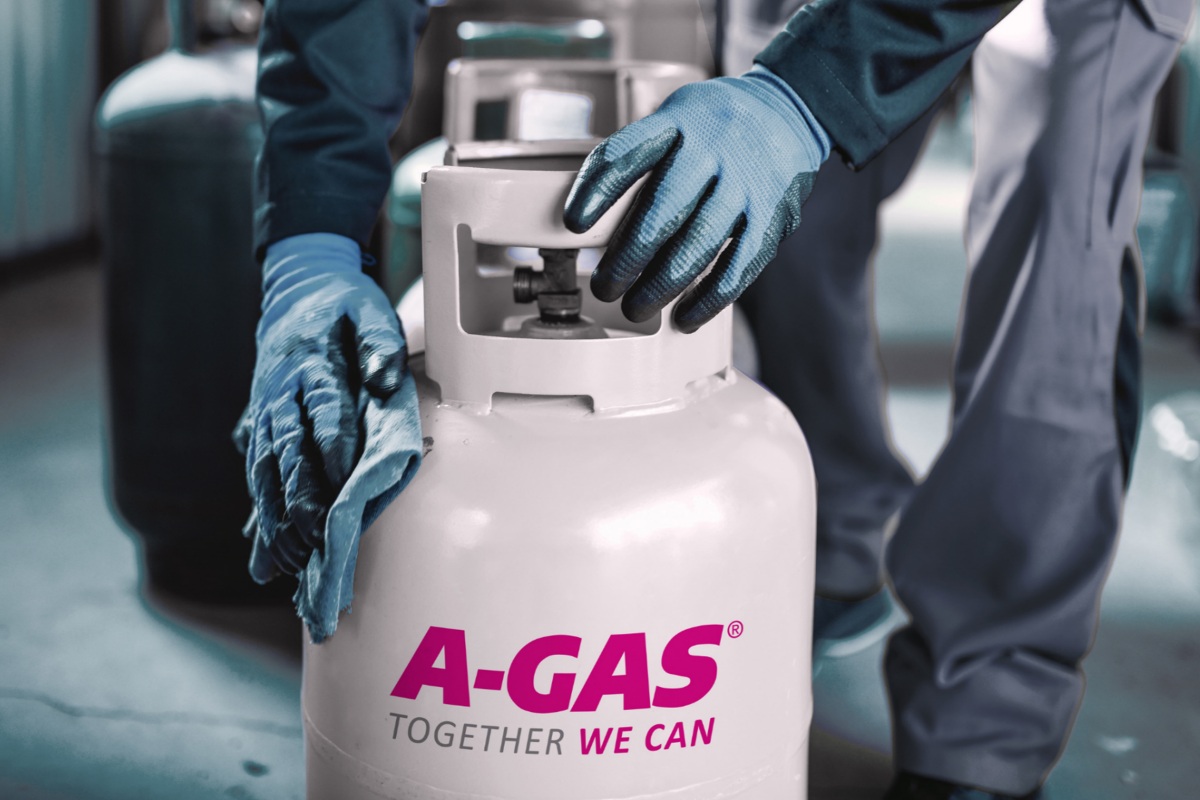
Through this case study, A‑Gas, a company specialising in lifecycle refrigerant management (LRM), demonstrates how its Rapid Recovery service enabled the safe, fast recovery and AHRI‑700 reclamation of 1,745 kg of R134a during a London data centre chiller retrofit, preventing 2,495 tonnes CO₂e, maintaining continuous operations, and enabling a successful transition to lower‑GWP cooling. The background The customer is a leading technology solutions and services provider in Europe, headquartered in the United Kingdom. It offers a broad portfolio of products and services, including data centre hosting, enterprise infrastructure, and cloud infrastructure, among others. The company, A‑Gas, is building a sustainable future through the supply of lower global warming refrigerants combined with responsible lifecycle management of refrigerant gases. Through its first-class recovery, reclamation, and repurposing processes, it captures refrigerants and fire protection gases for future re-use or safe destruction, preventing harmful release into the atmosphere. The offering, Rapid Recovery, is A-Gas’s premier refrigerant recovery service. Across the globe, it provides a safe and fast onsite solution, which includes what the company calls industry-leading F-Gas documentation. The challenge A-Gas was engaged by a digital infrastructure provider operating an edge data centre in London to support the recovery of refrigerant and assist in the transition to a lower GWP solution. The A-Gas Rapid Recovery team was contracted to recover a significant volume of R134a from four chillers scheduled for decommissioning. These units were being replaced as part of a retrofit project involving the installation of new cooling equipment with a substantially lower GWP. The solution A-Gas Rapid Recovery, an onsite refrigerant recovery service that operates up to 10 times faster than traditional methods, was appointed to assist with recovering the high GWP gas used at the data centre. The Rapid Recovery equipment is fully independent of external services (such as power), is portable, and is capable of reaching units across distances exceeding 300 feet (91 metres) through flexible hoses, making it ideal for challenging locations. This innovative solution proved perfect for the complex retrofit project, where efficiency was paramount. A-Gas’s team of certified F-Gas engineers managed the full recovery process, enabling contractors to focus on other critical aspects of the retrofit, ensuring streamlined and timely project completion. The results Over a four-day period, the A-Gas Rapid Recovery team successfully recovered 1,745 kg of R134a refrigerant, preventing the equivalent of 2,495 tonnes of CO₂e emissions. In addition, new chillers with a lower GWP were installed, significantly reducing the Total Equivalent Warming Impact (TEWI) of the cooling systems. A-Gas’s quick and efficient refrigerant recovery process ensured the project was executed without disruption to data centre operations, maintaining continuous service to customers and uninterrupted data security. The conclusion The recovered refrigerant was reclaimed to AHRI 700 standards, ready for safe reuse in the market. By ensuring full recovery and reclamation, A-Gas mitigated emissions from both leaks and the production of new refrigerants, supporting the principles of the circular economy, combining environmental protection with operational continuity. For more from A-Gas, click here.

Huawei launches AI data centre infrastructure platform
Chinese multinational technology company Huawei has introduced a new full-stack data infrastructure platform designed for AI data centres and large-scale enterprise AI deployments. The announcement was made during the Huawei Innovative Data Infrastructure (IDI) Forum 2026 on 21 May in Paris, France, where Yuan Yuan, Vice President of Huawei and President of the company’s Data Storage Product Line, outlined the growing role of AI infrastructure in enterprise operations. According to Huawei, increasing adoption of AI agents and AI applications is driving significant growth in enterprise data processing and token consumption, requiring organisations to redesign traditional IT infrastructure around AI workloads. With this in mind, the company says its platform has been developed to support AI data lakes, inference systems, model deployment, agent frameworks, and data resilience. Platform targets large-scale AI workloads Huawei says the infrastructure platform combines storage, data management, model deployment, and AI orchestration technologies intended for enterprise and hyperscale AI environments. The company introduced updates across several areas of its AI infrastructure portfolio, including: • OceanStor Pacific Scale-Out Storage for high-density data storage• DME Omni-Dataverse unified data management platform• Context Memory Storage for AI inference environments• ModelEngine deployment and resource scheduling platform• Nexent AI agent framework• AI-focused data resilience and protection technologies Firstly, Huawei says its OceanStor Pacific storage platform can deliver 11PB of capacity within a 2U chassis, enabling massive data storage at "optimal total cost of ownership" (TCO), while DME Omni-Dataverse is designed to support multimodal and cross-site data management. The company also introduced its Context Memory Storage system, which it says is designed for large-scale inference clusters and can reportedly reduce time to first token by 90%. AI infrastructure evolves beyond compute alone Huawei states that AI infrastructure planning increasingly requires integration between storage, compute, models, and data management systems, rather than focusing solely on GPU capacity. The company says its ModelEngine platform supports model deployment and compute resource scheduling, including partitioning resources across multiple workloads. Huawei also introduced the Nexent agent platform, which is designed to allow AI agents to be generated through natural language interactions. “AI is unlocking new opportunities for the IT industry," says Yuan. "The next chapter of AI is data. "Committed to technological innovation in data storage, Huawei will accumulate the experience of industrial AI adoption and work closely with the entire industry to help customers accelerate their journey into the intelligent era." The company says the platform also includes technologies designed to address AI-related security risks including ransomware, data tampering, and data poisoning attacks. For more from Huawei, click here.

HSCALE expands Milan hyperscale data centre plans
HSCALE, a London-based pan-European hyperscale data centre developer, has completed the acquisition of a second hyperscale data centre campus in northwest Milan, Italy, bringing its total planned power capacity in the region to 250MW. The company, which is backed by Bain Capital, says the combined investment across both Milan campuses will exceed €2 billion (£1.7 billion), with facilities expected to be ready for service in 2028. Both campuses are located in Settimo, northwest Milan, an area the company describes as one of the region’s most established hyperscale infrastructure locations. HSCALE says the sites are fully owned, with power capacity secured and pre-construction work already underway. According to the company, the projects are intended to support growing demand for hyperscale cloud and AI infrastructure across Southern Europe. Oliver Schiebel, CEO of HSCALE, explains, “We designed HSCALE's Milan campuses around a simple principle: the building should never be the bottleneck. "Our base design is liquid-cooled first, built for the most demanding hyperscale and AI workloads, and can pivot to air-cooled traditional deployments in the same physical structure. No redesign, no additional capex. "We design and build like this because we understand the long-term commitments our customers must make.” Flexible cooling designs target AI workloads HSCALE says the campuses have been designed to support multiple cooling approaches, including air cooling, direct liquid cooling, and hybrid configurations. The company states that this flexibility is intended to support both traditional cloud infrastructure and higher-density AI workloads without requiring major facility redesigns. Paul Berry-Selwood, CCO at HSCALE, says, “Milan is one of the strongest hyperscale markets in Europe and we are committing around €2 billion to this region because we understand what the market needs and are serious about its growth potential. "Our team closed the second site, secured the power, and is already progressing through pre-construction, ensuring we deliver real capacity as fast as possible.” The announcement also highlights Milan’s growing role as a connectivity hub, supported by the Milan Internet Exchange and increasing hyperscale investment outside traditional FLAP-D markets. Renewable energy and regional investment plans HSCALE says its Milan energy strategy currently targets an electricity mix with approximately 50% renewable generation, including solar, wind, and hydroelectric sources. The company also states that it is working with Aquila Clean Energy as part of a wider clean energy partnership. In addition to infrastructure investment, HSCALE says the developments are expected to create jobs across construction, engineering, IT, and data centre operations within the Milan region. The company is also supporting local initiatives including the Festival di Villa Arconati cultural event.

Eastern Light expands Nordic fibre capacity
Eastern Light, a Stockholm-based independent operator building and owning long-haul dark fibre submarine cable routes, has started construction of the Nordic Corridor, a new subsea fibre cable system connecting Sweden and Finland. The project includes the SF-II subsea connection and represents an investment of approximately €30 million (£26 million). Combined with the company’s existing SF-I cable system, the Nordic Corridor is intended to increase digital communications capacity between the two countries. Eastern Light currently operates the SF-I subsea cable between Sweden and Finland, which contains 144 fibres. The new SF-II system will add a further 288 fibres through a combination of terrestrial and subsea infrastructure. According to the company, the expanded system is designed to meet increasing demand for digital capacity across the Nordic and Baltic regions, particularly as data centre development accelerates. Mikael Vesterlund, COO of Eastern Light, says, “We are seeing rapidly growing demand for digital capacity in the Baltic Sea region, driven primarily by investments in data centres across the Nordics. "Several of the existing cable systems are old and are beginning to reach full utilisation. That is why we need to expand digital capacity between the countries. The Nordic Corridor is an important step in meeting this development.” New cable route designed around resilience Eastern Light says the SF-II deployment will take place in several phases. The first stage, extending to Finnish territorial waters near the Åland archipelago, was completed in May. The company states that the cable route has been designed to remain within national waters, reducing risks associated with international routes and simplifying future repair work if required. Eastern Light also says the Nordic Corridor is owned and financed by Nordic stakeholders. Mikael continues, “The Nordic Corridor is a project of critical importance to society. In the event of security incidents, data must be able to take alternative routes. "That is why we are now strengthening the robustness of the system by building a new fibre connection between Sweden and Finland. More cables are needed.” The SF-II project will span approximately 480km and has an estimated operational lifespan of around 50 years. The subsea cable itself will weigh approximately 566 metric tonnes.

Techno Digital commissions Mumbai edge data centre
Indian data centre developer Techno Digital has announced the completion of its Mumbai Edge Data Center (EDC) in Mahalakshmi, South Mumbai, India. Developed in partnership with RailTel Corporation of India, the facility is built to Rated-3 infrastructure standards and is now fully operational. The site has been designed to support enterprise workloads through a smaller infrastructure footprint focused on low latency and connectivity. The Mumbai EDC is positioned to support businesses operating in Mumbai’s financial districts, providing a reported latency of less than 150 microseconds from the Bombay Stock Exchange in Nariman Point and less than 250 microseconds from the National Stock Exchange of India in Bandra Kurla Complex (BKC). The facility is located near business districts including BKC, Nariman Point, Worli, Lower Parel, Mahalakshmi, and Fort, allowing organisations to deploy infrastructure closer to operational sites. A focus on low-latency connectivity Key features of the facility include: • Low-latency connectivity across Mumbai business districts• Access to RailTel’s nationwide fibre network, spanning more than 63,000km• Infrastructure designed to support sovereign and compliance-focused workloads Its proximity to Mumbai’s cable landing stations is also intended to support international connectivity while maintaining low-latency domestic performance. The Mumbai facility forms part of Techno Digital’s wider edge data centre expansion strategy in partnership with RailTel. The company plans to launch five additional edge locations, with a longer-term target of expanding to 102 sites across India over the next three to four years. Ankit Saraiya, Director & CEO of Techno Digital, comments, “As India’s digital economy scales, infrastructure requirements are evolving beyond capacity to include proximity and performance. "The Mumbai EDC is designed to align infrastructure with demand centres, particularly in high-performance environments such as financial services and real-time platforms. "At Techno Digital, our mission is to build a leading distributed network of interconnected edge infrastructure that matches the concentration of economic and digital activity. The Mumbai facility represents a key milestone in that journey.” Amit Agrawal, President of Techno Digital, adds, “In a city like Mumbai, where milliseconds can impact outcomes, infrastructure placement becomes critical. "This facility combines low-latency architecture, strong connectivity, and sovereign infrastructure to support performance-critical workloads ranging from trading and fintech platforms to real-time AI inferencing and enterprise applications. "It is designed to deliver the reliability and responsiveness required in latency-sensitive environments.” For more from Techno Digital, click here.

Zumtobel upgrades lighting at London data centre
Zumtobel, an Austrian company specialising in professional indoor and outdoor lighting, has completed a lighting upgrade at Global Switch’s London East data centre campus in Docklands, supporting the site’s ongoing refurbishment programme for AI and high-performance computing (HPC) workloads. The project covered multiple floors across the facility, including data halls, plant areas, offices, and a liquid cooling demonstration suite. The refurbishment programme is focused on improving flexibility, operational resilience, and energy efficiency as demand for AI-ready infrastructure continues to grow. Zumtobel worked alongside consultants including Hilson Moran, Burns & McDonnell, and AFK Studios, while Datalec Precision Installations carried out installation works. Lighting designed for AI-ready infrastructure The lighting installation was designed to improve visibility within the high-density data halls while supporting energy efficiency and long-term operational requirements. Zumtobel deployed its TECTON continuous-row lighting system across the halls, using split-lens optics to improve vertical illuminance at rack level for maintenance and operational tasks. Emergency lighting was integrated with the eBOX monitoring platform, providing automated testing and reporting functions designed for mission-critical environments. Plant areas, offices, and shared spaces were fitted with AMPHIBIA luminaires, selected for durability in technical environments, while the LITECOM lighting management platform enables centralised monitoring and control. Future refurbishment phases on levels eight and nine are expected to include TECTON II lighting, which supports faster installation through a modular 'plug-and-play' design. Ken Knight, Head of Data Centres - UK & Ireland at Zumtobel Group, comments, “Data centre environments place very specific demands on lighting, from vertical illuminance at rack level to reliability and energy efficiency. "Our role was to translate those requirements into a scalable solution that could be implemented across multiple floors while supporting Global Switch’s ongoing expansion and innovation strategy.” Matt Perrier Flint, Director - UK & Ireland at DPI, adds, “Delivering a project of this scale required close coordination between all parties. The modular design of the Zumtobel lighting system simplified installation and helped maintain programme certainty, while the collaborative approach ensured that technical requirements were clearly understood at every stage.” Lighting a liquid cooling demonstration suite Level 10 of the facility includes a liquid cooling demonstration suite designed by AFK Studios, showcasing technologies intended to support higher-density AI and HPC deployments. The lighting scheme was developed to support visibility, operational safety, and flexibility within the technical demonstration environment. According to Global Switch, the upgraded lighting infrastructure supports safer rack maintenance, lower energy consumption through LED technology and intelligent controls, simplified future upgrades, and improved emergency lighting monitoring. Derek Allen, Group Operations Director at Global Switch, notes, “Across our global portfolio, operational resilience and flexibility are fundamental. The lighting strategy implemented at our London data centre supports safe, efficient operations while giving us the adaptability required to meet evolving customer demands. "It forms part of the wider infrastructure platform that enables us to support increasingly complex AI and high-performance computing deployments.” Emily Clark, Global Switch, explains, “As our London data centre continues to evolve to support the demands of the most powerful AI and high-performance workloads, it was important that the supporting infrastructure could match that pace of innovation. "The lighting solution delivered by Zumtobel provides the performance, flexibility, and reliability we require across both operational data halls and demonstration spaces.” For more from Zumtobel, click here.

'DC construction enters a new era of delivery pressure'
In this exclusive article for DCNN, Dave Wagner, VP of Product Marketing at Newforma, examines how AI-driven demand, compressed timelines, and constantly evolving designs are forcing construction teams to rethink how data centre projects are coordinated and delivered: Why construction teams are rewriting the playbook The data centre boom has pushed construction into unfamiliar territory. Demand keeps climbing, driven by cloud computing, AI workloads, and real-time digital services. Analysts expect the global data centre market to pass $500 billion (£369 billion) within the decade. That growth sounds like opportunity; on the ground, it feels like pressure. Project teams face a new reality: Designs shift mid-build, stakeholders span continents, precision requirements leave no room for error, timelines shrink, and the old workflows do not hold up under these conditions. The solution isn’t just to work harder; it’s to work differently. The golden thread is under strain The “golden thread” promises a clear, traceable record of decisions from design through to delivery. In data centre projects, that thread gets pulled in every direction. Designs evolve while construction is already underway and a change in server density drives new cooling requirements. That then triggers updates across mechanical and electrical systems, while documentation must reflect those changes in real time or the thread breaks. Carl Veillette, Chief Product Officer at Newforma, sees this first hand, stating, “On data centre projects, the golden thread is not a static record; it is a live system. If it falls out of sync with reality, the risk compounds fast.” When information lags, teams build off outdated assumptions. That leads to rework, delays, and finger-pointing. Maintaining continuity of information is no longer a compliance exercise, but a delivery requirement. Design does not sit still Traditional construction relies on a stable design phase. Data centres ignore that sequence as technology advances too quickly. A facility planned around one generation of hardware often needs to support the next before completion. GPU-heavy AI workloads increase power density while liquid cooling replaces air in certain zones and redundancy strategies evolve. Each shift forces coordination across disciplines:• Electrical systems must handle higher loads.• Cooling infrastructure must adapt to new methods.• Structural layouts must support revised equipment footprints. These are not minor tweaks; they affect core systems. Carl puts it plainly, “You are designing for a future state that keeps changing. The teams that succeed are the ones that accept that volatility and build processes around it.” That means parallel workflows. Design, coordination, and construction happen at the same time, whilst decisions move faster, often with incomplete data. Teams need immediate visibility into the latest information to stay aligned. Precision, security, and uptime raise the stakes Data centres operate under strict conditions. Downtime is not tolerated and systems must perform on day one. This drives extreme precision: • Redundant power systems must function without failure.• Cooling must maintain exact environmental conditions.• Security measures must meet strict standards.• System integration must be flawless. At the same time, security concerns limit information access. Teams must share data widely enough to stay aligned while also restricting sensitive details. The margin for error disappears. According to Uptime Institute, over 60% of data centre outages cost more than $100,000 (£74,000), with a growing share exceeding $1 million (£739,000). That risk shapes every decision. Teams cannot afford mistakes caused by poor coordination or outdated information. Speed to market is the new benchmark The race to bring capacity online has compressed schedules across the industry. Hyperscale operators push for faster delivery to meet demand, and delays translate into lost revenue and competitive disadvantage. This pressure reshapes project timelines: • Design cycles shorten.• Construction phases overlap.• Procurement accelerates.• Commissioning windows tighten. There is no buffer for inefficiency. Rework becomes expensive and miscommunication becomes costly. Carl highlights the impact, noting, “Speed to market is not a goal anymore; it is the baseline. The only way to hit it is to remove friction from how teams share and act on information.” A shift towards structured collaboration The common thread across these challenges is information flow. Projects succeed when the right data reaches the right people at the right time. That requires a shift in how teams manage project information: • Centralised access to current documents and models• Clear tracking of RFIs, submittals, and decisions• Real-time updates across all stakeholders• A complete audit trail for accountability and risk management This is where platforms like Newforma play a role. They support the golden thread by keeping project information connected, traceable, and accessible. The impact shows up in reduced risk and faster delivery. Teams spend less time searching for information and more time acting on it. Coordination improves and errors drop, whilst projects move forward with fewer disruptions. The new standard Data centre construction has set a new standard for the industry. It demands speed without sacrificing precision. It requires flexibility without losing control. It depends on collaboration at a scale most projects never reach. These conditions will not ease, as demand will keep rising and technology will keep evolving. The teams that adapt their workflows to this reality will keep pace. Those that do not will fall behind. The playbook has already changed. The only question is who is still using the old one.

Andalusia greenlights €1.26bn campus at Málaga TechPark
The Andalusian regional government in southern Spain has formally declared a major new data centre development a "project of strategic interest", clearing the path for a €1.257 billion (£1 billion) facility to be built within the expansion zone of Málaga TechPark. The announcement was made on Tuesday, 12 May 2026, following a meeting of the Consejo de Gobierno, the regional cabinet of the Junta de Andalucía. The project is being promoted by Saltburn Holding, a company linked to brothers Rafael and José Benjumea Benjumea - grandsons of the founder of the Abengoa industrial group - and headquartered in Madrid. The Benjumea brothers have also been active in other digital infrastructure ventures, including Aquilon Project Iberia and CSM Holding, positioning them as increasingly significant players in Spain's fast-growing data centre sector. Facility specifications The proposed campus will occupy a 71,415m² plot within the SUS CA-23 sector of Málaga TechPark's expansion area, in the Campanillas district on the city's western fringe. The facility is designed to meet Tier III / Tier III+ reliability standards and will deliver an IT power capacity of 100 MW, with a total electrical draw of 150 MW, placing it firmly in the hyperscale-adjacent category. Intended workloads span data storage and processing, artificial intelligence inference and training, cloud services, and digital connectivity infrastructure. Construction is scheduled to commence in 2027, with the strategic interest declaration valid through to 31 December 2031, providing a regulatory framework to cover the full development and early operational phases. The development is projected to create 710 direct jobs during the construction phase, with a further 254 permanent positions once the facility enters operation. Given typical multiplier effects for large-scale infrastructure projects, the indirect employment and supply-chain impact on the wider Málaga economy is expected to be substantially higher. The declaration of strategic interest falls under Decreto-ley 4/2019, Andalusia's framework for administrative simplification and the promotion of strategic economic initiatives. It activates the regional government's Unidad Aceleradora de Proyectos (UAP - Project Acceleration Unit), designed to streamline permitting and reduce the bureaucratic timeline for large-scale investments. The project file has received favourable assessments from the departments responsible for industry, territorial planning, environmental sustainability, agriculture, culture, and public health, alongside a technical endorsement from the UAP itself. Málaga as a digital hub in southern Europe The Málaga TechPark - also known as the Parque Tecnológico de Andalucía (PTA) - has been the anchor of the city's technology economy since opening in 1992. Today, it hosts more than 650 companies across ICT, cybersecurity, fintech, and research and development, employing over 20,000 people and contributing around €4.8 billion (£4.1 billion) to Andalusia's GDP. International tenants include Google, Agilent Technologies, and TDK, among others. The Saltburn Holding campus would be the second major data centre to be announced in Andalusia in quick succession. Construction is already under way on Sierra DC's macrocentre in Escúzar, Granada - a project backed by Swedish capital with an investment approaching €1 billion (£865 million) - signalling that the region is beginning to attract the kind of hyperscale-scale commitments that have so far concentrated in Madrid, Barcelona, and the Iberian Atlantic coast. However, despite the scale of investor interest, electrical grid constraints remain a structural challenge for Andalusia's data centre ambitions. Regional President Juanma Moreno has publicly acknowledged delays to at least one technology project in Málaga due to grid connection difficulties and insufficient power supply. Industry analysts note that the region's grid infrastructure has been deprioritised in negotiations between the Junta and the central government over Spain's new energy planning framework, with data centres placed at the bottom of the list of infrastructure requests. For the Saltburn Holding project, a planned electrical consumption of 150 MW makes grid access a critical dependency. How quickly those connections can be secured will likely determine whether the 2027 construction start holds.

BCS Consultancy expands into Southern Europe
BCS Consultancy, a global data centre consultancy, has expanded its presence in Southern Europe through two senior appointments and a new data centre project in Barcelona. As part of this move, the company has appointed Alberto Modrego Eisman and Rhoana Zanotelli as Senior Consultants to support growth across the Iberian market. According to BCS, the appointments strengthen its ability to support clients across the data centre development lifecycle in Spain and wider Southern Europe. Alberto Modrego Eisman joins the company with experience in cost management and large-scale developments across Spain and the EMEA region, including previous roles at JLL. Rhoana Zanotelli previously held senior infrastructure and development roles at Goodman, where she worked on data centre projects across Europe. The Iberian market and a Barcelona data centre project BCS has also secured a data centre development project in Barcelona as part of a wider urban digital infrastructure scheme in the region. The company says it will support the project through key delivery phases as demand for data centre capacity continues to increase across Southern Europe. According to BCS Consultancy’s Q1 Data Centre Commercial Report, the Spanish market has recently moved to a competitive grid access framework using capacity auctions across constrained power nodes in locations including Madrid, Aragón, and Andalusia. The report states that the model prioritises operational readiness and accelerated delivery times for new infrastructure developments. BCS says the Iberian Peninsula continues to attract data centre investment due to lower land costs, renewable energy availability, and the ability to support large-scale AI and GPU-focused facilities. Chris Coward, COO at BCS Consultancy, comments, “Iberia is rapidly becoming one of the most important growth markets for data centre development in Europe. As constraints intensify in traditional hubs, our clients are looking to new regions to scale. "Expanding our presence in Southern Europe allows us to combine local expertise with our pan-European delivery capability, giving clients the clarity and confidence they need to execute complex projects in these emerging markets.” For more from BCS Consultancy, click here.


Translate »