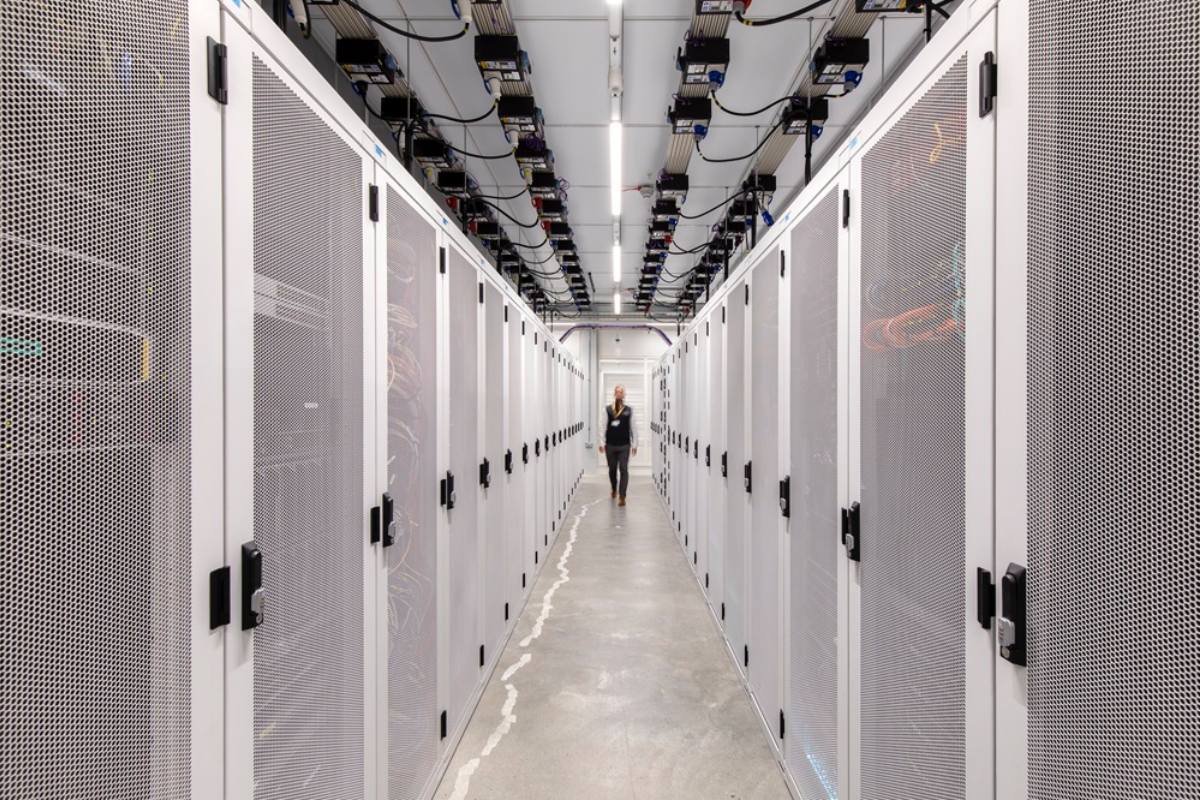
Exploring Modern Data Centre Design


Indigo telecom group announces plans to recruit 100 people
4site, a subsidiary of Indigo Telecom Group, has announced it will be recruiting more than 100 people, over the next three years, to support its plans for international expansion. With open-location and office-based roles across Ireland, the roles will span from Fibre Planners, GIS Engineers, Design Engineers, Telecoms Surveyors and Project Managers to business support roles in accounts, sales and operations. Indigo will be recruiting the 100 workers locally from Limerick and the Mid-West in the vicinity of the company’s Irish headquarters at Raheen Business Park. Established in Magor, South Wales in 1997, Indigo Telecom Group employs more than 400 people across 10 offices in the UK, Ireland, France, Germany and Netherlands. The company is now focused on expanding its skills portfolio to capitalise on the market opportunities around Fibre to the Home (FTTH), wireless, 5G, data centres, digitisation and telco network services. In 2020 alone, Indigo Telecom Group welcomed 140 people to the team. 4site works closely with Limerick Institute of Technology and the University of Limerick to create job opportunities for their highly skilled graduates. Providing network infrastructure to fixed/mobile carriers and the enterprise sector since 1997, Indigo Telecom Group is a leader in delivering Design, Build and Support services to a dynamic market where businesses and consumers demand powerful connectivity. A reputation for reliability has made Indigo Telecom Group a trusted partner to some of the biggest companies in the world, including Vodafone, Nokia, BT and NTT. The COVID-19 pandemic has demonstrated the critical importance that telecommunications infrastructure plays in keeping businesses and societies connected. Because of the economic and social disruption, people across the globe have relied more than ever on connectivity for information, interacting with loved ones, and working from home. During this period, Indigo Telecom Group has scaled operations to meet the growing demand of its customers. Tánaiste and Minister for Enterprise, Trade and Employment Leo Varadkar says: “I am really pleased to see that Indigo Telecom Group, through its Irish subsidiary 4site is expanding in Limerick and will be recruiting over 100 people over the next three years. This is in addition to the 140 new staff that Indigo Telecom Group hired  in 2020 - approximately 90 of which were here in Ireland - and underlines the company’s continued commitment to the Mid-West. This year more than ever we have relied on our communications networks to keep in touch and I welcome the expansion of this sector here. I wish Indigo and 4site every success with the expansion plans.” Kevin Taylor MBE, Chairman, Indigo Telecom Group, comments on the announcement: “We’re really excited to invest in Ireland, and specifically within Limerick and surrounding areas. This provides a great opportunity for local staff  to join an organisation which is on a high growth trajectory and with plans to expand in 2021 and beyond. For people considering a career in telecoms or a new challenge, there couldn’t be a better time to join a sector that is experiencing exponential growth and playing a critical role in the way we all connect with each other.”

CyrusOne strengthens sustainable design and delivery practice
CyrusOne has announced the appointment of Stuart Gray as Engineering Director Europe to strengthen its Design & Construction team. Stuart joins the company with more than 20 years of data centre sector and technical engineering expertise, and will be responsible for driving consistency, efficiency and sustainable practice in the design, delivery and commissioning of developments throughout CyrusOne’s data centre portfolio in Europe.  “I’m delighted Stuart has decided to join CyrusOne. It is an exciting time for our business in Europe as we have an ambitious development pipeline to deliver against increased demand for capacity. As a subject matter expert in mission critical, Stuart will lead engineering throughout the full lifecycle of our data centre developments - from design development through to commissioning - and further strengthen the breadth and depth of our offering to customers. Stuart will also drive efficiency and consistency and champion our continued development of sustainable and environmental design against the backdrop of our ‘Zero Carbon by 2040’ pledge,” comments Richard Brandon, CyrusOne’s Senior Director of European Design and Construction. “I am delighted to join CyrusOne's specialist European Design & Construction team and look forward to bringing the experience and engineering knowledge I have gained in my career to this exciting and challenging new role," says Stuart. "As CyrusOne continues to build the data centres of the future, I am eager to elevate our designs and technical engineering capabilities to help meet the company’s ambitious environment and sustainability objectives.”    Stuart joins the company from construction company, Structure Tone, where he was a project director, responsible for operational delivery on all live UK data centre projects. Stuart has also worked across multiple areas of the data centre industry from electrical contracting, data centre engineering design, technical services management and specialist main contracting - delivering technically complex schemes for a wide range of enterprise, hyperscale and colocation customers.  Stuart’s appointment follows CyrusOne’s recent ‘Zero Carbon by 2040’ pledge through the reduction of carbon emissions across the company’s global data centre portfolio. The pledge will build on sustainable efforts put forward by CyrusOne including purchasing renewables, leveraging green power and integrating sustainable design components across all its facilities around the world.

Scality predicts containerisation and cloud-native apps will define storage
Scality has announced its data storage predictions for 2021, focusing on the rapid growth rate of cloud-native apps and containerisation. According to IDC, by 2023, over 500 million digital apps and services will be developed and deployed using cloud-native approaches. That is the same number of apps developed in total over the last 40 years. “The accelerated growth of next-generation cloud-native digital apps and services will define new competitive requirements in every industry. Cloud native and containers are rapidly turning into the new blueprint for application development and underlying cloud infrastructure services,” explains Giorgio Regni, CTO at Scality. “For the storage industry, the container trend represents a significant inflection point that will transform deployment architectures leveraging Kubernetes and container-native storage APIs. Its impact will be comparable to that of server virtualisation in the 2000s and cloud computing in the 2010s.” Scality’s Chief Product Officer Paul Speciale adds, “2021 will see a number of trends emerge as enterprise IT teams and storage vendors adapt in order to support the rise of cloud-native apps and the subsequent change in application and cloud infrastructure models.” Scality’s predictions for 2021: New container-centric storage solutions will emerge Storage vendors in 2021 will create solutions to address the increasing scale and agility demands of container-based services, including boot volumes and logs, transactional databases, application data over traditional file and new object APIs, as well as backup and long-term archives. New container-centric storage products will be developed to enable traditional data-centric applications, as well as object storage and backups, to access Container Storage Interface (CSI)-type persistent volumes and radically reduce the complexity of large-scale Kubernetes deployments. Hybrid cloud data management will be adopted for disaster recovery Disaster Recovery (DR) across two physical data centres will no longer be required in 2021. Instead, hybrid cloud DR solutions that manage synchronized copies of critical data on-premises and in the public cloud will enable IT leaders to avoid the costs required to maintain and service two remote locations for DR, thereby saving thousands, if not millions, of dollars. Flash media will be embraced for high-capacity storage A new generation of high-density flash storage will become widely available in 2021. The optimal combination of high performance and lower prices makes it suitable for scale-out high-capacity file and object storage. Until now, flash storage has been deployed in smaller capacity applications and latency-sensitive use cases, while high-density spinning disk has been the preferred storage medium for large volumes of data (for example, media files or medical images). With the introduction of lower-cost, higher-density flash media in 2021, these use cases will adopt capacity-optimized solutions that maximize these benefits in density, scale and agility for multiple workloads.  Object storage will become a de facto storage model for data lakes Research and Markets estimates that by 2025 data lakes will grow into a $20.1 Billion market. To fully analyse and take advantage of the wealth of information and insight in these massive data repositories, organizations require a foundational storage layer that makes data accessible and useful. In 2021 object storage will fulfil this role, becoming the dominant storage interface for analytics applications, such as Cloudera, Elastic, Spark, Splunk, Vertica, Weka and many others. This is because analytics applications leverage the AWS S3 API, the standard API for object storage; large semi-structured and unstructured data sets are a natural fit for object storage; and performance and capacity resources can scale independently since object storage decouples the application compute tier from the storage tier. 2021 will see an increased convergence of object and file storage for unstructured data Organizations today are prioritizing data storage that scales both in capacity and in the breadth of applications that it supports. Cloud-native applications, which naturally consume and interact with object storage over S3 API, are increasingly deployed in the enterprise alongside long-standing applications that access file system storage. As a result, solutions that combine file and object models into single unified systems will prevail in the enterprise starting in 2021. The service mesh will be adopted to connect and secure workloads Complex cloud-native applications that straddle cloud regions, on-premises core data centres and edge locations are becoming increasingly popular. Yet secure communication between these services remains a challenge, particularly as the rise in remote working strains legacy network and firewall designs. In 2021, ‘service mesh’ approaches to secure network communication will be broadly adopted. Such approaches will enforce Transport Layer Security (TLS) and authentication and access control for both workload connectivity as well as towards the edge. This gradually introduces ‘zero-trust’ networks (spearheaded by Google’s BeyondCorp framework) where network policies can be codified and systematically deployed and enforced.

Taoiseach welcomes joint initiative as deal supports 250 new jobs
Echelon Data Centres and green energy developer SSE Renewables have announced a deal t to develop a joint 220kV substation at the Avoca River Business Park, Arklow, Ireland. The infrastructure will facilitate the development of Ireland’s first offshore wind farm, off the coast of Co. Wicklow with an export capacity of 520MW, and Echelon’s DUB20 100MW data centre. The initiative marks the first time that an offshore wind farm and a data centre have agreed to develop grid infrastructure together. The development is expected to require an investment of €50m to deliver. Upon completion, the proposed offshore wind farm and data centre will both connect to the Irish national grid via the shared substation. The deal is a step forward for the renewable energy and data centre sectors. Sharing grid infrastructure and locating data centres close to renewable sources of generation delivers on a key decarbonisation goal set out in Ireland’s Climate Action Plan to facilitate regional data centres, minimising grid reinforcements. It would also help to deliver a Climate Action Plan target of installing 1GW of offshore wind by 2025. The deal will support the delivery of 250 new jobs for Arklow. This includes up to 80 jobs during construction. Upon completion, the data centre will support 90 full-time roles. whilst a further 80 full-time jobs will be created to support the operation of the offshore wind farm. Welcoming the initiative Taoiseach Micheál Martin TD exclaims; “This announcement is a welcome boost for Arklow; it not only provides new job opportunities, it also places Arklow at the heart of the green tech sector.  This collaboration between renewable energy and tech will ensure that key targets are met. “I would like to pay tribute to Echelon and SSE Renewables – having identified an opportunity to share infrastructure to promote sustainability, they've worked collaboratively to ensure their vision became a reality.” Niall Molloy, CEO of Echelon Data Centres says; “We’re delighted to be working with SSE Renewables – contributing greatly to the country’s targets of delivering 1GW of offshore renewable energy by 2025. “It is also a model for the future, where data centre facilities are located close to the source of renewable energy, providing a constant demand for the power and working with renewable energy providers to facilitate the development of the necessary infrastructure.” Barry Kilcline, Director of Developments at SSE Renewables comments; “This is a major innovation for the integration of renewables and data centres into Ireland’s national grid. Through this landmark agreement with Echelon Data Centres we will develop new shared grid infrastructure at Arklow that will facilitate the development of the next phase of the 520MW Arklow Bank Wind Park.” SSE Renewables is actively developing Phase 2 of Arklow Bank Wind Park which will be located in a lease area situated six to 13km off Ireland’s Co. Wicklow coastline. The wind farm has the potential to reduce Ireland’s annual carbon emissions by 1%, offsetting half a million tonnes of CO2.


Translate »