Southco develops blind-mate mechanism for liquid cooling
Author: Joe Peck
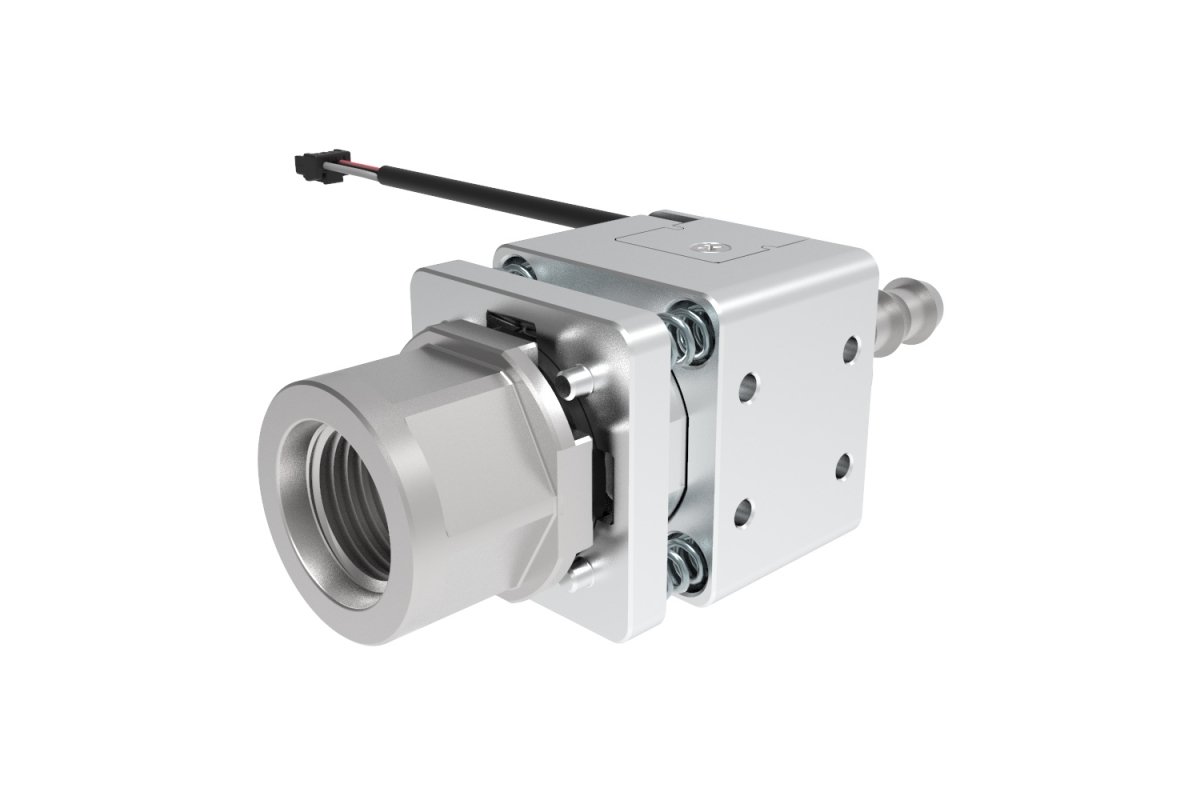
Southco, a US manufacturer of engineered access hardware including latches, hinges, and fasteners, has developed a high-tolerance blind-mate floating mechanism designed for next-generation liquid-cooled data centres.
The company says the design is intended to address mechanical tolerance challenges that affect cooling system efficiency and operational stability.
It notes that demand for liquid cooling is increasing as traditional air-cooling methods struggle to manage higher power densities associated with AI workloads and high-performance computing. Adoption is accelerating further as operators pursue sustainability and targeted PUE reductions.
Liquid cooling, however, requires reliable physical connections, with Southco highlighting that even small alignment deviations at manifold and cold-plate interfaces can disrupt coolant flow, increase pump energy consumption, and heighten the risk of leaks.
Managing mechanical deviation in liquid cooling systems
Citing guidance in the Open Compute Project’s rack-mounted manifold requirements, Southco notes that a 1mm deviation can raise flow resistance by 15%, leading to around a 7% increase in pump energy. In large facilities, these effects scale alongside thousands of connection points.
The company identifies several contributors to misalignment in operational environments:
• Accumulated tolerances between rack formats, including EIA-310-D and ORV3, which may reach ±3.2mm
• Displacement caused by vibration during transport and operation
• Thermal expansion of materials, including copper manifolds expanding more than 1mm over typical temperature ranges
Rigid, low-tolerance couplings can leave systems vulnerable to leaks, rising operational costs, and downtime risk, and the newly introduced blind-mate floating mechanism is designed to absorb movement and compensate for these deviations.
The product offers floating tolerance of ±4mm radially, axial displacement absorption up to 6mm, and automatic self-centring when disconnected. The design is intended to support long-term leak prevention and meet standards applicable to OCP and ORV3 liquid cooling deployments.
Southco adds that the mechanism includes sealing rated to withstand high-pressure testing in line with ASME B31.3 requirements and is intended to support more than ten years of continuous operation. It uses universal quick-disconnect interfaces to enable “blind” maintenance without precise alignment or tooling.
The company positions the technology as a step towards enabling rapid maintenance, reducing equipment handling time, and lowering the risk of service interruption. It also points to reduced energy used by pumps through lower flow resistance.
Southco sees future development in integrating sensing for temperature, flow, and pressure; exploring lighter materials; and working towards greater standardisation across suppliers and data centre ecosystems.