8 June 2026
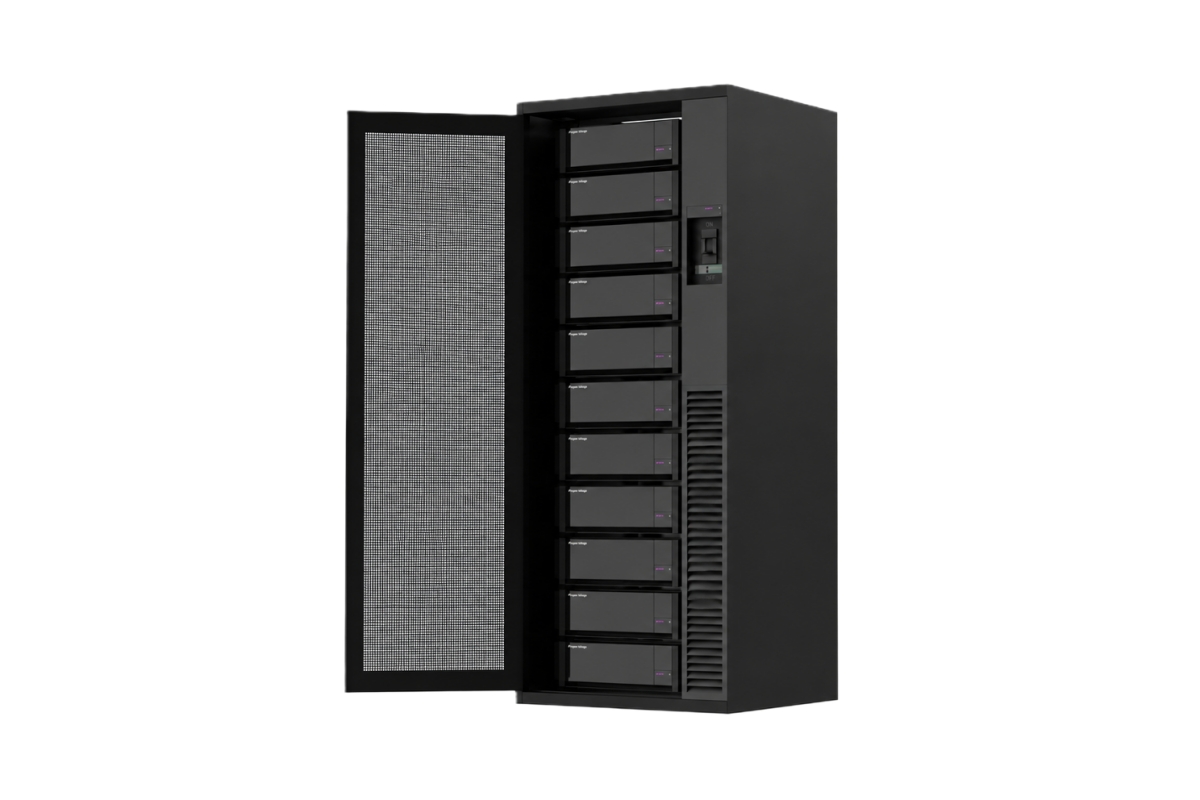
Siemens, Infineon partner on data centre circuit protection
 
8 June 2026
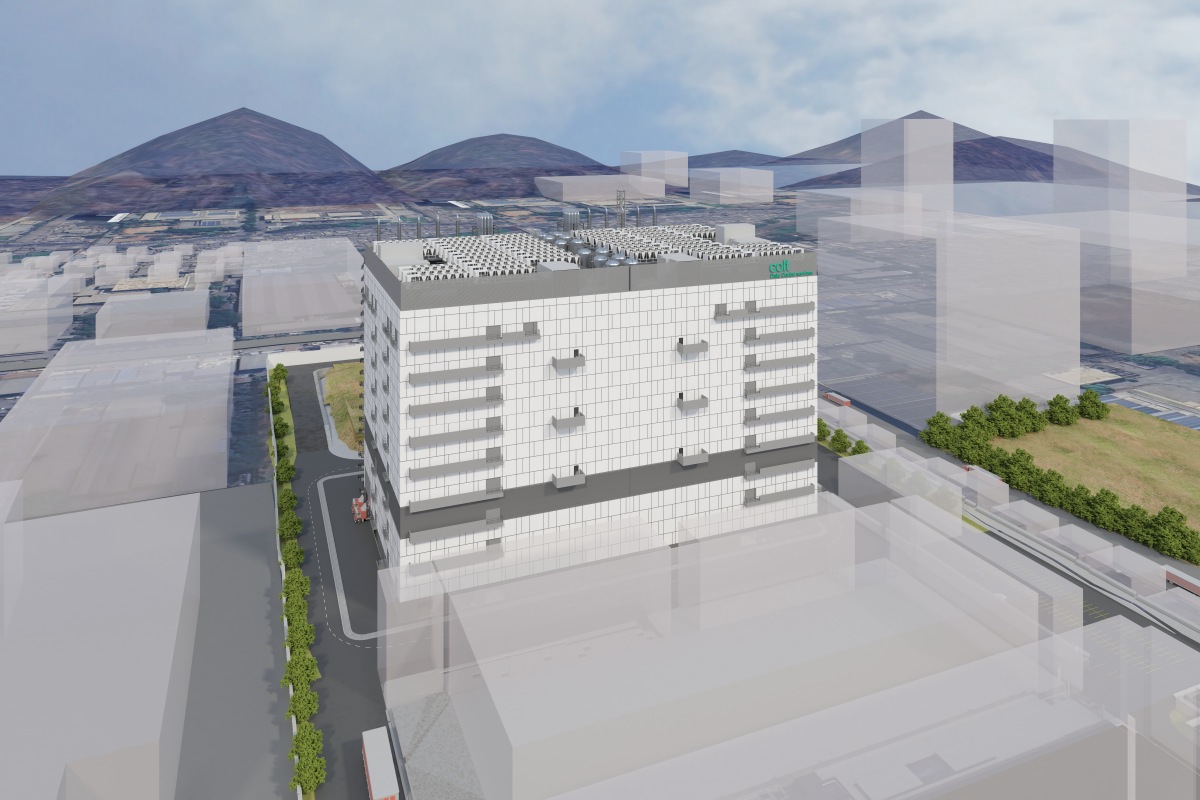
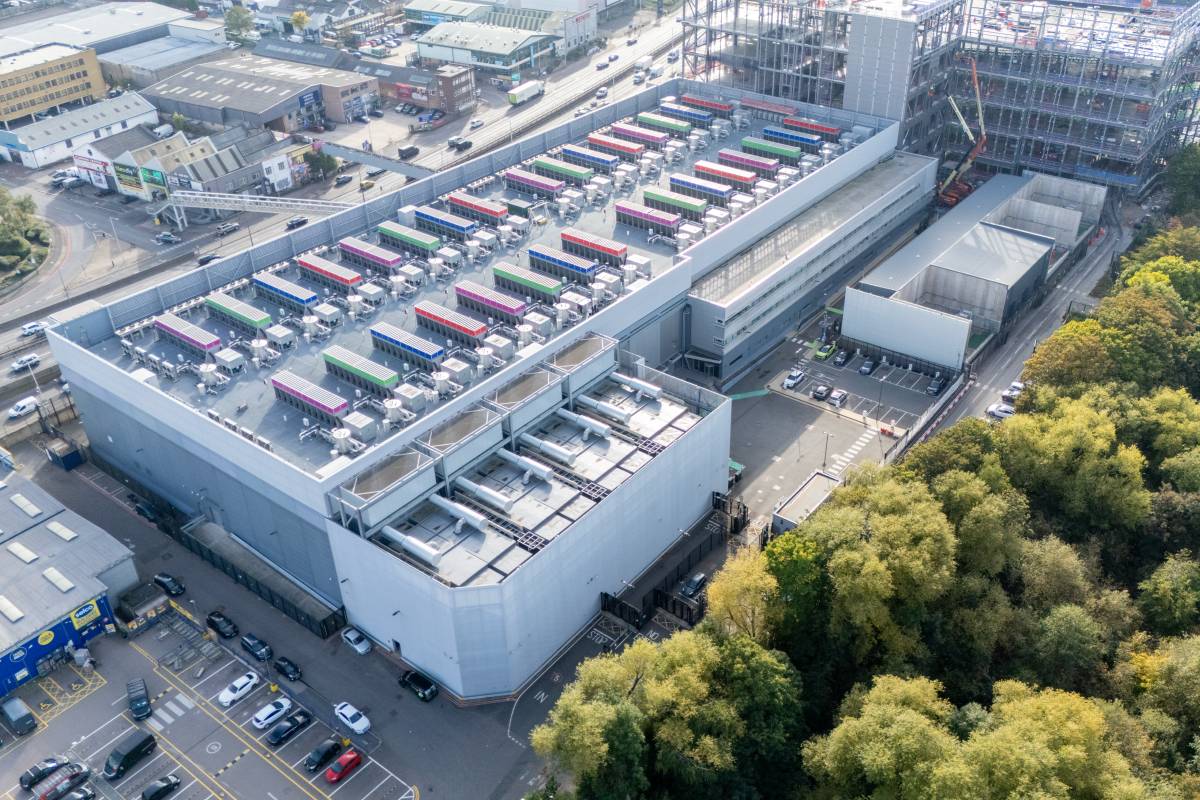
Nebius selects Kao Data for UK AI deployment
 
5 June 2026
NetApp helps Aston Martin accelerate data-driven operations
 
5 June 2026
A-Gas to attend DCN Toronto as sponsor
 
5 June 2026
nLighten launches rapid colocation deployment service
 

Latest News


atNorth expands to Norway with new 'mega site'
atNorth, a Nordic high-density data centre provider, has announced its expansion into Norway through the acquisition of land for a new data centre campus in Haugaland. The site will become home to NOR01, a planned data centre designed to support high-density computing workloads and hyperscale deployments. The development marks atNorth's first presence in Norway and extends the company's footprint across all Nordic countries. Located within Haugaland Business Park, the 36-hectare site is expected to deliver 120MW during its initial phases, with capacity ultimately increasing to 350MW. Power availability is projected for 2028 and will be supported by two new substations: one will be developed by Norway's transmission system operator, Statnett, and the second by regional grid provider Fagne. According to atNorth, the company is also exploring opportunities to reuse excess heat generated by the facility in partnership with organisations based within the business park. Eyjólfur Magnús Kristinsson, CEO of atNorth, says, "Expanding to Norway has been a long-term strategic priority for us, and we’re proud to officially mark our presence across all the Nordic countries with the announcement of NOR01. "Haugaland Business Park is a strong industrial region that offers the ideal combination of renewable energy, excellent connectivity, and a naturally cool climate, making it a highly attractive location for future-focused, AI workloads. "We look forward to collaborating with the local community to deliver world-class digital infrastructure in a responsible way." Haugaland selected for power and connectivity Norway has become an increasingly popular location for large-scale data centre developments due to its renewable energy resources, stable operating environment, and connectivity to European markets. The country's climate also supports more efficient cooling strategies, reducing reliance on mechanical cooling systems. Monika Lindanger, Mayor of Tysvær Municipality, suggests, "This project will not only bring in new investment and innovation to the region, but will also support our local community through training and employment opportunities, our economy via sustainable industry development, and our circular economy with beneficial heat reuse partnerships. "We’re proud to be part of this next chapter in the Nordic data centre evolution." The announcement follows atNorth's plans for a new large-scale data centre campus in Sollefteå, Sweden, as well as recent expansions at facilities in Iceland and developments in Sweden and Finland. For more from atNorth, click here.

EUDCA backs EU data centre energy integration plan
The European Data Centre Association (EUDCA), the representative body of the European data centre community, has co-signed a Declaration of Intent aimed at improving the integration of data centres within the European Union's energy system. The agreement supports the objectives of the European Commission's Strategic Roadmap for Digitalisation and AI in the Energy Sector and seeks to strengthen cooperation between data centre operators, energy providers, grid operators, and public authorities. As investment in AI, cloud computing, and digital infrastructure continues to increase across Europe, the declaration is intended to help establish common frameworks for planning and coordinating future infrastructure development. According to the signatories, the initiative will contribute to the development of shared principles, procedures, and best practices that can be adopted by EU Member States to support sustainable growth in data centre capacity. The declaration aligns with several European policy initiatives, including the Data Centre Energy Efficiency Package, the European Grids Package, and the proposed Cloud and AI Development Act. Industry groups target closer energy sector collaboration The declaration has been signed by organisations representing a broad range of sectors, including electricity networks, energy storage, renewable energy, district heating, and digital infrastructure. Among the signatories are the EUDCA, Eurelectric, ENTSO-E, WindEurope, SolarPower Europe, Energy Storage Europe, and the EU DSO Entity. Lex Coors, President of the EUDCA, says, "The energy system can no longer be viewed as a single connection to a single data centre. Europe is moving into a more complex, four-dimensional environment where capacity, flexibility, sustainability, and digital resilience must be planned together. "Data centres are becoming part of the wider energy system, and this Declaration of Intent is an important step towards building that cooperation in a responsible and future-proof way." The declaration establishes a series of working groups focused on areas including grid planning, connection agreements, flexibility services, energy generation, and energy storage. Working groups to address future capacity requirements Europe is expected to expand its data centre capacity significantly over the next five to seven years as AI infrastructure investment accelerates. The declaration is intended to support this growth while helping Member States meet wider energy and sustainability objectives. Michael Winterson, Secretary General of the EUDCA, explains, "Europe’s AI, cloud, and digital ambitions will require significant new infrastructure capacity over the coming years. Delivering that growth responsibly will depend on much closer coordination between the digital infrastructure and energy sectors. "This Declaration of Intent shows our commitment to partner with energy providers, local authorities, and wider EU institutions to deliver on advanced technologies, energy, and sustainability ambitions." The EUDCA says it will contribute technical and policy expertise to the working groups as discussions progress, supporting the development of future frameworks for cooperation between Europe's digital infrastructure and energy sectors. For more from the EUDCA, click here.

Bergen Engines signs 750MW data centre deal
Bergen Engines, a Norwegian manufacturer of medium-speed gas and dual-fuel engines, has signed an agreement with Crusoe to provide up to 750MW of power generation capacity for AI data centre developments in the United States. The agreement comprises a 438MW contract and a further 310MW letter of intent, supporting Crusoe's expanding portfolio of AI infrastructure projects. Crusoe develops large-scale AI data centre campuses using a combination of grid power, natural gas generation, renewable energy, and battery storage. The company deploys both grid-connected and behind-the-meter power infrastructure to support the high energy demands of AI workloads. John Adams, Senior Vice President of Power at Crusoe, says, "The pace of AI infrastructure development demands builders who treat power as a first-class AI infrastructure layer. "Bergen’s gensets give us the reliable baseload power we need to energise large-scale campuses, deployable on our timeline. We’re building AI factories at record speed, and this agreement helps us maintain that pace." Under the initial contract, Bergen Engines will supply 27 gas-powered generating sets rated at 12.5MWe and 20 units rated at 5MWe. Additional units are included within the letter of intent, with deliveries planned across multiple US locations through 2027. On-site generation supports growing AI power demand The generators are intended to provide continuous baseload power for AI data centres operating around the clock. The systems will incorporate alternators from Marelli Motori and dynamic power stabilisation technology from Piller Power Systems. According to the companies, the technology is designed to manage rapid fluctuations in electricity demand associated with computing-intensive workloads. Dean Richards, CEO of Piller Power Systems, says, "AI workloads have a distinct power profile that demands purpose-built generation and stabilisation technology. "SHIELD-X is designed to manage those dynamics, protecting the generation assets and maintaining stable plant operation while ensuring consistent power quality for the data centre." As AI infrastructure capacity expands, developers are increasingly turning to on-site and behind-the-meter power generation where grid connections are unavailable or unable to support required capacity within project timescales. Theo Lorentzos, Vice President of Sales for Bergen Engines Americas, notes, "The pace of AI infrastructure development is unlike anything the power generation industry has seen before. "In this market, access to power determines how fast you can scale. Crusoe’s model is built around speed and stable power, and our solution is designed to deliver both." The agreement forms part of a wider trend towards dedicated power infrastructure for AI data centres, enabling developers to accelerate deployments while reducing reliance on traditional utility connection timelines. For more from Bergen Engines, click here.

Corscale begins work on 140MW Iver data centre
Hyperscale data centre developer Corscale has appointed UK contractors McLaren Construction and Phoenix ME under a pre-construction services agreement to begin predevelopment works for a 140MW data centre campus in Iver, Buckinghamshire, UK. Located on a 14-acre (4,047m²) site at Court Lane near the M25, the development forms part of the West London data centre market and represents a significant addition to UK digital infrastructure capacity. The project will comprise two data centre buildings and a dedicated 140MVA substation. Designed by Gensler, the scheme includes architectural features intended to complement a nearby Grade II listed farmhouse, alongside measures aimed at supporting biodiversity. McLaren Construction will serve as main contractor, while Phoenix ME will act as MEP delivery partner. Gensler is supported by Cundall on MEP design and L&P Group on engineering services. Julian Michalski, Head of Development for Corscale Europe, says, "This is, by design, an exceptional collaboration of a tier-one team. "It brings a combination of expertise and experience - each with a strong track record in complex, mission-critical environments - to deliver superior quality, programme certainty, and technical assurance at every stage, ensuring we meet programme deadlines and our practical completion date in late 2029." Site clearance and remediation works begin in July Predevelopment activities are scheduled to begin on 1 July 2026 and will include site clearance, enabling works, utility diversions, and environmental remediation. The site is currently occupied by a mix of industrial uses, including vehicle storage, waste transfer operations, recycling facilities, concrete and aggregate storage, and tyre distribution businesses. Among the first phases of work will be the relocation of two 36in (91cm) water mains by Affinity Water and the implementation of a site-wide remediation strategy. David McDonnell, Managing Director for Data Centres at McLaren Construction, notes, "As data centres become larger, more powerful, and more complex, we become all the more reliant on the latest construction technology to achieve the project management and precision that this design requires. "We are proud to be partnering with Corscale and this outstanding project team on what promises to be a landmark scheme, and we look forward to progressing works on site." The project is targeting practical completion during the fourth quarter of 2029. For more from Corscale, click here.

Red Sift finds top US DCs lack email security protections
As cyber threats increasingly target critical infrastructure, a new analysis from Red Sift, a London-based cybersecurity firm specialising in AI-powered email security and digital brand protection, reveals significant email security gaps among the largest data centre operators in the United States. Despite underpinning the nation’s digital economy, an alarming 27% of the top 100 US data centres lack effective email authentication enforcement, leaving them vulnerable to domain spoofing and phishing attacks. The review examined the top 100 US data centres, analysing their implementation of key email security standards such as DMARC (Domain-based Message Authentication, Reporting, and Conformance), which is designed to prevent attackers from impersonating trusted domains. Key findings include: • 27% of data centres operate with weak or no enforcement (email security policies set to “none” or not configured), creating a major spoofing vulnerability across critical infrastructure. • 10% of analysed organisations have no DMARC record at all, representing the highest-risk category for impersonation-based attacks. • BIMI adoption remains extremely low at just 6%, meaning 94% of data centre brands lack visual verification in inboxes, significantly increasing the risk of brand impersonation. An urgent need for stronger protections These gaps are especially concerning given the sector’s scale and importance. The United States is home to more than 4,500 active data centres consuming approximately 176 TWh of electricity annually, about 4.4% of total US power use, with over 700 additional facilities under construction across 38 states. Virginia leads the nation with more than 665 facilities, followed by Texas and California. The findings, Red Sift believes, underscore an urgent need for stronger baseline protections across the sector. Even as data centre capacity rapidly expands to meet rising demand from AI and digital services, email security remains an overlooked but critical vulnerability layer, with attackers increasingly exploiting trusted infrastructure domains to gain footholds across interconnected systems. As the backbone of cloud computing, AI, financial systems, and national security infrastructure, data centres represent high-value targets for cybercriminals. Weak email authentication leaves operators, partners, and customers exposed to phishing, business email compromise (BEC), and supply chain attacks that can disrupt operations or compromise sensitive data flows.

LINX offers 15 months free at NoVA
The London Internet Exchange (LINX), an internet exchange point (IXP) operator, has launched a new initiative offering 15 months of no-charge port access and peering services at its LINX NoVA internet exchange in Ashburn, Virginia, USA. Available from 1 June 2026, the offer applies to both existing members upgrading services and organisations joining LINX for the first time. Participants signing up to an 18-month service term will receive the first 15 months without charge. LINX says the initiative has been introduced to help network operators manage increasing traffic demands and cost pressures while expanding their interconnection capabilities. Established in 2014, LINX NoVA operates within Ashburn's 'Data Center Alley', one of the world's largest internet interconnection markets. The exchange spans five data centre campuses operated by Equinix, Digital Realty, Iron Mountain, CoreSite, and QTS. More than 50 networks are connected to the platform, including content delivery networks, internet service providers, and cloud operators. Jennifer Holmes, CEO of LINX, says, "We recognise that network operators are managing a complex environment right now, from capacity planning to cost control. As a member-owned organisation, our role is to listen carefully to the feedback from our membership and monitor trends in the industry, acting where we can. "This initiative is about supporting our community in a practical way - creating space for networks to plan, grow, and adapt without immediate pressure." Ashburn exchange continues to expand network ecosystem LINX NoVA operates as a carrier-neutral internet exchange and allows participants to establish peering relationships through a single connection across its multi-site infrastructure. The organisation says the new programme is intended to encourage greater traffic localisation, increased peering activity, and further interconnection growth within the region. Jennifer continues, "We want to remind our members why LINX has remained a global leader in interconnection for over 30 years. "The difference is in the engineering discipline, the resilience of the platform, and the depth of operational support we provide. Not all IXPs are built the same - and when networks rely on interconnection for critical traffic paths, there’s very little margin for error. "Packet loss, instability, or downtime can have a direct and immediate impacts on revenue and customer experience. At LINX, we’ve built our reputation on removing that risk, delivering a level of reliability and support that our members can depend on without question." The exchange is supported by a fully redundant architecture, a 24/7 Network Operations Centre, and a distributed platform spanning multiple data centre locations. LINX operates as a member-owned organisation and says revenue is reinvested into the development of its infrastructure and services. For more from LINX, click here.

Schneider Electric unveils Uniflair XCA chillers
Global energy technology company Schneider Electric has introduced the Uniflair XCA range of air-cooled and free-cooling chillers, designed for high-density, liquid-cooled data centres supporting AI workloads. The new portfolio comprises the Uniflair XCAC air-cooled series and the Uniflair XCAF free-cooling series. Both incorporate oil-free centrifugal compressors with magnetic bearing technology and variable-speed drives to support operation across varying thermal loads and environmental conditions. The chillers are available in six sizes, ranging from 1,200kW to 2,500kW, and utilise low global warming potential (GWP) refrigerants. Schneider Electric says the systems are designed to support elevated water temperatures commonly associated with liquid cooling deployments in AI data centres. Andrew Bradner, Senior Vice President, Cooling Business at Schneider Electric, notes, "Energy efficiency, adaptability, and reliability are essential components of liquid cooling systems for AI-optimised data centres, and we’ve designed the Uniflair XCA line with these most important design features at the forefront. "With adaptable water operating temperatures and versatile deployment options, the XCA line features a system-level approach that gives operators scalability, enhanced performance, and long-term peace of mind as data centre complexity continues to rise." Cooling infrastructure adapts to rising AI power densities As AI applications, GPU clusters, and liquid cooling deployments increase data centre power densities, cooling infrastructure is becoming an increasingly important factor in facility efficiency and reliability. The Uniflair XCA platform incorporates oil-free magnetic bearing centrifugal compressors, which remove the need for lubrication systems and are intended to reduce maintenance requirements and mechanical losses. The chillers also feature a spray evaporator combined with V-shaped microchannel coils, designed to improve heat exchange performance while reducing refrigerant volume and material usage. For free-cooling deployments, the XCAF models support water outlet temperatures of up to 33°C and are designed to operate in ambient temperatures ranging from -20°C to 52°C. Schneider Electric states that, in suitable climates, the free-cooling configuration can reduce energy consumption compared with mechanical cooling systems by extending free-cooling operating periods. The range can also be configured with a variety of electrical, hydraulic, acoustic, and performance options to suit different deployment requirements. Additionally, a quick restart capability is included, enabling systems to reportedly return to full operating capacity within three minutes of a power outage. New control features target operational efficiency The XCA range also introduces new firmware and control functions designed to optimise cooling performance. These include variable-speed pump algorithms supporting constant flow, constant temperature differential, and constant head pressure operation, alongside advanced fan control modes that can be adjusted according to temperature, load conditions, or scheduled operating periods. Additional monitoring capabilities include energy metering and real-time water flow measurement to provide greater visibility into system performance. According to Schneider Electric, these features are designed to reduce compressor cycling and improve long-term operational stability. The first Uniflair XCA chiller units are scheduled to begin shipping globally in June 2026. For more from Schneider Electric, click here.

Panduit expands fault managed power portfolio
Panduit, a manufacturer of electrical and network infrastructure hardware, has launched the second generation of its Fault Managed Power System (FMPS), introducing higher power density and additional deployment options for enterprise environments. Designed for centralised power distribution, the FMPS Gen 2 platform is intended for use across campuses, warehouses, and large distributed facilities. The system uses Class 4 fault managed power technology, which allows power to be delivered over longer distances using low-voltage installation methods. According to Panduit, the platform is UL 1400 listed and SIL 3 rated, enabling organisations to distribute power while reducing electrical hazards and simplifying installation requirements. The company also states that the system uses less copper than traditional power distribution methods and remains backward compatible with existing FMPS deployments, allowing infrastructure upgrades without replacing existing installations. A key feature of the platform is the consolidation of backup power systems. By centralising UPS infrastructure rather than deploying units within individual intermediate distribution frames (IDFs), organisations can reduce equipment requirements, maintenance demands, and space utilisation. New hardware targets enterprise and edge deployments The FMPS Gen 2 portfolio includes a new 2kW system comprising a 1kW transmitter, a 2kW power supply, and a 2kW receiver. The range also includes a 600W single-channel receiver designed for applications such as lighting and security systems. Additional updates include higher-density power delivery within the same footprint, expanded receiver options, and support for both PoE++ and DC-powered devices. The platform is designed to support a range of applications including enterprise networking equipment, security and surveillance systems, wireless and in-building cellular infrastructure, lighting, and smart building technologies. Mahmoud Ibrahim, Senior Business Development Manager at Panduit Ventures, says, "FMPS Gen 2 reinforces our commitment to making enterprise power safer, simpler, and more efficient. "By increasing power density and enabling true UPS consolidation, customers can place power where it’s needed, remove complexity from IDFs, and confidently support the growing demands of modern networks - all without introducing new risk." The platform also incorporates monitoring and management capabilities intended to provide centralised visibility of connected infrastructure and support future expansion. Tom Kelly, Chief Technology Officer at Panduit, explains, "FMPS is engineered and designed by Panduit as a complete power platform, integrating power, cabling, and physical infrastructure into a single, coordinated solution. "Drawing on the expertise that developed the first generation of UL-listed Class 4 power distribution products, Panduit has engineered a second-generation system that aligns with where the market is going while also meeting requests from customers and partners in the space. "We’re excited to see the market transformation taking shape, as Class 4 power distribution adoption grows." For more from Panduit, click here.

Siemens develops AI data centre reference architecture
German multinational technology company Siemens has worked with NVIDIA and Fluence to develop a reference architecture aligned with NVIDIA DSX Vera Rubin, providing an electrical, power, and controls framework for hyperscalers, colocation providers, and cloud infrastructure operators deploying AI data centres. As AI workloads continue to drive demand for larger-scale infrastructure, platforms such as NVIDIA Vera Rubin NVL72 are increasing requirements for power and cooling. Data centre operators must also address challenges including site selection, grid connectivity, capital expenditure, and deployment times while integrating emerging technologies. The reference design, as a response to this, is based on a 136MW facility with a 100MW IT load. It covers the electrical infrastructure from the utility connection at 34.5kV through medium-voltage distribution, modular low-voltage power blocks, and rack-level interfaces. The architecture is designed to meet Tier III concurrent maintainability requirements, allowing individual components to be taken out of service without affecting IT operations. The modular design also allows capacity to be added in phases, supporting deployments ranging from 10s of megawatts to 100s of megawatts without requiring a complete redesign. The reference architecture incorporates electrical design parameters aligned with nVent and NVIDIA requirements, and a future update is expected to add advanced thermal management guidance. Sara Zawoyski, President of nVent Systems Protection, says, "nVent has deployed more than two gigawatts of liquid cooling capacity globally. That operational experience is what allows us to help partners like Siemens translate reference architectures into deployable thermal solutions that perform reliably from day one at this scale. "Platforms like NVIDIA Vera Rubin NVL72 are pushing rack densities well beyond what traditional air-cooled infrastructure can support." Supporting large-scale AI infrastructure According to Siemens, the architecture is designed to support high-density AI deployments while maintaining compatibility with future IT platforms and changing energy requirements. It also supports NVIDIA DSX MaxLPS and is intended to help operators maximise computing output within fixed power limits. Ruth Gratzke, President of Siemens Smart Infrastructure USA, states, "Siemens’ deep expertise in power systems and controls engineering, modular infrastructure, protection, and industrialised delivery is really evident in this latest joint reference architecture design. "Our pre-engineered, prefabricated, and factory-tested medium- and low-voltage skids help minimise on-site construction complexity, shorten commissioning cycles, and improve quality, safety, and repeatability across deployments. "Further, our automation and digital twin strategies deployed in this reference help ensure that facilities are brought online faster and with greater potential to produce tokens at scale." The design also incorporates battery energy storage technology from Fluence to provide additional operational flexibility and resilience. Jeff Monday, Chief Growth Officer at Fluence, suggests, "Our Smartstack platform is central to this new architecture, transforming the grid into an accelerator for compute. "By providing essential capabilities like voltage and frequency ride through, black start, grid demand response, and AI load smoothing, we are enabling our customers to build the AI factories of the future faster and more reliably." The architecture also includes integration with a centralised data centre management platform, providing visibility across power, cooling, and compute infrastructure through a single management interface. For more from Siemens, click here.

Pure DC launches carbon removal platform
A Healthier Earth (AHE), the climate technology research and development subsidiary of Pure Data Centres Group (Pure DC), has launched a carbon removal platform designed to increase the availability of biochar-based carbon removal credits for hyperscale operators, enterprises, and institutional buyers. According to AHE, the platform combines carbon removal project development, financing, governance, and verification within a single framework. The company says the initiative is intended to address challenges associated with the fragmented nature of the current carbon removal market. The launch comes as demand for carbon removal projects increases alongside broader corporate decarbonisation targets and continued investment in AI infrastructure. Gary Wojtaszek, Executive Chairman and interim CEO of Pure DC, comments, “What we’re doing at Pure DC is the first of its kind anywhere in the world. "In Dublin, we’ve demonstrated that net zero carbon, self-powered data centres are deliverable. Now, with our Biochar Integrated Carbon Removal from AHE, we’re making them scalable. “This isn’t incremental improvement; it’s a complete reset of how this sector will be built going forwards.” AHE says it is expanding its commercial, scientific, and operational capabilities to support the development of the platform as it moves from individual projects towards a longer-term operating model. Platform combines carbon removal projects and verification According to AHE, the platform combines company-owned production facilities with partner-developed projects, operating under a common governance structure and technical standards. All carbon removal credits generated through the platform will be certified under the Isometric Standard and supported by digital monitoring, reporting, and verification technology from Mangrove Systems. The company says this approach is intended to provide buyers with greater consistency, transparency, and traceability across carbon removal projects. Lukas May, Chief Commercial Officer at Isometric, states, “The data centre sector needs scalable, high-quality carbon removal and the confidence that every credit represents genuine climate impact. We’re looking forward to working with A Healthier Earth to deliver on that mission.” Brandon Vlaar, CEO of Mangrove Systems, adds, “We’re proud to be chosen as AHE’s digital data infrastructure partner, combining automation and AI-enabled tools to ensure every tonne of carbon removed through the platform is measured, accurate, and verified.” Carbon removal linked to data centre decarbonisation plans Pure DC says the platform forms part of its wider decarbonisation strategy and will support discussions with hyperscale customers and other organisations seeking to address residual emissions alongside energy efficiency measures. According to the company, the platform is designed to complement carbon reduction initiatives across its data centre campuses while providing customers with access to independently verified carbon removal projects. AHE says the framework has been developed to provide long-term access to carbon removal credits while maintaining oversight through centralised governance, verification processes, and project monitoring. For more from Pure DC, click here.


Translate »