Data Centre Infrastructure News & Trends

Janitza marks 40 years of growth
Janitza, a German manufacturer of energy measurement and power quality monitoring equipment, is marking its 40th anniversary as demand for power quality and energy monitoring continues to grow across sectors including data centres, industry, and critical infrastructure. The company says it is continuing to expand its international operations, with investment in local subsidiaries and customer support capabilities in markets including the UK, North America, and Australia. Founded in Germany in 1986, Janitza now operates in more than 90 countries, supplying energy monitoring and power quality technologies for applications where resilient electrical infrastructure is essential. Markus Janitza, founder and CEO of Janitza, notes, "The requirements for modern energy infrastructure have changed dramatically over recent decades. "As power grids become more dynamic and energy systems more complex, transparency and power quality are becoming increasingly critical, particularly in sectors such as data centres, industry, and critical infrastructure. "This is exactly where we continue to support our customers globally with precise measurement and monitoring technologies." International expansion continues Janitza says it has grown from a regional manufacturer with around 30 employees into an international supplier serving customers across a range of industries. The company states that it will continue investing in engineering and manufacturing at its German headquarters while expanding its international sales and customer support network. Alexander Veidt, CEO at Janitza, comments, "Over the years, Janitza has always identified technological developments at an early stage and translated them into practical solutions for customers. We will continue to follow this path consistently in the years ahead." Janitza remains a family-owned business and says it expects demand for energy transparency, resilient electrical infrastructure, and power quality technologies to continue increasing as energy systems become more complex. The company also formally celebrated its 40th anniversary with an industry event at its headquarters in Germany on 19 June 2026. For more from Janitza, cick here.

Lenovo to supply HPC for research at Southampton Uni
Lenovo, a Chinese multinational technology company making servers and AI infrastructure systems, has signed a four-year agreement with the University of Southampton in the UK to supply high-performance computing (HPC) infrastructure, supporting the university's research programmes. Through and in addition to this, the company says it also plans to return to the 'Top500' ranking of the world's most powerful supercomputers. Under the agreement, Lenovo will become the university's preferred supplier of HPC infrastructure following a competitive tender process. The partnership builds on a relationship between the two organisations spanning more than a decade. The first order, valued at approximately £7 million, is scheduled for delivery during summer 2026. New systems to support AI and scientific research The initial deployment will include Lenovo ThinkSystem SR675 V3 servers equipped with NVIDIA H200 GPUs and NVLink technology, designed for artificial intelligence, simulation, and other compute-intensive workloads. A second phase is expected to introduce a cluster based on NVIDIA Grace Blackwell architecture using Lenovo ThinkSystem SC777 V4 Neptune servers, further increasing the university's computing capacity. According to Lenovo, the systems will support research across a range of scientific disciplines and help expand the university's computational capabilities. Andy Rhodes, Managing Director of Lenovo UK & Ireland, says, "As research demands continue to grow in scale and complexity, access to powerful, scalable computing is critical. "Lenovo's latest HPC solutions, including next-generation GPU-accelerated systems, will enable the University of Southampton to tackle data-intensive workloads and accelerate breakthrough research. We are proud to support their ambition to further elevate their global research standing." Partnership extends beyond infrastructure Alongside the deployment of HPC systems, the agreement includes opportunities for collaboration on end-user computing, researcher engagement, and the adoption of new technologies across the university. Professor Mark Spearing, Vice President Research and Enterprise at the University of Southampton, comments, "This partnership represents a major step forward in strengthening our research infrastructure. "These new HPC capabilities will play a vital role in enabling cutting-edge research and innovation, helping to raise the global profile of Southampton's research community and compete at the highest international level." The organisations also expect to work together on activities linked to the British Science Festival, which will be hosted by the University of Southampton in September 2026. For more from Lenovo, click here.

SUBCO activates Australian SMAP subsea cable
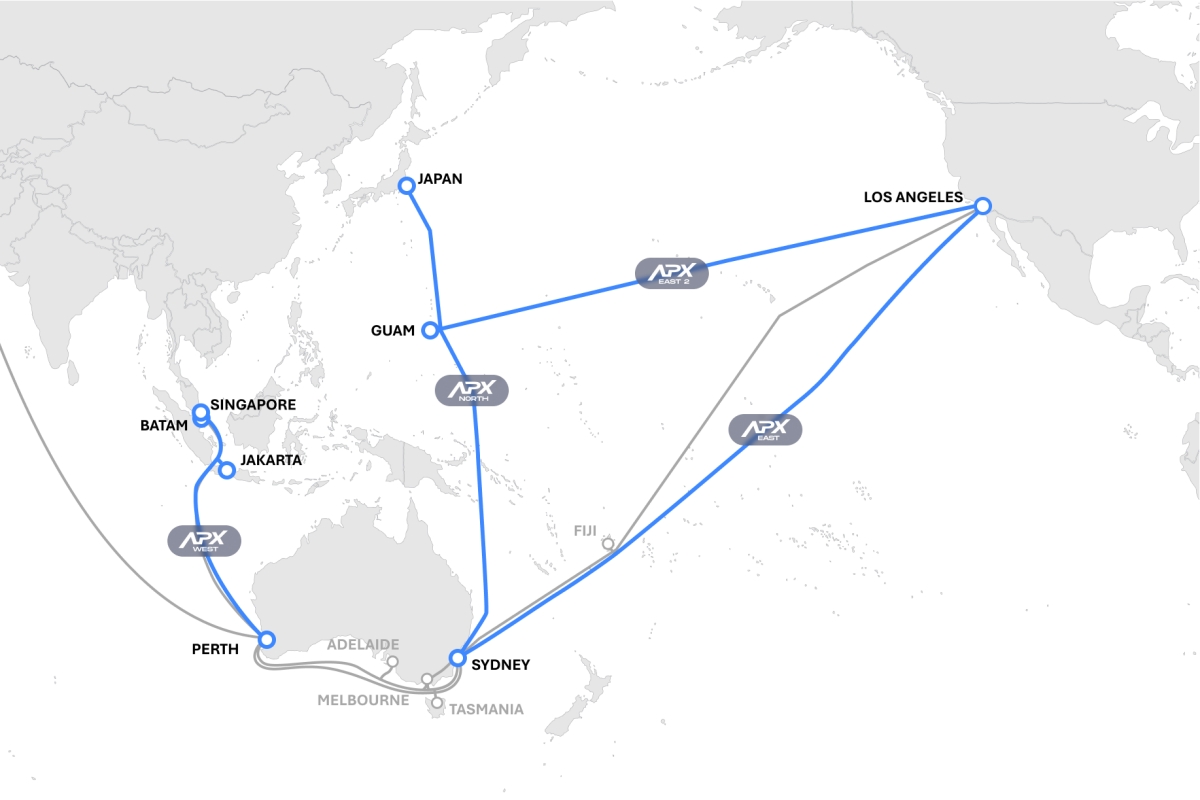
SUBCO, an Australian developer of undersea fibre optic cable networks, has announced that its 5,000km Sydney–Melbourne–Adelaide–Perth (SMAP) subsea cable system is now ready for service. The company says the system is the largest transcontinental capacity upgrade in Australia for almost 25 years, connecting the country's four largest cities through a single, fully armoured subsea cable. SMAP comprises 16 fibre pairs and uses space division multiplexing (SDM) technology to provide more than 400Tbps of capacity. According to SUBCO, it is Australia's first 'hypercable' and the first submarine cable system to land in both Melbourne and Adelaide, providing an additional route between Sydney and Perth. Bevan Slattery, founder and Co-CEO of SUBCO, comments, "SMAP going live is the culmination of more than three years of hard work, and a landmark moment for Australia's digital future. "For the first time, the nation's four major cities are connected by a single, fully armoured, high-capacity subsea system, delivering the resilience and scale that Australia's digital economy, and its role as a connectivity hub for the Indo-Pacific, demands." Foundation customers begin using new network The system's foundation customers include 5GN, Swoop, Aussie Broadband, Cloudflare, GSL, Host Universal, Kinetix, Leaptel, Megaport, Telair, and Virtutel. Brad Parker, CTO at Aussie Broadband, notes, "By coming on board early as a foundational customer of SMAP, we're locking in the capacity, performance, and resilience our customers will need for the next decade and beyond. "The hyperscale capacity and added redundancy allows us to move massive volumes of traffic between our capital city points of presence with lower latency, higher availability, and far more headroom for growth." Damian Matacz, Director, Network Strategy at Cloudflare, adds, "A better internet is built on resilient infrastructure. SMAP gives Cloudflare diverse new domestic paths across Australia, strengthening our network and elevating the experience for everyone our customers serve." Brendan Halley of Host Universal concludes, "SUBCO have always been forward thinking in how they design and operate their cable systems. SMAP is a standout example of that, delivering the resilient, sovereign infrastructure Australia needs. We're proud to continue our relationship as a foundation partner." For more from SUBCO, click here.

Schneider upgrades NHS Trust's critical infrastructure
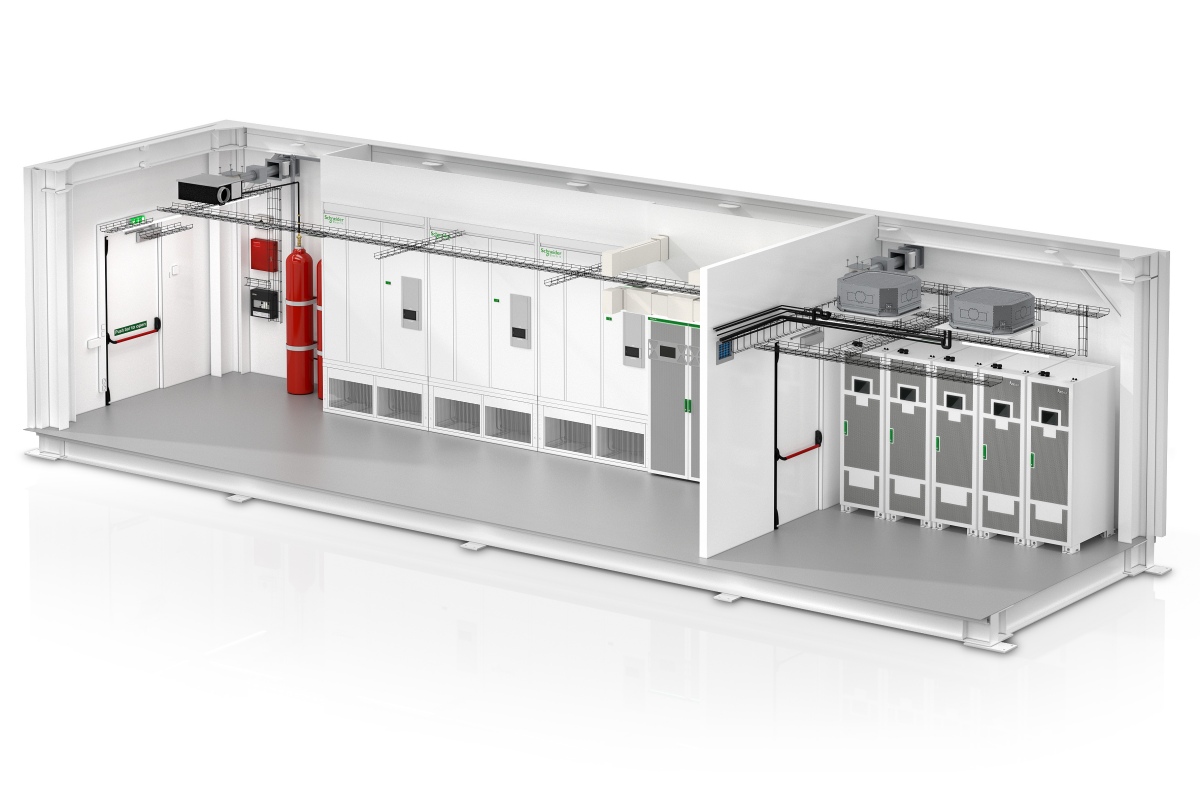
Northumbria Healthcare NHS Foundation Trust has completed a power infrastructure modernisation project using Schneider Electric technology to improve monitoring, visibility, and management of critical systems across its estate. The project was delivered with Schneider Electric, alongside EcoXpert partner RMD and technology provider XMA, and included the deployment of EcoStruxure monitoring software and uninterruptible power supply (UPS) equipment across multiple sites. The Trust provides healthcare services to more than 500,000 people across Northumberland and North Tyneside in the UK, with its IT infrastructure supporting electronic patient records, clinical systems, administration, access control, and CCTV. According to the Trust, a mix of legacy UPS systems from different manufacturers had created challenges around maintenance, monitoring, and service continuity. Mathew Burns, Operational Infrastructure Manager at Northumbria Healthcare NHS Foundation Trust, says, "With the UPS and network infrastructure, our ultimate goal is to improve service as it underpins everything the hospital does. "It's not only about looking at new technologies and different ways of working, but extracting more value from what we already have. In terms of meeting Service Level Agreements (SLAs), the key challenge is achieving 100% uptime, ensuring systems are always available across multiple sites over a very large geographical area." Creating a unified view across multiple sites To address these challenges, the Trust implemented EcoStruxure to provide centralised monitoring of UPS infrastructure across its facilities. The deployment includes Smart-UPS systems, network management cards, NetBotz cameras and sensors, and EcoStruxure IT Expert software for monitoring and reporting across 175 nodes. Ross Higgins, Senior Technical Specialist at RMD, explains, "We discussed the Trust's key issues such as the runtime needed for its data centres. It was clear that a centralised monitoring system was needed for its infrastructure." Bob Beckwith, Infrastructure Innovation and Transformation Manager at Northumbria Healthcare NHS Foundation Trust, notes, "Adoption of EcoStruxure is developing well. It provides reassurance that our UPS equipment on each site is reliable and 'fit for purpose'. "The Trust views its digital infrastructure as a pyramid, with power as the foundation and maintenance support at the top. We placed RMD, XMA, and Schneider Electric solutions at the base to create a really solid foundation." Supporting future infrastructure planning Following the deployment, the Trust reports complete visibility across its UPS infrastructure, alongside improved benchmarking of energy efficiency and equipment lifecycle status. The organisation says the data generated through EcoStruxure supports budgeting, maintenance forecasting, replacement planning, and future data centre consolidation projects. Mathew Burns continues, "Today, in terms of operations, our UPS estate state is healthy, with a reassuring healthy report from EcoStruxure. "This is a significant investment for the Trust, and we didn't want to put all the new equipment in without having the confidence to know that everything underpinning it was okay. EcoStruxure gives us that confidence." The project represents an investment of approximately £1 million. Under a five-year agreement, the Trust plans to continue upgrading UPS infrastructure, consolidate data centre operations, and maintain ongoing support services through RMD and Schneider Electric. Matthew Baynes, Vice President, Secure Power and Data Centre division at Schneider Electric UK & Ireland, concludes, "Projects like this demonstrate how resilient, connected power infrastructure underpins critical public services. "By modernising and standardising its UPS infrastructure, Northumbria Healthcare NHS Foundation Trust has created a highly resilient digital foundation that supports operational continuity, enhances visibility across its estate, and ensures healthcare teams can continue delivering outstanding patient care with confidence." For more from Schneider Electric, click here.

Why the UK’s AI ambitions demand a new power paradigm
In this exclusive article for DCNN, Javier Cavada (pictured above), President & CEO EMEA at Mitsubishi Power, considers how private power networks and on-site generation could help data centre operators overcome grid constraints while supporting the UK's AI ambitions: Decoupling digital growth In the UK, expanding digital and AI infrastructure is a strategic priority. The Government has indicated that the country will need at least 6GW of AI-capable data centre capacity by 2030 to support this ambition. However, this digital growth is outpacing the capacity of the UK’s physical energy infrastructure, resulting in a growing mismatch between the country’s AI ambitions and the systems needed to support AI-powered data centres. Electricity demand from data centres is already significant, at a time when the wider economy - indeed, society as a whole - is rapidly electrifying. Currently, data centres account for around 6% of UK electricity consumption, and the National Energy System Operator (NESO) projects that this could increase to 8.8% by 2030 as AI adoption accelerates. At the same time, grid connection requests for demand-side projects have surged from around 41GW in late 2024 to 125GW by mid-2025, with approximately 50GW linked to data centre developments. This rapid build-up in the connection queue is creating significant congestion, with some large, high-capacity projects now facing delays of up to a decade. All of this has prompted regulatory intervention, with NESO moving away from the previous “first come, first served” approach towards a more selective “first ready, first served” model for prioritising connection requests. While this shift is welcome, it will take time to translate into tangible improvements on the ground. In the meantime, the key takeaway for developers is clear: securing a guaranteed power connection has become a far more significant constraint on new data centre development than access to land. More broadly, the structural limitations of the UK’s centralised and ageing grid are emerging as a major barrier to delivering on the country’s AI and digital infrastructure ambitions. The grid bottleneck and the competitiveness risk The reality is that to ensure operational uptime from day one, operators can no longer rely solely on the UK’s national grid. Instead, delivering the power required to build and operate this critical infrastructure will increasingly depend on on-site energy parks and dedicated private-wire networks. This challenge extends well beyond a single industry; it is fundamental to the UK’s ability to sustain a dynamic, modern economy. AI, cloud computing, and high-performance computing (HPC) have become core drivers of global competitiveness, and, in turn, access to reliable power is a decisive factor in where hyperscalers and technology firms choose to deploy capital. These decisions shape long-term job creation and regional economic growth. Without sufficient power availability, the UK risks losing major digital investments - as well as the high-skilled employment they bring - to leading European markets. Competitors in the Netherlands, Ireland, and the Nordics are gaining ground by offering faster access to power - a trend already evident in the Slough/M4 corridor, where connection moratoriums have pushed operators to look beyond traditional hubs simply to keep pace with demand. One response is the deployment of high-efficiency gas turbine systems to help bridge this capacity and infrastructure gap. Gas turbines provide a practical interim solution, delivering reliable, dispatchable power at scale today while offering a pathway to lower-carbon operation as hydrogen and other low-carbon fuels mature. Why private power models are becoming essential By connecting dedicated power assets directly to the data campus via private-wire networks, operators can bypass multi-year utility queues, significantly compress construction timelines, and secure a predictable envelope of capacity. Operating behind the meter also provides a critical commercial advantage, shielding multi-million-pound infrastructure investments from volatile wholesale market prices and localised grid congestion, as well as enabling greater long-term cost certainty. However, access to power alone does not fully resolve the challenge. AI workloads require continuous, 24/7 baseload stability - something intermittent renewables cannot deliver in isolation. As the UK continues to scale wind and solar generation, managing intermittency becomes an increasing constraint, reinforcing the role of on-site gas turbines in providing immediate, dispatchable power to stabilise private networks. Crucially, deploying on-site gas generation does not mean abandoning sustainability goals. Instead, it offers a pragmatic bridge to net zero. The industry is already shifting towards flexible thermal infrastructure that can meet current demand using natural gas, while remaining compatible with lower-carbon fuels. Modern high-efficiency gas turbines, for example, can already operate on a 30% hydrogen blend, with engineered pathways to 50% and ultimately 100% hydrogen capability from around 2030 onwards, as technology and fuel supplies mature. This ensures that assets deployed today remain viable in a decarbonised future. Embracing a new model of infrastructure self reliance The UK cannot become a global AI leader if its data centres remain dependent on an increasingly constrained public grid. Colocated energy parks represent a shift from grid dependency to infrastructure self-reliance. By deploying on-site generation, operators can decouple build timelines from grid constraints while laying the foundations for a more resilient, future-ready, low-carbon digital economy. In this context, digital sovereignty cannot wait for grid reinforcement. The sector is moving towards a model in which operators take greater control of their energy supply, ensuring both immediate resilience and long-term strategic flexibility. For more from Mitsubishi, click here.

Power Electronics reaches 170GW installed capacity
Power Electronics, a global manufacturer of energy storage and solar inverters, has announced that it has reached 170GW of installed AC power worldwide, up from 150GW at the end of 2025. The company says the increase reflects growth across a number of international markets, particularly within the energy storage sector. Power Electronics reports continued expansion in markets including the United States, Australia, and the UK, alongside growth across the EU in countries such as Spain, Italy, Lithuania, and Poland. Its latest developments focus on energy storage, solar power, and data centre infrastructure, with an emphasis on grid stability, energy resilience, and operational efficiency. Energy storage and data centre infrastructure In the energy storage sector, Power Electronics is highlighting its PCSM and Multi PCSM battery inverters, designed for utility-scale battery energy storage system (BESS) projects. The company says the products support direct connection to medium-voltage networks and can operate in both grid-following and grid-forming modes. Their modular design is intended to support scalability, availability, and maintenance requirements. Power Electronics is also showcasing its Freesun DC/DC converter, which is designed for DC-coupled solar and storage installations. According to the company, the technology enables direct connection between photovoltaic systems and battery storage while supporting grid-forming operation. The manufacturer says it has gained significant experience with grid-forming technologies in markets including Australia, where such systems are increasingly being deployed to support grid stability and renewable energy integration. It is also increasing its focus on data centres, driven by growing demand associated with artificial intelligence and high-performance computing. Power Electronics' portfolio includes the AIPCS-integrated medium-voltage to 800VDC power supply, designed for high-density data centre environments. The company says the system is intended to improve efficiency and reduce energy losses. The offering is supported by the PCSM and Multi PCSM battery inverters, alongside the XMV670 medium-voltage drive, which is designed to provide control of cooling systems and support energy efficiency. According to Power Electronics, the combined technologies are intended to support scalable data centre infrastructure capable of operating under varying load conditions. Solar technologies for utility-scale projects Within its solar portfolio, the company is highlighting the HEM solar inverter and the Freemaq DC/DC converter. It says the HEM integrates medium-voltage equipment within a single enclosure, simplifying installation and reducing connection requirements. The inverter is also designed to support hybrid solar and storage configurations. The Freemaq converter is intended for hybrid renewable energy projects and supports functions including energy shifting, frequency response, ramp-rate control, and clipping energy recovery. Power Electronics says the technology is compatible with multiple battery technologies and can be configured for a range of project requirements. At The smarter E Europe 2026, the company also highlighted its European manufacturing operations, supply chain capabilities, cyber security measures, and after-sales support services. Raúl Padierna, CSO at Power Electronics, comments, "Reaching 170 GW of installed AC power is the result of accelerated growth over the past months and reflects the trust our customers place in our technology globally. "This momentum, especially in markets such as Europe, the US, and Australia, positions us strongly to continue scaling our solutions and supporting the next generation of energy systems."

Huawei announces Wi-Fi 7 patent licensing rates
Chinese multinational technology company Huawei has announced that its patent licensing royalty rate for WiFi 7 technologies would be set at $0.5 (£0.38) per unit for Wi Fi 7 compliant devices. This announcement, Huawei says, underscores its dedication to fostering a healthy innovation ecosystem through fair, transparent, and predictable licensing practices. As the latest generation of Wi-Fi technologies, Wi-Fi 7 delivers dramatically higher throughput, lower latency, and greater reliability. Serving as much more than just a connectivity upgrade, it lays the groundwork for the next wave of digital transformation and opens up new possibilities for interactions between people and intelligent systems. As a leading contributor to the IEEE 802.11 standards family, Huawei has played a pivotal role in shaping WiFi 7 (802.11be) technologies and holds one of the largest portfolios of declared essential patents for WiFi 7. The company has invested a decade of research and substantial resources into developing the core technologies that make Wi-Fi 7 truly next generation. Huawei has thus emerged as a leader in the global Wi-Fi licensing landscape, and its patent license agreements had covered over 1.2 billion consumer electronic devices worldwide by the end of 2024. With today's announcement, Huawei provides clear advance notice of its Wi‑Fi 7 royalty rate, which is $0.5 (£0.38) per unit for consumer‑grade Wi‑Fi 7 devices. Implementers may obtain licenses either through bilateral agreements or via patent pools, on FRAND (Fair, Reasonable, and Non-Discriminatory) terms. Support for both Wi-Fi 6 and 7 In July 2022, Huawei joined the Sisvel WiFi 6 patent pool as a founding member, concurrently becoming both a licensor and a licensee of the pool. The patent pool is a valuable option for the industry which in large provides a "one-stop" licensing solution under a transparent and fair framework with lower transactions costs. Huawei also maintains a strong and proven Wi-Fi 6 patent portfolio, which has been widely recognised and licensed across the industry. This legacy of innovation across successive generations further demonstrates Huawei's long-term commitment to advancing wireless connectivity. Building on this success, Huawei has extended its participation to the Sisvel WiFi Multimode pool as a founding member, offering licensees a single, streamlined platform for accessing essential patents across both WiFi 6 and WiFi 7 generations. Alan Fan, Huawei's Chief Intellectual Property Officer, comments, "Through these initiatives, Huawei continues to facilitate collaborative licensing models that balance the interests of innovators and implementers, further reinforcing its leadership in shaping a transparent and efficient global Wi-Fi licensing environment." For more information on Huawei's WiFi 7 licensing program, click here to visit the webpage. For more from Huawei, click here.

Opna named World Economic Forum 'Technology Pioneer'
London-based Opna has been named a 2026 Technology Pioneer by the World Economic Forum (WEF), joining the organisation's annual list of 100 companies recognised for developing technologies with the potential to influence industries and markets. The company, which focuses on the procurement and financing of critical power equipment, will participate in the Technology Pioneers programme, with the first meeting of the 2026 cohort scheduled to take place in China later this month. Opna works with data centre operators, renewable energy developers, and industrial organisations across Europe, helping them source and finance equipment including transformers, switchgear, high-voltage cables, and generators. According to the company, its platform combines equipment verification, supplier matching, and financing through a single data platform designed to improve visibility of manufacturing capacity and procurement options. Focus on power equipment supply chains The announcement coincides with the publication of a new industry blueprint from Opna founder and CEO Shilpika Gautam, which examines challenges affecting the supply of critical power infrastructure across Europe. The report argues that growing demand from sectors including data centres, renewable energy, and grid infrastructure is placing increasing pressure on power equipment supply chains. Opna identifies four key challenges affecting project delivery: differences between manufacturing and project timelines, payment structures that require significant upfront deposits, mismatches between available manufacturing capacity and changing demand patterns, and repeated verification processes for equipment suppliers. The company argues that improved coordination between manufacturers, developers, financiers, and infrastructure operators could help address these issues. Shilpika says, “More factories are coming, and that is a good thing, but they will not start delivering in time to close the power equipment supply squeeze that everyone from data centres to renewable developers and critical facilities [...] are facing. “We face a very real and worsening risk of funded projects stalling, clean energy generation not making it onto the grid, and the window to ramp off fossil fuels, electrify our economies, and create growth, resilience, and security across Europe narrowing. “I see a clear solution: we need a coordination layer for the industry, not just new physical supply - a foundational backbone that holds verification, matching, and financing on the same data, built with the visibility, financing depth, and platform capability that can turn this industry into a healthy market.” The blueprint includes commentary from a number of energy and infrastructure specialists, including representatives from Ember, Ørsted, Power System Partners, and other organisations involved in energy systems and grid infrastructure. Growing demand for grid infrastructure Opna says increasing demand for electricity infrastructure is being driven by data centre growth, electrification projects, renewable energy deployment, and wider grid modernisation efforts. The company cites long lead times for high-voltage power equipment and increasing pressure on manufacturing capacity as key challenges facing developers and infrastructure operators. According to Opna, its platform is designed to help organisations access qualified suppliers, secure manufacturing capacity, and align financing arrangements with project delivery schedules. The company says regulatory developments in the UK, EU (including Ireland), and the United States are placing greater emphasis on demonstrating access to equipment supply as part of infrastructure development and grid connection processes.

Oriole, AMD to advance photonic AI networking
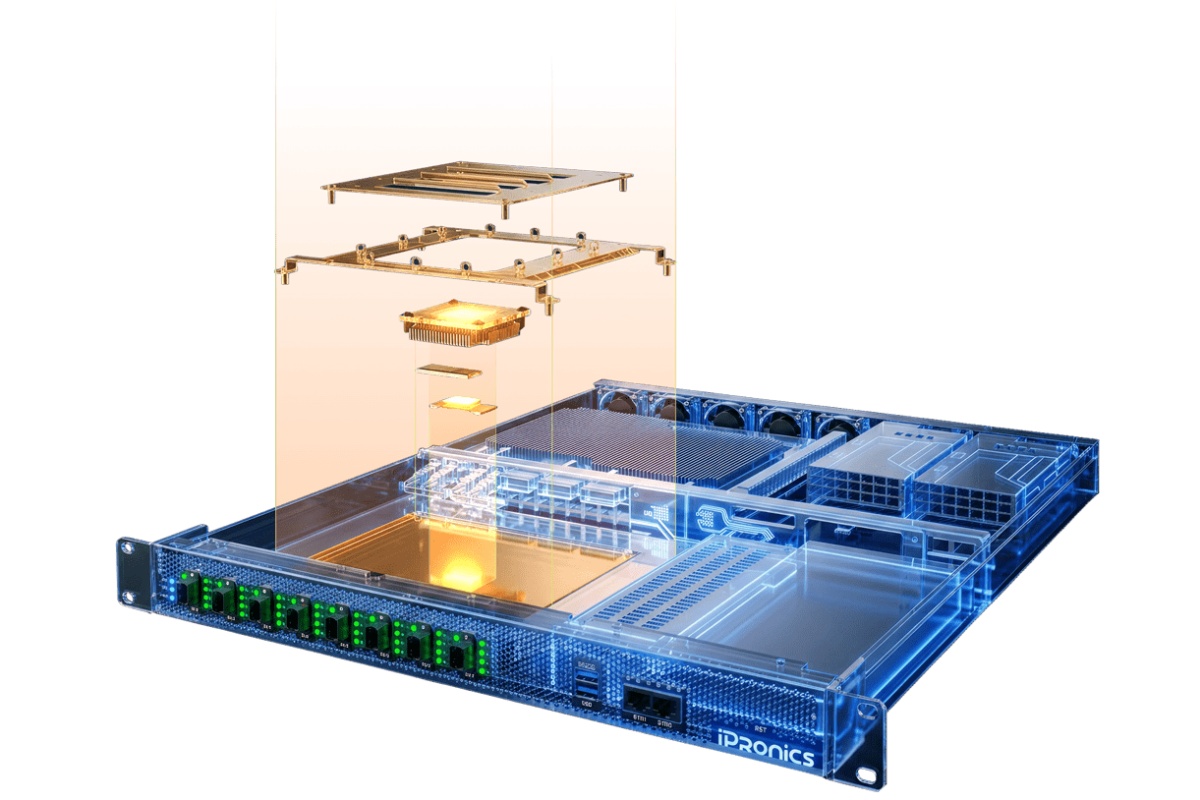
Oriole Networks, a London-based photonic networking startup, has announced further progress in its collaboration with AMD, an American multinational semiconductor company, as part of the UK's Advanced Research and Invention Agency (ARIA) Scaling Inference Lab programme, including plans to deploy what the company describes as the "world's first" large-scale AI system based on a pure photonic network. The project combines Oriole's PRISM photonic networking technology with AMD Instinct GPUs and AMD EPYC CPUs to explore new approaches to AI infrastructure that aim to reduce latency, improve performance, and lower energy consumption. According to the companies, the collaboration has been underway for more than a year and is focused on addressing networking challenges associated with increasingly large AI deployments. Oriole's PRISM platform replaces traditional electronic switches within the network core with optical circuit-switching technology, enabling data to be transmitted using photons rather than electrical signals. The company says this approach is intended to reduce network power consumption and minimise latency between computing resources, helping to improve the efficiency of AI inference workloads. AMD is providing processor and accelerator hardware for the project, alongside technical support to develop and evaluate large-scale AI networking models. James Regan, CEO of Oriole, notes, "A year ago, we were proving the physics. Today, we’re proving the business. "Our collaboration with AMD has moved from concept to deployment to a system an order of magnitude larger, and the data proves this is already driving performance increases at pace. "This is what it looks like when photonic networking stops being a research curiosity and starts being the foundation of how serious AI infrastructure gets built." Exploring alternatives to traditional networking Oriole says PRISM has been designed to operate independently of specific processor or accelerator vendors, allowing it to be deployed across different AI hardware platforms. The company states that the technology can reduce the reliance on conventional electronic networking equipment while also lowering cooling requirements and associated water consumption. Madhu Rangarajan, Corporate Vice President, Compute and Enterprise AI Business at AMD, says, "AMD is excited to collaborate with Oriole on the ARIA Scaling Inference Lab cluster. "Oriole’s AI backend networking with nanosecond optical circuit switching represents a fundamentally different way to connect accelerators at scale. We are helping to validate how photonic fabrics can work alongside AMD compute to deliver the low-latency, high-bandwidth connectivity that AI inference workloads demand." The deployment also represents the first commercial implementation of Oriole's technology, which the company says has progressed from research and development to production readiness within three years. Suraj Bramhavar, Programme Director at ARIA, comments, "Meeting the demands for modern AI requires rapidly identifying ways to improve the performance and cost-efficiency of large-scale AI clusters. "ARIA is thrilled to collaborate with Oriole and AMD to demonstrate the benefits of this new technology, and it’s exactly the type of collaboration, between innovative startups and industry leaders, that the Scaling Inference Lab was designed to foster." Oriole says wider deployment of its photonic networking technology is planned from 2027 as demand grows for infrastructure capable of supporting large-scale AI workloads.

Vertiv unveils high-capacity rack platform
Vertiv, a global provider of critical digital infrastructure, has introduced the Rack Extreme, a rack platform designed to support high-density computing, AI workloads, and next-generation IT deployments. The new rack has been developed to accommodate increasingly large and heavy computing equipment while supporting airflow management, cable organisation, and deployment flexibility within data centre environments. According to Vertiv, the platform is intended to address growing infrastructure requirements driven by higher compute densities and the adoption of AI applications. Giuseppe Leto, Senior Director, IT Systems at Vertiv, says, "The Vertiv Rack Extreme reflects our expanded capabilities in rack and enclosure designs for high-density and AI-driven deployments. "The platform also draws on Vertiv’s long-standing rack engineering expertise, including solutions historically developed under the Knürr brand, to support scalable next-generation IT infrastructure." The Rack Extreme is available in multiple sizes and configurations, allowing operators to tailor deployments to specific application requirements. The units are shipped fully assembled and are designed to integrate with a range of compatible cable management and airflow optimisation accessories. Designed for high-density deployments Vertiv says the Rack Extreme offers both static and dynamic load ratings of up to 2,045kg, enabling it to support high-density equipment installations while maintaining the same load capacity when being moved or when stationary. The company states that this provides greater flexibility during deployment and infrastructure changes, particularly in environments where heavy equipment must be repositioned after installation. The rack features a welded frame construction, integrated cable management options, high open-area mesh doors, flexible mounting rails, vertical cable bars, and corner mounting bars for rack power distribution units. Vertiv has also incorporated shipping features designed to simplify installation, including shock-absorbing pallets and reusable ramps intended to reduce the risk of equipment damage during transportation and deployment. The Rack Extreme has been designed to integrate with Vertiv's wider portfolio of data centre infrastructure products, including uninterruptible power supplies (UPS), rack PDUs, rear-door heat exchanger systems, coolant distribution units, and KVM management platforms. For more from Vertiv, click here.


Translate »