Features


A sustainable future for data centres
By Ruari Cairns, Director of Risk Management and European Operations, True (powered by Open Energy Market). In recent years, the data centre industry has witnessed significant growth and innovation, with notable developments such as Google's £1 billion investment in a new data centre in Hertfordshire and Octopus Energy’s commitment to utilising energy from processing centres to heat swimming pools. These advancements underscore the industry’s critical role in supporting our increasingly digitalised world. Since 2010, demand for digital services has increased rapidly with the number of global internet users more than doubling, and internet traffic increasing 25-fold, according to the International Energy Agency (IEA). Data centres serve as the backbone of digital infrastructure, providing the necessary storage, processing, and connectivity to not only allow day-to-day activity, but also to enable businesses to innovate, improve efficiency, and stay competitive in an increasingly digital age. The environmental impact of data centres Data centres are undeniably energy-intensive operations. A report from the IEA reveals that data centres and data transmission networks collectively accounted for approximately 330 Mt CO2 equivalent in 2020. Despite their environmental footprint, data centres are indispensable. Therefore, innovation is vital to decarbonise and make this sector more energy efficient. Challenges surrounding sustainability Encouragingly, major corporations are placing greater emphasis on environmental credentials. A prime example is Google Cloud, which has committed to achieving a carbon-neutral footprint and transitioning to completely carbon-free energy across all its global data centres by 2030. This ambitious target highlights the growing demand for sustainable solutions in the sector. However, regardless of the growing emphasis, data centres face significant challenges in achieving these green objectives. Balancing energy procurement during operational ramp-up periods and navigating regulatory complexities pose strategic hurdles. The insatiable demand for data presents capacity issues and strains on energy availability, necessitating innovation and collaboration for a greener future. Looking ahead to the next 12-18 months, not only will the data centre industry face pressures around sustainability, but it also may encounter capacity constraints and energy availability challenges. Power purchase agreements To achieve sustainability goals, data centres will adopt various strategies in 2024, including securing long-term PPAs for renewable energy procurement. With PPAs, data centres enter into agreements with renewable energy providers to ensure a consistent and sustainable source of electricity. According to a report by BloombergNEF, corporate PPAs for renewable energy reached a record of 23.7 gigawatts in 2020, with data centres being one of the key sectors driving this growth. This trend is likely to continue to grow, with more data centres looking for reliable green energy sources. Energy audits It is also important that data centres increase the regularity with which they perform energy audits. Energy audits identify areas of high energy consumption and support data centres to implement energy-efficient measures. This can include optimising server utilisation, upgrading to energy-efficient hardware, and implementing advanced cooling technologies. According to a study, commissioned by the US Department of Energy, energy audits can lead to energy savings of up to 30%. Infrastructure design Data centres will continue to prioritise energy efficiency in their infrastructure design into 2024. This includes using energy-efficient servers, cooling systems, and power distribution units. Advanced cooling technologies, such as liquid cooling, will also gain traction to improve energy efficiency. Advanced systems and infrastructure can support data centres to optimise cooling operations by adjusting cooling levels based on heat loads and demand. This minimises overcooling and ensures resources are used more efficiently. In some cases, cooling systems use up to 40% of the total energy a data centre needs. By implementing advanced, green, cooling technologies, data centres can make substantial and critical energy and carbon savings. Onsite generation Due to the growing concerns about grid capacity, data centres will increasingly invest in on-site energy generation technologies. This will be primarily through solar and wind turbines, as these are easily tailored to each location’s needs. By generating their own clean energy, data centres can reduce their dependence on the grid and minimise their carbon footprint. Highlighting this point, Google recently signed its first PPA in Ireland for a 58-megawatt solar site to help its offices and data centre in Ireland reach 60% carbon-free energy in 2025. The trend will continue this way as more data centres seek the security that comes with onsite generation. Conclusion As the digital revolution accelerates, the sustainability of data centres becomes key. By prioritising sustainability, navigating regulatory challenges, and adopting strategic energy procurement strategies, data centres can pave the way for a greener and more resilient future. Collaboration between industry stakeholders and government support will be pivotal in driving collective progress towards a sustainable data centre ecosystem.

Vultr and Run:ai deliver advanced NVIDIA GPU orchestration
Vultr, the privately held cloud computing platform, today announced that Run:ai, a leader in AI optimisation and orchestration, is the latest ecosystem partner to join its Cloud Alliance. Run:ai’s advanced AI workload orchestration platform, coupled with Vultr’s robust, scalable cloud infrastructure - including Vultr Cloud GPUs, accelerated by NVIDIA computing technologies and Vultr Kubernetes Engine - provides the enhanced computational power needed to accelerate AI initiatives across Vultr’s global network of 32 cloud data centre locations. As businesses across industries look to deploy their AI initiatives, they often grapple with scaling AI training jobs, fragmented AI development tools, and long queue times for AI experimentation. The partnership between Vultr and Run:ai addresses these challenges, offering a cutting-edge solution that enhances resource utilisation, supports rapid AI deployment, and provides customisable scalability through their integrated infrastructure and advanced AI workload orchestration. “Enterprises around the world are vying to deploy transformative, AI-driven solutions,” says Sandeep Brahmarouthu, Head of Global Business Development at Run:ai. “Our partnership with Vultr will give these organisations a comprehensive solution suite designed to address the technical challenges of AI project development. Now, businesses are empowered with unparalleled adaptability, performance, and control, setting a new standard for AI in today’s rapidly evolving digital landscape.” Vultr’s scalable infrastructure guarantees unified AI stack management, thanks to seamless integrations with existing Cloud Alliance partners, Qdrant and Console Connect. Qdrant, a high-performance vector database with retrieval-augmented generation (RAG) capabilities, manages and queries large volumes of vector data, enhancing tasks like similarity search and recommendation systems. Console Connect facilitates private, high-speed networking to ensure secure, low-latency data transfer between these components, optimising the overall AI/ML pipeline. Now, Run:ai has become the newest member of the Cloud Alliance, with its advanced AI workload orchestration platform. This integrated stack, centred around Vultr, provides a robust, scalable, and efficient solution for handling the most demanding AI/ML workloads. As a result, customers can benefit from: • Enhanced GPU utilisation – Maximise GPU efficiency with Run:ai’s dynamic scheduling and fractional GPU capabilities, reducing idle times and optimising resource use on Vultr’s scalable infrastructure.• Accelerated AI development – Speed up AI development cycles with Vultr’s high-performance cloud infrastructure and Run:ai’s comprehensive orchestration platform, reducing time to market for AI models.• Simplified lifecycle management – Streamline the entire AI lifecycle from development to deployment with integrated tools for dynamic resource allocation, efficient training, and comprehensive monitoring.• Cost-effective operations – Minimise operational costs with Vultr’s affordable cloud solutions and Run:ai’s efficient resource management, ensuring economical AI project execution.• Robust security and compliance – Bolster the security and compliance of AI workloads with advanced features like role-based access control and detailed audit logs, backed by Vultr’s secure infrastructure. Kevin Cochrane, CMO of Vultr, comments, “We are committed to giving our customers the best-of-breed technologies needed to help achieve their business goals. By partnering with Run:ai, we’ve provided a unique solution tailored specifically for AI workloads. Our integrated platform will not only ensure high performance and cost efficiency for customers worldwide, but also give them the agility needed to navigate the evolving demands of modern AI environments.” Vultr is a member of the NVIDIA Partner Network. For more from Vultr, click here.

Can AI limit the environmental damage it’s responsible for?
Data centres, expected to account for 6% of the world’s carbon footprint by 2030, are undergoing a period of transformation, driven by the rise of AI and the pressing need to combat climate change. With such rapid growth comes unforeseen environmental impacts, highlighting the significance of the application of AI technologies in optimising energy use. It is undeniable that the data-intensive workloads generated by AI will see power consumption soar to unprecedented levels. However, the technology itself can help develop the next generation of data centres that are both high-capacity and more sustainable. According to Julien Deconinck, Managing Director at DAI Magister, environmental concerns are driving the development of innovative AI solutions that optimise energy usage in data centres, while reducing operating costs. Julien explains, “Over the next five years, the amount of data generated will surpass the total produced in the past decade, necessitating a significant expansion of storage capacity in data centres worldwide. Another key factor contributing to this rising energy demand is the escalating computational power required for AI training, which is doubling every six months. “Tech giants, recognising the scale of the problem and their significant contribution to it, are racing to mitigate the environmental impact of their operations. These companies face mounting pressure to reduce their carbon footprint and meet neutrality targets. “Most data centres aim to operate in a ‘steady state’, striving to maintain consistent and predictable energy consumption over time to manage costs and ensure reliable performance. As a result, they’re dependent on the local electricity grid, where outputs can fluctuate significantly. AI-driven solutions offer enormous potential to address these challenges by optimising energy usage and predicting and managing demand more effectively. “Integrating renewable energy sources like solar and wind into the grid can improve data centre sustainability, but this presents challenges due to their variable availability. AI addresses this by forecasting renewable energy availability using weather data and predictive analytics. This enables data centres to shift non-critical workloads to peak renewable energy production periods, maximising the use of clean energy and reducing reliance on fossil fuels. “When assessing the efficiency of a facility, the power usage effectiveness (PUE) measure serves as a crucial metric for indicating output. By monitoring and adjusting operational parameters in real time, AI sensors autonomously adjust power supply voltages, reducing consumption without compromising performance. “AI algorithms analysing usage patterns and optimising workload distribution further reduce this energy waste associated with inadequate server management and inconsistent allocation. The optimisation of computing resources in data centres minimises the need for, and use of, excess capacity, both lowering operating costs and maximising performance capabilities.” AI can also pre-empt system issues that can lead to breakdowns or long-term disruption. “AI sensors are facilitating predictive maintenance by analysing real-time data to detect anomalies or deviations in consumption patterns. Once identified, AI systems alert the issue to operators, preventing the activation of energy-intensive emergency cooling systems. “Integration of AI sensors is further beneficial in thermal modelling, enabling dynamic adjustments to systems, accounting for high-intensity computing tasks and external temperature fluctuations by predicting potential hotspots within the facility, based on data collected.” Julien concludes, “Together, AI and green technologies are set to revolutionise data centre operations by allowing them to manage larger capacities while reducing their carbon footprint. This not only supports sustainability objectives but also safeguards the transition to low-carbon, high-capacity data centres as the demand for data storage and processing continues to surge brought about by the rise of AI.”

Black Box named a 'Partner of the Year' by Juniper
Black Box, a global provider of innovative communication and technology solutions, has been recognised as Worldwide GSI AIDE 2023 Partner of the Year by Juniper Networks, a leader in secure AI-native networks. Each year, Juniper Networks recognises partners based on their ability to drive innovative AI-native business solutions, providing exceptional customer and user experiences while achieving their financial goals. Black Box was recognised as the 2023 winner in the Global Solutions Integrator (GSI) category for its ability to modernise automated cloud-based network solutions integrating Juniper Networks' AI-native technologies. Juniper's 2023 Partner of the Year Awards are hosted as part of the Juniper Partner Advantage Programme. The programme not only recognises partners for their outstanding performance in delivering digital transformation to customers, but also helps partners build, sustain and grow their Juniper Practice with the right support and tools to leverage the next generation of networking solutions. Gordon Mackintosh, GVP of Partner Organisation, Juniper Networks, comments, "We are thrilled to recognise Black Box as the Worldwide GSI AIDE 2023 Partner of the Year. The company's commitment to driving innovative, AI-native business solutions has been exemplary, and its ability to modernise automated cloud-based network solutions integrating our AI-native technologies is truly commendable. "This recognition is a testament to its outstanding performance in delivering exceptional customer and user experiences while achieving its financial goals. We look forward to continuing our partnership and supporting Black Box in leveraging the next generation of networking solutions as part of our Juniper Partner Advantage Programme." Sanjeev Verma, CEO of Black Box, adds, "Being recognised as the Juniper Worldwide GSI AIDE Partner of the Year for 2023 is a testament to Black Box's unwavering dedication to technological advancement and industry leadership. "This accolade underscores our strategic alignment with Juniper Networks, a true trailblazer in AI and networking, and reinforces our commitment and contribution to shaping the future of technology. More than just recognition, it is a powerful affirmation of the value Black Box places on its partnerships." Additionally, Black Box is proud to announce its new designation as a Global Elite Plus Partner in the Juniper Partner Advantage Programme. This prestigious status highlights Black Box's capabilities and commitment to delivering innovative solutions on a global scale. The Global Elite Plus designation further cements Black Box's position as a leader in the industry, the company says, enhancing its ability to provide its service and expertise to clients worldwide. For more from Black Box, click here.

VAST Data Platform certified for NVIDIA cloud partners
VAST Data, the AI data platform company, today announced that the VAST Data Platform has been certified as a high-performance storage solution for NVIDIA Partner Network cloud partners. VAST Data says that this certification underscores its position as a leading data platform provider for AI cloud infrastructure, and that it further strengthens the company's collaboration with NVIDIA in building out next-generation AI factories. VAST provides a unified set of storage and data services that empower cloud service providers (CSPs) to offer a comprehensive catalogue of data-centric offerings that are deeply integrated with NVIDIA technologies. Uniquely designed to meet the stringent requirements of large-scale AI cloud infrastructure, the VAST Data Platform supports training and fine-tuning AI models of all sizes and modes, ranging from multimodal and small language models with less than 10 billion parameters to the world’s largest models consisting of over one trillion parameters. “This certification with NVIDIA builds on VAST’s already tremendous success with CSPs as the de facto AI data platform solution for large-scale, cloud infrastructure,” says John Mao, Vice President, Technology Alliances at VAST Data. “With the VAST Data Platform independently validated and certified through the NVIDIA Partner Network, organisations can more confidently and securely deploy their AI models at unprecedented scale across thousands of GPUs.” With seamless scalability and industry-leading uptime, the VAST Data Platform enables service providers with capabilities that span the complete AI pipeline - from multi-protocol data ingest, accelerated data pre-processing for feature engineering, and high-performance storage for model training with fast checkpoints and restores to edge data management for model serving and end-to-end cataloguing to meet audit and compliance requirements. The VAST Data Platform offers CSPs: ● Service provider-grade reliability: the VAST Data Platform helps observed production systems achieve 99.9999% availability● Secure multi-tenancy: with a zero-trust framework, per tenant data encryption, flexible network segmentation, and robust audit capabilities, VAST enables CSPs to deliver secure cloud services at scale● Fine-grained workload isolation: with granular quality-of-service policies that prevent multi-tenant I/O contention, the VAST Data Platform helps CSPs ensure numerous customers have the performance and data access they need for AI workloads from a single cluster● Infrastructure cost savings: service providers and enterprises alike can consolidate storage silos with an affordable single all-flash solution and eliminate the overhead of data copies and sprawl● Improved operational efficiency: VAST offers robust APIs and SDKs, and all day two operations (such as upgrades) can be performed online, leading to a better customer experience with fewer admins required. The VAST Data Platform serves as the comprehensive software infrastructure required to capture, catalogue, refine, enrich, and preserve data through real-time deep data analysis and learning. This comprehensive approach empowers AI clouds to offer a diverse range of data services to their customers, further enhancing their AI capabilities. For more from VAST Data, click here.

Sparkle activates new point of presence in Rome
Sparkle, the first international service provider in Italy and among the top global operators, and Aruba, Italy's leading provider of cloud, data centre, hosting, e-mail, domain registration and PEC (certified email) services, have announced the activation of the new Sparkle’s Point of Presence (PoP) at the Hyper Cloud Data Centre of Aruba, the largest data centre campus in Rome, to be inaugurated soon. The agreement between Aruba and Sparkle reinforces Rome as a global connectivity hub between Europe, Africa, the Middle East and Asia thanks to the connection with BlueMed, Sparkle's new cable that increases connectivity in the Mediterranean basin by linking various countries - including France, Greece, Israel and Italy - with landings in Rome, Genoa, Palermo and Golfo Aranci. BlueMed is an integral part of the Blue & Raman Submarine Cable Systems project. In partnership with Google and other operators, the project is set to establish a new digital infrastructure between Europe, Africa, the Middle East and Asia with extension as far as India, and is among the first projects being implemented on the IMEC (India-Middle East-Europe Economic Corridor) set up at the G20 summit in September 2023. Designed with an 'open cable system' and 'open landing station' architecture, BlueMed ensures maximum openness to other operators and the development of internet traffic interconnection ecosystems. With four fibre pairs and a capacity of over 25 Terabits per second (Tbps) per pair, BlueMed offers operators and businesses high-speed, high-performance international connections from Rome to all of Sparkle's destinations worldwide. Sparkle's new PoP was activated at Aruba's Hyper Cloud Data Centre (IT4), a technology campus located at the Tecnopolo Tiburtino, a district where more than 150 companies operate, ranging from aerospace to ICT, in an environment designed also to support the growth and development of new companies and start-ups. The data centre campus covers an area of 74,000 m² and, when fully operational, will include five independent data centres for a total of 30 MW of IT power, the first of which (DC-A) is already ANSI/TIA Rating 4 certified. Designed to the highest standards of resilience and infrastructure quality, the new hub will use renewable energy, cooling systems and highly efficient equipment. “With the activation of the new PoP integrated with BlueMed, we intend to respond to the needs of companies and operators that require large international interconnection capacities,” says Enrico Bagnasco, CEO of Sparkle. “We bring Rome closer to the world's major connectivity exchange points thanks to a unique, low-latency route to Marseille and Palermo, integrated with the main submarine cables crossing the Mediterranean and other destinations in Sparkle's global network.” Stefano Cecconi, CEO of Aruba, comments, “We share with Sparkle the aim of serving companies and operators that need large capacities, with not only connectivity but also space and power within state-of-the-art data centres that are large enough to support even the most ambitious growth plans. Being able to host a Sparkle PoP, with the availability of BlueMed, is an important building block in the consolidation of our data centres as strategic assets at a national and European level, and is perfectly in line with our carrier neutral philosophy. “This approach is designed to allow customers to enjoy, in maximum autonomy, extremely reliable and high-performance internet connection solutions, and to foster the development of interconnections that benefit the entire ecosystem, making Rome an additional connectivity hub and an IT and cloud service delivery centre for the capital and all Central and Southern Italy.” The new PoP - which already hosts important international players - adds to the four existing points of presence in Rome, increasing the capillarity of the metropolitan ring, a protected and redundant system fully integrated with Sparkle's Tier-1 global IP network, 'Seabone'. Network operators, ISPs, OTTs, content and application providers can benefit from the range of IP and data services offered by Sparkle, including DDoS Protection - which gives customers the option to self-protect their networks from attacks – and Virtual NAP, which provides virtual access to leading Internet Exchange Points (IXPs) without the need to build proprietary infrastructure. For more from Aruba, click here.

DE-CIX and Chief Telecom enter strategic partnership
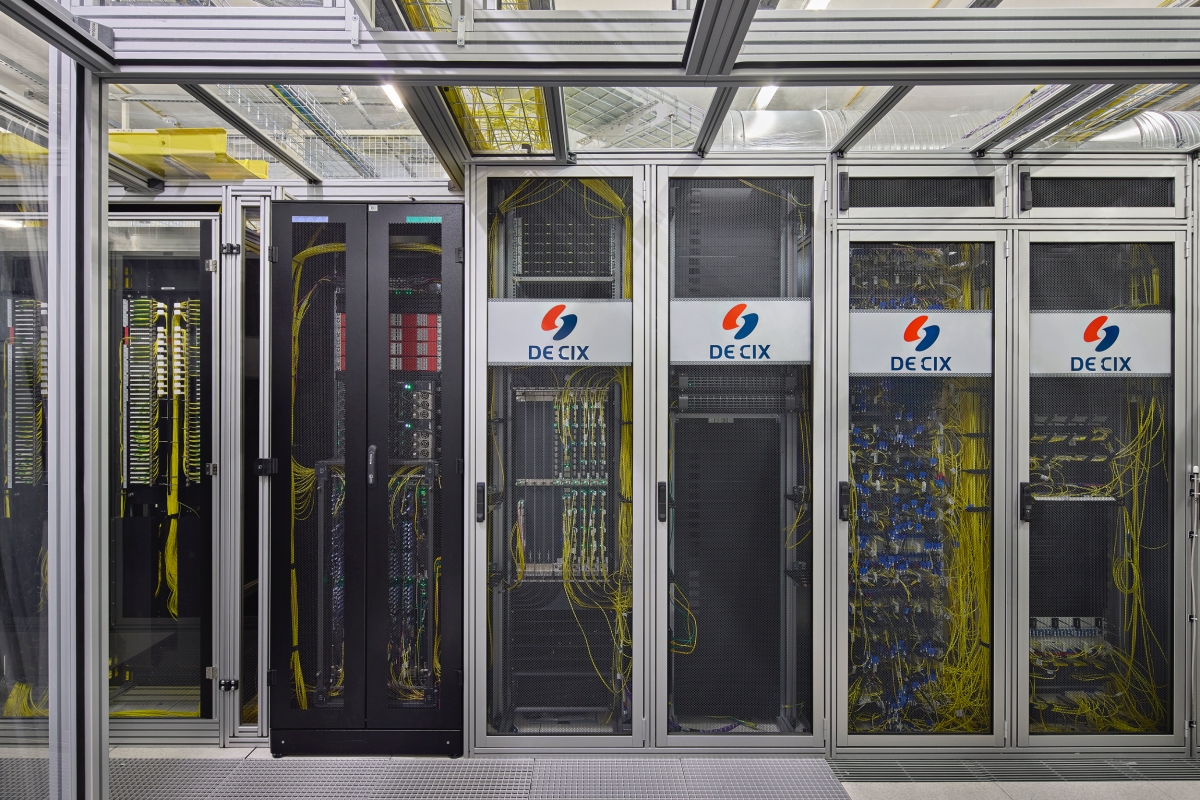
DE-CIX, a leading Internet Exchange (IX) operator, and Chief Telecom, a leading data centre and IX operator in East Asia, have signed a Letter of Intent to enter into a strategic partnership. As of June 2024, Chief Telecom customers can benefit from the neutral and global DE-CIX ecosystem that offers peering, cloud, and other interconnection services. The agreement enables Chief Telecom to bring its customers to Singapore to connect to the DE-CIX ASEAN distributed interconnection platform and engage in remote peering with DE-CIX Frankfurt, the largest Internet Exchange in Europe and one of the largest in the world. Chief Telecom’s customers will benefit from DE-CIX’s enterprise services, including DE-CIX’s Microsoft Azure Peering Service (MAPS) for dedicated and secure connectivity to the Microsoft 365 cloud, cloud connectivity to the major cloud service providers, or cloud to cloud connectivity via DE-CIX Cloud Router for connectivity between clouds. Wherever networks interconnect, this reduces latency times and increases performance of content and digital applications. Chief Telecom’s customers will be able to capitalise on this to support their close economic ties to Singapore, as well as South and Southeast Asia. “This new partnership opens a doorway to the ASEAN region that will allow Chief Telecom’s networks to directly interconnect with networks in Southeast Asia,” says Mareike Jacobshagen, Head of Global Business Partner Program at DE-CIX. “Together with partners like Chief Telecom, we are driving digitalisation in many regions around the globe and shaping the infrastructure that today's digital economies and societies need to grow and prosper.” Joseph Wu, Chairman of Chief Telecom, expressed that the establishment of the strategic partnership between DE-CIX and Chief is of great significance. DE-CIX not only connects thousands of data centres in Europe, the Middle East, North America, Asia, and Africa, but also operates more than 50 Internet and Cloud Exchanges worldwide. It is one of the top commercial internet exchange operators globally. In the future, Chief Telecom and DE-CIX will leverage their combined strength to promote more comprehensive solutions in Europe and Asia. The customers and peering members of both parties, therefore, will benefit from higher-quality internet services. The distributed DE-CIX ASEAN interconnection platform interconnects markets in Southeast Asia and promotes direct data pathways, lower latency, and access to clouds across the region. The DE-CIX ASEAN ecosystem now covers seven key metro markets: Jakarta, Singapore, Kuala Lumpur, Johor Bahru, Penang, Brunei, and Manila. Customers at any of the exchanges are able to exchange Internet traffic with networks at any of the other IXs in the region, offering a seamless connection, top quality interconnection services for wholesale and enterprise requirements, and the most cost-effective way to peer across Southeast Asia. For more from DE-CIX, click here.

Comparing on-premises with cloud and colocation
Here, Pulsant provides an overview of 'on-premises', cloud and colocation to help businesses that are looking to expand their digital infrastructure that will aid the success of the businesses in years to come. When it comes to digital infrastructure, deciding between utilising either ‘on-premises’ or cloud remains a divide amongst all business decision makers - and both sides have their benefits, depending on which way you look at it. Cloud, for example, its often believed to be a runaway success. The UK Regulator, Ofcom, produced a report into the domestic cloud service market and noted that the UK cloud infrastructure market is expanding, with overall revenues increasing from a rate of 35% to 40% annually. Despite that, Synergy analysts have discovered that by 2027, enterprise data centres will still account for more than a quarter of data centre capacity. This year, there were 350 UK IT leaders involved in a 2024 research project, which recorded 93% of its respondents who have been involved with a cloud repatriation project in the last three years. Furthermore, 25% of those businesses have already migrated half or more of their cloud-based workloads back to an ‘on-premises’ infrastructure. However, for many businesses, especially those experiencing growth, SMEs and medium-sized enterprises, the reality is there are two types of ‘on-premises’ infrastructures. Some businesses (usually within technology) will host their own data internally within their own data centre, while there are others that will host their entire IT infrastructure within their own office. The latter group of companies are often seeking solutions to manage their servers and treat it as a critical asset which they need to protect. Migrating to serviced offices Businesses that are experiencing growth or are already at a medium-sized level, tend to be already discussing their next steps. Usually driven by the increase in energy prices, higher borrowing, operational costs, and evolving work patterns, they tend to reassess their property portfolios. One focus has been the migration to serviced offices. Lambert Smith Hampton, a commercial property specialist, cites the following Mordor Intelligence forecasting which says that, “The UK market will grow by 8% per year during 2022-27.” There also been an “exceptional rise in demand”, for flexible offices in the UK, according to Savills reports. It also highlights that the increased demand has led to an increase in prices by 15%, and enquiries are also up by 17%. Despite that, issues have begun to arise with serviced offices. With critical business technology being operated within a shared space, restrictions have emerged. Firstly, serviced offices are rarely equipped with the necessary infrastructure and connectivity to host high-growth company needs. The power supply is shared throughout the entire building and can therefore be insufficient. Also, connectivity options and data management capabilities tend to be at a bare minimum. Shared offices also lack the necessary physical and cyber security assets. With the demand in costs, a serviced office typically has less physical security than a data centre and on-site staff aren’t comprehensively trained in cybersecurity. From a technological perspective, serviced offices are more vulnerable to cyber-attacks because they use less secure connections to keep the costs low. Finally, serviced offices have limited space for businesses looking to grow. By having a limitation on room-size, this can restrict business attempts to scale their IT infrastructure, because their office operators need to prioritise space for furniture etc. Colocation data centre When it comes to digital infrastructure, serviced offices often bring challenges for high-growth businesses. It is difficult for them to operate their own, expensive property facility or carry their ever-expanding infrastructure with them. On the other hand, businesses can experience a lack of control over their own technologies, so are forced to reduce their control over systems and key processes. Then there is the case of growth not being a ‘one time deal’ for businesses. It goes beyond legacy on-site strategies, expansions and adapting their infrastructure with every opening of a new facility. With a colocation centre, businesses can move their IT infrastructure, while focusing on their growth and agility. Firstly, businesses can exploit a flexible office space to move, optimising their capital expenditure (CAPEX) investment and operational expenditure (OPEX), by acquiring the minimum they need. In context, this is often a complete migration to OPEX as businesses seek to release themselves of expensive liabilities. The increased agility can fuel businesses to expand their operations. They also receive reassurance of greater security, and as they evolve, their colocation partner can also advocate a wider range of suppliers in connectivity and ecosystems. Business operations can become more resilient as the colocations provides managed connectivity, power and cooling issues which can assist their sustainability concerns. The issue however for businesses, is finding the right colocation partner who are local to them, available for support across the UK and can deliver transparency at a reasonable price. However, once a business finds a suitable colocation supplier, than they can benefit by splitting their IT infrastructure into a dedicated colocation space and benefit with the best of both worlds. They can gain an optimal operation focus with more control over costs and greater flexibility to grow. Adopting an interconnected approach To optimise any IT infrastructure migration, businesses need to clarify their approach within the decision-making process. They can do that in five simple steps: Establish what the data is going to be used for and thus, the primary attributes in successfully managing it. Is speed of access the top concern? Or security? Or real-time analysis? Consider scalability, business continuity and disaster recovery. Define the technologies that will most effectively serve these key purposes. Technically, this means assessing space, power, cooling, and connectivity requirements and accounting for data volume, bandwidth, and downtime. Find and connect with suppliers in those spaces that are prepared to become real partners. In a digital, data-driven age, the software and infrastructure a business is built on matters. Tour facilities and develop service level agreements (SLAs). Develop a detailed migration plan that anticipates delays and establishes clear definitions of success. Install and configure hardware to achieve this, spanning routers, switches, firewalls, load balancers and virtualisation platforms and hypervisors if applicable. Keep an eye on the future: embracing data and taking steps towards managing and optimising it typically accelerates growth for a business. As such, businesses must ensure that any strategy to put the data in the right place now, does not mean it is in the wrong place tomorrow. For more, visit pulsant.com/colocation. For more from Pulsant, click here.

Colt to deliver new cloud services via OVHcloud partnership
Colt Technology Services (Colt), a digital infrastructure company, has announced a partnership with OVHcloud, a global cloud player, which brings extensive public and private cloud services to business customers in over 140 countries. The collaboration sees organisations benefit from the security and flexibility of Colt’s award-winning Dedicated Cloud Access connectivity, coupled with the robust data protection built into OVHcloud’s diverse set of public and private cloud services available through OVHcloud Connect. OVHcloud operates over 450,000 servers within 43 data centres, serving 1.6 million customers across four continents. Spearheading a trusted cloud and pioneering a sustainable cloud service, OVHcloud offers customers the latest-generation solutions combining performance, predictable pricing, and complete data sovereignty to support their unfettered growth. Colt provides connectivity to OVHcloud via eight points of presence (PoPs) in Europe, and one in Singapore. This connectivity gives businesses the opportunity to access OVHcloud from Colt’s extensive last-mile footprint of over 32,000 connected buildings and 1,200 data centres globally, across a wide range of cloud connectivity options including SD WAN, Ethernet, Wave and IPVPN, and Colt’s first-to-market On Demand network-as-service (NaaS). Colt’s Dedicated Cloud Access provides secure connectivity that is dedicated to the customer, and thus provides optimal latencies and full bandwidth guarantees. The announcement comes as growth in the cloud market continues, with 94% of enterprises globally now using cloud services, according to one report. Besides the ongoing Cloud trend, improving security was also a top priority for IT investment as identified in Colt’s latest IT Priorities research, cited by 40% of the 1,000-plus respondents. Peter Coppens, VP Infrastructure and Connectivity Solutions at Colt, says, “Data sovereignty and security are top of mind for IT leaders tasked with accelerating cloud migration. They need to know their data is watertight – not just within the cloud itself, but also transitioning into and out of the cloud. Our partnership with OVHcloud gives businesses the peace-of-mind that comes from working with two organisations which meet the most robust data protection standards and have a deep understanding of European and Global data sovereignty topics, backed up with global scale and a shared dedication to delivering the best customer experience”. Yaniv Fdida, Chief Product and Technology Officer OVHcloud, adds, “We are delighted to work with Colt and offer OVHcloud services and solutions to even more customers throughout the world.” OVHcloud and Colt share a deep commitment to sustainability, the companies tell us. Colt is committed to sustainable infrastructure across its entire value chain: through reducing scope 3 emissions to using sustainable energy resources, refurbished hardware components and incorporating end-of-life processes which promote circular economy principles. OVHcloud, meanwhile, has been leveraging for over 20 years an integrated model that guarantees total control of its value chain: from the design of its servers with a bespoke watercooling system to the construction and management of its data centres, so customers can seize the benefits of an environmentally-conscious model with a frugal use of resources and a carbon footprint reaching the best ratios in the industry. For more from Colt Technology Services, click here.

Five tips to illuminate your data centre for peak performance
Data centres are among the most energy-intensive buildings in the world. With no windows, these buildings rely entirely on artificial lighting, making the quality and efficiency of the lighting systems crucial. The right lighting can help data centre facilities managers reduce energy usage and improve efficiency. LED lighting, for example, can reduce energy usage by up to 50%, and LED lighting with higher lumens per watt can further increase these energy savings. Ed Haslett, Divisional Director – Critical Facilities UK & Ireland at Zumtobel Group, shares five key points to consider to improve the efficiency of your data centre lighting. 1. Use a lighting track system for speed, flexibility, maintenance and sustainability Lighting track systems, such as the Tecton track system, eliminate the need for traditional cable runs and junction boxes, making installation faster, easier, and more sustainable. The Tecton system allows the installer to connect a luminaire anywhere along the run, providing unparalleled flexibility compared to other systems. Tecton installations are typically 61% quicker to install than traditional hard-wired solutions and 30% faster than some competitors. This system's flexibility in layout and maintenance allows for easy reconfiguration and repairs, making it an ideal choice for dynamic data centre environments. 2. Use the right luminaire intensities and beam angles to maximise spacing of luminaire points Selecting luminaires with appropriate intensities and beam angles ensures sufficient illumination while minimising the required fixtures. This not only reduces installation costs but also contributes to energy savings. However, it's important to note that the mounting height and intensity can significantly alter the spacing between luminaires. In some designs, it is possible to reduce from seven luminaires in a row to five, cutting commercial costs and decreasing the size of central battery systems, lighting control systems, and wattage loads significantly. However, this may not be feasible in all data centre environments, and careful planning and assessment are necessary. 3. Utilise dedicated emergency spots to reduce the number of emergency luminaires Employing dedicated emergency spotlights instead of traditional emergency luminaires for emergency illumination can significantly reduce the number of emergency luminaires required. The specially designed optics can be used in the design to deliver the required emergency illuminance without having to use more of the mains luminaires to achieve the requirements in emergency mode. Often, three mains luminaires are required to meet requirements in an aisle, where two dedicated emergency spots will do the job more efficiently with a significantly lower wattage requirement. This optimisation not only conserves space by utilising a smaller central battery system footprint, but also enhances the overall efficiency of the lighting system. Having a central battery system allows for an easier to maintain single point of maintenance for the site team, without the need to change out individual batteries in highly sensitive areas on a monthly basis, for individual failures. The batteries for these systems can then be placed in an area not subject to the high temperatures found in data halls, so the systems can have much longer life expectancies than the less robust integral emergency packs commonly used in the UK. Data centres are typically hot environments, so the equipment being used to support these areas need to be capable of working for sustained periods of time within these temperatures. Most integral battery luminaire solutions are not designed or tested to the levels seen in data centres, especially for these buildings which are in operation 24/7. The added benefit of the system monitoring the health of the emergency luminaires for reporting, also allows the site team to carry out maintenance only when required. 4. Implement dark sky compliant external lighting for environmental and nocturnal animal life Data centres, as high-security critical environments, should not stand out as beacons in their surroundings. It's crucial to maintain a low-key presence in the built environment. Both humans and ecological systems rely on periods of darkness to thrive. By adhering to dark sky-compliant guidelines for exterior lighting, data centre facilities managers can ensure minimal light pollution, protecting the environment and contributing to the preservation of nocturnal animal life, whilst maintaining a level of security necessary for the site. This responsible approach to lighting underscores the data centre's commitment to environmental stewardship. Dark sky-compliant exterior lighting restricts the amount of upward-directed light, avoids glare and over-lighting, utilises dimming and other appropriate lighting controls, and minimises short-wavelength (bluish) light in the night-time environment. The International DarkSky Association offers the DarkSky Approved programme, providing third-party certification for products and projects that minimise glare, reduce light trespass, and protect the night sky. 5. Implement intelligent control systems to minimise energy consumption Integrating intelligent lighting control systems allows for dynamic adjustment of lighting levels based on occupancy and required light conditions. This feature ensures optimal illumination while minimising energy consumption and maximising energy efficiency. DALI (Digital Addressable Lighting Interface) control systems can save energy and money by dimming luminaires when not required to be working at full output, maintaining the light levels required for CCTV coverage, or switching off luminaires at specific times or when rooms are empty, potentially reducing the systems energy consumption by up to 82%. By adopting these five key strategies, data centres can effectively harness the benefits of modern LED lighting, leading to significant energy savings, reduced environmental impact, and enhanced operational efficiency. For more information on innovative lighting solutions, visit Zumtobel's website and explore its range of products designed to optimise data centre performance. For more from Zumtobel, click here.


Translate »