Data Centre Business News and Industry Trends

CBRE: AI demand drives record Europe data centre signings
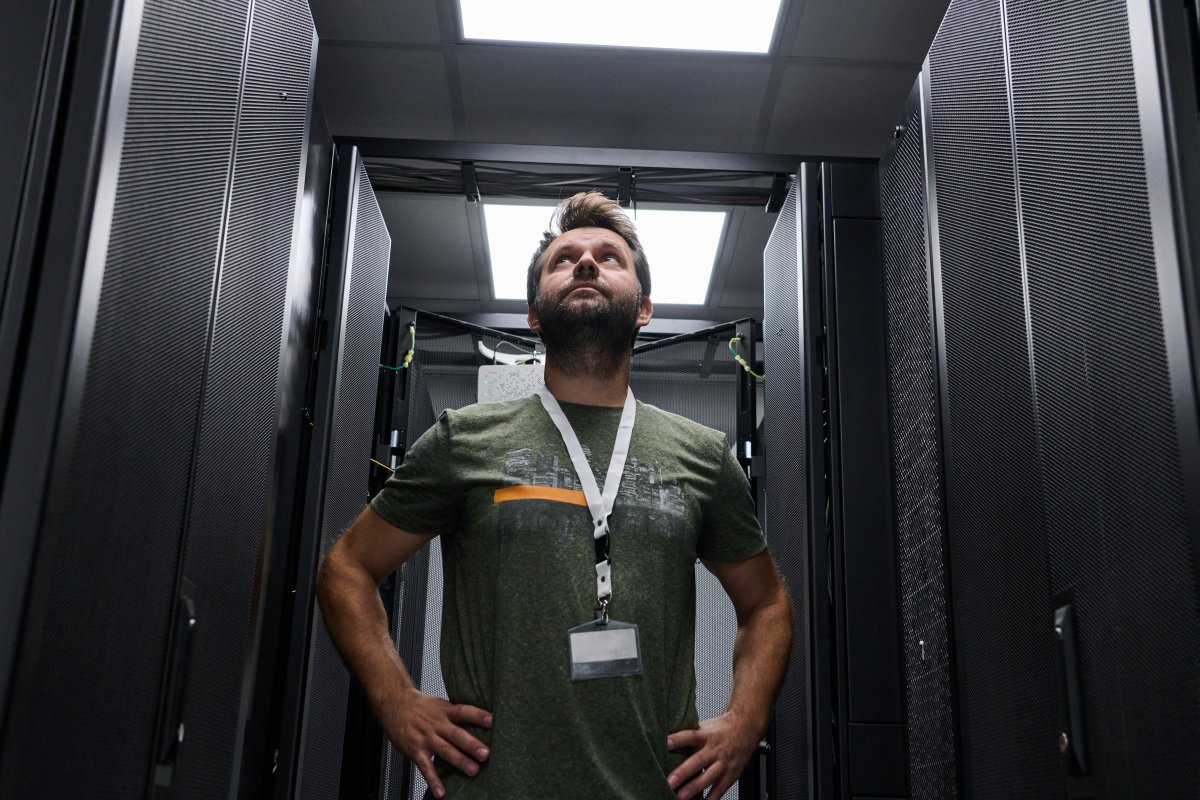
Demand for AI-ready data centre capacity is increasing across Europe, with emerging AI infrastructure providers, often referred to as neoclouds, securing record levels of capacity. According to research from global commercial real estate services and investment firm CBRE, signings for AI-focused colocation capacity reached 420MW in the first half of 2026, compared with 89MW during the same period in 2025. Two thirds (66%) of the contracted capacity is expected to be delivered by data centre operators to neoclouds in the Nordic region, where lower-cost renewable power is more readily available. The increase in AI-related capacity signings indicates growing confidence amongst data centre operators and investors in the neocloud sector. CBRE says operators are finding ways to meet funding requirements when contracting with neoclouds, representing a shift from the more cautious investment environment seen two years ago. Operators have also adopted measures such as rental deposits and letters of credit on some transactions to reduce financial risk. Neoclouds secure capacity for AI workloads Andrew Jay, Head of Data Centre Solutions, Europe at CBRE, explains, “Neoclouds have emerged as viable occupiers who are taking capacity at scale in markets typically where lower-cost power is the norm. "It is a sign that many data centre providers are increasingly comfortable with the ambitions of neocloud providers and the financial structures that can be used to satisfy the funders.” Kevin Restivo, Director, European Data Centre Research at CBRE, adds, “The underlying demand for compute is immense. Several neocloud companies have emerged with investment-grade customers, enabling them to secure capacity and support the growing requirements of AI workloads. “As a result, we are seeing unprecedented growth in this segment with deployments in areas in parts of Europe where data centre development isn’t the norm.” For more from CBRE, click here.

CVC DIF to acquire German data centre operator
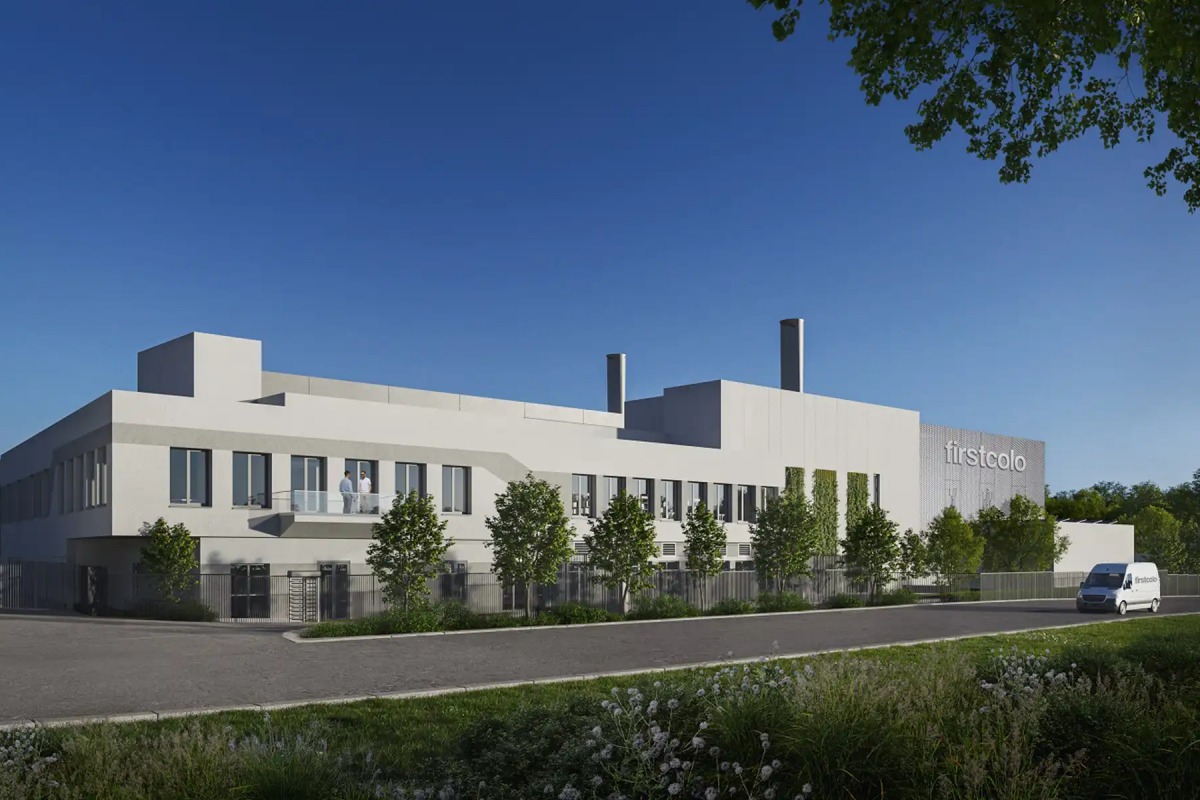
Global private markets manager CVC DIF has agreed to acquire a significant majority stake in Frankfurt-based colocation data centre operator firstcolo from Cube Infrastructure Managers. The investment will be made through DIF Value Add IV and is expected to close by the end of September 2026, subject to customary conditions. Founded in 2007, firstcolo operates two data centres in Frankfurt and provides colocation, dedicated cloud hardware, cloud, connectivity, and managed services to more than 350 enterprise customers. The company's existing facilities are described as near fully utilised and it is also developing FRA7, a new data centre in Rosbach, within the Frankfurt metropolitan region, which will provide 24MW of total gross capacity. The site has secured its power supply, required permits, and fixed-price construction arrangements. Firm tenant commitments are also in place for the facility. FRA7 is being developed in partnership with the regional utility provider, which will supply the facility's energy. Surplus heat from the data centre will be made available for the local district heating network. FRA7 forms first stage of expansion Following the acquisition, firstcolo intends to continue developing its enterprise data centre platform, with FRA7 forming part of its planned expansion in Frankfurt and other German data centre markets. The company will continue to be led by its existing management team, including CEO and co-founder Jerome Evans, COO and co-founder Nicolaj Kamensek, and CFO Dennis Bergfeld. Willem Jansonius, Managing Partner at CVC DIF and Co-Head of the DIF Value Add Strategy, comments, “firstcolo represents a rare opportunity to invest in a high-quality, founder-led colocation platform in an attractive and supply-constrained FLAP-D data centre market. The company combines a resilient, cash-generative existing business with a substantially de-risked expansion project.” Stefan Moosmann, Head of DACH at CVC DIF, adds, “firstcolo is a strong example of CVC DIF's local-for-local approach in action. The opportunity was sourced through our Frankfurt team's local network and developed in seamless collaboration with our pan-European digital infrastructure team.” Jerome Evans, CEO and co-founder of firstcolo, says, “FRA7 is more than a single data centre development; it is the first building block of a scalable, high-performance infrastructure platform designed to support the next generation of AI, cloud, and enterprise workloads in Germany.” Nicolaj Kamensek, COO and co-founder of firstcolo, concludes, “FRA7 is being designed as a highly efficient, AI-ready facility with the power, cooling, connectivity, and operational processes required for demanding high-density workloads.”

EdgeMode, BlackBerry to merge into BLACK AI
Data centre developer EdgeMode and investment firm BlackBerry Alternative Investment Fund (AIF) have signed a memorandum of understanding (MOU) outlining plans to merge and establish BLACK AI, a publicly listed AI infrastructure development platform. The proposed merger remains subject to final commercial terms, due diligence, definitive agreements, and customary closing conditions. The two organisations have worked together for almost 12 months and intend to combine EdgeMode's public company platform and AI infrastructure portfolio with BlackBerry AIF's experience in project development, renewable energy, infrastructure, and commercial execution. BLACK AI will initially focus on AI infrastructure projects in Spain and Panama, with plans to consider opportunities in additional international markets. Vision 2035 strategy BLACK AI's long-term strategy, Vision 2035, will focus on developing AI infrastructure projects, potentially monetising selected assets at the 'ready-to-build' stage, and progressing other projects through development and construction. The strategy also includes the potential to retain selected infrastructure assets as part of a portfolio intended to generate recurring cash flow. Charlie Faulkner, CEO of EdgeMode, comments, "What excites me most isn't the transaction itself; it's the partnership behind it. "Over the past year, Jose, Simon, and I have built enormous trust, respect, and friendship. The more we worked together, the more obvious it became that we weren't trying to build competing businesses; we were trying to build the same company. "Jose has assembled an outstanding team with exceptional technical and commercial expertise and, together, we believe we have the opportunity to build something truly special. "BLACK AI combines project development capability, strategic partnerships, and access to the public capital markets in a way that positions us to pursue a genuinely long-term vision. "AI infrastructure is one of the defining investment themes of our generation, and we believe BLACK AI has the opportunity to become a significant international platform over the decade ahead." Jose Mora, CEO of BlackBerry AIF, adds, "This partnership is built on a shared vision, complementary expertise, and a common ambition to build something exceptional. "By bringing together our development capability with EdgeMode's public-market platform, we believe BLACK AI will be well positioned to develop large-scale AI infrastructure across multiple international markets. "We believe speed, execution, and long-term thinking will define the winners in this industry and, together, we are creating a platform designed to achieve exactly that." For more from EdgeMode, click here.

Airsys urges UK MPs to focus on existing data centres
Airsys, a provider of data centre cooling systems, has called on MPs to consider upgrading existing data centre sites as part of the UK’s approach to expanding AI capacity. The cooling technology company will make the case for improving existing data centre assets in response to an inquiry launched by the All-Party Parliamentary Group (APPG) for Data Centres. Matthew Thompson, UK Managing Director at Airsys, says, “AI Growth Zones are clearly part of the mix, but these will take time to deliver. UK businesses need access to AI now, and better utilisation of existing sites has to be part of the answer.” The inquiry follows the publication of the APPG Insights report in May, which highlighted industry concerns around energy supply and grid access, energy costs, water use, planning, and sustainability. Matthew continues, “While government policy has emphasised construction of new data centres and AI Growth Zones, these will take years to come on stream. Planning and local community agreement is one hurdle, but getting sufficient power onto these sites is the biggest bottleneck for the industry. “The government policy is also heavily focused on regional developments, which has raised concerns amongst some operators about latency issues as inference becomes more important. “In the meantime, businesses need compute capacity now in strategic locations, that don’t compromise on latency.” Airsys is proposing that retrofitting existing sites and developing new capacity on brownfield sites should form part of the UK’s data centre and AI infrastructure agenda. Retrofitting could increase compute capacity Matthew notes, “The Government has correctly identified the UK’s massive potential for economic growth through data centres and AI. But, focusing purely on longer-term projects could mean more immediate opportunities to boost our AI capacity are lost.” Airsys argues that retrofitting legacy sites with liquid cooling could improve the use of available power by reducing cooling requirements and allowing more power to be allocated to computing. Data centre operators commonly use power usage effectiveness (PUE) to measure energy efficiency. Airsys has proposed two additional metrics - power compute effectiveness (PCE) and return on invested power (ROIP) - to assess the utilisation of data centre power and identify underused capacity. The company says deploying liquid cooling at existing sites, alongside developing capacity closer to users, could increase compute density and utilisation whilst reducing energy and water consumption. It also argues that a focus on longer-term regional AI Growth Zones, combined with fragmented local planning and policy, could make it more difficult to improve existing sites. Airsys will submit formal evidence to the inquiry, focusing on policies for edge environments and retrofitting alongside larger-scale data centre developments. Matthew concludes, “Clear, unified direction from central government and regulators is urgently required to ensure UK businesses get access to the capacity they need, where they need it. “We want to ensure the Government, legislators, and regulators are aware of all the tools available to ensure the country is able to fully realise the benefit of all its AI and data centre infrastructure." For more from Airsys, click here.

AVK secures $1bn investment from Partners Group
AVK, a provider of power systems and electrical infrastructure for data centres, has secured an initial investment of more than $1 billion (£743 million) from global private markets investment firm Partners Group, which will take a majority stake in the UK-based power infrastructure company. The investment is intended to support AVK's expansion and fund the development of on-site power infrastructure for data centre operators under an 'energy as a service' (EaaS) model. Ben Pritchard will retain a significant shareholding and continue as Chief Executive Officer, alongside the existing leadership team. The investment is the first external funding round in AVK's 36-year history, with it continuing to supply prime, standby, and dispatchable power infrastructure for data centres and other critical applications. AVK says the funding will support its strategy of funding, developing, owning, and operating on-site power infrastructure, including microgrids, whilst the company currently has a pipeline of more than 2GW. Under the EaaS model, data centre operators can procure energy through power purchase agreements (PPAs), rather than directly funding and managing large-scale on-site energy developments. AVK's existing operations are supported by its manufacturing facility in Haydock, in the North West of England, and a workforce of nearly 400 people across 10 hubs in the UK and Europe. Ben Pritchard, Chief Executive Officer at AVK, comments, “Speed-to-power is now a defining opportunity for European data centre operators. Our new partnership with Partners Group will allow us to meet our customers exactly where the market demands. "From the moment we launched our first microgrid, we recognised the challenge and the opportunity facing developers and operators globally. By adding capital to our power solutions portfolio, we can turn speed-to-power from an ambition into action. "I am excited to lead AVK into this new chapter alongside Partners Group, leveraging the firm's deep operational expertise in the data centre sector and power markets.” Investment targets on-site power infrastructure Partners Group has already invested in decentralised energy and data centres in Europe, including the pan-Nordic data centre platform atNorth. It also has experience investing in behind-the-meter energy infrastructure for data centres in the USA. Nicholas Pepper, Managing Director, Infrastructure at Partners Group, notes, "AI is driving one of the largest infrastructure buildouts in decades, and access to power is becoming a defining constraint. This constraint and lengthening connection queues are critical bottlenecks to growth in the European data centre market, which on-site generation can alleviate by accelerating speed-to-power. "AVK, with its deep expertise, track record, and pan-European footprint, is well positioned to address this issue as a one-stop-shop for data centre power solutions. We see an exciting growth opportunity for AVK and we look forward to supporting the management team in its next chapter." Earlier in 2026, AVK energised a large-scale data centre microgrid at Pure DC's campus in Dublin. The company says the project was the first of its scale for a data centre microgrid in Europe. For more from AVK, click here.

Sharon AI signs $373m cloud agreement
Sharon AI, an Australian neocloud provider, has signed a five-year cloud computing agreement with a global artificial intelligence platform worth $373 million (£277 million). Under the agreement, Sharon AI expects to deploy cloud computing infrastructure across its AI facilities in Australia, with revenue expected to begin in the first quarter of 2027. The company says its total AI factory capacity remains at 132MW, with 120MW now contracted to end customers. It also plans to increase the number of NVIDIA GPUs across its AI factory platform from 62,000 to 64,000 by mid-2027. The initial deployment under the agreement is expected to use 2,048 NVIDIA Blackwell Ultra B300 GPUs. Further deployments may take place during the five-year agreement, subject to customer requirements and the contract terms. An expansion of Australian AI infrastructure capacity Sharon AI says the agreement will contribute to the expansion of AI compute capacity in Australia and support the development of domestic AI infrastructure. James Manning, co-founder and Chief Executive Officer of Sharon AI, comments, "This agreement represents an important milestone in the continued expansion of Sharon AI's customer base and contracted AI infrastructure capacity. "As organisations increasingly seek access to sovereign, high-performance AI compute, we remain focused on delivering scalable infrastructure that supports the evolving needs of AI platforms, enterprises, and governments. "We continue to see strong demand for AI infrastructure in Australia and across the Asia-Pacific region, and this agreement reflects our strategy of securing long-term customer commitments as we expand our AI factory platform." The company has said the agreement is also expected to support investment in Australian digital infrastructure and provide additional opportunities for businesses, researchers, and government organisations to access AI compute capacity domestically.

Yondr acquires site for Northern Virginia data centre
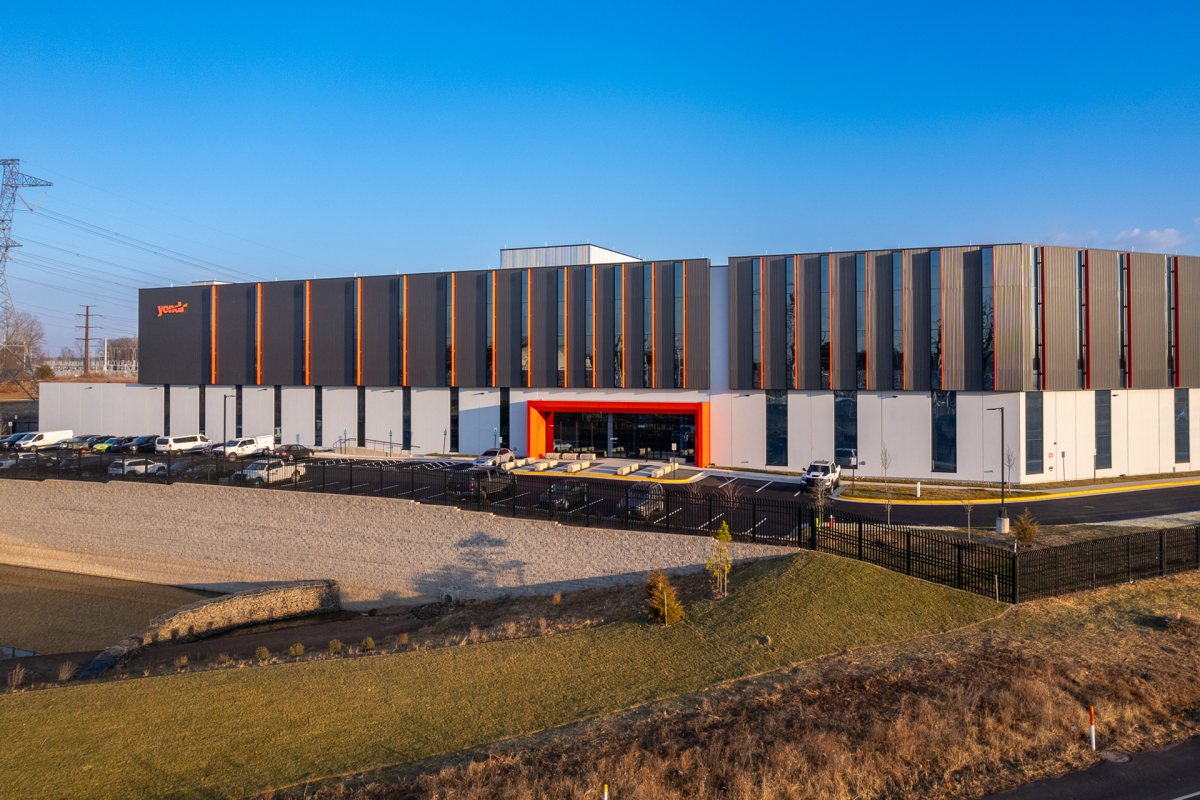
Yondr Group, a global developer, owner, and operator of hyperscale data centres, has acquired a 40-acre (16.2-hectare) site in Manassas, Virginia, USA - in partnership with funds and accounts managed by Cerberus Capital Management and its affiliates - which is expected to support the construction of a 72MW data centre campus, with operations planned to begin in 2029. The project is intended to provide additional capacity for hyperscale customers in Northern Virginia, supporting applications including cloud, enterprise, and artificial intelligence workloads. Northern Virginia is already an established data centre market, with a significant presence of hyperscale and cloud operators, extensive fibre connectivity, and connections to major hubs across the northeastern United States. Aaron Wangenheim, CEO of Yondr, comments, "We continue to see strong demand for well-located capacity across our global portfolio, including Northern Virginia, and this acquisition marks another important step in growing our North American footprint. "Bringing a project of this scale online in a market like Northern Virginia takes deep operational expertise and strategic, sophisticated capital, and our partnership with Cerberus brings both together to deliver the capacity hyperscale customers increasingly need." 72MW campus planned for 2029 The project is expected to have power available in the near term, with a target ready-for-service date of 2029. Tom Wagner, Senior Managing Director and Head of North American Real Estate at Cerberus, says, "We are pleased to partner with Yondr to deliver a high-quality project in Northern Virginia that is well positioned to support hyperscale demand. "With near-term power availability in a historically constrained market and a 2029 ready-for-service date, this project will be well positioned to support continued customer demand while creating long-term value for our partners and investors. "We look forward to advancing this project alongside Yondr and identifying compelling opportunities to invest in high-quality real assets supported by the strong fundamentals in the digital economy." For more from Yondr, click here.

Yondr agrees deal for its UK hyperscale data centre
Yondr Group, a global developer, owner, and operator of hyperscale data centres, has agreed to sell a majority stake in one of its UK hyperscale data centre campuses to GLIL Infrastructure, retaining a minority ownership interest and the responsibility for operating the site. The transaction involves a campus in Slough comprising two operational hyperscale data centre buildings serving a hyperscale customer. Financial terms were not disclosed. Yondr says the agreement enables it to realise value from a completed asset whilst continuing to manage its day-to-day operations and retain a long-term interest in the campus. Aaron Wangenheim, Chief Executive Officer at Yondr, says, "This transaction represents another important milestone in Yondr's long-term growth strategy. Bringing GLIL on board as an investment partner allows us to realise value from a high-quality, stabilised asset while remaining invested in its future and continuing to operate the campus on behalf of our customer." Investment expands digital infrastructure portfolio For GLIL Infrastructure, the acquisition adds to its digital infrastructure investments, which include a stake in Cornerstone, the UK's largest mobile tower company. Lee Belfield, Investment Director at LPPI and GLIL Infrastructure, notes, "Digital infrastructure is increasingly fundamental to the UK's economy, and hyperscale data centres are critical to supporting growing demand for cloud services and artificial intelligence. "This investment reflects GLIL's strategy of partnering with high-quality operators to invest in essential infrastructure that delivers resilient, long-term value for our pension fund members. "Yondr has developed a high-quality asset with a strong operational track record, and we look forward to commencing a long-term partnership with the Yondr team." The transaction is expected to complete in the coming months, subject to customary closing conditions and regulatory approvals. RBC Capital Markets acted as Yondr's financial adviser, with Linklaters providing legal advice. GLIL Infrastructure was advised by Nomura, with Simpson Thacher & Bartlett acting as legal counsel. For more from Yondr Group, click here.

US data centre pipeline growth slows in Q1
The pace of new US data centre developments slowed during the first quarter of 2026, with developers increasingly focusing on advancing existing projects rather than announcing new capacity, according to global research and consultancy firm Wood Mackenzie. Its latest US data center pipeline: Q2 2026 report found that 36GW of new data centre capacity was added to the development pipeline during Q1 2026, a 19% decline compared with Q4 2025. Total disclosed pipeline capacity now stands at 331GW, with around 40% of projects under active development. Wood Mackenzie says the slowdown reflects a more challenging development and regulatory environment, with established developers prioritising the delivery of existing projects. Caitlin Connelly, Senior Analyst at Wood Mackenzie, explains, "Established data centre developers continue to shift their focus to the maturation of their existing pipelines in the face of an increasingly challenging development and regulatory environment. "New entrants focused on gas supply and land access are targeting states such as Texas and Utah, but only a small fraction of those projects are under active development." Investment remains strong despite slower additions Texas continues to lead the US market with almost 100GW of planned capacity, followed by Ohio. New projects are also being planned in states including Utah, New Mexico, and West Virginia, although relatively few have progressed into active development. The report found that 53% of projects have passed the permitting stage, although these account for only 32% of total planned capacity. Meanwhile, signed construction or electricity supply agreements now cover 195GW of capacity, equivalent to around 26% of the United States' peak electricity demand in 2025. Wood Mackenzie also reports that disclosed capital investment in specific projects has exceeded $1 trillion (£743 billion). However, investment remains highly concentrated, with just 6% of projects accounting for 42% of total disclosed capital expenditure. The report also highlights increasing use of behind-the-meter power generation, particularly in Texas. Across projects where generation strategies have been disclosed, gas accounts for 48% of total site capacity, while renewable energy and battery storage represent 38%. Caitlin continues, "The regulatory environment for data centre development is increasingly complex and regionally diverse. Interruptible service options are being deployed, forcing companies to choose between speed to power and firm power. Policymakers tend to view firm service as an unnecessary friction to interconnection. "Fast-track capacity interconnection frameworks seek to bring new generation online quickly ahead of a supply crunch. It remains to be seen whether policy developments help or hinder demand growth, however, as policymakers seek to balance the often competing priorities of affordability and speed to power."

Data Centres APPG launches UK growth inquiry
The Data Centres All-Party Parliamentary Group (APPG) has launched a parliamentary inquiry to examine whether the UK's policy and regulatory framework is supporting the future growth and international competitiveness of the data centre sector. Titled Unlocking the UK's Data Centre Growth Opportunity, the inquiry will gather evidence from across the industry before publishing policy recommendations in December 2026. Written submissions are being invited from data centre operators and developers, investors, technology companies, utilities, combined authorities, regulators, academic institutions, and organisations representing environmental and community interests. Evidence must be submitted by 17:00 on 25 September 2026. Inquiry to examine key growth challenges The inquiry will include three oral evidence sessions between September and November, focusing on energy infrastructure and international competitiveness, investment and planning, and innovation and sustainability. It will also consider skills, workforce development, and the UK's long-term policy direction. Chris Curtis MP, Chair of the Data Centres APPG, comments, "Data centres are fast becoming some of the most significant infrastructure investments in the country and, with the right approach, they can deliver good growth, good jobs, good skills, and lasting economic and social benefit in the communities that host them. "This inquiry is about making sure that as the sector expands, it does so in a way that spreads opportunity across every region of the UK, not just where investment already concentrates. I'd encourage anyone with a stake in this agenda to submit evidence and help us build the case for growth that works for everyone." Alison Griffiths MP, Vice Chair of the Data Centres APPG, adds, "Data centres sit at the intersection of our national security, economic future, and environmental responsibilities. As demand for cloud computing and AI grows, communities are rightly concerned about the land, energy, and water they use. "As Vice Chair of the Data Centres APPG [...] and as a member of the Environmental Audit Committee, I want this inquiry to challenge operators to go beyond business as usual, improve their environmental performance, and demonstrate lasting value to the communities hosting them." David Reed MP, Officer of the Data Centres APPG, says, "The UK has a real opportunity to lead the world in data centre investment, but we should be under no illusion: other markets are competing hard for the same capital, the same skills, and the same technology. "This inquiry will look squarely at how the UK stacks up internationally, what's holding us back, and what reforms are needed to keep Britain at the front of the pack. I want this group to make the practical, evidence-led case for the policy changes that will secure our competitive standing for the next decade." The Rt Hon. Lord Philip Hunt of Kings Heath OBE, Officer of the Data Centres APPG, notes, "We cannot talk about data centre growth without talking honestly about energy, water, and sustainability. The sector's expansion will place real demands on our grid and our natural resources. This inquiry is an opportunity to hear from those developing the solutions, and to ensure sustainability isn't an afterthought but a condition of good growth." For more from the Data Centres APPG, click here.


Translate »