Exploring Modern Data Centre Design


Schneider research examines AI data centre maintenance
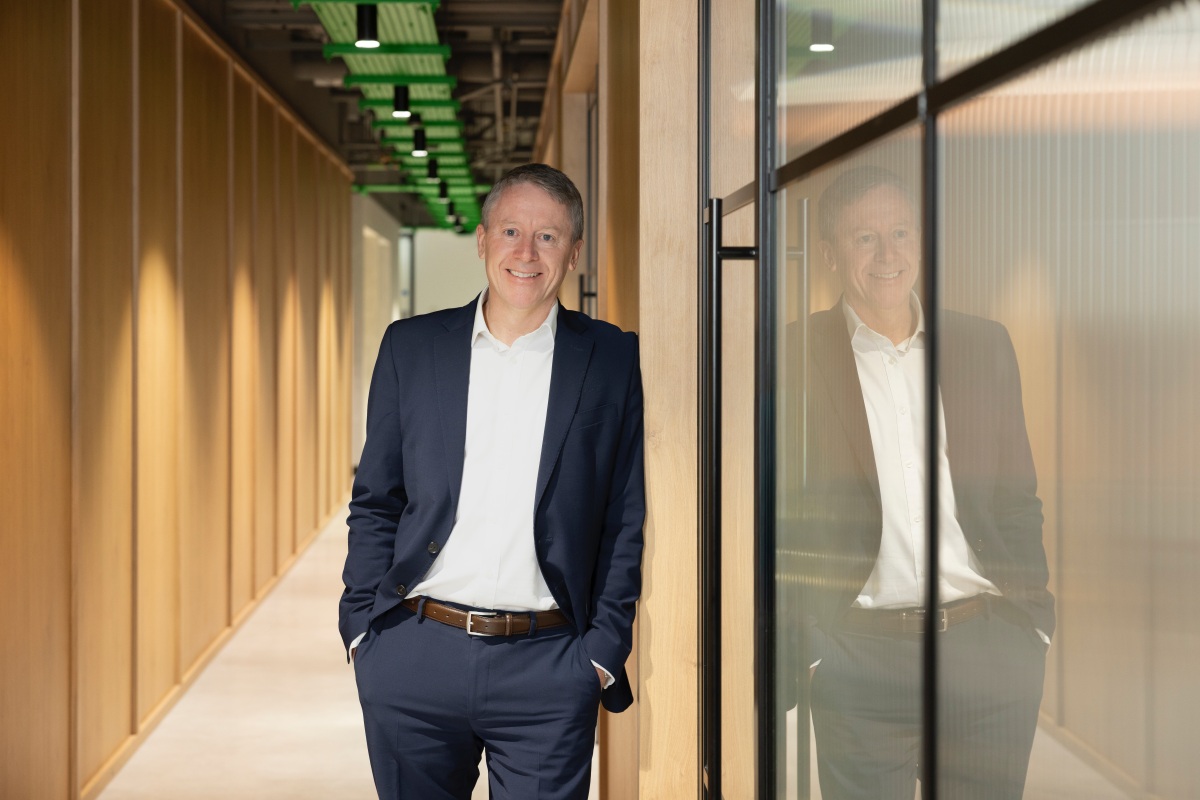
Global energy technology company Schneider Electric has published new research examining the role of condition-based maintenance (CBM) in supporting AI-era data centres. The IDC whitepaper, The Self-Aware Datacenter: How Condition-Based Maintenance Turns Fragmented, Multi-Vendor Datacenters into Predictable Infrastructure and System Intelligence, explores how increasing rack densities, multi-vendor environments, and shortages of skilled technicians are influencing maintenance strategies. According to the report, traditional, calendar-based maintenance is becoming less effective as data centre infrastructure becomes more complex. Instead, it highlights condition-based maintenance, which uses continuous monitoring and predictive analytics to identify potential equipment issues before failures occur. Jerome Soltani, Global Head of Services at Schneider Electric, says, "By combining remote monitoring capabilities with AI-assisted orchestration, you can gain insights regarding the health of your assets and systems, and get an early identification of abnormal behaviour that might precipitate a failure. "This ensures that downtime is minimised, but also that equipment that is working within specification is not disturbed or needlessly addressed." Research highlights growing operational challenges The whitepaper states that AI deployments are increasing rack power densities well beyond those typically found in conventional data centres, while mergers, acquisitions, and brownfield developments are creating more complex, multi-vendor environments. It also highlights the shortage of skilled engineers as a growing operational challenge, citing research indicating that demand for qualified personnel continues to outpace supply in many markets. According to IDC, organisations adopting AI-assisted CBM have reported reductions in manual interventions, operational expenditure, and unplanned downtime, alongside improvements in asset lifespan and operational efficiency. Luis Fernandes, Senior Research Manager at IDC and author of the whitepaper, explains, "Condition-based maintenance is an optimised operating model for AI-era infrastructure that reduces manual interventions, lowers OpEx, and extends asset lifecycle. "By scaling predictive analytics to correlate behaviour across every vendor, asset, and failure trajectory, CBM enables operators to build machine-driven, human-validated system intelligence." For more from Schneider Electric, click here.

Black & White Engineering expands into Spain
Data centre design consultancy Black & White Engineering has expanded its European operations with the opening of a new office in Madrid, strengthening its presence in Spain's growing data centre market. The new office will support increasing demand from data centre clients across Europe, providing civil, structural, MEP, and design management expertise from a local base. The Madrid operation will be led by Hector Hernandez (pictured above), Area Director, Spain, while Marcos Uttley has been appointed Regional Director, Europe, with responsibility for supporting the consultancy's growth across southern Europe. Marcos says, "Spain is an important market for data centre investment and gives us a strong base from which to support clients locally and across wider Europe. The Madrid office reflects our continued focus on building depth in key markets while drawing on the technical experience of our global team." Strengthening support for Europe's data centre market Hector Hernandez brings more than 20 years' experience in data centre and critical infrastructure engineering, having worked on projects across Europe, the Middle East, Australia, and the Americas. His experience spans hyperscale and colocation facilities, including advisory, design, construction, commissioning, and operational delivery. He comments, "The opportunity to build Black & White Engineering's presence in Spain from the ground up was a major draw. The market here is developing quickly and clients need advisors who understand both the technical demands of these projects and the local delivery environment." An Accredited Tier Designer by the Uptime Institute, Hector will work with the company's wider European leadership team as it continues to expand its operations in Spain. For more from Black & White Engineering, click here.

Schneider calls for collaboration on London data centres
Global energy technology company Schneider Electric has brought together organisations from across the public and private sectors to discuss the infrastructure challenges facing London's data centre market and the collaboration needed to support future AI growth. Held in partnership with Opportunity London and SEGRO, the roundtable explored how London can maintain its position as Europe's largest data centre hub while addressing growing demand for digital infrastructure. The event, chaired by Laura Citron, Chief Executive of London & Partners, included representatives from government, local authorities, energy companies, data centre operators, real estate, and the wider technology sector. Participants discussed the need for greater coordination around planning, electricity infrastructure, land availability, water use, and emerging technologies such as liquid cooling. The discussions also highlighted the importance of improving understanding of data centre requirements among policymakers as demand for AI and cloud infrastructure continues to grow. The roundtable also examined the role of data centres as critical national infrastructure (CNI) and their contribution to economic growth and AI development. Industry highlights need for coordinated infrastructure planning Matthew Baynes (pictured above), Vice President, Secure Power UK & Ireland at Schneider Electric, says, "Today, there remains a fundamental gap between how policymakers perceive and understand data centres [and] how the industry actually operates. "Decisions around planning, land allocation, and power provision are being made without a complete picture of what's required to meet the AI opportunity, and the UK now risks losing ground to markets where that understanding is far more mature. "As the UK's largest data centre hub, and its default AIGZ, London offers all the advantages needed to lead, but closing the gap between ambition and action is not optional; it is the prerequisite for success." Jace Tyrrell, Chief Executive of Opportunity London, adds, "Data centres are no longer a niche; they are foundational to London’s future economic growth, AI ambitions, and global competitiveness." Maria Jose Rivas-Duarte, Director of Sustainability at Pure Data Centres, also says the discussions demonstrated the importance of collaboration between industry, policymakers, and local communities to support responsible digital infrastructure development, while Luisa Cardani, Head of the Data Centres Programme at techUK, notes the UK's data centre sector has significant potential to contribute to economic growth, but that achieving this will require coordinated action between government and industry. For more from Schneider Electric, click here.

Supermicro reveals Arm-based AI infrastructure
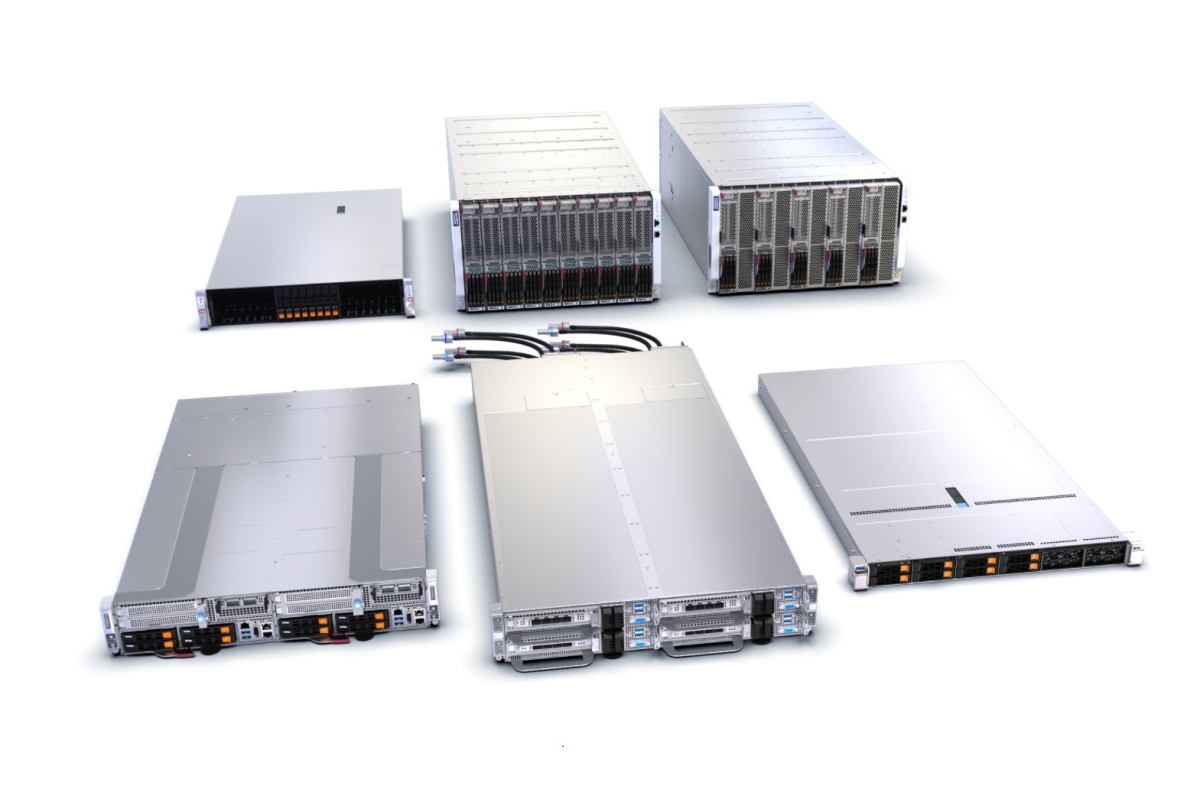
Supermicro, a provider of application-optimised IT systems, has announced a new portfolio of rack-scale infrastructure platforms based on Arm AGI CPUs, targeting enterprise AI and agentic AI workloads. The company says the systems have been designed to address increasing demand for compute capacity while improving energy efficiency and rack density within existing data centre environments. The new platforms combine Arm's Neoverse CSS V3-based CPU architecture with Supermicro's Data Center Building Block Solutions (DCBBS) approach, which integrates servers, storage, networking, cooling, and rack infrastructure. Charles Liang, President and CEO of Supermicro, says, "Supermicro continues to lead the industry when it comes to deploying new and innovative rack-scale solutions that maximise performance and efficiency. "Our DCBBS technology stack delivers end-to-end data centre solutions of any size, which, combined with the new density and efficient, performance-optimised Arm AGI CPU microarchitecture, helps enterprises realise significant TCO savings on their agentic AI infrastructure investments." The launch includes air-cooled and liquid-cooled server platforms designed for AI inference, AI training, cloud computing, and high-density enterprise workloads. Among the systems announced are a dual-socket 2U server for compute-intensive applications, a 5U GPU server supporting up to eight double-width GPUs, a liquid-cooled multi-node platform for rack-scale deployments, and a single-socket edge-focused server design. Focus on rack density and energy efficiency According to Supermicro and Arm, the infrastructure has been developed to maximise performance per watt and increase compute density for AI environments. Arm says its AGI CPU architecture features up to 136 cores per processor and is designed to support large-scale AI orchestration workloads through increased memory bandwidth, expanded memory capacity, and scalable I/O capabilities. The companies state that deployments can exceed 6,000 CPU cores within a single air-cooled rack, while larger Open Compute Project-based configurations can support significantly higher densities. Mohamed Awad, Executive Vice President, Cloud AI Business Unit at Arm, says, "Agentic AI is driving a fundamental shift in infrastructure requirements, where efficiency, scalability, and orchestration performance are becoming just as critical as raw compute. "By combining Arm AGI CPUs with Supermicro's rack-scale system expertise, we're enabling infrastructure designed to deliver higher AI throughput, maximum compute density, and improved data centre economics at scale." Supermicro says the platforms are intended to help organisations deploy AI infrastructure while making more efficient use of available data centre space, power, and cooling resources. The announcement expands Supermicro's portfolio of AI-focused infrastructure as demand continues to grow for high-density computing environments capable of supporting increasingly complex AI workloads. For more from Supermicro, click here.

Siemens develops AI data centre reference architecture
German multinational technology company Siemens has worked with NVIDIA and Fluence to develop a reference architecture aligned with NVIDIA DSX Vera Rubin, providing an electrical, power, and controls framework for hyperscalers, colocation providers, and cloud infrastructure operators deploying AI data centres. As AI workloads continue to drive demand for larger-scale infrastructure, platforms such as NVIDIA Vera Rubin NVL72 are increasing requirements for power and cooling. Data centre operators must also address challenges including site selection, grid connectivity, capital expenditure, and deployment times while integrating emerging technologies. The reference design, as a response to this, is based on a 136MW facility with a 100MW IT load. It covers the electrical infrastructure from the utility connection at 34.5kV through medium-voltage distribution, modular low-voltage power blocks, and rack-level interfaces. The architecture is designed to meet Tier III concurrent maintainability requirements, allowing individual components to be taken out of service without affecting IT operations. The modular design also allows capacity to be added in phases, supporting deployments ranging from 10s of megawatts to 100s of megawatts without requiring a complete redesign. The reference architecture incorporates electrical design parameters aligned with nVent and NVIDIA requirements, and a future update is expected to add advanced thermal management guidance. Sara Zawoyski, President of nVent Systems Protection, says, "nVent has deployed more than two gigawatts of liquid cooling capacity globally. That operational experience is what allows us to help partners like Siemens translate reference architectures into deployable thermal solutions that perform reliably from day one at this scale. "Platforms like NVIDIA Vera Rubin NVL72 are pushing rack densities well beyond what traditional air-cooled infrastructure can support." Supporting large-scale AI infrastructure According to Siemens, the architecture is designed to support high-density AI deployments while maintaining compatibility with future IT platforms and changing energy requirements. It also supports NVIDIA DSX MaxLPS and is intended to help operators maximise computing output within fixed power limits. Ruth Gratzke, President of Siemens Smart Infrastructure USA, states, "Siemens’ deep expertise in power systems and controls engineering, modular infrastructure, protection, and industrialised delivery is really evident in this latest joint reference architecture design. "Our pre-engineered, prefabricated, and factory-tested medium- and low-voltage skids help minimise on-site construction complexity, shorten commissioning cycles, and improve quality, safety, and repeatability across deployments. "Further, our automation and digital twin strategies deployed in this reference help ensure that facilities are brought online faster and with greater potential to produce tokens at scale." The design also incorporates battery energy storage technology from Fluence to provide additional operational flexibility and resilience. Jeff Monday, Chief Growth Officer at Fluence, suggests, "Our Smartstack platform is central to this new architecture, transforming the grid into an accelerator for compute. "By providing essential capabilities like voltage and frequency ride through, black start, grid demand response, and AI load smoothing, we are enabling our customers to build the AI factories of the future faster and more reliably." The architecture also includes integration with a centralised data centre management platform, providing visibility across power, cooling, and compute infrastructure through a single management interface. For more from Siemens, click here.

Zumtobel upgrades lighting at London data centre
Zumtobel, an Austrian company specialising in professional indoor and outdoor lighting, has completed a lighting upgrade at Global Switch’s London East data centre campus in Docklands, supporting the site’s ongoing refurbishment programme for AI and high-performance computing (HPC) workloads. The project covered multiple floors across the facility, including data halls, plant areas, offices, and a liquid cooling demonstration suite. The refurbishment programme is focused on improving flexibility, operational resilience, and energy efficiency as demand for AI-ready infrastructure continues to grow. Zumtobel worked alongside consultants including Hilson Moran, Burns & McDonnell, and AFK Studios, while Datalec Precision Installations carried out installation works. Lighting designed for AI-ready infrastructure The lighting installation was designed to improve visibility within the high-density data halls while supporting energy efficiency and long-term operational requirements. Zumtobel deployed its TECTON continuous-row lighting system across the halls, using split-lens optics to improve vertical illuminance at rack level for maintenance and operational tasks. Emergency lighting was integrated with the eBOX monitoring platform, providing automated testing and reporting functions designed for mission-critical environments. Plant areas, offices, and shared spaces were fitted with AMPHIBIA luminaires, selected for durability in technical environments, while the LITECOM lighting management platform enables centralised monitoring and control. Future refurbishment phases on levels eight and nine are expected to include TECTON II lighting, which supports faster installation through a modular 'plug-and-play' design. Ken Knight, Head of Data Centres - UK & Ireland at Zumtobel Group, comments, “Data centre environments place very specific demands on lighting, from vertical illuminance at rack level to reliability and energy efficiency. "Our role was to translate those requirements into a scalable solution that could be implemented across multiple floors while supporting Global Switch’s ongoing expansion and innovation strategy.” Matt Perrier Flint, Director - UK & Ireland at DPI, adds, “Delivering a project of this scale required close coordination between all parties. The modular design of the Zumtobel lighting system simplified installation and helped maintain programme certainty, while the collaborative approach ensured that technical requirements were clearly understood at every stage.” Lighting a liquid cooling demonstration suite Level 10 of the facility includes a liquid cooling demonstration suite designed by AFK Studios, showcasing technologies intended to support higher-density AI and HPC deployments. The lighting scheme was developed to support visibility, operational safety, and flexibility within the technical demonstration environment. According to Global Switch, the upgraded lighting infrastructure supports safer rack maintenance, lower energy consumption through LED technology and intelligent controls, simplified future upgrades, and improved emergency lighting monitoring. Derek Allen, Group Operations Director at Global Switch, notes, “Across our global portfolio, operational resilience and flexibility are fundamental. The lighting strategy implemented at our London data centre supports safe, efficient operations while giving us the adaptability required to meet evolving customer demands. "It forms part of the wider infrastructure platform that enables us to support increasingly complex AI and high-performance computing deployments.” Emily Clark, Global Switch, explains, “As our London data centre continues to evolve to support the demands of the most powerful AI and high-performance workloads, it was important that the supporting infrastructure could match that pace of innovation. "The lighting solution delivered by Zumtobel provides the performance, flexibility, and reliability we require across both operational data halls and demonstration spaces.” For more from Zumtobel, click here.

Schneider, GreenScale partner on new operational architectures
Global energy technology company Schneider Electric has partnered with GreenScale, a developer of hyperscale data centre campuses, to support the development of data centre sites across Europe, focusing on AI-ready infrastructure and operational design. Under the agreement, Schneider Electric’s Secure Power and Services divisions will provide engineering and design consultancy, contributing to the development of new operational architectures for data centres. The collaboration combines Schneider Electric’s infrastructure expertise with GreenScale’s experience in data centre operations, software, and digital twin technology. The aim is to improve deployment timelines, operational predictability, and maintenance processes through the use of automation and data-driven tools. With application in mind, GreenScale is developing data centres in regions with available power and renewable energy potential, with projects intended to support long-term regional investment and infrastructure growth. A focus on automation and operational efficiency The partnership includes the use of predictive analytics, condition-based maintenance, and digital twin integration to support performance and reliability across sites. These approaches are intended to reduce operational risk, improve maintenance planning, and support consistent performance, particularly in remote or emerging locations. The companies are also working on reference architectures designed to incorporate automation and monitoring from the outset, enabling improved visibility and control across infrastructure systems. Dan Thomas, CEO at GreenScale, says, "As demand for AI, Cloud and HPC accelerates in Europe, data centre operators must rethink how facilities are designed and managed." Thierry Chamayou, Vice President, Cloud and Service Providers, Europe at Schneider Electric, adds, "By combining expertise from our Secure Power and Services divisions, we are helping to create a resilient, AI-ready infrastructure platform." The collaboration also includes the integration of monitoring and control systems that connect physical infrastructure with digital platforms, supporting high-density AI and cloud workloads. For more from Schneider Electric, click here.

Design strategies for efficient, high-performance data centres
The rapid expansion of artificial intelligence workloads is placing unprecedented demands on data centre infrastructure. As computer densities increase and operational expectations tighten, the need to balance performance with energy efficiency and carbon reduction has become more urgent. This shift is driving a re-evaluation of how data centres are designed, particularly in relation to cooling strategies and overall resource use. Data centres are now a critical component of global infrastructure, supporting cloud services, digital platforms, and AI applications. With increasing digitalisation, energy consumption associated with these facilities continues to rise. In the UK and globally, regulatory and market pressures are also evolving, with greater emphasis on energy performance, carbon reporting, and long-term sustainability targets. Within this context, various industry reports are suggesting that: • Data centres are estimated to account for approximately 1–1.5% of global electricity consumption• High-density AI workloads can exceed 30–80 kW per rack, significantly increasing cooling demand• Leading facilities are targeting power usage effectiveness (PUE) values of 1.2 or lower Efficient cooling system strategies As computational loads increase, cooling systems are under growing pressure to maintain stable operating conditions without excessive energy use. Traditional approaches that rely heavily on mechanical cooling are becoming less viable due to their high energy intensity. This challenge affects operators, developers, and designers, particularly as expectations around efficiency and environmental performance continue to rise. BSE|3D, a UK building services engineering and consultancy practice, says it works with organisations navigating these challenges by applying a performance-led design approach from the earliest project stages. The company notes that it has observed that early integration of simulation tools allows for more effective alignment between building form, system design, and operational performance. Solutions that focus on reducing cooling demand at source while optimising system efficiency can significantly improve outcomes. This includes evaluating environmental conditions, refining building parameters, and developing strategies that prioritise low-energy operation. A key approach involves enabling a cooling profile where approximately 70% of annual demand can be met through low-energy systems such as economisation and adiabatic processes, with mechanical systems supporting peak conditions and operational resilience. This reduces reliance on continuous compressor use and supports improved overall performance. Kriti Gupta, Sustainability Consultant at BSE|3D, explains, “As data centre loads continue to increase, the industry needs to move beyond conventional cooling approaches. By prioritising low-energy strategies and validating them through simulation, it is possible to reduce energy demand while maintaining performance and resilience. Early-stage design decisions play a critical role in achieving this balance.” Data centres are expected to play an increasingly significant role in supporting digital infrastructure. As their impact grows, so too does the importance of designing them in a way that responds to both operational requirements and environmental considerations.

SambaNova, Intel unveil hybrid AI platform
SambaNova, a company specialising in AI hardware and software, and American multinational technology company Intel have announced a new hybrid-chip platform designed to address data centre capacity constraints linked to AI workloads. The architecture combines GPUs for prefill processing, Intel Xeon 6 processors for system control and workload execution, and SambaNova’s reconfigurable dataflow units (RDUs) for inference decoding. The platform is expected to be available in the second half of 2026 for enterprise, cloud, and sovereign AI deployments. The design targets agent-based AI workloads, which require coordinated processing across multiple stages, including data input, model inference, and execution of external tools and applications. Hybrid approach to AI infrastructure The platform reflects a shift towards heterogeneous computing in data centres, where different processor types are used for specific tasks rather than relying solely on GPUs. In this model, GPUs handle the initial processing of prompts, while RDUs manage high-throughput inference tasks. Xeon 6 processors act as both the host system and execution layer, coordinating workloads, running code, and managing interactions with external systems. Rodrigo Liang, CEO and co-founder of SambaNova Systems, explains, “Agentic AI is moving into production, and the winning pattern we’re seeing is GPUs to start the job, Intel Xeon 6 to run it, and SambaNova RDUs to finish it fast. "Together with Intel, we’re giving customers a blueprint they can deploy in existing air-cooled data centres, with broad x86 coverage for the coding agents and tools they already use today.” Kevork Kechichian, Executive Vice President and General Manager of the Data Center Group at Intel, adds, “The data centre software ecosystem is built on x86 and it runs on Xeon, providing a mature, proven foundation that developers, enterprises, and cloud providers rely on at scale. "Workloads of the future will require a heterogeneous mix of computing, and this collaboration with SambaNova delivers a cost-efficient, high-performance inference architecture designed to meet customer needs at scale, powered by Xeon 6.” The companies state that the approach is intended to support increasing demand for AI inference, particularly as agent-based systems move from testing into production environments. Additional industry participants highlighted the growing need for scalable infrastructure to support coding agents and similar workloads, which rely on CPUs for execution alongside accelerators for inference. The announcement marks an expansion of the existing collaboration between SambaNova and Intel, with a focus on enabling large-scale AI deployment across data centre environments.

Black & White Engineering makes senior tech hires
Data centre design consultancy Black & White Engineering has appointed Charlie Bater as Chief Technical Officer and Paul Cook as Global Director of Technology & Innovation, expanding its senior technical leadership team. The appointments come as the company continues to grow internationally, now operating across 24 locations with more than 1,000 employees. The move, the company says, reflects increasing demand for integrated, data-led engineering approaches across data centre and critical infrastructure projects. Charlie Bater takes on the newly created CTO role, having spent eight years with the business, most recently as Global Datacentre Director. During that time, he has supported regional expansion, technical standards, and project delivery consistency. The creation of the CTO role forms part of a wider update to the company’s technical leadership structure, aimed at supporting growth and strengthening engineering capability. Paul Cook joins the senior leadership team as Global Director of Technology & Innovation, working alongside Charlie Bater to develop a more structured approach to technology and innovation across projects. He brings experience across sectors including utilities, ports, pharmaceutical research and development, and healthcare. Prior to joining Black & White Engineering, he worked at Yondr Group and ISG in roles focused on technology, research and development, and digital integration. A focus on technical leadership and innovation Charlie Bater says, “Stepping into the CTO role is an incredible opportunity, and I’m grateful for the trust placed in me. Having grown with the business over the past seven years, I’ve seen first hand the strength of our people and the ambition that drives Black & White. “My focus is to build on our position as a leading data centre design consultancy by further enabling a technical function that drives innovation, supports our teams, and ensures we continue delivering high-quality solutions for our clients across global markets.” The appointments are part of the continued development of the company’s Global Engineering Team, a central function that supports project teams, technical direction, and consistency across regions. Paul Cook adds, “A consistent theme throughout my career has been understanding how complex environments operate in practice and how better integration of infrastructure, digital capability, and operational processes can improve performance and resilience. “At Black & White, the opportunity is to build a Technology and Innovation capability that is practical and supports how projects are delivered day to day, while also ensuring that buildings are designed to provide operational insight and enable effective performance over their lifecycle, supported by a structured research and development framework that ensures innovation is captured and applied in a measurable way. That means being clear about where technology adds value, improving how data is used, and strengthening decision-making from the earliest stages of a project.” The company says its Global Engineering Team will continue to support early-stage technical planning, bid development, and standardisation across projects, with a focus on consistency, efficiency, and long-term performance. For more from Black & White Engineering, click here.


Translate »