AI infrastructure is booming beyond the bubble
Author: Joe Peck
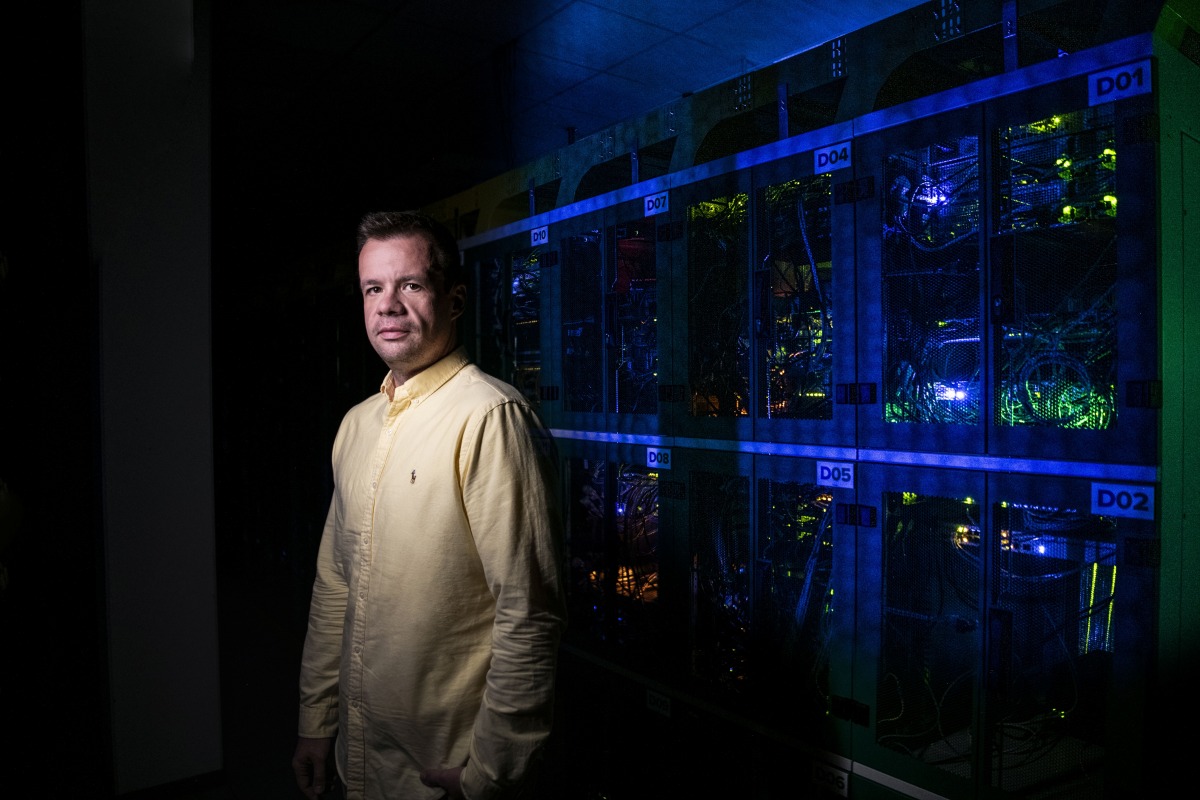
In this exclusive article for DCNN, Damir Špoljarič (pictured above), founder of Gi21 Capital, challenges the idea of an AI bubble, suggesting that long-term investment in data centre infrastructure reflects enduring demand rather than short-term market speculation:
The distinction between applications and infrastructure
Every conversation about the economics of AI inevitably arrives at the subject of the dreaded AI bubble. Artificial intelligence, we’re told, is a bubble that is just moments from bursting. When the MIT Sloan Management Review compiled its list of the biggest trends in AI and data science for 2026, the deflation of said bubble topped the list. With the IPO race between OpenAI and Anthropic heating up, The Telegraph worried aloud about “history repeating itself” with the “dotcom bubble 2.0”.
But these conversations are conflating two distinct categories: AI infrastructure and AI applications. The bubble-indicating hype exists predominantly at the application layer, consisting of AI startups, software platforms, and emerging business models. Infrastructure, by contrast, is driven by non-cyclical demand and is still in the early stages, so it’s more stable than the application layer. The entire AI ecosystem isn’t a single market; therefore, there is no single bubble that can burst.
The physical foundation that makes AI possible (data centres, power systems, networking equipment, cooling technologies, and compute capacity) and the investment appear increasingly structural and long-term.
Valuation vs demand vs implementation
Many AI companies are without a doubt overvalued, lacking strong fundamentals for such valuation, and those company-sized bubbles may indeed burst. However, there is no industry-sized bubble, and it’s a mistake to conflate the failure of individual companies with the long-term trajectory of AI adoption itself.
No bubble changes the reality that AI is still in the early stages of implementation across all industries globally, and that it will have a profound effect on the social contract in the coming years. This is real, transformative technology that will create far more winners than failed companies.
The models are getting more efficient by the day, but this does not mean that it will soon outpace demand. The world is likely using only a minuscule fraction of the AI that will eventually be deployed. A McKinsey report released last November found that nearly two thirds of organisations are still in their AI pilot and experimentation stages, and have not yet begun proper scaling across their enterprises.
As AI progressively penetrates every industry, the need for infrastructure will appear increasingly sensible and structural as opposed to speculative. Efficiency gains don’t change the fact that AI adoption remains at a very early stage, with untold demand yet to be realised.
Not-so-peak investment
The validity of any argument about an AI bubble rests on the idea that the industry is at, or near, peak investment. At best, we’ve only just finished the warm-up. There are indeed exorbitant amounts of capital flowing into foundation models, but that’s to be expected when building the base infrastructure layer of a technology as transformative as this.
It’s also necessary. We’re building the infrastructure required for future growth, not responding to already realised demand. Data centres, power grids, transmission networks, and compute clusters are years-long projects from planning to construction. Entire economies would struggle with capacity shortages if we waited until demand fully materialised. Consider it the opening phase of a much longer infrastructure buildout.
The cash flow is justified when viewed as front-loading the infrastructure of the biggest industrial shift of the century. Although AI is mostly limited to software, its next phase will be real-world, physical integration, particularly through robotics. Once that occurs, an even bigger (and more obviously justified) explosion in capital volume is likely to occur. Autonomous, AI-driven robotics will become central to manufacturing, logistics, and daily life, and require a capital expenditure that makes today’s spending look tiny.
Real demand and imagined bubbles
Supply constraints are good evidence that infrastructure demand remains strong, but it’s also more complex than that. Global project delays often come down to the limited availability of critical data centre infrastructure components such as transformers and UPS batteries. Lead times for both typically exceed a year. GPU supply is under hard pricing pressure due to high demand. Such realities are wholly inconsistent with the concept of a market suffering from excess capacity.
The likelihood of overbuilding is low. Genuine long-term demand exists behind current infrastructure development. Decade-long contracts are now commonplace in this market. Speculative projects haven’t disappeared, but overall financing conditions remain relatively disciplined. To that end, banks and infrastructure investors remain relatively conservative when it comes to financing, insofar as they still want to see meaningful long-term customer commitments before backing new AI data centre developments.
Infrastructure is always built ahead of demand – only with AI has this fact inspired such panic. The gap between current end-user consumption and projected future demand is fairly standard in the tech world.
Less bubble, more well-laid plans
Rather than view AI infrastructure as a bubble, we should view it as akin to city planning. Roads and water pipelines are built before they’re demanded en masse, and demand follows their construction. Construction and deployment take time. AI infrastructure, like any other kind of infrastructure, must be planned years in advance.
The bubble is not about to burst, because the bubble doesn’t exist. This is only the beginning of development, implementation, and investment. However it looks in a decade, it is not cause for frantic concern today.