STMicroelectronics begins silicon photonics production for AI
Author: Joe Peck
STMicroelectronics (ST), a Swiss-Italian semiconductor manufacturer, has begun high-volume production of its silicon photonics platform designed for optical interconnects in data centres and artificial intelligence infrastructure.
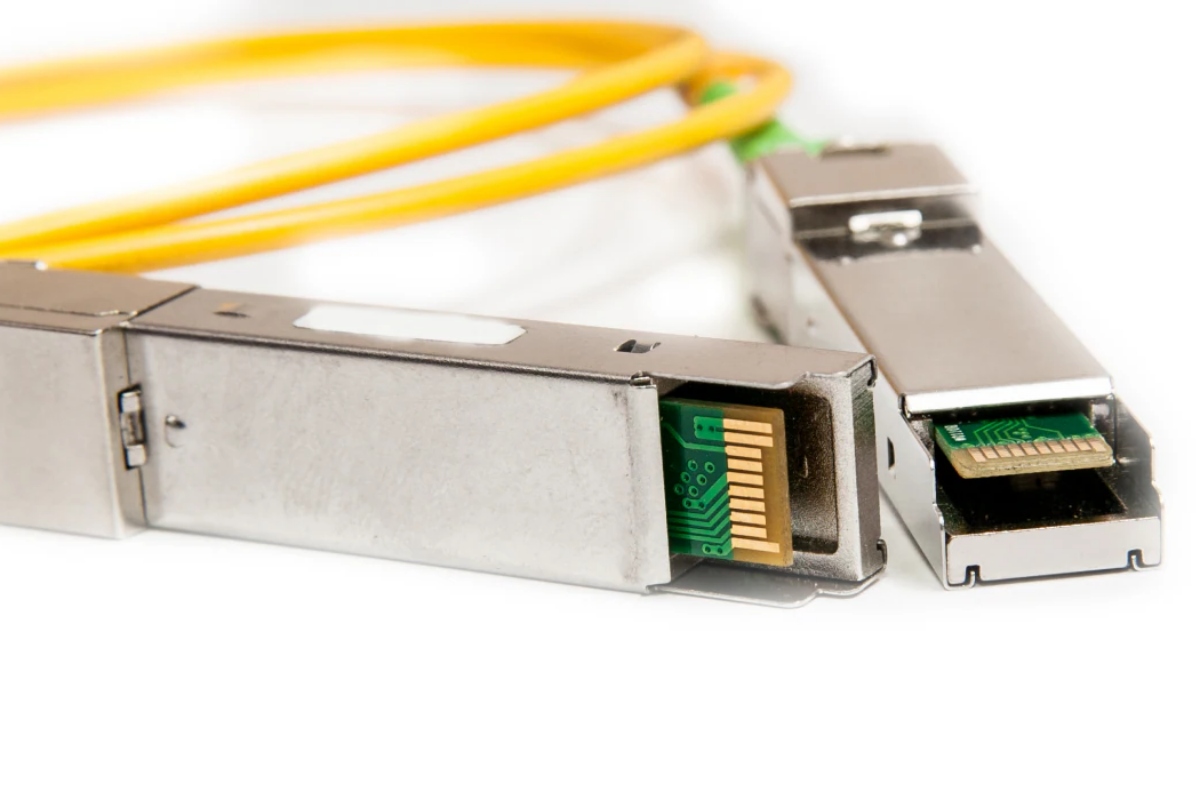
The company’s PIC100 platform is used in optical transceivers deployed by hyperscale operators to support high-speed connectivity within data centres and AI clusters. The 800G and 1.6T transceivers are intended to support increasing bandwidth requirements while reducing latency and energy consumption.
Production is being carried out on 300mm semiconductor manufacturing lines, which the company says allow the platform to be produced at scale as demand for AI infrastructure grows.
Fabio Gualandris, President of Quality, Manufacturing and Technology at STMicroelectronics, says, “Following the announcement of its new silicon photonics technology in February 2025, ST is now entering high-volume production for leading hyperscalers.
“The combination of our technology platform and the superior scale of our 300mm manufacturing lines gives us a unique competitive advantage to support the AI infrastructure super-cycle.
“Looking ahead, we are planning and executing on capacity expansions to enable more than quadrupling of production by 2027. This fast expansion is fully underpinned by customers’ long-term capacity reservation commitments.”
Silicon photonics technology for optical interconnects
Silicon photonics technology combines optical and electronic components to enable high-speed data transmission between servers, switches, and other computing infrastructure.
According to market research firm LightCounting, the data centre pluggable optics market reached $15.5 billion (£11.5 billion) in 2025 and is expected to grow at a compound annual growth rate of 17% between 2025 and 2030.
Vladimir Kozlov, CEO and Chief Analyst at LightCounting, says, “The data centre pluggable optics market continues to expand strongly, reaching $15.5 billion (£11.5 billion) in 2025. We expect the market to grow at a compound annual growth rate (CAGR) of 17% from 2025 through 2030, surpassing $34 billion (£25.3 billion) by the end of the forecast period. In addition, co-packaged optics (CPO) will emerge as a rapidly growing segment, contributing more than $9 billion (£6.7 billion) in revenue by 2030. Over the same period, the share of transceivers incorporating silicon photonics modulators is projected to increase from 43% in 2025 to 76% by 2030.
“ST’s leading silicon photonics platform coupled with its aggressive capacity expansion plan illustrates its capabilities to provide hyperscalers with secure, long-term supply, predictable quality, and manufacturing resilience.”
STMicroelectronics is also developing the next stage of its silicon photonics roadmap with the PIC100 TSV platform. This technology will integrate through-silicon via connections to increase optical connectivity density, improve module integration, and support system-level thermal efficiency.
The platform is designed to support emerging architectures such as near packaged optics and co-packaged optics, which aim to bring optical connectivity closer to processing hardware within large-scale computing systems.
The company will present further updates on its silicon photonics technology at the Optical Fiber Communication Conference in Los Angeles, USA, between 15 and 19 March 2026.
Related Posts