19 January 2026
Sabey Data Centers partners with OptiCool Technologies
 
19 January 2026
Prism expands into the US market
 
19 January 2026
Huber+Suhner expands sustainable packaging drive
 
16 January 2026
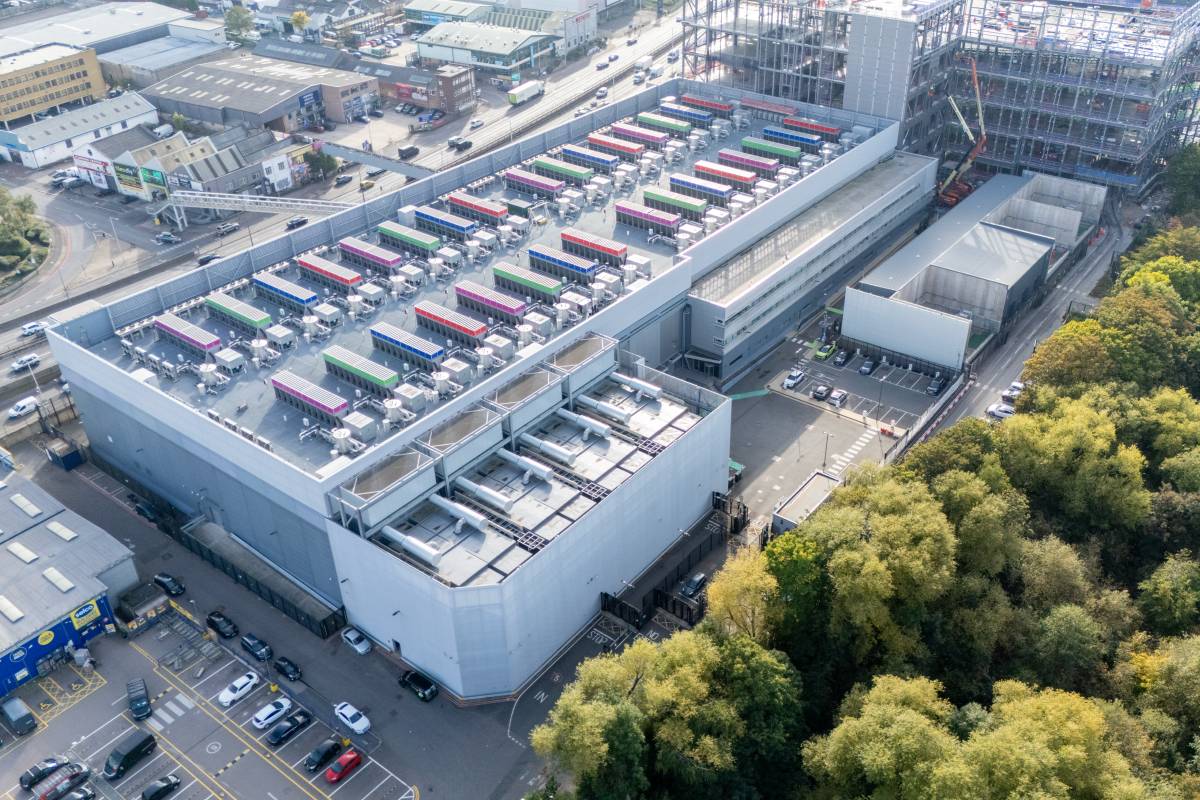
Multi-million pound Heathrow data centre upgrade completed
 
16 January 2026
APR increases power generation capacity to 1.1GW
 

Latest News


Vertiv launches new MegaMod HDX configurations
Vertiv, a global provider of critical digital infrastructure, has introduced new configurations of its MegaMod HDX prefabricated power and liquid cooling system for high-density computing deployments in North America and EMEA. The units are designed for environments using artificial intelligence and high-performance computing and allow operators to increase power and cooling capacity as requirements rise. Vertiv states the configurations give organisations a way to manage greater thermal loads while maintaining deployment speed and reducing space requirements. The MegaMod HDX integrates direct-to-chip liquid cooling with air-cooled systems to meet the demands of pod-based AI and GPU clusters. The compact configuration supports up to 13 racks with a maximum capacity of 1.25 MW, while the larger combo design supports up to 144 racks and power capacities up to 10 MW. Both are intended for rack densities from 50 kW to above 100 kW. Prefabricated scaling for high-density sites The hybrid architecture combines direct-to-chip cooling with air cooling as part of a prefabricated pod. According to Vertiv, a distributed redundant power design allows the system to continue operating if a module goes offline, and a buffer-tank thermal backup feature helps stabilise GPU clusters during maintenance or changes in load. The company positions the factory-assembled approach as a method of standardising deployment and planning and supporting incremental build-outs as data centre requirements evolve. The MegaMod HDX configurations draw on Vertiv’s existing power, cooling, and management portfolio, including the Liebert APM2 UPS (uninterruptible power supply), CoolChip CDU (cooling distribution unit), PowerBar busway system, and Unify infrastructure monitoring. Vertiv also offers compatible racks and OCP-compliant racks, CoolLoop RDHx rear door heat exchangers, CoolChip in-rack CDUs, rack power distribution units, PowerDirect in-rack DC power systems, and CoolChip Fluid Network Rack Manifolds. Viktor Petik, Senior Vice President, Infrastructure Solutions at Vertiv, says, “Today’s AI workloads demand cooling solutions that go beyond traditional approaches. "With the Vertiv MegaMod HDX available in both compact and combo solution configurations, organisations can match their facility requirements while supporting high-density, liquid-cooled environments at scale." For more from Vertiv, click here.

DCNN to host webinar with CRH
Resilient data centre infrastructure isn’t built at commissioning; it’s built at conception. DCNN and CRH, a US data centre construction specialist, are coming together for a powerful panel discussion exploring how early collaboration with building material providers and site engineers can shape smarter, stronger, and more sustainable data centres. The webinar, 'From the ground up: How future‑proofing data centres starts at the beginning of the project', is a must‑attend session for anyone involved in planning, designing, or delivering next‑generation facilities. Date: 19 February 2026Time: 3pm BST (10am EST)Location: Online (Zoom) Why join this webinar? • Understand how early‑stage decisions influence long‑term resilience • Hear directly from CRH’s global leaders in sustainability, innovation, and infrastructure delivery • Gain insights across the full project lifecycle - from planning to execution • Connect with experts shaping the future of data centre construction Meet the panel Moderator: Joe Peck, Assistant Editor, DCNN Frans Vreeswijk, VP Customer Solutions Strategy, CRH Americas Jenessa Miglietta, VP Sustainability & Innovation, CRH Americas Thomas Donoghue, VP Industry Innovation, CRH Group Attendees will gain insights into how local providers mitigate challenges and address critical issues, along with practical ideas for accelerating construction timelines. They will also learn strategies for expanding partnerships with essential suppliers. Click here to register now and be part of the conversation that starts at the foundation.

DE-CIX, Nomad Futurist partner to tackle skills gap
The Interconnection Academy, founded by internet exchange (IX) operator DE-CIX and the Universitat Pompeu Fabra in Barcelona, has formed a partnership with the Nomad Futurist Foundation, a nonprofit organisation advancing education in digital infrastructure, to widen access to free training covering networking, data centres, and interconnection. The collaboration aims to support skills development as digital infrastructure roles expand and organisations report difficulty filling technical posts. Industry research points to growing demand for skills in areas including networks, security, AI, and data, alongside an expected fall in available talent as experienced network engineers retire over the coming years. Through the agreement, both organisations will share selected online learning content and training modules, with new Interconnection Academy courses on networking and interconnection scheduled to launch in January and April 2026 and additional material planned later in the year. Shared content and new training pathways The Interconnection Academy is an online education initiative created to improve understanding of digital infrastructure and interconnection. It works with industry specialists and partner organisations to produce accessible technical and market-related material, aimed at supporting people entering the workforce as well as existing staff needing to update their knowledge. The Nomad Futurist Foundation is a non-profit organisation focused on raising awareness of the digital infrastructure sector through education and engagement. Its associated academy provides introductory and specialist learning covering data centre development, interconnection, and related areas. As part of the agreement, selected modules - beginning with content explaining data centre infrastructure - will be made available through the Interconnection Academy platform. The partnership announcement coincides with meetings between the organisations in Hawaii on 16 and 17 January, where Interconnection Academy founder and DE-CIX Chief Executive Ivo Ivanov will take part in the annual PTC Beyond Masterclass educational programme. Ivo notes, “With the advent of AI, we are facing the newest industrial revolution, in which we will need to further up-skill and re-skill workers for tomorrow’s industries.” Yolandi Cloete, Manager of the Global Interconnection Academy, comments, “Working with the Nomad Futurist Foundation enables us to expand access to high-quality educational offerings and co-create and share industry-relevant learning modules with a trusted partner. "The two organisations are united by a shared passion for education and innovation in the digital infrastructure space.” Nabeel Mahmood, co-founder and CEO of the Nomad Futurist Foundation, adds, “Digital infrastructure touches every part of modern life, yet very few people truly understand how it works or the opportunities it creates. "By partnering with the Interconnection Academy, we’re bridging that gap, making complex concepts approachable, and helping people see a future for themselves in this industry. Education is the on-ramp to inclusion, innovation, and long-term impact.” For more from DE-CIX, click here.

SITE delivers modular DC on remote Atlantic island
Secure I.T. Environments (SITE), a UK design and build company for modular, containerised, and micro data centres, has announced the completion of a complex, modular, containerised data centre for a global telecommunications provider on a remote South Atlantic island. The facility will support mission-critical ground operations connecting customers to next-generation satellite and subsea backbone services. Located 1,800km west of mainland Africa, the remote island offers an effective operating profile for satellite connectivity, but presented formidable barriers including rugged volcanic terrain with no pre-existing access road, minimal local infrastructure, limited sea freight windows, and a single weekly flight subject to weather. The brief demanded a resilient, high-capacity facility capable of continuous operation in a corrosive coastal climate, delivered with meticulous risk management and zero compromise on safety or performance. Overcoming challenging logistics One of the defining aspects of this project was the logistical coordination required not just across continents, but in partnership with the local community. The island’s small population meant that everyone from hotel owners to logistics workers became part of the project in some way. The project created local employment opportunities and, the company says, fostered a sense of community pride in supporting a high-tech project. Given the island's limited flight availability (one flight per week, weather permitting), all deliveries, personnel scheduling, and construction phases had to be meticulously timed. The team also had to navigate unpredictable weather, which could delay flights and shipping schedules. A spokesperson for the client outlines, “This was such a crucial project for us. We did a huge amount of work ensuring we picked an experienced data centre builder that could cope with the challenges. "SITE supported us throughout the design phase, adapted to meet our needs, and created a very detailed plan for delivery and installation, focused on minimising risks. We are very pleased with the outcome.” SITE’s bespoke solution Initial design discussions to final commissioning took 12 months and was completed on time. SITE designed, manufactured, pre-built, and factory-tested a multi-container modular facility - comprising a main data room, a separate UPS/switch room, and lobby space - engineered specifically for the island’s conditions, including specially adapted air conditioning condensers, protective coatings, and materials to withstand high salinity levels and ocean spray. The architecture integrates high-density IT racks with cold-aisle containment, N+1 energy-efficient cooling, modular N+1 UPS, custom switchgear, fire detection and suppression, security systems (CCTV, access control, intruder alarms), fibre raceways, and full electrical infrastructure. All modules underwent integrated systems testing (IST) in the UK to ensure seamless on-site assembly and performance alignment once deployed. Chris Wellfair, Projects Director at SITE, comments, “This was an extraordinary project in every sense: remote location, complex logistics, and high client expectations. "Our modular approach and close collaboration with clients ensured a smooth delivery despite the odds. It’s a project we’re incredibly proud of.” For more from SITE, click here.

Janitza launches UMG 801 power analyser
Modern data centres often face a choice between designing electrical monitoring systems far beyond immediate needs or replacing equipment as sites expand. Janitza, a German manufacturer of energy measurement and power quality monitoring equipment, says its UMG 801 power analyser is designed to avoid this issue by allowing users to increase capacity from eight to 92 current measuring channels without taking systems offline. The analyser is suited to compact switchboards, with a fully expanded installation occupying less DIN rail space than traditional designs that rely on transformer disconnect terminals. Each add-on module introduces eight additional measuring channels within a single sub-unit, reducing physical footprint within crowded cabinets. Expandable monitoring with fewer installation constraints The core UMG 801 unit supports ten virtual module slots that can be populated in any mix. These include conventional transformer modules, low-power modules, and digital input modules. Bridge modules allow measurement points to be located up to 100 metres away without consuming module capacity, reducing wiring impact and installation complexity. Sampling voltage at 51.2 kHz, the analyser provides Class 0.2 accuracy across voltage, current, and energy readings. This level of precision is used in applications such as calculating power usage effectiveness (PUE) to two decimal places, as well as assessing harmonic distortion that may affect uninterruptible power supplies (UPS). Voltage harmonic analysis extends to the 127th order, and transient events down to 18 microseconds can be recorded. Onboard memory of 4 GB also ensures data continuity during network disruptions. The system is compatible with ISO 50001 energy management frameworks and includes two ethernet interfaces that can operate simultaneously to provide redundant communication paths. Native OPC UA and Modbus TCP/IP support enable direct communication with energy management platforms and legacy supervisory control systems, while whitelisting functions restrict access to approved devices. RS-485 additionally provides further support for older infrastructure. Configuration is carried out through an integrated web server rather than proprietary software, and an optional remote display allows monitoring without opening energised cabinets. Installations typically start with a single base unit at the primary distribution level, with additional modules added gradually as demand grows, reducing the need for upfront expenditure and avoiding replacement activity that risks downtime. Janitza’s remote display connects via USB and mirrors the analyser’s interface, providing visibility of all measurement channels from the switchboard front panel. Physical push controls enable parameter navigation, helping users access configuration and measurement information without opening the enclosure. The company notes that carrying out upgrades without interrupting operations may support facilities that cannot accommodate downtime windows. For more from Janitza, cick here.

Integral triples capacity at Equinix SG1
Integral, a currency technology provider to the financial markets, has tripled the size of its presence at the Equinix SG1 data centre in Singapore to accommodate reported soaring regional demand. The company is also leveraging digital infrastructure company Equinix’s software-defined interconnection, Equinix Fabric, to establish private and direct connections to cloud services providers, as well as key partners and customers. This expansion comes amid increased transaction volumes and system load, with Integral now processing over one million tickets daily at Equinix SG1. Equinix operates a global network of over 270 International Business Exchange (IBX) facilities, providing infrastructure for advanced connectivity and colocation. Connecting clients in Asia-Pacific Integral’s SG1 data facility is employed to service clients not only based in Singapore, but across the Asia-Pacific. The news is directly correlated with the company’s growth in the region, with numerous client partnerships established in the past year. To service this expanding client base, Integral says it is committed to ongoing investment in infrastructure which "supports scalability, reliability, and optimal efficiency." Data is a crucial element of this dynamic and underpins the decision to triple infrastructure footprint at the SG1 data facility. The expansion aims to enable Integral to manage the increase in transaction volumes without a decline in speed or performance. Alongside Singapore (SG1), Integral also operates infrastructure within Equinix data centers in New York (NY4), Tokyo (TY4), and London (LD3). Yee May Leong, Managing Director, Singapore at Equinix, comments, "We are thrilled to support Integral in their significant expansion in SG1. This growth not only reflects Integral's commitment to meeting the soaring demand in the financial markets, but also underscores the trust they place in Equinix as a strategic partner. "Our robust finance ecosystem, combined with our global footprint and seamless access to leading cloud service providers, empowers Integral to deliver unparalleled performance and reliability to their clients across the Asia-Pacific region. "We look forward to continuing our collaboration and enabling Integral to thrive in this dynamic landscape." Harpal Sandhu, CEO of Integral, adds, “For over three decades, Integral has remained resolute in its support of the growing institutional and retail trading landscape across APAC, increasing our established customer base and strengthening the local liquidity ecosystem. "Singapore has been a key market for accelerating our regional presence, and the expansion of our SG1 data facility represents our commitment to ensuring our clients have access to the most sophisticated and agile cloud-based infrastructure possible.”

NorthC to build new data centre in Geneva
NorthC Group, a data centre operator in Northwest Europe, will begin construction of a new data centre in Geneva, Switzerland in Q1 of this year. The new facility will be built at The Hive campus, a technology park just outside Geneva. This will be NorthC’s sixth data centre in Switzerland, in addition to its existing data centres in Biel (Bern), Winterthur (Zurich) and Münchenstein (Basel), as well as the recently announced and yet-to-be-built data centre on the uptownBasel campus in Arlesheim (Basel). The total IT capacity will be 4.5 MW, delivered in phases of 1.5 MW, and the data centre will have a total floor area of 5,400 m², with construction expected to be completed by Q2 2028. NorthC says it will prioritise sustainability in constructing the new data centre "by implementing innovative technologies." The facility will use 100% green power, consistent with all of NorthC's data centres, and its cooling system will require no water. Additionally, backup generators will operate on HVO100, a fossil-free fuel made from renewable materials such as vegetable oils and waste fats. Designed for AI The new data centre will be designed to support emerging technologies (such as inference applications) through direct-to-chip (D2C) liquid cooling, which dissipates heat from computer chips more efficiently than traditional methods. Alexandra Schless, CEO of NorthC Group, comments, “Geneva is an important commercial and economic hub in Switzerland, alongside the Basel and Zurich regions. Demand for digital services - and, consequently, for data centre capacity - is growing rapidly. "This makes Geneva a logical location for NorthC to build a new data centre. The proximity to the renowned scientific research centre, CERN, also offers new opportunities for collaboration in scientific research and innovation, including AI.” Modular design and readiness for residual heat exchange The new Geneva data centre will be built according to NorthC’s standard blueprint design, which is based on modular construction, meaning additional modules can be added and activated as demand increases. This approach often results in more efficient energy consumption and enables rapid scaling. The data centre will also have a direct, high-speed data connection to NorthC’s other locations in Switzerland, providing customers in the region with fast access to services running at other locations. The construction, led by HIAG, a Swiss real estate developer, aims to ensure that the Geneva data centre is designed with sustainability at its core. Like almost all of NorthC's data centres, the Geneva facility will be prepared to support the exchange of residual heat. At The Hive campus, where the data centre is being built, this heat will be used to supply nearby buildings. The facility is also being prepared for a potential future connection to the district heating network operated by the local energy company. For more from NorthC, click here.

Data centre cooling options
Modern data centres require advanced cooling methods to maintain performance as power densities rise and workloads intensify. In light of this, BAC (Baltimore Aircoil Company), a provider of data centre cooling equipment, has shared some tips and tricks from its experts. This comes as the sector continues to expand rapidly, with some analysts estimating an 8.5% annual growth rate over the next five years, pushing the market beyond $600 billion (£445 billion) by 2029. AI and machine learning are accelerating this trajectory. Goldman Sachs Research forecasts a near 200TWh increase in annual power demand from 2024 to 2030, with AI projected to represent almost a fifth of global data centre load by 2028. This growth places exceptional pressure on cooling infrastructure. Higher rack densities and more compact layouts generate significant heat, making reliable heat rejection essential to prevent equipment damage, downtime, and performance degradation. The choice of cooling system directly influences efficiency and Total-power Usage Effectiveness (TUE). Cooling technologies inside the facility Two primary approaches dominate internal cooling: air-based systems and liquid-based systems. Air-cooled racks have long been the standard, especially in traditional enterprise environments or facilities with lower compute loads. However, rising heat output, hotspots, and increased energy consumption are testing the limits of air-only designs, contributing to higher TUE and emissions. Liquid cooling offers substantially greater heat-removal capacity. Different approaches to this include: • Immersion cooling, which submerges IT hardware in non-conductive dielectric fluid, enabling efficient heat rejection without reliance on ambient airflow. Immersion tanks are commonly paired with evaporative or dry coolers outdoors, maximising output while reducing energy use. The method also enables denser layouts by limiting thermal constraints. • Direct-to-chip cooling, which channels coolant through cold plates on high-load components such as CPUs and GPUs. While effective, it is less efficient than immersion and can introduce additional complexity. Rear door heat exchangers offer a hybrid path for legacy sites, removing heat at rack level without overhauling the entire cooling architecture. Heat rejection outside the white space Once captured inside the building, heat must be expelled efficiently. A spectrum of outdoor systems support differing site priorities, including energy, water, and climate considerations. Approaches include: • Dry coolers — These are increasingly used in water-sensitive regions. By using ambient air, they eliminate evaporative loss and offer strong Water Usage Effectiveness (WUE), though typically with higher power draw than evaporative systems. In cooler climates, they benefit from free cooling, reducing operational energy. • Hybrid and adiabatic systems — These offer variable modes, balancing energy and water use. They switch between dry operation and wet operation as conditions change, helping operators reduce water consumption while still tapping evaporative efficiencies during peaks. • Evaporative cooling — Through cooling towers or closed-circuit fluid coolers, this remains one of the most energy-efficient options where water is available. Towers evaporate water to remove heat, while fluid coolers maintain cleaner internal circuits, protecting equipment from contaminants. With data centre deployment expanding across diverse climates, operators increasingly weigh water scarcity, power constraints, and sustainability targets. Selecting the appropriate external cooling approach requires evaluating both consumption profiles and regulatory pressures. For more from BAC, click here.

Vertiv predicts data centre innovation trends
Data centre innovation is continuing to be shaped by macro forces and technology trends related to AI, according to a report from Vertiv, a global provider of critical digital infrastructure. The Vertiv Frontiers report, which draws on expertise from across the organisation, details the technology trends driving current and future innovation, from powering up for AI to digital twins and adaptive liquid cooling. Scott Armul, Chief Product and Technology Officer at Vertiv, says, “The data centre industry is continuing to rapidly evolve how it designs, builds, operates, and services data centres in response to the density and speed of deployment demands of AI factories. “We see cross-technology forces, including extreme densification, driving transformative trends such as higher voltage DC power architectures and advanced liquid cooling that are important to deliver the gigawatt scaling that is critical for AI innovation. "On-site energy generation and digital twin technology are also expected to help advance the scale and speed of AI adoption.” The Vertiv Frontiers report builds on and expands Vertiv’s previous annual Data Centre Trends predictions. The report identifies macro forces driving data centre innovation. These include: • Extreme densification — accelerated by AI and HPC workloads• Gigawatt scaling at speed — with data centres now being deployed rapidly and at unprecedented scale• Data centre as a unit of compute — as the AI era requires facilities to be built and operated as a single system• Silicon diversification — noting data centre infrastructure must adapt to an increasing range of chips and compute The report details how these macro forces have in turn shaped five key trends impacting specific areas of the data centre landscape: 1. Powering up for AI Most current data centres still rely on hybrid AC/DC power distribution from the grid to the IT racks, which includes three to four conversion stages and some inefficiencies. This existing approach is under strain as power densities increase, largely driven by AI workloads. The shift to higher voltage DC architectures enables significant reductions in current, size of conductors, and number of conversion stages while centralising power conversion at the room level. Hybrid AC and DC systems are pervasive, but as full DC standards and equipment mature, higher voltage DC is likely to become more prevalent as rack densities increase. On-site generation - and microgrids - will also drive adoption of higher voltage DC. 2. Distributed AI The billions of dollars invested into AI data centres to support large language models (LLMs) to date have been aimed at supporting widespread adoption of AI tools by consumers and businesses. Vertiv believes AI is becoming increasingly critical to businesses, but how - and from where - those inference services are delivered will depend on the specific requirements and conditions of the organisation. While this will impact businesses of all types, highly regulated industries (such as finance, defence, and healthcare) may need to maintain private or hybrid AI environments via on-premise data centres, due to data residency, security, or latency requirements. Flexible, scalable high-density power and liquid cooling systems could enable capacity through new builds or retrofitting of existing facilities. 3. Energy autonomy accelerates Short-term, on-site energy generation capacity has been essential for most standalone data centres for decades to support resiliency. However, widespread power availability challenges are creating conditions to adopt extended energy autonomy, especially for AI data centres. Investment in on-site power generation, via natural gas turbines and other technologies, does have several intrinsic benefits but is primarily driven by power availability challenges. Technology strategies such as 'Bring Your Own Power (and Cooling)' are likely to be part of ongoing energy autonomy plans. 4. Digital twin-driven design and operations With increasingly dense AI workloads and more powerful GPUs also comes a demand to deploy these complex AI factories with speed. Using AI-based tools, data centres can be mapped and specified virtually - via digital twins - and the IT and critical digital infrastructure can be integrated, often as prefabricated modular designs, and deployed as units of compute, reducing time-to-token by up to 50%. This approach will be important to efficiently achieving the gigawatt-scale buildouts required for future AI advancements. 5. Adaptive, resilient liquid cooling AI workloads and infrastructure have accelerated the adoption of liquid cooling, but, conversely, AI can also be used to further refine and optimise liquid cooling solutions. Liquid cooling has become mission-critical for a growing number of operators, but AI could provide ways to further enhance its capabilities. AI, in conjunction with additional monitoring and control systems, has the potential to make liquid cooling systems smarter and even more robust by predicting potential failures and effectively managing fluid and components. This trend should lead to increasing reliability and uptime for high value hardware and associated data/workloads. For more from Vertiv, click here.

Southco develops blind-mate mechanism for liquid cooling
Southco, a US manufacturer of engineered access hardware including latches, hinges, and fasteners, has developed a high-tolerance blind-mate floating mechanism designed for next-generation liquid-cooled data centres. The company says the design is intended to address mechanical tolerance challenges that affect cooling system efficiency and operational stability. It notes that demand for liquid cooling is increasing as traditional air-cooling methods struggle to manage higher power densities associated with AI workloads and high-performance computing. Adoption is accelerating further as operators pursue sustainability and targeted PUE reductions. Liquid cooling, however, requires reliable physical connections, with Southco highlighting that even small alignment deviations at manifold and cold-plate interfaces can disrupt coolant flow, increase pump energy consumption, and heighten the risk of leaks. Managing mechanical deviation in liquid cooling systems Citing guidance in the Open Compute Project’s rack-mounted manifold requirements, Southco notes that a 1mm deviation can raise flow resistance by 15%, leading to around a 7% increase in pump energy. In large facilities, these effects scale alongside thousands of connection points. The company identifies several contributors to misalignment in operational environments: • Accumulated tolerances between rack formats, including EIA-310-D and ORV3, which may reach ±3.2mm • Displacement caused by vibration during transport and operation • Thermal expansion of materials, including copper manifolds expanding more than 1mm over typical temperature ranges Rigid, low-tolerance couplings can leave systems vulnerable to leaks, rising operational costs, and downtime risk, and the newly introduced blind-mate floating mechanism is designed to absorb movement and compensate for these deviations. The product offers floating tolerance of ±4mm radially, axial displacement absorption up to 6mm, and automatic self-centring when disconnected. The design is intended to support long-term leak prevention and meet standards applicable to OCP and ORV3 liquid cooling deployments. Southco adds that the mechanism includes sealing rated to withstand high-pressure testing in line with ASME B31.3 requirements and is intended to support more than ten years of continuous operation. It uses universal quick-disconnect interfaces to enable “blind” maintenance without precise alignment or tooling. The company positions the technology as a step towards enabling rapid maintenance, reducing equipment handling time, and lowering the risk of service interruption. It also points to reduced energy used by pumps through lower flow resistance. Southco sees future development in integrating sensing for temperature, flow, and pressure; exploring lighter materials; and working towards greater standardisation across suppliers and data centre ecosystems.


Translate »