Data Centre Software for Smarter Operations


Four reasons MSPs will help customers face 2021 by Matthieu Brignone
In every industry 2020 will be remembered as a year that brought immense change in both working practices, and the types of services needed by customers. The business environment shifted dramatically almost overnight; a pre-existing surge in technological innovation was pushed into overdrive by the need to adapt to an entirely new working reality. It’s no surprise that this need for business agility has resulted in higher investment in IT services, and with it, an increased need for management of these services. Managed Service Providers (MSPs) have long played a role in supporting a customer’s IT infrastructure. But with a global shift to remote working and tech innovation, MSPs found themselves in an almost purpose-built situation that required remote handling of IT solutions. With their ability to help businesses prepare for change and ease them into a new era of working, there are four key things MSPs should have in their armoury to help customers grow and succeed in 2021. Multi-cloud data storage Multi-cloud has changed the game for organisations. While it has without a doubt opened up new opportunities, businesses now require infrastructure that allows for their workloads to work seamlessly in different environments. For this reason, MSPs should focus on supporting customer’s strategy, asking themselves how to best prepare their customers for an environment that will undoubtedly continue changing to keep up with the latest technological innovations. They should be looking to add value in all areas possible, and should consider the different benefits of cloud storage vs. on-prem storage: recognising that the future will continue to focus on a multi cloud strategy incorporating both. In this sense, building a customer’s infrastructure can be regarded as a strategic tool for future-proofing their data strategy. From a financial perspective, MSPs need to appreciate that the endless cycle of upgrading and implementing the latest technology is a large burden for businesses wanting to stay ahead of the game. Multi-cloud makes sense; it’s operationally efficient for customers wanting the capacity to move workloads freely without large investment every few years. As-a-service offerings support innovation Many companies and their CFOs will understandably be reluctant to implement innovation strategies with no direct link to benefits. As-a-service offerings, like Pure-as-a-Service, provide the flexibility that many will be looking for after such a tumultuous year. MSPs, and some vendors, should be looking to identify these pain points and solve them through adapted financial offerings. What’s more, they need to recognise that buying into expensive on-prem offerings has become an increasingly bitter pill to swallow. We can see a transition happening with MSPs that will sit comfortably in 2021; many are seeing an opportunity to differentiate by pushing their customers into the next age of innovation whilst taming the costs. A win-win situation. With the constant stream of new technology released, as-a-service options allow both MSPs and customers to try new tech and ‘fail fast’ - enabling them to find the solution that fits their needs without breaking the bank. Plus, as an added bonus, they won’t need to worry about the burdens of financial forecasting - offering relative flexibility in their investment. Containers In 2021 customers need the ability to move their workloads freely, and containers hold the benefit of encapsulating software into virtual self-contained units. But the complexity of cloud-native technologies such as Kubernetes is driving more organisations toward consuming managed services delivered via the cloud versus deploying these technologies on their own. Forward-looking businesses are moving to containers which in a couple of years will be a widely adopted and mainstream standard for data storage. Many larger customers are further along their digital transformations and are now ready for multi-cloud, meaning MSPs that can deploy Kubernetes across multiple clouds will see increasing demand for that expertise as they look to tee up customers to realise the value from their data. 2021 will be a year of assessing how workloads are managed; they need to be in the right place for their designated application, and this will continue to be a key area that customers look for in their data assets Taking on hyperscalers with differentiation Hyperscale public cloud providers have created a new dynamic in the cloud market, offering businesses unlimited capacity, seamless updates and large geographic scope. Analysis has shown that hyperscalers dropped $99 billion in capital expenditure in the first three quarters of 2020, setting a quarterly record in the third quarter alone. It’s no wonder they raise a consistent concern. But rather than competing with hyperscalers, MSPs that want to get ahead are already starting to work with them. In this scenario MSPs must act as the metaphorical glue that brings all of these new technologies together for their customers. Only by doing this will they be seen as a true partner, having the best interest of their customers at the forefront. And where they can’t work together, MSPs need to be recognising their key attributes that differentiate them from hyperscalers. Take the ongoing challenge that Covid has presented, and how many customers haven’t been able to directly get to their data centres in the frequency they would normally have liked. For MSPs, having someone do that on the customer's behalf on a monthly basis has become an incredibly strong selling point. It’s clear that many of the pain points of 2020 will stick around for much of 2021. The business landscape has irreversibly changed in many ways. With this in mind, MSPs need to recognise that the hurdles that have been put into place for businesses represent a clear opportunity to help knock them down. By providing innovative bespoke solutions for customers, using the forward-looking tech and services above, MSPs can play a crucial role in providing the roadmap for continued business growth and success.

Riello UPS extends NextEnergy range with 600 kVA version
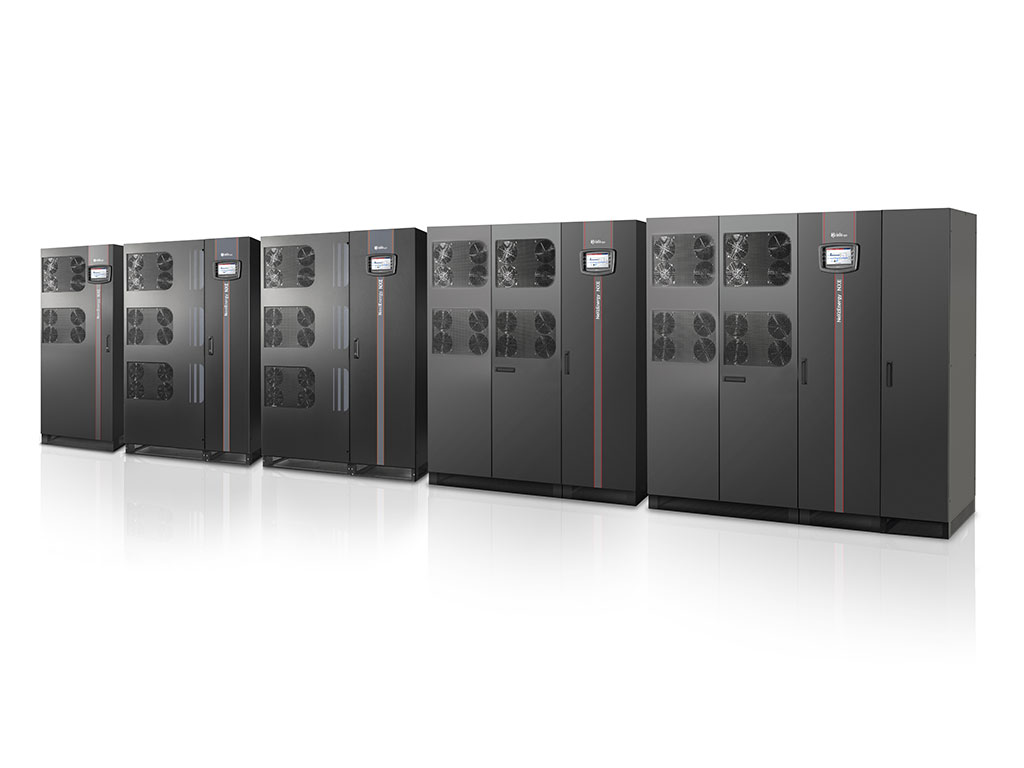
Riello UPS upgrades its NextEnergy (NXE) series with a new 600 kVA model. The NXE 600 is designed to protect larger data centres including hyperscale or colocation facilities and is capable of powering parallel installations up to a massive 4.8 MVA. It joins the series’ already popular 250-300-400-500 kVA versions and shares the same advanced transformer-free technologies that enable it to deliver unity power (kW = kVA) and TÜV-certified operational efficiency up to 97% in online UPS mode. With front to top ventilation and full front access for maintenance eliminating the need for rear clearance, the NextEnergy range offers operators fantastic installation flexibility (i.e. against the wall, side-to-side, back-to-back). It also works with or without a neutral connection, reducing distribution costs for data centres not requiring a neutral line. Like the rest of the range, the new NXE 600 incorporates a host of energy saving features that reduce operators’ power consumption and running costs. These include an innovative Active Eco operating mode that offers enhanced efficiency of 98.5% by powering the load using the bypass line, which filters harmonics on the mains whilst avoiding the need for any power factor correction. It also incorporates an Efficiency Control System that optimises power consumption in parallel installations at low loads by automatically putting some UPSs into standby and sharing the workload amongst the rest, ensuring they run at the highest possible efficiency. Leo Craig, Managing Director of Riello UPS, comments: “With the addition of the NXE 600, the NextEnergy range caters for data centres of all sizes, from smaller server rooms right the way through to hyperscale facilities. “You can parallel up to eight of the new UPS systems together, meaning you can protect large-scale mission-critical applications up to 4.8 MVA of power. And its Hot System Expansion capability enables you to easily add UPS when it’s time to scale up without having to transfer to bypass, ensuring your critical load is protected at all times.” The NextEnergy series is compatible with lithium-ion batteries and supercapacitors as alternative energy storage options, while it also provides three peak shaving options: static (pre-programmed at commissioning stage); remote controlled (by the user/operator); and dynamic (adjusts in real-time according to site conditions). Featuring a large 7in colour LCD touchscreen display panel for advanced communications, the NXE range easily integrates with all DCIM and remote monitoring software.

Epsilon partners with Lifeway Singapore for 5G cyber testing
Epsilon has been selected by Lifeway Singapore (LWS), an information technology service provider, to provide colocation, remote peering and data centre interconnection services to power its global 5G Cyber Range solution. LWS benefits from on-demand connectivity delivered by Epsilon that can be scaled-up to meet enterprise and regulator 5G testing scenarios.  LWS’s Cyber Range 5G infrastructure provides customers with a secure and flexible testing environment where they can ensure the viability, performance and security of their 5G solutions. Epsilon’s private network infrastructure and interconnection services will underpin the Cyber Range environment that enables LWS’s customers to secure their smart cities, self-driving cars, smart factories and other Industry 4.0 solutions under production and operational scenarios. Worldwide 5G network infrastructure market revenue was forecasted to almost double in 2020 to reach $8.1 billion, according to Gartner.  “5G deployments are accelerating around the world and that requires robust testing environments to ensure security, viability and optimal performance. We’re excited to support LWS’s 5G Cyber Range solution by offering scalable, agile and global connectivity. With Infiny and our on-demand connectivity solutions, we are enabling LWS to scale-up testing environments and better serve its customers’ requirements across the globe,” says Warren Aw, Managing Director, Asia Pacific at Epsilon. “It’s great to be supporting LWS in its plans to roll out the 5G Cyber Range solution and realise the future of Industry 4.0.” LWS has 5G Cyber Range infrastructure deployed at Epsilon’s colocation data centre facilities in Singapore, London and New York. Epsilon’s secure and interconnected colocation provides LWS with the foundation it needs to deploy, host, connect and manage its network, services and applications. On top of this, LWS uses Epsilon’s Data Centre Interconnection and Remote Peering services to keep peering traffic closer to LWS’s customers through a carrier-grade MEF-certified backbone network for lower latencies and optimal user experience.  “In 2021, 5G deployments are going to grow with more organisations developing 5G applications and services. The challenge is to ensure that these solutions and critical data that are traversing through the 5G network are secured under production environments. With the support of Epsilon, we’re offering 5G infrastructure that spans the globe and our customers such as enterprises, telcos and regulators should be able to validate the resilience and security of IoT or private data. We can spin up a testing environment wherever it is needed and help to bring the next 5G innovation securely to market,” comments Freddi Huang, Chief Executive Officer at Lifeway Singapore. “Whether that’s a new application, protocol or technology, 5G is something that will change how we live and work. It’s a tremendous opportunity and that requires agile infrastructure and robust cyber testing.”  Epsilon’s services are offered through Infiny, a Network as a Service (NaaS) self-service platform that allows users to access on-demand connectivity to the world’s leading data centres, clouds and internet exchanges. With Infiny, LWS has immediate access to Epsilon’s global ecosystem of 260+ world-leading communications and technology hubs across 41 cities.

Changes to red diesel regulations - maintaining your critical assets
In the 2020 budget, the government announced that many sectors will lose their entitlement to use red diesel from April 2022. The reforms support the UK’s bold environmental commitments to improve air quality, champion greener fuels, and achieve net zero carbon emissions by 2050. Mark Griffiths, Head of Business Development at Adler and Allan, examines the impact of the new laws for data centre operators – and explains why acting now to review assets could boost the long-term resilience, lifespan, and performance of your overall infrastructure. Data and network centres who depend on red diesel for business-critical back-up power – and benefit from an 80% tax saving per litre – must now implement measures to replace existing reserves with alternative fuel options, such as white diesel, HVO (a 100% renewable ‘drop in’ diesel substitute), or even BioDiesel.   Protecting the planet’s resources – and your professional reputation In a sector where the promise of power continuity can make or break businesses, sweeping changes to back-up generation systems could put contracts, customer relationships and critical services on the line. So while rolling back red diesel rebates is the right move for the environment, can data centres really balance ecological responsibility with rising costs and the far-reaching risk of operational downtime? Whatever your tier, the answer lies in a long-term view and recognition that revamped red diesel rules are more than a standalone fuel supply swap. They are a turning point for companies and a mandatory move towards ecological accountability for the UK as a whole. Under ambitious government climate change targets, protective policies across air and water quality, biodiversity, natural resources, and waste management will continue to be enshrined in law. Working with an experienced consultant will help you expertly tackle the immediate task of red diesel replenishment and shape a cost-effective, compliant and sustainable environmental strategy for the future – while continuing to deliver on the strictest of SLAs. Bespoke routes to a greener business The replacement of red diesel involves a specialised sequence of tank cleaning, line flushing, and the uplift of current stores to make way for onward fuel. For data and network storage facilities, whose prime deliverable is peace of mind, the success of the procedure – and its direct impact on your end-users – depends on a detailed understanding of your operations, assets, and risk profile.   As well as performing the complex fuel transfer process, a qualified consultant can carry out a comprehensive portfolio survey to ensure your infrastructure is fit for purpose going forward. A full estate inspection will identify structural and functional weaknesses – linked to age, internal corrosion, and exposure to the elements – that could lead to service failures, pollution events, and punitive fines under increasingly tough environmental laws. A trusted partner will also discuss how improvements to your fuel management and maintenance programme could unlock long-range cost savings and efficiencies.  As a first step, an environmental professional will undertake a practical audit of assets to gauge their condition, potential ecological hazards, and the recommended plan for fuel uplift and fulfilment. To ensure unfaltering operational continuity, fuel replenishment for back-up generators is likely to require a completely bespoke, phased methodology. Following open dialogue and mutual agreement of your most beneficial approach, skilled onsite technicians – trained in the use of all fuel transfer pumps, handling hazardous materials, and spill response procedures – will implement diversion systems and temporary fuel supplies to prevent downtime and disruption. Additional services will include full tank inspections to identify signs of degradation, comprehensive cleaning, and removal of red diesel dyes to prevent penalties under new regulations. Once tanks are degassed and clear of residue, legacy fuel will be removed and disposed of in line with current compliance guidelines. Tailored follow-up consultation will focus on top line business aims and your organisation’s long-term environmental risk reduction plan, with every element designed to prolong the life of your assets and protect your company, clients, and the wider community. One compliant step at a time The finer details of red diesel reforms are yet to be revealed, but prudent operators will take immediate – yet measured – action. By initiating the planning process now, and aligning with a commercially minded risk specialist, it is possible to intelligently spread investment and mitigate the financial burden of building a greener business. An expert partner will help you pinpoint and prioritise your most urgent environmental risks, while – crucially – setting timescales for less urgent requirements, allowing you to make meaningful changes at a manageable pace.   Readying your centres for the red diesel switch and developing a deeper understanding of your environmental threats and opportunities are sensible places to start. Working with a single, proven supplier who can guide you through the entire process – from discovery to delivery – will ensure you remain compliant, provide unswerving support to your customers, and meet evolving expectations around environmental responsibility.

Ventilation sales sky-rocket to serve digital demand
The surge in digital demand as a result of COVID-19 is seeing a corresponding acceleration in specialised ventilation from Gilberts Blackpool. Britain’s manufacturer of commercial ventilation supply options is reporting growing interest at home and abroad in its internal floor grilles and external ventilation louvres for data centres, specifically its GF Series heavy duty floor grilles and new WK Series kitform screening louvres. Inside the data centre, Gilberts’ GF Series delivers air volumes up to 500l/sec with a jet velocity of 3m/sec. Able to withstand point loading of up to 4.5KN, the GF grilles are available with slimline hit/miss dampers that are position lockable to give finite control over airflow without hot or cold spots. The dampers are attached to the body grilles and the grilles engineered to replace 600mm square floor tiles to simplify on-site installation and handling. Externally, Gilberts' range of factory-built and site-assembled screening louvres provide the agility to address any through-façade ventilation, balancing 50% free ventilation with weather protection. WK is the latest variation, bringing a unique design of mullion which enables screening sections up to 3m high to be constructed on-site without the need for intermediate support. Its kit format means it is easy to precisely cut each blade on site to address specific façade considerations (services penetrations etc.). The system can be infinitely accessorised with eliminator blades, insect screens, acoustic blanks and so on to tailor each screen to specific weather and performance requirements. “The pandemic and its impact on our way of living - home working, online shopping etc. - has seen the UK designate data centres as part of the Critical National Infrastructure (CNI), and staff therein as keyworkers. London alone has seen an almost doubling of digital deployments in the past year, meaning numbers of existing industrial units are having to be rapidly converted and remodelled,” explains Gilberts’ Sales Director Ian Rogers. “Good ventilation is critical to address the internal heatload generated from banks of servers. We have remained open for business throughout the various lockdowns and have a reputation for quality product and service. Therefore we have been well-positioned to react and deliver single-source internal and external solutions that are quick to fit and effective in maintaining the precise ambient temperature and humidity (RH) crucial for such sensitive equipment.”

Avnet, Schneider Electric and Iceotope deliver Micro Data Centre
Avnet, Schneider Electric and Iceotope have been joined by Lenovo to deploy its Lenovo ThinkSystem SR670 servers in a highly scalable, GPU-rich, liquid-cooled micro data centre solution. Sealed at the chassis level, the new solution enables artificial intelligence (AI), machine learning (ML), and high-performance computing (HPC) workloads to be deployed in close proximity to the location of data generation and use regardless of how harsh the environment is. Avnet is providing the integration services for the solution on behalf of Schneider Electric and Iceotope to help them deploy globally to a wide range of customers. The unique capabilities and technologies Avnet brings to the partnership include: Conversion of the Lenovo ThinkSystem SR670 to liquid cooling and integration of Schneider Electric’s APC NetShelter liquid-cooled enclosure systemSoftware development to deliver Out of Band Management (OOBM) capability. Through Witekio, an Avnet company, Avnet is working with Iceotope to offer a RedFish-compliant solution that is enabled by Avnet’s MaaxBoard IoT single board computerA full portfolio of lifecycle services such as warranty support, field installation and maintenance, advance exchange, repair/refurbishment, and IT asset disposition and value recovery The groundbreaking solution is based on Iceotope’s Ku:l 2 liquid-cooled chassis which provides unique value by completely isolating the critical IT from the environment with a perfectly sealed and resilient enclosure. This enables secure and tamper-proof computing, storage and networking, providing an extra level of physical and I/O connective security in the most extreme locations and climatic conditions. With Schneider Electric’s EcoStruxure IT solution, remote monitoring and management is taken to a new level enabling proactive insights on critical assets that impact the health and availability of IT environments, so infrastructure performance is optimised and risk is minimised. “Liquid cooled servers that are cost effectively deployed at scale will revolutionise the server industry as well as computing in general by cutting energy usage, noise and space requirements,” says Scott MacDonald, President, Avnet Integrated. “As a leader in industrial solutions, Avnet Integrated is uniquely positioned to simplify the deployment of this solution for our customers in collaboration with Schneider Electric, Iceotope and Lenovo. Our ability to solve complex problems on a global scale for large customers while closely collaborating with all partners is what differentiates us as an advanced systems integrator.” David Craig, CEO Iceotope comments, “The infrastructure to provision edge expansion will be installed where space provides, outside traditional data centres – we call this the Fluid Edge. Iceotope is dedicated to ensuring the durability, reliability, efficiency and long-term viability of Fluid Edge facilities, where air cooled approaches have a limited future. Partnering with Lenovo to bring the Ku:l Micro DC to life has accelerated our capability to provide a proven and warranty-backed, chassis-level immersion cooled HPC design solution to this expanding market.” Steven Carlini, VP Innovation and Data Centre, Schneider Electric states: “This integrated, immersion cooled solution brings highly intensive and efficient edge computing capabilities that “drop into” applications from the edge to large scale HPCs. The ability to bring these ready-to-deploy liquid cooled solutions to market proves the strength of the Avnet, Schneider Electric and Iceotope partnership.”

Acronis issues warning of critical risks in 2021 on Data Protection Day
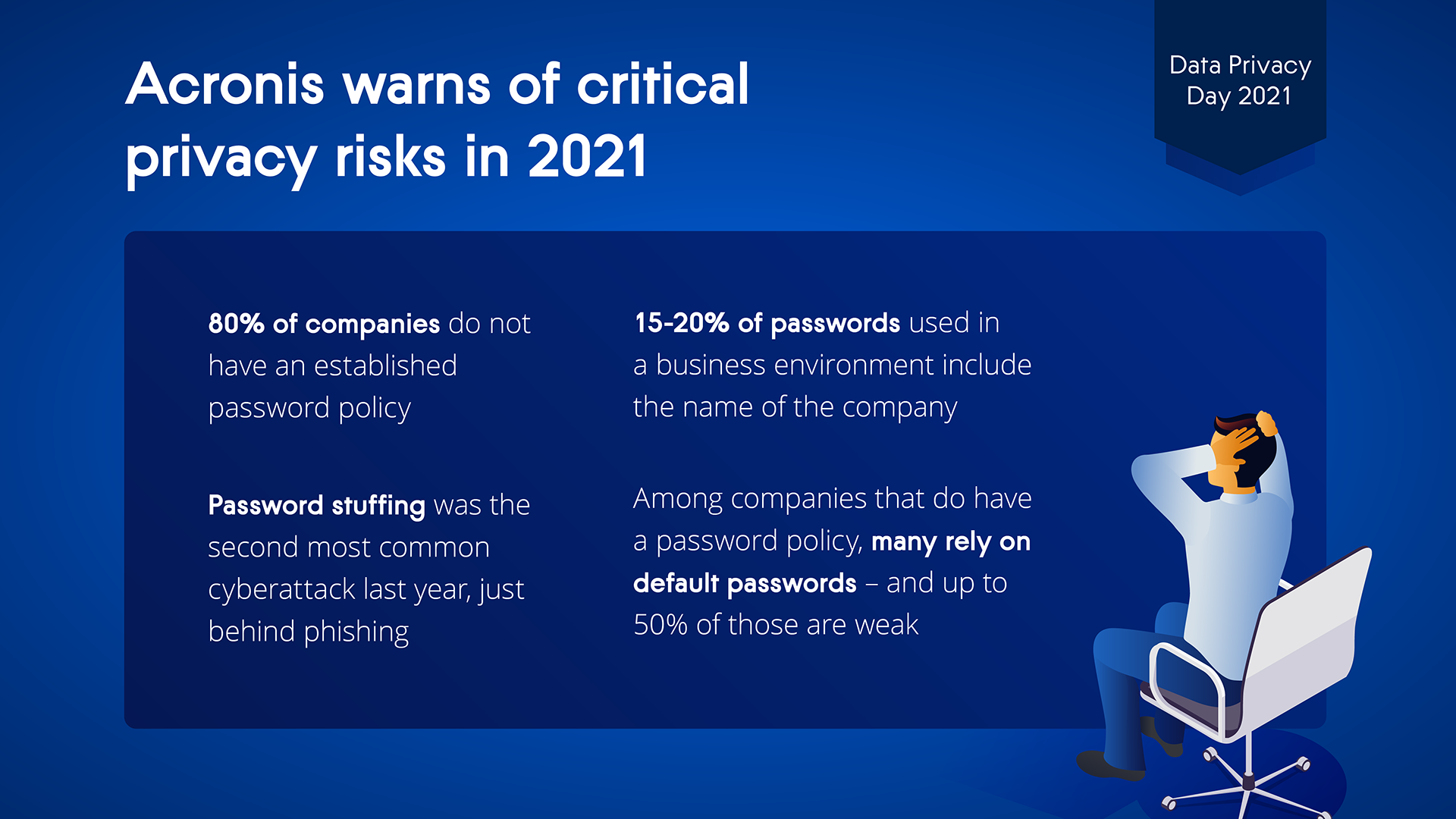
Acronis has issued a warning that, based on their research of recent cyberattack trends and existing business practices, organisations around the world currently face a global threat to data privacy and security in 2021. The company announced its findings on European Data Protection Day to alert organisations that immediate action is needed to avoid costly attacks. The latest research by the cybersecurity experts at the global network of Acronis Cyber Protection Operations Centers (CPOCs) revealed that 80% of companies do not have an established password policy. Between 15-20% of the passwords used in a business environment include the name of the company, making them easier to compromise. Two recent high-profile breaches illustrate this problem: before its Orion compromise, SolarWinds was warned that one of its update servers had a publicly known password of “solarwinds123”, while former President Donald Trump’s Twitter account was hacked because the password was allegedly “maga2020!”. Of the organisations that do have a password policy in place, the researchers found many rely on default passwords – and up to 50% of those are categorised as weak. Attackers know these weak password practices are widespread and, with so many employees working from home as a result of the COVID-19 pandemic, cybercriminals have targeted the less secure systems of these remote workers. Acronis analysts observed a dramatic increase in the number of brute force attacks during 2020 and found that password stuffing was the second most used cyberattack last year, just behind phishing. “The sudden rush to remote work during the pandemic accelerated the adoption of cloud-based solutions,” explains Candid Wüest, VP of Cyber Protection Research at Acronis. “In making that transition, however, many companies didn’t keep their cybersecurity and data protection requirements properly in focus. Now, those companies are realising that ensuring data privacy is a crucial part of a holistic cyber protection strategy – one that incorporates cybersecurity and data protection – and they need to enact stronger safeguards for remote workers.” Financial and reputational risks While the business community is recognising that better cyber protection is needed to ensure the privacy of their data and their customers’ data, awareness among digital users continues to lag. One report found that 48% of employees admit they are less likely to follow safe data practices when working from home. Poor password hygiene and lax cybersecurity habits of remote workers are among the reasons Acronis CPOC analysts expect the financial impact of data exfiltration will soar in 2021, as bad actors can more easily access and steal valuable company data. The trend is similar to one now seen among ransomware attackers, who are stealing proprietary or embarrassing data and then threatening to publish it if the victim doesn’t pay. Last year, Acronis identified more than 1,000 companies around the world that experienced a data leak following a ransomware attack. Implementing tighter authentication requirements To avoid the costly downtime, significant reputational damage in the marketplace, and steep regulatory fines in 2021 that can be caused by a data breach, organisations must strengthen the authentication requirements needed to access company data. Acronis and other cybersecurity experts recommend the following best practices: Multifactor authentication (MFA), which requires users to complete two or more verification methods to access a company network, system, or VPN, should be the standard for all organisations. By combining passwords with an additional verification method, such as a fingerprint scan or randomised PIN from a mobile app, the organisation is still protected if an attacker guesses or breaks a user’s password. Zero trust model should be adopted to ensure data security and privacy. All users, whether they are working remotely or operating inside the corporate network, are required to authenticate themselves, prove their authorisation, and continuously validate their security to access and use company data and systems.User and entity behavior analytics, or UEBA, helps automate an organisation’s protection. By monitoring the normal activity of users with AI and statistical analysis, the system can recognise behaviour that deviates from normal patterns – particularly those that indicate a breach has occurred and data theft is underway. While European Data Protection Day 2021 is an ideal opportunity to bring attention to the risks to data privacy, the researchers at the Acronis CPOCs have identified additional cyberthreat trends that will challenge sysadmins, managed service providers (MSPs), and cybersecurity professionals during the coming year.

Data privacy day: Expert data privacy trends and predictions for 2021
Thursday January 28 marks Data Privacy Day, an international effort to empower individuals and encourage businesses to respect privacy, safeguard data and enable trust. With 2021 set to present us with new challenges and ways of working, businesses need to prioritise data privacy now more than ever, resulting in arguably the most significant Data Privacy Day on record. On the back of 2018, which saw the implementation the ‘General Data Protection Regulation’ (GDPR) act, data privacy was at the top of the corporate and consumer priority lists, giving people more control over their personal data. However, looking back at the last 12 months, it is evident that data privacy is no longer taken quite as seriously. The pandemic and the ‘new normal’ appears to have changed public attitudes on data privacy, which once called for ‘more privacy’. With widely accepted systems such as ‘Track and Trace’ it has become more culturally acceptable for people to willingly share their data. For example, Statista has reported that the NHS contact tracing app has been downloaded nearly 21 million times (20.9m) in the UK.  The same shift in data privacy attitude can be said for businesses and monitoring employee behaviours. Since the pandemic, businesses are faced with the majority of their staff working remotely and, whilst it was once a questionable practice between privacy and corporate necessity, many are now considering ways to keep an eye on productivity, whether employees like it or not. Pedro Martins, Co-Founder & Technical Director of London’s leading IT support experts Totality Services, comments: “As we all know, security breached can be catastrophic to businesses and with the majority of employees now working remotely, we’ve seen a rise in malice attacks across devices. “Business leaders need to understand the importance and actions to keep their data secure. The key is ensuring the organisation's workforce are educated and understand the measure that must be taken to keep key information secure.” “Ahead of Data Privacy Day, we’ve outlined our top predictions for the year and the actions we expect businesses to take to keep their key data as secure as possible.” As businesses consider how to approach data privacy amidst the ‘new normal’ of 2021, Pedro Martins shares some projected trends and predictions for the year ahead. MORE STRINGENT VETTING ON COLLABORATION APPLICATIONS Whilst communication platforms inheritably started as direct Instant Messaging applications, they have, for the most part, been developed into collaboration platforms, used to share important company data both internally and more importantly, externally. This will drive businesses towards more policy-driven and tightened controls, to protect themselves and their data from being shared with the outside world. We're currently seeing this with all collaboration platforms, which are able to share data and files outside of trusted networks. This in turn will lead to businesses running more stringent privacy vetting on all collaborative applications. MORE PROMINENT DATA PROTECTION GUIDELINES WITHIN ORGANISATIONS  Every employee should be vigilant when it comes to Data Privacy, unfortunately, humans tend to fall back into old habits, so whilst GDPR went a long way to emphasise the importance and need for Data Protection, it should be an on-going activity as opposed to a one-off. This in turn helps employees place value and importance on much needed Data Privacy and Data Protection.  There are accreditations and certifications such as ISO27001 and Cyber Essentials which are set out for businesses to follow and commit to. This helps emphasise the importance of employees understanding both Data Privacy and Data Protection in the workplace. With the majority of organisations currently operating a 'work from home' model, it’s imperative to ensure organisations are adhering to these standards on how to manage information security. A RISE IN EMPLOYYEE MONITORING On the whole, we expect to see a slight increase in monitoring employees whilst businesses are working remotely, more noticeably for ones that have not incorporated a remote working policy before the COVID-19 pandemic. Remote working has taken a shift for obvious reasons and will force businesses to adopt important privacy policies during the pandemic. It will be an important step in the direction of a Digital Transformation.  MORE SECURE TECHNOLOGY WILL BE INSTALLED  We expect to see some minor tweaks to existing laws and regulations over the coming year; however, the emphasis is going to focus more around the technology itself as that helps determine how secure company’s data is. There is of course always room for human error and malice behaviour, having the right technology platforms will aid businesses in the prevention, resolution and transparency of potential breaches. In essence, it’s more around the platforms and systems in this case, such as email secure filtering, secure DNS, data encryption, secure email sending and dark web monitoring. REVISED REMOTE WORKING POLICIES TO ALLOW FOR LONG TERM REMOTE SET-UPS Businesses will utilise this time to re-visit their Remote Working Policies. In most cases, no policy was designed for prolonged Remote Working in mind. We also expect organisations to factor in standard security, information and data confidentially for home workers. The systems and security platforms used day to day are key but as is the hardware being used in the home environment, which in most cases is not fit for business use.  EMPLOYEE DATA PRIVACY EDUCATION We expect to see businesses focus their attention on educating their workforce on the importance and value of Data Privacy. Employees must understand what measures to take in an unlikely security breach, such as reporting incidents and the relevant processes to follow.

MediaTek, Swisscom, Ericsson and OPPO enable 5G carrier aggregation
MediaTek has announced it has reached a 5G carrier aggregation (CA) and Voice over New Radio (VoNR) milestone in collaboration with Swisscom, Ericsson and OPPO, advancing 5G networks across Europe. Through this joint initiative, 5G CA between frequency division duplex (FDD) low band and time division duplex (TDD) mid band was achieved in both Non-Standalone (NSA) and Standalone (SA) network architectures. FDD was deployed simultaneously with LTE using the same spectrum resources and utilizing the Dynamic Spectrum Sharing (DSS) technique. Aggregating the FDD band with its wider coverage capabilities together with the TDD band will help to extend the coverage of the higher peak rate capabilities of the TDD band and increases network capacity. FDD-LTE and FDD-TDD are both important in paving the way for 5G SA deployment, ensuring a seamless 5G user experience and extended capacity. “As a 5G innovation pioneer, MediaTek has a long history of working with Swisscom, Ericsson and OPPO on 5G to usher in this new era of ultra-fast connectivity,” says JS Pan, General Manager of Wireless Communication System and Partnership at MediaTek. “This is just the beginning of the 5G SA journey in Europe and MediaTek is committed to bringing it live to its full extent. We are prepared to meet the increasing demand in new 5G services and applications. Our Dimensity series of powerful and energy-efficient 5G SoCs are designed to support NR CA across multiple configurations, as well as native VoNR support, to ensure a seamless user experience.” VoNR represents a major step towards the migration to 5G SA systems. This will allow OEMs to bring innovative new services to market. With SA networks, 5G applications will be able to go beyond enhanced Mobile Broadband (eMBB) targets of high data throughput to meet the ultra-low latency and reliability requirements of mission-critical use cases and enable next generation of massive IoT deployment. Both accomplishments were made on Swisscom’s commercial 5G network using Ericsson’s network infrastructures including its RAN, Core Network and IMS solutions. Additionally, the milestones were reached on commercially available OPPO Reno 4Z 5G devices powered by MediaTek’s Dimensity 800 SoC and MediaTek Dimensity 1000+ SoC test user equipment (UE). “In our labs we are showcasing that the technologies we invest in today will benefit our customers tomorrow. This was confirmed again recently with Swisscom topping the latest Umlaut Connect best network test in Switzerland for the fourth year in a row,” comments Christoph Aeschlimann, Chief Technology and Information Officer at Swisscom. “The future of 5G services will be centred around 5G standalone networks, and by investing in 5G standalone, we are also investing in new opportunities for Switzerland, such as through network slicing and dedicated on-premises 5G deployments.” “Through this joint initiative, we’re taking another big step towards the commercialization of 5G standalone networks in Europe,” adds Maggie Xue, President at OPPO Western Europe. “As 2021 will be a pivotal year for accelerating 5G rollouts, we’re eager to bring the best 5G experiences to European consumers with the help of MediaTek, Ericsson and Swisscom.” “Bringing 5G standalone to the market requires a strong collaboration with our customers and partners. This latest achievement using industry-leading solutions like 5G carrier aggregation is an important step towards realizing the full benefits of 5G,” concludes Hannes Ekström, Head of Product Line 5G RAN, Ericsson. “Ericsson is proud to drive the innovation in this area together with MediaTek, Swisscom, and OPPO. We are enabling a reliable, secure, and flexible 5G standalone architecture that will push Europe’s digital transformation forward.”

Semtech releases new Digital Baseband IC in the LoRa Core portfolio
Semtech Corporation has announced the LoRa Core portfolio with a new chipset. The LoRa Core portfolio provides global LoRaWAN network coverage and is targeted to several vertical industries including asset tracking, building, home, agriculture, metering, and factory automation. The LoRa Core portfolio consists of sub-GHz transceiver chips, gateway chips and reference designs including SX126x series, SX127x series and LLCC68 transceiver chips, as well as the SX130x series gateway chips, legacy gateway reference designs and the LoRa Corecell gateway reference designs. Together, they represent the essential capability of Semtech’s LoRa devices including long range, low power and cost effective end-to-end communication. New additions to the LoRa Core portfolio are a gateway baseband processor integrated with LoRa (SX1303) and an associated LoRa Corecell gateway reference design that supports the fine timestamp feature. “The new LoRa Core gateway IC enables the network-centric geolocation of LoRa devices without requiring the inclusion of GPS hardware at each individual end node. Based on a fine timestamp capability that provides accurate time of arrival information for each demodulated message, the new chipset allows gateways to perform network-centric geolocation based on Time Difference of Arrival (TDOA). This is ideal for several cost-sensitive asset tracking applications,” says Pedro Pachuca, Director of Wireless Products in Semtech’s Wireless and Sensing Products Group. “The new LoRa Core IC helps customers accelerate the development of their applications operating the LoRaWAN protocol. Semtech is committed to delivering solutions to customers that simplify their application development cycle when using LoRa devices.” The new LoRa Corecell gateway reference design, with fine timestamp, is available for U.S., Europe and China regions, and will enable developers to produce gateways integrating LoRa with optimal bill-of-material (BOM) and the lowest power profile, while offering the latest performance for network-centric geolocation. Key Features of the new LoRa Core chipset (SX1303): Provides accurate time of arrival information for each demodulated LoRa frameFine timestamp is a nano second resolution value references to a PPS (pulse per second) signalGeolocation accuracy is around 75–150m depending on many different factorsSize and pin-to-pin compatible with LoRa Core SX1302Featured for implementations leveraging the LoRaWAN protocol and worldwide sub-GHz bands Up to -141dBm sensitivity with LoRa Core SX1250 Tx/Rx front-endUnique 64-bit serialized number for identification and security purposesGateway offers lower power consumption and smaller size than legacy gateways


Translate »