Renewables and Energy: Infrastructure Builds Driving Sustainable Power

Feature - Why is Green IT so important?
By Eric Herzog, Chief Marketing Officer (CMO) of Infinidat. Green IT is an essential component of an enterprise IT strategy, because it prioritises practices and technologies that target reducing the environmental impact of IT operations, whilst also saving on operational expenses. This includes minimising energy consumption, lowering carbon emissions, and promoting sustainable disposal of technology products. Interest among enterprises in Green IT has grown significantly in recent years, driven by environmental concerns, cost savings and regulatory pressures. This transition to Green IT is crucial because the environmental impact of data centres and IT infrastructure is huge and growing rapidly, especially given the interest in AI applications. At present, data centres worldwide consume 1-2% of overall power, but this percentage is projected to rise to 3-4% by the end of the decade, according to Goldman Sachs. It emphasises the very urgent need for sustainable IT practices. It’s especially important in tech-heavy industries like banking, finance and telecommunications. Recent research conducted by IDC in 2024 indicates that increased power consumption by data centres was largely driven by the surge in AI workloads and edge computing. During the period 2025 to 2028, electricity consumption is expected to more than double, with a CAGR of 19.5%, reaching 857 Terawatt hours (TWh) in 2028. In the AI data centre sector this rate is even higher, with energy consumption rates forecast to grow at a CAGR of 44.7%, reaching 146.2 TWh by 2027. The reason for this disparity this is very clear. On average, a ChatGPT query needs nearly 10 times as much electricity to process as a Google search, according to research published by Goldman Sachs. Plus, AI models often require constant training and fine-tuning, leading to prolonged periods of high energy consumption. By adopting Green IT practices, enterprises can not only contribute to a more sustainable future but will also reduce their operational costs (OpEx). This article will illustrate how, by adopting enterprise storage solutions optimised for environmental efficiency, enterprises will get a head start on best practice. So, what should green conscious buyers be looking for when they invest in enterprise storage? Storage arrays designed with sustainability in mind One of the best ways that an enterprise can cut energy consumption within its storage infrastructure is to consolidate the number of arrays being used. If you are wondering how to identify what ‘too many arrays’ looks like, an enterprise usually finds itself ready for storage consolidation when it’s experiencing storage array sprawl. This is an overloaded storage infrastructure caused by years of bringing in a different array for one or two workloads at a time, in a piecemeal fashion. By consolidating, enterprises can benefit in three key ways: • Access to the latest power-efficient hardware and software designed to minimise energy consumption.• An opportunity to make ongoing energy savings through telemetry-based optimisation. This provides real-time power and cooling consumption data, for continuous power usage monitoring and optimisation.• All-round reduced footprint, because consolidating multiple storage arrays into a single, more efficient platform cuts down on the floor space requirements too. For instance, a financial services company could replace over 288 floor tiles of legacy arrays with 61 floor tiles of advanced arrays optimised for energy efficiency, resulting in a reduction of over four times in data centre floor space and 62% reduction in total power consumption. Vendor commitment to operational decarbonisation Perhaps the simplest way that enterprise buyers can assure themselves they are making inroads with Green IT programmes is to opt for vendors that are taking this priority seriously inside their own organisations. There are three key ways vendors can be signalling to procurement heads that their storage solutions meet these requirements. Firstly, through integrated ESG (Environmental, Social and Governance) reporting. Vendors that are proactive in this space will be ‘walking the talk’, incorporating ESG principles into every aspect of their operations, from supply chain management to technology development. Secondly, through a documented commitment to reducing Scope 3 Emissions. These are the indirect emissions within an enterprise’s total carbon footprint that exist in the upstream and downstream value chain. Controlling Scope 3 emissions is particularly important, because they typically make up the largest portion of a company's carbon footprint, often accounting for more than 70% of total emissions. As a company, Infinidat is proud to have achieved a 41% reduction in total carbon footprint across our own value chain, encompassing Scope 3 emissions. Lastly, through continuous investment in the development of power-efficient products. Infinidat continuously upgrades its product lines to deliver ongoing higher performance with the lowest possible energy consumption. Compare competitors for storage energy efficiency You might expect that all enterprise storage vendors would have similar environmental credentials, but the reality is very different. Some solutions are significantly more energy-efficient than others. Independent analysis shows that the ‘greenest’ arrays deliver 2.5 to 4.5 times better power efficiency (watts/TB) compared to other enterprise-class storage competitors. Consider this comparison above of publicly available power and capacity information detailing the consumption rates of two leading enterprise storage vendors to illustrate the point. And take this analysis a step further to consider your own environment using the energy efficiency calculator. Estimate the savings to be made both in terms of OpEx and carbon footprint by clicking here. What next? There are three very tangible benefits to be seen from using energy efficient storage solutions for Green IT. • Lower OpEx – because reduced power consumption translates directly into lower operational expenses.• Reduced Greenhouse Gas (GHG) Emissions – because by minimising energy use you can achieve a lower carbon footprint, supporting Green IT and environmental sustainability goals.• Improved ROI/TCO – because the combination of lower OpEx and increased efficiency results in a better return on investment and lower total cost of ownership. Clearly, Green IT must become an essential component of every enterprise IT strategy. We cannot continue unchecked, on the current trajectory of power consumption. As the explosion of generative AI continues, enterprises will need to regain control of their energy usage and find ways to embrace this new technology without it causing negative consequences. Identify the right strategic technology partner, one with the right mix of products and an emphasis on cutting carbon emissions, and you can achieve this. - Eric Herzog is a guest speaker at DTX 2025 and will be discussing 'The New Frontier of Enterprise Storage: Cyber Resilience & AI' on the Advanced Cyber Strategies Stage. Join him for unique insights on 3 April 2025 from 11.15-11.40am. Infinidat will be located at booth C81 at DTX 2025, taking place on 2-3 April at Manchester Central. For more from Infinidat, click here.

EcoDataCenter secures €450m for green transition
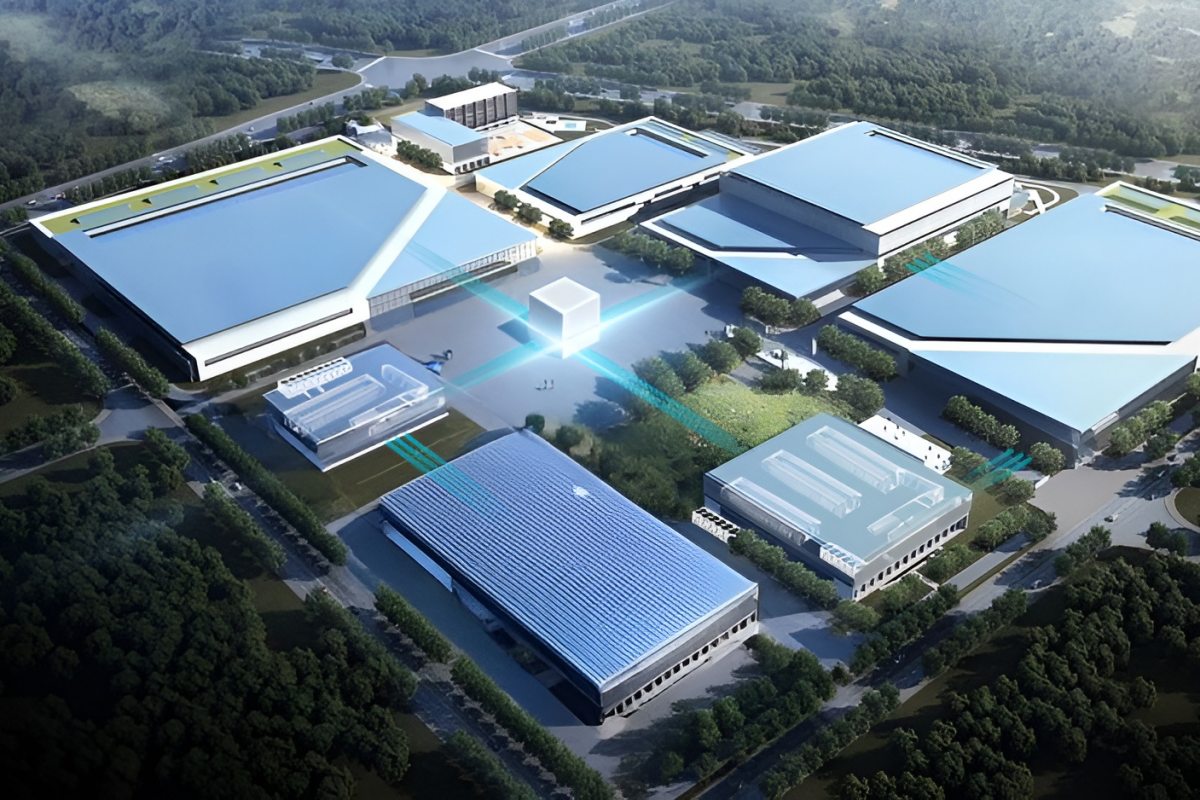
EcoDataCenter's owner, Areim, has successfully secured €450m in capital from leading institutional investors. The capital will be used to enable further growth and drive the green transition in the data centre industry through EcoDataCenter. Over the past two years, Areim and EcoDataCenter have secured a total of approximately €1.2bn in funding. "We are establishing one of the most exciting companies in the Nordics. Through our platform, we have established partnerships with some of the world's leading companies, which creates great investor confidence in what we do," says Peter Michelson, CEO of EcoDataCenter. EcoDataCenter has quickly become a leader in digital infrastructure in Europe. In 2024, the company partnered with AI Hyperscaler CoreWeave to build one of Europe's largest AI clusters in Falun. Soon after, the company secured a new mega site of +240MW to establish additional data centres. A journey of expansion that now continues with the help of the new capital. "It is a strong confirmation of our ability to raise capital of this scale. We will continue to drive the market for how digital infrastructure should be built together with our customers," says Leif Andersson, founder of Areim and Chairman of EcoDataCenter. EcoDataCenter opened its first facility in Falun in 2019, and since then has established data centres with a focus on computing capacity. Due to its technological leadership, the company has gained the trust of world-leading companies such as BMW, DeepL and CoreWeave. Fore more from EcoDataCenter, click here.

Schneider Electric advocates for increase in sustainable technology
Schneider Electric, the energy management and automation specialist – and recognised sustainability expert – will play an active role at the World Economic Forum Annual Meeting 2025 (WEF), advocating for more collaboration to increase uptake of energy technologies and automation solutions. The annual meeting gathers global leaders from all sectors to address the world's most urgent challenges. This year, it emphasises stronger collaboration to address geopolitical dynamics, while stimulating growth and stewarding a just energy transition. Schneider Electric tells us that it is firmly aligned with the WEF’s call to action. The company has long worked across multiple industries and sectors, helping clients and partners reduce environmental impacts along their value chain, while improving efficiency and resilience. Recently, Schneider Electric released two key reports: The Looming Power Crunch; Solutions for Data Center Expansion in an Energy-Constrained World from its Energy Management Research Center, and Artificial Intelligence for Energy Transition from its Sustainability Research Institute. These reports outline strategies for addressing the challenges of an energy-constrained world and ensuring expansion is both sustainable and economically viable. They also define a strategy for integrating AI seamlessly into our infrastructure to achieve substantial decarbonisation in the energy sector. Olivier Blum, CEO of Schneider Electric, during the IEA global conference in December 2024 advocated that it is possible to leverage innovations in AI to deliver greater efficiency, resilience, and security simultaneously while ensuring smart and sustainable management. Schneider Electric now calls for harnessing the momentum around AI to accelerate the adoption of existing technologies such as end-to-end AI data centre solutions or AI powered HVAC in buildings. The company states that this will facilitate a successful energy transition and drive the development of smart industries. According to a WEF report, reducing energy usage with existing technologies alone could lower energy intensity by 31% and generate annual savings exceeding $2 trillion (£1.6 trillion) by 2030. To deploy technology at scale, Schneider Electric emphasises stronger partnerships and enhancing efficiency at the industry level. Olivier Blum comments, “Sustainability and economic growth can go hand-in-hand. By forging strategic partnerships, companies can leverage innovation and technology at hand to increase their performance while delivering meaningful impacts and a better future for all.” From 20-24 January, participants at WEF’s Annual Meeting can engage with Schneider Electric's experts in both public and private panel discussions. These sessions will focus on practical strategies for implementation, return on investment, and real-world case studies that highlight the benefits and successes of sustainable projects. Company executives in attendance will include: • Olivier Blum, Chief Executive Officer, Schneider Electric• Jean-Pascal Tricoire, Chairman, Schneider Electric• Aamir Paul, President of North America Operations, Schneider Electric• Barbara Frei, EVP, Industrial Automation, Schneider Electric• Caspar Herzberg, CEO, AVEVA & Member of the Executive Committee, Schneider Electric• Chris Leong, Chief Sustainability Officer, Schneider Electric• Deepak Sharma, Managing Director & CEO, Zone President Greater India, Schneider Electric• Pankaj Sharma, Executive Vice President, Data Centers & Networks, Schneider Electric For more from Schneider Electric, click here.

Keepit recognised for its green data centres
Keepit, a global provider of a comprehensive cloud backup and recovery platform, has been awarded 'Best Green Initiative' by the Business Awards UK, 2024 Corporate Sustainability Awards. Keepit’s data centres in the Americas and EMEA have been powered by 100% renewable energy since 2023. "Keepit prides itself in having built its whole operation efficiently, with sustainability in mind. Providing our customers with the ability to secure their data on our platform, knowing we’re also doing our part to reduce environmental impact, is important to us as a company”, says Michele Hayes, CMO at Keepit. Since 2023, all Keepit’s data centres in the Americas and EMEA have been powered by 100% renewable energy. Keepit reached this important green energy milestone ahead of other cloud-based backup vendors. Keepit constructed its technology stack from the ground up, specifically designing it to efficiently address data storage challenges. This approach reflects a commitment to optimising resource utilisation and delivering a service that is not only effective but also resource efficient. Keepit platform was also named Best Cybersecurity Backup Service by Business Awards UK, 2024 Cybersecurity and Resilience Awards. Keepit is headquartered in Copenhagen, Denmark, with offices in the US, Germany, and the UK. Among its UK customers are The National Gallery and Oxford University Innovation. For more from Keepit, click here.

Salumanus unveils white paper on green data centres
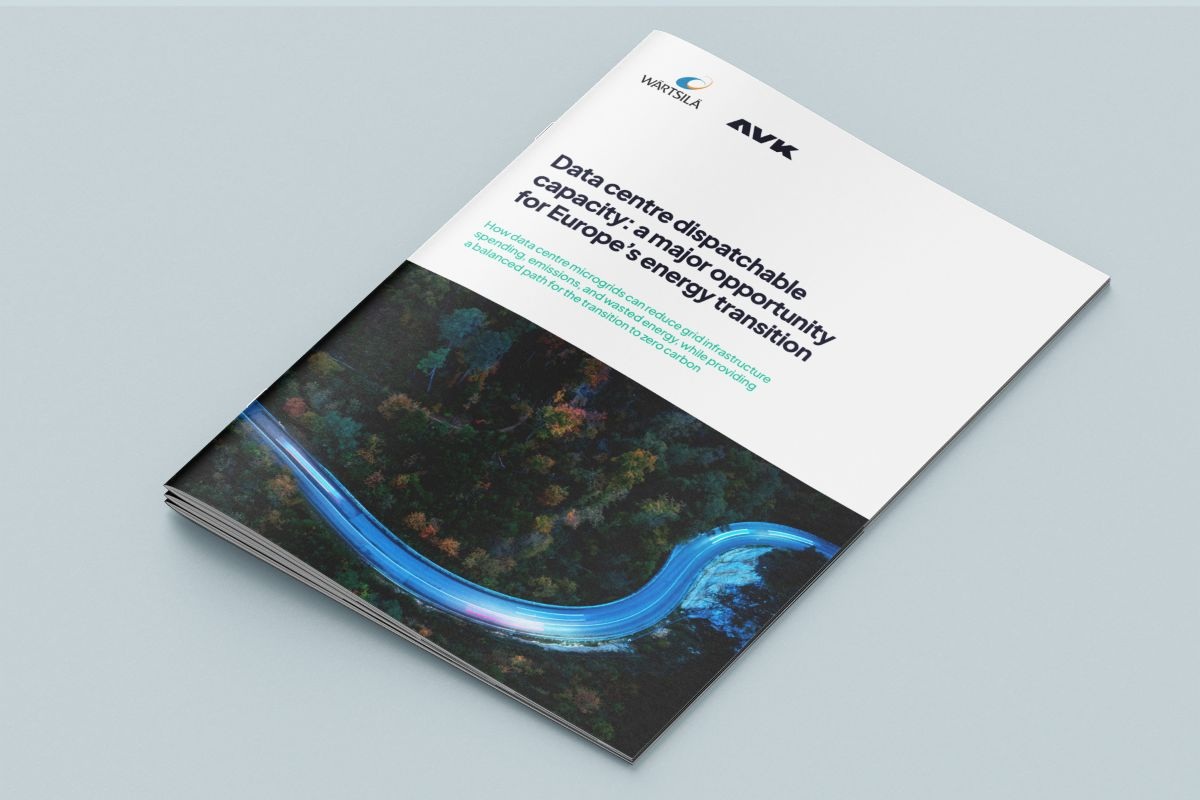
To encourage businesses to take practical steps to reduce emissions from data centres, which contribute 1-3% of the world’s total energy usage, optical solutions specialist, Salumanus, has released a white paper titled Building a sustainable digital infrastructure: A comprehensive guide to green data centres. This guide offers in-depth insights into the evolution and implementation of green data centres, providing essential guidance for businesses and organisations aiming to reduce their environmental footprint. In today's hyper-connected world, data centres are the backbone of our digital economy, supporting everything from cloud computing and artificial intelligence (AI) to online retail and streaming services. As the demand for digital services continues to grow exponentially, so does the energy consumption of data centres, which are now some of the largest consumers of electricity globally. According to the International Energy Agency, data centres are responsible for approximately 90 billion kWh of electricity annually, producing around 330 million tonnes of CO2 emissions. Salumanus’ white paper delves into the environmental challenges posed by traditional data centres, particularly their significant energy demands and the extensive cooling systems required to maintain optimal operating temperatures. It highlights that cooling systems alone can consume up to 40% of a facility’s total energy, exacerbating the carbon footprint of data centres. “Salumanus is committed to advancing digital infrastructure in a way that supports both technological progress and environmental stewardship,” says Marcin Bala, CEO of Salumanus. “Our white paper is a vital resource for businesses and organisations looking to reduce their environmental footprint, while maintaining high levels of performance and efficiency in their data centres.” The white paper outlines the concept of green data centres, which represent a paradigm shift towards more sustainable and energy-efficient practices. These facilities incorporate cutting-edge technologies such as virtualisation, which allows multiple virtual machines to run on a single physical server, significantly reducing the number of servers needed and consequently lowering power consumption. Liquid cooling systems, another innovative solution discussed, offer superior heat dissipation compared with traditional air cooling, reducing the energy required for cooling by up to 27%. A key highlight of the white paper is the discussion on universal optical transceivers, such as the Smart Recode Device (SRD) offered by Salumanus. The SRD standardises optical transceivers across different networking equipment, streamlining inventory management, reducing electronic waste, and enhancing operational efficiency within data centres. This technology not only simplifies maintenance and upgrades, but also features advanced energy-saving modes that contribute to the overall sustainability of data centres. “The SRD exemplifies our commitment to advancing sustainable practices in data centre management,” Marcin continues. “By enabling the use of a single optical transceiver across multiple platforms, the SRD addresses the inefficiencies that have long plagued data centres. This innovation streamlines operations and plays a crucial role in reducing electronic waste and energy consumption.” Additionally, the white paper explores the role of edge computing in minimising energy consumption by processing data closer to the source, thereby reducing the need for data to travel long distances. AI and machine learning technologies are examined for their ability to optimise workloads and improve energy efficiency in real-time. The white paper is now available for download on the Salumanus website by clicking here. For more from Salumanus, click here.

Colt DCS publishes its second Sustainability Highlights report
Colt Data Centre Services, a global provider of hyperscale and large enterprise data centre solutions, has released its second 2023 Sustainability Highlights Report. In 2023, Colt DCS further reduced its global absolute greenhouse gas emission by 40%, compared to its 2019 base year. This means that Colt DCS is currently on track to reach its 1.5oC 2030 climate targets, approved by the Science-based Targets initiative (SBTi). To sustain momentum in delivering on its ESG strategy, Colt DCS is already showing progress towards its long-term goal to reach net zero emissions by 2045. The business is undertaking actions such as renewable energy procurement and energy efficiency initiatives. It is prioritising close collaboration with its suppliers and customers to make sure it is decarbonising across its entire value chain. Zero waste in operations and conserving natural resources is also a priority to prevent environmental degradation. Further key features from the 2023 Sustainability Highlights Report include: Decarbonising the business 100% renewable electricity in Europe and India 67% reduction in absolute Scope 1 & 2 emissions compared to 2019 38% reduction in absolute Scope 3 emissions compared to 2019 Connecting people Launch of the AIM Framework - which serves as the foundation of its vision to become an employer of choice 83% of employees affirm Colt DCS as an excellent place to work 74 global customer satisfaction (NPS) score Safeguarding the company “A” rating CDP Climate and Platinum score for EcoVadis Standalone DCS Governance Committee formed As demands for digital technologies has grown, so too has the number of data centres across the globe. Therefore, data centre operators have a responsibility to design, build, and operate facilities that are good for society and the planet. Colt DCS has been committed to expanding existing and constructing new data centres across India, Japan, the Netherlands, France, Germany and the UK. All new data centre builds from Colt DCS in London, Paris, Frankfurt, Tokyo, and Mumbai have been or will be constructed using its Global Reference Design (GRD) guidelines which adopt a number of principles to enhance a site's environmental sustainability performance. Niclas Sanfridsson, Chief Executive Officer at Colt DCS said: “I want to extend my gratitude to our valued customers, partners, and dedicated employees. Your support and collaboration has been instrumental in achieving this significant progress in our sustainability goals.   Data centres are the backbone of our global digital economy and a vital component of modern society. Designing, building, and operating these facilities with sustainability at the core has never been more crucial. Today, achieving our vision - to be the most trusted and customer- centric data centre operator in the industry - means investing in a future that is better for people, places and the planet.”   Fore more from Colt DCS, click here.

Green digital infrastructure – where we are, and looking to the future
By Anthea van Scherpenzeel, Senior Sustainability Manager, Colt DCS The amount of data we use is rising rapidly. In fact, by 2025 the volume of data created, captured, copied, and consumed worldwide is predicted to reach 181ZB, more than quadrupling 2019 figures. As data volume increases, data centres must keep up with demand and respond to evolving needs, but this raises new challenges. Creating sustainable digital infrastructure that can cope with these new requirements is a tricky task. Increased power consumption, cooling needs, and new construction can call the green credentials of data centres into question, with sustainability now a key priority for all major stakeholders. However, are data centres the catalyst for sustainable change? And what should they be doing to play their role in the climate fight? Colt DCS takes a look at the past, present, and future of sustainable digital infrastructure, and how we can minimise the environmental impact of data centres for good.  Looking back, and looking in the now In the 1990s and 2000s, demand for data centres was minimal. Primarily used by content providers to host companies and e-commerce sites, their energy consumption and emissions were relatively low. Now, data centres consume huge amounts of energy to support new technologies like cloud, AI, and quantum computing that have an increasingly large impact on the planet. A hyperscale data centre can require around 150MW of grid capacity and consume hundreds of GWh of electricity annually. Add 2023’s boom in generative AI into the mix, and the carbon footprint of data centres will only increase. For instance, the AI industry alone could consume as much energy as the Netherlands by 2027. Data centres are currently responsible for 1% of energy-related global greenhouse emissions with the IEA signalling that improvement is needed in this space. The environmental impact of data centres must not be underestimated. In line with the Paris Agreement, hyperscalers must set their own tangible targets to decrease their impact on the planet, as well as supporting their customers’ net zero strategies. However, not all data centres are as ahead of the curve as others. Data centres need to step up Data centres have a responsibility to up their environmental game. Not only to meet the needs of the upcoming EU Corporate Sustainability Reporting Directive (CSRD) and EU Taxonomy, but also to win the business of those with clear sustainability strategies in place. There are many areas where data centres can improve their green credentials, including energy, waste, and biodiversity. Hyperscalers are in a prime position to source renewable energy, implement more efficient or less harmful cooling equipment, and harness waste energy to keep emissions and environmental impact down. But considerations for the environment often end here.  True decarbonisation requires tangible net zero strategies, achieved through collaboration with customers and suppliers. With the CSRD and Scope 3 tracking, data centres need to be more aware and conscious of third-party emissions than ever before. Being on the same sustainability journey as partners goes one step further, ensuring that ESG is not just a tick-box exercise. Ultimately, your efforts can be negated when green initiatives are overshadowed by unsustainable partners. The value chain must be analysed and partners must be engaged in important conversations to align sustainability goals and priorities. Setting goals for the path ahead Science-based, measurable goals create a clear view of the path ahead. There will always be uncertainties with long-term targets, with new regulations, laws in different nations, and global events throwing a spanner in the works. However, when data centres create a science-based roadmap and feasible targets, this short-term uncertainty is unlikely to put long-term goals at risk. One element that will become more important in the future is data centres’ embedded carbon footprint. Likely to play a large role in reporting, this includes metrics that cover the whole lifecycle of a data centre from shipping materials to construction to operation. For complete transparency, more thorough data is needed from the start of a data centre project to ensure sustainable practices are baked in from a project’s inception. Monitoring usually takes place from the on-switch, but this doesn’t account for the environmental impact of the whole value chain.  This makes supplier evaluation and partner choice even more important. One data centre provider can only do so much, it’s up to all the players in the market to work together to drive a bigger impact for the overall industry. Furthermore, digital infrastructure operators must work with partners and customers to align on sustainability as a core part of strategy. With the boom in AI and the increased need for data centres, we must be cautious that racing to keep pace with innovation doesn’t push sustainability down the priority list. It is important for businesses to consider the environmental impact of their data, and to choose the right partner who can help in achieving a net zero status throughout their operational network. When managed correctly, data centres can, and should, be a key player in the climate fight. Sustainability will soon be a key differentiator, and as collaboration increases to fulfil reporting regulations, choosing the right partners to reach net zero targets will be vital. 

AirTrunk and ib vogt sign Virtual Power Purchase Agreement
Asia Pacific and Japan (APJ) hyperscale data centre specialist, AirTrunk, and international renewable energy developer, ib vogt, have signed the first data centre renewable energy Virtual Power Purchase Agreement (VPPA) under Malaysia’s Corporate Green Power Programme (CGPP). The CGPP is an initiative from the Suruhanjaya Tenaga, Malaysia’s Energy Commission, enabling businesses to sign VPPAs and participate in renewable energy projects in Malaysia. A quota of 800MW of solar energy generation capacity is allocated to the programme and developers can apply for a maximum capacity of 30MW with a secured offtaker.  AirTrunk, as the offtaker, will procure renewable energy from the 29.99MW solar farm that ib vogt is currently developing under the CGPP. Construction is scheduled to begin in mid-2024. This announcement builds on AirTrunk’s renewable energy agreements in Hong Kong and Australia. These include a long term PPA for a new solar farm development that will add renewable energy generation capacity into Australia’s grid and a first-of-its-kind renewable energy solution in Hong Kong that will match data centre electricity consumption with local renewable energy certificates.

Equinix and wpd sign seven Power Purchase Agreement deals
Equinix and wpd have signed seven 20-year Power Purchase Agreements (PPAs) that will provide over 100MW in capacity, and more than 300GWh per year of green energy output in France. The Power Purchase Agreement, which is one of the largest of its kind signed in France, was facilitated by Schneider Electric and includes four wind projects in Nouvelle-Aquitaine, two in Hauts-de-France and one wind farm in Pays de la Loire. The agreement will see long term financial support to help further the deployment of renewable energy in France and make a major contribution in decarbonising the grid, as well as reaffirming Equinix’s commitment to sustainability, with the company continuing its focus on becoming climate neutral globally by 2030. PPA solutions such as these are highly impactful tools for achieving sustainability targets for companies and demonstrate the maturity of PPAs in France. For wpd, the PPAs allow it to diversify its financing options for wind power projects being developed. Régis Castagné, Managing Director, Equinix France, says, “We are proud to sign one of the biggest Power Purchase Agreements in French history, marking a significant milestone in France and underscoring Equinix's global dedication to investing in renewable energy solutions. Through aligning with France's own renewable energy production goals, we're delighted to be positively and proactively contributing to the nation's decarbonisation and renewable investments. Equinix is committed to making responsible business decisions that will support our customers on their sustainable journeys and the signing of this deal with wpd helps us make a big leap forward in on our own path to becoming climate neutral by 2030.” This deal also represents a major step forward for wpd France, augmenting its position as a major player in the French and European PPA market. The contracts will come into force in 2025 at latest – supporting renewable energy in France up to the year 2045. The Guarantees of Origin (GOs) generated from the project will be allocated to Equinix’s locations in all eleven of the company’s data centres in France.

Schneider Electric urges accelerating decarbonisation at Davos meeting
Far greater deployment of existing technologies is needed to keep climate change from spiralling out of control, Schneider Electric has urged. Accelerating climate change, geopolitical tensions, see-sawing energy prices, and pressure from stakeholders to address these risks, have pushed environmental sustainability and energy resilience to the top of the corporate and policy agenda in recent years. They form the backdrop to the World Economic Forum’s annual meeting in Davos, Switzerland, from 15 to 19 January 2024. “With energy accounting for 80% of carbon emissions, the energy transition is central to decarbonisation,” says Peter Herweck, CEO of Schneider Electric. “The potential of AI is currently capturing everyone's attention. But let’s not forget that existing technologies – both renewable energy generation and digital and electrification tools that lower energy demand by rendering sites and operations far more energy efficient – can sharply reduce emissions now. There’s no time to wait for tomorrow’s solutions when much more can be achieved with what we have today.” Action from the private sector, by companies around the globe, is key to lowering emissions. Encouragingly, the business world is increasingly making commitments to sustainability and decarbonisation. As of January 2024, more than 4,200 companies worldwide have set emissions-reduction targets validated by the Science Based Targets initiative (SBTi), for example. The power of energy efficiency, in particular, is gaining more recognition. Last year, Schneider Electric partnered with the International Energy Agency to bring together government and business leaders for a major conference on the topic. A new report published by the World Economic Forum on 8 January, found that acting on energy consumption through energy savings, energy efficiency and value cooperation partnerships could unlock up to $2 trillion in savings for the wider economy, and avoid building 3,000 additional power stations if actions are taken before 2030. And research conducted by Schneider Electric recently showed that installing digital building and power management solutions in existing buildings could sharply reduce operational carbon emissions, with a payback period of less than three years, highlighting the huge potential in that area alone. Challenges and opportunities in tackling Scope 3 emissions Another key area of focus is tackling the indirect emissions generated by companies’ Scope 3 emissions activities. These come from their upstream and downstream value chains and account for the largest part of a company’s carbon emissions – more than 70%, according to the UN Global Compact. The global supply chain disruptions of the past few years have helped push this topic up the corporate agenda. More than two-thirds of business leaders interviewed for a report last year by Schneider Electric, in partnership with Women Action Sustainability (WAS), says that regulatory pressure was pushing them to initiate decarbonisation planning with supply chain partners. Those surveyed also say they were seeing an increased demand for supply chain decarbonisation information from investors and/or financial entities. "Businesses that are serious about decarbonisation need to look beyond their own operations and address their entire value chain. And they need to realise that encouraging and helping their suppliers, customers, and other business partners to strive for greater energy efficiency – through electrification and digital technologies – and cleaner energy procurement, is a huge part of the answer,” says Olivier Blum, Executive Vice President of Energy Management at Schneider Electric. Read more latest news here.


Translate »