Data Centre Software for Smarter Operations


Schneider launches tool to evaluate the cost of servicing power systems
Schneider Electric has launched a new TradeOff Tool, the Edge UPS Fleet Management Comparison Calculator. Using the TradeOff Tool, IT solutions providers, managed service providers, VARs and end users can model the cost implications of uninterruptible power supply (UPS) monitoring and maintenance across distributed sites and make data driven decisions regarding cost, site criticality and servicing resources. The latest addition to Schneider Electric’s library of free digital TradeOff Tools, the Edge UPS Fleet Management Comparison Calculator helps users simplify and clarify the costs associated with monitoring and maintaining a UPS fleet. The model considers the size (VA rating), quantity, age and distribution of the fleet, as well as cost factors such as the expense of service technicians travelling to remote sites. Furthermore, it provides a financial analysis of the potential operational expenses (OpEx) incurred by using internal staff to service distributed sites, or whether engaging with an external partner or vendor can be more cost effective. “With greater dependency on digital infrastructure and IT at the edge, ensuring critical power across distributed sites has become a key challenge for today’s IT professionals,” says Marc Garner, VP, Secure Power Division, Schneider Electric UK&I. “UPS systems must be properly maintained, repaired or replaced when nearing end of life, and deploying sufficient technical staff to perform these tasks reliably and at minimum cost often requires the support of Schneider Electric or external service partners. This tool provides customers the capabilities to know when they should leverage additional resources, while optimising budgets to safeguard against outages.” Calculating the cost of downtime Schneider Electric TradeOff Tools are web-based, mobile-friendly applications that allow channel partners and end users to experiment with different scenarios, using data and science to estimate outcomes during data centre concept and design work. To facilitate cost comparisons, the Edge UPS Fleet Management Comparison Calculator allows the user to input a number of variables to gain an estimate for the amount of downtime that would be avoided by using a partner, or managed service, for monitoring and maintenance. It assigns a cost per hour which will vary according to the size of the UPSs. The larger the UPS, for example, the more expensive the outage. The user can also adjust the cost per hour variable if they have a record of the costs specific to their business. Having calculated the total cost of downtime, whether by self-servicing or through utilising proactive monitoring, preventative maintenance or a service level agreement (SLA), the comparison is automatically displayed. Research detailed in Schneider Electric white paper, ‘A Quantitative Comparison of UPS Monitoring and Servicing Approaches Across Edge Environments’, found that although internal personnel can manage a fleet of new equipment cost effectively, the savings gained by using partner or service provider resources increase substantially as equipment ages. With a fleet of 100 distributed UPS working with an external service partner can offer savings of up to 59 percent under a typical managed SLA. Digital services for the edge According to the Uptime Institute global annual data centre survey, 75% of respondents cited that downtime could have been preventable with better management, processes or configuration. For an organisation with the responsibility of operating multiple IT environments, the cost of having trained technical personnel on-site can be significant and often unrealistic. Using the tool, partners and end-users can calculate the cost of ensuring power continuity and resiliency for distributed, mission-critical IT applications, whether through partners or internal teams. By utilising software systems such as Schneider Electric’s open, vendor-agnostic remote management platform, EcoStruxure IT, customers can gain greater insights into the health and status of their UPS and dispatch service teams to minimise downtime. With its recent Public API and Monitoring and Dispatch Services, EcoStruxure also delivers proactive alerts into the status of edge computing environments, enabling IT Solutions Providers, MSPs and VARs to mitigate the fallout from power outages, and transition to digital servicing models.

ABB information systems selects Google cloud to expand its cloud footprint
Google Cloud announced it has been selected by ABB to further expand the cloud footprint of its Information System (IS) services. The Swiss-headquartered global technology leader has chosen Google as part of the organization’s ‘Rationalizing IT Operations’ (code named: Program RIO) initiative, which seeks to further increase the scalability and resilience of its infrastructure services to all ABB businesses. Google Cloud will collaborate with ABB’s hosting services team to layout an optimized cloud migration that is tailored to meet the IS needs of ABB businesses. This will be rolled out in a structured way and in-line with ABB’s new operating model. The migration signals ABB’s increased focus on cloud adoption, and optimizing its data centers’ capacity. Google Cloud’s data science, artificial intelligence (AI) and machine learning (ML) capabilities will be leveraged to simplify and improve the IS quality assurance via automation and consolidation of identified services housed in ABB’s strategic data centers and remote sites, with a cloud-first approach. “ABB is a global technology leader that has been a Fortune 500 company for many years,“ comments Dominik Wee, Managing Director Global Manufacturing and Industrial at Google Cloud. "We’re thrilled about the opportunity to help ABB in its journey toward powering its information systems services in the cloud, as the company heads towards a more digitized future.” ‘’We are excited to be working together with to improve the competitiveness of ABB’s Information Systems services, and the flexibility we offer our internal business customers,’’ says Daniele Lisetto, Head of IS Strategy Office and Sponsor of RIO Program at ABB. “Our choice further strengthens our strategic vision and stimulates innovation as we expand the Information Systems’ footprint,’’ concludes Prabhu Chakravarthy, Group IS Program Leader at ABB.

Aruba formalises its GAIA-X status as a Day-1 member
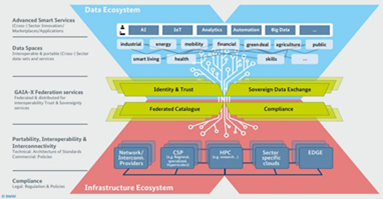
Aruba, formalizes its status as a Day-1 member of the GAIA-X project. With the aim of making a strong contribution to the development of a secure, reliable and certified network infrastructure for sharing and accessing data across Europe, the GAIA-X project is a step forward towards enabling a Cloud offering based on European values. Officially presented at the Digital Summit 2019, GAIA-X was formed with the intention of creating an interoperable and secure cloud infrastructure, based on compliance with European standards and regulations. It helps to create a free and transparent data environment, in which the potential for vendor lock-in is eliminated, and encourage competition between cloud solution providers, providing the highest level of certification, with the guarantee of the full protection of the European law. GAIA-X, due to be launched as early as 2021, acts as a legal entity supported by the European Commission according to the standards set out by its members. It is a project open to all countries that decide to contribute to its growth and join in as members, with the goal to provide European companies with a secure cloud network, using standards guaranteed by the European institutional system. Judging by the number of companies participating in the project and the country they are based in, Italy ranks third, behind only German and French firms. In total, 22 companies and founding associations are behind the project and there are also further providers that have been recently officialised, one of them being Aruba, which is named as a Day-1 Member of the project. “We’re aware how valuable and how much of a strategic resource data represents to every European company and beyond. GAIA-X aims to dictate a new European standard for the creation and provision of cloud services ideal for managing, storing, and processing data for everyday citizens and their businesses. This will most certainly strengthen the innovation and adoption of cloud computing while promoting European digital sovereignty” says Stefano Cecconi, CEO of Aruba S.p.A. He continues, “we joined the project as a Day-1 member because we believe that any service provided to citizens and businesses - either Italian or European - must comply with the same laws and regulations, the same principles and technical standards, in order to guarantee total interoperability between operators that adhere to the project by giving advantages to the users. " The newly formed GAIA-X company is a non-profit company that will oversee the creation, implementation, and promotion of this digital ecosystem, based in Belgium, Europe’s institutional heart.

BittWare Launches IA-840F and Support for oneAPI Unified Software Programming Environment
BittWare, a Molex company, has unveiled the IA-840F, the company’s first Intel Agilex-based FPGA card designed to deliver significant performance-per-watt improvements for next-generation data centre, networking and edge compute workloads. Agilex FPGAs deliver up to 40% higher performance or up to 40% lower power, depending on application requirements. BittWare maximized I/O features using the Agilex chip’s unique tiling architecture with dual QSFP-DDs (4× 100G), PCIe Gen4 x16, and three MCIO expansion ports for diverse applications. BittWare also announced support for Intel oneAPI, which enables an abstracted development flow for dramatically simplified code re-use across multiple architectures. “Modern data center workloads are incredibly diverse requiring customers to implement a mix of scalar, vector, matrix and spatial architectures,” said Craig Petrie, vice president of marketing for BittWare. “The IA-840F ensures that customers can quickly and easily exploit the advanced features of the Intel Agilex FPGA. For those customers who prefer to develop FPGA applications at an abstracted level, we are including support for oneAPI. This new unified software programming environment allows customers to program the Agilex FPGA from a single code base with native high-level language performance across architectures.” The new IA-84F offers enterprise-class features and capabilities, including: Support for Intel oneAPI unified software programming environmentHDL developer toolkit: API, PCIe drivers, application example designs and diagnostic self-testSophisticated Board Management Controller (BMC)Choice of thermal cooling options: passive, active or liquidMultiple expansion port for additional PCIe, storage or network I/O To streamline cross-architecture development, oneAPI includes a direct programming language, Data Parallel C++, and a set of libraries for API-based programming. Data Parallel C++ is based on C++ and incorporates SYCL from the Khronos Group. This dramatically simplifies code re-use across multiple architectures while facilitating custom tuning for accelerators. “Intel Agilex FPGAs and cross platform tools including the oneAPI toolkit are leading the way to enable easier access to these newest FPGAs and their tremendous capabilities - including eASIC integration, HBM integration, BFLOAT16, optimized tensor compute blocks, Compute Express Link (CXL), and 112 Gbps transceiver data rates for high speed 1Ghz compute and 400Gbps+ connectivity solutions”, comments Patrick Dorsey – VP Product, Programmable Solutions Group at Intel.  “The highly customizable and heterogenous Agilex platform and oneAPI tools enable products like the new IA-840F accelerator card from BittWare to drive innovation from the edge to the cloud.” First IA-840F card shipments are scheduled to begin Q2 2021. Customers can purchase the new card as a pre-integrated DELL or HPE server from the BittWare TeraBox range with a comprehensive three-year warranty.

Acronis expands its reach in cyber protection, joining the MPC Alliance
Acronis, a global leader in cyber protection, announces today that it has joined the MPC Alliance, a global association with the mission of improving data security through the implementation of the secure cryptographic technology of multi-party computation.  MPC is a mathematical approach to digital security, reducing the dependency on third parties to maintain the privacy of our digital footprints, which have grown in value and are vulnerable to misuse. MPC is a subfield of cryptography, allowing multiple parties to compute an output using their private data without disclosing their data to any third party, and is capable of doing so while guaranteeing the correctness of the output even if some data becomes corrupt.  Acronis has adopted MPC technology as it develops cyber protection solutions that address safety, accessibility, authenticity, and security challenges. Acronis services are trusted by 5.5 million individuals and companies worldwide.  Amongst a range of MPC research initiatives, Acronis is working with Singapore’s Nanyang Technological University to create encryption and secure data management technologies to enable a secure MPC platform for business-to-business transactions, ensuring data can be shared between multiple untrusted parties while keeping shared data private.  Acronis Technology President and co-founder Stanislav Protassov concludes: "Multi-party computation is of interest to Acronis into which we have devoted research resources. Implementing MPC technology in our cyber protection solutions is essential to apply a trusted third party that receives the input and confidentially computes the result, not revealling any data."  

Increased responsibilities are pushing IT to breaking point
IT is an innovator as well as a caretaker in mid-market organisations, but increased pressure is driving teams towards burnout Increasing pressure on IT teams is pushing many IT decision-makers to the brink, according to new research from Pulsant, a leading UK provider of regional data centre and cloud infrastructure services. Nearly two-thirds of UK IT decision-makers (65%) have felt under increasing pressure to keep the organisation running effectively over the past year, with 80% of these admitting this has harmed their health and wellbeing. The research, which was conducted on 201 UK IT decision-makers in mid-market organisations, finds increased pressure on IT has manifested in various ways: 40% of IT decision-makers impacted say they are experiencing anxiety as a result of increased pressure; over a third (35%) are suffering from increased stress which is unsustainable and will result in burn out if not addressed, and nearly a quarter (24%) have experienced this which has resulted with absence from the business. Worryingly for businesses, 20% have either resigned or started looking for a new job. The rise in pressure could be due to an increase in expectations with 77% of IT decision-makers saying expectations of IT have risen within their organisation in the past 12 months. The biggest reasons for this increase were noted as a greater focus on security and compliance (45%), the expectation for IT to work with more areas of the business (39%), the expectation for IT to support and have knowledge of a broader range of technologies (38%), increased pressure to update ageing infrastructure (36%) and being expected to deliver projects quicker (35%). This, in turn, means that IT teams are left stretched across a wide range of responsibilities, with over a third (34%) of IT decision-makers saying a big workload/not enough time is one of the top challenges within their teams.  “An accelerating pace of change means that IT teams are under more pressure than ever to support more critical business initiatives and deliver results faster, while at the same time ensuring business systems remain available, secure and compliant,” says Pulsant CTO, Simon Michie. “This can place IT teams under immense strain which is detrimental to both the success of the business, and more importantly employee wellbeing, with staff left stressed, anxious and having to take time out from the business. “ The research also revealed a divide in opinions on the purpose of IT, with IT seen as both a caretaker of information and technology and also the driver of innovation across the business. Over half of IT decision-makers (58%) and business leaders (55%) believe the primary role of IT is either a help desk or technical support function or to be responsible for maintaining and running business-critical systems, while 40% of IT decision-makers and 45% of business leaders see the main role of the IT department as an enabler of innovation. IT has also become influential in board-level business decision making with the majority (87%) of IT decision-makers saying IT is involved in setting the business strategy for the year ahead. An overwhelming majority (93%) say their organisation has a representative from the IT team on the board/leadership team, highlighting that IT is now widely regarded as a critical function. However, while there is clear recognition for the role of IT in driving the business strategy and innovation, IT teams face challenges in delivering on expectations. Nearly two-thirds of IT decision-makers (65%) say their team is under pressure to be more innovative but there is not enough investment for this to be possible. IT decision-makers are also put off from driving new ideas forward by challenges including conflicting priorities (38%), lack of resource (36%) and time (35%). “It’s hugely positive that both business leaders and IT decision-makers recognise the role of IT in driving innovation, but it’s clear that more attention needs to be paid to providing the IT team with the right support and resources it needs to perform both functions effectively and maintain the wellbeing of IT professionals,” concludes Michie.

Kao Data Partners with Vorboss, offering Specialist Low-Latency Connectivity for Fintech
Kao Data, has today announced a new partnership with Vorboss to expand its low-latency, resilient connectivity capabilities at its Harlow campus. Vorboss, a leading London-based connectivity provider is continuing to engineer its fibre network, which offers resilient high-capacity connectivity across the UK and into Europe. Kao Data’s Open Compute Project-Ready (OCP) data centre design provides Vorboss with a strategic Point of Presence (PoP). Their direct fibre connection offers increased resilience for end-users with even the most complex of requirements using direct links from London’s financial hubs to the UK Innovation Corridor and into all European metropolitan cities. The collaboration offers superior connectivity alongside high density, scalable HPC environments of 25kW and above to cater for AI applications delivering quant and grid computing. “Financial data science is a complex and high-growth market sector, requiring data centres that can truly support the demands of AI and compute-intensive research and trading platforms,” says Spencer Lamb, VP, Kao Data. “Expanding our carrier neutral partnerships with fibre from Vorboss provides direct access to additional high-quality network capacity and will help meet customer requirements for dedicated low-latency and high-performance connectivity.” Vorboss provides market leading enterprise connectivity including wholesale leased lines, DIA, MPLS and public cloud connections over a world-class network resiliently engineered for exceptional uptime. Using Vorboss-owned fibre, Kao Data clients can benefit from low latency, high-performing connections with handoffs available in over 25 data centres throughout the UK and Europe. “Vorboss is known for its innovation and expertise in the financial services sector, and Kao Data understands the competitive advantages that dedicated fibre offers to this crucial segment of UK businesses,” comments Vorboss CEO, Timothy Creswick. “It’s particularly fitting to be offering fibre connections to the site where fibre optic technologies were discovered over 50 years ago and we’re excited to see this collaboration maximise return on investment for many organisations.”

Data and HR experts form pioneering ethics board to tackle misuse of AI
Data science company Profusion has launched the UK’s first data ethics board to incorporate leaders from HR, academia, law, data science and cybersecurity. The Data Ethics Advisory Board will be to provide the wider tech industry with guidance on how to tackle complex ethical issues emerging within data science. This includes challenges around privacy, security and responsible use of AI tools. It is hoped that the decisions made by the Board will help to set moral standards which will inform businesses that use data science.  To ensure the Board provides a range of views, experts from a number of disciplines have joined, including: Camara (HR director, Co-op), Dr Hastilow (Head of digital manufacturing - civil aerospace, Rolls Royce) and Dodhia (Neuroscience undergraduate student, Cardiff University). They join specialist legal board members to offer diversity of thought to this challenging topic. Natalie Cramp, CEO of Profusion, states: “At Profusion we’re regularly dealing with data projects that are the first of their kind. There is no road map or set of standards we can look to to ensure that we’ve considered all the implications of our work. Whilst data science has amazing power for good, we recognise it can sometimes have unintended consequences. This is why we formed the Ethics Advisory Board. We believe that the wide range of views and experience will enable us to make the best decisions, and in time create a roadmap to support the wider data industry.”  Khyati Sundaram, CEO of Applied, says: “There are countless examples of how data misuse can lead to serious real world consequences. By bringing together voices from different industries and backgrounds we can examine and debate different aspects of these problems, providing guidance that may help to create industry-wide ethical standards.” 

Schneider Electric and Elite Partner APT Deliver Data Centre Digital Transformation for Newcastle City Council
Schneider Electric, has delivered a new data centre digital transformation project for Newcastle City Council in collaboration with Elite Partner, Advanced Power Technology (APT). The initiative included consolidation of existing data centre capacity, upgrades to infrastructure and deployment of next generation management software to ensure efficient digital service delivery for the council’s e-government strategy. The project aims to improve Newcastle City Councils ability to deliver e-government services to 300,000 citizens and businesses. Applications within the facility include council tax collection, social and library services, education and road traffic management, whilst supporting other essential public service bodies such as the NHS and the Police. The data centre replaces three server rooms, each containing a number of disparate UPS and cooling systems which in need of maintenance. The Council chose EcoStruxure for Data Centers and Schneider Electric’s system architecture for its new data centre. The system, designed and built by APT, consolidates the council’s IT infrastructure in a single data hall. To guarantee uptime in the event of a power outage, the Council installed Schneider Electric modular and scalable range of Galaxy range UPS’s, offering N+1 redundant configuration and extended runtimes. APT has also deployed EcoStruxure IT Expert, Schenider Electric’s next-generation DCIM software to drive efficiency and provide monitoring, improved maintenance schedules and proactive alerts to system issues. The new data centre improves Newcastle City Council’s ability to ensure service continuity and increases efficiency for a lower cost of ownership. A benefit of EcoStruxure IT Expert software is the ability for operators to monitor power consumption. With the new data centre designed to house IT and network devices in contained aisles, visibility of energy consumption and environmental data, enables the power and cooling systems to be operated with optimum energy efficiency. EcoStruxure IT Expert enables the facility to deliver cost-effective hosting services to other local bodies. Around 10% of the data centre’s real estate is leased out to other public sector organisations. By carefully monitoring the power supply to each rack, the Council can accurately charge for hosting services, producing a revenue stream that helps to offset its operating costs. “Previously, we were able to withstand a loss of power for 20 minutes,” says James Dickman, Senior ICT Solutions Analyst, Newcastle City Council. “we can operate for three hours on UPS batteries if required and can use our backup generator to provide alternative power in the event of a loss of our mains supply.” “The management capabilities of EcoStruxure IT has resulted in improved visibility of the data centre operations and offers a ability to mitigate issues,” states John Thompson, MD of Advanced Power Technology. “With more detailed insight, Newcastle City Council can increase the resiliency of the IT Service to improve the customer experience.” “With IT, connectivity and digital demands growing, the data centre plays a crucial role,” comments Marc Garner, VP, Secure Power Division, Schneider Electric UK&I. “APT’s expertise in data centre design, build and installation have been pivotal in the success of this digital transformation project.” “As a public body we are looking for ways to improve cost and energy efficiencies,” continues Dickman. “Schneider Electric and APT were able to design and deliver a data centre that meets our needs and expectations. The facility enables us to meet our service commitments to stakeholders while minimising the carbon impact.”

Asperitas wins deal for immersion cooling for Crédit Agricole
Immersion cooling specialist Asperitas supports the datacentre scale up of the Chartres site. The Asperitas technology, will enable the bank’s data centres to reduce their costs and environmental footprint, preparing for a future with more computer driven applications, with high density solutions required. In 2018, a project with Asperitas was installed for Credit Agricole, the technology was validated and met their Tier 4 data centre and enterprise standards, qualifying for their datacentres. The project managed 40% of the bank workload in Chartres. The module was exposed to weather fluctuations, performing exceptionally. The next step of the project is to install multiple Asperitas modules in two datacentres, taking up 150 square meters of floor space. Rolf Brink, Asperitas CEO says: “I am delighted that Crédit Agricole, has chosen Asperitas to support their scale-up. The simplicity of the AIC24 modules make it a solution, without having to change environmental infrastructure, this outcome enables Crédit Agricole’s next step in development. Having multiple modules on the French site will impact on their data centre performance, efficiency and sustainability.” The AIC24 solution will meet the demand for high density compute on a system. It uses a natural convection driven fluid circulation. This approach enables immersion cooling to be both climate independent and fully heat reuse ready. Making use of the shell immersion cooling fluid, the solution is suitable for the most demanding data centres and allows for efficient cooling. Sundeep Kamath, Global Marketing Manager for Process Oils at Shell adds: “We are excited with this success. Shell is committed to working with our partners to develop solutions. Data centres today consume 1% of global energy, this is expected to grow with exponential amounts of data generated. This solution offers – increased compute performance, lower costs, and lower CO2 footprint. Shell is deploying this technology for our own computing and are very happy to see a leading bank like Crédit Agricole choose this solution.” Jean Buet, Senior Officer, Head of Datacentres, Crédit Agricole comments: “The solution provided by Asperitas allows us to increase the density of our data centre without major work. We can offer a high thermal density solution that meets both growing demand and new technological challenges. We have now decided to deploy this solution.” The multiple module installation is scheduled for before the end of 2020, with Asperitas working alongside Dell Technologies to provide integrated compute solutions.


Translate »