Colocation Strategies for Scalable Data Centre Operations


Colocation fundamentals
By Amy Young, Sales Director, Custodian Data Centres The colocation space is an ever-evolving area with new technologies continuing to emerge, however, some of these technologies are more realistic and sustainable than others. It is important when researching these data centre innovations, be it liquid cooling or high-density racks, to consider how relevant they are for your specific business requirements. Understanding what setup and structure is needed to optimise your business for current operations and for looking forward is not a simple task and it is often difficult to know where to begin. Working with partners who can support your business and truly understand what your business needs will help to mitigate some of these challenges when starting on this digital transformation journey. Sticking to the core priorities of resilience, redundancy, location and power when looking for a colocation provider should always remain at the forefront when embarking on the decision-making journey. These core fundamentals should not be overlooked ahead of ‘new’ or cutting-edge features. Ultimately, any of these new technologies emerging through the market are only as good as the core features of the data centre they are operating in. A facility that does not have truly diverse power or connected network routes may have the latest liquid or immersion-cooled racks for example, but will still fail under a power cut, highlighting the importance of choosing the correct data centre facility. Colocation customisation Certainly, as colocation requirements evolve, customers are increasingly looking for the ability to customise to make their chosen data centre space bespoke. For your business to thrive, mission-critical systems need to be designed to work in parallel with each of your customers’ IT roadmaps. From custom features, branding or additional layers of security, the ability to take the space and tweak it to the customer’s specific needs is vast becoming the expected norm across the industry. With the option of ‘built to suit’ on the rise in the sector, enabling a host of unique and custom features that ensure the customer can build the space as they need, is crucial to keep up with customer requirements and the extremely competitive market. Colocation certainly isn’t one-size-fits-all and colocation providers have to be able to cater to the needs of their customers without compromising on the core foundations of the data centre. Colocation providers also have the opportunity to reach different markets, such as the gaming and entertainment industry, when offering bespoke and customisable options, in comparison to only offering set solutions. For example, in the gaming industry, offering bespoke solutions such as gaming towers, in whichever form they take, and having the right dynamic service partner, can mean gaming innovators can ensure their facilities are completely built to suit, taking into account gameplay traffic, high spec game upgrades, local connectivity requirements and more. When choosing your colocation provider, you must choose a facility that is consultative, provides technical support and dedicated resources on-demand, to ensure all requirements for you and your customers are achieved. Power up! Power consumption is ever-increasing, and resilience remains key to handling this growing consumption, so digital transformation technologies within data centres need to develop to keep up with demand. Having the foresight to forward plan and ensure that your critical power infrastructure, like UPS, ATS and Switchgear are future-proofed and scalable, is vital for end-users. As an operator, uninterruptible power is essential, but that power should also be sustainable. Here truly diverse renewable energy feeds can play a critical part in delivering sustainable service to customers. To protect your customers and your business, redundancy must be included within the core priorities of your colocation selection process. Planning for the future and planning for the worst-case scenario is how you secure your data within a data centre environment. By partnering with a colocation provider which is resilient and secure, you ensure your systems, processes and infrastructure are set up to still ‘function’ even if the worst was to happen, protecting you and, importantly, your customers. Operationally you need to ensure you have processes in place to deal with any situation that may arise, so you can respond in a controlled way. Again, when choosing your colocation supplier, this remains a key focus as you can supply your customers with a reliable backup solution. It is important to flag any issues you currently have and also have an open conversation with your potential supplier regarding expectations - this way the colocation provider can ensure all of your power needs are met without any fault. The core foundation of your IT infrastructure cannot be under-estimated. When partnering with a data centre, it is pivotal that the technology underpinning the data centre is as future-proofed as the hardware that is being deployed within it. To future-proof in the current climate, it’s not just about working to industry best practices but exceeding these perimeters and this applies to your strategic partners too.

Securing supply in the face of growing grid strain
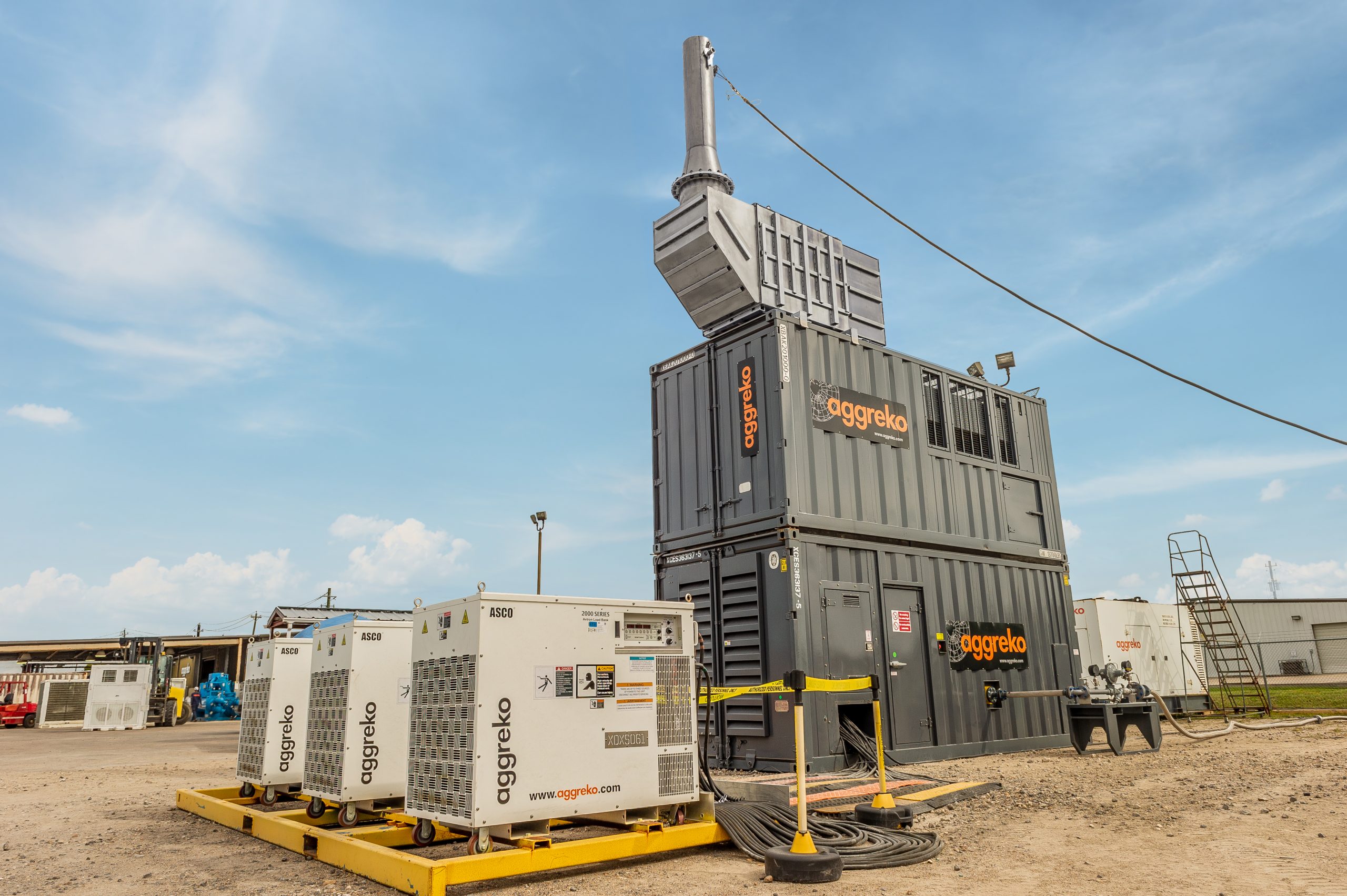
As data demand continues to surge post-pandemic, colocation data centre operators have been tasked with satiating Europe’s digital appetite. However, with grid strain also peaking, some countries are beginning to impose restrictions on data centre connections going forwards. Billy Durie, Global Sector Head for Data Centres at Aggreko, discusses the importance of securing power supply in the face of this industry challenge. Post-pandemic, the role of data is more critical than ever to our everyday lives. The persistence of remote working is one of the lasting reminders of the lockdown landscape, while demand for streaming services and online gaming continues to surge. Naturally, this has contributed to increased pressure upon Europe’s data centres, with a CBRE report published in late 2021 indicating that colocation supply in the FLAP (Frankfurt, London, Amsterdam and Paris) market was 17% higher than that of the previous year. The true cost of downtime This growth in demand has added fuel to the fire of an already-burgeoning industry challenge, with electrical demand now exceeding supply in a number of key markets. The resulting effect is grid strain, which has called into question the reliability of many facilities’ mains connection. For many colocation data centre operators, this poses the risk of blackout should the demands of peak time become particularly strenuous. The Uptime Institute’s 11th annual Global Data Centre Survey highlights on-site power as the primary source of downtime in the past year, and asserts that the majority of outages remain preventable. Despite this fact, the report also indicates that 65% of outages costed $100,000 or more in 2021, while 15% costed more than $1,000,000. As such, the physical consequence of grid strain for data centre operators is apparent. Warding against grid strain Moreover, with grid strain becoming so severe in a number of key European markets, some countries are beginning to impose restrictions on data centre connections going forwards in an attempt to alleviate stress on their respective national grids. In Ireland, for example, national supplier EirGrid has forecasted that data centres could account for as much as 25% of the nation’s electrical demand by 2030. Resultantly, section 4.2.4 of the organisation’s 2019 Connection Offer Policy and Process declares that ‘Firm Capacity’ will only be provided if the facility can demonstrate the ability to make on-site power generation available should it be necessary. Otherwise, the site will only be entitled to ‘Flexible Demand’, which will fluctuate with strain on the grid. On a local scale, EirGrid stated late last year that it would not be accepting any new data centre applications until 2028, with applications outside of the capital reviewed on a strictly case-by-case basis. Here, Ireland may serve as a warning as to the changes that may follow in the FLAP market, with these cities experiencing similar levels of strain. The changing face of legislation While energy shortages are by no means a new phenomenon in this sector, the possibility of a blanket ban on data centre connections presents an entirely new challenge. Exacerbating this further is the introduction of new environmental legislation, which has had a knock-on effect for data centre operators looking to top up their energy supply. Until recently, one of the most common methods of power remediation was through the use of diesel gensets, which acted as a back-up energy supply should a facility’s mains supply dwindle or threaten to cut out. However, the introduction of the European Commission’s Medium Combustion Plant Directive (MCPD) has significantly limited their use. The MCPD aims to limit the emissions of carbon dioxide, nitrogen oxides and particulate matter – all of which are by-products of diesel combustion. This is a move that has been echoed in the UK with the introduction of low and ultra-low emission zones in a number of major cities. This is a particular concern for colocation facilities, which are often based in urban areas and are already facing the brunt of grid strain. An heir to diesel It would appear as though the combination of these factors has created somewhat of a perfect storm for colocation data centre operators, who have now been stripped of a primary method of remedial power generation when it is needed most. For this reason, it is necessary that the scope is expanded in the search for a solution. Here, there are a number of alternative technologies that may help to bridge the energy gap. First and foremost, operators that would like to continue using gensets should consider introducing hydrotreated vegetable oil (HVO) as a drop-in fuel, allowing for an immediate reduction in local emissions. For a site with temporary load requirements of 1MW for a generator and 1MW for the UPS system, this simple switch can deliver a 90% reduction in carbon dioxide emissions, while also cutting NOx and PM by up to 25%. For those looking for a more permanent heir to traditional diesel systems, Stage V generators, such as those used by Aggreko, may prove a sensible option. These high-performance gensets are equipped with diesel particulate filters, catalytic reduction systems and diesel oxidation systems to reduce the emissions of carbon dioxide, nitrogen oxides and particulate matter. Crucially, these features make these gensets fully compliant with the MCPD and fit-for-use in low and ultra-low emissions zones. In order to help curb inefficient generator usage, Stage V systems can be incorporated as part of a load on demand package, wherein a larger generator is replaced by multiple smaller ones that scale up or down in accordance with demand. Research from Aggreko has found that hired solutions are often ran on as low as 30% capacity – a far cry from the recommended level of 80%, so this consideration is key. This approach is particularly crucial to the data centre construction phase, with load demand experiencing high levels of fluctuation. Returning to the aforementioned example of UPS power requirements of a 1MW generator and 1MW UPS system, switching to two 600KVa Stage V generators instead results in a 25% reduction in CO2 and overall fuel consumption, as well as an 85% reduction in local emissions. Battery storage systems Besides HVO and Stage V, the final technology that holds great potential for power remediation in the data centre sphere is battery storage systems. Here, the concept of ‘energy shifting’ allows energy to be stored from solar or thermal sources, to be redeployed when grid supply dwindles. This is done by way of a spinning reserve system, with battery storage automatically topping up supply in a matter of seconds to help avoid a costly blackout. This approach also provides scope for the creation of a genset-battery hybrid system, equipping the operator with maximum flexibility to ward against power shortages. Final thoughts While the tightening of both power procurement and environmental legislation initially appears to be a challenge, it is clear that there are effective methods of overcoming grid strain without violating sustainability commitments. To ensure that these tools are accessible, Aggreko has recently launched its Greener Upgrades initiative to support the data centre industry in its move towards net zero. Here, by offering solutions that are both environmentally friendly and pragmatic, the company aims to help contractors make impactful choices to reduce emissions while keeping operating costs to a minimum. Incorporating decentralised energy solutions on-site is not only critical to alleviating current grid strain, but to future-proof against any legislative shifts that may limit new connections, such as EirGrid’s Connection Offer Policy and Process. Here, it will be necessary for data centre operators to broaden their horizons in the search for a comprehensive solution, as only through an all-encompassing approach can the effects of grid strain be alleviated.


Boost your data centre build time
The global colocation data centre market is expected to double to more than $62 billion from 2017 to 2022. Pam Cannon, ABB’s Head of Marketing for Global Data Centre Solutions, discusses the latest solutions and strategies to boost the build time of new colocation centres. To remain competitive in this fast paced and highly competitive market, data centre operators need to ensure they have enough quality colocation space to service new customers. However, opening new centres that will remain partially filled for a time is ineffective in terms of resources. Here’s a look at the company's four most effective strategies to speed up data centre builds by up to 50%: Pay-as-you-grow strategy Pay-as-you-grow ensures you grow both sustainably and profitably by installing capacity little and often. Rather than making sizeable upfront capital investments that build too much capacity for initial demand, data centre operators can make sure they only spend as more customers come onboard by installing new capacity in line with demand. This optimises cash flow and secures revenue quickly, as the individual installations are smaller, thus faster, to deploy. For example, ABB worked with US-based data centre operator, GIGA, to design a system that would initially support 60MW of IT load and can be scaled to expand in increments of 2MW. The expansion project was completed in less than six months, allowing them to onboard customers as they continued to build capacity. Modular solutions Modular, prefabricated solutions not only enable a pay-as-you-grow strategy, but also helps speed to deployment so that operators can meet crucial project deadlines and generate revenue faster. eHouses, for example, are industry-proven, prefabricated solutions that can be quickly transported and installed on site, reducing risk of project delays. Already factory-tested to meet all necessary data regulations, eHouses can be shipped and packaged in one order, simplifying communications and logistics to a single point of contact to streamline processes and save on onsite manpower. Another benefit of prefabricated solutions is that they improve reliability and optimise the speed of data centre build and maintenance. Since the solutions are pre-tested beforehand, onsite engineers and installers are helped with a 'plug-and-play' approach – site connection, testing, and commissioning are all much faster, reducing risk of schedule delays and cost overruns. Some even provide a tax advantage since they can be depreciated as equipment rather than building. Overall, compared to traditional build methods, the build time from engineering to construction can be reduced by up to 30% when using modular, prefabricated solutions. Going another step and using predesigned eHouses and skids could reduce that time by a further 20%. Digitalisation Not only does digitalisation give operators the benefit of remote condition monitoring of equipment, but it can also speed up deployment time and profitability. Digital switchgears, for example, replace hundreds of copper wires with a single fibre optic bus cable. In this way, digitalisation can reduce wiring by up to 90%, significantly decreasing installation time. Similarly, the sensor technology of digital switchgears enables operators to alter system parameters via software rather than needing to make hardware changes in traditional builds. These can be done later in the production cycle and reduce expensive and time-costly hardware changes. Users of digital switchgears can also make adjustments via built-in device settings or download software updates remotely whenever necessary, providing for safer and more reliable and energy-efficient equipment. Online tools Modern online web applications and tools can cut data centre deployment times compared with conventional methods for configuring low voltage technology. In many cases, these online applications can help shorten the time to manufacture to weeks rather than months. Configurators provide savings on time and cost by eliminating potential errors in product specification. Through innovative web apps with 3D visual interfaces, data centre operators can easily retrieve specific product information, including images, technical specifications, and product availability before placing an order, reducing chances of project delays. The use of online tools also simplifies product orders, as production, assembly, packaging, and delivery can be done in one accurate and streamlined process. These tools are somewhat like an online store, but instead of going through numerous online listings to find the right price and specification, it does the work for you.

Zayo increases fibre presence at Proximity’s UK edge colocation data centres
Proximity Data Centres has announced the completion of Zayo’s high-capacity dark fibre network at its edge colocation data centre in Chester Gates near Manchester.  Additionally, Zayo is nearing completion of a new dark fibre network connection at Proximity’s Nottingham edge data centre. Combined with the existing Zayo connection at the Birmingham facility acquired earlier this year, Proximity now offers customers, carriers and service providers three strategic Zayo direct points of presence (PoP).  Zayo’s dark fibre connection to Proximity Edge 4 at Chester Gates allows service providers to offer a range of low-latency services to businesses located in the Northwest of England – including a growing number of applications developers and content delivery providers (CDNs) – looking to move data and content closer to users. Services offered by Zayo will include dark fibre, Ethernet, wavelengths and IP. Additionally, the company is provisioning low latency circuits from Proximity Edge 4 to data centre hubs in Manchester, Dublin and the USA, allowing its customers increased resilience when connecting to cloud services. “We are delighted that Zayo is continuing to increase its points of presence across our expanding footprint of regional UK edge data centres,” says John Hall, Managing Director – Colocation, Proximity Data Centres. “This is in line with our strategy of enabling Proximity’s sites to function as secure interconnected regional communications hubs for the benefit of our customers, offering the widest availability of diverse high-speed, low-latency fibre connections to carriers, ISPs and cloud providers.”    He adds: “Together with Zayo, we will be offering ultra-low latency cloud on ramp services to all major public cloud providers.”   Andrew Tipping, Business Development for UK, Zayo Europe says: “Proximity’s edge data centres are ideal points of presence for Zayo, enabling us to address growing demand from businesses and service providers for more network capacity in key regional areas. Connecting to Proximity’s strategic hubs in major UK conurbations allows us to further satisfy their latency, bandwidth and backhaul requirements.”  Proximity’s expanding UK network of interconnected regional edge data centres currently includes sites in Birmingham, Bridgend, Swindon, Nottingham, Rugby, Liverpool, Chester Gates and Wakefield. The company expects to have 20 sites available within the next 12 months, all in close proximity to major conurbation areas.   

iM Critical unveils energy-efficient, modular Pittsburgh data centre campus
iM Critical is unveiling its modular Pittsburgh data centre campus. iM Critical, delivering full-stack IT services in a six nines environment, will empower High-Performance Computing (HPC) users and colocation customers in the region with demanding use cases across AI, robotics, smart cities, autonomous vehicles, academic research, smart cities and more with scalable, powerful infrastructure solutions. The 10MW phase one campus presents a radical new standard for advanced data and computing needs, delivering cooling capabilities to support over 35kW per rack with highly efficient and sustainability-focused systems. iM Critical’s signature and innovative modular approach enables a high level of scalability, offering a high degree of customisation for customers to meet IT goals with tailored colocation services, a deep managed service stack and high-touch support. All of this is backed by iM Critical’s experience providing flexible colocation, and the company’s commitment to sustainability across all IT infrastructure solutions. Customer benefits at this next-generation, modular campus include: • Low latency networks with sub-1ms metro optical rings. • Unique network route diversity to major peering points. • Full-stack managed IT services. • Big Data storage. • Onsite renewable energy source. • Strategic location within an SBA HUBZone/IRS opportunity zone. “We deliver an enlightened approach to IT infrastructure, providing innovative customer solutions, helping organisations reach beyond today’s technology goals for greater ease and future-proofed outcomes,” comments Michael Roark, CEO of iM Critical. “The specialised experience gained by designing, engineering, building, owning and operating data centres for over 25 years inspired and informed our factory-built, fully-integrated modular data centres, which are based on tried-and-true engineering typologies and rapid deployment principles.”

SUPERNAP signs PPA with WHA Utilities & Power to power its data centre
SUPERNAP will produce its own energy, and will lower its carbon footprint, leading a green approach to digital transformation, and bringing renewable energy to the digital infrastructure of Thailand. In line with the company’s policy to help save the planet, reduce global warming and greenhouse effects, the project will also help SUPERNAP, and its clients, to reduce electricity costs significantly throughout the system’s life, while offsetting 18,250 tonnes of CO2 emission to the environment. “SUPERNAP is the forerunner in the region since our hyperscale facility opened in 2017. Since then, our leading technology provides 100% uptime. Our commitment to provide the best digital infrastructure is once again demonstrated with this initiative towards efficiency and sustainability. WHAUP has been chosen to install the solar power system at SUPERNAP because of its expertise in engineering and safety and its solid experience in the installation of solar power systems. We are confident in the skills and professionalism of the company” says Sunita Bottse, Chief Executive Officer of SUPERNAP. SUPERNAP has started working with WHA Utilities & Power towards the implementation of the solar panel farm. The solar farm will be built on SUPERNAP’s land on its data centre premises located in the Economic Eastern Corridor (EEC), outside the Bangkok flood zone and close to international network landing station with links across the country of Thailand. “SUPERNAP is a Tier-IV certified data centre colocation and cloud services provider with the most advanced technology in the ASEAN region. It is driven by demand in Asia Pacific for purpose-built data centres that can guarantee performance, availability and disaster risk reduction. The growth of data and applications in the region is derived from the need to stay closer to businesses and consumers to improve customer experience using Cloud, AI, IoT and BIG Data. SUPERNAP is the leader in Asia, offering higher service capabilities than any other data centres in Southeast Asia. Having such a great company as our customer reinforces WHAUP’s position as a standard service provider of solar power systems,” comments Dr. Niphon Bundechanan, Chief Executive Officer, WHA Utilities and Power PLC (WHAUP). The Power Purchase Agreement (PPA) includes engineering, procurement and construction (EPC), as well as an energy storage system to store excess power and reuse it when the solar energy system cannot generate enough power to satisfy the demand. Furthermore, WHAUP will be responsible for operation and maintenance of the system for 20 years. The project, which is scheduled for completion in fall of this year, began early April. By being the first colocation and cloud data centre implementing renewable energy, SUPERNAP will contribute to the development of the green digital infrastructure of the region, supporting the national strategy to reduce greenhouse gas emissions, as well as lowering the carbon footprint of its client.

Hyve colocates at Telehouse to meet demand for sustainable infrastructure
Telehouse has announced that Hyve has chosen Telehouse as one of its colocation partners to help meet growing sustainability demands. With rich connectivity delivered through a fully secure, energy-efficient and power redundant data centre, Hyve can now realise its ambitions of providing customers with long-term sustainable solutions, and easily scale for future growth. IT and cloud providers are under increasing pressure from organisations to improve sustainability, driven by the outcomes of COP26 and new sustainability disclosure requirements (SDRs) introduced in 2021. By housing IT infrastructure to Telehouse’s London Dockland’s data centre campus, Hyve aims to improve the sustainability of its mission-critical cloud, managed security and dedicated hosting services, while still delivering the fast, reliable and flexible service customers expect.  Hyve has experienced rapid growth over the past two years, recently featuring in the 22nd annual Sunday Times Profit Track ‘Ones to Watch’ supplement. With a fast-growing customer base, and plans to accommodate future expansion, the company needed a data centre partner with global site diversity, the ability to scale quickly when needed, and maximum levels of security to ensure the safety of customers and data. Telehouse was the colocation provider of choice due its access to 900+ connectivity partners and strong green credentials. All Telehouse London data centres are powered by 100% renewable energy procured from certified wind, solar, biomass and hydro generators and are compliant with GHG Protocol Scope 2. Telehouse also complies with international ISO standards in Environment and Energy Management, and actively participates in voluntary environmental standards, regulations and frameworks, with the company considered an ultra-small emitter under the UK Emissions Trading Scheme. James Annetts, Infrastructure Manager at Hyve, comments: “Climate change is transforming the way we all use energy, and customers are rightly demanding greater action from their cloud hosting providers on sustainability issues.  We have ambitious environmental goals and will only work with data centre providers who actively strive to make sustainability a central part of their business operations. Telehouse was the perfect choice for us, offering not only a secure and sustainable location to house our infrastructure but the flexibility and scalability we need to support our future growth.” Tipu Ali, Account Manager at Telehouse adds: “For cloud service providers like Hyve, having a safe, sustainable and resilient data centre is critical. Customers expect the best standards in security, uptime, and latency, but more importantly, that services are delivered with minimal impact on the environment. Colocation is a key enabler in driving improvements in energy efficiency, and only those providers that put sustainability at the forefront of their operations will be well-equipped to rise to the challenges ahead.”

The fast-track method to data centre scalability – pay-as-you-grow
“Pay-as-you-grow” offers potential for colocation data centre operators to grow sustainably and profitably. In this interview, ABB’s global head of data centre technology, Dave Sterlace, explains how to implement the strategy and shares a couple of examples. What is “pay-as-you-grow”? Demand for colocation space is growing fast as businesses recognise the benefits of outsourcing data services for better availability and flexibility. The challenge with managing this is how to do it efficiently – and this is what pay-as-you-grow does. Rather than having to make large up-front investments in a new site, pay-as-you-grow is designed so that new capacity can be installed little and often. This improves affordability as operators can secure tenants earlier and use the income to invest in their next infrastructure build phase. Pay-as-you-grow uses scalable and modular solutions to provide a consistent, efficient, and cost-efficient way to meet demand. Data centre designers, operators, and stakeholders can benefit from benefits including faster deployment, improved reliability, reduced capital costs, and higher energy efficiency. How quickly can new capacity be added? Data centre operators want to deploy new infrastructure fast. In 2010, two-year build times were typical. However, according to a survey in 2020, 39% of industry professionals expect to see new capacity rolled out in less than a year and 66% in less than 18 months. One example is US operator GIGA. It delivered the first phase of a new centre in North Carolina in less than six months and with an ultra-low Power Usage Effectiveness (PUE) of 1.15. This is enabling it to save energy and minimise the operating costs of its 60 MW facility. It called on ABB as a design partner to deliver a packaged power solution. The approach is based on a ‘system plus system’ arrangement and features two types of UPS system to provide flexibility and scalability. The first supports customer IT loads and is the site’s existing TLE UPS. It is integrated with lithium-ion (Li-ion) batteries, which are lightweight and compact. These are particularly important in this case as the UPS is installed on a mezzanine level that has space and load-carrying limits. The Li-ion batteries also help to reduce energy demand as they can run at higher temperatures, reducing the cooling requirements. GIGA is its second UPS to support network servers. It is based on the decentralised parallel architecture (DPA) approach. It meets the operator’s requirement for a low-power system and scalable deployment, enabling GIGA to expand its facility in 2 MW blocks. What challenges are there and how can operators avoid them? It might sound obvious but if you have a pay-as-you-grow strategy, you need systems that are designed for scalability and flexibility from the start. This will avoid cost and time delays when rolling out future expansions. One operator that has used this approach is Volico in Florida. It wanted its FLL1 Tier IV colocation data centre to have excellent availability and reliability, as well as providing dedicated server space for customers. During construction, it found that the original proposed UPS was not scalable and approached ABB for advice. We suggested switching to a modular DPA UPS with the capability of scaling up in 100 kW increments. This type of UPS can be scaled vertically in increments of 100 kW up to 500 kW in a single frame, and horizontally in up to six parallel frames for a total of 3 MW. It supports Volico’s 'six-nines' principle of 99.9999% availability. It also has the additional benefits of high energy efficiency, and hot-swappability so that maintenance can be performed on a module while the rest of the system is live. What are the design considerations for pay-as-you-grow? Four key considerations must be taken into account when planning and implementing a pay as you grow strategy. These are: choice of electrical topology, equipment scalability, digitalisation, and modular deployment. System topology is the first choice and depends on how much redundancy the operator wants. System plus system topology provides the highest level of redundancy but is the most costly as it uses two independent systems to supply the load. At the other end of the scale, block redundant topology makes the most efficient use of electrical infrastructure as it automatically switches critical loads to a reserve or catcher system if the original supply fails. Shared redundant topology is a compromise between the two. It uses N+1 UPS systems to share backup capacity across N loads. Next, it’s essential to specify equipment scalability. For example, by choosing gas-insulated switchgear (GIS), UPS, power distribution units (PDU), and remote power panels (RPP) that are capable of scalability. A modular UPS based on decentralised parallel architecture (DPA) enables scalability while also delivering continuous power availability during maintenance and expansion, and has a lower upfront investment. Digitalisation – adding intelligence to your electrical equipment – can improve simplicity and enhance scalability as uses a single fiber optic communication bus instead of many point-to-point copper wire connections. The result is that it’s possible to reduce wiring by up to 90%, saving installation time when adding new phases. Finally, modular systems that are pre-engineered, prefabricated, and pretested packages such as skid units and ehouses can accelerate construction times while reducing risk through consistency. Ultimately, the technology exists to support pay-as-you-grow for your chosen topology. It’s a matter of specifying equipment that is designed for scalability to support the strategy.

BBT selects MCFI to build first colocation data centre in Permian Basin
Mission Critical Facilities International (MCFI) has announced that it has deployed its GENIUS Modular Data Centre in Midland, Texas. BBT selected the MCFI GENIUS Modular Data Centre solution to provide energy efficient and reliable IT infrastructure to improve communications and safety in the oilfields and the surrounding digitally underserved communities of West Texas. MCFI’S GENIUS Modular Data Centre for BBT is the first colocation facility in the Permian Basin. The data centre, which is now open and serving customers, is master-planned for a total of 440 racks, 5MW of critical power, and scalable MMR supporting up to 30 fibre carriers. The initial phase has deployed 1MW of delivered power and 88 racks and is designed to scale along with the demand to manage capital outlay.  The GENIUS Modular Data Centre is a pre-designed/pre-engineered data centre solution that leverages the benefits of containerised data centres with an impressive speed to market, going from pad to operation in as little as five to eight months. It also delivers maximum leasable space and a life expectancy of over 30 years with significant cost savings to customers.  “We’re excited to bring our GENIUS Modular Data Centres to the Permian Basin,” says Patrick Giangrosso, Vice President at MCFI. “We are committed to providing innovative, sustainable, cost-effective, and quick-to-deploy infrastructure solutions with the economics and flexibility of a stick-built data centre for edge or colocation providers. Our partnership with BBT is pioneering change in critical communications at the edge for West Texas oil and gas industries.” The BBT data centre location will serve as the aggregation point for communication services in the Permian Basin with improved connectivity at oil and gas wellheads, providing live views with augmented reality to reduce traffic and enhance work safety and communications in the oilfields. Emergency services and businesses in West Texas can also access a more robust IT infrastructure with disaster recovery solutions to protect critical communications. “This is BBT’s first data centre and it is a success because of the expertise and guidance from the MCFI team,” says Neville Haynes, Vice President of Data Centre Operations at BBT. “MCFI deployed within our accelerated timeline, pivoted quickly, and accommodated our anchor tenant requests while overcoming challenges related to permitting, construction, the pandemic, severe weather and supply chains. MCFI handled the entire process perfectly.”

Ficolo to support advanced, high performance computing installation
Ficolo has announced it will provide colocation services for a high density supercomputing infrastructure platform at Ficolo’s The Air Data Centre in Helsinki for one of the largest technology companies in the US. This brings an exceptional level of security to, and supports the platform, which enables users to secure and scale unique cutting-edge services for innovation. “After evaluation of the major providers in the region, we were selected for this undertaking due to The Air’s ingenuity and climate friendly design,” says Ficolo CEO Seppo Ihalainen. “That, combined with the cool climate and well-connected Nordic location, positioned Ficolo as the ideal candidate to provide colocation services for this platform. Additionally, our team is always prepared to move quickly and meet the specific needs of each customer, which allows us to accommodate the unique requirements this project requires.”   Ficolo The Air utilizes the latest technological innovations in cooling, active fire protection, heat reuse and flexible power distribution. Combined energy and cooling cells (CECC) offer an energy efficient and low PUE solution. The data center’s UPS system and generators guarantee an uninterrupted power supply, and the cell-based design allows adaptive scalability as CECC units can be fitted as the capacity grows. This allows providing a mix of services for different types of customers from the same whitespace.  A leader in sustainability, Ficolo is the first and only data center company to be Dark Green rated — the highest rating awarded by Norwegian climate research institute, Cicero. The dark green rating is allocated to projects that correspond to the long-term vision of a low carbon and climate resilient future and was awarded to Ficolo in conjunction with raising a Green Bond in 2019. “Traditional data centers don’t provide the level of flexibility to fulfill today’s requirements for sustainability, speed, versatility and cost-efficiency, but we’re continuously looking for ways to improve,” says Ficolo CEO Seppo Ihalainen. “We also have the advantage of the cool Finnish climate, which helps us provide the most cost-effective, innovative and sustainable service. We look forward to delivering that promise in this venture and in the future to hyperscalers around the world.” Ficolo concentrates entirely on data center and cloud infrastructure services, allowing customers to focus on core initiatives and expand infrastructure to fit growth requirements. Ficolo’s data centers offer ISO 27001, ISO 22301 and PCI DSS certified services for HPC, wholesale and hyperscale operations.


Translate »