Sustainable Infrastructure: Building Resilient, Low-Carbon Projects


Frankfurt data centre meets EU taxonomy criteria
maincubes, a developer and operator of data centres in Europe, and part of the DTCP portfolio, has announced that its newly constructed FRA02 data centre in Frankfurt aligns with the EU Taxonomy standard. This milestone underscores maincubes’ commitment to stringent environmental stewardship, regulatory compliance, and creating long-term value for investors and clients alike. The EU Taxonomy is the classification framework to determine whether an economic activity is considered environmentally sustainable in the context of the European Green Deal. The framework sets rigorous performance standards for projects to ensure substantial contribution to climate goals, such as emissions reduction and energy efficiency. In addition, the alignment approves that a project does no significant harm (DNSH) to other environmental objectives and does not infringe on human rights. Verified by Northshore, a specialist in data centre sustainability assessments, FRA02 meets stringent criteria for energy efficiency and emissions management, bolstering its credibility and minimising risks through validated compliance with the EU Taxonomy‘s sustainability criteria. By adhering to the EU Taxonomy’s high standards, maincubes establishes with FRA02 a benchmark for sustainability and operational excellence in the data centre industry. The data centre’s innovative design and energy-efficient operations serve as a model for the industry under increasing pressure to lower emissions and improve sustainability. “Achieving EU Taxonomy alignment for FRA02 underlines our commitment to sustainability and regulatory excellence. This important milestone contributes to shaping a more sustainable future for the data centre industry, while enhancing trust and transparency for our customers and stakeholders,” says Martin Murphy, Chief Operating Officer at maincubes. For more from maincubes, click here.

Michigan state continues to support data centre growth
The Green Building Initiative (GBI) has congratulated Michigan leaders on the finalisation of Senate Bill 237 (SB 237) as a Public Act on 30 December 2024. The new law continues Michigan’s commitment to supporting critical data centre growth, while holding data centre projects accountable to community sustainability priorities. As part of its requirements, the law requires sustainable and resilient design, construction, and operation of these facilities through GBI’s Green Globes certification, among others, within three years of operation. “Michigan joins a number of states and cities who are committed to sustainable data centre development, demonstrated by the passing of SB 237,” says Vicki Worden, GBI President & CEO. “Green Globes is ideally suited to educate, evaluate, and improve data centre operations, creating more efficient and resilient mission critical facilities that are positively contributing to communities.” Senate Bill 237 extends the sunset on a use and sales tax exception from 2035 to 2050, or 2065 if the data centre is located on a brownfield site or a location that was used primarily as a power plant for electricity. Data centres may pursue Green Globes New Construction for projects with less than 12 consecutive months of utility data or Green Globes for Existing Buildings for buildings with 12 or more months of utility data for compliance. To date, nearly 16 million square feet of data centres have been certified or are pursuing Green Globes certification in 17 states and Canada. GBI offers personalised guidance and support throughout the assessment process, multiple compliance pathways for a rigorous, not rigid approach, and matches the data centre industry speed to market. In addition to recognition in SB 237, Green Globes certification serves as a compliance pathway in several tax abatement policies throughout the US, including those in Arizona, Washington, and Illinois. Green Globes certification also contributes to an improved GRESB score, a global benchmarking system, in increasing demand by stakeholders. Companies including Aligned Data Centers, Compass Datacenters, CyrusOne, Equinix, Powerhouse, and Vantage Data Centers have achieved Green Globes certification to demonstrate their commitment to and accountability for sustainability. For more from The Green Building Initiative, click here.

Schneider Electric makes key data centre appointment
Schneider Electric has announced the appointment of Nirupa Chander as Senior Vice President, Secure Power & Data Centres, International Operations. In the role, Nirupa will lead a division of more than 700 professionals, supporting customers and partners in their digital transformation journeys and achieving their sustainability goals in an all-electric world across international zones, including MEA, EAP, Japan, India and South America. “Understanding the complex and nuanced interplay between energy and data will be key to navigating the future of our industry,” says Pankaj Sharma, Executive Vice President, Secure Power, Data Centres & Global Services, Schneider Electric. “Nirupa’s experience and insight in this area will be invaluable in the ongoing digitalisation of the energy sector and our increasingly digital world.” A veteran of the energy industry, Nirupa has extensive experience in energy grids, micro-grids, and automation, as well as project management, engineering, service and business development. Beginning her career with India’s largest industrial electrical company, Nirupa progressed from project engineering roles through project management, and country manager roles with major engineering firms (such as ABB and Hitachi Energy) in Singapore and Australia before joining Schneider Electric in 2022 as Vice President of Power Systems for the Middle East and Africa. Commenting on her appointment, Nirupa comments, “Early career experiences with controls and automation brought me into IT infrastructure, showing me how energy and data are increasingly intertwined. Working on microgrids highlighted the complexity of balancing the grid with energy storage technology and renewables - insights now applicable to creating sustainable data centres. “It is exciting to see the strong coupling between data and energy, and I am excited about applying my knowledge and skills to this evolving field, especially with the anticipated growth in artificial intelligence (AI) and its potential impact on the industry.” Nirupa holds a degree in Engineering from Gujarat University in Electronics and is a certified project management professional. She is a graduate of leadership programmes from both the Wharton School and INSEAD Executive Education. For more from Schneider Electric, click here.

Feature - Sustainable data centre cooling
In many data centres, water-cooled chillers are paired with an open or closed-circuit cooling tower for heat rejection. Other options include dry coolers, hybrid fluid coolers and adiabatic fluid coolers. It is beneficial to evaluate all heat rejection options to optimise energy and water consumption. Baltimore Aircoil Company (BAC) was approached by a high-performance computing customer with 160MW operating power to provide a more sustainable cooling solution. They had previously used open cooling towers with water-cooled chillers, so BAC worked with the customer to understand its major challenges and needs. The following were identified as critical priorities: - Minimise water usage while balancing energy consumption to support customer sustainability efforts- Provide cooling for an increasing heat load in a smaller footprint- Meet system water temperature requirements without chillers at high loads and varying outside conditions BAC analysed the IT capacity, space requirements, operating power, and location weather data, and then evaluated fully evaporative, hybrid, and adiabatic solutions. Based on the analysis, BAC recommended a chillerless system utilising the HXVTM hybrid cooler. The HXV’s packaged evaporative and dry cooling features offered the water saving and energy efficient solution the customer desired. The factory assembled unit also allowed for easier maintenance and serviceability for the operations team. They were able to easily access the cold-water basin, prime surface coil and drive system due to the crossflow design, large doors, and internal access platforms. Additionally, the customer could perform faster inspections of the spray distribution system while the unit was in operation. The HXV Hybrid Cooler not only addressed all of the customer’s challenges and needs, but it also reduced annual energy costs and improved system efficiency. The HXV Hybrid Cooler helped achieve an estimated power usage effectiveness (PUE) of 1.136. The HXV incorporates three modes of operation. It has the benefits of evaporative, adiabatic, and dry cooling in a water saving and energy efficient solution. It maintains peak system performance for a variety of applications where water is scarce, water costs are high, uptime is critical, or plume is a concern. Furthermore, it is an ideal solution where space is limited. The HXV hybrid cooler offers the following benefits: - Up to 70% water savings compared to an open cooling tower due to a high dry switch point and more dry operating hours- Year-round 'sensible cooling' with the dry coil to maximise water savings- On average, 25% water savings even on a design day through sensible cooling- Up to 60% lower energy costs compared to air cooled systems due to evaporative cooling and BAC’s innovative combined flow design- Increased operational and layout flexibility with balanced water and energy savings- Highest reliability, and water saver mode eliminates plume abatement- Up to 25% less maintenance than traditional fluid coolers due to dry operation and crossflow design- Up to 70% chemical savings due to dry operation In this installation, the HXV Hybrid Cooler met the customer’s need for a reasonable first cost while significantly reducing both water consumption and operating costs. The HXV heat rejection benefits compared to open cooling towers with water-cooled chillers are: - 71% reduction in annual WUE- 86% reduction in installed peak power- 52% reduction in annual operating cost (energy and water) For more from BAC, click here.

Duos partners with Texas city for data centre development
Duos Technologies Group, through its operating subsidiaries Duos Edge AI and Duos Energy Corp, has announced a partnership with the Pampa Energy Center. This collaboration aims to develop high-density data centre development parks powered by up to 500MW of natural gas self-generation, supplemented by up to 200MW of wind turbine generation and alternative fuel sources for redundancy. This 500+ acre project will transform Pampa Texas’s infrastructure, create jobs, and drive technological and economic growth. The move will also establish Pampa as an epicentre to address the national shortage of High-Density Data Centre (HDDC) capacity. Building on its expertise in deploying adaptive and scalable brick and mortar data centres, Duos Edge AI is streamlining project timelines, optimising operations, and delivering bespoke infrastructure solutions for Pampa to support four 50MW HDDCs. In partnership with Fortress Investment Group, Duos Energy will ensure reliable energy for the HDDCs by providing up to 500MW of natural gas self-generation, bolstered by wind turbine generation and alternative fuel sources for enhanced redundancy. The first 50MW HDDC is planned to be operational by the end of 2025. Duos says that this integrated approach will ensure sustainability and provide resilience to support Pampa's growing technological and economic needs. Doug Recker, President and Founder of Duos Edge AI, says, “The US faces a tough challenge in alleviating the current data centre demand shortfall, as well as building data centres with alternative energy sources. This collaboration helps to accomplish these challenges, as well as defining a new direction for the Texas panhandle and setting up Pampa to be a new technology leader in the High-Density Data Centre landscape. We’re excited to help set Pampa on an innovative path forward and create new jobs and economic development in the region through this collaboration.” Chuck Ferry, CEO of Duos, comments, “Duos Energy Corporation, partnered with Fortress Investment Group, recently signed a definitive agreement to manage 850MW of mobile gas turbines acquired from APR Energy. This strategic partnership with Pampa allows us to begin the deployment of these highly sought-after power generation assets starting in early 2025, and will provide a bridge to a long-term permanent power plant. We are honoured to contribute to Pampa’s economic growth and bright future.” David Dorman, Duos Energy’s Director of Commercial Operations, remarks, “We are looking forward to collaborating with the Pampa Energy Center to deliver mission-critical power to this High-Density Data Centre development. Duos Energy’s turn-key solution will provide rapid-dispatch bridging power, seamlessly transitioning to a permanent facility. We are honoured to contribute to the future economic growth and development of Pampa, Texas.” Glennette Goode, President of the Pampa Energy Center, adds, “The partnership with Duos Edge AI, Duos Energy, and the Pampa Energy Center allows for the transformation of Pampa into a dynamic hub of innovation, enhanced connectivity, and economic strength. Our board has long focused on the need to diversify our commercial and industrial base. Located in the central United States and within the heart of the wind energy sector, we are poised for significant economic growth. This partnership is the first step in a journey to long-term prosperity in Pampa, Texas.” For more from Duos, click here.

Data centre consumption set to double, Finning reports
Finning UK & Ireland, a dealer of Cat machines, engines, equipment, and power products, is urging data centre operators to accelerate the take-up of sustainable backup power solutions in response to projected surge in energy consumption for the sector. According to Deloitte, global data centre electricity consumption is expected to double to 1,065 terawatt-hours (TWh) by 2030 – equivalent to 4% of total global energy consumption – driven by power-intensive generative AI applications. The increasing strain on power grids – coupled with the rapid expansion of data centres – highlights the urgent need for reliable, sustainable backup power solutions. “The data centre industry faces unprecedented challenges as we approach 2025,” explains Graham Scandrett, Head of Electric Power Sales at Finning UK & Ireland. “The growth of AI and cloud computing is driving increases in power consumption. And although the sector is making strides towards sustainability, the demand for reliable backup power solutions remains paramount. This creates an urgent need to balance environmental responsibilities with operational resilience. “Hydrotreated Vegetable Oil (HVO) is emerging as a practical solution for data centre operators looking to reduce their carbon footprint while maintaining the reliability of traditional backup power systems. With whole-lifecycle carbon emissions approximately 70% lower than conventional diesel, HVO offers an immediate pathway to sustainability without compromising on performance or reliability.” Graham continues, “We’re seeing a growing interest from operators to use sustainable fuels during both the testing phase and in operation as an alternative to diesel to achieve incremental reductions in the total carbon intensity of fuels while maintaining optimal backup power performance. The flexibility of HVO as a drop-in replacement, combined with its stability and storage advantages over other alternative low-carbon fuels, positions it as one of several strategic choices for data centre operators. “As the data centre industry continues to expand, operators are increasingly focused on developing robust and sustainable backup power strategies. The next few years will be critical for the data centre industry as it balances rapid growth with environmental responsibilities. Forward-thinking operators are already exploring mixed-fuel strategies and investing in compatible generator systems to future-proof their operations. Success will depend on choosing the right partners and technologies to navigate this transition, particularly as we see the convergence of AI-driven demand growth and increasingly stringent environmental regulations.” Finning supports data centre operators with comprehensive power solutions that enable the transition to more sustainable backup power options while ensuring uninterrupted operations and system reliability. For more from Finning, click here.

Verne unveils plans for data centre campus in Finland
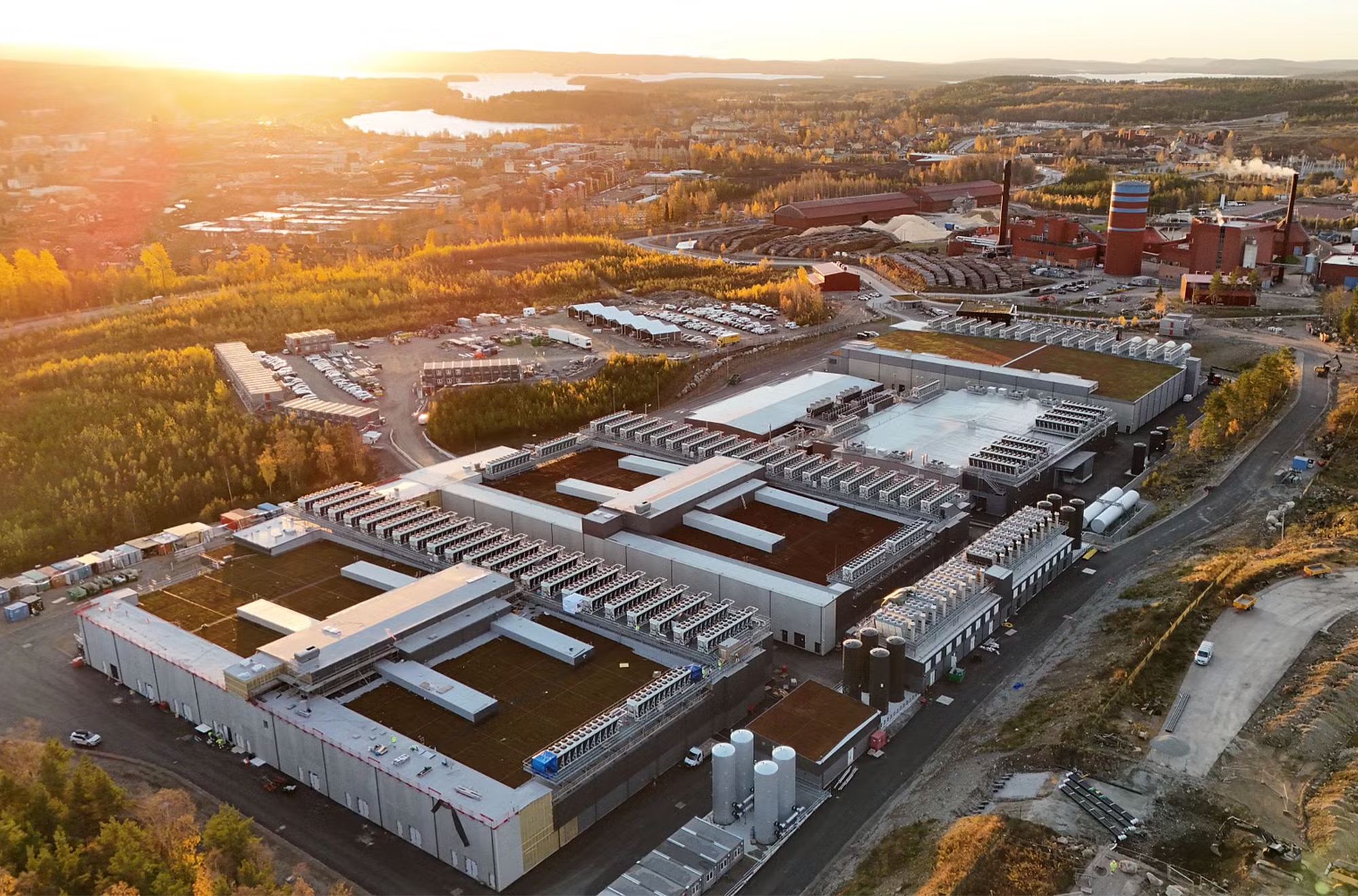
Verne, a provider of sustainably powered HPC data centres across the Nordics, has today announced it has acquired a strategic site in Mäntsälä, Finland, and unveiled plans to build its fifth Nordic data centre. With an initial capacity of 70 MW, the Mäntsälä 10-hectare campus, a 40-minute drive from Helsinki-Vantaa International Airport, will support services to data intensive enterprises and AI innovators running High Performance Compute (HPC), machine learning, and other high intensity workloads, while operating exclusively on renewable energy. The new facility will be built in line with Verne’s best practice design principles and expertise, which aim to maximise efficiency while helping customers reduce the environmental impact of their data centre operations. In addition, the new campus will be powered by 100% renewable energy sources, while waste heat generated by the data centre will be harnessed to power local community heating projects. “Verne’s Mäntsälä data centre campus represents a significant step in our mission to help global enterprises embrace advanced computing while at the same time reducing their impact on the environment,” says Dominic Ward, CEO, Verne. “This new site is part of our strategy of continuous growth across the Nordic region and marks our first new location following Ardian’s acquisition of Verne.” Dominic continues, “Finland, with its abundant clean energy, established data centre industry, and highly skilled workforce, offers the perfect environment for our latest development. We are also working in close collaboration with the Mäntsälä Municipality to ensure our latest facility benefits the local area. This includes a plan to harness the waste heat from the facility to supply hot water and heating to neighbouring districts.” Mäntsälä's Mayor, Hannu Laurila, adds, "We are very pleased that Verne has chosen Mäntsälä as the location for its new data centre. This investment creates excellent opportunities for the broader development of the entire region. Mäntsälä is seen by companies as a highly attractive place to settle – one reason for this is, of course, the location, but also our basic infrastructure with reliable power grids is very good.” Construction of Verne’s Mäntsälä data centre will commence in mid-2025 and is expected to take two years to complete. This expansion represents a strategic move in the company’s long-term plan to build out its sustainably powered data centre platform, which was acquired by private investment house, Ardian, in early 2024. Ardian is a long-term infrastructure investor committed to the Nordics market, where it has already invested more than €1.6 billion, with a focus on energy transition and digital infrastructure projects. It is working with Verne to drive sustainable growth across the Nordic countries, starting with this expansion plan in Finland. Verne’s data centre platform currently includes three further facilities in Finland – in Helsinki, Pori, and Tampere, together with a substantial campus in Iceland, and a facility in Central London, which is optimised to support latency-sensitive applications. The Mäntsälä expansion marks another milestone in Verne’s mission to deliver sustainable data centre solutions for the rising demands of AI and HPC workloads. For more from Verne, click here.

Spirent selected for Ethernet infrastructure testing
Spirent Communications, a provider of test and assurance solutions for next-generation devices and networks, today announced that a leading AI-focused hyperscaler has selected Spirent to perform critical 800G Ethernet fabric testing and assurance, to ensure optimal performance for AI workloads. Spirent’s solution will enable the hyperscaler to balance efficiency and sustainability, while monetising its AI Ethernet infrastructure investments. “Artificial intelligence is transforming the industry and this hyperscaler is leader in building the next generation public cloud for enabling large scale AI workloads,” says Aniket Khosla, Spirent’s Vice President of Wireline Product Management. “At Spirent we understand the challenges that come with building sustainable AI data centre networks and supporting high-performance compute use cases, and we’re excited to support leading industry players as they address the performance demands of advanced AI applications.” Hyperscalers globally are continuing to scale rapidly to meet the dramatic demand for accelerated compute solutions critical for training and serving the most sophisticated AI models. Leveraging Spirent’s B3 800G Appliance and proven test methodologies, Spirent is enabling hyperscalers to optimise the performance of high-speed Ethernet infrastructure required to support AI-driven applications. The B3 800G Appliance is a high-density native 800G OSFP and QSFP-DD test platform, and the first in its class to support IEEE 802.3df specifications. It provides rigorous, high-scale testing to evaluate bandwidth and resource utilisation, helping to accelerate 800G deployments and enable the networking industry to power new applications running AI/ML. With the B3 800G Appliance, hyperscalers can test and validate their infrastructure’s readiness for bandwidth-intensive AI workloads, while maintaining optimal network efficiency. For more from Spirent, click here.

Research forecasts AI’s impact on energy consumption
Schneider Electric, an expert in the digital transformation of energy management and automation, has released two reports from its Sustainability Research Institute (SRI). These reports fill key knowledge gaps regarding AI’s impact on sustainability, particularly in energy use. The first research, Artificial Intelligence and Electricity: A System Dynamics Approach, examines four possible scenarios for AI's electricity consumption over the next decade. Considering the growing concern around AI’s energy consumption, Rémi Paccou, Director of Schneider Electric’s Sustainability Research Institute, and Prof. Fons Wijnhoven, Associate Professor at the University of Twente (Netherlands), have built a system dynamics model that forecasts diverse scenarios for AI electricity demand, highlighting the path forward for sustainable AI development strategies and policies to mitigate environmental impacts. The authors construct four scenarios of AI development and their associated impacts on electricity consumption. These scenarios, which are not predictions but rather tools to understand the complex factors shaping our future, span a range of possibilities: from Sustainable AI development to Limits to Growth, including more radical scenarios such as Abundance Without Boundaries and even the possibility of Energy Crises caused by AI. Alongside these forecasts and analysis, the report also contains recommendations for policymakers and decision-makers, contributing to a thoughtful and responsible approach to development, aiming for a path that balances progress with sustainability. The second report, AI-Powered HVAC in Educational Buildings: A Net Digital Impact Use Case, also by Rémi Paccou and Gauthier Roussilhe, Research Fellow and Doctoral Student at RMIT, demonstrates how AI-powered heating, ventilation, and air-conditioning (HVAC) systems can enhance energy efficiency and environmental conservation in buildings. HVAC systems account for 35-65% of total building energy consumption. The study examined over 87 educational properties in Stockholm, Sweden, over an extended period under real-world conditions. Between 2019 and 2023, the study observed a total carbon emission reduction of 65tCO2e/y, roughly 60 times the actual embodied carbon footprint of the AI system deployed. The research reveals opportunities for even greater carbon reductions in environments with more demanding heating, cooling, or air conditioning requirements. A comparative analysis between Stockholm and Boston showed that implementing the same solution in Boston could yield carbon emission savings seven times higher than in Stockholm. The publishing of these reports coincides with the IEA's Global Conference on Energy & AI, where Schneider Electric was in attendance. This conference gathers experts from the energy and tech sectors, government, civil society, and academia to discuss the potential impacts of AI on global energy systems and the opportunities for leveraging AI for energy and climate goals. Schneider Electric’s CEO, Olivier Blum, and Executive Vice President of its Data Centres & Networks Business, Pankaj Sharma, participated in a high-level roundtable discussion. Vincent Petit, Climate and Energy Transition Research SVP at Schneider Electric, notes, “The release of our reports comes at a crucial time, as the IEA conference highlights the transformative power of AI in the energy sector. As a company and as researchers, we are committed to keep shaping the future of energy and climate solutions.” For more from Schneider Electric, click here.

Milestone for Yondr Group’s Frankfurt data centre
Yondr Group, a global developer, owner and operator of hyperscale data centres, has handed over the first 20MW of its 40MW project in Bischofsheim, just south of Frankfurt, Germany. The milestone, achieved in just 20 months, represents the completion of the first two ready-for-service (RFS) phases in Yondr’s planned four-phase schedule for its Bischofsheim data centre. It is Yondr’s second successful handover in Europe this year, following RFS for the first building at the company’s 100MW+ London campus in July. The Bischofsheim facility is also part of Yondr’s rapidly growing global data centre portfolio, with projects currently on site in EMEA, APAC and North America. Designed and constructed to industry-leading sustainability standards, the Bischofsheim data centre is aiming for LEED Gold certification. It will also comply with the German Energy Efficiency Act (EnEfG), which stipulates that data centres in Germany use renewable energy for 50% of the asset’s electricity consumption, rising to 100% renewables from 1 January 2027. To help align the data centre with Yondr’s sustainability goals and net carbon zero targets, the building has a solar PV installation on the roof, along with a green wall. The asset also has electric vehicle charging points. The Bischofsheim project is strategically located in one of Europe’s most important data industry hubs, which Yondr says demonstrates the company's expertise in identifying, procuring and developing sites in the world’s most sought-after data centre locations. Part of the FLAP market, the Frankfurt data centre hub is central to meeting Germany’s data demand, alongside Berlin, Düsseldorf and Munich, and accounts for around 65% of Germany's upcoming data centre capacity. The new 40MW Bischofsheim data centre being delivered by Yondr will help to meet growing demand for capacity in a location that is both Germany's financial capital and a major technology hub. Peter Hill, VP Design & Construction EMEA at Yondr, comments, “Germany is a very dynamic market, with 1.2GW of capacity fully built, and a number of projects set to add to that capacity over the next couple of years, including our Bischofsheim facility. “This data centre has been built to provide exceptional resilience, while also delivering on our client’s goals for sustainability and operational efficiency. Achieving our first RFS milestone in Frankfurt adds to a busy year for Yondr, with more on the horizon.” Ailish McDonnell, Development Director, adds, “We are proud to contribute to Frankfurt’s reputation as a critical location in the FLAP market. This data centre reflects our desire to expand and invest further in the German market. Yondr is excited to continue partnering with local stakeholders to drive innovation and deliver cutting edge, sustainable data centres that meet the country’s evolving needs.” For more from Yondr Group, click here.


Translate »