Rethinking cybersecurity for an always-on digital enterprise
Author: Joe Peck
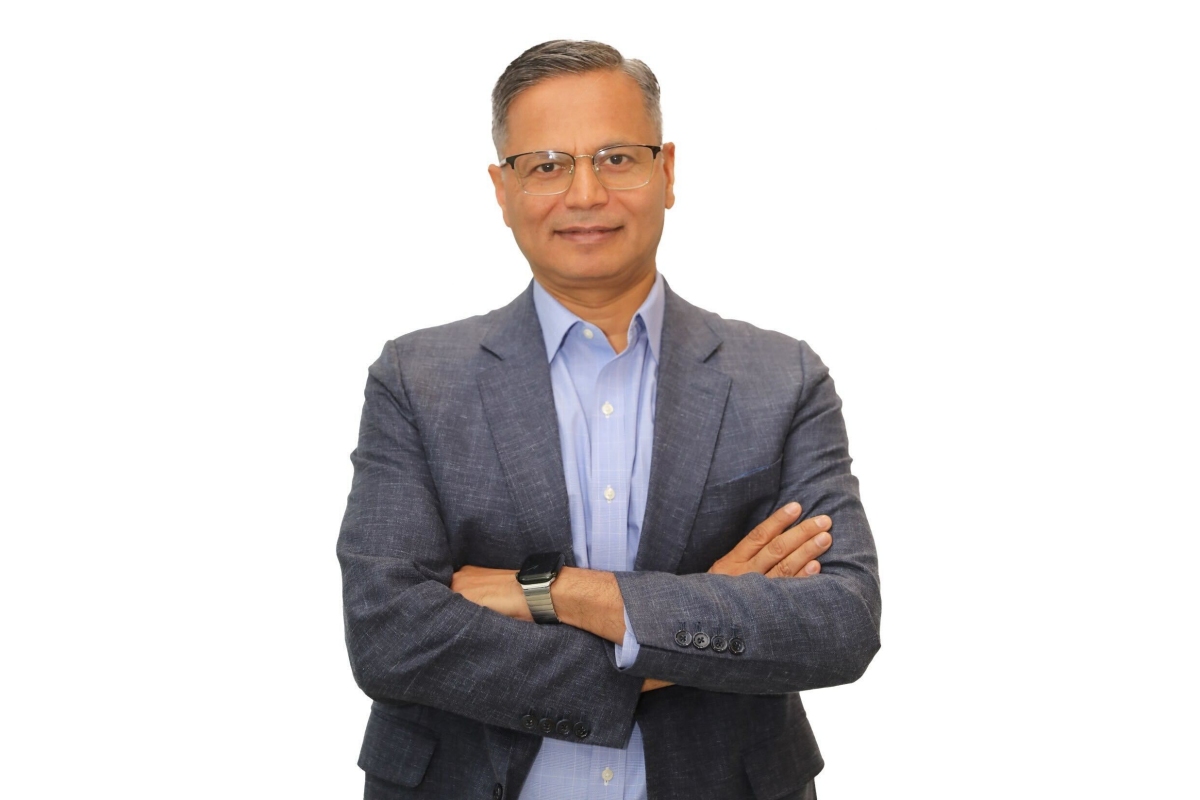
In this exclusive article for DCNN, Sharat Sinha (pictured above), CEO at Airtel Business, assesses how unified security platforms combining AI-driven threat detection, automated response, and human oversight can strengthen cyber resilience across increasingly complex digital environments:
The world has entered an era where more than 20 billion connected devices generate continuous digital exhaust. Every transaction, sensor read, API call, and remote login now feeds a vast digital nervous system supporting economies, governments, and critical infrastructure. As adversaries weaponise automation and AI to scale reconnaissance and exploitation, the cyberattack surface has expanded faster than traditional defences can adapt. To safeguard national and enterprise resilience, security must evolve from fragmented, reactive controls to an AI-powered, human-led, always-on model delivered through a unified security platform.
Traditional architectures were designed for static networks and stable perimeters; they were never built for cloud-native workloads, edge computing, distributed workforces, or API-centric digital ecosystems. Threat actors, however, now operate at machine speed, using AI to craft hyper-targeted phishing, escalate privileges autonomously, and exploit misconfigurations in minutes. Meanwhile, breach discovery in many organisations still spans months. This widening gap between attacker speed and defender response highlights the need for continuous, intelligence-driven protection across network, identity, cloud, and data layers.
Using AI to identify weaknesses
Within this shift, AI is emerging as a force multiplier – not a replacement – for human expertise. AI-driven analytics reduce false positives by up to 60%, correlate billions of signals across hybrid environments, and detect weak anomalies invisible to manual analysis. Predictive models identify the vulnerabilities most likely to be weaponised, shrinking patch backlogs and strengthening overall resilience. Behavioural algorithms reinforce identity security by spotting subtle deviations that precede credential compromise. Even configuration hygiene improves as AI continuously validates cloud and network settings, eliminating exposures before they become incidents.
AI is also enabling entirely new security capabilities. AI assistants for security leaders can summarise incidents, explain posture drift, and produce board-ready insights in seconds. Autonomous SOC workflows now triage, enrich, and contain threats across identity, endpoint, and cloud layers. DevOps and cloud engineering teams use AI copilots to enforce guardrails and detect compliance drift, addressing misconfiguration risks that consistently rank amongst the top causes of breaches worldwide.
These advancements reflect a broader global shift towards unified, AI-first cybersecurity platforms, where intelligence becomes the connective fabric linking telemetry from identity, network, cloud, and data. Rather than operating dozens of siloed tools, organisations gain a single operating layer where detection, decision making, and response flow seamlessly. This consolidation accelerates containment, eliminates blind spots, and frees up security teams to focus on high-impact decisions.
AI also strengthens data protection and regulatory alignment, including emerging requirements under India’s DPDP Act. Automated data classification, policy violation monitoring, retention enforcement, and real-time breach alerts shift privacy oversight from periodic checks to continuous assurance. As India’s digital economy scales – driven by cloud adoption, fintech innovation, and public digital infrastructure – AI-driven governance ensures both compliance and protection without increasing operational burden.
Confidence in an unpredictable landscape
The global direction is clear: AI-first, human-centred, unified platforms are becoming the foundation of modern cyber resilience. With cyber incidents costing organisations millions of dollars and often causing systemic ripple effects, intelligent consolidation is no longer an efficiency strategy; it is a national and enterprise resilience strategy.
Looking ahead, cybersecurity will be defined by how effectively organisations integrate AI across the entire lifecycle (posture management, threat prediction, protection, governance, and automated response) whilst empowering human judgement at every critical decision point.
In a world where threats operate at machine speed, always-on, AI-powered, end-to-end protection is becoming the new standard. Organisations that embrace unified, AI-driven architectures will be best positioned to safeguard their people, data, and services with confidence in an increasingly unpredictable digital landscape.
Related Posts