Projects & Infrastructure


Nokia powers CMC Networks’ EMEA-R connectivity corridor
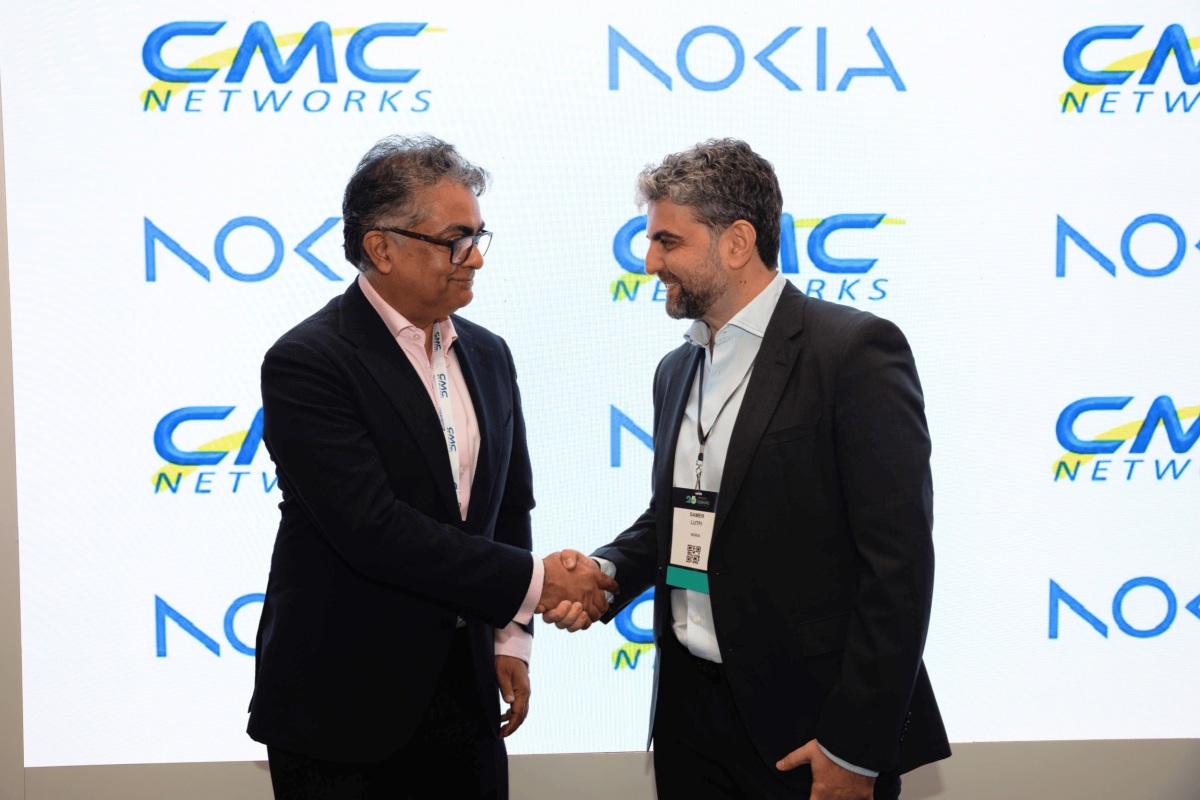
Finnish telecommunications company Nokia is providing optical networking technology for South African connectivity provider CMC Networks’ new Europe-Middle East-Africa Ring (EMEA-R), a high-capacity connectivity corridor linking key network hubs across Africa, the Middle East, and Europe. The corridor connects six strategic network nodes across the three regions, providing wholesale and enterprise customers with International Private Leased Circuit (IPLC) services at dedicated capacities of 1G, 10G, and 100G. Customers can access capacity through a single contract, service-level agreement (SLA), and operational relationship with CMC Networks. Pre-built, pre-lit capacity on established routes is also intended to reduce service activation times. Terrestrial and subsea routes connect six hubs The first phase of EMEA-R connects Johannesburg to London via Cape Town and the Atlantic, and Jeddah to Marseille via the Red Sea and Mediterranean. Terrestrial routes also link London, Frankfurt, and Marseille. The network uses Nokia’s optical transport technology, based on its 1830 Photonic Service Switch platform. Extensions to data centres, internet exchanges, customer sites, and other regional destinations are available upon request. Samer Lutfi, Head of MEA Hyperscaler and AI & Cloud at Nokia, says, “EMEA-R demonstrates how advanced optical transport infrastructure can help address the growing demand for seamless, high-performance connectivity across markets. "By combining Nokia’s optical technology with CMC Networks’ regional reach and service expertise, the corridor gives wholesale and enterprise customers greater flexibility in how they access and scale international capacity.” Mahesh Jaishankar, Managing Director at CMC Networks, comments, “With EMEA-R, we are addressing a key need among carriers and enterprises for reliable, flexible, and scalable connectivity across international markets. "By combining our regional expertise and network reach with Nokia’s optical transport technology, we are simplifying how customers access and manage capacity across Africa, the Middle East, and Europe.” Further expansion is planned to extend connectivity across the three regions as demand for capacity grows, particularly from cloud, AI, and other data-intensive applications. For more from Nokia, click here.

Airsys backs ThermAI heat reuse for home heating
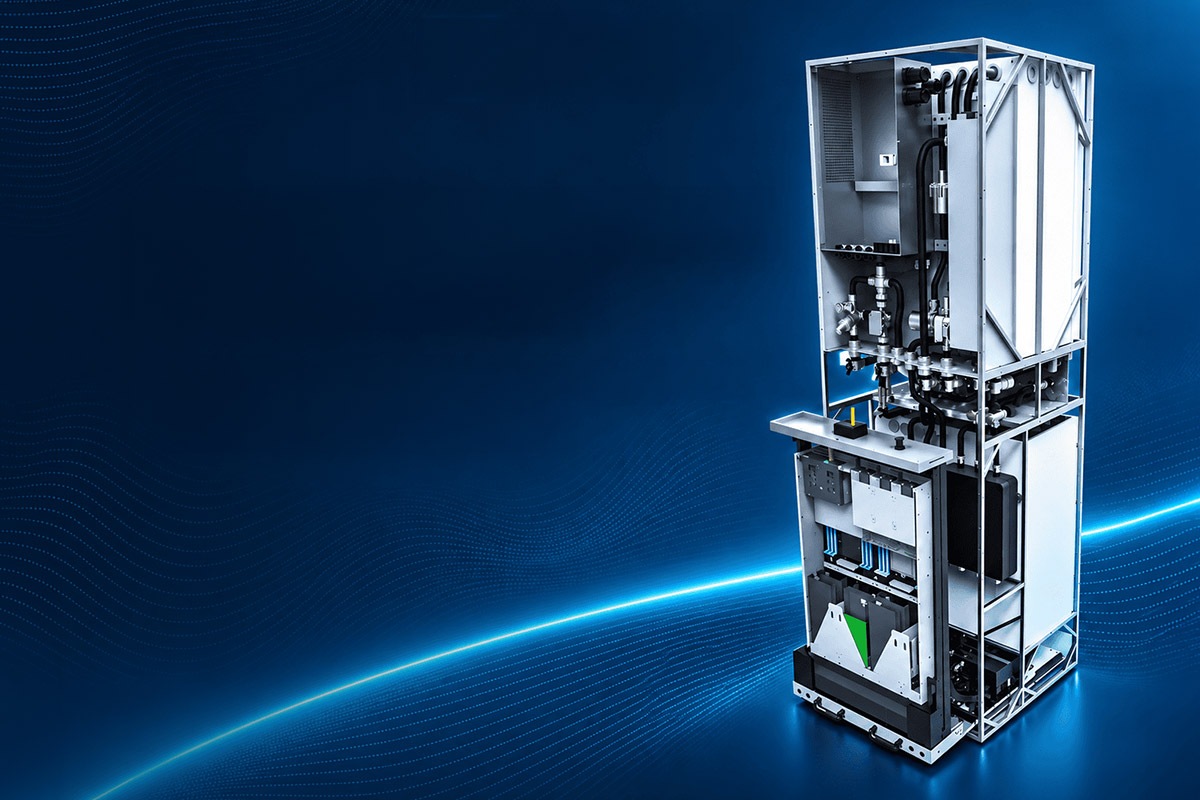
Airsys, a provider of data centre cooling systems, has become the lead investor in, and technical partner of, UK GPU computing company ThermAI, supporting the development of infrastructure that uses waste heat from computing equipment to provide domestic heating and hot water. ThermAI's HeatBridge system uses its LiquidDock server cassette, incorporating Airsys's LiquidPack spray cooling technology, to recover heat generated by AI and research computing. The recovered heat is then used to provide heating and hot water to participating households at no cost. The company has also developed FlightDeck, a GPU computing platform providing access to UK-hosted computing resources for AI, research, and engineering workloads. It intends to use the platform to establish a distributed network of computing installations that can also supply domestic heating. ThermAI has now closed a pre-seed funding round led by Airsys, with participation from venture capital firm Augur VC and angel investors. “We’re designing the computing platform and the heating system together so heat reuse is part of the infrastructure from the start,” says Christopher Smart, founder and CEO of ThermAI. “Our aim is to make that work as a commercially viable model that can scale.” Domestic heating from recovered server heat Participating households will receive heating and hot water at no cost, while ThermAI will also cover the cost of backup heating where required. The initial deployment will focus on social housing, with the company targeting installations in 100 homes in partnership with UK social housing providers during 2027. The initiative comes as landlords work towards bringing all social rented homes in England to EPC band C by 2030, supported by the Government's £15 billion Warm Homes Plan. Augur VC is also backing the project, with its President, Dan Chapman, stating, “ThermAI brings together a commercial opportunity in GPU computing and a practical way to make homes more affordable to heat. We see strong potential in the model and are pleased to support Chris and the team.” University research pilot planned Professor Jonathan Hirst of the University of Nottingham's School of Chemistry has signed a letter of intent to participate in a ThermAI computing pilot. The project would support GPU-intensive research applications, including drug discovery and molecular dynamics. Jonathan notes, “ThermAI’s approach is a highly sustainable one that would benefit local communities. Initiatives like this could play an important role in maintaining and improving the sustainability of organisations such as ours.” For Airsys, the project also provides an opportunity to explore how recovered heat could be used beyond individual homes, including in larger data centre deployments supplying district heating networks. Yunshui Chen, founder and CEO of Airsys, comments, “Heat reuse is the next frontier for thermal infrastructure, and ThermAI shows what it looks like when you design for circularity from the server up. “For the first time, our spray cooling technology is not only keeping servers cool but turning their heat into a vital utility for the home. If we can prove this circular model in a single household, the same approach can scale to data centres feeding district heating. That is what ‘Balance the Environment’ demands of us: treating every watt of energy as a resource that does double duty.” How the HeatBridge system works Each installation combines a custom six-GPU ThermAI Node with the HeatBridge system, which has a UK patent application pending. Universities, research centres, AI start-ups, and engineering companies access the computing resources remotely through FlightDeck, with the hardware hosted in the UK. LiquidPack uses an electrically non-conductive fluid sprayed directly onto server components inside a sealed cassette, rather than immersing the hardware in liquid. The system recovers heat into a water circuit at temperatures of up to 60°C, making it suitable for domestic heating and hot water. A heat exchanger transfers the recovered energy into the water circuit, whilst Sunamp heat batteries store it until required by the household. Christopher Smart explains, “When we saw spray cooling and higher coolant temperatures, it instantly clicked. For something that has to live inside a home, it suits what we’re building.” The servers are manufactured by 2CRSi through its Manchester-based subsidiary and use NVIDIA RTX PRO 6000 Blackwell Server Edition GPUs, each with 96GB of memory. ThermAI is also a member of the NVIDIA Inception programme. Its wider partner network includes Sunamp, Oleon, ESBE, Roedan, OCF, Inta, InstaGen, and Savar Brass, alongside the University of Nottingham. For more from Airsys, click here.

Digital Realty energises 110kV Frankfurt connection
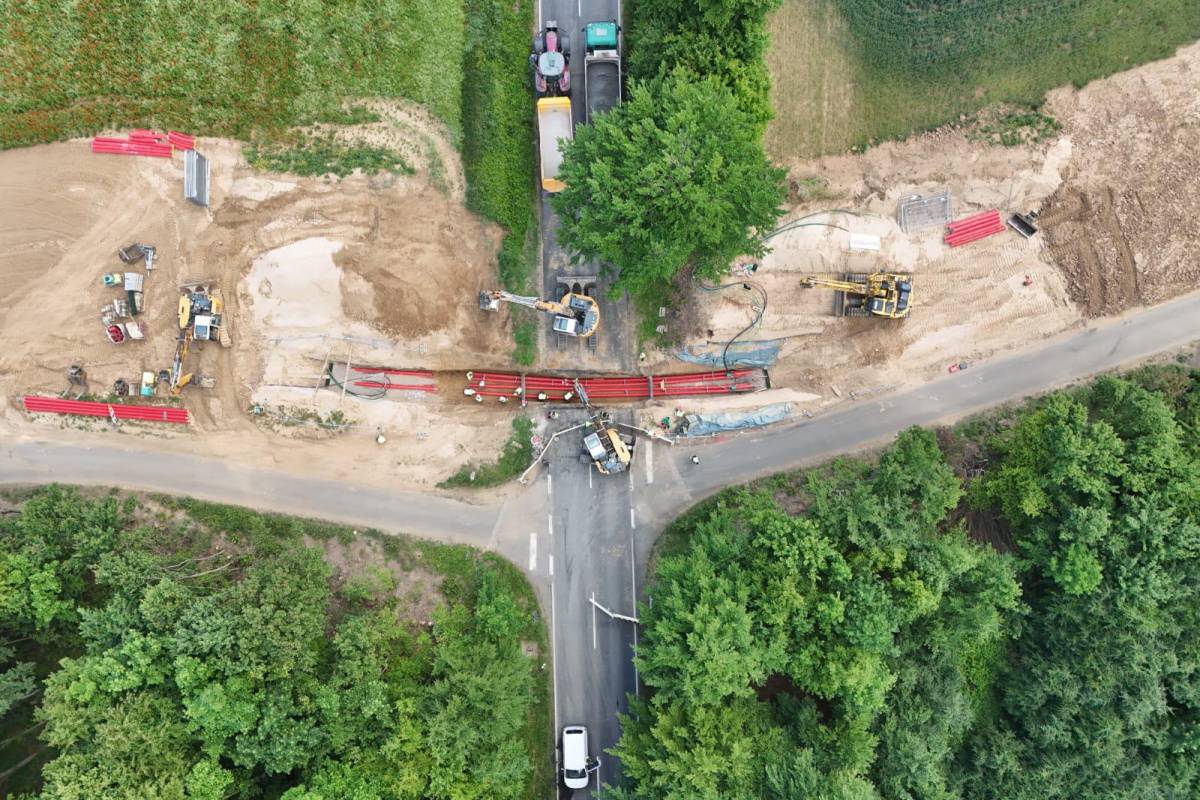
Digital Realty, a cloud- and carrier-neutral data centre platform, has brought a dedicated 110kV power connection online at its Digital Park Fechenheim campus in Frankfurt, Germany, providing up to 300MVA of grid connection capacity. The fully underground connection runs approximately 16km from the Karben substation to the campus. Owned by Digital Realty, it took around 20 months to build and commission, representing an investment of several hundred million euros. More than 70% of the route was constructed using drilling methods rather than open-cut techniques, helping to limit disruption to traffic, residents, and the surrounding environment. Campus expansion planned for Frankfurt Digital Realty says the new connection will support the continued development of Digital Park Fechenheim, where access to electricity has become an increasingly important factor in data centre development. Volker Ludwig, Managing Director Central Europe at Digital Realty, comments, “Access to power has become one of the defining factors for digital infrastructure in Frankfurt. "We chose to invest in our own connection to support the continued development of Digital Park Fechenheim. This gives us greater visibility as we plan the campus’s growth and support our customers as their requirements evolve.” At full build-out, Digital Park Fechenheim is planned to comprise 11 data centres with up to 200MW of IT capacity. Three are already operational, with a fourth scheduled to go live in 2027. The campus also forms part of PlatformDIGITAL, Digital Realty’s global data centre platform. For more from Digital Realty, click here.

ALG, Magnom Properties plan $750m Egypt data centre
US contractor Aedan Looking Glass (ALG) and Magnom Properties, an Egyptian real estate developer backed by Saudi Arabia’s Rawabi Holding, have agreed to develop a $750 million (£568 million) data centre within Forbes International Tower in Egypt’s New Capital. The Pinnacle Data Center will provide computing infrastructure and digital services, including AI computing, high-performance computing (HPC), and secure enterprise services. The agreement was signed in Washington, D.C. on 10 November 2026, coinciding with B20 USA, a forum bringing together international real estate and US technology stakeholders. The project brings together Magnom Properties, ALG, Trinidy AI, and Turnkey Capital. Trinidy AI will operate the facility, overseeing its design, development, and ongoing operations, including AI computing services, whilst ALG will lead technology and infrastructure delivery and Turnkey Capital will act as a strategic partner. Under a long-term commercial framework, ALG will fund and deliver the facility, with Magnom Properties retaining ownership of Forbes International Tower, and there is reportedly a defined route to bringing the data centre fully within the tower’s ownership. A focus on efficiency Designed by Adrian Smith + Gordon Gill Architecture, Forbes International Tower will incorporate clean hydrogen energy, solar technologies, intelligent building systems, and advanced security infrastructure. The proposed data centre design includes AI-driven energy management, modular infrastructure, and intelligent power and cooling systems, all intended to improve operational efficiency and reduce unnecessary energy consumption. Eric Fitzgerald, Chairman of Aedan Looking Glass, comments, “Our role is to deliver the technology and infrastructure needed to support secure, scalable AI computing operations. This partnership represents a significant step in expanding US technology capabilities into international markets while supporting Egypt’s growing digital economy.” Michael Jalbert, CEO of Forbes Global Properties, adds, “The Forbes name has long been associated with people shaping the global business landscape. Forbes International Tower brings that legacy into the built environment, with the advanced digital infrastructure that these leaders increasingly require.” Clifford Cruz, CEO of Trinidy AI, suggests, “The Pinnacle Data Center represents an opportunity to build a world-class AI computing facility designed to meet the demands of today while also anticipating the demands of tomorrow. “As the data centre operator, our focus is on delivering efficient, scalable infrastructure that supports the growing demand for AI computing while creating lasting economic value for the region and strengthening the country's technology infrastructure.”

AirTrunk advances 1GW Hunter renewables partnership
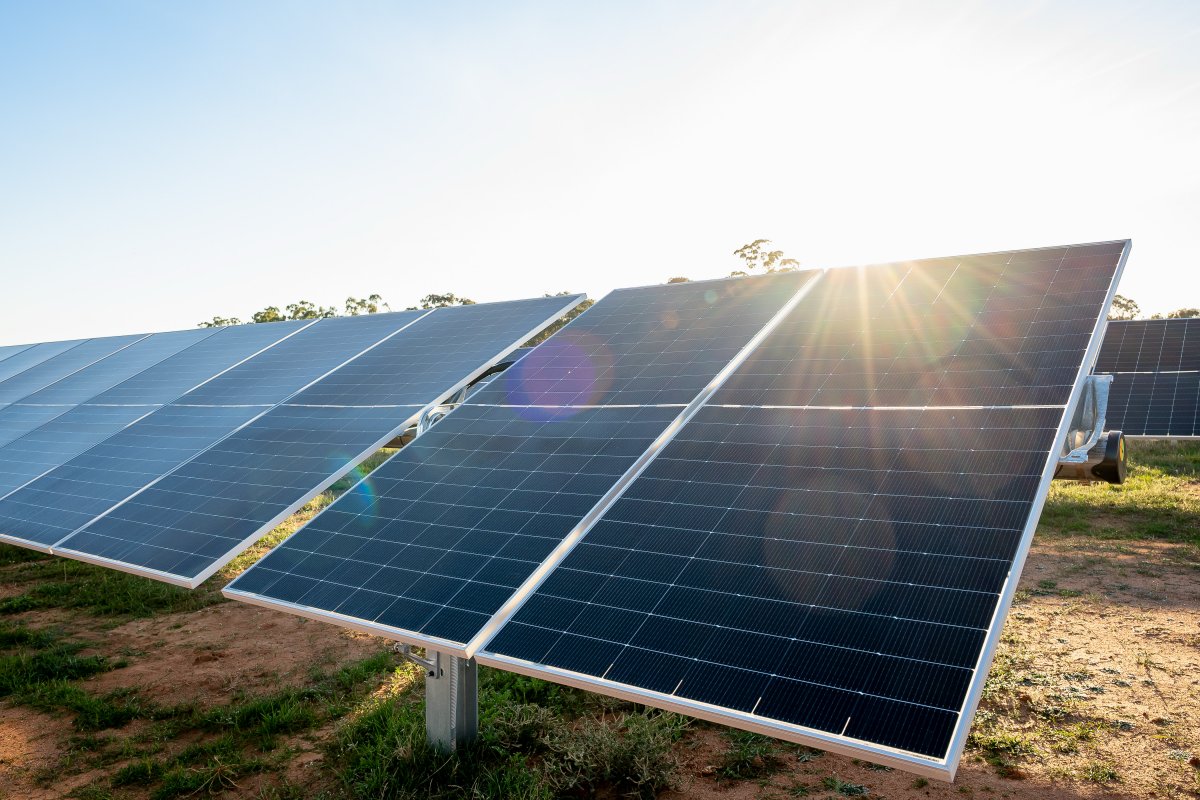
Australian data centre operator AirTrunk and renewable energy developer European Energy Australia have signed an exclusivity agreement to progress renewable energy and storage projects in the Hunter region of New South Wales, Australia, with potential combined capacity exceeding 1GW. The proposed developments comprise a 260MW solar project, a battery storage facility exceeding 800MWh, and a wind project of up to 350MW. Together, they could add more than 1GW of renewable generation and storage capacity to the state's electricity system. The companies are progressing development work and discussing a potential long-term power purchase agreement (PPA) to support AirTrunk's electricity requirements in New South Wales, including its proposed Kurri Kurri data centre campus. The projects are expected to begin operating between 2030 (for the solar and battery developments) and 2032 (for the wind project). European Energy plans to connect them to Ausgrid's upgraded 132kV network within the Hunter-Central Coast Renewable Energy Zone, subject to approvals, technical assessments, and final connection arrangements. Renewable energy supply for data centre growth The partnership comes amid Australian Government expectations that new data centres secure additional clean energy generation and storage to offset their electricity demand, whilst also supporting grid stability. The NSW Data Centre Guidelines also expect operators to fund the additional energy supply and infrastructure required by their developments, without transferring net costs to households, businesses, or communities. Robin Khuda, founder and CEO of AirTrunk, notes, “Digital growth must bring new energy with it. The Australian Government’s expectations and NSW’s guidelines set a high bar for the industry. This partnership is an important step towards delivering on that commitment.” Sabooh Whitelaw, AVP Energy at AirTrunk, adds, “We understand the community wants to know how Kurri Kurri’s electricity needs will be supported. Our focus is on bringing new renewable generation forward and securing renewable electricity through long-term supply arrangements.” Catriona McLeod, Managing Director of European Energy Australia, says, “It’s great to see AirTrunk and the tech sector embracing renewable energy. Partnerships like this allow us to bring more renewables online and add more energy to the grid.” The agreement builds on the companies' work at the 31MW Mulwala Solar Farm, which officially opened in November 2026 and is now supplying renewable electricity to the New South Wales grid. They also intend to explore further renewable energy developments. Kurri Kurri data centre plans AirTrunk is proposing a data centre on the former Kurri Kurri smelter site at Loxford, reusing land with an established industrial history. The development is intended to create employment and economic opportunities in the Hunter region whilst making use of existing infrastructure. The company says it has engaged with local communities over the past four months through information sessions, project updates, and a public drop-in hub. It intends to continue providing information and gathering feedback as the proposal progresses through the planning process. Sabooh Whitelaw continues, “The Hunter projects are an important step, but more renewable generation and firming will be needed to support Kurri Kurri and AirTrunk’s wider NSW needs. We’ll continue working with developers and energy partners to progress further projects across Australia.” AirTrunk is also targeting 100% renewable energy matching for its electricity consumption by 2030, as part of its Net Zero 2030 commitment. The company reports that approximately 73% of its electricity use across its portfolio was matched with renewable energy in FY26. For more from AirTrunk, click here.

3Flash plans 480MW data centre in Finland
3Flash Finland, a Finnish developer of industrial-scale solar, green hydrogen, and energy storage projects, is planning a 480MW data centre at Huuhansuo in Lappeenranta, Finland, alongside on-site solar power generation, battery storage, and a gas engine power plant. The project is designed to include up to 200MWp of solar generation, a battery energy storage facility with capacity of up to 320MW/2,560MWh, and a gas engine power plant with capacity of up to 720MW. The on-site generation is intended to reduce the data centre's reliance on the electricity grid during periods of limited supply. The plans were presented to local residents and landowners at Vilkjärvi village hall on Monday, 9 November 2026. The project's environmental impact assessment (EIA) programme is expected to be made available for public review at the end of November. On-site generation and energy storage The gas engine power plant would be capable of starting within minutes when wind and solar generation are insufficient. The engines could operate using natural gas, biomethane, or hydrogen. The data centre would occupy a site of up to approximately 105 hectares, with no lake or river water used for cooling. The final project scope will be determined through the EIA and land-use planning processes, which will also assess a smaller development option. Miko Huomo, Chairman of the Board at 3Flash Finland, says, “Dozens of data centres are being planned in Finland, and many rightly ask whether there is enough electricity for everyone and who pays for the peak hours. "At Huuhansuo, the answer is built into the project: the data centre brings its own balancing power. When electricity is in short supply, it does not take it from the grid at the expense of others. Here, the combination of a data centre and energy production is more than the sum of its parts.” Huuhansuo comprises former peat production land and commercial forest, and it is already zoned for energy production. Fingrid's Yllikkälä substation is located a few kilometres away, whilst a Gasgrid gas transmission pipeline runs alongside the site. Noise, water, nature, and landscape impacts will be assessed through the EIA process, with the findings made publicly available. 3Flash Finland states that it intends to keep noise levels at the nearest homes below permitted guideline values and will manage stormwater appropriately. Questions and answers from the public meeting are due to be published on the company's website within a week. Permits targeted for 2028 The Finnish Supervisory Agency will announce the EIA programme's public consultation period and a further public event. A master plan amendment and detailed local plan will also be prepared in cooperation with the City of Lappeenranta. The project aims to secure permits in 2028, with construction of the first phase potentially beginning in 2029 at the earliest. 3Flash Finland is developing the project towards permit readiness and is seeking a data centre operator and investor. Arctic Securities is acting as financial adviser, with further project partners to be announced once agreements have been finalised.

Downing expands into data centres with 500MW pipeline
Downing Renewable Developments (DRD), a UK developer of solar, battery storage, and onshore wind projects, has expanded into data centre development, establishing an initial pipeline of more than 500MW of advanced projects in Sweden and Finland. The most advanced sites are in central Sweden and southern Finland, with land secured and grid connections anticipated before 2030. Permitting for the first projects is expected to begin shortly, with the sites targeting Powered Land status by Q4 2027. This means securing both the land and power capacity needed for future data centre development. Linking data centre development with renewable energy The move builds on DRD’s experience developing renewable energy projects across the UK and Nordics. The company says it is using this expertise to identify suitable data centre locations whilst exploring opportunities to supply clean energy to sites throughout their operational lives. Tony Gannon, Head of Downing Renewable Developments, comments, “Data centres and energy infrastructure are becoming increasingly interconnected. Access to power is a fundamental consideration when identifying where new data centre capacity can be developed, which makes this a natural extension of our existing renewable energy development capabilities.” Tom Williams, Head of Energy and Infrastructure at Downing, adds that the company aims to provide firmed power from portfolios of renewable generation assets to its data centre developments, offering long-term supply security while reducing their impact on the grid and the environment.

Multiverse Computing, YellowDog target European sovereign AI
Multiverse Computing, a Spanish company specialising in compressing large language models (LLMs), and UK cloud workload orchestration firm YellowDog.ai have agreed to work together to improve compute efficiency and support the development and deployment of European sovereign AI. The collaboration will combine AI model compression with hybrid and multi-cloud compute management to help enterprises, research organisations, and public sector institutions operate AI within European infrastructure. Multiverse Computing’s CompactifAI technology uses quantum-inspired tensor-network methods to compress large AI models, while YellowDog.ai provides a platform for managing compute resources across hybrid and multi-cloud environments. The companies say they aim to bring together processing capacity, secure access, storage, networking, and data centre operations, whilst simultaneously reducing costs, energy consumption, and infrastructure complexity. They also identify GPU shortages as a key challenge, particularly for European organisations seeking to make more efficient use of available capacity. Customers will be able to use the combined capabilities for model development, benchmarking, optimisation, compressed model deployment, inference, and sovereign infrastructure planning. Target sectors include financial services, life sciences, advanced engineering, energy, telecoms, public services, and defence-adjacent industries, where data residency, security, cost, compute availability, and regulatory compliance are important considerations. Supporting Europe's AI compute infrastructure Enrique Lizaso, co-founder and CEO of Multiverse Computing, says, “Sovereign AI will only succeed if it is economically and technically sustainable. Our compressed AI models are designed to run faster, use less energy, and operate closer to the data. "Working with YellowDog.ai gives customers a powerful route to deploy efficient AI across cloud, on-premises, edge, and sovereign data centre environments.” Bruce Beckloff, CEO of YellowDog.ai, adds, “Europe has the talent, data, and industrial base to lead in AI, but it needs infrastructure that is fast, efficient, secure, and sovereign by design. “By partnering with Multiverse Computing, we are creating practical capacity solutions where organisations can scale compute intelligently, reduce bottlenecks, and retain control of critical workloads.” The agreement comes as European organisations seek alternatives to fragmented, expensive, and capacity-constrained AI infrastructure. The companies also point to the European Commission’s AI Gigafactory initiative, which envisages large-scale facilities providing computing capacity for the development, training, fine-tuning, and deployment of advanced AI models and applications. These facilities are expected to combine AI-optimised computing, secure cloud access, high-capacity storage, advanced networking, energy-efficient data centres, and specialist support services. The stated priorities include improving access to hybrid compute, reducing operational costs and energy use through model compression and workload scheduling, and supporting deployments that meet European requirements for data protection, security, and technological autonomy. For more from Multiverse Computing, click here.

KDDI, Telehouse acquire £220m London Docklands site
KDDI, a Japanese telecommunications company, and Telehouse, an operator of colocation data centres, have completed the purchase of the Inventory Estate in East India Dock, London, for more than £220 million ($294 million). The site was acquired from LaSalle Investment Management and Trilogy Real Estate. The land will support a new high-density, AI-ready data centre as part of the expansion of Telehouse’s existing London Docklands campus. Its proximity to the campus will provide an opportunity to add capacity and make use of its established connectivity ecosystem, coming amid increasing constraints on land and power. The planned development will provide high-density colocation, low-latency connectivity, and infrastructure for AI workloads. A total of 65MVA of power has been secured for the site, supporting phased, long-term expansion. The acquisition follows the announcement of Telehouse West Two, a nine-storey data centre building under development at the London Docklands campus, which is due for completion in 2028. Telehouse says it will continue to engage with local stakeholders and the wider Tower Hamlets community as plans for the new development progress, focusing on sustainable development, local investment, and employment opportunities. Further expansion at London Docklands Mark Pestridge, Managing Director of Telehouse Europe, comments, “The purchase of the Inventory Estate represents an important step in the long-term development of our London Docklands campus, one of Europe's leading connectivity hubs. "It provides space for future expansion to support our customers' digital growth ambitions, including the crucial innovation that is taking place across industries such as healthcare, education, and financial services. "As demand for AI-ready infrastructure grows, we remain focused on sustainable operations, community engagement, and creating opportunities in the local area.” Takayo Takamuro, Executive Officer, European Chief Executive, and Board Director at Telehouse, adds, “This acquisition supports the next phase of our growth and our commitment to supporting customers’ AI ambitions. The new data centre will be one of the largest facilities in the Telehouse London Docklands campus, reinforcing its role as the leading connectivity hub in Europe.” Chris Lewis, Head of UK Transactions at LaSalle Investment Management, notes, “The extensive refurbishment works undertaken in partnership with Trilogy Real Estate to regenerate East India Dock into a world-class, mixed-use innovation campus have paved the way for this next exciting development on the Inventory Estate. "We look forward to watching its progress as the Docklands are set to host an important AI-ready data centre, critical to powering London’s tech sector.” For more from Telehouse, click here.

Blueshift outlines thermal management for orbital data centres
US advanced materials company Blueshift has outlined a three-part thermal management approach for spacecraft in low Earth orbit (LEO), addressing the challenges posed by extreme temperature changes and increasingly powerful computing payloads. Presented at CAMX 2026, the approach treats thermal protection as an integral part of the spacecraft system. It focuses on moving internally generated heat to radiators for rejection at the highest practical temperature, controlling heat flow to protect temperature-sensitive components, and managing solar, Earth, and environmental exposure at the spacecraft surface. Blueshift reportedly has more than 20,000ft² (1,858m²) of its AeroZero Thermal Protection Systems (TPS) flying in LEO, alongside material testing and standards references including ASTM E595 and NASA-STD-6016. Spacecraft in LEO experience temperature swings from -180°C to +150°C between shadow and sunlight, with this cycle occurring 16 times a day. Computing payloads add to the challenge by generating substantial internal heat. Tim Burbey, co-founder and President of Blueshift, says thermal protection must be considered as part of the overall spacecraft design, regardless of vehicle type, noting, “Every spacecraft produces internal heat, and now we are seeing data centres produce 100 times more, forcing it to become a design driver.” Managing heat across spacecraft systems Blueshift says its AeroZero TPS materials can be used across the three areas of thermal management. Within the spacecraft, the material acts as a thermal break at brackets, joints, and other interfaces, helping to isolate batteries and temperature-sensitive components from hot electronics and coolant loops. This separation allows high-powered processors to determine the coolant loop temperature, enabling radiators to operate at higher temperatures and reject more heat per unit area. By separating hot and cold zones, the approach can also reduce radiator area and support smaller spacecraft thermal systems. In vacuum testing, Blueshift research found that AeroZero TPS had 19 times lower thermal conductivity and six times lower thermal diffusivity than standard polyimide tape. Thermal diffusivity determines how quickly temperature changes propagate through a thermal break, while the material is intended to buffer the temperature swings experienced every 90 minutes in LEO. In a modelled LEO scenario comparing thermal breaks, a solar cell mounted on a composite frame in sunlight ran almost 40°C cooler with AeroZero TPS than with standard tape. The comparison examined how thermal breaks could limit heat transfer between spacecraft structures and equipment. For exterior surfaces, Blueshift gives AeroZero TPS a solar absorptance-to-emittance ratio (α/ε) of 0.14, compared with 0.60 for uncoated Kapton. In illustrative steady-state calculations for a flat surface facing the Sun, the estimated surface temperature was -32°C (241 K) for AeroZero TPS and +73°C (346 K) for Kapton, a difference of 105°C. Tim concludes, “Supporting reliable, long-duration missions in increasingly demanding orbital environments is a key focus for Blueshift. Following CAMX, we look forward to further opportunities to showcase our AeroZero TPS portfolio and engage with spacecraft designers, engineers, and industry decision makers on how material innovation can support the next phase of commercial space development.”


Translate »