Airsys backs ThermAI heat reuse for home heating
Author: Joe Peck
Airsys, a provider of data centre cooling systems, has become the lead investor in, and technical partner of, UK GPU computing company ThermAI, supporting the development of infrastructure that uses waste heat from computing equipment to provide domestic heating and hot water.
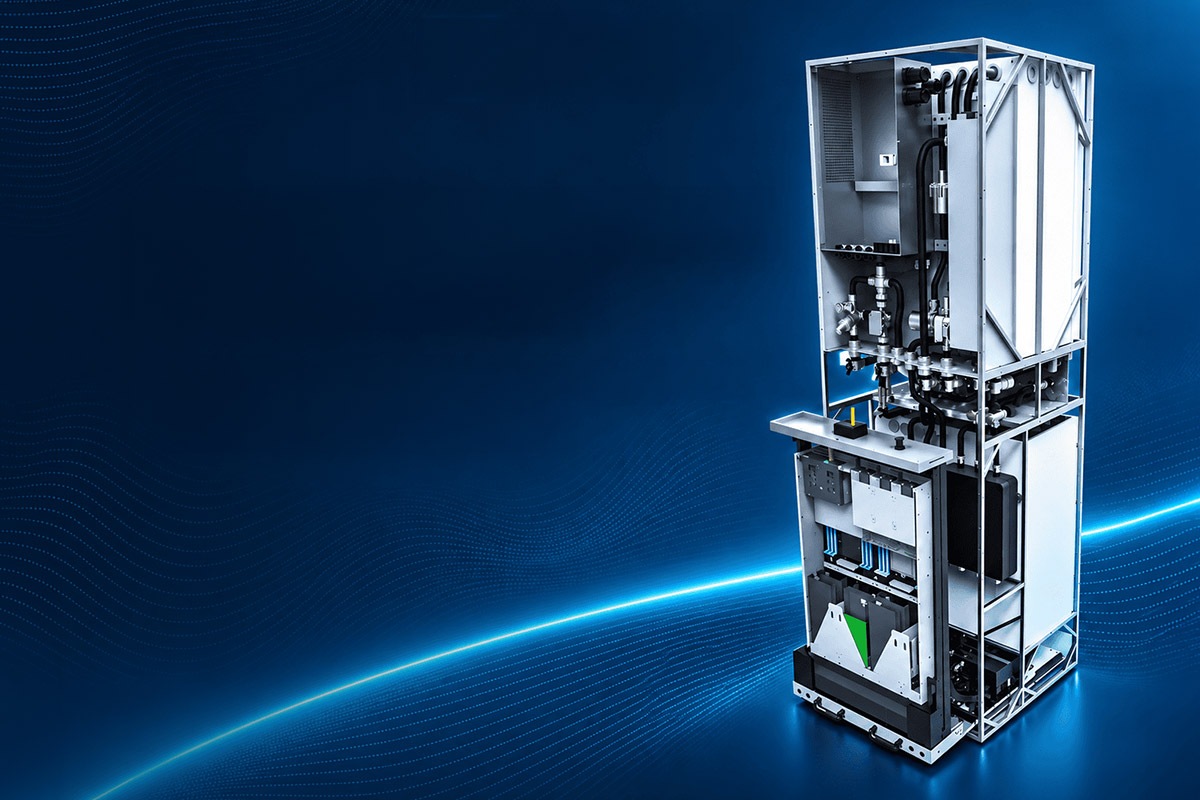
ThermAI’s HeatBridge system uses its LiquidDock server cassette, incorporating Airsys’s LiquidPack spray cooling technology, to recover heat generated by AI and research computing. The recovered heat is then used to provide heating and hot water to participating households at no cost.
The company has also developed FlightDeck, a GPU computing platform providing access to UK-hosted computing resources for AI, research, and engineering workloads. It intends to use the platform to establish a distributed network of computing installations that can also supply domestic heating.
ThermAI has now closed a pre-seed funding round led by Airsys, with participation from venture capital firm Augur VC and angel investors.
“We’re designing the computing platform and the heating system together so heat reuse is part of the infrastructure from the start,” says Christopher Smart, founder and CEO of ThermAI. “Our aim is to make that work as a commercially viable model that can scale.”
Domestic heating from recovered server heat
Participating households will receive heating and hot water at no cost, while ThermAI will also cover the cost of backup heating where required. The initial deployment will focus on social housing, with the company targeting installations in 100 homes in partnership with UK social housing providers during 2027.
The initiative comes as landlords work towards bringing all social rented homes in England to EPC band C by 2030, supported by the Government’s £15 billion Warm Homes Plan.
Augur VC is also backing the project, with its President, Dan Chapman, stating, “ThermAI brings together a commercial opportunity in GPU computing and a practical way to make homes more affordable to heat. We see strong potential in the model and are pleased to support Chris and the team.”
University research pilot planned
Professor Jonathan Hirst of the University of Nottingham’s School of Chemistry has signed a letter of intent to participate in a ThermAI computing pilot. The project would support GPU-intensive research applications, including drug discovery and molecular dynamics.
Jonathan notes, “ThermAI’s approach is a highly sustainable one that would benefit local communities. Initiatives like this could play an important role in maintaining and improving the sustainability of organisations such as ours.”
For Airsys, the project also provides an opportunity to explore how recovered heat could be used beyond individual homes, including in larger data centre deployments supplying district heating networks.
Yunshui Chen, founder and CEO of Airsys, comments, “Heat reuse is the next frontier for thermal infrastructure, and ThermAI shows what it looks like when you design for circularity from the server up.
“For the first time, our spray cooling technology is not only keeping servers cool but turning their heat into a vital utility for the home. If we can prove this circular model in a single household, the same approach can scale to data centres feeding district heating. That is what ‘Balance the Environment’ demands of us: treating every watt of energy as a resource that does double duty.”
How the HeatBridge system works
Each installation combines a custom six-GPU ThermAI Node with the HeatBridge system, which has a UK patent application pending. Universities, research centres, AI start-ups, and engineering companies access the computing resources remotely through FlightDeck, with the hardware hosted in the UK.
LiquidPack uses an electrically non-conductive fluid sprayed directly onto server components inside a sealed cassette, rather than immersing the hardware in liquid. The system recovers heat into a water circuit at temperatures of up to 60°C, making it suitable for domestic heating and hot water.
A heat exchanger transfers the recovered energy into the water circuit, whilst Sunamp heat batteries store it until required by the household.
Christopher Smart explains, “When we saw spray cooling and higher coolant temperatures, it instantly clicked. For something that has to live inside a home, it suits what we’re building.”
The servers are manufactured by 2CRSi through its Manchester-based subsidiary and use NVIDIA RTX PRO 6000 Blackwell Server Edition GPUs, each with 96GB of memory.
ThermAI is also a member of the NVIDIA Inception programme. Its wider partner network includes Sunamp, Oleon, ESBE, Roedan, OCF, Inta, InstaGen, and Savar Brass, alongside the University of Nottingham.
For more from Airsys, click here.