Projects & Infrastructure


Downing expands into data centres with 500MW pipeline
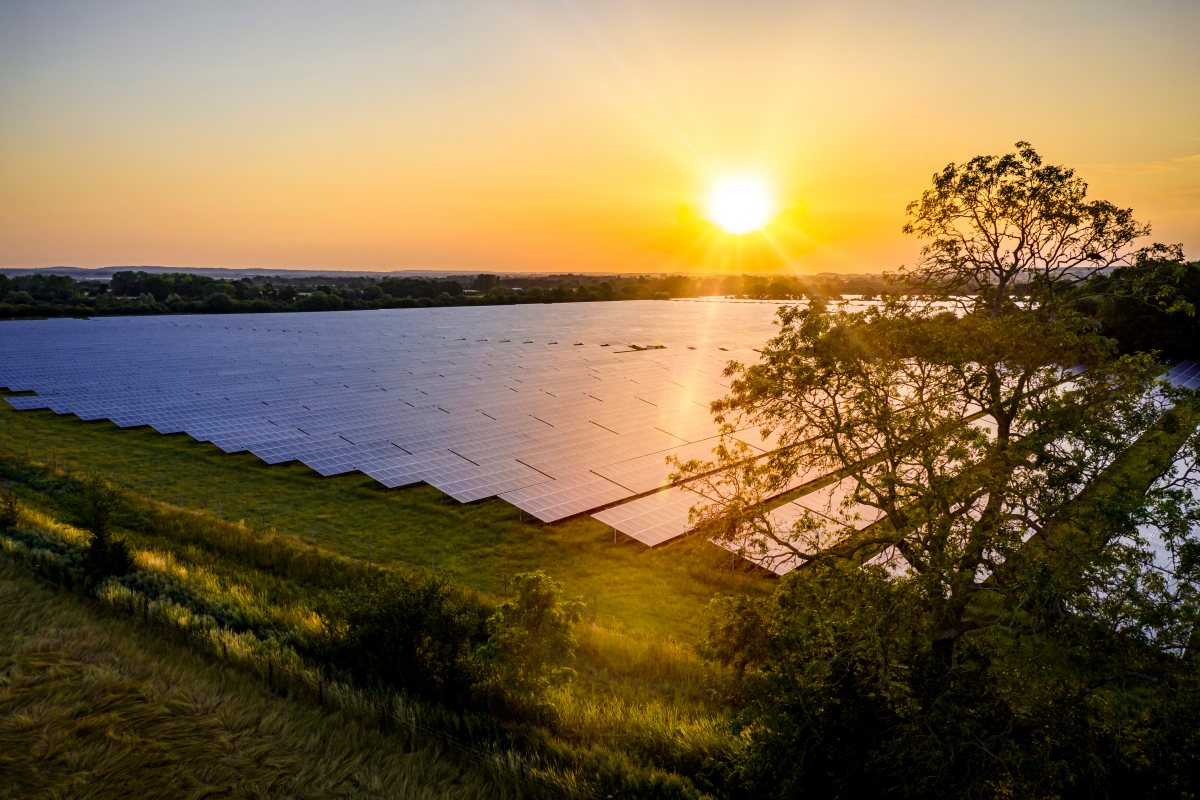
Downing Renewable Developments (DRD), a UK developer of solar, battery storage, and onshore wind projects, has expanded into data centre development, establishing an initial pipeline of more than 500MW of advanced projects in Sweden and Finland. The most advanced sites are in central Sweden and southern Finland, with land secured and grid connections anticipated before 2030. Permitting for the first projects is expected to begin shortly, with the sites targeting Powered Land status by Q4 2027. This means securing both the land and power capacity needed for future data centre development. Linking data centre development with renewable energy The move builds on DRD’s experience developing renewable energy projects across the UK and Nordics. The company says it is using this expertise to identify suitable data centre locations whilst exploring opportunities to supply clean energy to sites throughout their operational lives. Tony Gannon, Head of Downing Renewable Developments, comments, “Data centres and energy infrastructure are becoming increasingly interconnected. Access to power is a fundamental consideration when identifying where new data centre capacity can be developed, which makes this a natural extension of our existing renewable energy development capabilities.” Tom Williams, Head of Energy and Infrastructure at Downing, adds that the company aims to provide firmed power from portfolios of renewable generation assets to its data centre developments, offering long-term supply security while reducing their impact on the grid and the environment.

Multiverse Computing, YellowDog target European sovereign AI
Multiverse Computing, a Spanish company specialising in compressing large language models (LLMs), and UK cloud workload orchestration firm YellowDog.ai have agreed to work together to improve compute efficiency and support the development and deployment of European sovereign AI. The collaboration will combine AI model compression with hybrid and multi-cloud compute management to help enterprises, research organisations, and public sector institutions operate AI within European infrastructure. Multiverse Computing’s CompactifAI technology uses quantum-inspired tensor-network methods to compress large AI models, while YellowDog.ai provides a platform for managing compute resources across hybrid and multi-cloud environments. The companies say they aim to bring together processing capacity, secure access, storage, networking, and data centre operations, whilst simultaneously reducing costs, energy consumption, and infrastructure complexity. They also identify GPU shortages as a key challenge, particularly for European organisations seeking to make more efficient use of available capacity. Customers will be able to use the combined capabilities for model development, benchmarking, optimisation, compressed model deployment, inference, and sovereign infrastructure planning. Target sectors include financial services, life sciences, advanced engineering, energy, telecoms, public services, and defence-adjacent industries, where data residency, security, cost, compute availability, and regulatory compliance are important considerations. Supporting Europe's AI compute infrastructure Enrique Lizaso, co-founder and CEO of Multiverse Computing, says, “Sovereign AI will only succeed if it is economically and technically sustainable. Our compressed AI models are designed to run faster, use less energy, and operate closer to the data. "Working with YellowDog.ai gives customers a powerful route to deploy efficient AI across cloud, on-premises, edge, and sovereign data centre environments.” Bruce Beckloff, CEO of YellowDog.ai, adds, “Europe has the talent, data, and industrial base to lead in AI, but it needs infrastructure that is fast, efficient, secure, and sovereign by design. “By partnering with Multiverse Computing, we are creating practical capacity solutions where organisations can scale compute intelligently, reduce bottlenecks, and retain control of critical workloads.” The agreement comes as European organisations seek alternatives to fragmented, expensive, and capacity-constrained AI infrastructure. The companies also point to the European Commission’s AI Gigafactory initiative, which envisages large-scale facilities providing computing capacity for the development, training, fine-tuning, and deployment of advanced AI models and applications. These facilities are expected to combine AI-optimised computing, secure cloud access, high-capacity storage, advanced networking, energy-efficient data centres, and specialist support services. The stated priorities include improving access to hybrid compute, reducing operational costs and energy use through model compression and workload scheduling, and supporting deployments that meet European requirements for data protection, security, and technological autonomy. For more from Multiverse Computing, click here.

KDDI, Telehouse acquire £220m London Docklands site
KDDI, a Japanese telecommunications company, and Telehouse, an operator of colocation data centres, have completed the purchase of the Inventory Estate in East India Dock, London, for more than £220 million ($294 million). The site was acquired from LaSalle Investment Management and Trilogy Real Estate. The land will support a new high-density, AI-ready data centre as part of the expansion of Telehouse’s existing London Docklands campus. Its proximity to the campus will provide an opportunity to add capacity and make use of its established connectivity ecosystem, coming amid increasing constraints on land and power. The planned development will provide high-density colocation, low-latency connectivity, and infrastructure for AI workloads. A total of 65MVA of power has been secured for the site, supporting phased, long-term expansion. The acquisition follows the announcement of Telehouse West Two, a nine-storey data centre building under development at the London Docklands campus, which is due for completion in 2028. Telehouse says it will continue to engage with local stakeholders and the wider Tower Hamlets community as plans for the new development progress, focusing on sustainable development, local investment, and employment opportunities. Further expansion at London Docklands Mark Pestridge, Managing Director of Telehouse Europe, comments, “The purchase of the Inventory Estate represents an important step in the long-term development of our London Docklands campus, one of Europe's leading connectivity hubs. "It provides space for future expansion to support our customers' digital growth ambitions, including the crucial innovation that is taking place across industries such as healthcare, education, and financial services. "As demand for AI-ready infrastructure grows, we remain focused on sustainable operations, community engagement, and creating opportunities in the local area.” Takayo Takamuro, Executive Officer, European Chief Executive, and Board Director at Telehouse, adds, “This acquisition supports the next phase of our growth and our commitment to supporting customers’ AI ambitions. The new data centre will be one of the largest facilities in the Telehouse London Docklands campus, reinforcing its role as the leading connectivity hub in Europe.” Chris Lewis, Head of UK Transactions at LaSalle Investment Management, notes, “The extensive refurbishment works undertaken in partnership with Trilogy Real Estate to regenerate East India Dock into a world-class, mixed-use innovation campus have paved the way for this next exciting development on the Inventory Estate. "We look forward to watching its progress as the Docklands are set to host an important AI-ready data centre, critical to powering London’s tech sector.” For more from Telehouse, click here.

Blueshift outlines thermal management for orbital data centres
US advanced materials company Blueshift has outlined a three-part thermal management approach for spacecraft in low Earth orbit (LEO), addressing the challenges posed by extreme temperature changes and increasingly powerful computing payloads. Presented at CAMX 2026, the approach treats thermal protection as an integral part of the spacecraft system. It focuses on moving internally generated heat to radiators for rejection at the highest practical temperature, controlling heat flow to protect temperature-sensitive components, and managing solar, Earth, and environmental exposure at the spacecraft surface. Blueshift reportedly has more than 20,000ft² (1,858m²) of its AeroZero Thermal Protection Systems (TPS) flying in LEO, alongside material testing and standards references including ASTM E595 and NASA-STD-6016. Spacecraft in LEO experience temperature swings from -180°C to +150°C between shadow and sunlight, with this cycle occurring 16 times a day. Computing payloads add to the challenge by generating substantial internal heat. Tim Burbey, co-founder and President of Blueshift, says thermal protection must be considered as part of the overall spacecraft design, regardless of vehicle type, noting, “Every spacecraft produces internal heat, and now we are seeing data centres produce 100 times more, forcing it to become a design driver.” Managing heat across spacecraft systems Blueshift says its AeroZero TPS materials can be used across the three areas of thermal management. Within the spacecraft, the material acts as a thermal break at brackets, joints, and other interfaces, helping to isolate batteries and temperature-sensitive components from hot electronics and coolant loops. This separation allows high-powered processors to determine the coolant loop temperature, enabling radiators to operate at higher temperatures and reject more heat per unit area. By separating hot and cold zones, the approach can also reduce radiator area and support smaller spacecraft thermal systems. In vacuum testing, Blueshift research found that AeroZero TPS had 19 times lower thermal conductivity and six times lower thermal diffusivity than standard polyimide tape. Thermal diffusivity determines how quickly temperature changes propagate through a thermal break, while the material is intended to buffer the temperature swings experienced every 90 minutes in LEO. In a modelled LEO scenario comparing thermal breaks, a solar cell mounted on a composite frame in sunlight ran almost 40°C cooler with AeroZero TPS than with standard tape. The comparison examined how thermal breaks could limit heat transfer between spacecraft structures and equipment. For exterior surfaces, Blueshift gives AeroZero TPS a solar absorptance-to-emittance ratio (α/ε) of 0.14, compared with 0.60 for uncoated Kapton. In illustrative steady-state calculations for a flat surface facing the Sun, the estimated surface temperature was -32°C (241 K) for AeroZero TPS and +73°C (346 K) for Kapton, a difference of 105°C. Tim concludes, “Supporting reliable, long-duration missions in increasingly demanding orbital environments is a key focus for Blueshift. Following CAMX, we look forward to further opportunities to showcase our AeroZero TPS portfolio and engage with spacecraft designers, engineers, and industry decision makers on how material innovation can support the next phase of commercial space development.”

Armada, Johnson Controls plan 500MW AI infrastructure rollout
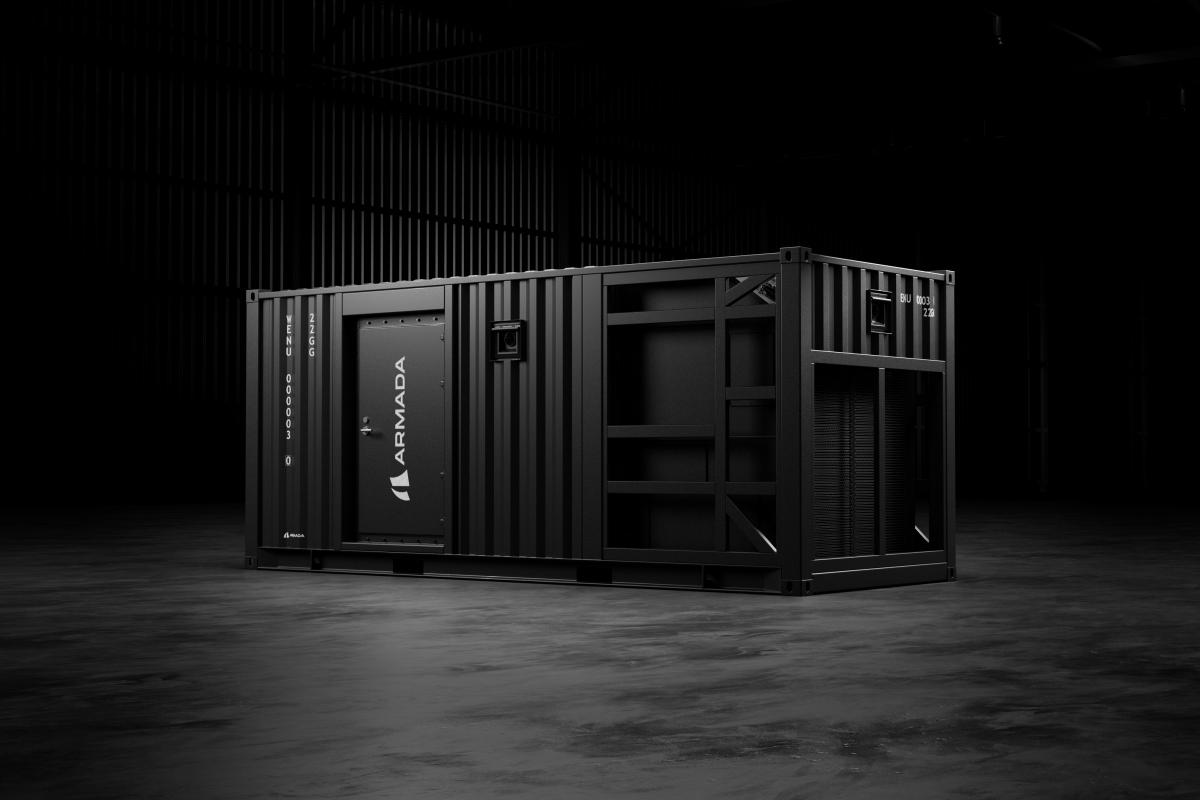
Armada, a US provider of modular edge data centres and connectivity for remote sites, plans to work with Johnson Controls, a global provider of smart building technologies, to build 500MW of distributed sovereign super intelligence (SI) infrastructure in 2027, using factory-integrated systems based on NVIDIA’s DSX POD reference design and Vera Rubin platform. Announced at NVIDIA GTC, the collaboration will combine engineering, manufacturing, and deployment to deliver modular infrastructure with cabling, wiring, piping, and functional validation completed before shipment. Factory-built infrastructure aims to accelerate deployment The NVIDIA DSX POD reference design moves repeatable construction work from data centre sites into factories. Compute, networking, rack-level power, plumbing for liquid cooling, and supporting infrastructure are integrated and validated before delivery. On site, the containers are connected to prepared power, water, cooling, and networking infrastructure, with capacity expanded by adding standardised units. Armada will use NVIDIA DSX Air to simulate AI factories and validate its Bridge GPU management software before shipment. Once deployed, NVIDIA DSX MaxLPS will help manage power and workloads to maximise computing throughput within each site’s available power capacity. Dan Wright, co-founder and CEO of Armada, says, “The SI race isn't going to be won by whoever pours concrete the fastest. Companies and nations can have the chips, the land, the power, and the ambition and still be told to wait years for a building. "The NVIDIA DSX POD reference design lets us cut that wait out of the equation. We build the SI factory in one of our Galleon Forge factories, ship it, connect it, and our customers are generating tokens in months on infrastructure they own and control.” Distributed capacity for sovereign AI Armada says conventional 50MW facilities can take years to become IT-ready and require around 600,000 on-site labour hours. It also cites a projected construction workforce shortfall of 288,000 workers by 2027 as a challenge to expanding capacity. The company plans to deploy modular SI facilities close to energy sources, including stranded, renewable, and off-peak power. Its proposed architecture is designed to operate without cloud dependencies, allowing customers to retain control of their models, data, and infrastructure. Charlie Boyle, Vice President of DGX Systems at NVIDIA, notes, “The demand for compute is outpacing the speed at which the world can build the facilities to house it. "By utilising the NVIDIA DSX POD reference design, Armada can deliver factory-built, Vera Rubin-based containers to customers. Together with Johnson Controls, Armada is positioned to bring Vera Rubin-based factories to customers who need capacity now, wherever their energy and data are.” Manufacturing partnership Armada brings experience deploying modular data centre infrastructure in remote and challenging environments, including Alaska, a US Navy littoral combat ship, and desert locations in the Middle East. The company says its manufacturing and deployment capabilities will support the planned rollout, with Johnson Controls contributing thermal management technology, engineering, and global manufacturing capacity. Joakim Weidemanis, CEO of Johnson Controls, comments, “NVIDIA is rapidly advancing the age of intelligence and reshaping the infrastructure required to support it. "Our collaboration with Armada combines their expertise in deploying compute at the edge with Johnson Controls' advanced thermal management technology, engineering capabilities, and global manufacturing scale. This combination delivers high-performance infrastructure engineered to quickly bring capacity online where and when it's needed.” Under the collaboration, NVIDIA will design, test, and validate the DSX POD reference design for the Vera Rubin platform, whilst Armada will engineer, manufacture, integrate, customise, service, and deliver the modular data centres.

JSM completes 110kV substation at Berlin data centre
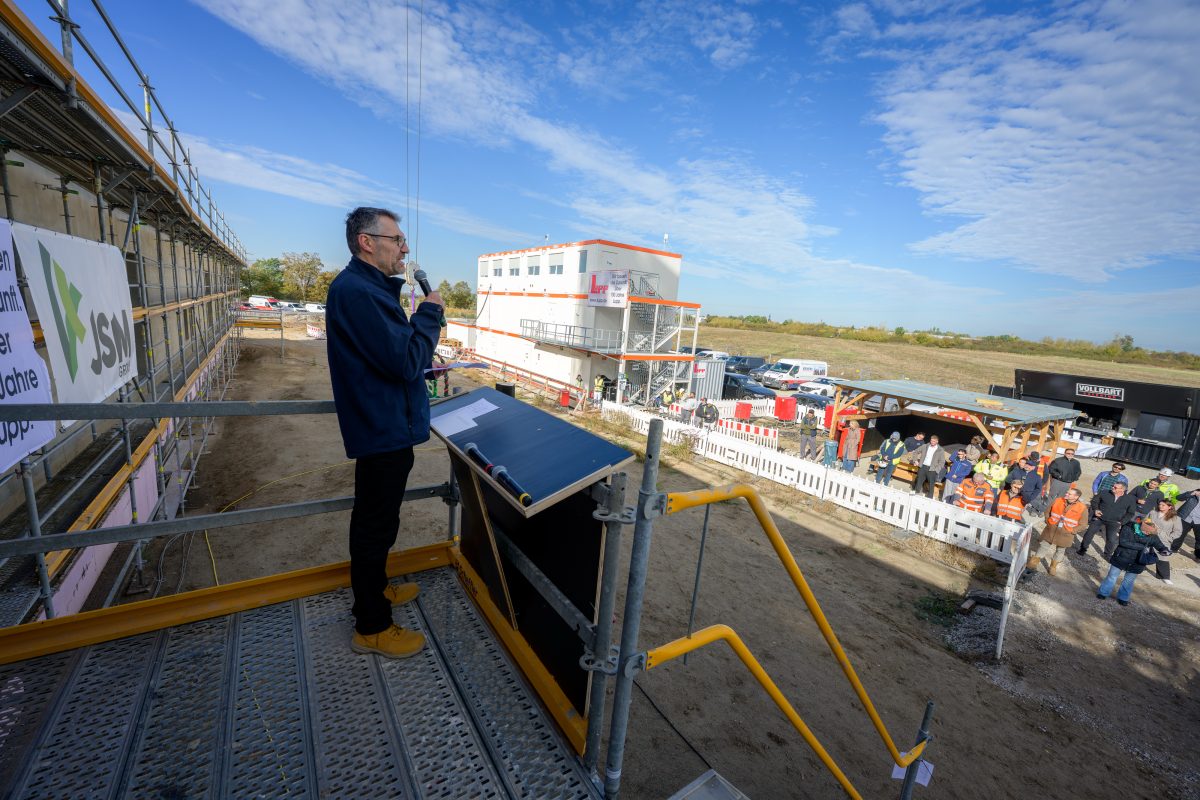
JSM Services, part of utility infrastructure provider JSM Group, has completed the structural works on a 110kV substation at maincubes’ mainHub data centre campus in Nauen, near Berlin, six months after construction began. The topping-out ceremony took place on 13 October and marks progress on the power infrastructure for the campus. As general contractor, JSM is delivering the 200MVA substation and an approximately 6km high-voltage cable route connecting the campus to the Wustermark substation. The project is JSM’s first in Germany. Construction began at the end of February, but ground investigations found topsoil up to 3m deep, compared with the expected 1m. Around 4,200m³ of soil was replaced to provide a secure foundation. During summer temperatures of up to 41°C, concrete pours were scheduled for the early hours to maintain progress. The substation incorporates around 250 tonnes of structural steel embedded in concrete and approximately 3,500m² of precast walls and ceilings. An 11m-span ceiling in the central block was lifted into place in a single day. Peter Östlund (pictured above), Managing Director of JSM Services, says, “Today, there is no longer a wooden roof truss here, but concrete and steel. Yet, the essence of a topping-out ceremony remains the same: it is a celebration of gratitude towards the people who built it. "10 design firms, 14 companies, and even more suppliers have worked together on this building. Despite its comparatively small size, it is highly complex, and every one of them has played their part in getting us here.” Cable route works progress in parallel The substation will house four transformers, each weighing just under 70 tonnes. The installation of building services is scheduled to begin at the end of October, followed by the delivery of the transformers. Work on the cable route is progressing across four construction phases. More than 27km of protective conduit has been laid, around 14,000m³ of cable trench excavated, and more than 3,000 tonnes of asphalt removed. 10 horizontal boreholes are planned to cross the L161 and B5 roads. The project has also involved managing archaeological finds, crossing existing water and gas pipes and other utilities, and protecting trees and wildlife. JSM reports that around 18,000 working hours have been completed at the substation and a further 6,200 on the cable route, totalling approximately 24,000 hours without an accident resulting in lost time or serious injury. Thomas Wacker, Chief Development Officer at maincubes, comments, “The topping-out of the substation marks an important milestone in the development of mainHub Berlin and brings us one step closer to delivering the infrastructure needed to support the campus. "A reliable power supply is fundamental to the long-term success of any data centre, and we are pleased to see this critical element taking shape on schedule. The progress achieved in just six months is a testament to the commitment and expertise of everyone involved. "We look forward to the next phase as we continue to bring our vision for mainHub Berlin to life.” The Nauen development expands maincubes’ presence in the Berlin region, building on the operation of its existing BER01 data centre. For more from JSM, click here.

ORCA launches PT-3 photonic quantum computer
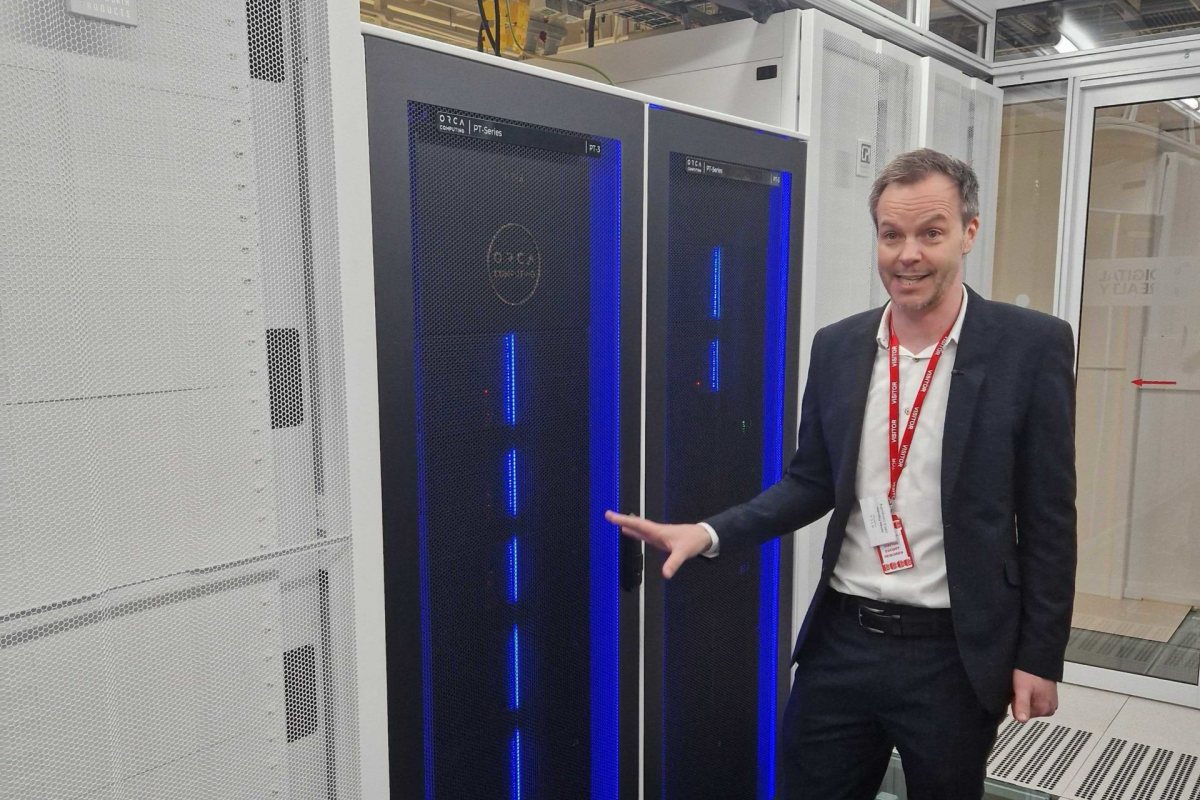
ORCA Computing, a London-based developer of photonic quantum computers for data centres, has launched PT-3, a photonic quantum computer designed to deliver commercial quantum advantage. The first system is operational at Digital Realty’s Innovation Lab in London, where it runs alongside NVIDIA accelerated computing. ORCA says PT-3 works alongside graphics processing units (GPUs) to increase the expressivity of AI models, helping them learn from limited training data and identify candidates for new drugs and materials. The system has generated results using a hybrid quantum-classical extension of NVIDIA’s Proteína generative protein-design model. Trained using 32 NVIDIA Hopper GPUs and a PT-3 system operating with 64 photons in 128 qumodes, the model improved the ratio of useful proteins by 20% compared with a classical baseline. It also generated novel proteins with a different mix of secondary structures. These results build on earlier work using ORCA’s PT-2 system with the Technical University of Denmark, which produced around twice as many strong peptide binders as classical AI, validated in laboratory testing, and generated 49% more valid, unique molecules on the QM9 benchmark. Faster optimisation workflows PT-3 is also being used for industrial optimisation, including energy scheduling. In work involving JIJ and the UK’s National Quantum Computing Centre, the system ran a hybrid quantum-classical workflow for a 25,755-variable unit commitment problem in about an hour. ORCA says this is more than 12 times faster than its predecessor at the same solution quality. The associated whitepaper found that the hybrid solver produced results competitive with a commercial optimisation solver and, with additional runtime, found the best solutions among the methods tested. Richard Murray, co-founder and CEO of ORCA Computing, comments, “By integrating our photonic quantum computer with NVIDIA accelerated computing, we have taken a critical first step in the future of hybrid quantum supercomputing. "The PT-3 is already delivering results in AI for science and industrial optimisation, from protein design to energy scheduling. Through Digital Realty, enterprise users can now put it to work on their most challenging workloads, and customers are trialling use cases in life sciences, defence, energy, and logistics.” Sam Stanwyck, Director of Quantum Product at NVIDIA, adds, “With the PT-3, ORCA is bringing photonic quantum computing and NVIDIA accelerated computing together in a system researchers can use to develop and test new applications. "The value of a computing platform is in what researchers build on it. ORCA’s extension of NVIDIA’s Proteína model to generate a different range of protein structures with improved designability is a great example of what can be accomplished when these tools come together.” Séamus Dunne, Managing Director, UK and Ireland at Digital Realty, says, “Our partnership with ORCA reflects a shared ambition to make quantum computing practical for business. "Hosting the PT-3 in the DRIL gives us a real-world environment to explore how quantum can deliver value today, and it’s a significant step towards commercial quantum advantage at scale.”

Colt DCS, RMZ begin construction of 64MW Mumbai data centre
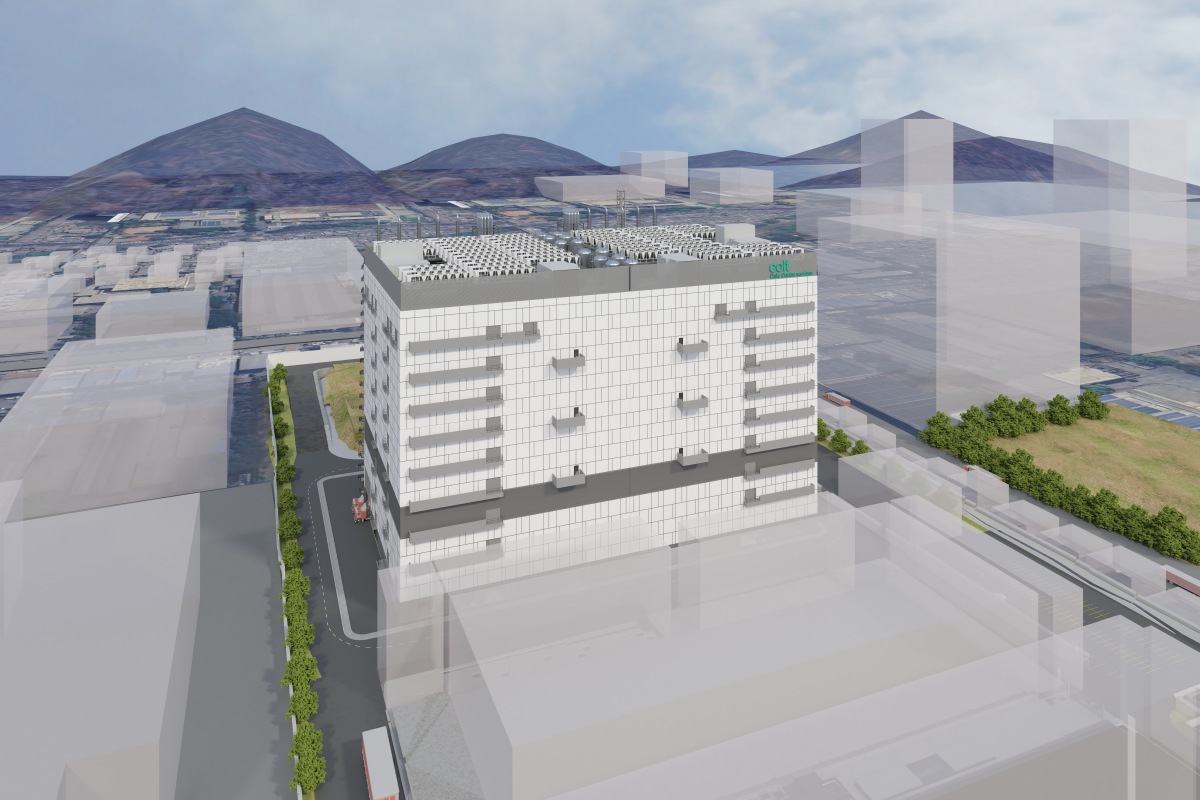
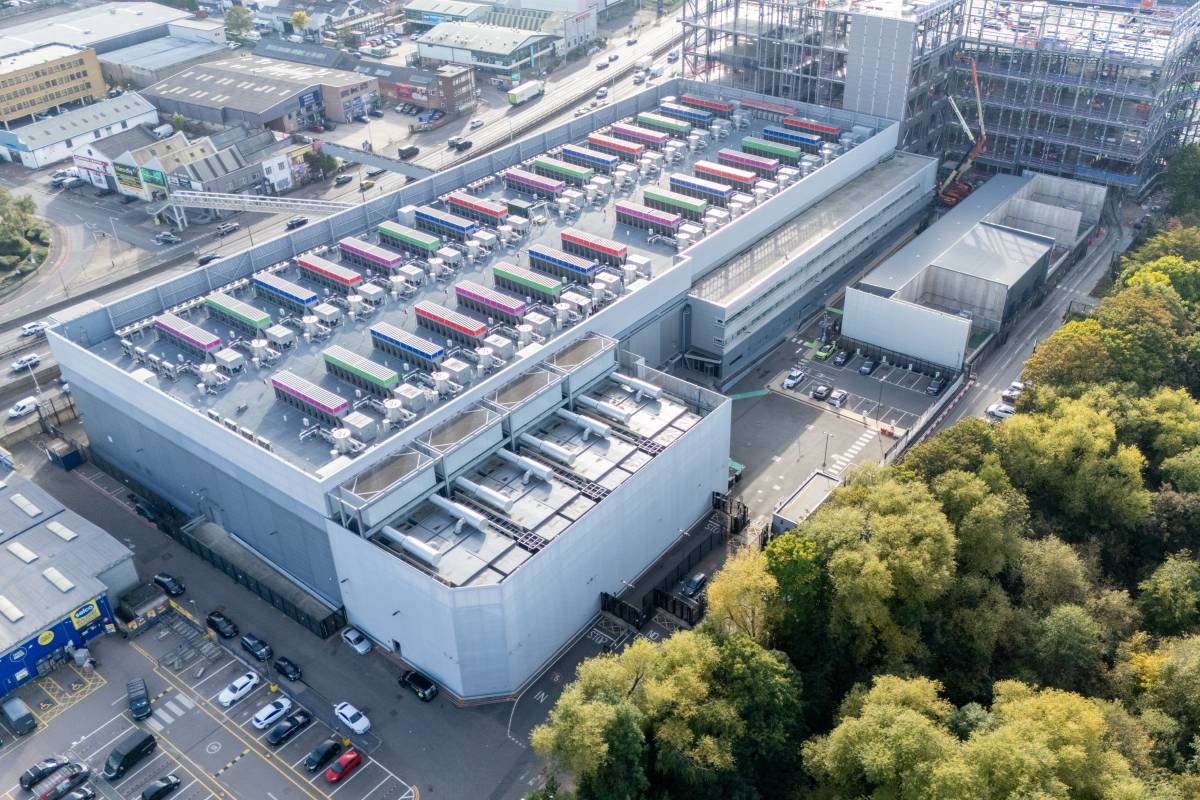
Colt Data Centre Services (Colt DCS), a hyperscale and colocation data centre operator, and RMZ, an Indian real estate and digital infrastructure group, have begun construction of Mumbai 3, a 64MW data centre at the Navi Mumbai campus in India. The AI-ready facility follows the signing of the campus's first hyperscale customer contract and is fully pre-let. The project is part of a joint venture announced in 2024, under which the companies committed to invest $1.7 billion (£1.2 billion) in India’s data centre market. Ground preparation began in December 2025. Mumbai 3 will combine air cooling with direct liquid-to-chip cooling to support AI and high-performance computing workloads. The facility will also have an on-campus 220kV gas-insulated switchgear (GIS) substation and carrier-neutral connectivity with access to high-capacity fibre routes. Pratap Mane, Country Head DCS, India, says, “The nature of data centre demand is evolving rapidly, with customers requiring larger deployments, higher rack densities, and infrastructure capable of supporting increasingly intensive AI workloads. Mumbai 3 is designed to address these needs, further strengthening our Navi Mumbai Campus as a scalable and future-ready digital infrastructure platform. "Built with AI readiness at its core, the facility incorporates advanced cooling capabilities, including liquid cooling, and enhanced power infrastructure to support high-density deployments. This enables customers to efficiently scale next-generation AI and high-performance computing workloads while maintaining operational resilience and efficiency.” Renewable energy and local jobs The facility is planned to operate on 100% renewable energy and use a closed-loop cooling system designed to produce near-zero wastewater from the cooling process. The project is expected to create more than 700 jobs across construction and operations whilst supporting local suppliers and contractors. Mumbai 3 will join the existing Mumbai 1 and Mumbai 2 facilities at the campus. Once complete, it will increase the site’s operational capacity to 86MW, with potential for the campus to reach 148MW at full development. Deepak Chhabria, President, RMZ Digital Infrastructure, comments, “The next wave of digital growth will be driven by infrastructure that brings together scale, resilience, and speed to market. "At Mumbai 3, we are developing a future-ready campus designed to enable hyperscalers and neo-cloud providers to scale seamlessly as their capacity and computing needs evolve. "This investment reinforces our commitment to building advanced data centre and AI infrastructure that meets global standards and supports the rapidly evolving demands of the digital economy.” The joint venture has committed to developing 250MW of data centre capacity across Mumbai and Chennai. For more from Colt DCS, click here.

1.3GW solar farm and 1GW data centre proposed in Norfolk
EPL Norfolk, a subsidiary of UK-based independent energy developer Evolution Power, has announced plans for Longmarsh Green Energy, a proposed 1.3GW solar farm and battery project alongside a 1GW data centre campus near King’s Lynn in west Norfolk. A community consultation on the proposal is set to run from 15 October to 26 November 2026. The project comprises two sites: one northeast of Tilney St Lawrence and another near Fincham and Barton Bendish. The development would connect to the existing transmission network substation at Walpole, with a connection date expected in 2031. The proposed data centre campus is expected to attract more than £25 billion in regional investment. According to EPL Norfolk, it would create thousands of construction jobs, more than 500 direct operational roles, and support a further 1,500 jobs. Renewable power and regional investment The company says the combination of local offshore wind generation and 1.3GW of colocated solar capacity would allow the campus to be powered predominantly by locally sourced renewable energy. It also proposes a closed-loop cooling system that recirculates liquid rather than continually drawing water from mains supplies. A spokesperson for the project says, “Longmarsh Green Energy would bring significant local and national economic benefits, providing secure renewable energy and data centre capacity, both of which are critical for future UK economic growth. "Our design includes measures and commitments to reduce local effects, and we welcome feedback on these, together with suggestions regarding how the project could support local community projects and initiatives.”

Pure DC completes final transformer installation at LON01
Pure Data Centres Group (Pure DC), a designer, developer, and operator of hyperscale data centres, has installed the third and final power transformer at its 90MW LON01 data centre campus in North London, bringing the substation’s total capacity to 150MVA. The 75MVA transformer, manufactured by Hitachi, will supply power to the campus’s B1 and B2 buildings. Energisation is planned for later this month, completing the dedicated power system serving the campus. LON01 is being developed to support cloud computing and AI inference workloads, using a closed-loop liquid cooling system designed for high-density computing. Specialist lifting system overcomes site constraints Installing the transformer presented a logistical challenge because restricted space around the live substation prevented the use of a conventional 500-tonne crane. The project team instead designed and deployed a specialist gantry system with a lifting capacity of 1,000 tonnes to move the transformer into position. The lift took four hours and involved Pure DC’s project team, MGE Group, logistics partners, and specialist suppliers. The operation reportedly followed extensive preparation, including route planning, road closures, and local authority approvals. The installation completed an 18-month programme that began with manufacturing in Colombia in March 2025. Following factory testing in June 2026, the transformer was transported by sea to the UK before being delivered to the campus. Once B2 is complete, the building will feature a living wall comprising more than 750,000 plants. Pure DC says the installation is intended to reduce noise and air pollution and encourage biodiversity, including insects and birds, near Brent Reservoir’s Site of Special Scientific Interest (SSSI). For more from Pure DC, click here.


Translate »