Data Centre Projects: Infrastructure Builds, Innovations & Updates


Rethinking infrastructure for the AI era
In this exclusive article for DCNN, Jon Abbott, Technologies Director, Global Strategic Clients at Vertiv, explains how the challenge for operators is no longer simply maintaining uptime; it’s adapting infrastructure fast enough to meet the unpredictable, high-intensity demands of AI workloads: Built for backup, ready for what’s next Artificial intelligence (AI) is changing how facilities are built, powered, cooled and secured. The industry is now facing hard questions about whether existing infrastructure, which has been designed for traditional enterprise or cloud loads, can be successfully upgraded to support the pace and intensity of AI-scale deployments. Data centres are being pushed to adapt quickly and the pressure is mounting from all sides: from soaring power densities to unplanned retrofits, and from tighter build timelines to demands for grid interactivity and physical resilience. What’s clear is that we’ve entered a phase where infrastructure is no longer just about uptime; instead, it’s about responsiveness, integration, and speed. The new shape of demand Today’s AI systems don’t scale in neat, predictable increments; they arrive with sharp step-changes in power draw, heat generation, and equipment footprint. Racks that once averaged under 10kW are being replaced by those consuming 30kW, 40kW, or even 80kW - often in concentrated blocks that push traditional cooling systems to their limits. This represents a physical problem. Heavier and wider AI-optimised racks require new planning for load distribution, cooling systems design, and containment. Many facilities are discovering that the margins they once relied on - in structural tolerance, space planning, or energy headroom - have already evaporated. Cooling strategies, in particular, are under renewed scrutiny. While air cooling continues to serve much of the IT estate, the rise of liquid-cooled AI workloads is accelerating. Rear-door heat exchangers and direct-to-chip cooling systems are no longer reserved for experimental deployments; they are being actively specified for near-term use. Most of these systems do not replace air entirely, but work alongside it. The result is a hybrid cooling environment that demands more precise planning, closer system integration, and a shift in maintenance thinking. Deployment cycles are falling behind One of the most critical tensions AI introduces is the mismatch between innovation cycles and infrastructure timelines. AI models evolve in months, but data centres are typically built over years. This gap creates mounting pressure on procurement, engineering, and operations teams to find faster, lower-risk deployment models. As a result, there is increasing demand for prefabricated and modular systems that can be installed quickly, integrated smoothly, and scaled with less disruption. These approaches are not being adopted to reduce cost; they are being adopted to save time and to de-risk complex commissioning across mechanical and electrical systems. Integrated uninterruptable power supply (UPS) and power distribution units, factory-tested cooling modules, and intelligent control systems are all helping operators compress build timelines while maintaining performance and compliance. Where operators once sought redundancy above all, they are now prioritising responsiveness as well as the ability to flex infrastructure around changing workload patterns. Security matters more when the stakes rise AI infrastructure is expensive, energy-intensive, and often tied to commercially sensitive operations. That puts physical security firmly back on the agenda - not only for hyperscale operators, but also for enterprise and colocation facilities managing high-value compute assets. Modern data centres are now adopting a more layered approach to physical security. It begins with perimeter control, but extends through smart rack-level locking systems, biometric or multi-factor authentication, and role-based access segmentation. For some facilities - especially those serving AI training operations - real-time surveillance and environmental alerting are being integrated directly into operational platforms. The aim is to reduce blind spots between security and infrastructure and to help identify risks before they interrupt service. The invisible fragility of hybrid environments One of the emerging risks in AI-scale facilities is the unintended fragility created by multiple overlapping systems. Cooling loops, power chains, telemetry platforms, and asset tracking tools all work in parallel, but without careful integration, they can fail to provide a coherent operational picture. Hybrid cooling systems may introduce new points of failure that are not always visible to standard monitoring tools. Secondary fluid networks, for instance, must be managed with the same criticality as power infrastructure. If overlooked, they can become weak points in otherwise well-architected environments. Likewise, inconsistent commissioning between systems can lead to drift, incompatibility, and inefficiency. These challenges are prompting many operators to invest in more integrated control platforms that span thermal, electrical, and digital infrastructure. The goal is now to have the ability to see issues and to act quickly - to re-balance loads, adapt cooling, or respond to anomalies in real time. Power systems are evolving too As compute densities rise, so too does energy consumption. Operators are looking at how backup systems can do more than sit idle: UPS fleets are being turned into grid-support assets. Demand response and peak shaving programmes are becoming part of energy strategy. Many data centres are now exploring microgrid models that incorporate renewables, fuel cells, or energy storage to offset demand and reduce reliance on volatile grid supply. What all of this reflects is a shift in mindset. Infrastructure is no longer a fixed investment; it is a dynamic capability - one that must scale, flex, and adapt in real time. Operators who understand this are the best placed to succeed in a fast-moving environment. From resilience to responsiveness The old model of data centre resilience was built around failover and redundancy. Today, resilience also means responsiveness: the ability to handle unexpected load spikes, adjust cooling to new workloads, maintain uptime under tighter energy constraints, and secure physical systems across more fluid operating environments. This shift is already reshaping how data centres are specified, how vendors are selected, and how operators evaluate return on infrastructure investment. What once might have been designed in isolated disciplines - cooling, power, controls, access - is now being engineered as part of a joined-up, system-level operational architecture. Intelligent data centres are not defined by their scale, but by their ability to stay ahead of what’s coming next. For more from Vertiv, click here.

Telehouse breaks ground on new London data centre
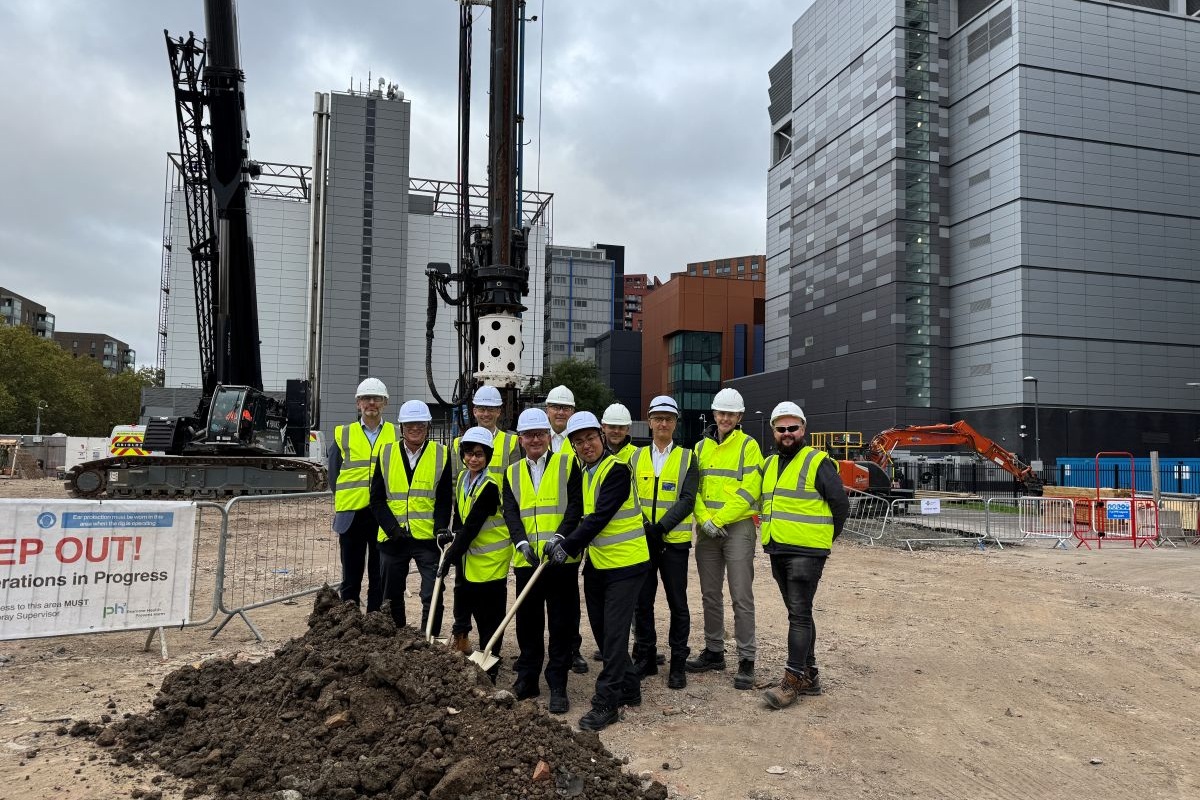
Telehouse International Corporation of Europe, a global data centre service provider and subsidiary of telecommunications company KDDI Corporation, has today broken ground on the new Telehouse West Two data centre at its existing London Docklands campus - which Telehouse says is the most connected data centre campus in Europe. The £275m investment in the new data centre is set for completion in 2028. Flynn Management & Contracting, an international construction and fit-out company, will work with Jones Engineering Group, specialists in mechanical, electrical, and fire protection, to deliver the project. Strategically located close to London’s financial district, the new facility will be purpose-built to support the rapid adoption of emerging technologies such as AI. The new facility will integrate both air and liquid cooling technologies to meet growing demand for high density compute environments, allowing customers to scale without compromise. Telehouse West Two will offer two meet-me rooms and four dedicated secure connectivity risers. Designed with sustainability, resiliency, and security at its core, Telehouse West Two will offer uptime guarantees of 99.999% to ensure uninterrupted operations for customers. The data centre has been designed to BREEAM Excellent standards, indicating a high level of environmental performance against a widely recognised sustainability assessment for buildings. 100% renewable energy will power its operations. The new facility will deliver exceptional efficiency with very low WUE and PUE, while also supporting sustainability objectives with heat recovery potential and HVO-fuelled backup generators. The new data centre represents a significant step in Telehouse’s long-term strategy to expand its presence in London, where it has maintained a presence for more than 35 years. This latest development in London strengthens Telehouse’s global growth trajectory, meeting the rising demand for advanced digital infrastructure and empowering enterprises to accelerate their digital transformation. Kenkichi Honda, Managing Director at Telehouse Europe, says, “The new Telehouse West Two site marks another important step in our ongoing mission to deliver world-class, sustainable digital infrastructure. This expansion will empower digital transformation for enterprise clients across multiple sectors, enabling them to benefit from emerging technologies which are shaping the future world, while supporting the uncompromising need for energy efficiency and carbon neutrality.” The nine-storey building will cover a total gross area of 32,000m², including 11,292m² of white space across six levels, on floor customer storage and plant areas. With flexibility central to the design, the layout will incorporate associated switchgear, UPS systems, chilled water cooling, and a floor-by-floor ventilation plant to support a wide range of customer requirements. The site will also be powered by two new 132kV substations which will provide 11kV across the wider campus, enabling an overall building capacity of 33MW. Each floor will be capable of delivering up to 4.4 megawatts (MW) of power capacity ensuring the resilience and scalability required for future growth. To ensure the highest levels of protection, the facility will be equipped with multi-layered physical security and advanced threat detection, including 24/7 surveillance, on-site security personnel, and real-time incident response protocols. Kevin Flynn, CEO of Flynn Management & Contracting, comments, “We’re proud to have once again been appointed by Telehouse for a new building project. Our team is ready to deliver on the company’s vision for a data centre that meets the ever-growing digital needs of companies, and it’s a great opportunity for us to further enhance our presence in the capital’s data centre market.” Brendan McAtamney, Group Director, Jones Engineering Group, adds, “We’re delighted to work with Flynn Management & Contracting on the engineering and installation of services to Telehouse West Two. This is a fantastic opportunity for us to work on a major data centre project in the heart of London, and we’re looking forward to getting started.” For more from Telehouse, click here.

Pressing challenges impacting the future of US data centres
In this exclusive article for DCNN, Matt Coffel, Chief Commercial and Innovation Officer at Mission Critical Group (MCG), explores how growth in the US data centre market is being affected by increasing challenges, demanding new levels of collaboration and innovation across the sector: An increasingly omnipresent industry Data centres and related facilities are everywhere today. Synergy Research Group states hyperscalers account for 44% of those facilities worldwide, while non-hyperscale colocation and on-premise account for 22% and 34% respectively. They also project that by 2030, hyperscalers will account for 61% of all data centres and related facilities. While there are no definitive estimates on how many of these facilities will be constructed in the US in the coming years, planning and development in the country are happening faster than ever before. Take, for example, the recent developments in Pennsylvania regarding investment in data centres and other technology infrastructure to support AI, including significant investments from Amazon and CoreWeave. With AI adoption surging and data generation accelerating in sectors like healthcare, financial services, and the federal government, the number of data centres is only set to grow. But as demand rises, so too do the obstacles. Data centre operators and their partners face mounting challenges that threaten timelines, drive up costs, and complicate efforts to scale efficiently - and there are no easy fixes. Persistent and critical challenges When it comes to the construction of a data centre, there are many factors to consider. However, four factors have emerged as critical challenges for data centre operators and their partners: permitting, power, skilled talent, and compute. 1. Regulation: Securing permits to build and operate Even as demand for compute and power accelerates, operators are forced to navigate lengthy and often inconsistent approval processes. In some jurisdictions, permitting can take two to three years before projects can even break ground. These delays put US developers at a disadvantage compared to countries with more streamlined regulatory systems. The challenge is compounded by the sheer scale of today’s facilities. Projects promising multiple gigawatts of capacity require not only land and power, but also regulatory sign-off on issues such as environmental impact, emissions, and noise. These reviews often involve multiple parties - utilities, consultants, environmental specialists, and local governments - which makes coordination slow and uncertain. Moreover, the difficulty varies widely by location. In cities like Austin in Texas, approvals can be tough to secure, while just miles outside the city limits, the process may move much faster. 2. Time to power According to the International Energy Agency’s (IEA) Energy and AI report, “Power consumption by data centres is on course to account for almost half of the growth in electricity demand between now and 2030 in the US.” This rising demand is evident in Northern Virginia, where a large cluster of data centres has been built over the past twenty years. With this cluster of data centres in a single area, along with the demands from AI and data processing loads, power substations have reached maximum capacity. This has forced utility providers and data centre operators to either bring in new lines from distant locations - where there is excess power, but transmission infrastructure is lacking - or to build new data centres in rural areas so they can access untapped power. Yet, building new transmission lines from other locations or setting up data centres can take years and doesn’t address the current power demand. 3. Access to skilled talent to support current and future projects Data centre operators and their partners are working to build new facilities across the US, often in remote parts such as Western Texas, where they can access untapped power sources. Building in these areas introduces several challenges related to skilled labour. Building and maintaining a data centre requires highly skilled electricians, mechanics, and controls specialists who can handle complex electrical and mechanical systems and often on-site power generation. However, the US faces a nationwide shortage of these workers. The US Bureau of Labor Statistics forecasts that employment for electrical workers will grow by 11% from 2023 to 2033 - a much faster rate than the average for all jobs. Still, many electricians are nearing retirement and set to leave the field in the coming years. This is likely to create a gap that operators will find difficult to fill as they work to build and keep their facilities running. Additionally, data centre operators and their partners face the reality that many skilled workers are unwilling to live far from population centres. Recent estimates from Goldman Sachs Research underscore the scale of this challenge. It projects that the US will require 207,000 more transmission and interconnection workers and 300,000 extra jobs in power technologies, manufacturing, construction, and operations to support the additional power consumption needs projected for the US by 2030. This dual challenge of labour scarcity and logistical complexity is making traditional, on-site construction methods increasingly untenable. As a result, the industry is pivoting towards prefabricated, modular power solutions that are engineered and assembled in a controlled factory environment. This approach mitigates the impact of localised labour shortages by capitalising on a centralised, highly skilled workforce and deploying nearly complete, pre-tested power modules to the remote data centre location for rapid and simplified final installation. 4. The accelerating pace of change in compute technology The speed at which compute technology is evolving has reached an unprecedented level, putting enormous pressure on data centre operators and their partners. Moore’s Law is no longer the standard; today’s compute configurations are far more advanced than ever before, with denser platforms being released every 12 to 18 months. This rapid cycle forces operators to rethink how they design and future-proof facilities - leveraging concepts such as modularisation - as infrastructure built just a few years ago can quickly fall behind. The need for collaboration Each of these challenges is significant on its own, but together they mark one of the most complex periods in the history of infrastructure development. To move forward, data centre operators, utilities, manufacturers, technology providers, and government agencies must work closely to identify solutions and provide support for each obstacle. On the skilled labour front, companies outside the manufacturing space are also contributing. Earlier this year, Google pledged support to train 100,000 electrical workers and 30,000 new apprentices in the US. This funding was awarded to the electrical training ALLIANCE (etA), the largest apprenticeship and training program of its kind, founded by the International Brotherhood of Electrical Workers and NECA. State leaders are playing a role as well. In Pennsylvania this summer, for example, the governor and other legislators have demonstrated strong support for data centre growth. MCG, a manufacturer and integrator of power and electrical systems, is one example of how industry players are stepping up. MCG designs, manufactures, delivers, and services systems tailored for data centre operators and other mission critical environments. In collaboration with operators and other equipment and technology providers, MCG produces modular power systems that are built off-site to ease workforce constraints. These systems are then delivered directly to data centres or their power facilities, where the MCG team commissions and maintains them. With efforts from government officials, companies like MCG and Google, and other stakeholders, the US data centre industry can continue powering the digital future - no matter how much demand for power and compute increases. For more from Mission Critical Group, click here.

London's data centres could heat 500,000 homes
According to a new report from global infrastructure company AECOM, London’s data centres are releasing enough waste heat to warm up to half a million homes each year, yet much of this potential energy is being lost to the atmosphere. Commissioned by the Greater London Authority (GLA) and conducted in partnership with asset management and commercial consultants HermeticaBlack, the study reveals that up to 1.6 terawatt-hours of heat could be recovered each year from the capital’s data centre estate - equivalent to meeting all the heating and hot water needs for all homes in Ealing. The report - Optimising Data Centres in London: Heat Reuse - identifies opportunities to adjust planning and infrastructure policy to unlock this potential for London and sets out recommendations including updated planning guidance, targeted infrastructure incentives, and a standardised framework for activating heat offtake from data centre operators. This includes making sure the designs for all future data centres optimise the ability to re-use waste heat. The potential of heat recovery The uptake of heat recovery in London is currently limited, but AECOM’s report identified cities around the world, including Geneva, that are utilising as much as 95% of the heat recovered from a data centre. The infrastructure consultant says that UK cities, including London, have an opportunity to heat new homes with clean, affordable energy. The report estimates, based on the quantum of heat being currently lost, there is the potential to heat up to half a million homes. When this model was tested across London’s data centre dataset, it evidenced the network could provide enough heat to supply around 350,000 homes. With more than one in eight London households in fuel poverty, and the UK still heavily reliant on gas boilers for home heating, the report highlights the social as well as environmental case for change. Data centres - often located in densely populated parts of East and West London - offer a local, low-carbon source of heat for nearby homes, schools, and public buildings. The added value of data centres Data centres are critical to catering for the increasing demand for AI and high-performance computing. The computing power required generates higher server temperatures, creating higher-grade waste heat more viable for reuse. Asad Kwaja, Associate Director, Sustainability & Decarbonisation Advisory at AECOM, says, “The UK needs complex digital infrastructure to enable its ambitions to become a leader in AI. "Data centres lie at the heart of this conversation, but we must consider their wider use if they are going to play an integral part of the UK’s infrastructure landscape. Data centres should no longer be considered as just an energy consumer; they can become a part of the whole energy ecosystem. “London is one of the biggest data centre hubs across Europe, the Middle East, and Africa, and hosts 80% of the UK’s capacity. With the right planning, coordination, and investment, London’s data centres could play a pivotal role in decarbonising the heat needed to power the influx of new homes the capital needs to build to address the housing crisis, while also cutting bills for existing residents and improving local energy resilience.” A scheme to capture the waste heat from data centres is already underway in North West London. In 2023, the Old Oak and Park Royal Development Corporation (OPDC) secured £36 million in funding from the government to deliver a heat network, developed by AECOM, to serve 95 gigawatt-hours annually, recovering heat from up to three data centres.

Planera secures $8m to support data centre expansion
Planera, a US provider of construction scheduling and planning software, has announced an additional $8 million (£6 million) in funding to expand its work within the data centre construction sector. The company, which develops collaborative scheduling software for construction projects, says the funding will support wider adoption among contractors and subcontractors involved in complex data centre builds. The latest investment follows the company’s 2024 Series A round and brings total funding to $26.5 million (£19.9 million). According to Planera, the new capital will be used to enhance its platform and deepen engagement with data centre clients. Supporting large-scale construction projects Planera says it has developed tailored services for data centre contractors, supported by a dedicated team with experience in mission-critical construction. The company has also introduced new AI tools designed to identify potential schedule risks earlier and improve project delivery timelines. Current customers include: • HITT Contracting, which uses Planera to improve visibility on data centre project progress and accelerate delivery. • Ralph L. Wadsworth (RLW), which employs Planera to coordinate complex builds for major technology clients, helping to improve collaboration and reduce schedule compression. • Ryan Companies US, which uses the platform for collaborative scheduling, subcontractor resource analysis, and integration with master schedules. Industry research highlights the scale of the sector’s growth, as Grand View Research estimates the global data centre market at around $347.6 billion (£261.7 billion) in 2024, rising to $652 billion (£490.9 billion) by 2030. Arizton reports that data centre construction will grow from $91.9 billion (£69.1 billion) in 2024 to more than $214 billion (£161.1 billion) by 2030, driven by investment in hyperscale and AI infrastructure. Nitin Bhandari, CEO of Planera, comments, “With data centre demand increasing worldwide, our customers need modern, collaborative scheduling tools that can match the scale and complexity of these projects. "This new funding will help us focus further on mission-critical work while continuing to support customers across other segments.” The funding round includes participation from Sorenson Capital, Sierra Ventures, Prudence, Brick and Mortar Ventures, Zachry Construction Corporation, and other industry investors. Ken Elefant, Managing Director of Sorenson Capital, suggests, “The adoption of AI is driving intense demand for new data centre capacity. Delays on large-scale projects can have significant financial implications and Planera is well positioned to help contractors deliver on time.” Ranjeet Gadhoke, Vice President of Project Controls at Zachry Construction Corporation, adds, “We use Planera across all our projects and have seen the value it brings to planning and scheduling. This investment reflects our confidence in the platform and its contribution to greater efficiency.” Todd Von Krosigk, Senior Superintendent at HITT Contracting, concludes, “To meet growing data centre demand, we require modern scheduling technology that can keep pace. Planera has become a key partner, giving our teams improved visibility and control.”

Fibre overlooked in UK, delaying 82% of DC projects
Neos Networks, a UK-based B2B connectivity provider, today revealed that 82% of UK data centre operators have delayed site builds or expansion due to fibre availability. 95% of these operators say that access to new, high-capacity fibre networks will now influence their expansion plans. The findings come from new research showing that, despite unprecedented government and enterprise momentum around data centre development and artificial intelligence (AI), fibre remains the critical bottleneck that could slow the UK’s digital growth. However, Neos says the industry is united on the solution: investment in new, high-capacity fibre backbones. The study, carried out in partnership with Censuswide, surveyed data centre operators, enterprise IT leaders and local government stakeholders. Across all three groups, there was a consensus that core fibre networks are the foundation of the UK’s AI infrastructure: • 89% of local government stakeholders report that fibre gaps have delayed infrastructure projects in their regions. • Almost half (45%) of enterprises cite fibre as the key bottleneck holding back AI and digital infrastructure. • Almost half (46%) of local government authorities say their region’s fibre infrastructure is not fully ready to support AI data centres. • One in six companies (16%) doubt the ability of the UK’s current fibre infrastructure to support their AI ambitions. Lee Myall, CEO of Neos Networks, comments, “Over the past decade, we’ve seen a huge amount of investment in last-mile fibre builds, but core fibre networks across the country have received much less attention. Without them, workloads cannot move between data centres, data cannot be trained, and investments stall. "The UK has the ambition, the demand and the regional readiness to lead in AI, but if we don’t address fibre gaps, we risk losing out on one of the greatest economic opportunities of our generation.” AI is reshaping data centre and digital strategy The UK government has set out its ambition to position the country as a global leader in AI, with initiatives such as AI Growth Zones in the AI Opportunities Action Plan central to this vision. The research shows these policies are already shaping investment and strategy across the ecosystem: • 96% of data centre operators say AI Growth Zones are influencing expansion and site selection, with 44% citing them as a strong influence. • 68% of enterprises view AI Growth Zones as a strong driver of change in their infrastructure planning. Importantly, this momentum is fuelling new growth corridors beyond London. While 23% of data centre operators still expect new investment in Greater London, a greater share pointed to the North of England and the Midlands (39%), signalling a shift towards regional hubs of AI activity. This diversification is mirrored in the way compute is being deployed. With data centre sites becoming more dispersed, almost all (97%) data centre operators expect up to half of their UK compute to move to the edge of the network by 2030, underlining the need for high-performance, resilient fibre across every region. But despite this momentum, concerns remain: • 41% of data centre leaders believe the UK’s fibre networks are only partially prepared to support regional AI workloads. • More than 70% of enterprises feel the UK’s attractiveness for data centre investment needs improvement (53%) or is lagging (17%). Unlocking opportunity through new fibre backbones The research highlights a path forward, with new fibre backbone projects critical to unlocking growth. Nearly all respondents agree that investment in high-capacity fibre corridors will transform confidence in the UK’s ability to attract and scale AI projects: • 95% of data centre operators, 96% of enterprises, and 96% of local authorities say new fibre corridors into underserved areas would positively impact AI and data centre growth. • More than half of local authorities (53%) believe such projects would be transformative for their regions. Lee concludes, “AI is no longer a future ambition; it’s here today, reshaping how businesses, communities, and governments operate. "But the UK cannot lead in AI on yesterday’s infrastructure and we need continued investment in the fibre backbones that connect every region of the country. "At Neos, we’re committed to building those foundations so the UK can not only keep pace, but compete and thrive in the global AI race.” For more from Neos Networks, click here.

CleanArc adds 300 MW to planned Virginia campus
CleanArc Data Centers, a US developer of renewable-energy-powered hyperscale data centre campuses, has acquired an additional 35.4 hectares of land to expand its flagship hyperscale data centre campus in Virginia. The expansion increases the site’s planned capacity from 600 MW to nearly 1 GW, supporting growing demand for scalable and energy-efficient digital infrastructure. The new development will deliver an extra 300 MW of critical power capacity, enhancing redundancy and long-term resilience for hyperscale clients. Expansion timeline and capacity growth The first 300 MW phase of the Virginia campus is scheduled to come online in the first quarter of 2027, followed by a second phase in 2030. The latest land acquisition enables a third 300 MW phase, currently planned for between 2033 and 2035. James Trout, founder and CEO of CleanArc Data Centers, comments, “Securing this additional land and substantially increasing our planned capacity positions CleanArc to meet the needs of the most demanding hyperscalers. "We’re ensuring our customers have the infrastructure they need to grow, innovate, and operate without limits today and well into the future. "Working closely with Caroline County, this expansion will support our customers’ growth while reinforcing our dedication to sustainability and making a positive, lasting impact on the local community.” Groundbreaking for the VA1 project is scheduled for the fourth quarter of 2025. For more from CleanArc Data Centers, click here.

Echelon announces new €3bn Milan data centre site
Echelon, a developer and operator of large-scale data centre infrastructure, has partnered with controlled affiliates of Starwood Capital Group to acquire a 37-acre site with grid power near Milan. Echelon says this investment marks the next step of its expansion into Continental Europe and follows the announcement of a €2 billion (£1.74 billion) joint venture (JV) with Spanish energy company Iberdrola to develop data centres in Spain. Development will begin immediately to create one of Italy’s largest data centre campuses. The site has electrical capacity of 250MVA gross power - 100MVA of which is available immediately through the existing onsite substation. Up to €3 billion (£2.6 billion) will be invested in the development of the LIN10 data centre campus. Industry comments Niall Molloy, CEO of Echelon, says, “Echelon is very pleased to partner with Starwood Capital to enter this new market. LIN10 has in place grid power, scale, and flexibility, which makes it one of the most attractive projects in Europe. "It is ready to build and offers exceptional opportunities for hyperscale operators. We expect to start construction imminently and have the facility operational in 18 to 24 months. Everyone at Echelon is delighted to have secured our first development site in continental Europe.” David Smith, Chief Investment Officer at Echelon, comments, “Entering the Italian market is another significant milestone on Echelon’s growth trajectory, and we are delighted to have made this strategic step. "We have a strong pipeline of exciting opportunities across Europe and expect to add additional markets over the next 24 months to continue to support the growth of our customers.” Maximilian Gentile, Senior Vice President at Starwood Capital, adds, “We believe in the fundamental growth drivers of the Milan data centre market. "Demand for data centre capacity continues to grow exponentially globally and this investment demonstrates Echelon’s commitment to delivering power and scale to help customers meet the requirements of an increasingly AI-driven digital economy.” Echelon currently has seven data centre facilities either operational or in development across Ireland, the United Kingdom, and Spain, with a combined capacity of approximately 1.25GW. The acquisition of LIN10 forms part of the company’s growth plans to develop an additional 1.5GW of capacity across new locations over the next five years. For more from Echelon, click here.

NorthC to build new data centre at uptownBasel campus
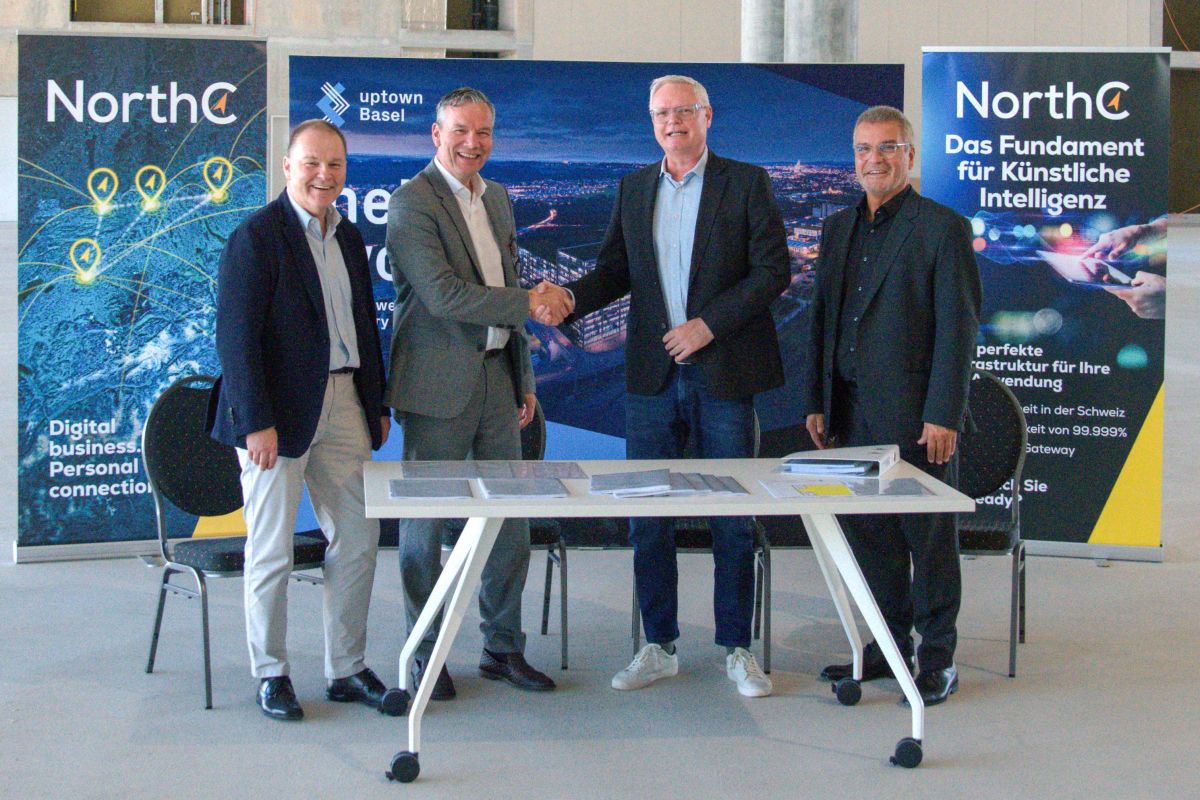
NorthC, a Dutch provider of sustainable data centre and colocation services, has signed an agreement to develop a regional data centre at the uptownBasel Innovation Campus in Arlesheim, Switzerland. The project expands NorthC’s existing collaboration with uptownBasel and will deliver a facility designed to support advanced technologies such as artificial intelligence, quantum computing, diagnostics, and personalised medicine. Construction is scheduled to begin around 18 months after planning approval, with operations expected to start by mid-2027. Sustainable design and regional focus In its first phase, the facility will cover 2,500 m² and provide 6 MVA of power capacity. It will be powered entirely by renewable energy, with backup systems running on green diesel, part of NorthC’s goal to achieve climate neutrality by 2030. The centre will also incorporate waste heat reuse for residential heating. Hans-Jörg Fankhauser, founder of uptownBasel, says, “With NorthC, we have a partner that shares our vision, one that understands the potential of operating a data centre on a globally recognised innovation campus.” Fankhauser adds that uptownBasel aims to be “a platform for leading networks in medical technology, quantum computing, artificial intelligence, and the future of work. We aim to attract startups and talent to Arlesheim early on in their journey.” NorthC already operates two facilities in nearby Münchenstein and says the new site will strengthen its role as an infrastructure provider for MedTech, Industry 4.0, and AI in the Basel region. With this development, the company will operate five data centres in Switzerland. Alexandra Schless, CEO of NorthC Group, comments, “We are very pleased to deepen our partnership with uptownBasel. The construction of this data centre underscores our continued commitment to Switzerland as a strategic location and reflects our belief in innovation and the future.” For more from NorthC, click here.

Zoho to open new UK data centre
Zoho, a provider of cloud-based business software and productivity tools, has announced it will open a new UK data centre in the first quarter of 2026. The announcement comes alongside 43% growth in the UK and a tripling of staff numbers over the past two years. The new facility will allow customers to retain data within the UK, addressing demand for greater data sovereignty, particularly in sectors such as financial services and the public sector. The company will also relocate its UK office from Bletchley to Milton Keynes in the same quarter to support further team expansion. Strengthening UK operations and compliance Zoho’s UK strategy is built around its Transnational Localism programme, which provides local teams to support customer needs and contribute to self-reliant regional economies. The latest growth expands its customer-facing staff across sales, support, and marketing. Sachin Agrawal, UK Managing Director of Zoho, says, "In a constantly moving landscape impacted by geopolitical tensions and economic instability we are focusing deeply on enhancing the customer experience we provide to our UK customer base. "We understand the shift to customers wanting to host their data within the boundaries of the UK, which is particularly important in industries such as the public sector and financial services. Data privacy and protection continue to be at the core of our operations and is enhanced further with our new data centre. "Investment in our new office space enables us to continue to strengthen our growing team, ensuring that we not only deliver the best software, but the best service and support from those with excellent local knowledge of the market." At its Zoholics Birmingham event, Zoho also confirmed new compliance features for UK customers. Zoho Books is now recognised by HMRC for Making Tax Digital (MTD) for Income Tax Self Assessment (ITSA), adding to its existing approval for VAT. From April 2026, this regulation will apply to sole traders with qualifying income above £50,000 and from April 2027 to those above £30,000.


Translate »