News


Huawei sets out its vision for intelligent data infrastructure
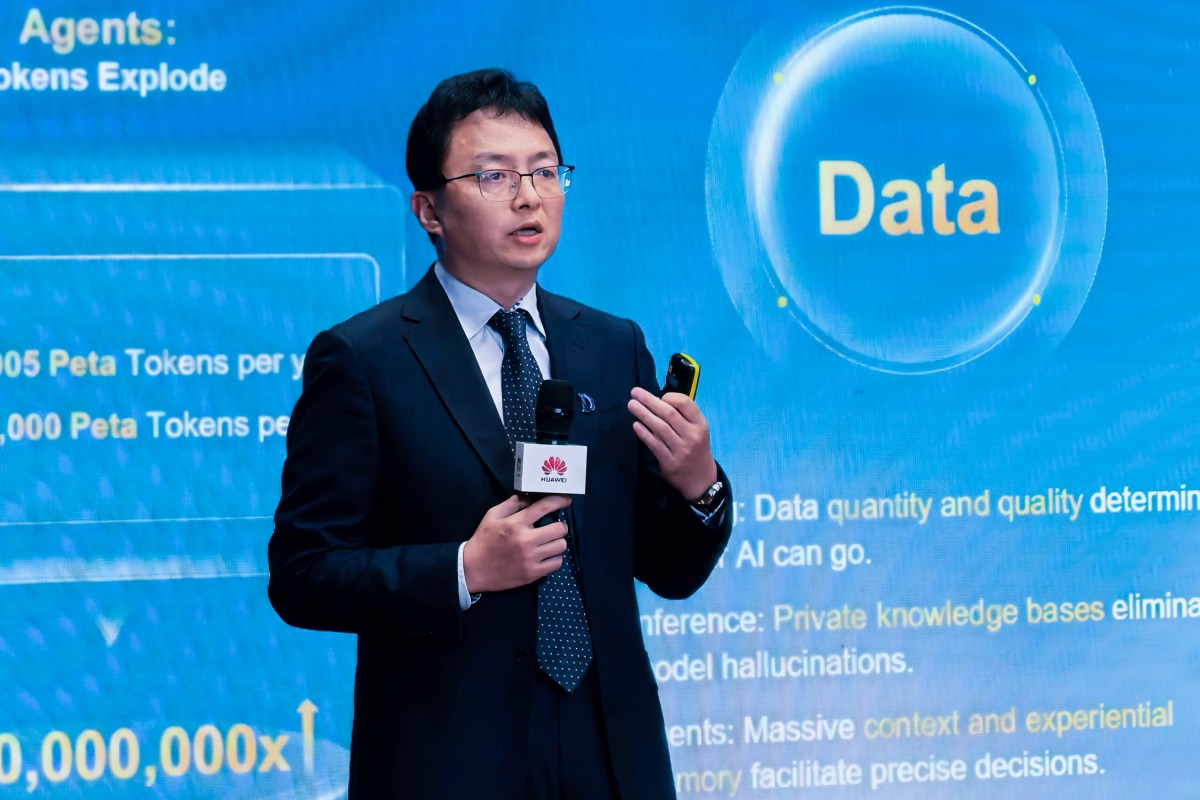
Speaking at Huawei Connect 2026 in Florence, Huawei's Data Storage leadership made the case that the AI race has entered a new phase, one where data quality and architecture - not raw compute - will determine which enterprises succeed. Florence, Italy, played host to Huawei Connect 2026 on 16 October, with the company's Data Storage Summit drawing together enterprise leaders, technology partners, and industry experts to examine how data infrastructure must evolve to serve the demands of the AI era. The central argument, articulated most clearly by Yuan Yuan, President of Huawei's Data Storage Product Line, was deceptively simple: computing power and model development have had their moment, and AI has now entered a stage where data is the decisive factor. "The next chapter of AI is data," Yuan says. His case rests on a structural argument: deploying AI successfully at enterprise scale is no longer primarily a question of accessing sufficient compute or choosing the right foundation model. The bottleneck has shifted to data - its quality, its accessibility, and the infrastructure built to manage it. Enterprises that fail to address this will find their AI investments underperforming, regardless of how much they spend on GPUs. A platform built for AI inference The headline product announcement at Florence was Huawei's 3+1 AI Data Platform Solution - the company's claim to be the first in the industry to integrate a knowledge base, key-value (KV) cache store, memory bank, and Unified Cache Manager into a single platform. The solution has already been deployed across more than 20 service scenarios, and the customer cases presented at the summit illustrate the practical impact. A leading hospital used the platform to address a persistent problem with large-model AI in clinical settings: limited understanding of specialist medical terminology and a tendency towards hallucinations. By integrating multimodal medical data and applying knowledge parsing, vectorisation, and knowledge graph construction, the hospital developed a clinical-grade agent for diagnosis and treatment, lifting the adoption rate of AI-assisted diagnosis reports from 50% to 90%. In a different context, a major internet company was struggling with the storage demands of multi-turn, long-sequence inference tasks for AI coding workflows. Huawei's platform improved inference throughput by a factor of 2.2 - measured in tokens per second - by replacing repeated computation with associative search, using multi-level cache scheduling and prefix cache techniques. Meanwhile, a large bank applied the platform to its customer service operations, automatically extracting historical conversation data and enabling memory recall in seconds, resulting in a 16% increase in customer satisfaction. Infrastructure that keeps pace with AI Lucio Ceruti, CTO of Huawei Data Storage Italy, outlined the product-level upgrades underpinning the broader platform story. Performance improvements centre on FlashLink intelligent algorithms, built on a data and control plane separation architecture, which deliver a 50% performance uplift. On resilience, an integrated ransomware protection system with network-storage collaboration achieves 99.99% ransomware identification accuracy, supported by intelligent health inspection and automatic diagnosis capabilities. Energy efficiency gains come from hardware-based offloading of deduplication and compression, combined with dynamic CPU frequency reduction, reducing overall power consumption without compromising throughput. Yuan also highlighted an upgraded AI Data Lake Solution, built on higher-density green hardware, with global data visibility, multi-dimensional vector retrieval, and the ability to deliver data in seconds - designed to act as a one-stop supply of high-quality data for AI training and inference pipelines. European deployments in practice Two European customer cases grounded the summit's broader narrative in concrete infrastructure terms. Daniele Cesarini, Head of AI/HPC Architecture at Cineca - Italy's national supercomputing centre - described how the organisation adopted Huawei OceanStor Pacific scale-out storage to build an exabyte-scale scientific research data lake with tiered storage for hot, warm, and cold data. The deployment supports the Square Kilometre Array project, among other large-scale scientific programmes, and has significantly reduced both system complexity and total cost of ownership. Marco Frontini, Chief Information and Digital Officer of Cerba HealthCare Italia, described a different challenge: consolidating a legacy IT architecture spread across 50 labs and five central nodes into a single full-stack platform. The company, which operates 400 medical centres, serves more than 1.2 million patients, and conducts over 50 million examinations each year, achieved a 23% reduction in five-year TCO while adding ransomware protection and zero data loss capabilities. Building for what comes next Adley Zhang, Director of Huawei's European Data Centre Marketing and Solution Sales Department, contextualised the product and customer announcements within Huawei's broader European trajectory. The company has been expanding its presence across finance, healthcare, education and research, and retail, and Zhang emphasised Huawei's commitment to an open and innovative ecosystem as the foundation for continued growth in the region. For data centre and infrastructure professionals, Huawei believes its Florence summit's message is worth taking seriously. The shift Yuan describes - from compute-centric to data-centric AI infrastructure - has real architectural implications. It demands storage systems capable of supporting high-throughput inference, low-latency retrieval, long-term memory, and seamless data governance at scale. Huawei's argument is that these requirements call for a purpose-built platform, not a collection of upgraded legacy components. The customer deployments on show in Florence suggest that argument is beginning to find traction across European enterprises. For more from Huawei, click here. This article is sponsored by Huawei

Echion, Proper Voltage to co-develop 1.6MW energy system
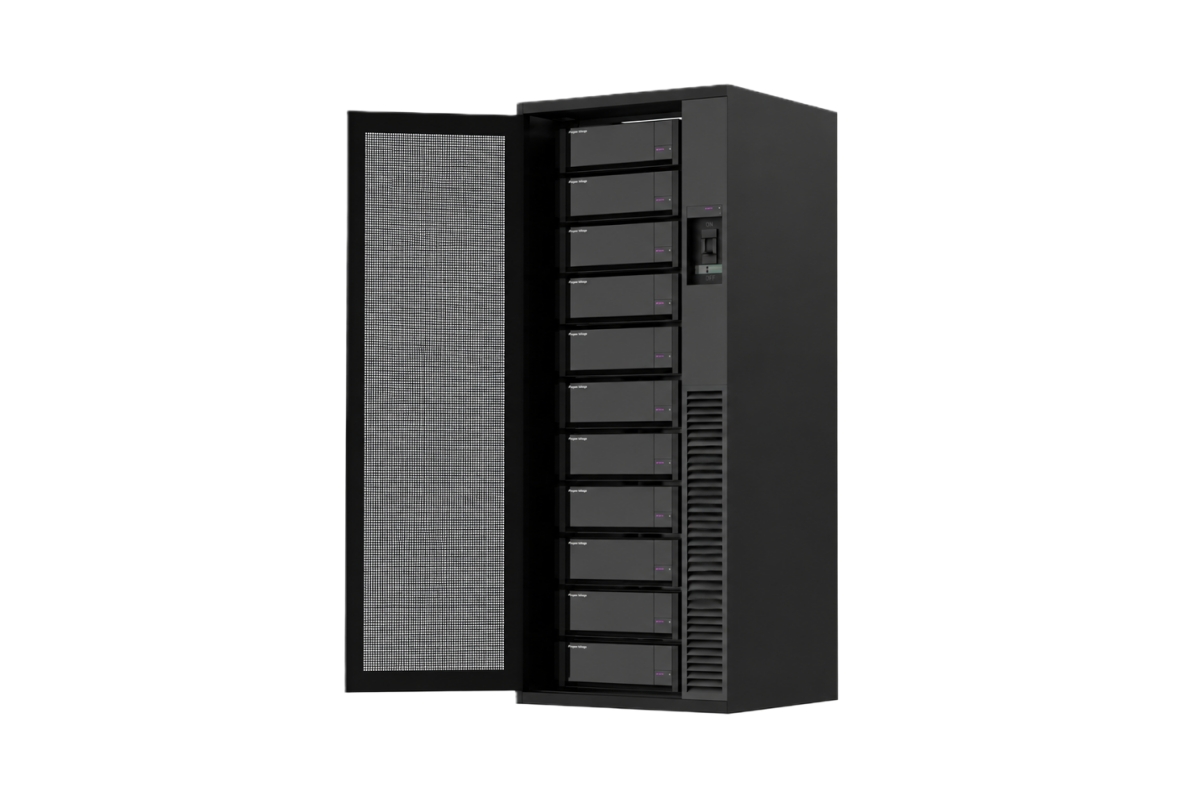
Echion Technologies, a UK developer of niobium-based fast-charging battery anode materials, and Proper Voltage, a US developer of battery management software and electronics, are collaborating to develop a 1.6MW uninterruptible power supply (UPS) system designed to buffer fluctuating AI workloads and bridge power outages in data centres. The proposed VaultX system will integrate Echion’s niobium-based battery technology into Proper Voltage’s Vault UPS platform, which supports 480V and 800V configurations. The companies have signed a memorandum of understanding (MoU) covering the development. AI training workloads can cause power demand to fluctuate by tens of megawatts within milliseconds, placing additional demands on utility connections, switchgear, and generation equipment. The companies say buffering these fluctuations within data centres could help operators make better use of existing grid capacity. VaultX is planned to deliver 1.6MW of power and 84kWh of storage capacity. Its battery system will use Echion’s XNO anode technology, which the company says is designed to support high-rate charging and discharging over repeated cycles. The technology is intended to meet the demands of AI data centres, where frequent power fluctuations can require rapid charging and discharging. Echion says its battery chemistry can support charging or discharging in three to six minutes and more than 50,000 cycles under specified test conditions. UPS system combines backup power and load buffering Jean de La Verpilliere, CEO of Echion, comments, “AI data centres need exactly what XNO was built for, which is extremely high charge and discharge rates sustained across tens of thousands of cycles. "Our materials and cells are built for duty cycles that aren’t survivable for conventional chemistries, and collaborating with Proper Voltage enables us to implement these capabilities in a market-leading UPS platform and ensure that operators can benefit from VaultX in the shortest possible amount of time. “Conventional chemistries can deliver serviceable discharge but cannot safely handle the continuous and instantaneous high-C-rate charging that AI data centres require. XNO addresses this. "Operators will soon be able to incorporate a single system that serves both the backup mission and continuous load buffering. I look forward to working with Proper Voltage to launch what has the potential to be a step-change product to the market.” Charlie Welch, CEO of Proper Voltage, adds, “Our architecture was purposely designed so that operators can adopt new and emerging battery technology without redesigning their power systems, which is why integrating XNO into our Vault architecture is straightforward. "What this system changes for an operator is the business case. A UPS that also buffers load stops being an asset that sits idle between outages and starts earning its footprint every day. "We recognise the impact that XNO can have on data centre operations and its symmetric power capabilities fundamentally change what a data centre UPS can do to support emerging GPUs and ease the stress placed on upstream grid infrastructure. It’s exciting to be moving into the next phase of a project with this much potential to shape AI infrastructure.”

Aggreko invests in liquid cooling test equipment
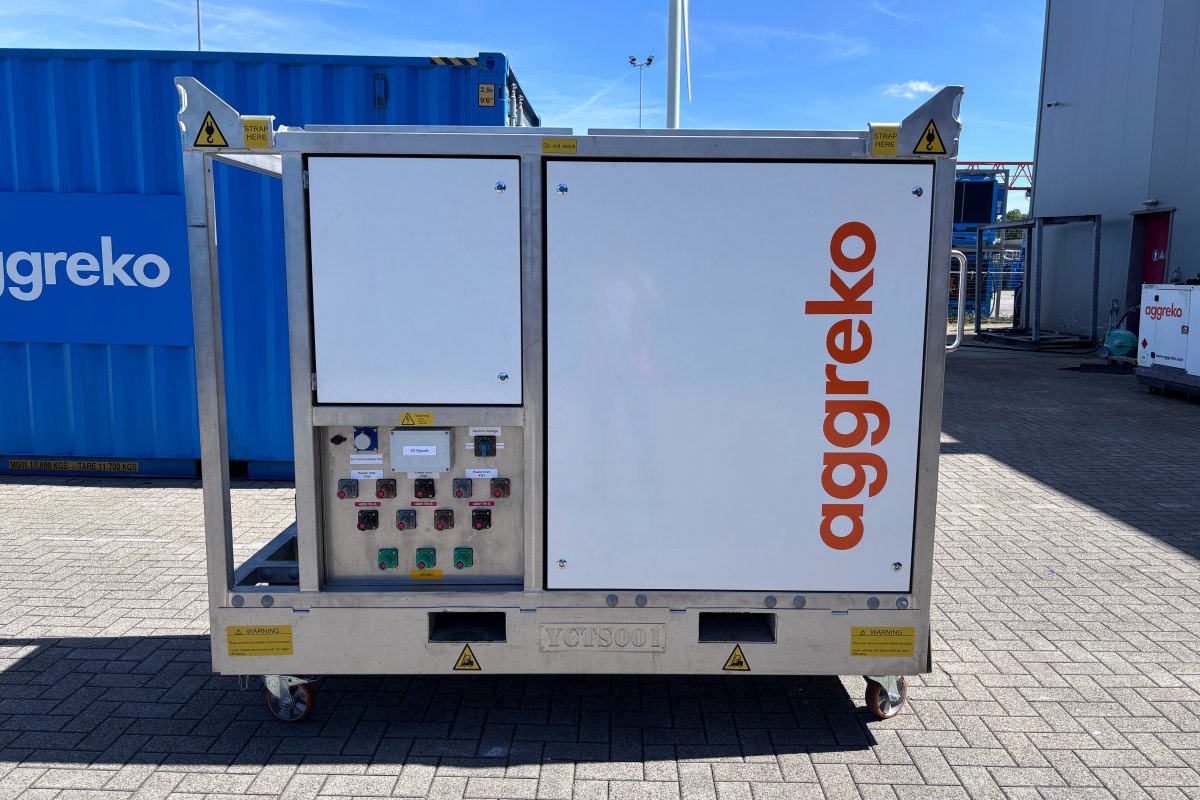
Aggreko, a British multinational temporary power generation company, has invested in a fleet of liquid-cooled load banks to support the testing and commissioning of AI data centre cooling systems across Europe. The units are designed to simulate the thermal and electrical loads of IT equipment, allowing operators to test cooling and electrical infrastructure before a facility goes live or during refurbishment. Liquid cooling is increasingly used in high-density AI and high-performance computing environments. During commissioning, the load banks can help operators validate equipment including chiller lines, pipework, pumps, heat exchangers, and coolant distribution units (CDUs), reducing the risk of equipment failures during operation. Load banks support testing at different power levels The units can be configured to accept 200kW, 300kW, or 600kW across single or multiple connections, accommodating different electrical supply arrangements on site. Constructed from 316L stainless steel, the equipment is designed to reduce material degradation and the risk of contamination in liquid cooling systems. Each unit and its accessories undergo specialist cleaning, flushing, sealing, and testing before deployment. The load banks also offer adjustable operating modes, allowing engineers to control power loads, temperature differentials, and leaving water temperatures within specified parameters. Multiple units can be networked to manage larger loads and support testing under different operating conditions. Torben Hiller, Lead Development Engineer at Aggreko, comments, “The rapid growth of AI has ushered in a new era of data centre cooling. However, with even a single outage presenting six- or seven-figure ramifications, ensuring that this cooling infrastructure is fit to handle the demands of day-to-day operation is paramount. “Our new LCLBs are the first of their kind on the market, and feature bespoke control systems that allow them to be set up for precise, scenario-specific testing. "Combined with the knowledge and sector experience of our data centre team, this new investment will allow us to offer unrivalled testing and commissioning support for European AI data centres and their cooling equipment, providing operators with the best possible assurance that their infrastructure will be able to handle real load conditions.” Torben also says testing under different scenarios is important as rack densities increase, warning that inadequate testing can lead to overheating, poor heat rejection, coolant contamination, and reduced equipment lifespan. For more from Aggreko, click here.

BAC introduces Trillium adiabatic cooler for data centres
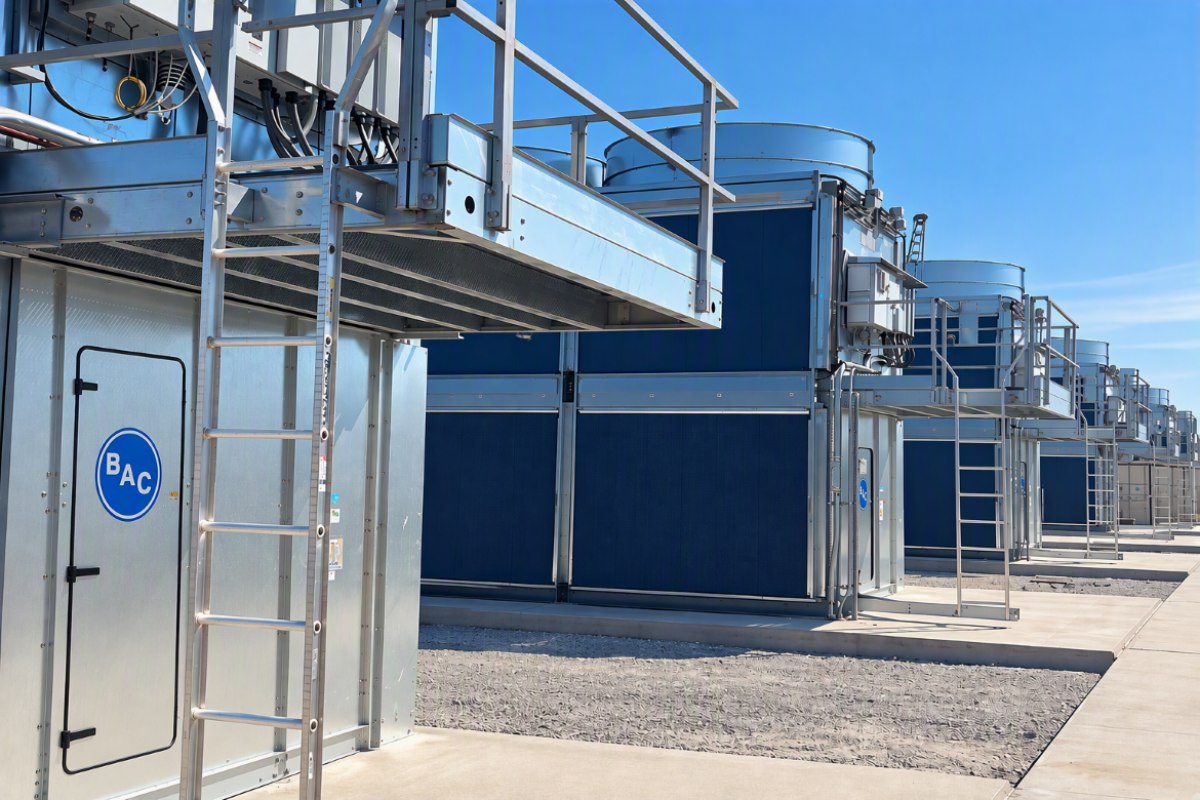
Baltimore Aircoil Company (BAC), a provider of data centre cooling equipment, has introduced the Trillium Adiabatic Cooler TRFS, a double-stacked adiabatic cooler designed for hyperscale and colocation data centres. It combines BAC’s adiabatic cooling design with intelligent controls for applications where dry cooling alone may not provide sufficient performance. The TRFS is designed to help data centre operators lower fluid temperatures, reduce peak power demand and power usage effectiveness (PUE), limit water consumption, and increase free-cooling opportunities. The company says it also supports high-density chip cooling, reduces air recirculation in large deployments, and can help sites meet design conditions without oversizing chillers or other infrastructure. Cooling capacity and water management With greater capacity per unit than dry coolers, the TRFS can reduce equipment numbers, connections, and installation time. Its adiabatic design maintains capacity at high ambient temperatures and supports water-cooled chiller, chiller-less, and direct-to-CDU configurations. Depending on the design, it can also allow chillers to be downsized or eliminated. The cooler is designed to limit annual water consumption and can be configured to meet site requirements, including water constraints, permitting requirements, and sustainability goals. Factory-installed adiabatic pads and intelligent controls activate cooling when needed, balancing water and energy use. Dustin Cohick, Market Leader - Americas Data Center at BAC, says, "Data centre operators are being asked to meet more aggressive temperature, power, and water targets on increasingly compressed schedules. "The Trillium Adiabatic Cooler TRFS gives them a way to use water only when it matters most and gain meaningful capacity and efficiency benefits in return. It's already operating at multiple hyperscale and colocation data centres." The TRFS is manufactured globally and features a pre-configured design intended to shorten engineering cycles. Options and features include Whisper Quiet fans (which can reportedly reduce sound levels by up to 13 dBA); automatic night-quiet operation; reduced steel support requirements; redundancy across fans, motors, and drives; accessible service platforms; and pre-programmed controls housed in a UL enclosure to support start-up and troubleshooting. A dry cooler version, the Trillium Dry Cooler, is also available for water-free operation. For more from BAC, click here.

BCS Consultancy launches data centre power division
BCS Consultancy, a global data centre consultancy, has launched a new Power Infrastructure division to help investors, developers, and operators address power requirements for data centre developments. Formerly operating as BCS’s Utilities team, the division reflects changes in the scale and complexity of power requirements as data centre development increases, driven in part by AI and more power-intensive workloads. Electricity network capacity, grid connection times, planning requirements, and infrastructure delivery are increasingly influencing whether proposed data centre developments can progress from the pipeline to operational capacity. BCS’s Data Centre Truths 2026 research found that 93% of industry respondents expect demand to continue rising, despite power supply becoming harder to secure. The consultancy says power availability is increasingly influencing site selection and investment decisions, with grid access alone no longer sufficient. Developers also need to establish whether power can be delivered to a site within a commercially viable timeframe. The Power Infrastructure division builds on more than 50 power infrastructure projects across Europe, the Middle East, and Africa, as well as other regions. Its work covers power strategy and grid connections through to substations, cable routes, microgrids, and other power infrastructure. Led by Cameron Thompson (pictured above), previously Head of Utilities and now Head of Power Infrastructure at BCS Consultancy, the team will work with investors, landowners, developers, and operators from early-stage power planning through to infrastructure delivery. With some grid connection offers now extending into the 2030s, BCS is also working on alternative and transitional power strategies, including combinations of on-site generation, solar, and battery storage alongside longer-term grid connections. Power planning moves earlier in development Cameron Thompson, Head of Power Infrastructure at BCS Consultancy, says, “Power has always been fundamental to data centre development, but the conversation has shifted. Clients are coming to us much earlier, asking how they can make sites viable within the timeframes they need. “Power Infrastructure reflects that shift. By bringing strategy and delivery together, we can give clients a clear route to power, from early planning through to an energised site.” The division will coordinate power programmes across network operators, designers, original equipment manufacturers, contractors, land and planning teams, and other stakeholders. BCS says this coordination is becoming more important as power programmes increase in complexity, with delays often arising at the interfaces between grid connections and delivery. These can include design approvals, cable routes and land rights, long-lead equipment, civil engineering readiness, commissioning, and network witnessing. Chris Coward, COO of BCS Consultancy, comments, “Power increasingly determines where and when data centre projects can happen and, ultimately, whether they are commercially viable. "As the market shifts from announcing capacity to proving what can actually be delivered, clients need much greater certainty earlier in the development process. “Expanding our Power Infrastructure capability is a direct response to that shift. By combining specialist power strategy with our data centre land intelligence and delivery expertise, we can help clients make better decisions from the outset and support them all the way through to delivery and energisation.” For more from BCS Consultancy, click here.

Why water hygiene is key to data centre efficiency
AI is driving higher rack densities and increasing thermal loads, placing unprecedented demands on cooling infrastructure. In this exclusive article for DCNN, Gary Nicholls (pictured above), Managing Director of Swiftclean, discusses how proactive water quality management can help data centres maximise the efficient life of critical assets whilst improving operational resilience: According to the Uptime Institute, average rack power density increased by 38% between 2022 and 2024, largely down to the launch of generative AI to a mainstream audience. We are now on an irreversible trajectory that will continue to compound thermal and energy pressures on data centres and the systems that keep them cool. As the margin for error shrinks, cooling infrastructure must be managed with the same focus on reliability and resilience as other mission-critical systems. Many data centres are moving to liquid-based cooling systems that can manage rising thermal loads, so water quality plays a fundamental role in maintaining performance and reliability. With 40% of power usage in a data centre going towards cooling on average, and with water increasingly becoming the primary means of achieving appropriate temperatures, water hygiene is essential and can have a significant impact on operational efficiency and cost. Water quality: The hidden performance factor Closed-loop water systems are a critical part of many data centre cooling infrastructures, circulating treated water through chillers, heat exchangers, cooling distribution units, and associated pipework. Although these systems are designed to operate continuously for long periods, they remain vulnerable to gradual deterioration. Oxygen ingress, depleted corrosion inhibitors, microbiological activity, and the accumulation of suspended solids can all affect water quality over time. The result is a gradual decline in system performance, with corrosion, scale, and fouling reducing heat transfer efficiency and increasing the workload placed on pumps and other components. Equally as important, poor water hygiene can also affect system reliability. Corrosion and contamination can contribute to component degradation, increasing the potential for leaks, equipment damage, and unplanned downtime. Investing in advanced cooling technology is one part of the solution, but it does not guarantee long-term performance alone. Protecting both efficiency and reliability requires ongoing water testing and treatment to maintain the condition of the water circulating through the system. Why water sampling matters Because closed-loop cooling systems often operate quietly in the background, changes in water condition can go unnoticed until cooling performance begins to decline. By this stage, deterioration may already be affecting heat transfer efficiency or the condition of critical components. Regular water testing for microbial activity provides operators with visibility into system health, allowing changes in water quality to be identified before they become operational issues. Samples can be analysed for key indicators including poor water chemistry and a range of different bacteria. Water treatment is a lifecycle process Water Treatment for Closed Heating and Cooling Systems (BG 50/2021) provides best practice guidance for monitoring and maintaining closed circuits, including chilled water systems and closed condenser water systems. The guidance highlights the importance of corrosion control, pH management, dissolved gases, suspended solids, filtration, and microbiological control in maintaining system performance. BG 50 also reinforces that water treatment is not a one-off activity but a lifecycle process involving commissioning, testing, monitoring, and adjustment throughout the operational life of the system. For mission-critical environments such as data centres, this proactive approach supports equipment protection, energy efficiency, and operational resilience. Specialist expertise in mission-critical environments The increasing complexity of data centre infrastructure also places greater demands on those responsible for maintaining cooling systems. In high-security facilities, access to critical infrastructure is tightly controlled and maintenance windows are often limited. Specialist contractors must, therefore, combine technical expertise with robust security procedures and careful planning to ensure essential water treatment and testing activities can be completed efficiently without affecting site security or operational continuity. As AI continues to increase the demands placed on data centre cooling systems, water hygiene should be treated as an operational risk control measure rather than a routine maintenance activity. Through regular water testing, effective treatment strategies, and proactive maintenance, operators can preserve thermal performance, extend equipment life, and reduce the likelihood of cooling-related downtime.

Henkel publishes latest edition of Uniquely Wired
Uniquely Wired is a curiosity-driven platform for people who think about connectivity for a living. Across the podcast, the print magazine, and conferences worldwide, Henkel, a German manufacturer of adhesives, sealants, and consumer brands like Schwarzkopf and Pritt, explores the breakthroughs, bottlenecks, and big shifts defining data telecom, semiconductors, AI, and automation. No borders between disciplines, no ceiling on where the thinking goes, just the people whose brains push the industry forward, talking to people like them. https://youtube.com/shorts/5p-h9g2ZvBY?si=MCldvEzOOm6KB8zm In Henkel's brand-new Volume 2 of the magazine, futurist Bernard Marr reflects on how fast an industry can really move before something breaks. Beyond this, Vishal Kirti of Cisco Systems gets into the silicon behind the internet, Agnes Heftberger talks about Germany's path to becoming an AI powerhouse, and half a dozen other engineers and leaders present a genuinely different way of seeing where this is all heading. Connectivity is everything, and Uniquely Wired Volume 2 proves it. Download it now!

Schneider Electric appoints new SVP in Europe
Global energy technology company Schneider Electric has appointed Damien Dhellemmes as Senior Vice President of its Secure Power and Data Center business in Europe. Damien has more than 30 years of experience at Schneider Electric, including senior operational and supply chain roles in Europe, Asia, and the Middle East. Most recently, he served as Senior Vice President of Schneider Electric’s Digital Energy business globally, where he worked on digital transformation through software, automation, and energy management. During his time in Digital Energy, the business saw reported growth and demand across areas including healthcare, public administration, real estate, and data centres. Having recently relocated to Paris, Damien will lead Schneider Electric’s Secure Power and Data Center business across Europe, working with customers, partners, and regional teams as demand for AI infrastructure continues to grow. His responsibilities will include Schneider Electric’s prefabricated power and three-phase UPS technologies, its EcoStruxure Data Center portfolio, Motivair by Schneider Electric liquid cooling systems, and EcoStruxure Software and Services. He will also work with the company’s existing AI ecosystem partnerships, including NVIDIA and AMD. New appointment for data centre growth Damien comments, "The data centre industry has entered one of the most exciting and demanding periods in its history and Europe has a unique opportunity to lead the next wave of AI leadership. "As the global energy technology partner for data centres and AI, Schneider Electric is perfectly positioned to help partners and customers capture demand. By combining our expertise across power, cooling, software, and services with our longstanding ecosystem partnerships, our customers can build infrastructure that is not only faster and more resilient from inception, but more efficient and sustainable.” Schneider Electric says Damien's operational and customer experience will support its work with customers deploying AI infrastructure, including efforts to reduce project risk and integrate power, cooling, software, and services. His tenure as Senior Vice President, Secure Power and Data Centers for Europe begins with immediate effect. For more from Schneider Electric, click here.

Epsilon, Megaport expand North American network reach
Epsilon Telecommunications, a global connectivity provider offering network, cloud, and colocation services, and Network-as-a-Service (NaaS) provider Megaport have partnered to expand Epsilon’s network footprint in North America. The partnership allows customers to access Megaport’s compute, network, and storage infrastructure across the USA and Canada through Epsilon, with software-defined connectivity to data centre, cloud, and internet exchange hubs across the region. North America is expected to account for 43% of a global addressable IT market worth more than $6 trillion (£4.5 trillion) in 2026, according to Omdia. The companies say their partnership provides on-demand connectivity across their software-defined networks, in response to demand for connectivity between key markets in the USA and Canada. Customers can access additional destinations through a single connectivity service, whether expanding within North America or entering the region from international markets. Warren Aw, Chief Commercial Officer at Epsilon, comments, “North America is a key market for our customers, with growing demand for high-performance access to cloud, data centres, and digital infrastructure across the region. “By partnering with Megaport, we’re simplifying how our customers can connect and accelerate their growth in the United States and Canada. Together, we’re hugely expanding the opportunities available to our customers and making global connectivity more seamless than ever.” Connectivity across North America The partnership enables cloud access across North America, bringing applications closer to customers and their users, whilst allowing cloud regions to be connected on demand. It also supports content delivery across markets and business continuity through geographically redundant backup environments. Misha Cetrone, Executive VP, NAM & Global Alliances at Megaport, says, “Our collaboration with Epsilon brings together two complementary platforms to give customers more choice in how and where they connect. “We’re combining our strengths for unparalleled global connectivity, while creating new compute, network, and storage possibilities for businesses around the world. We’re excited to help more customers connect and grow across North America with our automated, globally connected infrastructure platform.” Epsilon and Megaport say organisations in Europe, Asia Pacific, and other international markets can also use the connectivity service to expand into North America and scale workloads across hybrid and multi-cloud environments. For more from Epsilon, click here.

DataX Connect salary survey finds data centre pay gaps
UK data centre recruitment company DataX Connect has released the results of its 2026 Data Centre Salary Survey, drawing on responses from more than 1,700 data centre professionals across the UK, Europe, and the USA. The findings indicate a mobile talent market in which salary remains an important consideration, whilst career development, benefits, and progression are increasingly influencing decisions to stay with an employer or move elsewhere. The research also proposes a gender disparity, with more than 46% of women surveyed in Europe saying their gender had negatively affected their compensation or career progression. Almost four in 10 professionals in permanent roles in both Europe and the USA plan to change companies in the next 12 months, despite 65% of European and 71% of US respondents receiving a salary increase over the past year. In Europe, career development is the biggest reason for considering a move, while salary remains the leading factor in the USA, with career development close behind. Key findings include: • Pay rises do not guarantee retention: 38.8% of permanent professionals in Europe and 37.8% in the USA plan to change companies in the next 12 months. In Europe, career development is the biggest reason for considering a move, cited by 36.0% of respondents, while in the USA salary leads at 31.4%, followed by career development at 29.5%. • Gender continues to affect pay and progression: Nearly half of women surveyed say their gender has affected their pay or career progression, with 97% of those reporting a negative impact. The figure is 46.4% among women in Europe and 51.4% in the USA, compared with 1.7% of men in Europe and 2.2% in the USA. • Adjacent industries provide a potential talent pool: 41.7% of European respondents worked in energy or semiconductor/pharmaceutical roles before entering the data centre sector. In the USA, 36.9% came from energy or military backgrounds. • Benefit preferences vary by region: Shares, stocks, or equity are the most requested additional benefit in Europe, selected by 30.3% of respondents. In the USA, car or fuel allowance is the most requested (at 38.1%). Career development emerges as a key factor The findings of the 2026 Salary Survey point to opportunities for employers and professionals, whilst also highlighting changing expectations around benefits, career progression, and recruitment. Salary remains an important factor, but the survey indicates that employers may need to consider what employees value beyond pay, while also creating clearer routes for progression and looking beyond traditional data centre backgrounds when recruiting. Andy Davis, Director at DataX Connect and Data eXec, and host of the Inside Data Centre Podcast, comments, "The biggest takeaway from this year's Salary Survey is that there isn't one simple answer to the talent challenge. Pay is important, but so is career progression, the benefits people value, and, increasingly, where the skills we need actually exist. "The challenge now is turning that insight into better decisions around where we recruit, how we attract people, and how we retain them. Nearly half of women in our survey say their gender has affected their pay or career progression, and one of the clearest drivers is the lack of visible female role models in senior data centre roles. If people can't see a path for themselves, they're far less likely to stick around and carve one out. Closing that gap, and the gender pay gap alongside it, is vital to the future of this industry." The full 2026 Data Centre Salary Survey reports for Europe and the USA are available from the DataX Connect website. For more from DataX Connect, click here.


Translate »