Data Centre Infrastructure News & Trends


RETN expands Balkans fibre backbone
RETN, an independent global network service provider, has launched a new backbone route connecting Drobeta, Bucharest, Iași, and Chișinău, creating an additional connectivity path across Romania and into Moldova. Delivered as a single, end-to-end backbone route, the expansion provides an alternative physical connectivity option to existing regional IP transit corridors in Eastern Europe. The new route forms part of RETN’s wider strategy to expand its optical network infrastructure across Central and Eastern Europe. By linking Romania and Moldova with the company’s existing Balkans corridor between Budapest, Timișoara, and Sofia, the project introduces additional geographical route diversity across the region. The backbone also enables alternative routing into Ukraine via Moldova and into the Balkans through Bulgaria, offering additional routing options for regional and international traffic flows. New routing options across Eastern Europe Olena Lutsenko, Business Development Director at RETN, comments, “This project is an important step in strengthening connectivity resilience in Romania. “Bucharest and Iași are rapidly developing hubs for business, education, and technology, and demand for resilient, high-capacity infrastructure is rising fast. “By delivering a direct route from Timișoara to Bucharest and onward to Chișinău, we are enabling faster, more scalable access to the region from the Balkans, Ukraine, and Central and Eastern Europe in general - for operators, ISPs, enterprises, and international customers.” The expansion comes amid continued fibre infrastructure growth across Romania and Eastern Europe. According to the National Authority for Management and Regulation in Communications of Romania (ANCOM), Romania recorded 6.9 million fixed broadband connections in mid-2025, with 37% capable of gigabit speeds. The regulator also reported continued growth in demand for ultra-high-speed internet services and increasing fixed broadband traffic per capita. Internet adoption across Romania was estimated at approximately 94% of the population in late 2025. For more from RETN, click here.

Data Centre Energy Summit to focus on AI power demands
The Data Centre Energy Summit (DCES) 2026 will bring together representatives from the UK’s energy and digital infrastructure sectors to examine the growing energy demands associated with artificial intelligence and large-scale data centre development. Taking place at the Storey Club Paddington in London, the event will focus on how the energy sector can respond to increasing demand from hyperscale computing, cloud expansion, and AI infrastructure. Organisers say the summit will address issues including grid constraints, planning delays, water usage, energy strategy, and rising infrastructure costs, with discussions centred on practical approaches to delivering data centre capacity within energy-constrained environments. Sessions throughout the event will examine topics including onsite power generation, grid integration, engineering design, microgrids, and energy campus models. Financial and regulatory considerations, including ESG reporting and planning frameworks, will also form part of the programme. Industry leaders to discuss energy infrastructure challenges Confirmed participants include Paul Stein, CEO of Floral Energy; Katie Davies, Head of Energy & Infrastructure Policy at TechUK; and Jonathan Clark, Associate Director at Gleeds, alongside a broader cohort of industry figures involved in shaping the future of power and connectivity. Eric Lewis, Managing Director of Foresight Industries, says, “We have deliberately chosen to approach this summit from the perspective of the energy sector looking at data centres, rather than the other way around. "This perspective allows us to better understand how different parts of the energy sector can respond to one of the fastest-growing challenges in infrastructure today.” According to the organisers, the event is intended to encourage earlier collaboration between energy providers, infrastructure developers, policymakers, investors, and engineering teams as pressure on power networks continues to increase. The summit will also explore how cooling systems, heat reuse, and high-density computing requirements are shaping future infrastructure planning and investment decisions. To find out more about the summit, click here.

euNetworks launches Frankfurt–Strasbourg fibre route
euNetworks, a European bandwidth infrastructure company, has launched a new long-haul fibre route connecting Frankfurt and Strasbourg, expanding its Super Highway network across Europe. The 247km route links two key connectivity hubs and has been developed in response to rising demand for AI and cloud infrastructure across the FLAP-D region, which includes Frankfurt, London, Amsterdam, Paris, and Dublin. The route provides direct, low-latency connectivity between the two cities, with access to more than 76 data centres in Frankfurt and further connections to over 600 sites across euNetworks’ wider European footprint. Built using new high-capacity fibre, the route has been designed to avoid congested areas, improving resilience and offering additional network diversity. Supporting capacity and resilience in FLAP-D The expansion addresses increased traffic between Frankfurt, one of the world’s most interconnected network hubs, and Strasbourg, an established interconnection point for long-haul routes. As part of the build, new infrastructure has been introduced along the route, including upgraded intermediate line amplifier sites designed to improve energy efficiency. The fibre deployed is also intended to support improved transmission performance and lower operational costs. Marisa Trisolino, CEO at euNetworks, comments, "euNetworks is relentless in our pursuit to address Europe’s accelerating demand for bandwidth, and we will continue to develop our state-of-the-art networks where our customers need it the most." The Frankfurt–Strasbourg link is the sixth route to be delivered as part of euNetworks’ Super Highway programme, which focuses on connecting major data centre markets across the FLAP-D region.

Legrand cooling selected for 'Europe’s largest AI campus'
Legrand, a French multinational infrastructure products manufacturer, has been selected by Start Campus, a designer, builder, and operator of sustainable data centres, to supply cooling technology for a large-scale data centre development in Sines, Portugal. The project forms part of a planned 1.2GW campus designed to support AI, cloud computing, and high-performance workloads. Legrand will deploy its rear-door heat exchanger technology, developed by its USystems brand, to provide rack-level cooling across the site. The Sines campus is powered by renewable energy and is targeting a power usage effectiveness (PUE) of 1.1 and a water usage effectiveness (WUE) of 0, using seawater cooling to support high-density environments. Robert Dunn, CEO of Start Campus, says, "These are very technically challenging projects, so we need to work with the best in the business to meet those complex challenges." Cooling technology for high-density workloads The cooling system operates at rack level, removing heat directly at source by cooling exhaust air before it enters the wider data hall. This approach reduces reliance on traditional air-cooling methods and supports higher rack densities. Legrand states that the system can reduce cooling-related power consumption compared with conventional approaches, whilst also maintaining stable thermal conditions. The technology additionally adjusts cooling capacity in real time to match operational requirements, supporting efficiency and performance across the facility. Rita Lourenço, Key Account Manager - Critical Power at Legrand, notes, "The full lifecycle partnership [...] includes knowledge sharing, maintenance support, proactive problem detection, and long-term collaboration beyond commissioning." The two companies state their partnership includes ongoing support and maintenance, alongside the initial deployment of the cooling systems. For more from Legrand, click here.

A-Gas participating as a Gold Sponsor at DCN
With the growing global demand for data, the need for efficient cooling solutions and environmentally friendly refrigerants is becoming increasingly critical. Meeting this rising demand sustainably is essential, which is where A-Gas, a company specialising in lifecycle refrigerant management (LRM), says it can play an important role, supporting the industry’s transition to lower-GWP alternatives. The company has announced that, for this reason, it will attend Data Center Nation (DCN) in Milan as a Gold Sponsor on 27 May, demonstrating how it can actively support industry players. Data Center Nation is an event dedicated to the data centre industry. The organisers say it serves as a hub where hyperscalers (such as AWS and Microsoft), investors, enterprise end users, and infrastructure suppliers can come together to discuss the future of digital infrastructure. At the event, A-Gas says it will feature a dedicated booth and contribute to the Tech Stage panel with a presentation titled 'Cooling in Transition: HFCs, Low-GWP Refrigerants & the Data Centre Challenge'. On 27 May, attendees can visit the company's stand to learn more about its offerings to support the transition to low-GWP alternatives and to discover its recovery, reclamation, and repurposing technologies. For more from A-Gas, click here.

AVK launches modular PowerPods for data centres
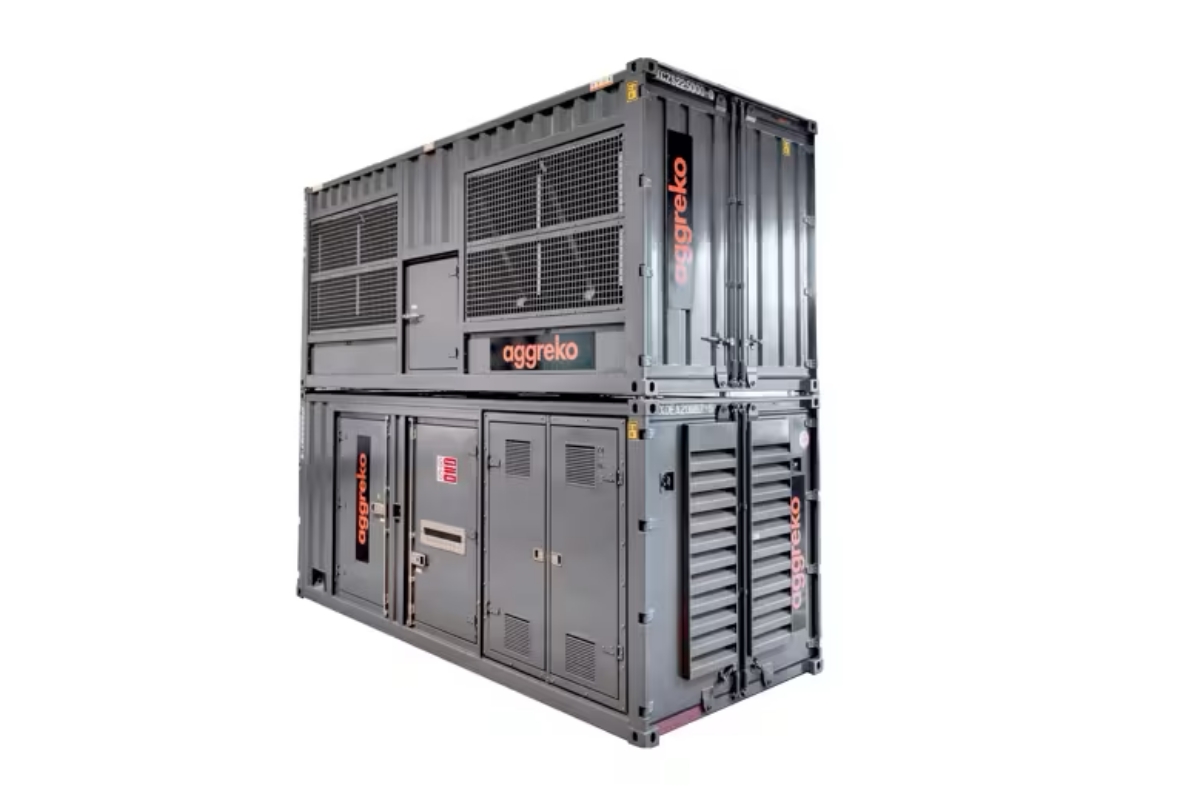
AVK, a provider of power systems and electrical infrastructure for data centres, has introduced a new modular power system, PowerPods, designed to support energy infrastructure for hyperscale data centres and AI deployments. The units integrate key electrical components - including uninterruptible power supplies (UPS), engines, switchgear, controls, enclosures, and transformers - into a single, pre-engineered system. Each unit is delivered ready for connection and deployment on site. The launch reflects growing demand for scalable power infrastructure, as data centre operators seek to deploy capacity more quickly while maintaining resilience and operational continuity. PowerPods have been developed using AVK’s experience in critical power systems, including standby and prime power, as well as control and service capabilities. Modular approach to data centre power deployment The company highlights that the systems are designed to simplify installation by combining multiple elements of the power chain into a single unit. This approach aims to reduce complexity during deployment and support more flexible expansion as demand increases. PowerPods can be configured to meet specific project requirements and are designed to support a range of technologies, allowing operators to adapt systems over time. The modular design also enables use across both new developments and existing sites requiring additional capacity. The units are available for immediate deployment, with a focus on reducing lead times for projects where rapid delivery is required. Ben Pritchard, CEO at AVK, says, “The launch of the AVK PowerPods reinforces our position as one of the few businesses capable of designing, delivering, and supporting the entire data centre power ecosystem - at scale, with true flexibility, and with the engineering depth that critical infrastructure demands. "Large data centres need partners who genuinely understand the full energy picture and we now own the full power train. “PowerPods complete our proposition to the market. They bring together our extensive critical power expertise with our technology-agnostic model to deliver a complete power train solution that makes us a reliable, long-term energy partner for data centre operators. "With our ready-to-deploy PowerPods model, we are perfectly positioned to support the next wave of hyperscale data centres and AI infrastructure.” For more from AVK, click here.

Ellis unveils heavy-duty cable hanger, Hercules
Ellis Patents, a UK manufacturer of cable cleats and cable management systems, has introduced a new heavy-duty cable hanger, Hercules, at Data Centre World Frankfurt, expanding its cable support range for high-capacity data centre infrastructure. The product has been developed to support heavier cable installations as facilities increase power density and cabling volumes. It is designed for use in environments where mechanical strength and cable integrity are critical. Hercules is available in sizes ranging from 6 inches to 25 inches, providing flexibility across different cable diameters and installation requirements. The hanger is also UV-resistant, making it suitable for installations where cable containment may be exposed to external conditions, such as perimeter runs or transition zones. Designed for high-capacity cable installations As data centre projects scale, contractors are required to manage larger power cables and higher electrical loads, often within tighter deployment schedules. Cable support systems play a key role in maintaining safety and reliability in these environments. Ellis says the Hercules cable hanger has been developed in consultation with industry stakeholders to address these installation challenges, supporting heavier cable runs while maintaining ease of installation. Kelly Brown, Sales Director at Ellis, explains, "As data centre infrastructure grows in scale and complexity, the need for dependable, heavy-duty cable support becomes increasingly important. "Hercules has been developed in partnership with industry experts to provide installers with a strong, practical solution that supports heavier cable runs while offering the flexibility, durability, and UV resistance along with the reliability customers need and have come to expect from Ellis." The product was presented to contractors, consultants, and specifiers at Data Centre World Frankfurt, where it is aimed at those involved in hyperscale, colocation, and enterprise data centre projects. Ellis states that the addition of Hercules also strengthens its wider cable management offering for data centre applications.

Daikin expands UK HVAC rental fleet
Daikin Rental Solutions, the dedicated temporary HVAC hire division of Daikin Applied UK, has expanded its UK rental fleet with additional cooling, heating, and air handling equipment, responding to growing demand for temporary HVAC systems. The investment reflects pressure on organisations to maintain operations while managing ageing infrastructure, higher temperatures, regulatory requirements, and the shift towards lower-carbon energy. The company has increased its range of high-capacity cooling systems, process cooling equipment, and heat pumps, alongside introducing UK-manufactured air handling units. Broader HVAC capability for UK industries Demand for temporary HVAC continues to rise across sectors such as data centres, healthcare, and manufacturing, where system downtime can have operational consequences. To support this, Daikin has added higher-capacity chiller units and an expanded range of heat pumps, offering scalable cooling and heating for larger or more complex environments. Additional dry air coolers have also been introduced to support process cooling requirements, including systems designed to improve energy performance under suitable conditions. The company has also expanded its airside equipment with a new range of air handling units manufactured in the UK. Produced at Daikin Applied UK’s facility in Cramlington, the units are designed for rental use, with a focus on ease of installation and suitability for environments such as cleanrooms and healthcare settings. Mike England, UK Rental Sales Manager at Daikin Applied UK, says, "In many of the sectors we support, downtime simply isn’t an option. Customers need solutions that are not only available quickly, but that perform reliably and integrate seamlessly into their existing systems." The company states that manufacturing air handling units within the UK is intended to improve equipment availability and reduce lead times, while maintaining consistent engineering standards across its rental fleet. Digital monitoring and control features are available on selected systems, supporting maintenance and operational oversight where required. For more from Daikin, click here.

Veolia, Amazon develop data centre water reuse system
Veolia, a French multinational environmental services company, is working with US technology and e-commerce company Amazon to introduce reclaimed water for cooling at a data centre in Mississippi, USA, as part of efforts to reduce water use and support long-term water resilience. The facility, expected to be operational in 2027, will be the first Amazon data centre in the state to use treated wastewater for cooling processes. The system will convert effluent from nearby treatment plants into water suitable for industrial use. Once fully operational, the project is expected to reuse more than 83 million gallons (313 million litres) of potable water each year, reducing demand on local groundwater and drinking water supplies. Veolia will deploy modular, containerised treatment systems designed for scalable use. The approach allows similar installations to be introduced at other data centres where conditions allow. Turning wastewater into cooling power for data centres The collaboration also includes the use of artificial intelligence to improve water treatment processes. Amazon Web Services (AWS) will support Veolia in developing systems for real-time optimisation, predictive maintenance, and operational analysis. These tools are intended to improve efficiency and reduce resource consumption across water treatment operations. Estelle Brachlianoff, Chief Executive Officer at Veolia, comments, “We are delighted to collaborate with Amazon to secure its water needs in Mississippi while protecting the local community's resources. This is environmental security in action. "By combining Veolia’s water expertise with Amazon’s AI technologies, we’re transforming data centres into engines of innovation for sustainability. This solution builds on our newly launched offering for data centres.” Will Hewes, Global Water Stewardship Lead at Amazon, adds, “Through our collaborative work on AI applied to water treatment, Veolia will be able to further drive innovation and enhance the efficiency of on-site teams, thanks to automated analytics, actionable recommendations, optimised inventory management, and streamlined maintenance. "We’re pleased to join forces with Veolia to advance more sustainable water use strategies while helping it pioneer more efficient water treatment solutions for customers worldwide.” The project, Amazon says, forms part of its wider aim to become water positive across its direct data centre operations by 2030.

Vertiv acquires Strategic Thermal Labs
Vertiv, a global provider of critical digital infrastructure, has acquired Strategic Thermal Labs (STL), a company specialising in liquid-cooling technologies for high-density computing environments. The acquisition is intended to strengthen Vertiv’s engineering capabilities in managing the interaction between server-level liquid cooling and supporting infrastructure, which is becoming increasingly important in AI and high-performance computing deployments. Strategic Thermal Labs brings experience in cold-plate design, server-side liquid cooling, and thermal validation for high-density systems. This is expected to support Vertiv’s ability to simulate real-world operating conditions and improve the integration of thermal and power systems. Acquisition targets high-density cooling challenges As computing workloads become more intensive, thermal management at chip level is playing a greater role in overall system performance and reliability. The addition of STL is aimed at improving design, integration, commissioning, and long-term operation of liquid-cooled environments. Scott Armul, Chief Product and Technology Officer at Vertiv, comments, “As AI and high-performance computing push power densities to unprecedented levels, understanding and solving heat challenges at the chip level becomes critical to system design, performance, and reliability. "STL brings deep expertise and proven capability in addressing some of the industry’s most demanding chip-level density and thermal problems, strengthening Vertiv’s ability to emulate and validate system-level solutions and enabling customers to improve performance and lifecycle outcomes in liquid-cooled environments.” Vertiv states that the acquisition will not change its approach to supporting interoperable infrastructure and the company will continue to work with a range of server and silicon platforms. It adds that the move forms part of its wider strategy to address increasing infrastructure complexity through integrated power, thermal, and lifecycle capabilities. For more from Vertiv, click here.


Translate »