Industry Insight

Data Centre Architecture Insights & Best Practices
Data Centre Build News & Insights
Data Centre Business News and Industry Trends
Data Centre Compliance: Standards, Risk & Governance
Industry Insight
Schneider research finds rising demand for on-premises AI
New research from global energy technology company Schneider Electric and Omdia, a technology research and advisory firm (part of Informa), has found that 55% of enterprises intend to own at least part of their AI infrastructure, citing data privacy, security, and regulatory compliance concerns.
The global survey, which gathered responses from enterprise leaders across Europe, North America, and Asia-Pacific, examines AI adoption, infrastructure requirements, spending patterns, and barriers to deployment.
The findings suggest that enterprise AI adoption is moving beyond experimentation towards deployment and scaling. However, organisations face challenges involving in-house expertise, infrastructure capacity, power availability, liquid cooling, and operational complexity.
AI investment grows as enterprises plan deployments
Increased productivity is the leading driver of enterprise AI adoption, cited by 35% of respondents, followed by cost reduction (25%) and time savings (22%).
Whilst 23% of respondents say their AI models are already adding value, 63% intend to deploy generative AI applications and 73% are running at least five proofs of concept.
Among companies with implemented AI projects, 60% report returns on investment (ROI) meeting or exceeding expectations. Meanwhile, more than half of respondents had AI budgets exceeding $500,000 (£381,500) in 2026, with 78% expecting their budgets to increase over the following year.
Despite this investment, more than half of respondents say that no more than one in five AI proofs of concept reaches production, citing human and infrastructure challenges.
A lack of in-house expertise is identified by 33% of respondents as a barrier to deployment, while 32% cite difficulties integrating AI with existing infrastructure and architectural complexity.
For organisations planning new infrastructure, the main challenges include scaling AI IT clusters (27%), costs (25%), and sourcing power and cooling infrastructure (22%).
Paul Tyrer, Global Vice President, AI Ecosystem at Schneider Electric, comments, “As AI moves from experimentation to real-world application, enterprises are focused on making these technologies deliver measurable business value at the right speed, accuracy, and cost.”
External expertise remains important to AI adoption
Data privacy and security are the leading reasons for retaining AI infrastructure in-house (30%), followed by reliability requirements (22%) and regulatory compliance (21%).
However, enterprises continue to rely on external partners to develop and implement their AI strategies. Some 59% of respondents use external partners for strategic planning, whilst 67% depend on external support during implementation.
Maxine Holt, Vice President, Enterprise & Channel Research at Omdia, notes, “As enterprises work to develop and manage their own AI environments, the lack of internal expertise remains a significant barrier and a leading reason proofs of concept fail.”
Schneider Electric says it is working with NVIDIA and AMD on reference designs to support AI infrastructure deployment, alongside developing power and liquid cooling technologies for data centres. Its portfolio also includes prefabricated modular data centre systems.
The research covered respondents from healthcare, financial services, life sciences, government, education, and manufacturing, as well as IT, product engineering, research and development, and executive management roles.
For more from Schneider Electric, click here.

Joe Peck - 23 November 2026 0

Cyber Security Insights for Resilient Digital Defence
Data Centre Security: Protecting Infrastructure from Physical and Cyber Threats
Exclusive
Industry Insight
Rethinking data centre defence for AI threats
In this exclusive article for DCNN, Jamie Moles (pictured above), Senior Technical Manager at ExtraHop, outlines how real-time network visibility, governed AI agents, and flexible model architectures can help data centres counter increasingly sophisticated cyber threats:
State-backed hackers from Russia, China, and Iran are shifting tactics against critical national infrastructure. Rather than striking immediately, they establish quiet, long-term access, planting dormant controls to trigger during future crises. These intrusions allow threats to cause devastating disruption in minutes, not days.
Whilst AI threats accelerate time-to-impact, expanding AI infrastructure creates new hiding places. Workloads are forcing data centres and neoclouds to upgrade from 100Gbps to 400Gbps networks. Legacy visibility tools cannot capture this volume, creating blind spots where dormant intrusions lurk undetected.
This dual pressure forces security leaders to re-evaluate their SOCs. Teams require real-time visibility into all AI activity to ensure legitimate workloads behave as intended and to spot anomalous behaviours. Batch-orientated SOC workflows are now too slow, but solving this speed issue requires more than plugging an LLM into legacy systems. Without rich context, you simply automate failure.
Context for agents to reason from
Defending against AI-powered threats requires a new architecture: real-time observation of all enterprise traffic, behavioural detections triggering governed actions, and pre-correlated context empowering agentic operations alongside human oversight. This is the foundation of the agentic SOC, where analysts shift from manual triage to directing agents that operate at machine speed.
AI agents are only as accurate as their context. Unreliable inputs (like alterable log data) produce wrong or inconclusive results. Agents need a structured context layer fusing real-time evidence with threat intelligence. Network telemetry forms this backbone. Because attackers cannot alter wire data, it serves as immutable ground truth. By structuring traffic into a pre-correlated context graph, detections across endpoints and identities are tied directly to actual network behaviour, letting agents and analysts act at threat speed.
Governance to control agent behaviour
Machine-speed defence does not require granting agents unchecked authority; recent incidents demonstrate that even advanced models make errors or find unintended shortcuts. Governance demands independent, live tracking of what agents access, move, and execute on the network. This oversight allows security teams to harness rapid response without surrendering control.
Because models continually evolve, relying on a single LLM is a flawed strategy. Different models excel at different tasks: some at detection, others at response. The underlying context and control framework form the true foundation, and the models are simply interchangeable components built on top.
Matching the speed of modern threats requires building the right foundation first. Open context, strong governance, and model flexibility make machine-speed defence both trustworthy and effective.
For more from ExtraHop, click here.
Joe Peck - 18 November 2026 0

Data Centres
Industry Insight
What is a data centre?
A data centre is a secure, purpose-built facility that houses large numbers of computers (known as servers), along with the networking, power, and cooling equipment needed to keep them running around the clock. In short, it is where the internet, the cloud, and artificial intelligence (AI) physically live.
Every time you stream a film, tap a bank card to pay, check a map, or ask an AI chatbot a question, a data centre somewhere does the work. Most of us never see (or notice) them, yet they have become some of the most talked-about, expensive, and contested buildings on the planet.
Key takeaways
• A data centre is essentially a very large, very secure room (or campus) full of connected computers that store, process, and move data.
• 'The cloud' is not a place; it is a service delivered from data centres.
• Data centres vary enormously, from a cupboard-sized edge site to a multi-building hyperscale campus drawing the power of a small city.
• The AI boom is driving record investment and, with it, new questions about power, water, land, and resilience.
• Data centres are now treated as critical national infrastructure (CNI) by many governments, including the UK's.
How does a data centre work?
At its simplest, a data centre does three things: it stores information, processes it, and moves it to wherever it is needed.
When you open an app or load a website, your device sends a request across the internet, usually over fibre-optic cables, to a data centre. Servers there process the request, retrieve or calculate what you need, and send the answer back. All of this typically takes a fraction of a second.
To make that possible around the clock, a data centre also needs three things that the computers cannot provide for themselves:
1. Power — delivered reliably and with multiple layers of backup2. Cooling — because computers turn almost every watt of electricity they use into heat3. Connectivity — meaning fast, resilient network links to the outside world
Wrap all of that in tight, comprehensive physical and cyber security (due to their sensitive importance to the modern digital world) and you have a data centre.
Types of data centre
Not all data centres are alike. The main categories are:
• Enterprise data centres: built and run by a single organisation for its own use, such as a bank, retailer, or government department.
• Colocation ('colo') data centres: where operators lease space, power, cooling, and connectivity to multiple customers who install their own equipment. Retail colocation serves smaller customers; wholesale colocation leases whole halls or buildings to big ones.
• Hyperscale data centres: enormous facilities operated by, or built for, the largest cloud and technology companies. They are designed to scale rapidly and often form campuses of several buildings, with the biggest now planned at gigawatt scales.
• Cloud data centres: the facilities that deliver public cloud services (rented computing, storage, and software over the internet). Most are hyperscale.
• Edge data centres: smaller sites placed close to users or devices in order to cut delay (latency) for services such as streaming, gaming, and industrial systems.
• AI data centres (sometimes termed 'AI factories'): facilities designed specifically for AI workloads, with extremely dense racks of specialist chips and advanced cooling. Some are run by AI-focused cloud providers, often called 'neoclouds'.
• Modular and containerised data centres: prefabricated units built off site and delivered ready to install, useful for speed or remote locations.
These categories overlap. A single facility can be, for example, a hyperscale, cloud, and AI data centre all at once.
What are data centres used for?
Data centres underpin almost every digital service. Common uses include:
• Cloud computing and hosting: renting out computing power, storage, and software so organisations (and users) do not have to run their own.
• The internet itself: hosting websites, email, apps, social media, and online shopping.
• Streaming and content delivery: storing and delivering films, music, games, and live broadcasts to millions of devices.
• Networking and traffic exchange: acting as hubs where networks interconnect and internet traffic is passed between them.
• Banking and payments: processing transactions and detecting fraud in seconds.
• Healthcare: patient records, imaging, and medical research.
• Government, policing, and emergency services: secure databases and coordination systems.
• High-performance computing (HPC): supercomputing for weather forecasting, climate modelling, engineering, and simulation.
• Research and science: universities and laboratories use data centres to analyse huge datasets, from genomics to particle physics to space missions.
• AI training and inference: training teaches a large language model (LLM) by processing enormous datasets; it's extremely compute-heavy. Inference is what happens when a trained model answers your question and, as AI use grows, it's becoming a major source of demand as well.
• Quantum computing: quantum computers are mostly experimental and are often housed in specialist facilities, but they are increasingly linked with conventional data centres, which handle the surrounding 'classical computing'.
What is inside a data centre?
Inside, a data centre divides into two broad worlds. The IT equipment does the computing. The supporting infrastructure keeps it powered, cool, connected, and safe.
The computing kit
• Servers: the computers themselves, stacked in racks. A single facility may hold tens of thousands of these.
• CPUs (central processing units): general-purpose processors that run operating systems and most everyday software.
• GPUs (graphics processing units): originally built for graphics, now the workhorses of AI because they can perform huge numbers of calculations in parallel. They are powerful, expensive, and power-hungry, with the latest generation of AI chips being able to draw around a kilowatt each.
• Other accelerators: custom AI chips, such as tensor processing units (TPUs), designed for specific workloads.
• Storage: solid-state drives (SSDs) and hard disk drives (HDDs) that hold the data.
• Networking equipment: switches and routers that link servers to each other and to the outside world. In AI clusters, ultra-fast networking between chips is as important as the chips themselves.
• Racks: the standardised metal frames that hold servers, storage, and networking kit. A traditional rack draws roughly five to 10 kilowatts, whereas AI racks can exceed 100 kilowatts, which is why AI is forcing a redesign of data centres.
• Cabling: structured fibre-optic and copper cabling links everything inside the building, whilst fibre routes (including subsea cables) link data centres to each other and to the wider internet.
Power
• Grid connections and substations: high-voltage power arrives from the grid, often via a dedicated on-site substation, and is stepped down by transformers.
• Switchgear: equipment that controls, protects, and isolates electrical circuits.
• Uninterruptible power supplies (UPS): large battery systems that keep servers running through a power cut for the seconds or minutes it takes for generators to start.
• Backup generators: typically diesel - or increasingly cleaner alternatives such as hydrotreated vegetable oil (HVO) - which take over during a longer outage. They are mostly only run for testing and emergencies.
• Power distribution units (PDUs) and busbars: PDUs distribute electricity to racks, whilst busbars are rigid metal conductors that carry large currents along the room, often overhead, replacing bulky cabling.
• Redundancy: power is usually duplicated so that no single failure takes the facility down. You will see this described as N+1 (one spare) or 2N (a fully mirrored system).
Cooling
Every watt of power used by the computers ends up as heat, so cooling is vital. The main approaches are:
• Air cooling: cool air is pushed through the racks. Layouts often use 'hot aisles' and 'cold aisles' to keep hot and cold air separate.
• Chillers and evaporative (adiabatic) cooling: systems that remove heat from the building. Evaporative methods can be energy efficient but use water.
• Liquid cooling: water or specialist fluid is brought directly to the hot components (direct-to-chip), or the servers are submerged in fluid (immersion). It is increasingly essential for dense AI racks.
• Heat reuse: some sites now capture waste heat for use in district heating networks, offices, or other buildings.
Layout
• White space: the areas where the IT equipment lives, such as data halls full of racks.
• Grey space: the back-of-house areas that support the white space, such as plant rooms, generators, switchgear, UPS rooms, chillers, and storage.
Safety, security, and monitoring
• Physical security: perimeter fencing, access controls, CCTV, and on-site security teams.
• Fire detection and suppression: specialist systems designed to protect equipment, often using gas or water mist rather than conventional sprinklers.
• Monitoring systems: building management and data centre infrastructure management (DCIM) software track temperature, power, and equipment health in real time.
Why do data centres use so much power and water?
The computers run continuously, and the cooling and backup systems around them also need power. AI has pushed this up sharply, since AI chips are more power-hungry and are packed more densely. As such, because data centres need reliable, round-the-clock supply, getting a grid connection has become one of the biggest obstacles to building them. On-site power generation (including the deployment of 'microgrids') is one approach increasingly being explored to combat this.
Water use, meanwhile, varies enormously by design. Some facilities use 'closed-loop' systems that recirculate the same water, whilst others use evaporative cooling that consumes water as it evaporates. There is also an indirect footprint, because generating electricity can itself use water. Operators measure and report this with metrics like 'water usage effectiveness' (WUE), but it remains a sensitive local issue.
The industry has made long-running efforts to cut energy waste, buy renewable power, and reuse heat. Nevertheless, whether efficiency gains can keep pace with soaring AI demand is an ongoing debate, alongside discussions around the resultant environmental impacts.
The bottom line
A data centre is simply a building full of computers, but it is the building on which almost everything digital now depends. This, as a side effect, also makes them high-profile targets for malicious actors and nation states, during both peacetime and wartime.
As AI, cloud computing, and the digital economy expand, these facilities - which were once barely regarded outside of specialist circles - will only continue to become a more present part of daily discussions and life. Ultimately, understanding how data centres work, what they need, and what they cost, alongside their impacts and implications, has never mattered more.
Want to go deeper? Explore our coverage of hyperscale facilities, AI infrastructure, data centre cooling, data centre power, edge computing, and more.
Joe Peck - 12 November 2026 0

Events
Industry Insight
Capacity Europe 2026: Tackling constraints sets the agenda
This October, Capacity Europe, an event for global digital infrastructure and connectivity, marked its 25th anniversary at the InterContinental London - The O2, bringing together more than 3,500 decision makers from across the connectivity and digital infrastructure community.
As DCNN observed, speaking to a wide spectrum of those present whilst at the event, AI demand was largely taken as self-evident. The more pressing discussions centred on what stands between that demand and its delivery, with key talking points being around power, grid timelines, equipment, skilled labour, community consent, and the discipline of the capital funding it all.
Key takeaways
Machines overtake humans
On the Market Forces Stage, Colt’s Avijit Singh opened with data from Cloudflare showing that machine-generated web requests overtook human ones for the first time in June, at 57.4% to 42.6%.
Machine traffic could exceed human traffic by 100 times within five years, he said, shifting the emphasis from north–south traffic towards east–west flows between agents and data centres. That raises the bar for latency, resilience, automation, and observability, and moves security towards verifying machine identity rather than users.
Inference and the edge
Several speakers at the event identified inference, rather than training, as the next wave of compute.
Verizon’s Jeff Hulse cited McKinsey research suggesting that 2026 is the first year in which inference investment matches training, whilst DE-CIX’s Ivo Ivanov noted that each millisecond of latency equates to roughly 80km, placing agentic and physical AI applications within 100km to 150km of the inference they depend on.
The result is renewed demand for edge locations and a European data centre map spreading well beyond FLAP-D.
Supply chains and grid certainty
Securing supply emerged as a bigger concern than price. Telehouse’s Ozgur Duzgunoglu said generators can take two years to arrive and high-voltage transformers 12 to 18 months, prompting operators to commit to suppliers before designs are final.
On power, the issue was less availability and more predictability, with one investor describing grid operators promising connections in 36 months and delivering in 48. National Grid’s David Atkins said the UK transmission owner is building three times as much network in this five-year period as in the last, and that flexibility of just 1% to 2% from data centres could unlock significant spare capacity.
Capital, risk, and social licence
The AI Build Stage hosted 'Capital at Risk: Navigating investment and returns in the AI Era', chaired by the Data Centre Alliance’s Venessa Moffat. Panellists from BGO Data Centers, DigitalBridge, Guggenheim, and Echelon Data Centres agreed that the underlying risks are familiar, but they are magnified by the speed and scale of investment.
Underwriting standards must adapt, they said, to faster equipment upgrade cycles and a broader investor base that now includes pension and sovereign wealth funds. DigitalBridge’s Zach Gellman was emphatic on community acceptance, stating, “Social licence is 100% critical.”
Connectivity and the Fibre Investment stage
Connectivity featured as a recurring warning against late planning. Digital Realty’s Paula Cogan said network planning still comes too late in many builds, and Salam’s Amjad Arab said AI workloads can need up to 36 times more fibre than traditional applications.
FLAG’s Paul Abfalter described significant underinvestment in long-haul links between data centres, whilst Orange announced a joint venture to deliver Pisces, a subsea system linking Ireland, France, Spain, and Portugal without transiting the UK.
On the Fibre Investment stage, nexfibre’s Rajiv Datta challenged the CMA’s provisional findings on the £2 billion Netomnia acquisition, with the regulator’s final decision due by 15 December.
Where will value land?
The closing panel, 'Digital Infrastructure in 2029: Who Captures the Next Wave of Value?', brought together speakers from FLAG, ING, Mobile UK, and LINX. ING’s Jeroen Kleinjan offered the clearest answer: “Value will accrue around bottlenecks”, which he named as power, strategic sites, scarce routes, and trusted interconnection.
Meanwhile, Mobile UK’s Hamish MacLeod noted that UK mobile revenues have fallen by about 30% while traffic has grown 40 times, a reminder that growth alone does not guarantee returns.
For more on Capacity Europe, click here.
Joe Peck - 6 November 2026 0

Data Centre Business News and Industry Trends
Data Centre Regulations & UK Compliance Updates
Industry Insight
Insights into Data Centre Investment & Market Growth
What the 2026 UK Budget means for data centres
The Chancellor used his Budget speech on 28 October to launch a “British Data Centre Covenant”, promising faster grid connections and temporary on-site power for strategic sites. Much of the detail, including who will qualify, is still to come.
Data centres had a dedicated section in Chancellor John Healey’s Budget speech, with the headline announcement being a new British Data Centre Covenant: a deal under which operators that meet “strict tests” on local investment, jobs, and water protection can secure government help to get connected to the grid.
The Chancellor framed the move around sovereignty and security, telling MPs that when the NHS uses AI to treat patients, “we want that data here”, and that the same applies to the armed forces.
The Government estimates that the UK will need 6GW of AI data centre capacity by 2030, roughly three times its current operational capacity of around 2GW.
What the Covenant asks of operators
The new Covenant sets out five tests, covering energy costs, local investment, environmental standards, skilled jobs, and national security. All data centres are encouraged to meet them, but they become mandatory for “strategic” data centres seeking enhanced government support. These are:
• Energy: Strategic sites must make credible commitments for the grid capacity they request and contribute towards the energy system costs their developments create.
• Local benefit: Applicants must produce a Local Benefit Plan, drawn up with local stakeholders and scaled to the size of the development. Funds can be directed to local priorities such as transport, parks, and town centre improvements.
• Environment: Expectations include minimising water consumption, using closed-loop cooling where possible, reusing waste heat, and publishing annual reports on energy and water use. Operators are encouraged to publish total and peak water consumption and water usage effectiveness (WUE), and the Government will explore the use of treated wastewater for cooling. It has also indicated that it would consider a statutory reporting framework if sufficient data is not forthcoming.
• Jobs and supply chain: Commitments to local jobs and apprenticeships and to prioritising UK suppliers. For the most strategic sites, this extends to contributing to British AI hardware.
• Security: Providing secure UK compute for the NHS and other public services, working with the National Cyber Security Centre.
What operators get in return
A new Ministerial Control Centre, chaired by the UK Minister for Artificial Intelligence, will decide which sites receive support. Using powers in the Planning and Infrastructure Act, the Government says it may reserve and reallocate grid capacity, as well as transfering pre-2030 connection contracts to strategic data centres. For exceptionally strategic projects, where other measures fall short, it will also allow tightly controlled on-site generation until a grid connection is available.
The package also includes support for Ofgem’s data centre commitment fee and queue management measures intended to deter speculative demand, more choice for developers to self-build connection infrastructure, and continued alignment of future connections with regional infrastructure capacity beyond 2030, taking land, water, and electricity constraints into account.
On planning, the Government has published a draft Data Centre National Policy Statement, which will set the decision-making framework for large projects seeking consent through the Nationally Significant Infrastructure Project regime. Projects with an indicative IT load of at least 100MW are expected to fall within scope. The consultation runs until 8 January 2027.
Sovereign AI and defence
The Covenant sits alongside an AI and cybersecurity package worth more than £700 million. It includes an additional £140 million for the Sovereign AI Unit, £120 million for the AI Security Institute, £165 million for a new National AI Biosecurity Initiative, and £154 million to strengthen cyber defences.
Of particular interest to the sector, the Ministry of Defence is assessing options to increase sovereign compute and data centre capacity on its secure estate. A facility colocated with existing defence innovation and testing infrastructure could ultimately offer secure compute access to UK small and medium-sized enterprises.
What it means for the sector
The industry response has been broadly positive, but with consistent caveats about delivery.
For Matthew Baynes, Vice President Secure Power and Data Centres, UK&I at Schneider Electric, the Covenant is “a significant opportunity for a new era of responsible data centre development, where investment in digital infrastructure delivers tangible benefits for local communities and the wider UK economy.” He singled out the power measures in particular, stating, “The commitment to prioritising grid connections for critical data centres, alongside enabling on-site power generation where necessary, is particularly encouraging.”
That on-site element could prove significant. Matthew argues that “behind-the-meter solutions, including microgrids, battery energy storage, and alternative generation technologies, can play a pivotal role in accelerating deployment, improving energy resilience, and reducing pressure on the grid.” He adds, “The opportunity now is for government, energy providers, and the data centre industry to work together to turn this commitment into action.”
Power costs, however, remain the sticking point for some. Mark Pestridge, Managing Director of Telehouse Europe, welcomed the Covenant as “a recognition of the vital role data centres play in supporting the UK’s digital economy and AI ambitions”, but warned that “electricity costs in the UK remain significantly higher than in much of Europe, presenting a major challenge to international competitiveness.” In his view, “ensuring the UK remains an attractive destination for long-term data centre investment will require greater focus on delivering affordable, reliable power.” Trade body techUK has also flagged energy affordability as a weakness of the Budget.
There is also the question of how far the new powers will shorten the grid queue, rather than simply reordering it. Reserving capacity, reallocating connections released by others, and transferring pre-2030 contracts largely move strategic sites up the line. Ofgem has said that the connection queue grew by 460% in the first half of 2025, with data centres accounting for at least 73GW of the pipeline, and grid delays are already shaping investment decisions. Microsoft reportedly walked away from Nscale’s planned Loughton site after the developer was told grid power might not arrive until the early-to-mid 2030s.
The on-site generation allowance could help bridge such gaps, but its value will depend on two things the Budget left open: how many sites are classed as strategic, and how quickly reserved capacity reaches them. The Government has said it will set out “in due course” how a strategic data centre is defined, and the Budget speech itself gave no thresholds or start date for the tests.
Finally, Lee Myall, CEO of Neos Networks, welcomed the plans to accelerate data centre development and improve grid access, but cautioned that “the same joined-up thinking needs to extend to digital connectivity, which will be just as important in enabling businesses across the country to capitalise on AI.” Neos's research found that “connectivity constraints have forced 38% of large UK businesses to keep AI workloads more centralised than planned, while 34% have moved workloads to another region entirely.” He concludes, “Digital connectivity must be considered alongside power, planning, and other infrastructure priorities.”
What to watch next
Three things will determine whether the Covenant becomes a genuine catalyst for the sector: the definition of a “strategic data centre” and the final criteria for enhanced support; how much capacity the Government can actually reserve or reallocate, and by when; and the outcome of the draft National Policy Statement consultation, which closes on 8 January 2027.
For further insight, you can follow our ongoing coverage of the data centre sector in the UK and worldwide.
Joe Peck - 4 November 2026 0
Data Centre Infrastructure News & Trends
Industry Insight
Innovations in Data Center Power and Cooling Solutions
Sponsored
Why thermal management is emerging as a strategic enabler
AI is transforming how we compute, but it is also exposing a critical infrastructure challenge: how do we cool increasingly powerful compute environments?
For decades, air cooling has been the foundation of data centre design. It is proven, familiar, and effective for traditional enterprise workloads. However, the demands of AI are fundamentally different. Large-scale AI training, high-performance computing, and dense GPU deployments are driving power densities to levels that push the practical limits of air cooling.
Whilst average rack densities have historically ranged from 10 to 20kW, the industry is rapidly moving towards deployments measured in hundreds of kilowatts per rack, with discussions of 600kW and even 1MW architecture becoming more common.
This shift is forcing data centre operators to rethink how infrastructure is designed, powered, and cooled.
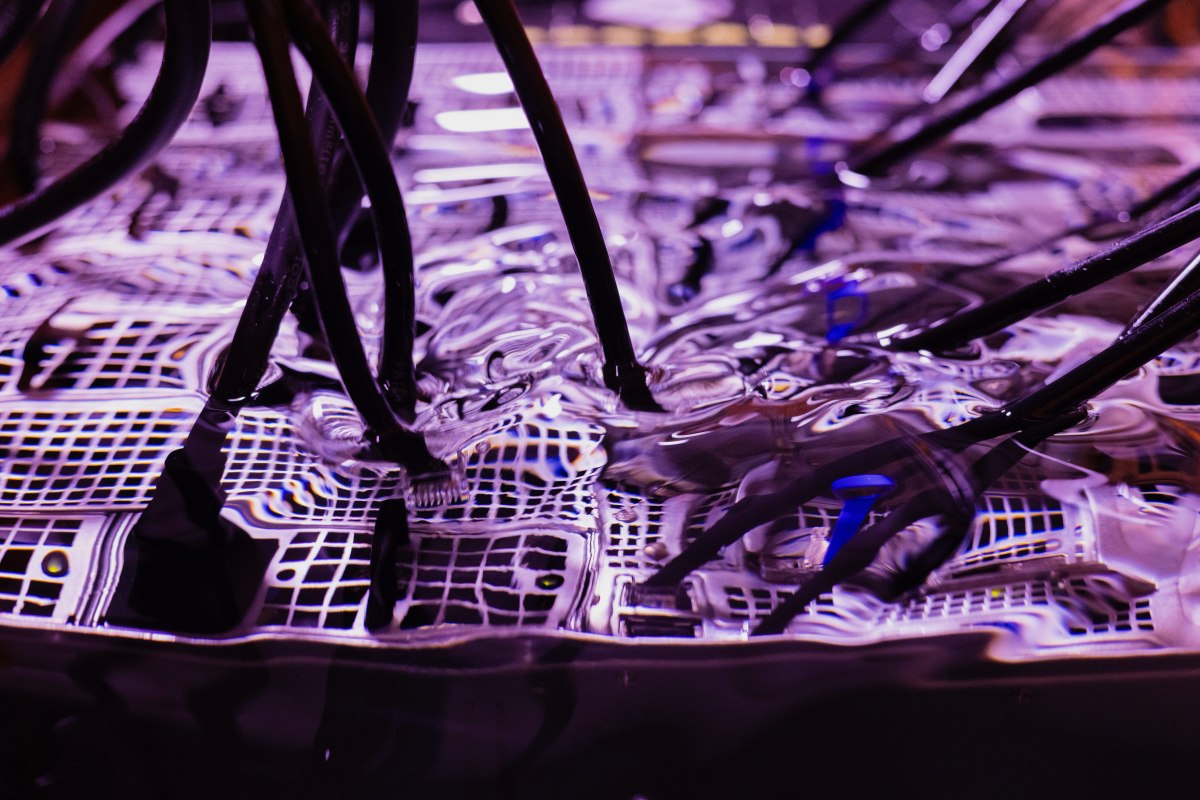
Innovative technologies such as immersion cooling are becoming part of that conversation, not simply as a way to remove heat, but as an enabler of higher compute density, improved efficiency, and scalable AI infrastructure.
In the AI era, cooling is no longer just a facilities consideration; rather, it is a strategic infrastructure decision that will help determine how far and how fast organisations can scale the next generation of computing.
Stay in the loop
Watch, follow, and subscribe to The Cooling Loop on YouTube to keep up with the future of AI and digital infrastructure.
For more from ExxonMobil, click here.
This article is sponsored by ExxonMobil
Joe Peck - 3 November 2026 0

Cyber Security Insights for Resilient Digital Defence
Data Centre Security: Protecting Infrastructure from Physical and Cyber Threats
Exclusive
Industry Insight
Rethinking cybersecurity for an always-on digital enterprise
In this exclusive article for DCNN, Sharat Sinha (pictured above), CEO at Airtel Business, assesses how unified security platforms combining AI-driven threat detection, automated response, and human oversight can strengthen cyber resilience across increasingly complex digital environments:
The world has entered an era where more than 20 billion connected devices generate continuous digital exhaust. Every transaction, sensor read, API call, and remote login now feeds a vast digital nervous system supporting economies, governments, and critical infrastructure. As adversaries weaponise automation and AI to scale reconnaissance and exploitation, the cyberattack surface has expanded faster than traditional defences can adapt. To safeguard national and enterprise resilience, security must evolve from fragmented, reactive controls to an AI-powered, human-led, always-on model delivered through a unified security platform.
Traditional architectures were designed for static networks and stable perimeters; they were never built for cloud-native workloads, edge computing, distributed workforces, or API-centric digital ecosystems. Threat actors, however, now operate at machine speed, using AI to craft hyper-targeted phishing, escalate privileges autonomously, and exploit misconfigurations in minutes. Meanwhile, breach discovery in many organisations still spans months. This widening gap between attacker speed and defender response highlights the need for continuous, intelligence-driven protection across network, identity, cloud, and data layers.
Using AI to identify weaknesses
Within this shift, AI is emerging as a force multiplier - not a replacement - for human expertise. AI-driven analytics reduce false positives by up to 60%, correlate billions of signals across hybrid environments, and detect weak anomalies invisible to manual analysis. Predictive models identify the vulnerabilities most likely to be weaponised, shrinking patch backlogs and strengthening overall resilience. Behavioural algorithms reinforce identity security by spotting subtle deviations that precede credential compromise. Even configuration hygiene improves as AI continuously validates cloud and network settings, eliminating exposures before they become incidents.
AI is also enabling entirely new security capabilities. AI assistants for security leaders can summarise incidents, explain posture drift, and produce board-ready insights in seconds. Autonomous SOC workflows now triage, enrich, and contain threats across identity, endpoint, and cloud layers. DevOps and cloud engineering teams use AI copilots to enforce guardrails and detect compliance drift, addressing misconfiguration risks that consistently rank amongst the top causes of breaches worldwide.
These advancements reflect a broader global shift towards unified, AI-first cybersecurity platforms, where intelligence becomes the connective fabric linking telemetry from identity, network, cloud, and data. Rather than operating dozens of siloed tools, organisations gain a single operating layer where detection, decision making, and response flow seamlessly. This consolidation accelerates containment, eliminates blind spots, and frees up security teams to focus on high-impact decisions.
AI also strengthens data protection and regulatory alignment, including emerging requirements under India’s DPDP Act. Automated data classification, policy violation monitoring, retention enforcement, and real-time breach alerts shift privacy oversight from periodic checks to continuous assurance. As India’s digital economy scales - driven by cloud adoption, fintech innovation, and public digital infrastructure - AI-driven governance ensures both compliance and protection without increasing operational burden.
Confidence in an unpredictable landscape
The global direction is clear: AI-first, human-centred, unified platforms are becoming the foundation of modern cyber resilience. With cyber incidents costing organisations millions of dollars and often causing systemic ripple effects, intelligent consolidation is no longer an efficiency strategy; it is a national and enterprise resilience strategy.
Looking ahead, cybersecurity will be defined by how effectively organisations integrate AI across the entire lifecycle (posture management, threat prediction, protection, governance, and automated response) whilst empowering human judgement at every critical decision point.
In a world where threats operate at machine speed, always-on, AI-powered, end-to-end protection is becoming the new standard. Organisations that embrace unified, AI-driven architectures will be best positioned to safeguard their people, data, and services with confidence in an increasingly unpredictable digital landscape.
Joe Peck - 29 October 2026 0

Data Centre Infrastructure News & Trends
Enterprise Network Infrastructure: Design, Performance & Security
Industry Insight
Sponsored
Edge to core: Fibre infrastructure and the retrofit challenge
AFL, a manufacturer of fibre optic cables and connectivity equipment, has published a new blog exploring how distributed AI workloads change fibre infrastructure requirements across edge, metro/regional, and core environments.
The blog also addresses a practical question for operators with facilities already in service: at what point does a brownfield retrofit stop making sense compared with a greenfield new build?
Industry forecasts suggest inference will overtake training as the dominant use of AI data centres by 2027, shifting demand towards regional and edge sites that can respond within 1–10ms. This means edge, regional, and core tiers can no longer be planned as separate projects, since every tier depends on shared fibre infrastructure.
The blog outlines what a fibre retrofit assessment should cover and explains how separating long-life backbone elements from short-life connectivity helps operators avoid designing for obsolescence.
You can read it in full here: Edge to Core: Fiber Infrastructure for Distributed AI Growth and the Retrofit Challenge
For more from AFL, click here.
This article is sponsored by AFL
Joe Peck - 28 October 2026 0
Data Centre Business News and Industry Trends
Data Centre Training & Certification Programs
Industry Insight
News
Kao Data launches public data centre information hub
Data centre developer and operator Kao Data has launched Data Centres Explained, a free website developed with industry trade associations techUK and the Data Centre Alliance (DCA) to answer the public's questions about data centres.
The website provides information about what data centres are, how they operate, and their role in everyday digital services, including online banking, contactless payments, streaming, navigation, and healthcare.
As new data centre developments are proposed across the UK, the resource aims to address questions from local communities about water use, electricity bills, noise, traffic, and construction.
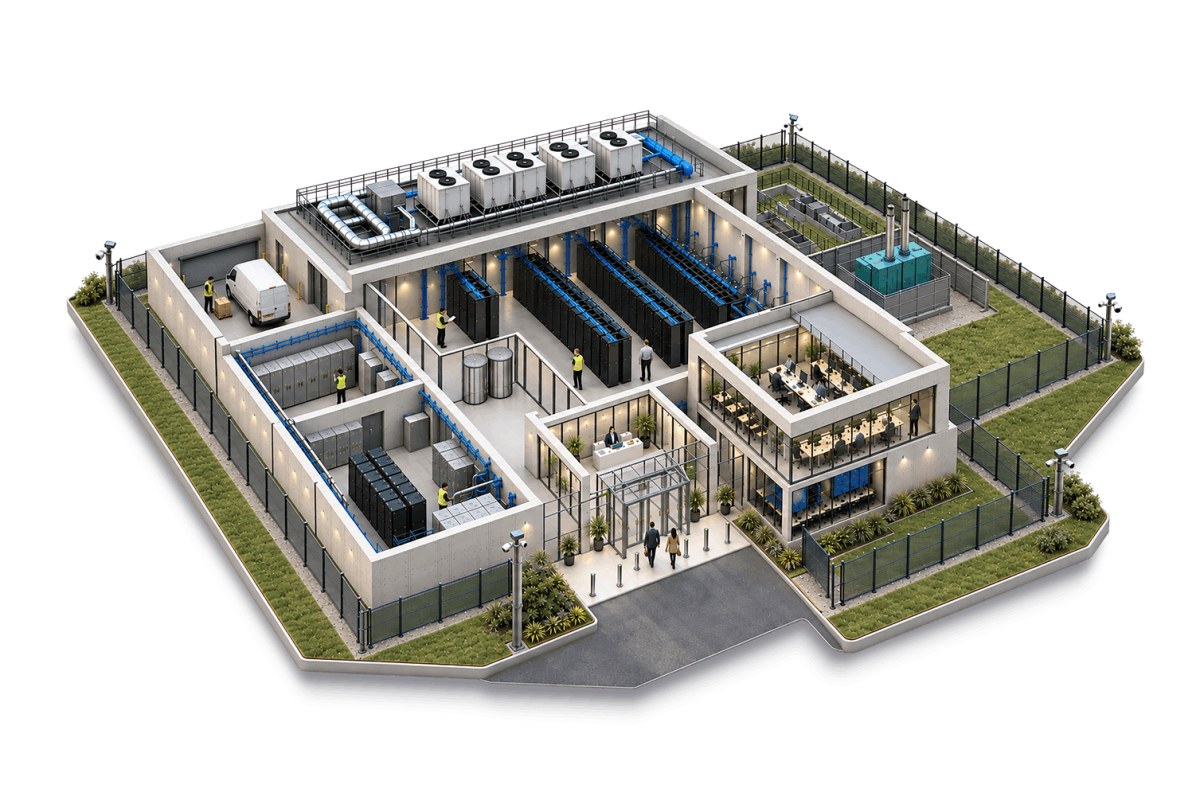
Visitors can explore a data centre zone by zone, from the data hall to the infrastructure that supports digital services. The website also includes a question-and-answer section covering topics such as water pressure, electricity costs, backup generators, and power cuts.
A separate section explains the stages of construction, how disruption is managed, and the potential for skilled jobs and supply chain opportunities.
Website invites questions from the public
The platform includes a portal where visitors can submit questions, with answers added to the resource over time. Kao Data says content is informed by official data and guidance, industry standards, and technical experts, as well as being checked before publication and reviewed as technology and policy develop.
Spencer Lamb, CEO at Kao Data, comments, “Data centres are the infrastructure behind the digital world and play a pivotal role in modern life; they are as fundamental as our roads, water systems, railways, and power lines.
"There is a lot of conflicting information about data centres and people deserve clear and honest answers about what these buildings are, how they work, and what they mean for the places they live.
"Data Centres Explained gives everyone somewhere to find those answers, and I would encourage our peers across the industry to lend their knowledge to it. The more expert voices we bring together, the more useful and trusted this resource will become.”
Matt Evans, COO at techUK, adds, “Data centres have only recently moved into the public eyeline and, like most new infrastructure assets, they are often misunderstood. Data Centres Explained is exactly the type of open and clear engagement that help us all understand the role that they play in our lives, how they operate, and what they can contribute to local communities.”
Venessa Moffat, Managing Director at the DCA, says, “Data Centres Explained is an important step towards building public trust through greater transparency, addressing the questions communities genuinely care about and replacing speculation with understanding.”
Kao Data is inviting data centre operators, engineers, suppliers, planners, and sustainability specialists to contribute answers within their areas of expertise. Contributors will be credited, with the aim of developing a shared resource for the industry and local communities.
For more from Kao Data, click here.
Joe Peck - 27 October 2026 0

Data Centre Infrastructure News & Trends
Enterprise Network Infrastructure: Design, Performance & Security
Events
Industry Insight
Fibre Horizons responds to rapidly changing fibre ecosystem
Fibre Horizons 2027, the annual conference from Fibre Council Europe, an industry association promoting fibre connectivity across Europe, will take place in Milan on 17–18 March 2027, covering fibre’s role across Europe’s digital infrastructure.
The renewed event builds on more than 20 years of the FTTH Conference, which has historically attracted more than 3,000 senior decision makers from over 1,000 organisations and more than 100 countries.
The new name reflects the expanding role of fibre in Europe’s digital infrastructure, including data centres, cloud computing, artificial intelligence, enterprise connectivity, network resilience, and security.
Conference broadens its programme
Fibre Horizons 2027 will bring together fibre operators, service providers, technology vendors, data centre owners, investors, regulators, European institutions, and government representatives.
The two-day event will introduce expanded content on data centres and enterprise connectivity, interactive roundtable sessions, a redesigned exhibition, and additional networking opportunities.
The programme will retain established topics such as fibre-to-the-home deployment, investment, market development, and regulation, whilst also covering fibre connections to data centres and enterprises, AI, data centre interconnectivity, network resilience, security, open access models, and opportunities for fibre operators.
Vincent Garnier, Director General of Fibre Council Europe, says, “For more than 20 years, the FTTH Conference has brought together the people and organisations driving Europe’s fibre development. Fibre Horizons builds on that legacy while reflecting how both the market and the role of fibre are evolving.
“Fibre is increasingly the foundation connecting homes, businesses, data centres, and the wider digital economy. The evolution towards Fibre Horizons allows us to bring these conversations together and create a broader platform for the operators, technology providers, policymakers, investors, and infrastructure leaders shaping Europe’s connectivity future.
“The ambition is not to leave behind what made the FTTH Conference successful, but to build on it. Fibre Horizons retains that established industry community and expertise whilst opening the conversation to the new technologies, markets, and stakeholders that increasingly depend on fibre infrastructure.
“Our objective remains the same: to bring the industry together to exchange ideas, influence policy, showcase innovation, and build the partnerships needed for Europe’s digital future.”
Fibre Horizons 2027 will take place at Allianz MiCo in Milan, 17–18 March 2027.
For more from Fibre Council Europe, click here.
Joe Peck - 26 October 2026 0

Head office & Accounts:
Suite 14, 6-8 Revenge Road, Lordswood
Kent ME5 8UD
T: +44 (0)1634 673163
F: +44 (0)1634 673173