Industry Insight
Events
Industry Insight
Capacity Europe 2026: Tackling constraints sets the agenda
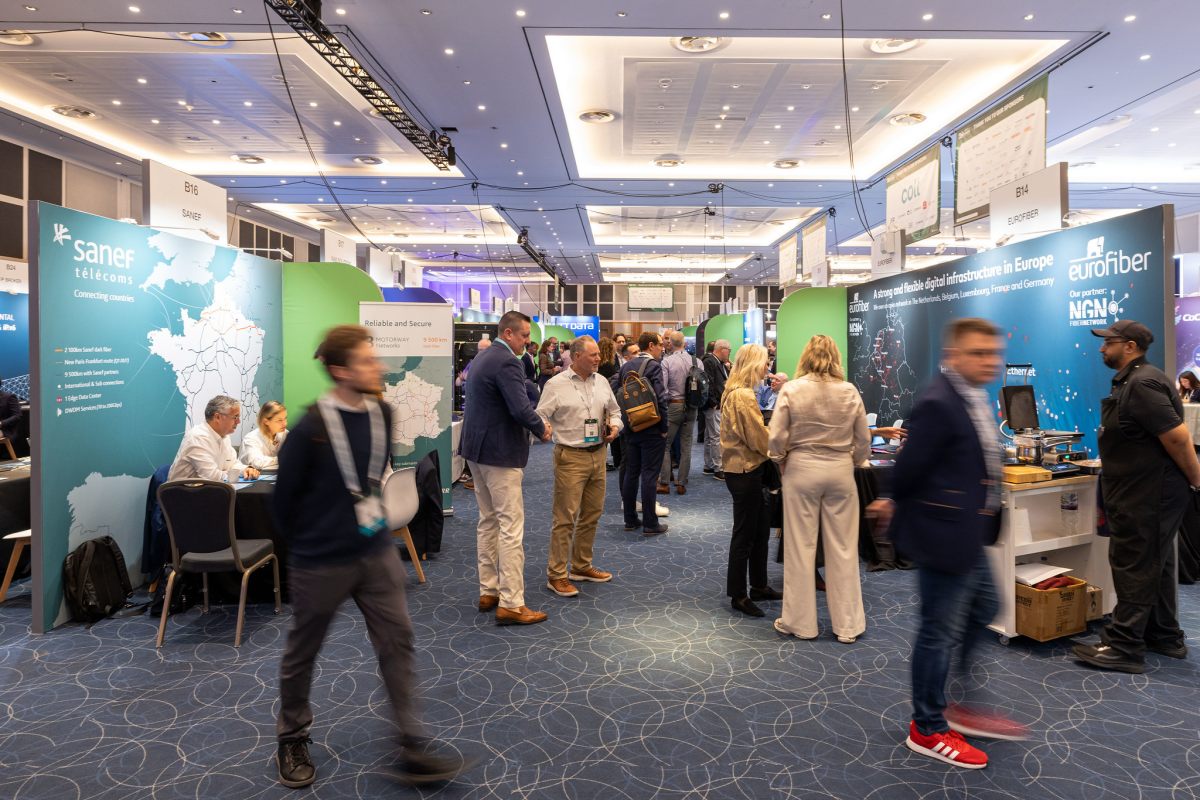
This October, Capacity Europe, an event for global digital infrastructure and connectivity, marked its 25th anniversary at the InterContinental London - The O2, bringing together more than 3,500 decision makers from across the connectivity and digital infrastructure community.
As DCNN observed, speaking to a wide spectrum of those present whilst at the event, AI demand was largely taken as self-evident. The more pressing discussions centred on what stands between that demand and its delivery, with key talking points being around power, grid timelines, equipment, skilled labour, community consent, and the discipline of the capital funding it all.
Key takeaways
Machines overtake humans
On the Market Forces Stage, Colt’s Avijit Singh opened with data from Cloudflare showing that machine-generated web requests overtook human ones for the first time in June, at 57.4% to 42.6%.
Machine traffic could exceed human traffic by 100 times within five years, he said, shifting the emphasis from north–south traffic towards east–west flows between agents and data centres. That raises the bar for latency, resilience, automation, and observability, and moves security towards verifying machine identity rather than users.
Inference and the edge
Several speakers at the event identified inference, rather than training, as the next wave of compute.
Verizon’s Jeff Hulse cited McKinsey research suggesting that 2026 is the first year in which inference investment matches training, whilst DE-CIX’s Ivo Ivanov noted that each millisecond of latency equates to roughly 80km, placing agentic and physical AI applications within 100km to 150km of the inference they depend on.
The result is renewed demand for edge locations and a European data centre map spreading well beyond FLAP-D.
Supply chains and grid certainty
Securing supply emerged as a bigger concern than price. Telehouse’s Ozgur Duzgunoglu said generators can take two years to arrive and high-voltage transformers 12 to 18 months, prompting operators to commit to suppliers before designs are final.
On power, the issue was less availability and more predictability, with one investor describing grid operators promising connections in 36 months and delivering in 48. National Grid’s David Atkins said the UK transmission owner is building three times as much network in this five-year period as in the last, and that flexibility of just 1% to 2% from data centres could unlock significant spare capacity.
Capital, risk, and social licence
The AI Build Stage hosted 'Capital at Risk: Navigating investment and returns in the AI Era', chaired by the Data Centre Alliance’s Venessa Moffat. Panellists from BGO Data Centers, DigitalBridge, Guggenheim, and Echelon Data Centres agreed that the underlying risks are familiar, but they are magnified by the speed and scale of investment.
Underwriting standards must adapt, they said, to faster equipment upgrade cycles and a broader investor base that now includes pension and sovereign wealth funds. DigitalBridge’s Zach Gellman was emphatic on community acceptance, stating, “Social licence is 100% critical.”
Connectivity and the Fibre Investment stage
Connectivity featured as a recurring warning against late planning. Digital Realty’s Paula Cogan said network planning still comes too late in many builds, and Salam’s Amjad Arab said AI workloads can need up to 36 times more fibre than traditional applications.
FLAG’s Paul Abfalter described significant underinvestment in long-haul links between data centres, whilst Orange announced a joint venture to deliver Pisces, a subsea system linking Ireland, France, Spain, and Portugal without transiting the UK.
On the Fibre Investment stage, nexfibre’s Rajiv Datta challenged the CMA’s provisional findings on the £2 billion Netomnia acquisition, with the regulator’s final decision due by 15 December.
Where will value land?
The closing panel, 'Digital Infrastructure in 2029: Who Captures the Next Wave of Value?', brought together speakers from FLAG, ING, Mobile UK, and LINX. ING’s Jeroen Kleinjan offered the clearest answer: “Value will accrue around bottlenecks”, which he named as power, strategic sites, scarce routes, and trusted interconnection.
Meanwhile, Mobile UK’s Hamish MacLeod noted that UK mobile revenues have fallen by about 30% while traffic has grown 40 times, a reminder that growth alone does not guarantee returns.
For more on Capacity Europe, click here.

Joe Peck - 6 November 2026 0

Data Centre Business News and Industry Trends
Data Centre Regulations & UK Compliance Updates
Industry Insight
Insights into Data Centre Investment & Market Growth
What the 2026 UK Budget means for data centres
The Chancellor used his Budget speech on 28 October to launch a “British Data Centre Covenant”, promising faster grid connections and temporary on-site power for strategic sites. Much of the detail, including who will qualify, is still to come.
Data centres had a dedicated section in Chancellor John Healey’s Budget speech, with the headline announcement being a new British Data Centre Covenant: a deal under which operators that meet “strict tests” on local investment, jobs, and water protection can secure government help to get connected to the grid.
The Chancellor framed the move around sovereignty and security, telling MPs that when the NHS uses AI to treat patients, “we want that data here”, and that the same applies to the armed forces.
The Government estimates that the UK will need 6GW of AI data centre capacity by 2030, roughly three times its current operational capacity of around 2GW.
What the Covenant asks of operators
The new Covenant sets out five tests, covering energy costs, local investment, environmental standards, skilled jobs, and national security. All data centres are encouraged to meet them, but they become mandatory for “strategic” data centres seeking enhanced government support. These are:
• Energy: Strategic sites must make credible commitments for the grid capacity they request and contribute towards the energy system costs their developments create.
• Local benefit: Applicants must produce a Local Benefit Plan, drawn up with local stakeholders and scaled to the size of the development. Funds can be directed to local priorities such as transport, parks, and town centre improvements.
• Environment: Expectations include minimising water consumption, using closed-loop cooling where possible, reusing waste heat, and publishing annual reports on energy and water use. Operators are encouraged to publish total and peak water consumption and water usage effectiveness (WUE), and the Government will explore the use of treated wastewater for cooling. It has also indicated that it would consider a statutory reporting framework if sufficient data is not forthcoming.
• Jobs and supply chain: Commitments to local jobs and apprenticeships and to prioritising UK suppliers. For the most strategic sites, this extends to contributing to British AI hardware.
• Security: Providing secure UK compute for the NHS and other public services, working with the National Cyber Security Centre.
What operators get in return
A new Ministerial Control Centre, chaired by the UK Minister for Artificial Intelligence, will decide which sites receive support. Using powers in the Planning and Infrastructure Act, the Government says it may reserve and reallocate grid capacity, as well as transfering pre-2030 connection contracts to strategic data centres. For exceptionally strategic projects, where other measures fall short, it will also allow tightly controlled on-site generation until a grid connection is available.
The package also includes support for Ofgem’s data centre commitment fee and queue management measures intended to deter speculative demand, more choice for developers to self-build connection infrastructure, and continued alignment of future connections with regional infrastructure capacity beyond 2030, taking land, water, and electricity constraints into account.
On planning, the Government has published a draft Data Centre National Policy Statement, which will set the decision-making framework for large projects seeking consent through the Nationally Significant Infrastructure Project regime. Projects with an indicative IT load of at least 100MW are expected to fall within scope. The consultation runs until 8 January 2027.
Sovereign AI and defence
The Covenant sits alongside an AI and cybersecurity package worth more than £700 million. It includes an additional £140 million for the Sovereign AI Unit, £120 million for the AI Security Institute, £165 million for a new National AI Biosecurity Initiative, and £154 million to strengthen cyber defences.
Of particular interest to the sector, the Ministry of Defence is assessing options to increase sovereign compute and data centre capacity on its secure estate. A facility colocated with existing defence innovation and testing infrastructure could ultimately offer secure compute access to UK small and medium-sized enterprises.
What it means for the sector
The industry response has been broadly positive, but with consistent caveats about delivery.
For Matthew Baynes, Vice President Secure Power and Data Centres, UK&I at Schneider Electric, the Covenant is “a significant opportunity for a new era of responsible data centre development, where investment in digital infrastructure delivers tangible benefits for local communities and the wider UK economy.” He singled out the power measures in particular, stating, “The commitment to prioritising grid connections for critical data centres, alongside enabling on-site power generation where necessary, is particularly encouraging.”
That on-site element could prove significant. Matthew argues that “behind-the-meter solutions, including microgrids, battery energy storage, and alternative generation technologies, can play a pivotal role in accelerating deployment, improving energy resilience, and reducing pressure on the grid.” He adds, “The opportunity now is for government, energy providers, and the data centre industry to work together to turn this commitment into action.”
Power costs, however, remain the sticking point for some. Mark Pestridge, Managing Director of Telehouse Europe, welcomed the Covenant as “a recognition of the vital role data centres play in supporting the UK’s digital economy and AI ambitions”, but warned that “electricity costs in the UK remain significantly higher than in much of Europe, presenting a major challenge to international competitiveness.” In his view, “ensuring the UK remains an attractive destination for long-term data centre investment will require greater focus on delivering affordable, reliable power.” Trade body techUK has also flagged energy affordability as a weakness of the Budget.
There is also the question of how far the new powers will shorten the grid queue, rather than simply reordering it. Reserving capacity, reallocating connections released by others, and transferring pre-2030 contracts largely move strategic sites up the line. Ofgem has said that the connection queue grew by 460% in the first half of 2025, with data centres accounting for at least 73GW of the pipeline, and grid delays are already shaping investment decisions. Microsoft reportedly walked away from Nscale’s planned Loughton site after the developer was told grid power might not arrive until the early-to-mid 2030s.
The on-site generation allowance could help bridge such gaps, but its value will depend on two things the Budget left open: how many sites are classed as strategic, and how quickly reserved capacity reaches them. The Government has said it will set out “in due course” how a strategic data centre is defined, and the Budget speech itself gave no thresholds or start date for the tests.
Finally, Lee Myall, CEO of Neos Networks, welcomed the plans to accelerate data centre development and improve grid access, but cautioned that “the same joined-up thinking needs to extend to digital connectivity, which will be just as important in enabling businesses across the country to capitalise on AI.” Neos's research found that “connectivity constraints have forced 38% of large UK businesses to keep AI workloads more centralised than planned, while 34% have moved workloads to another region entirely.” He concludes, “Digital connectivity must be considered alongside power, planning, and other infrastructure priorities.”
What to watch next
Three things will determine whether the Covenant becomes a genuine catalyst for the sector: the definition of a “strategic data centre” and the final criteria for enhanced support; how much capacity the Government can actually reserve or reallocate, and by when; and the outcome of the draft National Policy Statement consultation, which closes on 8 January 2027.
For further insight, you can follow our ongoing coverage of the data centre sector in the UK and worldwide.
Joe Peck - 4 November 2026 0

Data Centre Infrastructure News & Trends
Industry Insight
Innovations in Data Center Power and Cooling Solutions
Sponsored
Why thermal management is emerging as a strategic enabler
AI is transforming how we compute, but it is also exposing a critical infrastructure challenge: how do we cool increasingly powerful compute environments?
For decades, air cooling has been the foundation of data centre design. It is proven, familiar, and effective for traditional enterprise workloads. However, the demands of AI are fundamentally different. Large-scale AI training, high-performance computing, and dense GPU deployments are driving power densities to levels that push the practical limits of air cooling.
Whilst average rack densities have historically ranged from 10 to 20kW, the industry is rapidly moving towards deployments measured in hundreds of kilowatts per rack, with discussions of 600kW and even 1MW architecture becoming more common.
This shift is forcing data centre operators to rethink how infrastructure is designed, powered, and cooled.
Innovative technologies such as immersion cooling are becoming part of that conversation, not simply as a way to remove heat, but as an enabler of higher compute density, improved efficiency, and scalable AI infrastructure.
In the AI era, cooling is no longer just a facilities consideration; rather, it is a strategic infrastructure decision that will help determine how far and how fast organisations can scale the next generation of computing.
Stay in the loop
Watch, follow, and subscribe to The Cooling Loop on YouTube to keep up with the future of AI and digital infrastructure.
For more from ExxonMobil, click here.
This article is sponsored by ExxonMobil
Joe Peck - 3 November 2026 0

Cyber Security Insights for Resilient Digital Defence
Data Centre Security: Protecting Infrastructure from Physical and Cyber Threats
Exclusive
Industry Insight
Rethinking cybersecurity for an always-on digital enterprise
In this exclusive article for DCNN, Sharat Sinha (pictured above), CEO at Airtel Business, assesses how unified security platforms combining AI-driven threat detection, automated response, and human oversight can strengthen cyber resilience across increasingly complex digital environments:
The world has entered an era where more than 20 billion connected devices generate continuous digital exhaust. Every transaction, sensor read, API call, and remote login now feeds a vast digital nervous system supporting economies, governments, and critical infrastructure. As adversaries weaponise automation and AI to scale reconnaissance and exploitation, the cyberattack surface has expanded faster than traditional defences can adapt. To safeguard national and enterprise resilience, security must evolve from fragmented, reactive controls to an AI-powered, human-led, always-on model delivered through a unified security platform.
Traditional architectures were designed for static networks and stable perimeters; they were never built for cloud-native workloads, edge computing, distributed workforces, or API-centric digital ecosystems. Threat actors, however, now operate at machine speed, using AI to craft hyper-targeted phishing, escalate privileges autonomously, and exploit misconfigurations in minutes. Meanwhile, breach discovery in many organisations still spans months. This widening gap between attacker speed and defender response highlights the need for continuous, intelligence-driven protection across network, identity, cloud, and data layers.
Using AI to identify weaknesses
Within this shift, AI is emerging as a force multiplier - not a replacement - for human expertise. AI-driven analytics reduce false positives by up to 60%, correlate billions of signals across hybrid environments, and detect weak anomalies invisible to manual analysis. Predictive models identify the vulnerabilities most likely to be weaponised, shrinking patch backlogs and strengthening overall resilience. Behavioural algorithms reinforce identity security by spotting subtle deviations that precede credential compromise. Even configuration hygiene improves as AI continuously validates cloud and network settings, eliminating exposures before they become incidents.
AI is also enabling entirely new security capabilities. AI assistants for security leaders can summarise incidents, explain posture drift, and produce board-ready insights in seconds. Autonomous SOC workflows now triage, enrich, and contain threats across identity, endpoint, and cloud layers. DevOps and cloud engineering teams use AI copilots to enforce guardrails and detect compliance drift, addressing misconfiguration risks that consistently rank amongst the top causes of breaches worldwide.
These advancements reflect a broader global shift towards unified, AI-first cybersecurity platforms, where intelligence becomes the connective fabric linking telemetry from identity, network, cloud, and data. Rather than operating dozens of siloed tools, organisations gain a single operating layer where detection, decision making, and response flow seamlessly. This consolidation accelerates containment, eliminates blind spots, and frees up security teams to focus on high-impact decisions.
AI also strengthens data protection and regulatory alignment, including emerging requirements under India’s DPDP Act. Automated data classification, policy violation monitoring, retention enforcement, and real-time breach alerts shift privacy oversight from periodic checks to continuous assurance. As India’s digital economy scales - driven by cloud adoption, fintech innovation, and public digital infrastructure - AI-driven governance ensures both compliance and protection without increasing operational burden.
Confidence in an unpredictable landscape
The global direction is clear: AI-first, human-centred, unified platforms are becoming the foundation of modern cyber resilience. With cyber incidents costing organisations millions of dollars and often causing systemic ripple effects, intelligent consolidation is no longer an efficiency strategy; it is a national and enterprise resilience strategy.
Looking ahead, cybersecurity will be defined by how effectively organisations integrate AI across the entire lifecycle (posture management, threat prediction, protection, governance, and automated response) whilst empowering human judgement at every critical decision point.
In a world where threats operate at machine speed, always-on, AI-powered, end-to-end protection is becoming the new standard. Organisations that embrace unified, AI-driven architectures will be best positioned to safeguard their people, data, and services with confidence in an increasingly unpredictable digital landscape.
Joe Peck - 29 October 2026 0

Data Centre Infrastructure News & Trends
Enterprise Network Infrastructure: Design, Performance & Security
Industry Insight
Sponsored
Edge to core: Fibre infrastructure and the retrofit challenge
AFL, a manufacturer of fibre optic cables and connectivity equipment, has published a new blog exploring how distributed AI workloads change fibre infrastructure requirements across edge, metro/regional, and core environments.
The blog also addresses a practical question for operators with facilities already in service: at what point does a brownfield retrofit stop making sense compared with a greenfield new build?
Industry forecasts suggest inference will overtake training as the dominant use of AI data centres by 2027, shifting demand towards regional and edge sites that can respond within 1–10ms. This means edge, regional, and core tiers can no longer be planned as separate projects, since every tier depends on shared fibre infrastructure.
The blog outlines what a fibre retrofit assessment should cover and explains how separating long-life backbone elements from short-life connectivity helps operators avoid designing for obsolescence.
You can read it in full here: Edge to Core: Fiber Infrastructure for Distributed AI Growth and the Retrofit Challenge
For more from AFL, click here.
This article is sponsored by AFL
Joe Peck - 28 October 2026 0
Data Centre Business News and Industry Trends
Data Centre Training & Certification Programs
Industry Insight
News
Kao Data launches public data centre information hub
Data centre developer and operator Kao Data has launched Data Centres Explained, a free website developed with industry trade associations techUK and the Data Centre Alliance (DCA) to answer the public's questions about data centres.
The website provides information about what data centres are, how they operate, and their role in everyday digital services, including online banking, contactless payments, streaming, navigation, and healthcare.
As new data centre developments are proposed across the UK, the resource aims to address questions from local communities about water use, electricity bills, noise, traffic, and construction.
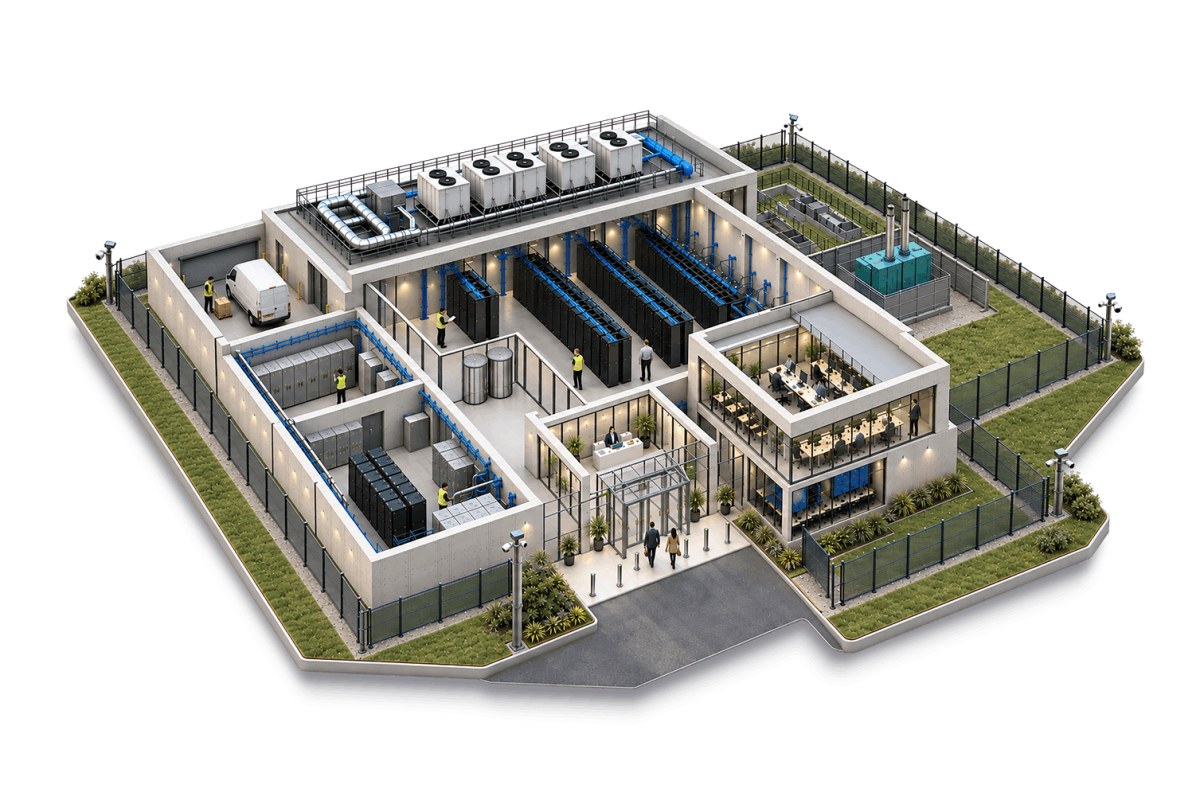
Visitors can explore a data centre zone by zone, from the data hall to the infrastructure that supports digital services. The website also includes a question-and-answer section covering topics such as water pressure, electricity costs, backup generators, and power cuts.
A separate section explains the stages of construction, how disruption is managed, and the potential for skilled jobs and supply chain opportunities.
Website invites questions from the public
The platform includes a portal where visitors can submit questions, with answers added to the resource over time. Kao Data says content is informed by official data and guidance, industry standards, and technical experts, as well as being checked before publication and reviewed as technology and policy develop.
Spencer Lamb, CEO at Kao Data, comments, “Data centres are the infrastructure behind the digital world and play a pivotal role in modern life; they are as fundamental as our roads, water systems, railways, and power lines.
"There is a lot of conflicting information about data centres and people deserve clear and honest answers about what these buildings are, how they work, and what they mean for the places they live.
"Data Centres Explained gives everyone somewhere to find those answers, and I would encourage our peers across the industry to lend their knowledge to it. The more expert voices we bring together, the more useful and trusted this resource will become.”
Matt Evans, COO at techUK, adds, “Data centres have only recently moved into the public eyeline and, like most new infrastructure assets, they are often misunderstood. Data Centres Explained is exactly the type of open and clear engagement that help us all understand the role that they play in our lives, how they operate, and what they can contribute to local communities.”
Venessa Moffat, Managing Director at the DCA, says, “Data Centres Explained is an important step towards building public trust through greater transparency, addressing the questions communities genuinely care about and replacing speculation with understanding.”
Kao Data is inviting data centre operators, engineers, suppliers, planners, and sustainability specialists to contribute answers within their areas of expertise. Contributors will be credited, with the aim of developing a shared resource for the industry and local communities.
For more from Kao Data, click here.
Joe Peck - 27 October 2026 0

Data Centre Infrastructure News & Trends
Enterprise Network Infrastructure: Design, Performance & Security
Events
Industry Insight
Fibre Horizons responds to rapidly changing fibre ecosystem
Fibre Horizons 2027, the annual conference from Fibre Council Europe, an industry association promoting fibre connectivity across Europe, will take place in Milan on 17–18 March 2027, covering fibre’s role across Europe’s digital infrastructure.
The renewed event builds on more than 20 years of the FTTH Conference, which has historically attracted more than 3,000 senior decision makers from over 1,000 organisations and more than 100 countries.
The new name reflects the expanding role of fibre in Europe’s digital infrastructure, including data centres, cloud computing, artificial intelligence, enterprise connectivity, network resilience, and security.
Conference broadens its programme
Fibre Horizons 2027 will bring together fibre operators, service providers, technology vendors, data centre owners, investors, regulators, European institutions, and government representatives.
The two-day event will introduce expanded content on data centres and enterprise connectivity, interactive roundtable sessions, a redesigned exhibition, and additional networking opportunities.
The programme will retain established topics such as fibre-to-the-home deployment, investment, market development, and regulation, whilst also covering fibre connections to data centres and enterprises, AI, data centre interconnectivity, network resilience, security, open access models, and opportunities for fibre operators.
Vincent Garnier, Director General of Fibre Council Europe, says, “For more than 20 years, the FTTH Conference has brought together the people and organisations driving Europe’s fibre development. Fibre Horizons builds on that legacy while reflecting how both the market and the role of fibre are evolving.
“Fibre is increasingly the foundation connecting homes, businesses, data centres, and the wider digital economy. The evolution towards Fibre Horizons allows us to bring these conversations together and create a broader platform for the operators, technology providers, policymakers, investors, and infrastructure leaders shaping Europe’s connectivity future.
“The ambition is not to leave behind what made the FTTH Conference successful, but to build on it. Fibre Horizons retains that established industry community and expertise whilst opening the conversation to the new technologies, markets, and stakeholders that increasingly depend on fibre infrastructure.
“Our objective remains the same: to bring the industry together to exchange ideas, influence policy, showcase innovation, and build the partnerships needed for Europe’s digital future.”
Fibre Horizons 2027 will take place at Allianz MiCo in Milan, 17–18 March 2027.
For more from Fibre Council Europe, click here.
Joe Peck - 26 October 2026 0
Data Centre Build News & Insights
Industry Insight
Sustainable Infrastructure: Building Resilient, Low-Carbon Projects
Could smarter monitoring reduce data centre wastewater?
Liquid waste removal experts at BusinessWaste.co.uk say operators will need to think more carefully about how water is used across their sites, where wastewater is being created, and what can be done to reduce it:
Water use depends on how sites are designed
Water demand can vary considerably between data centres, depending on the cooling systems and infrastructure in place.
Some cooling systems rely much more heavily on water, whilst others are designed to recirculate more of it. That means decisions made during site planning can have an impact on how much water it eventually uses.
For new developments, that could mean considering cooling systems, local water availability, and whether any water reuse opportunities exist before construction begins. Existing sites can also get a clearer picture of where water is going by using meters and sensors to track usage over time.
A sudden rise in consumption could prompt checks for a leak, an equipment problem, or another change in the site.
Where cooling or maintenance processes produce wastewater, cutting unnecessary water use and reusing more of it could also help reduce the amount that eventually needs to be treated or discharged.
Could AI help operators spot problems earlier?
As large data centres already produce a huge amount of operational data, AI could help operators make more sense of it.
Used alongside existing monitoring systems, AI could pull together information from water meters, cooling equipment, and other parts of a site, which could make unusual changes or any emerging patterns easier to spot. This could help operators investigate problems sooner, especially on large sites where it may be difficult to track everything manually.
Where a site generates wastewater through cooling or maintenance, the same monitoring could also help operators track changes in the amount being produced and understand where those changes originate.
There is still a lack of clear evidence around how much water data centres use and how AI could affect that demand. The Environment Agency has faced difficulties gathering reliable water-use data from the sector, which has made it difficult to assess future demand.
Research into AI-led cooling is also developing, although much of the focus so far has been on energy efficiency. A recent review of 64 studies found that only three reported water usage effectiveness (WUE), suggesting there is still more to understand about how AI optimisation could affect water consumption.
That means water use will need to be measured more consistently if operators are going to understand whether these systems are actually making a difference.
Could data centres rely on less drinking water?
As demand for AI continues to grow, there will likely come a point when operators will need to look beyond using drinking water as a means of cooling.
Depending on the site and the type of cooling system being used, some options include rainwater harvesting, recycled wastewater, and other non-drinking water sources. Government research has already identified these as possible ways to ease pressure on public water supplies.
Closed-loop cooling could also help, as it allows water to circulate through a system several times rather than constantly bringing in fresh supplies. The Environment Agency has pointed to this as a more water-efficient option and says reuse should be considered when new data centres are planned.
There may also be opportunities to reuse some of the wastewater created on site. Water removed from cooling systems, for example, can sometimes be treated and fed back into the system instead of being discharged straight away.
For future sites, the wider aim could be to get more use out of the water already available, rather than relying so heavily on fresh supplies each time.
Calls for more transparency
Mark Hall, Liquid Waste Removal Expert at BusinessWaste.co.uk, comments, “Data centres are becoming a bigger part of everyday infrastructure, and the relationship between them and water is becoming a bigger part of discussions.
“As more sites are proposed, operators are likely to face more questions from local communities, councils, and regulators about the pressure they could place on water supplies. Being able to explain that is going to become increasingly important.
“There needs to be more openness across the sector, because if we don’t know how much water data centres are using, it becomes much harder to judge what further growth could mean for local water supplies.
“For businesses planning new sites, water should be treated as a key part of the decision-making process from the beginning. The availability of land and power will always matter, but access to water could also play a bigger role in where these facilities can realistically operate.”
Joe Peck - 13 October 2026 0
Data Centre Infrastructure News & Trends
Industry Insight
Innovations in Data Center Power and Cooling Solutions
OCP accepts Airsys whitepaper on data centre power allocation
The Open Compute Project (OCP) has accepted a whitepaper by Airsys executives proposing a new metric to measure how much of a data centre’s provisioned electrical capacity is available for IT compute before construction begins.
The paper introduces 'Power Compute Effectiveness' (PCE), a metric intended to help data centre designers identify how much power is allocated to IT equipment, cooling systems, electrical losses, and auxiliary loads at the design stage.
The framework was authored by Airsys founder and CEO Yunshui Chen, Chief Strategic Relations Officer Paul Quigley, and Product Marketing Manager Jake Roberts. It was contributed to OCP, peer reviewed, and accepted under an open licence.
As AI workloads increase power density and grid connection constraints limit available capacity, the paper argues that operators need to understand how electrical capacity is allocated before a facility is built.
Existing metrics, such as Power Usage Effectiveness (PUE), assess operational energy efficiency rather than how provisioned capacity is distributed in the design.
PCE measures capacity available for compute
PCE measures the proportion of provisioned electrical capacity within a defined facility boundary that is available for IT compute after accounting for redundancy requirements. Expressed as a value between zero and one, it is intended to complement established operational metrics.
The proposed methodology has three main applications: identifying capacity allocated to cooling, electrical distribution losses, and auxiliary loads; complementing PUE by assessing capacity allocation at the design stage; and enabling comparisons across facilities of different sizes, including colocation sites, hyperscale campuses, and retrofit projects.
Yunshui Chen says, “Operators have spent years optimising for how power is used inside a data centre using existing metrics like PUE. PCE asks a different question: how much of the power facility you've already paid for is structurally reaching compute in the first place?
"We built this framework to give the industry a common, design-level way to answer that question, and we believe the answer should benefit every operator, not just Airsys customers.”
Paul Quigley adds, “PUE has served this industry well, but it looks in the rearview mirror at operational energy efficiency. PCE is meant to be the windshield.
"A design team can take the facility design documents, starting with the single-line diagram, and determine how much of the provisioned power is allocated to compute and how much is allocated to cooling, electrical losses, and auxiliary load, before a single watt is drawn.
"When power decides how big a data centre can be, that's a question every operator should be able to answer on the drawing board.”
Whitepaper sets out design-stage approach
The paper presents PCE as a provisional metric that could help operators, owners, and planners assess capacity allocation before construction, or when evaluating facility upgrades and retrofits.
Jake Roberts notes, “Energy stewardship starts long before a facility goes live. The path every kilowatt takes between the utility meter and the rack is more nuanced than most people realise.
"PCE is a provisional metric, and the earlier we can calculate the power allocation for a facility - starting in the design phase or in the retrofit/upgrade stage - the better we can steward that power for its entire life.
"Having OCP peer review and accept the whitepaper opens the door to broader industry adoption, and I'm excited for a future where we can plan with metrics that help us prioritise power allocation and stewardship from the start.”
The whitepaper, Power Compute Effectiveness (PCE): A Provisioned Capacity Allocation Metric for the New Data Center Era, is available through the OCP Contribution Database.
For more from Airsys, click here.
Joe Peck - 12 October 2026 0

Data Centre Infrastructure News & Trends
Industry Insight
Innovations in Data Center Power and Cooling Solutions
Sponsored
'We used to consume energy; today, we manage it'
For 40 years, Janitza has helped shape the evolution of modern power infrastructure. Today, digitalisation, electrification, and increasingly volatile power grids are fundamentally changing requirements for visibility, availability, and power quality. In this interview, Alexander Veidt (pictured above), CEO at Janitza, explains the challenges arising from these developments and how the company is positioning itself for the energy infrastructure of the future:
DCNN: Power infrastructure worldwide is becoming increasingly complex, dynamic, and data driven. Which trends are driving this transformation the most?
Alexander: I see three key developments. First, we are seeing large-scale electrification of industry, buildings, transportation, and heating systems. Second, there is increasing decentralisation and volatility driven by renewable energy sources, energy storage systems, and flexible loads. Third, there is a growing need for transparency because energy is no longer just a cost factor; it has become a strategic business resource.
All of this is leading to a fundamental shift. We used to consume energy; today, we manage it. We need to know where the energy comes from, when it is available, and how we can control it, store it, or send it back to the grid.
DCNN: Electrification is pushing power grids to their limits in many parts of the world. Is the key question ultimately whether enough energy is available?
Alexander: That is certainly a central question. Equally important, however, is the question of power quality. We have been focused on power quality for 40 years, and one thing is becoming increasingly clear: power quality is deteriorating.
DCNN: What specific issues are you seeing?
Alexander: One example is grid frequency. Conventional power plants create a physically stable and inert grid through their rotating masses. Today, many renewable energy sources feed power into the grid through power electronics and inverter technologies. As a result, grid behaviour is changing compared to traditional systems based on large rotating generators.
DCNN: How are AI data centres intensifying these challenges?
Alexander: At the end of the day, data centres are major energy consumers. However, when it comes to AI data centres, a new question is emerging: Do we have the right power quality, at the right time, in the right place, and can we control it reliably?
In addition, we should not overlook the fact that data centres also influence the power grid itself. During AI training runs or sudden demand spikes, significant and rapid changes in power demand can place considerable stress on the electrical network.
DCNN: Janitza has been developing solutions for its customers for 40 years. How is the company evolving its products to address these new requirements?Alexander: Our UMG 512-PRO Power Quality Analyzer is a comprehensive solution with a strong track record in the market. Additionally, we are preparing to launch the next generation of our measurement devices, designed specifically to address the issues we have just discussed.
What’s more, this applies across all voltage levels. For each level, we offer dedicated product families capable of detecting these issues, processing the data, and helping customers manage them while addressing the specific characteristics of each grid environment.
DCNN: We have talked about AI in data centres. What role will AI play in Janitza’s portfolio in the coming years?
Alexander: AI will play a major role. One of our advantages is that Janitza solutions generate data, and data is the foundation for training AI models. Only then can large volumes of data be used effectively for monitoring, control, optimisation, and automation. We are already implementing AI applications, including within GridVis (our energy monitoring and power quality analysis software) and in planning tools for electrical infrastructure.
Janitza has made energy data visible to its customers across every generation of our products. Access to data is not the issue; AI takes the analysis of these vast volumes of measurement data to an entirely new level and makes that information significantly more actionable.
DCNN: As power grids become more complex, companies around the world are also facing increasing regulatory pressure. Which issues are currently top of mind for your customers?
Alexander: I see two primary issues. The first is sustainability: reducing CO₂ emissions and lowering energy consumption, driven by regulatory requirements and compliance deadlines.
The second is the growing international influence of regulatory frameworks. Today, we can clearly see how regulations established in one region increasingly affect companies in other parts of the world.
DCNN: In this dynamic environment, where do you see the greatest growth opportunities for Janitza over the next several years, particularly on an international level?
Alexander: Everywhere electrical infrastructure is critical, complex, and closely tied to economic growth. That includes data centres, industrial facilities, energy infrastructure, healthcare, and large commercial buildings. North America will remain one of our most important strategic markets, particularly because it is home to the world's largest data centre ecosystem.
At the same time, we will continue to diversify our business and expand into new industries. Each region we are targeting faces its own challenges. We understand those challenges and know how to address them in different ways. That positions us well for continued growth.
DCNN: Janitza celebrates its 40th anniversary in 2026. What can customers continue to expect from Janitza in the years ahead?
Alexander: For us, Janitza’s 40th anniversary is both an opportunity to reflect on what we have achieved and a starting point for the next stage of our development. Over the years, we have built a strong commitment to quality and innovation that our customers can continue to rely on. At the same time, we are investing heavily to ensure that we remain among the technology leaders in our industry.
Our customers can count on Janitza to remain the innovative specialist in energy measurement technology. This is our passion.
For more from Janitza, cick here.
This article is sponsored by Janitza
Joe Peck - 9 October 2026 0

Head office & Accounts:
Suite 14, 6-8 Revenge Road, Lordswood
Kent ME5 8UD
T: +44 (0)1634 673163
F: +44 (0)1634 673173