Report: How Slough became Europe’s largest DC cluster
Author: Joe Peck
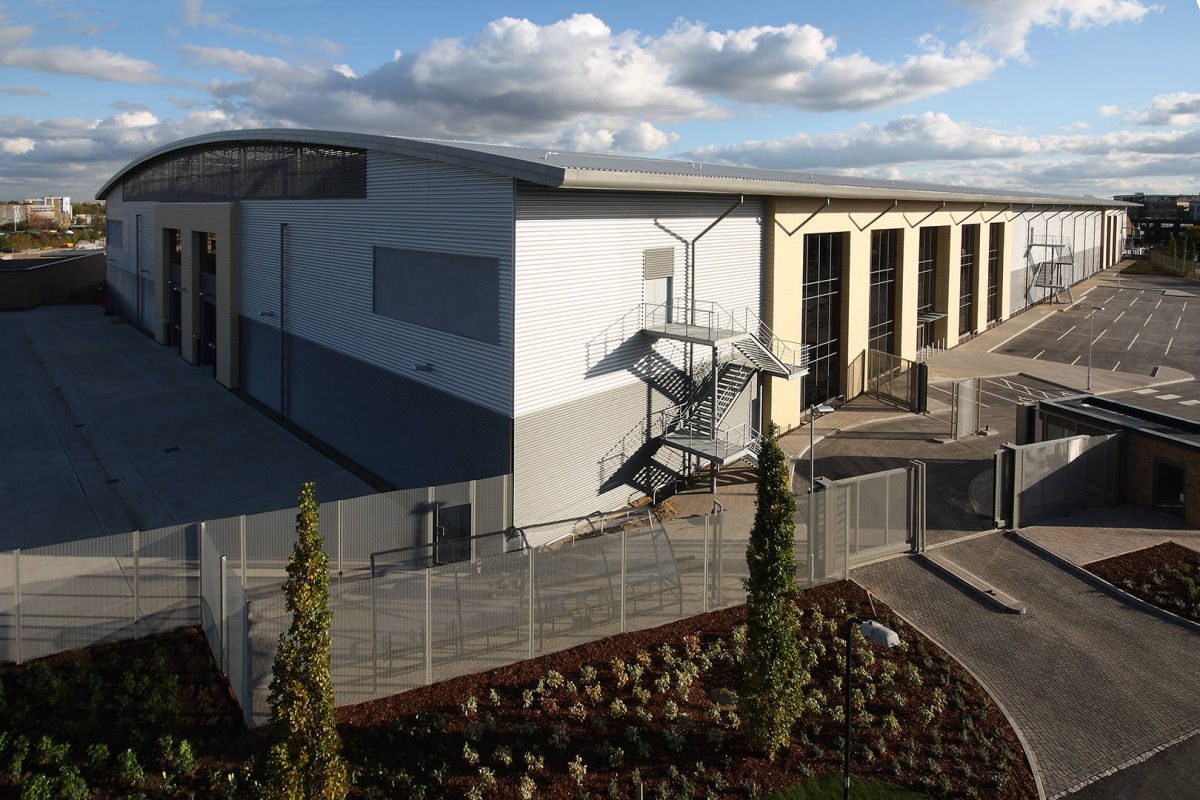
Kao Data, a developer and operator of data centres engineered for AI and advanced computing, has published a new report examining how Slough has evolved into Europe’s largest data centre cluster – and the UK’s de facto AI Growth Zone (AIGZ) – hosting over 675 Megawatts (MW) of hyperscale data centre capacity, while contributing more than 14,000 jobs and over £30 million in annual business rates to the local economy.
The new report, ‘The Quiet Revolution: How Data Centres Remade Slough and Secured the UK’s Digital Future’, was released just as the UK marks 12 months since the inception of the Government’s AI Opportunities Action Plan, which proposed the creation of AIGZs to accelerate infrastructure deployments in support of the country’s AI and economic ambitions.
Kao Data’s new report, produced with support from Carbon3IT and Parisi, demonstrates that such a growth zone already exists in Slough, operating at around 1GW of capacity and providing a proven blueprint for regional, economic growth.
Further, it highlights the positive contribution that data centres – often incorrectly maligned as an industry which creates minimal jobs and economic impact – can have on a local community.
For example, the report reveals that data centres replaced declining manufacturing employment in the Slough region on a near one-to-one basis, and created approximately 8,000 construction jobs between 2010 and 2025, alongside hundreds of permanently skilled operational roles.
Other key findings
• Slough hosts more than 30 operational data centres with around 1GW of total capacity, including 675MW of hyperscale facilities serving UK availability zones.
• The cluster supports approximately 14,000 jobs across direct, indirect, and induced employment.
• Data centre operators contribute over £30 million per year in local business rates.
• 95% of Slough’s data centre electricity demand is backed by 100% renewable procurement.
• The Simplified Planning Zone (SPZ) framework generated £18 million in council revenues between 2014 and 2024.
• Nearly 2.7 million people with engineering, construction, and telecommunications experience live within one hour of the Slough Trading Estate.
Spencer Lamb, MD & Chief Commercial Officer at Kao Data, explains, “Slough shows, in very real terms, what happens when infrastructure is developed with planning certainty, energy availability, and a skilled workforce, and our new report demonstrates that data centres have delivered long-term job creation, significant tax revenues, and a resilient foundation for the UK’s AI and digital economies.
“We firmly believe that data centres are a force for good in this country, providing well-paid, varied, and future-proof employment, economic regeneration to post-industrial areas, and, through operator-led energy procurement, are helping transition the UK to a green economy.”
With Slough and West London’s grid constraints well documented, the economic case for developing additional regional hubs in the UK has never been more urgent.
Moreover, with data centres now designated as Critical National Infrastructure (CNI), the report concludes that the UK must create additional clusters across the country to propel regional economic growth and provide security diversity.
With Slough proving what’s possible when the conditions and local governance are right, the task now is to build on that success deliberately, regionally, and at scale – starting with the UK’s AIGZs and existing city tech communities like Greater Manchester – so that Britain’s AI and digital economies can be powerful and resilient.
For more from Kao Data, click here.