9 November 2026 0
SolidUltra secures €3m to develop 800VDC power technology
 
6 November 2026 0
Downing expands into data centres with 500MW pipeline
 
6 November 2026 0
Capacity Europe 2026: Tackling constraints sets the agenda
 
5 November 2026 0
Pure DC secures $1.9bn financing framework for expansion
 
4 November 2026 0
What the 2026 UK Budget means for data centres
 

Latest News


AVK appoints former UK Energy Minister as Chair
AVK, a provider of power systems and electrical infrastructure for data centres, has appointed former UK Energy Minister Claire Perry O’Neill as Chair of its board, following the completion of a majority investment by Partners Group. The investment, first announced in August 2026, included an initial commitment of more than $1 billion (£741 million) to support the company’s next phase of growth. Claire brings more than 30 years of experience across finance, business, and government. She began her career at Bank of America before completing an MBA at Harvard Business School and taking roles at McKinsey & Company and Credit Suisse First Boston. She was elected MP for Devizes in 2010 and subsequently held several ministerial positions, including Minister of State for Energy and Clean Growth. In that role, she led the UK’s bid to host COP26 and served as its first President-Designate. Since leaving the UK Government, she has been Managing Director of the World Business Council for Sustainable Development and a Board Director at Scottish Power. Her current roles include Operating Director at Gren Group, Non-Executive Director at Occidental Petroleum and SGX Group, and Board Chair of Climate Impact X. She is also a global advisor to McKinsey & Company and Climate Investments. Investment supports AVK's expansion As Chair, Claire will work with CEO Ben Pritchard, the board, and the leadership team as AVK expands its operations. Her remit includes supporting the growth of AVK Capital, the company’s funding arm, which finances, owns, and operates on-site power systems for data centre developers. Through its Energy as a Service (EaaS) model, AVK enables customers to pay for power through a power purchase agreement (PPA) without upfront capital expenditure or ownership of the assets. Access to power has become a major constraint on data centre and AI infrastructure development in the UK and Europe, with new grid connections taking years to secure in some markets. AVK says that its approach uses on-site generation to bring capacity online sooner, with more than 400 employees across 10 hubs in the UK and Europe, a modular manufacturing facility in Haydock, and an EaaS pipeline of more than 2GW. Claire comments, “I’m delighted to join AVK as Chair at such an important moment. The completion of Partners Group's investment gives AVK the backing to grow faster, and the timing could not be better. "Grid capacity has become one of the biggest barriers to economic growth and the energy transition in the UK and Europe and all of my previous experience suggests that no matter how ambitious the policies, grid expansion faces real constraints. "On-site, flexible power generation has a real role to play as the UK Government’s new Data Centre Covenant makes clear, and AVK has the expertise and ambition to deliver this capability. "My priority is to help AVK’s team turn that potential into growth, working closely with Partners Group to scale AVK Capital and bring speed to power to more customers.” Ben Pritchard, CEO of AVK, says, “Claire’s appointment is an exciting moment for everyone at AVK. She has shaped energy policy at the highest level, led the UK’s early work on COP26, and advised some of the world’s largest businesses on the energy transition. "With Partners Group’s investment now complete, we have the capital to deliver speed to power at scale. Claire’s understanding of how policy, investment, and infrastructure fit together will be invaluable as we grow AVK Capital and help our customers bring new capacity online faster.” Earlier this year, AVK also energised what it describes as Europe’s first large-scale data centre microgrid at Pure DC in Dublin. For more from AVK, click here.

Why thermal management is emerging as a strategic enabler
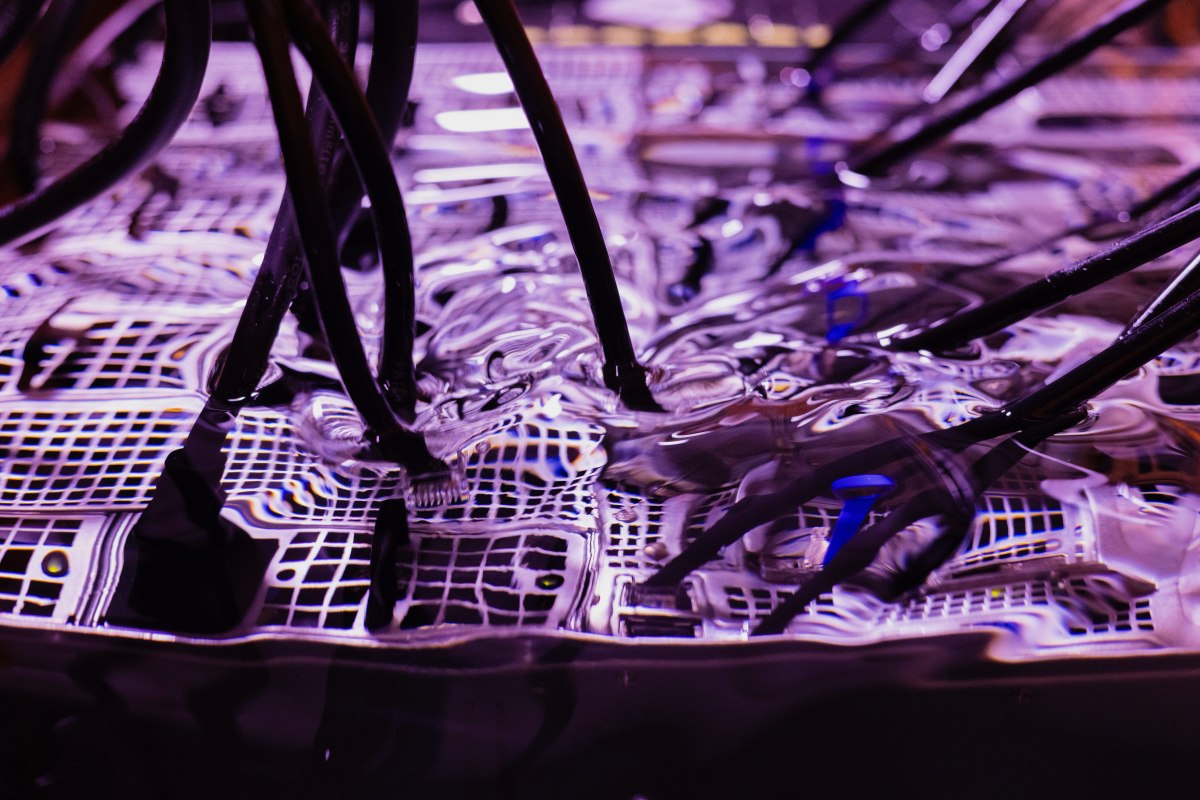
AI is transforming how we compute, but it is also exposing a critical infrastructure challenge: how do we cool increasingly powerful compute environments? For decades, air cooling has been the foundation of data centre design. It is proven, familiar, and effective for traditional enterprise workloads. However, the demands of AI are fundamentally different. Large-scale AI training, high-performance computing, and dense GPU deployments are driving power densities to levels that push the practical limits of air cooling. Whilst average rack densities have historically ranged from 10 to 20kW, the industry is rapidly moving towards deployments measured in hundreds of kilowatts per rack, with discussions of 600kW and even 1MW architecture becoming more common. This shift is forcing data centre operators to rethink how infrastructure is designed, powered, and cooled. Innovative technologies such as immersion cooling are becoming part of that conversation, not simply as a way to remove heat, but as an enabler of higher compute density, improved efficiency, and scalable AI infrastructure. In the AI era, cooling is no longer just a facilities consideration; rather, it is a strategic infrastructure decision that will help determine how far and how fast organisations can scale the next generation of computing. Stay in the loop Watch, follow, and subscribe to The Cooling Loop on YouTube to keep up with the future of AI and digital infrastructure. For more from ExxonMobil, click here. This article is sponsored by ExxonMobil

Multiverse Computing, YellowDog target European sovereign AI
Multiverse Computing, a Spanish company specialising in compressing large language models (LLMs), and UK cloud workload orchestration firm YellowDog.ai have agreed to work together to improve compute efficiency and support the development and deployment of European sovereign AI. The collaboration will combine AI model compression with hybrid and multi-cloud compute management to help enterprises, research organisations, and public sector institutions operate AI within European infrastructure. Multiverse Computing’s CompactifAI technology uses quantum-inspired tensor-network methods to compress large AI models, while YellowDog.ai provides a platform for managing compute resources across hybrid and multi-cloud environments. The companies say they aim to bring together processing capacity, secure access, storage, networking, and data centre operations, whilst simultaneously reducing costs, energy consumption, and infrastructure complexity. They also identify GPU shortages as a key challenge, particularly for European organisations seeking to make more efficient use of available capacity. Customers will be able to use the combined capabilities for model development, benchmarking, optimisation, compressed model deployment, inference, and sovereign infrastructure planning. Target sectors include financial services, life sciences, advanced engineering, energy, telecoms, public services, and defence-adjacent industries, where data residency, security, cost, compute availability, and regulatory compliance are important considerations. Supporting Europe's AI compute infrastructure Enrique Lizaso, co-founder and CEO of Multiverse Computing, says, “Sovereign AI will only succeed if it is economically and technically sustainable. Our compressed AI models are designed to run faster, use less energy, and operate closer to the data. "Working with YellowDog.ai gives customers a powerful route to deploy efficient AI across cloud, on-premises, edge, and sovereign data centre environments.” Bruce Beckloff, CEO of YellowDog.ai, adds, “Europe has the talent, data, and industrial base to lead in AI, but it needs infrastructure that is fast, efficient, secure, and sovereign by design. “By partnering with Multiverse Computing, we are creating practical capacity solutions where organisations can scale compute intelligently, reduce bottlenecks, and retain control of critical workloads.” The agreement comes as European organisations seek alternatives to fragmented, expensive, and capacity-constrained AI infrastructure. The companies also point to the European Commission’s AI Gigafactory initiative, which envisages large-scale facilities providing computing capacity for the development, training, fine-tuning, and deployment of advanced AI models and applications. These facilities are expected to combine AI-optimised computing, secure cloud access, high-capacity storage, advanced networking, energy-efficient data centres, and specialist support services. The stated priorities include improving access to hybrid compute, reducing operational costs and energy use through model compression and workload scheduling, and supporting deployments that meet European requirements for data protection, security, and technological autonomy. For more from Multiverse Computing, click here.

KDDI, Telehouse acquire £220m London Docklands site
KDDI, a Japanese telecommunications company, and Telehouse, an operator of colocation data centres, have completed the purchase of the Inventory Estate in East India Dock, London, for more than £220 million ($294 million). The site was acquired from LaSalle Investment Management and Trilogy Real Estate. The land will support a new high-density, AI-ready data centre as part of the expansion of Telehouse’s existing London Docklands campus. Its proximity to the campus will provide an opportunity to add capacity and make use of its established connectivity ecosystem, coming amid increasing constraints on land and power. The planned development will provide high-density colocation, low-latency connectivity, and infrastructure for AI workloads. A total of 65MVA of power has been secured for the site, supporting phased, long-term expansion. The acquisition follows the announcement of Telehouse West Two, a nine-storey data centre building under development at the London Docklands campus, which is due for completion in 2028. Telehouse says it will continue to engage with local stakeholders and the wider Tower Hamlets community as plans for the new development progress, focusing on sustainable development, local investment, and employment opportunities. Further expansion at London Docklands Mark Pestridge, Managing Director of Telehouse Europe, comments, “The purchase of the Inventory Estate represents an important step in the long-term development of our London Docklands campus, one of Europe's leading connectivity hubs. "It provides space for future expansion to support our customers' digital growth ambitions, including the crucial innovation that is taking place across industries such as healthcare, education, and financial services. "As demand for AI-ready infrastructure grows, we remain focused on sustainable operations, community engagement, and creating opportunities in the local area.” Takayo Takamuro, Executive Officer, European Chief Executive, and Board Director at Telehouse, adds, “This acquisition supports the next phase of our growth and our commitment to supporting customers’ AI ambitions. The new data centre will be one of the largest facilities in the Telehouse London Docklands campus, reinforcing its role as the leading connectivity hub in Europe.” Chris Lewis, Head of UK Transactions at LaSalle Investment Management, notes, “The extensive refurbishment works undertaken in partnership with Trilogy Real Estate to regenerate East India Dock into a world-class, mixed-use innovation campus have paved the way for this next exciting development on the Inventory Estate. "We look forward to watching its progress as the Docklands are set to host an important AI-ready data centre, critical to powering London’s tech sector.” For more from Telehouse, click here.

Reliable piping infrastructure for high-density and AI workloads
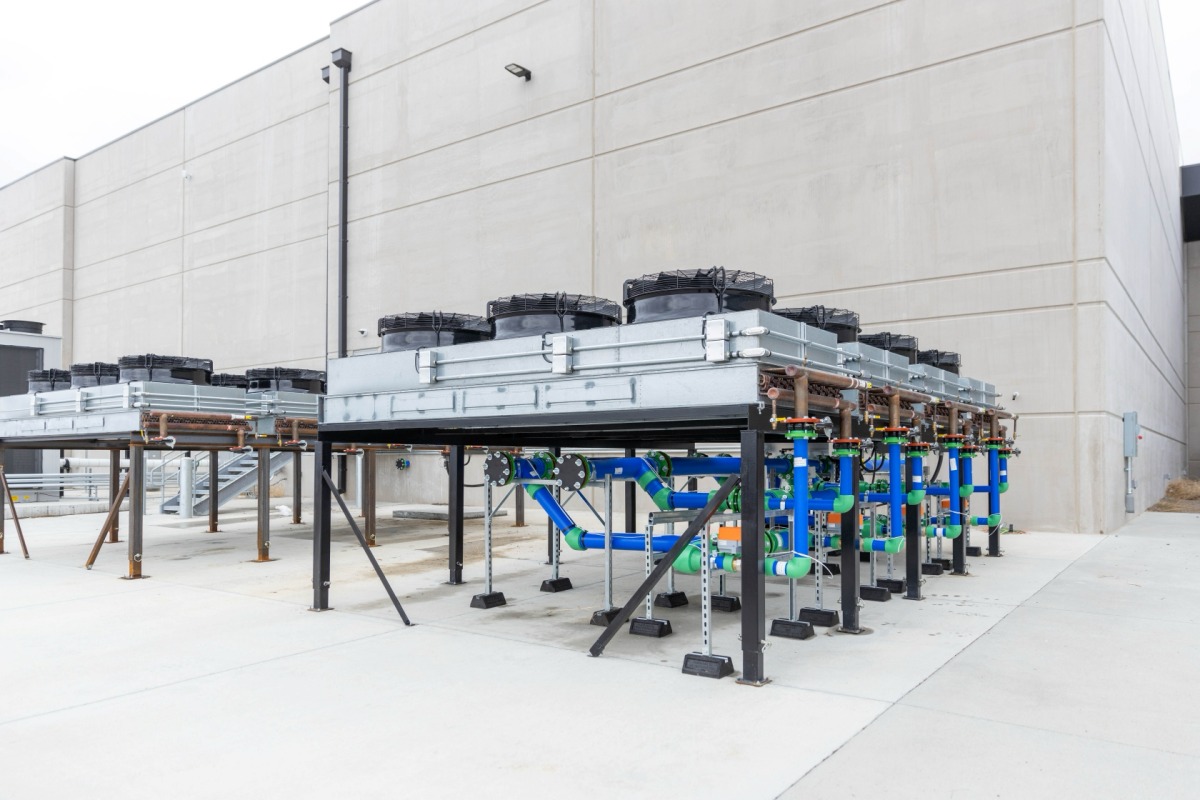
As high-density racks and AI/ML clusters become standard, cooling systems must react quickly and reliably to changing loads. Liquid cooling circuits, combined with suitable piping systems, offer an effective way to manage these conditions. aquatherm blue is engineered for chilled- and process-water applications in data centres. Its PP-RCT material is resistant to corrosion, which supports long-term stability in temperature and flow. Fusion-welded joints create homogeneous, materially bonded connections, reducing leakage risk at critical points in the system. This robustness is particularly relevant where cooling must be maintained continuously and where downtimes are unacceptable. The system can be used for central chilled-water networks, rack-level cooling solutions, and the connection of heat exchangers in modern architectures. For more information, visit Cooling data centres with aquatherm pipe systems. For more from aquatherm, click here. This article is sponsored by aquatherm

Blueshift outlines thermal management for orbital data centres
US advanced materials company Blueshift has outlined a three-part thermal management approach for spacecraft in low Earth orbit (LEO), addressing the challenges posed by extreme temperature changes and increasingly powerful computing payloads. Presented at CAMX 2026, the approach treats thermal protection as an integral part of the spacecraft system. It focuses on moving internally generated heat to radiators for rejection at the highest practical temperature, controlling heat flow to protect temperature-sensitive components, and managing solar, Earth, and environmental exposure at the spacecraft surface. Blueshift reportedly has more than 20,000ft² (1,858m²) of its AeroZero Thermal Protection Systems (TPS) flying in LEO, alongside material testing and standards references including ASTM E595 and NASA-STD-6016. Spacecraft in LEO experience temperature swings from -180°C to +150°C between shadow and sunlight, with this cycle occurring 16 times a day. Computing payloads add to the challenge by generating substantial internal heat. Tim Burbey, co-founder and President of Blueshift, says thermal protection must be considered as part of the overall spacecraft design, regardless of vehicle type, noting, “Every spacecraft produces internal heat, and now we are seeing data centres produce 100 times more, forcing it to become a design driver.” Managing heat across spacecraft systems Blueshift says its AeroZero TPS materials can be used across the three areas of thermal management. Within the spacecraft, the material acts as a thermal break at brackets, joints, and other interfaces, helping to isolate batteries and temperature-sensitive components from hot electronics and coolant loops. This separation allows high-powered processors to determine the coolant loop temperature, enabling radiators to operate at higher temperatures and reject more heat per unit area. By separating hot and cold zones, the approach can also reduce radiator area and support smaller spacecraft thermal systems. In vacuum testing, Blueshift research found that AeroZero TPS had 19 times lower thermal conductivity and six times lower thermal diffusivity than standard polyimide tape. Thermal diffusivity determines how quickly temperature changes propagate through a thermal break, while the material is intended to buffer the temperature swings experienced every 90 minutes in LEO. In a modelled LEO scenario comparing thermal breaks, a solar cell mounted on a composite frame in sunlight ran almost 40°C cooler with AeroZero TPS than with standard tape. The comparison examined how thermal breaks could limit heat transfer between spacecraft structures and equipment. For exterior surfaces, Blueshift gives AeroZero TPS a solar absorptance-to-emittance ratio (α/ε) of 0.14, compared with 0.60 for uncoated Kapton. In illustrative steady-state calculations for a flat surface facing the Sun, the estimated surface temperature was -32°C (241 K) for AeroZero TPS and +73°C (346 K) for Kapton, a difference of 105°C. Tim concludes, “Supporting reliable, long-duration missions in increasingly demanding orbital environments is a key focus for Blueshift. Following CAMX, we look forward to further opportunities to showcase our AeroZero TPS portfolio and engage with spacecraft designers, engineers, and industry decision makers on how material innovation can support the next phase of commercial space development.”

Rethinking cybersecurity for an always-on digital enterprise
In this exclusive article for DCNN, Sharat Sinha (pictured above), CEO at Airtel Business, assesses how unified security platforms combining AI-driven threat detection, automated response, and human oversight can strengthen cyber resilience across increasingly complex digital environments: The world has entered an era where more than 20 billion connected devices generate continuous digital exhaust. Every transaction, sensor read, API call, and remote login now feeds a vast digital nervous system supporting economies, governments, and critical infrastructure. As adversaries weaponise automation and AI to scale reconnaissance and exploitation, the cyberattack surface has expanded faster than traditional defences can adapt. To safeguard national and enterprise resilience, security must evolve from fragmented, reactive controls to an AI-powered, human-led, always-on model delivered through a unified security platform. Traditional architectures were designed for static networks and stable perimeters; they were never built for cloud-native workloads, edge computing, distributed workforces, or API-centric digital ecosystems. Threat actors, however, now operate at machine speed, using AI to craft hyper-targeted phishing, escalate privileges autonomously, and exploit misconfigurations in minutes. Meanwhile, breach discovery in many organisations still spans months. This widening gap between attacker speed and defender response highlights the need for continuous, intelligence-driven protection across network, identity, cloud, and data layers. Using AI to identify weaknesses Within this shift, AI is emerging as a force multiplier - not a replacement - for human expertise. AI-driven analytics reduce false positives by up to 60%, correlate billions of signals across hybrid environments, and detect weak anomalies invisible to manual analysis. Predictive models identify the vulnerabilities most likely to be weaponised, shrinking patch backlogs and strengthening overall resilience. Behavioural algorithms reinforce identity security by spotting subtle deviations that precede credential compromise. Even configuration hygiene improves as AI continuously validates cloud and network settings, eliminating exposures before they become incidents. AI is also enabling entirely new security capabilities. AI assistants for security leaders can summarise incidents, explain posture drift, and produce board-ready insights in seconds. Autonomous SOC workflows now triage, enrich, and contain threats across identity, endpoint, and cloud layers. DevOps and cloud engineering teams use AI copilots to enforce guardrails and detect compliance drift, addressing misconfiguration risks that consistently rank amongst the top causes of breaches worldwide. These advancements reflect a broader global shift towards unified, AI-first cybersecurity platforms, where intelligence becomes the connective fabric linking telemetry from identity, network, cloud, and data. Rather than operating dozens of siloed tools, organisations gain a single operating layer where detection, decision making, and response flow seamlessly. This consolidation accelerates containment, eliminates blind spots, and frees up security teams to focus on high-impact decisions. AI also strengthens data protection and regulatory alignment, including emerging requirements under India’s DPDP Act. Automated data classification, policy violation monitoring, retention enforcement, and real-time breach alerts shift privacy oversight from periodic checks to continuous assurance. As India’s digital economy scales - driven by cloud adoption, fintech innovation, and public digital infrastructure - AI-driven governance ensures both compliance and protection without increasing operational burden. Confidence in an unpredictable landscape The global direction is clear: AI-first, human-centred, unified platforms are becoming the foundation of modern cyber resilience. With cyber incidents costing organisations millions of dollars and often causing systemic ripple effects, intelligent consolidation is no longer an efficiency strategy; it is a national and enterprise resilience strategy. Looking ahead, cybersecurity will be defined by how effectively organisations integrate AI across the entire lifecycle (posture management, threat prediction, protection, governance, and automated response) whilst empowering human judgement at every critical decision point. In a world where threats operate at machine speed, always-on, AI-powered, end-to-end protection is becoming the new standard. Organisations that embrace unified, AI-driven architectures will be best positioned to safeguard their people, data, and services with confidence in an increasingly unpredictable digital landscape.

DTGen acquires Realpower to expand critical power services
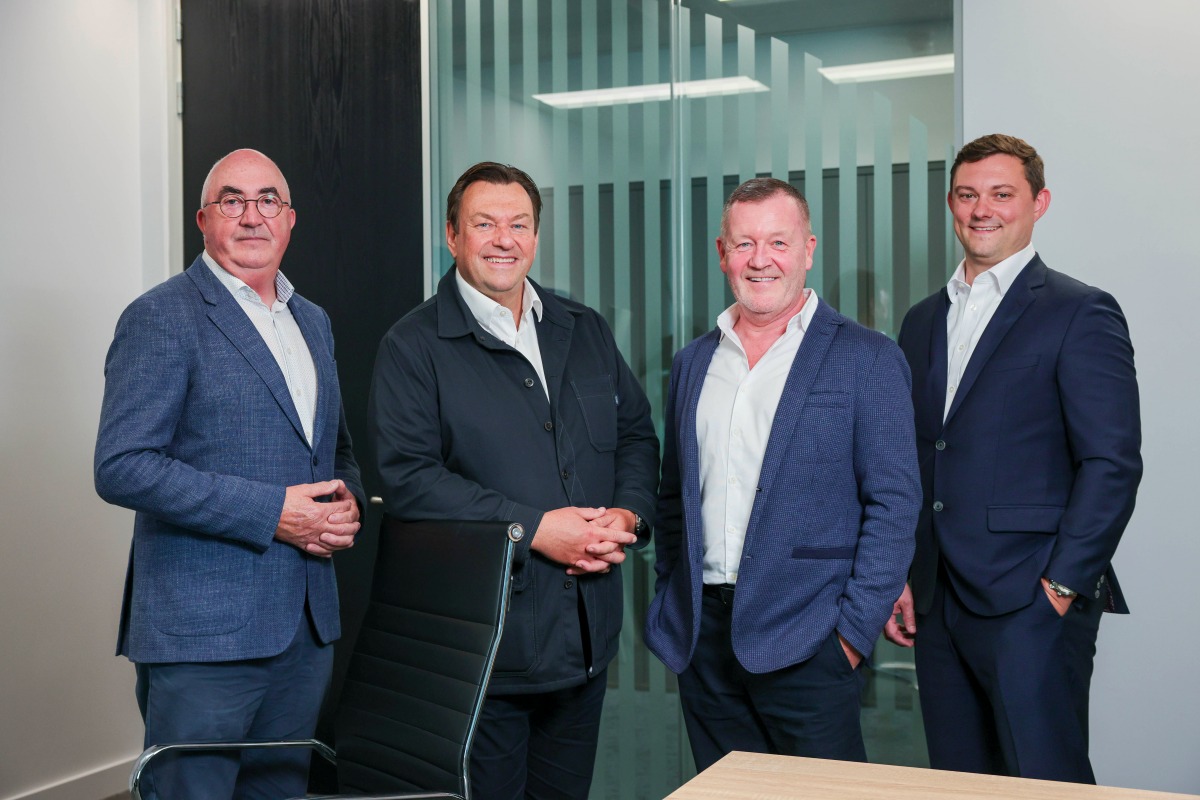
DTGen, a UK supplier of standby diesel generators and energy systems, has acquired Irish generator maintenance specialist Realpower, expanding its engineering capacity across the UK and Ireland and creating at least 10 new jobs. The acquisition by DCC Energy Ireland brings together DTGen’s 22 years of experience in standby power generation and project delivery with Realpower’s 16 years of generator maintenance expertise. The combined business has more than 110 employees, including 70 engineers, operating from DTGen’s locations in Glasgow, Bristol, and Northampton, alongside Realpower’s base in Moydrum, County Westmeath. The value of the acquisition has not been disclosed. The expanded business will provide services covering system design, installation, commissioning, maintenance, remote monitoring, and lifecycle support. DTGen expects the acquisition to increase its engineering capacity, geographical coverage, and emergency power support across both markets. DTGen has delivered projects across retail, financial services, healthcare, the public sector, and major infrastructure, including more than 50 data centre projects worldwide. The company will also draw on its European trading platform to support customers and projects across the continent. Its capabilities include those of PCS, a power controls specialist acquired around 18 months ago, which designs, builds, tests, and commissions power management systems. Realpower provides planned preventative maintenance, inspections, servicing, and emergency repairs for critical power infrastructure across Ireland. Expanded services for data centres and critical infrastructure Nigel Newton, Managing Director at DTGen, says, “Realpower has established itself as one of Ireland’s most respected maintenance providers, with service capabilities that complement DTGen’s generator project delivery expertise, making it an excellent addition to the DCC Energy Ireland and DTGen group. "With Farrell Spollen recently announced as Managing Director of Ireland, he will play a key role within the DTGen team in driving our growth ambitions and strengthening our presence in the Irish market. “For engineers and consultants working in high-demand environments, including data centres, the combined business offers practical engineering expertise, local service support, and the scale to help customers investing in generator systems choose a delivery partner with confidence.” Realpower’s customers will continue to receive support from its existing team, with access to the wider resources of the combined business under the leadership of the company's newly appointed Irish Managing Director, Farrell Spollen. Michael Tumulty, owner of Realpower, comments, “Joining forces with DTGen and being backed by DCC Energy Ireland is a positive step for Realpower. Our commitment to providing specialist support to organisations across Ireland will not change, and our customers will receive the same trusted service and expertise from our team. “Now strengthened by DTGen’s project experience, wider engineering capability, and the scale of DCC Energy Ireland, it creates an opportunity to continue supporting customers’ critical power needs and to grow the services we can offer in the years ahead.” Rob Flanagan, Commercial Director at DCC Energy Ireland, adds, “The acquisition of Realpower reflects DCC Energy Ireland’s continued investment in specialist energy businesses that support customers with critical infrastructure and resilience. “Alongside our fuels, power, and solar capabilities, our focus is on supporting businesses that deliver long-term value to customers, while ensuring they have the investment, backing, and expertise to develop further. This acquisition strengthens our ability to support customers across Ireland with dependable, future-focused energy solutions.” For more from DTGen, click here.

Edge to core: Fibre infrastructure and the retrofit challenge
AFL, a manufacturer of fibre optic cables and connectivity equipment, has published a new blog exploring how distributed AI workloads change fibre infrastructure requirements across edge, metro/regional, and core environments. The blog also addresses a practical question for operators with facilities already in service: at what point does a brownfield retrofit stop making sense compared with a greenfield new build? Industry forecasts suggest inference will overtake training as the dominant use of AI data centres by 2027, shifting demand towards regional and edge sites that can respond within 1–10ms. This means edge, regional, and core tiers can no longer be planned as separate projects, since every tier depends on shared fibre infrastructure. The blog outlines what a fibre retrofit assessment should cover and explains how separating long-life backbone elements from short-life connectivity helps operators avoid designing for obsolescence. You can read it in full here: Edge to Core: Fiber Infrastructure for Distributed AI Growth and the Retrofit Challenge For more from AFL, click here. This article is sponsored by AFL

Kao Data launches public data centre information hub
Data centre developer and operator Kao Data has launched Data Centres Explained, a free website developed with industry trade associations techUK and the Data Centre Alliance (DCA) to answer the public's questions about data centres. The website provides information about what data centres are, how they operate, and their role in everyday digital services, including online banking, contactless payments, streaming, navigation, and healthcare. As new data centre developments are proposed across the UK, the resource aims to address questions from local communities about water use, electricity bills, noise, traffic, and construction. Visitors can explore a data centre zone by zone, from the data hall to the infrastructure that supports digital services. The website also includes a question-and-answer section covering topics such as water pressure, electricity costs, backup generators, and power cuts. A separate section explains the stages of construction, how disruption is managed, and the potential for skilled jobs and supply chain opportunities. Website invites questions from the public The platform includes a portal where visitors can submit questions, with answers added to the resource over time. Kao Data says content is informed by official data and guidance, industry standards, and technical experts, as well as being checked before publication and reviewed as technology and policy develop. Spencer Lamb, CEO at Kao Data, comments, “Data centres are the infrastructure behind the digital world and play a pivotal role in modern life; they are as fundamental as our roads, water systems, railways, and power lines. "There is a lot of conflicting information about data centres and people deserve clear and honest answers about what these buildings are, how they work, and what they mean for the places they live. "Data Centres Explained gives everyone somewhere to find those answers, and I would encourage our peers across the industry to lend their knowledge to it. The more expert voices we bring together, the more useful and trusted this resource will become.” Matt Evans, COO at techUK, adds, “Data centres have only recently moved into the public eyeline and, like most new infrastructure assets, they are often misunderstood. Data Centres Explained is exactly the type of open and clear engagement that help us all understand the role that they play in our lives, how they operate, and what they can contribute to local communities.” Venessa Moffat, Managing Director at the DCA, says, “Data Centres Explained is an important step towards building public trust through greater transparency, addressing the questions communities genuinely care about and replacing speculation with understanding.” Kao Data is inviting data centre operators, engineers, suppliers, planners, and sustainability specialists to contribute answers within their areas of expertise. Contributors will be credited, with the aim of developing a shared resource for the industry and local communities. For more from Kao Data, click here.


Translate »