Data Centre Infrastructure News & Trends


GreenScale publishes data centre grid design guidance
GreenScale, a developer of hyperscale data centre campuses, has published open-source design requirements to help data centre operators adapt mechanical and electrical (M&E) infrastructure to variable AI loads and evolving grid codes. The document, Grid & AI Load Compatibility: System Design Requirements for AI Load, Grid Code & Fault Ride-Through, was developed with contributions from vendors, partners, and independent experts. It outlines considerations for managing variable AI power demand, meeting grid connection requirements, complying with fault ride-through rules, supporting demand response, and adapting to future changes in grid codes and tenant load profiles. GreenScale says the guidance is intended to give operators a practical starting point for developing their own designs, reducing duplicated work and helping the industry progress towards compliance. Fault ride-through requirements are emerging as data centres become more significant participants in the electricity system, where grid stability is a shared objective. However, grid codes vary by region and continue to evolve, leaving no widely adopted common specification for data centre power systems to be designed and tested against. Liam Newcombe, SVP Product, Energy Strategy and Innovation at GreenScale, notes, “The deployment of AI requires data centres to move from being simple customers of the electricity grid to participants in the grid. "Data centres as a class are now large enough to impact grid stability, which means facilities need to adapt, incorporating capabilities such as fault ride-through to ensure this impact is positive, resulting in a resilient, stable grid. "The task is no longer simply to protect the IT equipment from the grid, but to meet the combined requirements of the IT equipment, data centre infrastructure, and electricity grid. “This document is published as a work in progress. It provides an initial approach that we hope others in the industry will test, challenge, and improve. By publishing it open-source, we hope to provide a useful starting point for others, sharing our learnings both direct and from our contributors.” Addressing evolving grid requirements The guidance promotes a base system design that accounts for foreseeable operating conditions, including load- and site-specific constraints that affect design, equipment selection, and specification. Examples include specifying uninterruptible power supply (UPS) systems with fault ride-through capabilities and mechanical equipment able to operate across required voltage and frequency ranges. Liam says adaptability was a central principle, as AI load profiles, grid codes, and flexibility requirements continue to develop. The guidance aims to help project teams make proportionate decisions now and reduce the risk of costly equipment changes later. GreenScale suggests that modelling, technical data, and design knowledge developed through early projects could also be transferable to future data centre developments. The document is released under a Creative Commons Zero (CC0) licence, allowing companies and individuals to use and build upon it under the licence terms. GreenScale is inviting data centre operators, designers, engineering consultants, utilities, technology providers, and independent experts to review and reuse the document, as well as to contribute to further industry discussion. For more from GreenScale, click here.

Schneider Electric unveils software-defined MV switchgear
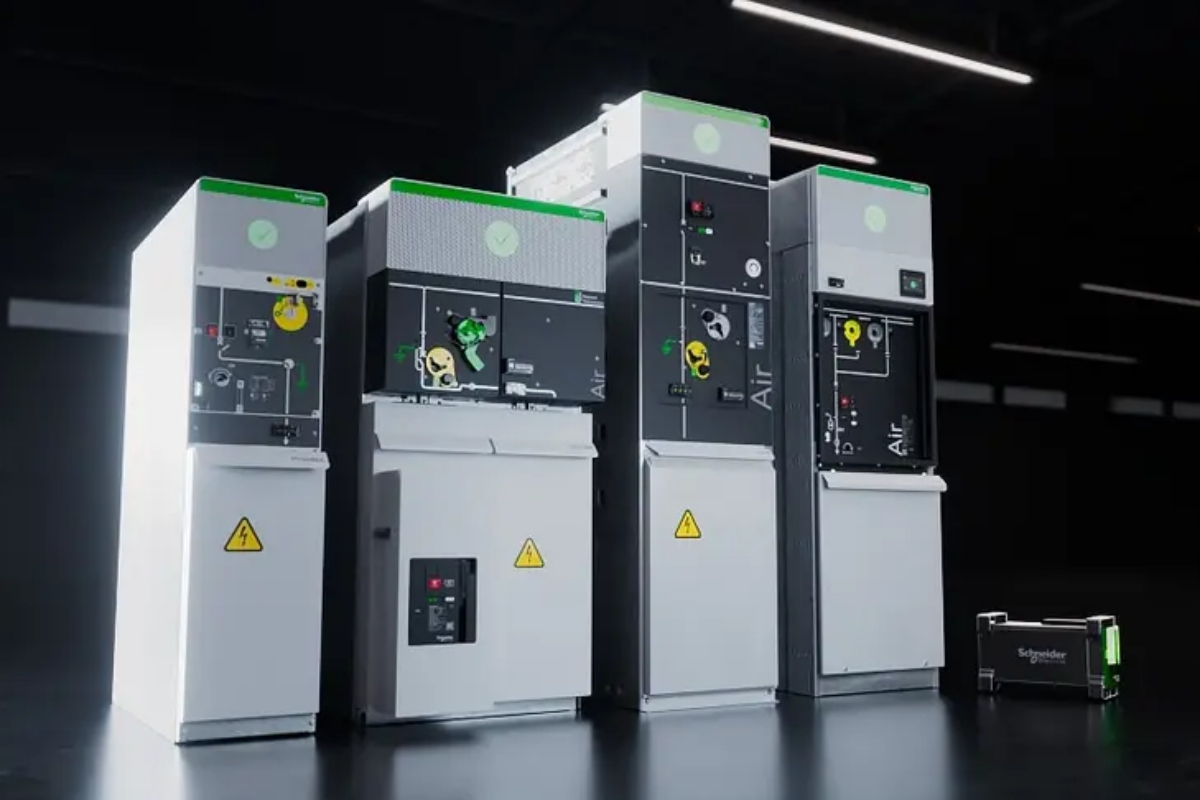
Global energy technology company Schneider Electric has unveiled what it describes as the world's first fully software-defined medium-voltage (MV) switchgear, designed to change how electrical distribution systems are deployed and operated for AI factories and other applications. Announced at YOTTA 2026 in Las Vegas, USA, the equipment forms part of Schneider Electric's Software Defined Energy approach, which separates system intelligence from hardware and uses software to add functionality and performance updates. Traditional MV systems often rely on engineered-to-order designs, which can result in longer lead times and complex procurement. Schneider Electric's software-defined approach uses standardised hardware platforms and over-the-air software updates, allowing functionality to be changed without physical modifications. The company says the modular architecture can reduce system complexity, with less wiring and fewer components. Based on Schneider Electric's studies and estimates, the approach can deliver up to three times faster ordering and manufacturing, whilst digital commissioning processes can enable up to twice as fast commissioning and on-site acceptance testing. Software-defined approach to medium-voltage equipment The equipment includes connectivity and analytics for real-time system monitoring, alongside AI-powered predictive maintenance through EcoCare Services. Schneider Electric says this can provide greater visibility into system performance and help reduce unplanned downtime. Melton Chang, Executive Vice President, Power Systems Division at Schneider Electric, notes, “Data centres are being asked to build faster than traditional power infrastructure can move. “With Software Defined MV switchgear, we are bringing the logic of software to medium-voltage equipment so customers can deploy in a fraction of the time, standardise across regions, and add new capabilities with zero downtime.” The equipment has already been deployed through a pilot with Equinix in a live colocation data centre environment. Greg Metcalf, Senior Director, Global Data Center Design and Innovation at Equinix, comments, “Software Defined MV Equipment transform the way we design, procure, build, and operate MV switchgear, allowing increased standardisation for multiple use cases whilst maintaining the highest standards of safety, quality, and reliability. “We look forward to deepening our collaboration with Schneider Electric as we continue to innovate and scale for the future.” Schneider Electric plans to extend the software-defined MV architecture across its medium-voltage portfolio and, progressively, other parts of the powertrain. Pilot programmes are expected to continue through 2027, with broader availability planned from 2028. The company says the approach is intended to support faster project execution, greater operational visibility, and lifecycle-based service models for electrical infrastructure. For more from Schneider Electric, click here.

Leviton invests $100m in network infrastructure
Leviton, a manufacturer of cabling, fibre, and connectivity products for data centres and enterprise networks, has announced a $100 million (£75 million) global capital investment in its Network Solutions business, aimed at expanding manufacturing capacity for fibre-optic and copper networking systems. The five-year investment follows an $80 million (£60 million) capital programme completed in 2025. Leviton says the new investment is in response to demand for networking products for AI infrastructure and smart buildings. Daryoush Larizadeh, President and CEO of Leviton, comments, “For 120 years, Leviton has remained relevant by looking beyond today’s demands and investing in what comes next. “This $100 million commitment to our Network Solutions business underscores our determination to lead through innovation, manufacturing excellence, and customer partnership.” The investment covers Leviton's Network Solutions manufacturing facilities for fibre-optic and copper systems. It includes increased capacity for Category 6A cabling and connectors, as well as expanded fibre-optic cabling and connectivity manufacturing for enterprise and data centre networks. Expanding fibre and copper capacity Ross Goldman, COO of Leviton Network Solutions, notes, “While many organisations remain cautious amid volatile raw material and energy costs, Leviton believes this is the right time to invest. “The expansion of AI, smart buildings, and high-performance networks is happening at an unprecedented pace. With this five-year investment, we’re ensuring our customers have access to the capacity, quality, and global scale they need, when they need it most.” The investment follows Leviton's previous capital programme, which expanded global production capacity, doubled the size of its Fuquay-Varina (North Carolina) facility, and increased its copper and fibre manufacturing capabilities. Ross concludes, “Capital investments like these are not just about adding capacity; they are about building long-term capability and service. Our customers are planning infrastructure for decades of AI-driven growth. We’re matching that vision with the foresight to invest in world-class manufacturing, even in challenging market conditions.” For more from Leviton, click here.

ECOC Exhibition honours optical connectivity innovation
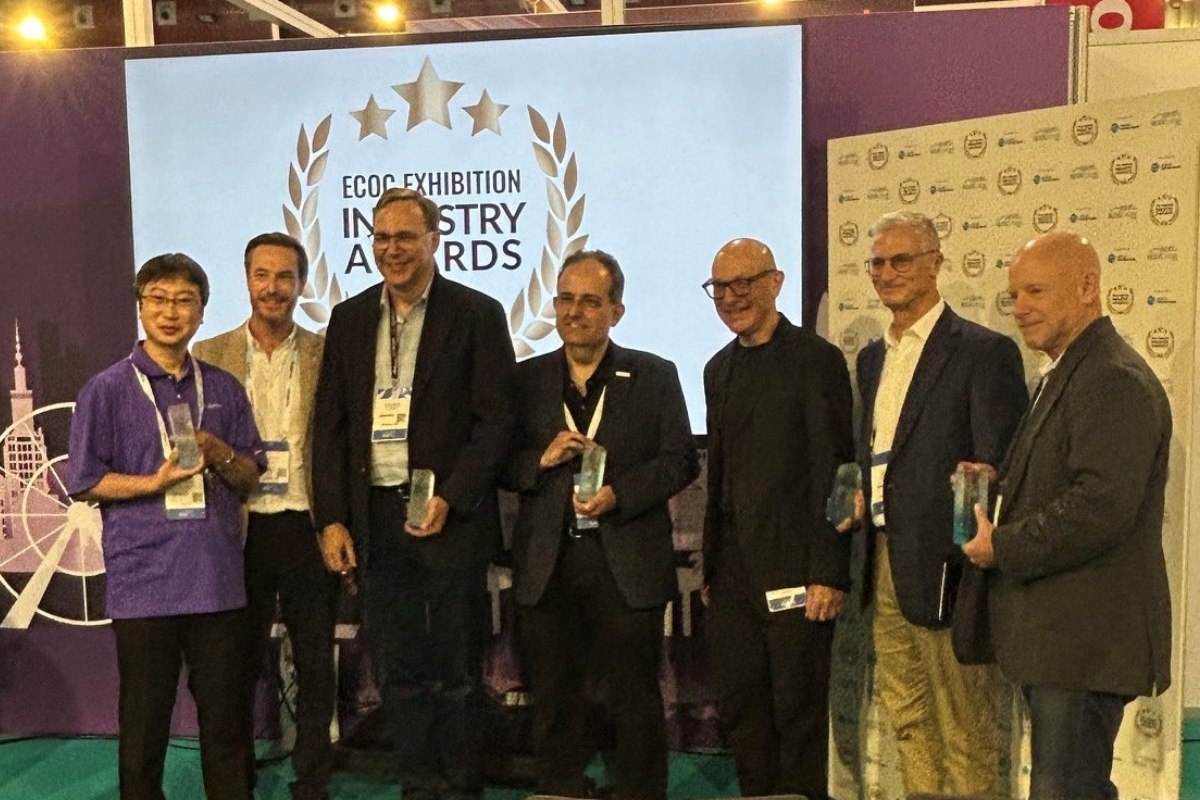
Eight companies have been recognised at the ECOC Exhibition Industry Awards 2026 for innovations in optical connectivity. The awards, presented in Málaga, Spain, recognise developments across optical modules, test and measurement, fibre infrastructure, and access networks, including technologies for photonics, quantum computing, and AI data centres. The winners are Avencia Tech, China Telecom, Ciena, Corning Optical Communications, Furukawa Electric, Keysight Technologies, Lumentum, and Semtech Corporation. Michael Lebby, Awards Committee Chairman at the ECOC Exhibition, says, “Congratulations to this year’s winners of the ECOC Exhibition Industry Awards 2026 for their contributions and innovations to the optical communications industry. “It is great to see such strong momentum across the industry as new challenges and opportunities emerge from the sectors of photonics, quantum computing, fibre infrastructure, and AI data centres.” Optical connectivity award winners The award categories and winning products are: • Best Optical Module: Ciena’s Vesta 200 6.4T CPX• Best Optical Test & Measurement Process: Keysight Technologies’ N4378A Lightwave Component Analyzer (LCA) – 220GHz• Fibre Infrastructure Innovation: Furukawa Electric’s Snap-Beam Connector: Compact, Detachable Optical Connector for PIC Integration• Optical Access Innovation: China Telecom’s Industrial Network All-Optical Intelligent Connectivity (Industrial PON)• Optical Communication Innovation: Corning Optical Communications’ CPO FlexConnect fibre• Optical Component (Chip/Wafer) Innovation: Semtech Corporation’s 224Gbps per lane TIA family for linear pluggable optics• Optical Component (Package/OSA/Fibre) Innovation: Lumentum’s VCSEL-based FOWLP optical engine for AI scale-up networks Two further awards were presented as part of the Post Deadline Awards: • Higher optical communications value chain technology & products: China Telecom’s Optical Access Network 'Network-Compute-Intelligence' Integrated Intelligent Interconnection• Lower optical communications value chain technology & products: Avicena Tech’s LightBundle eKit: 1Tbps evaluation kit for microLED-based interconnects The ECOC Exhibition Industry Awards recognise technologies and companies in the optical communications sector. The 2026 awards covered developments intended to address requirements for AI, cloud, and high-capacity connectivity.

A-Gas at Chillventa: Discover the LRM journey for data centres
A-Gas is a company specialising in the lifecycle management of refrigerants, which is increasingly relevant as the industry looks to reduce its carbon emissions and move away from high global warming potential (GWP) gases. For over 30 years, A-Gas has supported clients and partners, including those in the data centre sector, on their environmental journey as an enabler of lifecycle refrigerant management (LRM) and circularity in the industry, with world-class processes for the safe recovery, reclamation, and destruction of used refrigerants. This LRM circular approach is the opposite of the 'take, make, and dispose' model that has dominated the refrigerant industry for decades. By recovering used refrigerant gases and reclaiming them to AHRI 700 standards, A-Gas makes better use of existing resources and reduces the need for virgin production. Re-supplying these products to the market helps the wider heating, ventilation, air conditioning, and refrigeration (HVAC-R) industries embrace circular economy principles. Where no future reuse is possible, A-Gas uses United Nations-approved destruction technology to eliminate the gases in a safe and environmentally responsible way. During the three days of Chillventa, A-Gas will take visitors on a journey through the different phases of Lifecycle Refrigerant Management (LRM). A-Gas will highlight how each phase impacts the refrigerant lifecycle and demonstrate how its products and services support customers at every stage. • Recovery — featuring globally renowned services such as Rapid Recovery and Rapid Exchange• Supply — showcasing its expertise in multiple refrigerants, including low and ultra-low GWP refrigerants, as well as the new blends• Reclaim — highlighting world-class reclamation capabilities that restore refrigerants to AHRI 700 standards for re-supply Why Rapid Recovery is important for data centres For data centre operators, Rapid Recovery is a key part of this approach. The sector has specific requirements in terms of speed and efficiency, which A-Gas is able to address promptly, keeping server downtime to a minimum. In this context, one aspect that is often underestimated is the logistical complexity involved in challenging environments such as hyperscale data centres and edge infrastructure. In these cases, decommissioning or retrofit operations may involve large quantities of refrigerant and require rapid intervention to minimise disruption to operations, which could otherwise result in significant inconvenience and substantial financial losses. Rapid Recovery is a high-speed, on-site refrigerant recovery programme delivered by highly specialised technicians using purpose-built proprietary technologies, lorries equipped with 120-metre flexible recovery hoses and other company assets, including 1,000-litre drums and high-performance vacuum pumps. The service removes refrigerant at speeds of up to 10 times those of traditional recovery processes, while operating in full compliance with local and international regulations. It also includes comprehensive support with all required documentation. The service can be adapted to applications of any size and is available 24 hours a day, seven days a week. A-Gas meets visitors at Chillventa Discover A-Gas solutions and more by visiting A-Gas in Hall 1 - Booth 1-332. The team looks forward to welcoming you and guiding you through the LRM journey. For more from A-Gas, click here.

SUBCO announces 'largest subsea build in Indo-Pacific history'
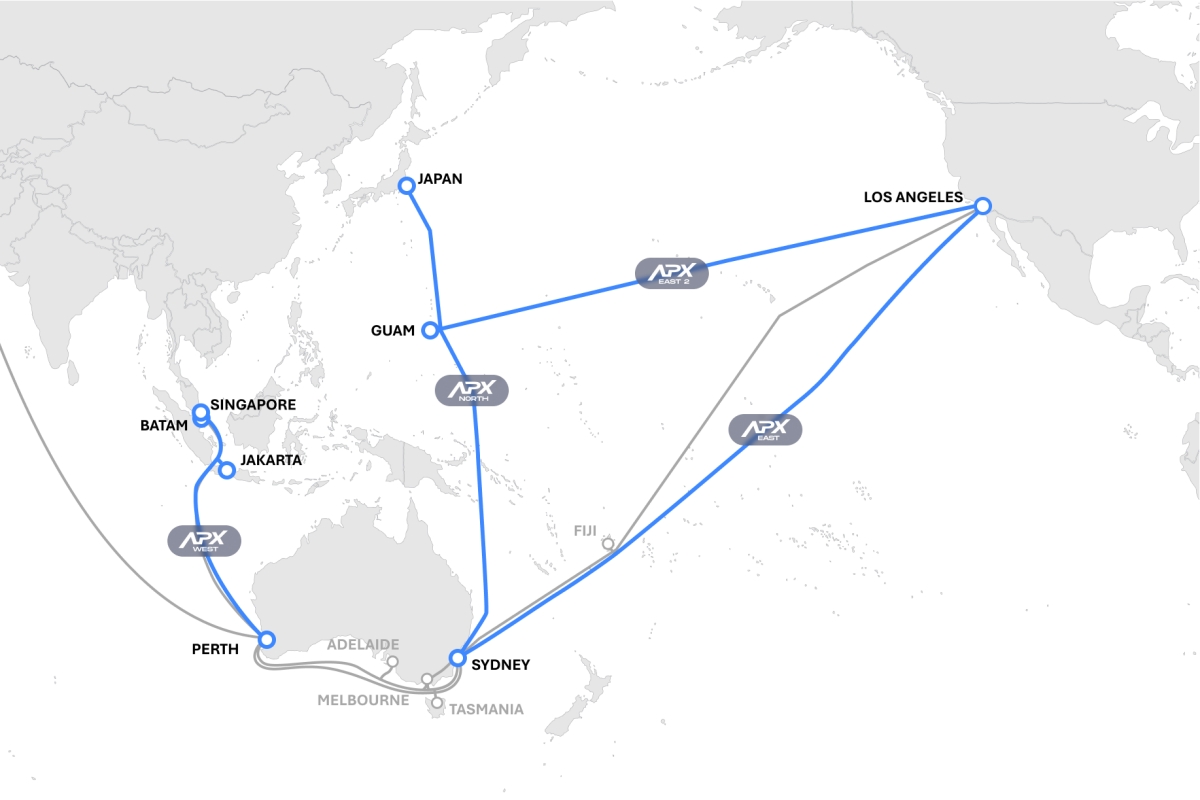
SUBCO, an Australian developer of undersea fibre optic cable networks, has announced three new subsea cable systems - APX North, APX East-2, and APX West - to provide additional connectivity capacity for AI and other data-intensive applications across the Indo-Pacific. APX North is a 9,500km, 24-fibre-pair system that will connect Sydney to Japan via Guam. It will be the first hypercable from Australia to connect directly to Guam, and the first system to provide direct connectivity between Japan and Australia. Like SMAP, APX North will include switched branching units, allowing selected fibre pairs to bypass landing in Guam and operate directly between Australia and Japan. APX East-2, meanwhile, is a 10,000km, 24-fibre-pair system connecting Guam to Los Angeles. It is intended to provide additional route diversity between the US, Japan, and Australia via Guam. Bevan Slattery, founder and Co-CEO of SUBCO, explains, “This segment is vital and will serve as the backbone for trans-Pacific traffic between Asia and the US, as well as providing diverse connectivity for Australia and Japan via APX North. We expect this system to be incredibly popular.” The third system, APX West, is a 4,600km, 24-fibre-pair system connecting Perth to Singapore, with branches to Jakarta and Batam in Indonesia. The system is designed to provide additional resilience and flexibility through switching in and out of regional interconnection hubs in Batam and Jakarta. Bevan continues, “Singapore and Indonesia remain critical to Asia's connectivity landscape, and their strategic importance will only grow as bandwidth demand accelerates. "New interconnection hubs are needed to deliver greater flexibility and route diversity. We are building as much of that as possible into our system design and making that available to our cornerstone customers through APX West.” SUBCO is targeting completion of all three systems in 2029. Connecting Australia and Southeast Asia “I know it’s ambitious, but it’s achievable and it’s necessary. We are finalising the details of cable supply and vessels and expect to be Contract in Force on all three systems by early next year,” says Bevan. “People have been slow to understand that AI factories are dead without massive subsea connectivity to carry tokens from factory to customers - hundreds and hundreds of terabits per second. That’s why we are about to undertake the single largest subsea infrastructure build ever by a carrier in the Indo-Pacific. "Not only is the build itself huge, but the timeframe is compressed with over 40,000km of cable to be installed in just over three years. Our team has signed up for the challenge and will grow significantly as each system reaches CIF.” For more from SUBCO, click here.

Datacenter United signs multi-megawatt capacity agreement
Datacenter United, an independent Belgian data centre operator, has signed a binding agreement to provide multi-megawatt data centre capacity for AI workloads at DC Machelen in Belgium. The environment will use liquid cooling to support the power densities and heat loads associated with high-density AI systems. The customer's identity and commercial terms of the agreement will remain confidential. AI systems concentrate increasing amounts of computing power within a limited footprint, raising both the power required per rack and the amount of heat that must be removed. Power supply, cooling, connectivity, redundancy, and operations must, therefore, be engineered as an integrated environment. Liquid cooling removes heat closer to its source and can enable high-density configurations that are increasingly difficult to support with air cooling alone. The system at DC Machelen will be engineered around the customer's confirmed architecture and operational requirements. The agreement reflects demand for specialised AI infrastructure in Belgium, with the project moving from planning to deployment. Liquid cooling for high-density AI Friso Haringsma, CEO of Datacenter United, comments, “Demand for specialised AI infrastructure in Belgium is moving from ambition to actual deployment. "This binding agreement translates a specific customer requirement into a concrete, multi-megawatt project in Machelen. It demonstrates that a Belgian operator can support high-density AI workloads at this scale.” The liquid-cooling design is intended to support higher computing densities whilst improving cooling and energy efficiency. Datacenter United says the project also demonstrates the importance of access to power, connectivity, suitable locations, and predictable permitting for AI infrastructure development in Belgium. DC Machelen is designed for organisations with high power and capacity requirements. The site combines power, space, carrier-neutral connectivity, and the flexibility required for large-scale, high-density infrastructure. Technical implementation will proceed according to the agreed system configuration and deployment plan. Further information on the commissioning schedule is set to be provided at a later stage. For more from Datacenter United, click here.

iPronics, BSC advance optical networking for AI
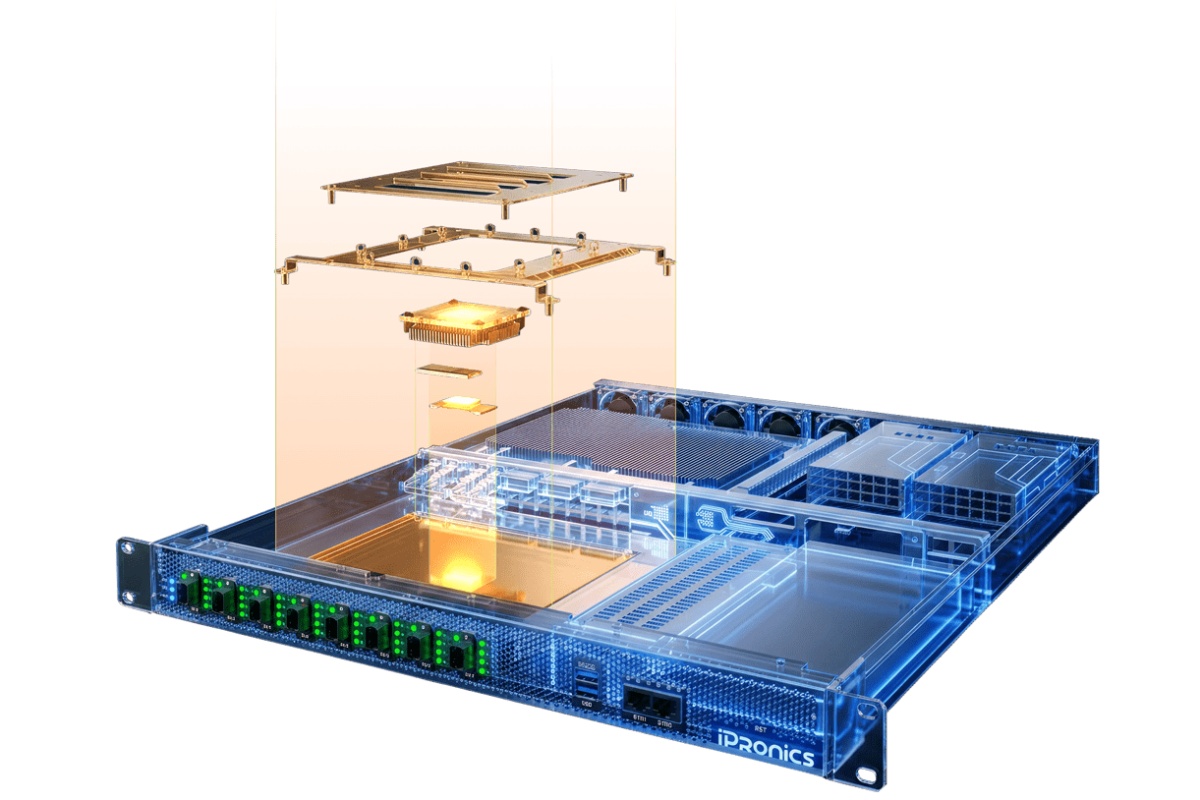
iPronics, a developer of silicon photonics-based optical circuit switching, has announced a two-year technology collaboration with the Barcelona Supercomputing Center – Centro Nacional de Supercomputación (BSC-CNS) to advance programmable optical networking for GPU-based AI and high-performance computing infrastructure. The collaboration will bring iPronics's programmable optical switching platform together with BSC's research-class GPU and HPC infrastructure. The teams will investigate how dynamically reconfigurable optical connectivity can respond to the communication requirements of AI workloads. iPronics will provide its programmable optical switching platform, low-level software, and APIs, whilst BSC will develop software above the switch-management layer. The work will focus on networking approaches that align optical connectivity with AI applications. “AI infrastructure is reaching a point where scaling compute also requires rethinking the network,” says Christian Dupont, CEO of iPronics. “Networking needs to become more dynamic and more closely aligned with the behaviour of AI workloads. "Our strategic collaboration with BSC is an important milestone in bringing programmable optical networking deeper into the AI infrastructure stack.” Programmable optics for AI workloads The platform will be integrated into BSC's GPU and HPC infrastructure, allowing the teams to investigate networking approaches for AI training and inference, including large language models (LLMs) and mixture-of-experts (MoE) workloads. Antonio Peña, Leading Researcher and Group Leader at BSC, notes, “As AI and HPC systems scale, the interconnect is becoming an increasingly important part of overall system architecture. “Our collaboration with iPronics gives us the opportunity to explore how programmable optical networking and the software stack can work together to support more dynamic and efficient computing infrastructures.” The collaboration is intended to generate system-level insights that can inform the architecture of future AI infrastructure. The announcement follows iPronics's recent $125 million (£93 million) Series B funding round, co-led by Maverick Silicon and Light Street Capital, with participation from NVIDIA. The funding brings the company's total raised to $177 million (£132 million). iPronics has also opened a US office in Santa Clara, California, which it says will support its product strategy, customer deployments, and AI infrastructure partnerships. For more from iPronics, click here.

Schneider Electric expands prefabricated power portfolio
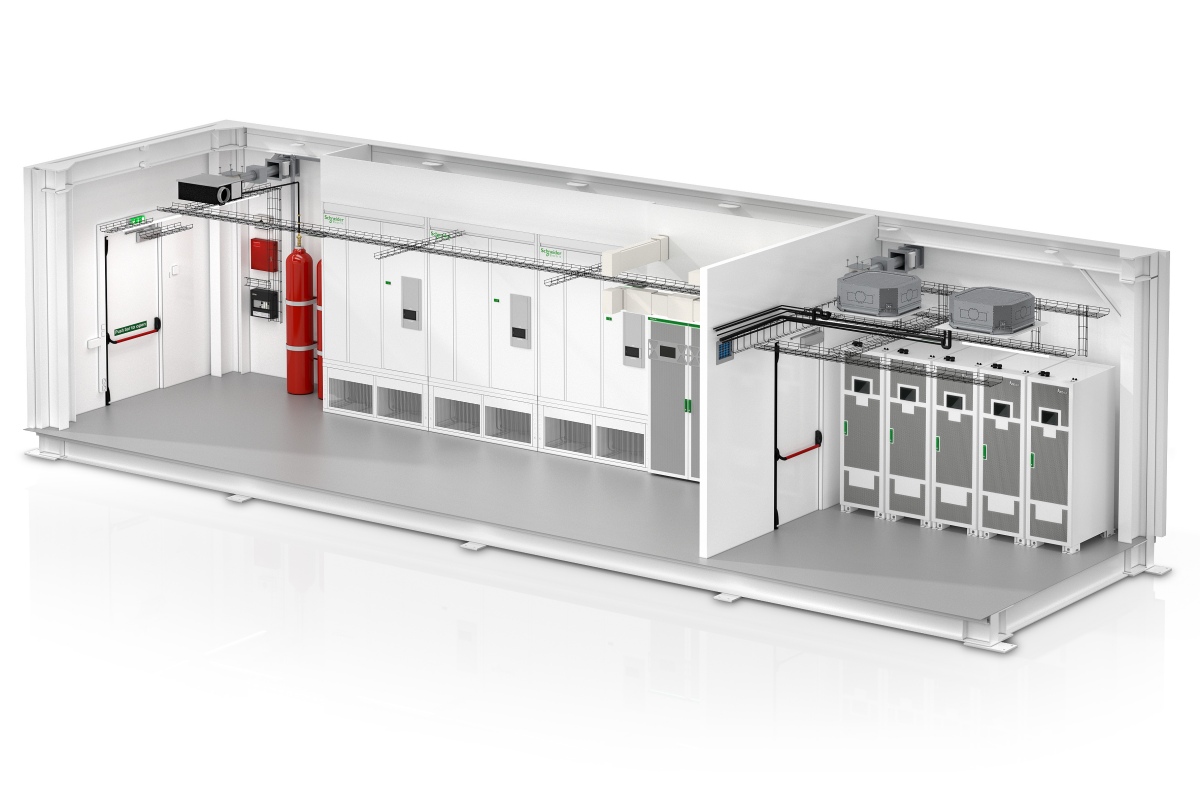
Global energy technology company Schneider Electric has launched a range of standardised Prefabricated Power Modules and Power Skids for hyperscale, neocloud, and colocation data centres supporting AI and high-performance computing workloads. Powered by the company’s Galaxy VXL UPS technology, the prefabricated power modules provide up to 2.5MW of capacity per module. Standard configurations are available at 2MW, 2.25MW, and 2.5MW, allowing multiple units to be deployed as repeatable power blocks across larger data centre campuses. The systems are based on Schneider Electric’s reference designs with NVIDIA, including integrated power management and liquid cooling controls for the GB300 NVL72 platform. They are intended to support AI training clusters and other GPU-intensive workloads. Standardised systems target faster deployment Schneider Electric says traditional customised prefabricated power systems can require lead times of 12–14 months. Its standardised approach is intended to simplify specification, design, and manufacturing, with production possible in as little as six months. The modules combine UPS, switchgear, cooling systems, lithium-ion batteries, busway, and power distribution within a factory-tested enclosure. The power skids provide similar electrical infrastructure in an open format for indoor deployment. Tarunjeet Sarao, SVP Data Center Systems at Schneider Electric, says, “Today’s data centre operators are under immense pressure to deploy AI-ready infrastructure faster, more efficiently, and at greater scale. “By standardising our prefabricated power systems and incorporating our leading Galaxy VXL UPS technology, we are enabling hyperscale, neocloud, and colocation providers to deploy scalable, high-density power infrastructure in months rather than years.” The modules and skids are engineered, manufactured, and tested at Schneider Electric’s facility in Sant Boi de Llobregat, Barcelona. The products are available immediately in Europe, with North American availability planned later this year, followed by other international markets and APAC. For more from Schneider Electric, click here.

ESA funds €1.5m automated satellite backup for subsea cables
The European Space Agency (ESA) has selected multi-orbit satellite communications specialist neXat to lead a €1.5 million (£1.2 million) project developing automated satellite backup for submarine fibre networks. neXat will work with satellite operator Telesat and telecoms infrastructure provider Colt Technology Services Belgium to develop and demonstrate CableShield, a system designed to detect submarine cable interruptions and automatically reroute affected traffic through satellite connectivity. Submarine cables carry an estimated 99% of intercontinental data traffic, whilst around 30% of tracked cables experience at least one fault each year. Repairs can take 10 to 20 days, potentially leaving critical services without their normal connectivity. CableShield automates traffic failover CableShield will use multiple satellite providers through a ‘Pooling and Sharing’ model. When a cable interruption is detected, the platform will select the required satellite capacity and reroute a controllable proportion of traffic, with routing and prioritisation protocols used to establish an end-to-end connection. The system will combine detection and decision-making with terrestrial and satellite control layers through a common orchestration framework. These layers will communicate using APIs defined through ESA’s Pooling and Sharing Interface Definitions, enabling multi-vendor, multi-orbit systems to exchange data and manage shared capacity. Caroline De Vos, COO of neXat, explains, “Submarine cables carry an estimated 99% of global connectivity, so when they go down, entire regions can lose access instantly, disrupting business, public services, and other critical communications. “Satellite provides the lifeline that keeps essential services online when their primary connectivity is gone.” The project will run for 18 months of development and validation, with commercial launch targeted for 2028 alongside the planned entry into service of Telesat’s Lightspeed constellation.


Translate »